A Pair of 1910 Sears Motorcars

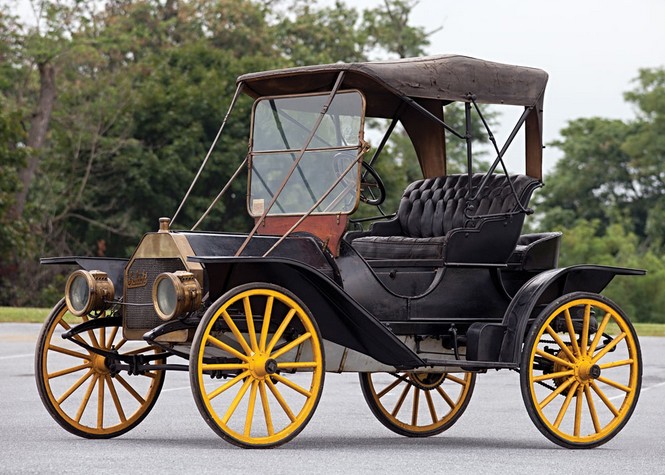
1910 Sears Model G Runabout

Offered by Bonhams | Philadelphia, Pennsylvania | October 7, 2013
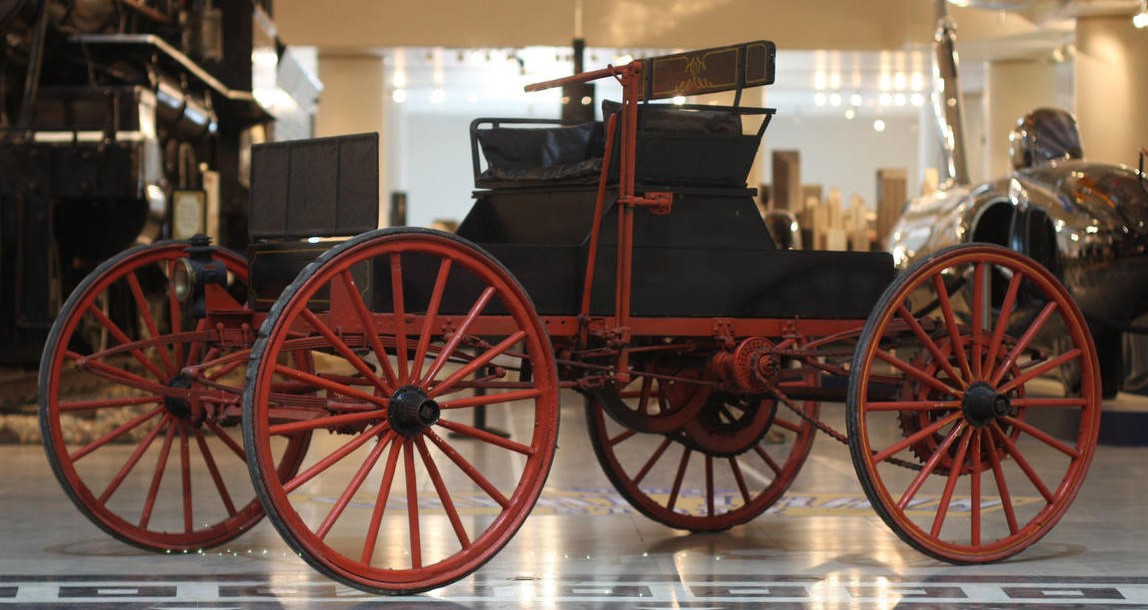
1910 Sears Model G Runabout

Mail-order automobiles might seem like a ludicrous idea – but think about eBay. People buy cars, sight unseen, every minute online. So maybe Sears was just way ahead of the game. Between 1906 and 1911, you could order a variety of cars from Sears, Roebuck & Company catalogs.

They were built in Chicago (where this car has spent a large part of its life in the Museum of Science and Industry) and this model is a high-wheeler. The increased ride height was great news for rural Americans whose roads were rugged. Buying from a catalog was probably their best bet as well – as they bought just about everything else from Sears too.

The most this car has going for it is that it is an original Sears chassis. The engine is missing, as is the transmission, and the body is described as “not an accurate recreation.” That doesn’t make it that much less interesting. It could still command between $15,000-$20,000. Click here for more info.

Update: Sold $3,850.

______________________________________________________________

1910 Sears Model P Four-Passenger Motorbuggy

Offered by Bonhams | Philadelphia, Pennsylvania | October 7, 2013
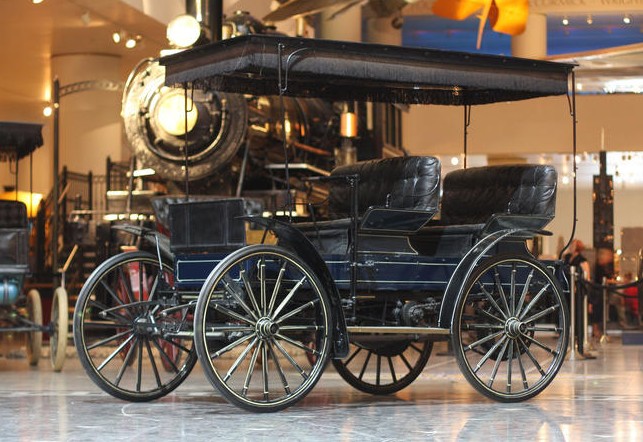
1910 Sears Model P Four Passenger Motorbuggy

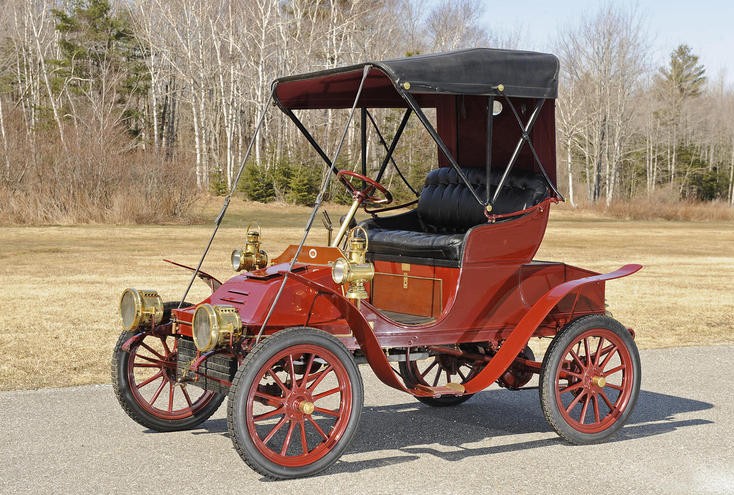
Here’s another Sears automobile – and this one’s a runner. It’s also a little more practical as it has a roof, four seats and a more traditional layout. But where’s the engine? It’s under the seats. It’s a 1.8-liter flat-twin making 14 horsepower. You’d think, with automakers chasing perfect weight distribution, that someone would try to mount a flat engine underneath the passenger compartment today – but “necessities” like air conditioning make that unlikely, and this car obviously didn’t have to worry about air conditioning.

It’s chain-driven, has solid rubber tires and tiller steering. This was the largest car Sears built (and is the rarest today). They cost between $325-$485 out of the catalog. Every car they sold was sold at a loss – a solid business plan that might explain why only 3,500 Sears-branded motorcars were built in the five short years they were available.

This car entered Chicago’s Museum of Science and Industry in 1972 and was sold from there by Bonhams in 2008. It’s actually a pretty cool car for as basic as it appears. It should sell for between $25,000-$35,000. Click here for more info and here for the rest of Bonhams’ awesome lineup at the Simeone Foundation.

Update: Sold $38,500.
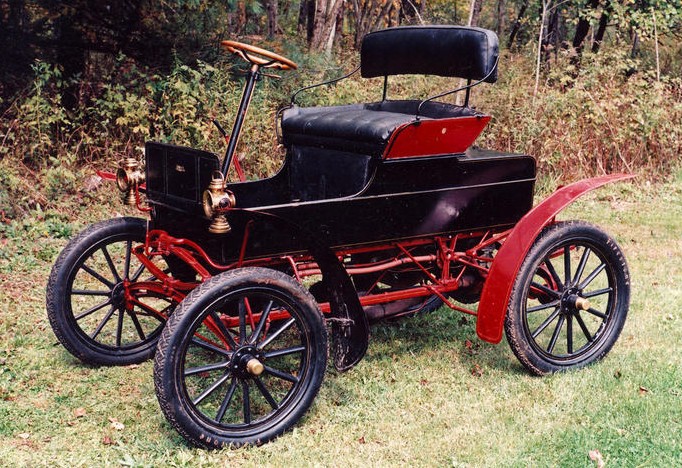
Sears Model G

1910 Sears Model G Runabout

Offered by Bonhams | Philadelphia, Pennsylvania | October 7, 2013

1910 Sears Model G Runabout
Photo – Bonhams

Mail-order automobiles might seem like a ludicrous idea – but think about eBay. People buy cars, sight unseen, every minute online. So maybe Sears was just way ahead of the game. Between 1906 and 1911, you could order a variety of cars from Sears, Roebuck & Company catalogs.

They were built in Chicago (where this car has spent a large part of its life in the Museum of Science and Industry) and this model is a high-wheeler. The increased ride height was great news for rural Americans whose roads were rugged. Buying from a catalog was probably their best bet as well – as they bought just about everything else from Sears too.

The most this car has going for it is that it is an original Sears chassis. The engine is missing, as is the transmission, and the body is described as “not an accurate recreation.” That doesn’t make it that much less interesting. It could still command between $15,000-$20,000. Click here for more info.

Update: Sold $3,850.

Jewel Runabout

1907 Jewel Model B 8hp Runabout

Offered by Bonhams | Philadelphia, Pennsylvania | October 7, 2013

1907 Jewel Model B 8hp Runabout

Jewel was originally known as Jewell – for 1906 only when the car was built in Cleveland, Ohio by the Forest City Motor Co. before they moved to Massillon, Ohio, to secure more funding. When production resumed in 1907, the name was changed to Jewel (with one “L”).

This car is an 8 horsepower model using a two-stroke engine (a 2.1-liter two-cylinder) that was touted as being extremely easy to use and maintain. It cost $400 when new and was well-engineered. Apparently, this little engine is torque-y enough to pop the front wheels off the ground if you launch it hard!

This particular example was in single family ownership for 50 years before Bonhams sold it in 2009. Jewel only built about 1,000 cars before going out of business in 1909 and being reorganized as Croxton-Keeton. This car should sell for between $25,000-$35,000. Click here for more info and here for more from this sale.

Update: Sold $25,300.

A Pair of Schachts

1910 Schacht Model R Runabout

Offered by RM Auctions | Hershey, Pennsylvania | October 10, 2013

1910 Schacht Model K Runabout

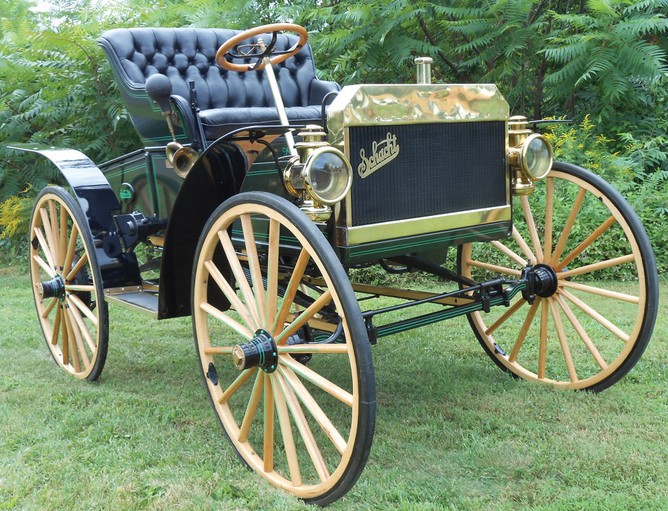
The Schacht Motor Car Company of Cincinnati, Ohio (nothing like a really solid German name like Schacht to be able to guess this was built in Cincy), built high-wheelers from 1905 through 1909. Come 1910, the company switched to more traditional cars like this all-original Model K Runabout.

This car uses a steering wheel instead of a tiller (popular at the time) and a water-cooled 3.0-liter two-cylinder engine producing 18 horsepower. The engine has not been run in over 20 years and some mechanical work will be necessary in order to drive this car.

Schacht soon turned to commercial vehicles and was able to soldier on until 1940. This car has been in the Antique Automobile Club of America (AACA) Museum since 1996. It should sell for between $20,000-$25,000. Click here for more info and here for more from this sale.

Update: Sold $19,800.


1909 Schacht Model K Runabout

Offered by RM Auctions | Hershey, Pennsylvania | October 10, 2013

1909 Schacht Model K Runabout

Really? Another Schacht – and another Model K Runabout at that? Why am I featuring this? To show you the difference a year can make.

Schacht started by building high-wheelers just like this. They were referred to as the “Invincible Schacht” because they were apparently so rugged (the Titanic was also considered invincible, FYI). This uses the same engine as the car above (perhaps it would’ve made more sense to feature this one first and do things chronologically, but oh well). The major difference is the size of the wheels. The cars have the same wheelbase.

Another major difference is that this example is in full running and driving condition. And that is apparently only worth a $5,000 premium – as this car is expected to sell for between $25,000-$30,000. It was restored in the early-1990s. Over 8,000 Schacht road cars were believed to have been built before the full-time switch to commercial vehicles occurred in 1914. Click here for more info and here for more from RM.

Update: Sold $41,250.

Schacht Model R

1910 Schacht Model R Runabout

Offered by RM Auctions | Hershey, Pennsylvania | October 10, 2013

1910 Schacht Model K Runabout

The Schacht Motor Car Company of Cincinnati, Ohio (nothing like a really solid German name like Schacht to be able to guess this was built in Cincy), built high-wheelers from 1905 through 1909. Come 1910, the company switched to more traditional cars like this all-original Model K Runabout.

This car uses a steering wheel instead of a tiller (popular at the time) and a water-cooled 3.0-liter two-cylinder engine producing 18 horsepower. The engine has not been run in over 20 years and some mechanical work will be necessary in order to drive this car.

Schacht soon turned to commercial vehicles and was able to soldier on until 1940. This car has been in the Antique Automobile Club of America (AACA) Museum since 1996. It should sell for between $20,000-$25,000. Click here for more info and here for more from this sale.

Update: Sold $19,800.

1906 Autocar

1906 Autocar Type 10 Runabout

Offered by Bonhams | Carmel, California | August 16, 2013

1906 Autocar Type 10 Runabout

Photo – Bonhams

Autocar, a company that is still around producing trucks, adopted the name Autocar in 1899. Their first car was introduced in 1900. In 1907, they started building trucks and by 1911, that’s all they were making. You’d think, in the past 100 years, they may have thought about a name change, but no, Autocar remains Autocar, even though they haven’t built a car in 102 years.

The Type 10 was introduced in 1904. It uses a flat-twin engine (at a time when most companies were using an inline configuration) making 12 horsepower. It was practical and reliable and over 1,000 were built by the end of production.

The car was restored sometime around 1967. A collector acquired it in ’67 and owned it until 2008 when it went to a European collection. Because it spent the past 50 years in museums, it remains in remarkable condition. This car should sell for between $40,000-$50,000. Click here for more info and here for more from Bonhams in California.

Update: Sold $46,200.

Puritan Steam Car

1902 Puritan Runabout

For Sale by H&H Auctions | Appleton, England

1902 Puritan Runabout

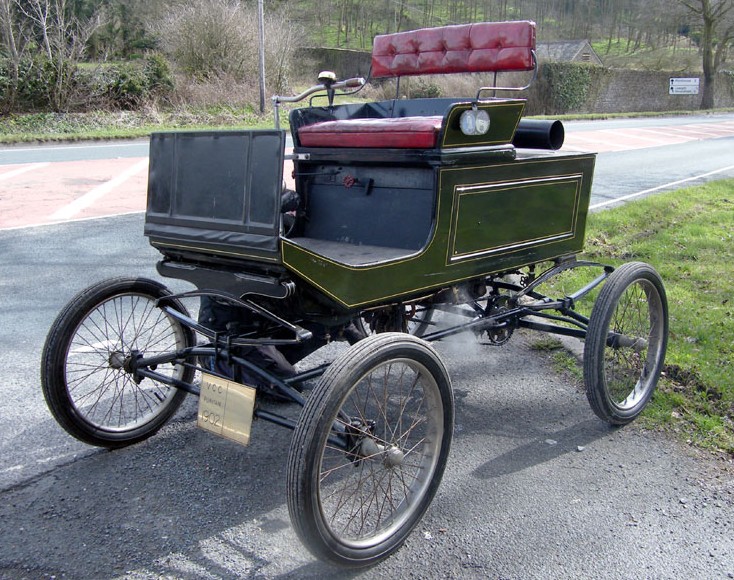
When Albert Locke took control of his father and uncle’s company in Salem, Massachusetts, around the turn of the century, he decided he wanted to do more than just build parts for steam engines. The Locke Regulator Company was getting into the car business.

In 1902, they launched their little runabout (designed in-house by Albert himself) that uses a straight-twin steam engine making six horsepower. Most Puritans were known to be ahead of their time (the cars, not the people) by featuring two things that would become standard on automobiles: a steering wheel and a foot throttle. However, this car has tiller steering. It could go 100 miles on one tank of water and could reach 20 mph.

Unfortunately, the company didn’t last in the car business for long, with production ceasing the following year in 1903. As rare as that makes it, surprisingly, there is at least one other Puritan steam car in England. This one isn’t exactly in concours-level shape, but it is usable – which is the most important thing. Price is not listed but you can check out more here.

Update: Not sold, H&H Auctions Duxford, Fall 2014.

Lavie Runabout

1904 Lavie Runabout

Offered by Coys | London, U.K. | March 12, 2013

1904 Lavie Runabout

So many different marques built cars in the early 1900s. Lavie was one of many and it didn’t last long – the company (which was actually registered in its owner’s name) only built cars for one year – 1904.

Needless to say, it is an incredible stroke of luck that this lone example survives. Especially considering he only built two cars – total – in his Parisian workshop. Both cars were originally owned by the Lavie family – one by him and one by his brother. This car was owned by Mr. Lavie and the second owner is known as well. But then the car disappeared until 1968, when it went on display at the Le Mans Museum.

The engine in this car is a Delahaye straight-two and the chassis is low-slung with a convertible top. It’s almost sporty – which is perhaps why the man who purchased it from the museum in 1978 used it in almost every veteran car event in France up until 2002. It has received a mechanical overhaul recently and is London-to-Brighton eligible. It is expected to sell for between $98,500-$106,000. Click here for more info and here for the rest of Coys’ lineup.

1906 Pope-Waverley

1906 Pope-Waverley Electric Runabout

Offered by RM Auctions | Hershey, Pennsylvania | October 12, 2012

From Albert Augustus Pope’s early automotive manufacturing empire comes this 1906 Pope-Waverely Electric Runabout. Waverely was actually founded in 1899 in Indianapolis by the Indiana Bicycle Company. They began by making electric two-seaters. In 1903, the Pope Motor Car Company scooped up Waverely and changed the name to reflect their new corporate overlords.

This model is a three horsepower model with a 60-volt DC motor. The body is a simple runabout with tiller steering. It also has electric lighting and the older restoration still shows well. The Pope empire crumbled quickly, going bankrupt in 1907. Waverely was spun off as an independent marque again in 1908, but some Pope makes lasted longer – up through 1914.

As electric vehicles become popular once again, cars like this are finding a larger collector fanbase and prices will be going up. The price for this car is expected to be between $60,000-$80,000. For more information, click here. And for the rest of the RM Auctions Hershey lineup, click here.

Update: Sold $60,500.

Northern Runabout

1902 Northern Runabout

Offered by RM Auctions | Hershey, Pennsylvania | October 12, 2012

I have a new general rule: if a car comes up for sale and it’s a marque you can’t recall ever seeing come up for sale, the there is a good – no, better than good – chance that it is an ex-Harrah Collection car. As is this 1902 Northern Runabout.

1902 was the first year for the Northern Manufacturing Company of Detroit. Founded by Charles B. King (who went on to build the King) & Jonathan Maxwell (who went on to build the Maxwell), this marque would last until 1909 when it was merged into E.M.F. This “Silent Northern” has a five horsepower single-cylinder engine and cost $800 in 1902. These cars were also built under license in Sweden as the Norden.

Ownership history is known from new. It was acquired by Bill Harrah in 1956, making him the fourth owner. It was purchased from the collection and restored by its current owner in 1986, with the restoration completing in 1990. It has competed in 10 London-to-Brighton runs and holds the Guinness World Record for being the oldest car driven coast-to-cast across the United States (accomplishing this in 1994). Only 11 are known to still exist.

It is expected to sell for between $70,000-$90,000. For more information, click here. And for more from RM at Hershey, click here.

Update: Sold $66,000.