Argyll Torpedo Tourer

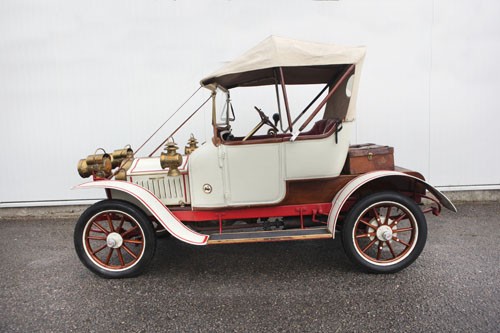
1913 Argyll 12hp Torpedo Tourer

Offered by H&H Auctions | Duxford, U.K. | October 16, 2013

1913 Argyll 12hp Torpedo Tourer

I’ve literally been waiting months to feature this car. I saw it pop up in H&H’s catalog early on and have been excited about it since. Argyll was a Scottish marque that was founded in Glasgow in 1899 by Alex Govan.

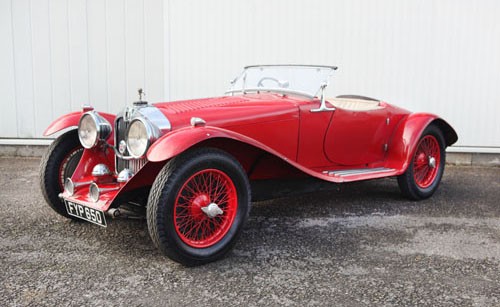
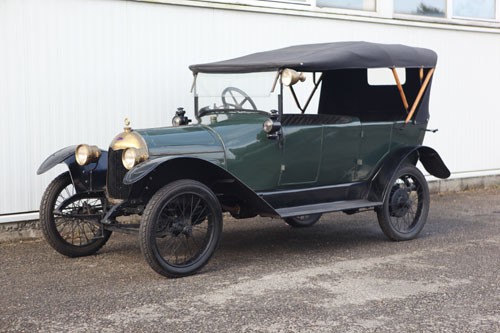
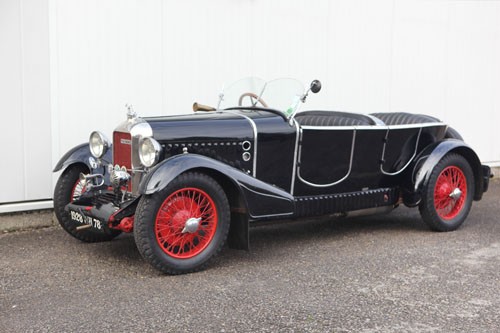
Right around 1913 was when Argyll really hit their stride. Business was expanding – in fact, this car was sold new in Sydney, Australia. It didn’t re-arrive back into the U.K. until 2001. I’m not sure about the John Deere paint scheme, but I kind of like it. I also like the upright windshield and pillarless sides when the top is stowed back.

The engine is a 12 horsepower (presumably taxable) four-cylinder. The “artillery” look of the wheels is one of my favorite early wheel styles (yes, I have multiple categories for favorite wheel styles). This just looks like a fun, usable car from what was once Scotland’s largest automobile manufacturer. It is expected to sell for between $48,500-$56,000. Click here for more info and here for the rest of H&H’s auction lineup.

Update: Sold $56,250.
Briton Tourer

1910 Briton 10hp Tourer

Offered by H&H Auctions | Duxford, U.K. | October 16, 2013

1910 Briton 10hp Tourer

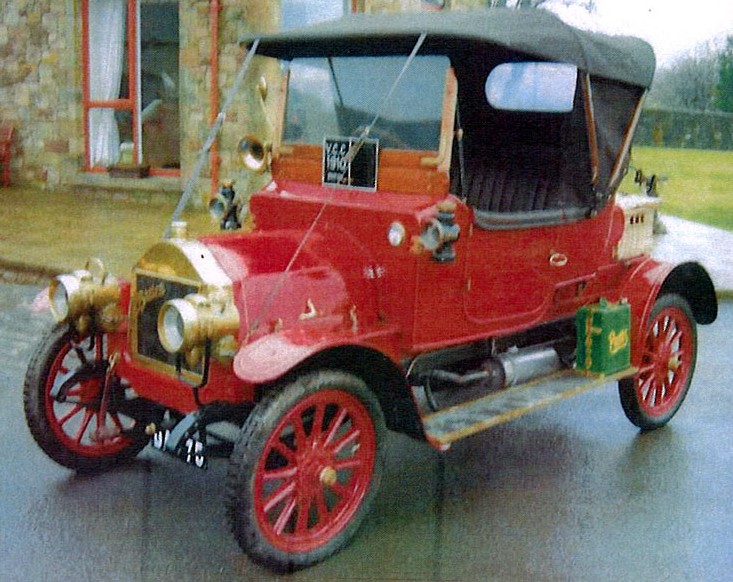
First off, apologies for the grainy photograph that was apparently taken with a circa 2002 cellphone… in a rainstorm. I can’t do anything about it (and likely, neither could the auction house) – but it doesn’t change the fact that this is an interesting car.

The Briton Motor Co. Ltd. was actually founded in 1908 as the Star Cycle Co. Ltd. of Wolverhampton. Star built a car called the Starling but when that venture proved unsuccessful, Star moved to a new facility, hired a new manager, and rebranded.

The cars were affordable and of good quality. The first model (such as the car featured) featured a twin-cylinder engine making 10 horsepower. There was a four-cylinder variant as well, but this 10hp model was much more popular. Briton survived until going out of business near the end of 1928.

This car is described as “very usable,” having just underwent a fair amount of reconditioning. It is expected to sell for between $40,500-$48,500. Click here for more info and here for more from H&H’s sale.

Update: Failed to sell.

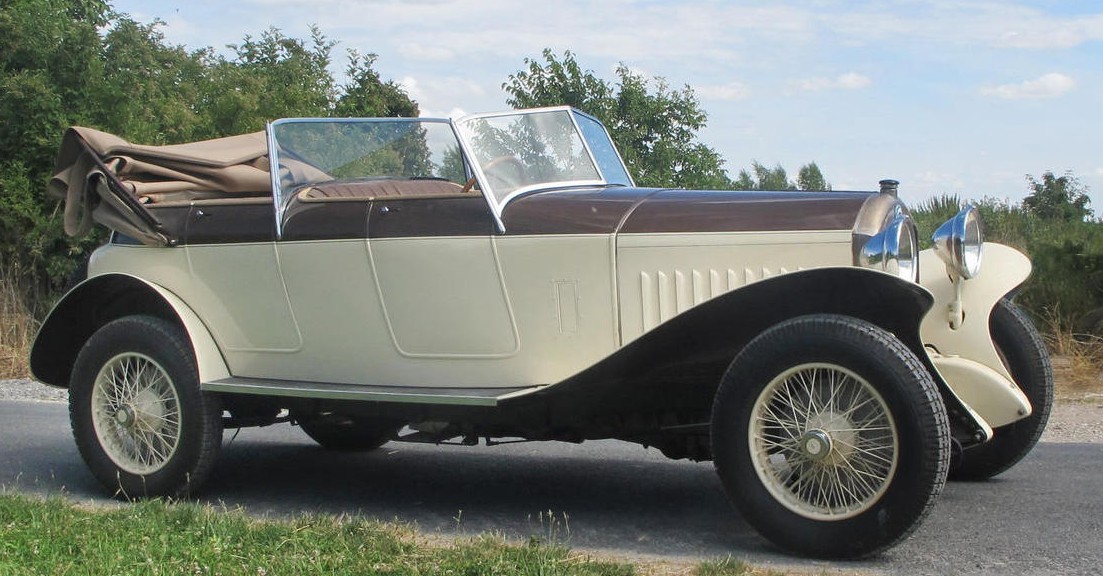
Cottin-Desgouttes Torpedo

1924 Cottin-Desgouttes Type M Torpedo

Offered by Bonhams | Knokke-Heist, Belgium | October 11, 2013

1924 Cottin-Desgouttes Type M Torpedo

Cottin-Desgouttes (sometimes written as Cottin & Desgouttes) was a French automobile manufacturer founded in Lyon in 1906. Pierre Desgoutte built cars under his own name in 1904 before being joined by a wealthy backer – Cyrille Cottin – two years later.

They built mainly luxury and sporty, racing cars. The company was doing well – and then the war came. Luckily, they found their niche was were able to weather World War One, coming out of it well-equipped and ready to resume production. But the wealth of pre-war France wasn’t quite the same immediately following the war, so the company introduced a cheaper model – this, the Type M.

It used a four-cylinder engine with 12 taxable horsepower. It was well-equipped and technically innovative. This car has a very sporty convertible torpedo body on it and has spent a long time in a museum – the last 15 years of which in storage. It was brought out and driven this year – so it does run and drive. It should sell for between $54,000-$81,000. Click here for more info and here for the rest of Bonhams’ auction lineup in Belgium.

Update: Sold $70,204.

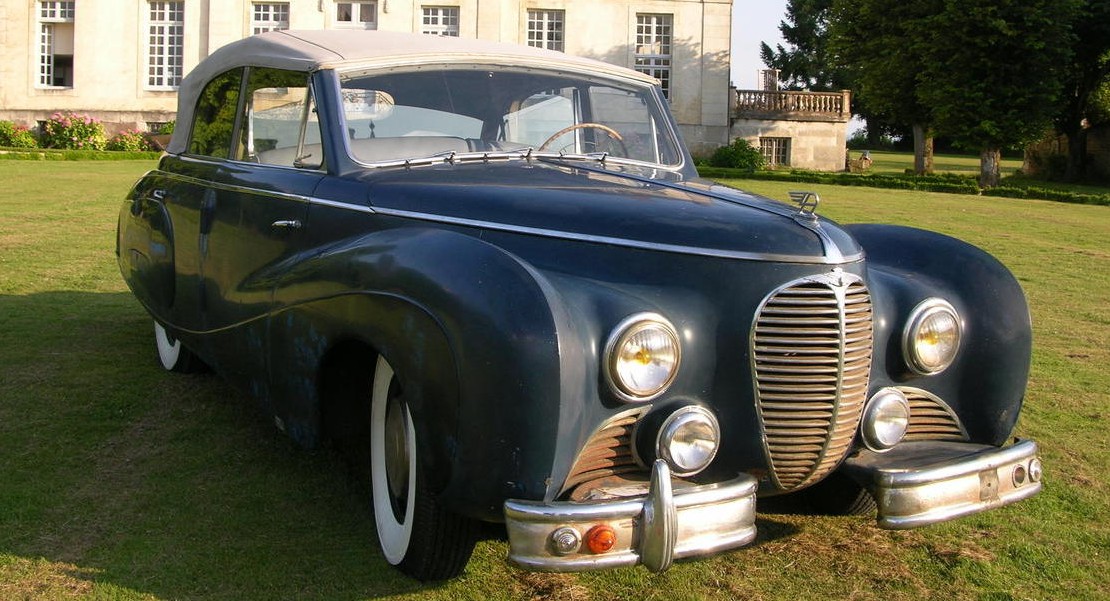
One-off Austin Sheerline

1949 Austin Sheerline A.125 Cabriolet by Vesters & Neirinck

Offered by Bonhams | Knokke-Heist, Belgium | October 11, 2013

1949 Austin Sheerline A.125 Cabriolet by Vesters & Neirinck

Photo – Bonhams

When World War II ended, Austin decided to build a car to try and rival Bentley. They introduced the Sheerline (originally in A.110 form) in 1947. After only 12 of those were sold, they shifted to the A.125 – the difference being displacement.

The cars looked a little like Bentleys and a little like Jaguars – in that they were stately, boxy sedans. All were four-door cars offered as sedans or limousines. The engine in the A.125 was a 4.0-liter straight-six making 125 horsepower.

This particular car was delivered new to Belgium and given a custom coachbuilt body by a local Belgian coachbuilder. When I saw this car in the auction catalog, I thought “Oh, a Saoutchik Delahaye!” Boy was I wrong and boy is that a huge compliment to the body on this car. It really is nice looking. The fact that it is also a convertible is a plus as well.

This car is being sold by only its second owner. The mechanicals and interior have been completely restored but the body and paint are entirely original. This is the only example like this built (of the 7,851 A.125s built) and it is a cheap entry into major concours events worldwide. It is expected to sell for between $54,000-$81,000. Click here for more info and here for more from Bonhams in Belgium.

Update: Sold for significantly less than the lower end of the estimate. The person who bought it has asked that the price not be displayed here. In a couple of months, after he has flipped the car, the price will be posted here again.

1912 Stimula

1912 Stimula Roadster

Offered by Coys | Graz, Austria | October 12-13, 2013

1912 Stimula Roadster

Stimula was founded by two brothers – Guy and Carl de la Chappelle – in the Gier Valley in France in 1907. They started with motorcycles and three-wheelers for a few years before the car business really got going.

At the beginning, Stimula, unlike many contemporary French manufacturers who used engines from De Dion-Bouton, designed and built their own engines. But by the second decade of the 20th century, they went scrambling for De Dion engines as well, as this car uses a 1.7-liter De Dion straight-four. The cars were light and handy in competitive events like hillclimbs.

Stimula built over 1,000 cars before WWI shut the business down in 1914. Xavier de la Chappelle, a great-nephew of Carl and Guy, resurrected the Stimula name in the 1970s to build the de la Chappelle Bugatti replica. You can read more about this recently restored car here and check out the rest of this auctions lineup here.

Update: Sold for about $25,800.

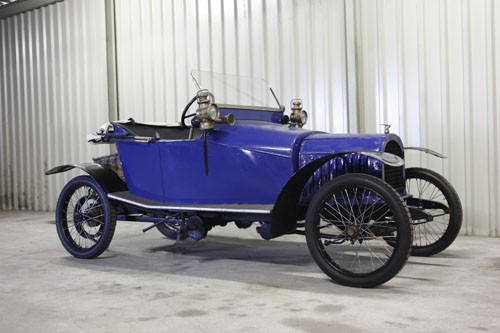
Warne Cyclecar

1913 Warne 8

Offered by Coys | Graz, Austria | October 12-13, 2013

1913 Warne 8hp Cyclecar

I love it when fine examples of short-lived automobile manufacturers survive for 100 years. This Warne 8 cyclecar is 100 years old. The company, Pearsall-Warne Ltd, was founded in Letchworth in 1913. It only lasted through 1915.

Light cars were all the rage in that day. A lot of companies popped up and built cars of varying quality with varying success. Warne may not have had a lot of success, but they had quality down. The engine is an eight horsepower 1.0-liter V-twin from J.A.P. and the price was a crazy-low-sounding £99!

The car is simple, yes, but it does have a convertible top, lights and it is belt-driven (for weight reasons). I don’t know how many were made in total, but it is said the company built six of them a week. This is car #57. You can read more here and check out more from Coys here.

Update: Sold for about $10,800.

Autovia Roadster

1939 Autovia 3-Litre

Offered by Coys | Graz, Austria | October 12-13, 2013

1939 Autovia 3-Litre

There are sporty cars from the U.K. from the 1930s that everyone knows about, like the SS100 and Invictas. Then there are the lesser known ones like Arabs and this beautiful Autovia.

Like Arab, Autovia was a very short-lived marque. Founded in Coventry in 1937 as a subsidiary of well-known Riley. The cars were expensive, luxurious and sporty. It was a market that was already full of more prominent manufacturers. Two different sedan bodstyles were offered, as well as a limousine. In total, only 38 four-door cars were built. There were also six bare chassis sold – this is one of those cars. The Autovia proved an expensive experiment that ultimately bankrupted Riley, which was acquired by the Nuffield Organization in 1938. Autovia disappeared forever after that.

This car is the only Autovia to receive two-door aluminium roadster bodywork. What sets this roadster apart from many other British sports cars of the day is the engine. It’s a 3.0-liter V-8 making 125 horsepower. That’s a lot more than most of its competition – it’s Bugatti territory. This is a very quick car.

And very desirable too. Only eight Autovias are thought to survive, with this one having the most desirable coachwork (by far). This is definitely one of the stars of this auction. You can read more here and find out what other cars will be crossing the block here.

Update: Sold for about $110,000.

Philos Double Phaeton

1913 Philos Ballot Double Phaeton

Offered by Coys | Graz, Austria | October 12-13, 2013

1913 Philos Ballot Double Phaeton

SA Nouvelle des Automobiles Philos was founded in Lyon, France, in 1912. In 1923 they were acquired by Jean Gras – another French automobile manufacturer. While Jean Gras soldiered on until 1930, 1923 was the end of the line for Philos. Early Philos cars used engines from Ballot.

This car, being from the second year of manufacture, uses an aforementioned Ballot engine: it’s a 1.1-liter straight-four. Later cars used engines of varying size from a variety of manufacturers. The design feature that set the Philos apart was its curved V-shaped radiator.

This car is offered in preserved, all-original condition. It is a very fine example of early French motoring. You can read more here and check out more from Coys here.

Update: Sold for about $16,100.

One of the World’s First Microcars

1921 Moll-Mobil III Chemnitz Roadster

Offered by Coys | Graz, Austria | October 12-13, 2013

1921 Moll-Mobil III Chemnitz Roadster

The Moll was introduced during the cyclecar craze of the early 1920s. Many cyclecars of the era were small – but this was was downright tiny. It was one of the first true microcars ever built.

Introduced in the early 1920s, the Chemnitz Roadster was constructed by Moll-Werke AG of Chemnitz, Germany. It used a 125cc single-cylinder engine that is mounted between the driver’s legs (this car features tandem seating – the passenger sits directly behind the driver).

This car is listed as a 1921, likely because they have no idea when it was built. My records show the company in existence from 1922 through 1925 and this Mobil III model having been built from ’24-’25 with a more standard light car preceding it. In any case, this is one of two or three of these to survive and it is in excellent restored condition. Read more about it here and see more from this awesome sale here.

Update: Sold for about $14,500.

Genestin Double Phaeton

1928 Genestin GS8 Double Phaeton by J. Pessel-Annonay

Offered by Coys | Graz, Austria | October 12-13, 2013

1928 Genestin DS8 Double Phaeton by J. Pessel-Annonay

Paul Genestin started building his own cars in 1925 in Fourmies in the north of France. He got his start at the end of World War One rebuilding cars that were left behind by the Germans. I’ve honestly never seen one of these cars but this thing looks super sporty and I really like it.

The engine is a 1.8-liter straight-eight made by Vermerel and the torpedo body is by a little known French coachbuilder. Genestins are said to be sporty and a shorter wheelbase was offered for even better handling.

This is one of only a few Genestins still in existence and has spent a long time in museums. It would be an awesome addition to any collection and a welcome sight at car shows all over the globe. No pre-sale estimate is available but you can find out more here and more from the sale of the Karl Ritter Collection here.

Update: Sold for about $71,100.