Panhard by Vanvooren

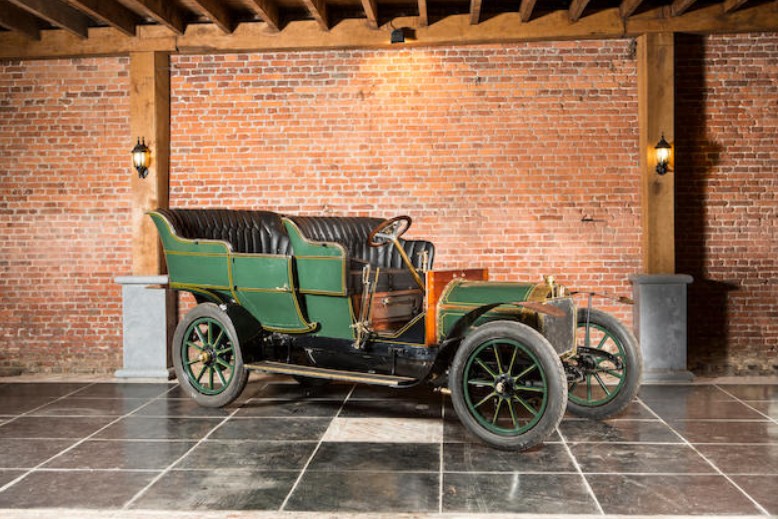
1912 Panhard et Levassor X14 20CV Torpedo by Vanvooren

Offered by Artcurial | Paris, France | February 9, 2018

Photo – Artcurial

Artcurial is offering a collection of Vanvooren-bodied automobiles at their Rétromobile sale. It’s one of the most packed auction catalogs I’ve ever seen and we will be featuring more cars from this sale than just about any other sale in the past seven years.

This big, beautiful Panhard is a Type 14, which was introduced in 1911. It features a 4.4-liter straight-four which was rated at 20 taxable horsepower. It’s a big Torpedo tourer and one of the earliest Vanvooren-bodied cars in the world.

Sold new to a customer in Buenos Aires, this car later made it’s way back to Europe. Unbelievably, it is 100% original (the up-close patina is incredible) and since 1995, it has been either in large private collections or museums. Because of it’s museum stints, it has not seen the road in quite some time and will require a little work to get it roadworthy. It should bring between $215,000-$315,000. Click here for more info and here for more from Artcurial.

Update: Sold $365,050.

Monica Sedan

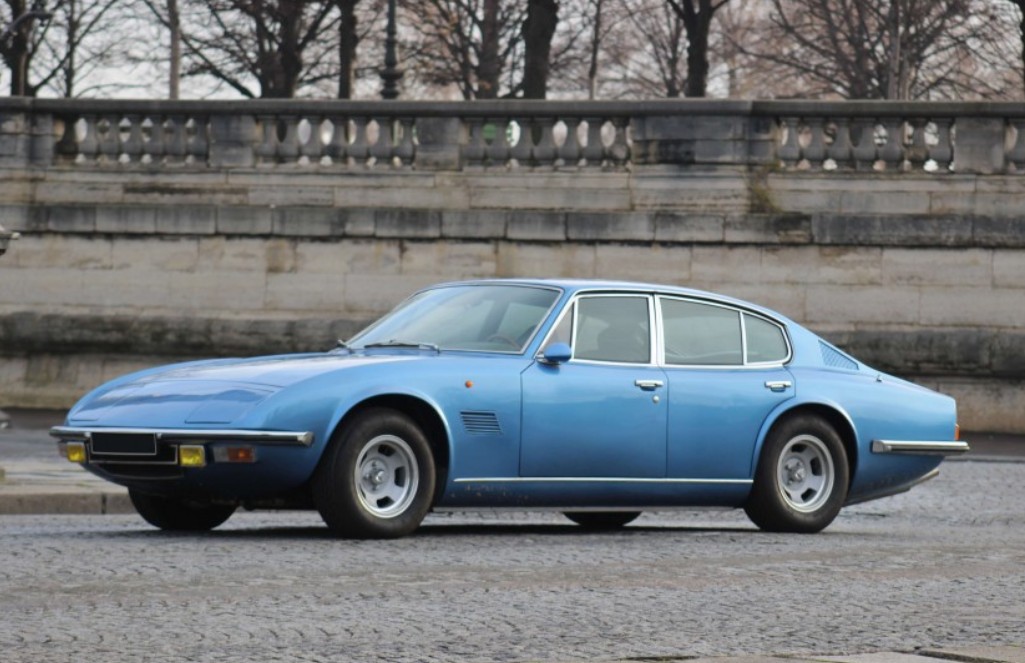
1975 Monica 560

Offered by Artcurial | Paris, France | February 9, 2018

Photo – Artcurial

No this is not a stretched Lamborghini Islero. Nor is it an Iso Fidia or Monteverdi. It is a Monica, which was a car built by CFMF, a company that specialized in building rail cars. The owner of the company, Jean Tastevin, was a car guy who lamented the fact that he didn’t buy a Facel Vega while they were still on sale. So he set out in the 1970s to build a high-quality French luxury car.

Introduced in 1974, the Moncia – whose sole model was the 560 sedan – is powered by a 5.6-liter Chrysler V-8 that makes 285 horsepower. A big American V-8 and French style made for what should have been a winning combination, but the oil crisis happened to hit around this time and that American V-8 was thirsty. Tastevin decided to shut the company down in 1975.

Only 22 of these were built and very few still exist. This one was sold new in Spain and it remained there until 1990 when it returned to France. It has been restored (in 2015) and would be a rare sight anywhere it’s shown. It should bring between $120,000-$155,000. Click here for more info and here for more from this sale.

Update: Sold $131,418.

1912 FN Tourer

1912 FN Model 2000 Five-Seat Tourer

Offered by Bonhams | Paris, France | February 8, 2018

Photo – Bonhams

FN – short for Fabrique Nationale – still exists as an arms manufacturer, the industry with which the company began in the 1880s. They branched into bicycle manufacturing (and were a long-running motorcycle manufacturer) before they built their first automobile in 1899.

Full-on production of cars didn’t start until 1906 and those first examples were Rochet-Schneiders built under license. This model, the Model 2000, (which was introduced in 1908), is powered by a 2.0-liter straight-four engine and has a five-seat open-tourer body. Driving this car is a daytime-only experience as this car does not have headlights.

Not much is known about the history of this particular example (including things like, when the last time it was started), but FN cars are pretty nice and they were Belgium’s longest-lived auto manufacturer, existing until 1935. This one should bring between $30,000-$42,000. Click here for more info and here for more from Bonhams.

Update: Sold $35,471.

Taupin 1100

1927 Taupin 1100 Prototype

Offered by Artcurial | Paris, France | February 9, 2018

Photo – Artcurial

Here’s yet another one-off prototype car from this same collection. Not much is known about this history of this car, other than it seems to be assembled and custom made. The radiator is from a Darmont. The engine is a SCAP unit of 1.1-liters.

It was built by an actual engineer, so there was some thought put into it. The wheels have independent suspension, so it sits very low. It’s almost like the grandfather of the Ariel Atom… if an Atom only had three wheels. Customized by the owner to add such creature comforts as a cushion to sit on, this thing is largely original and just might be in running condition. It should cost the next owner between $6,000-$9,500. Click here for more info.

Update: Sold $23,363.

Salomon Prototype

1931 Salomon Prototype

Offered by Artcurial | Paris, France | February 9, 2018

Photo – Artcurial

Jean-Marie-Jules Salomon co-founded Le Zebre early in his career. He later worked for Citroen and then Peugeot. From 1928 through 1939 he worked at Rosengart. While at Rosengart (which did pretty well building light cars themselves), Salomon designed and built his own cyclecar prototype.

This light, two-seat roadster features a tubular axle and front brakes. The body is aluminum, which wasn’t all that common in 1931. It’s powered by a two-stroke single-cylinder engine. It’s in pretty original condition and would require a full restoration (it’s missing things like gauges, the entire floor, you know… some basics). But still, it’s a unique car from the 1930s and it can be yours for between $12,000-$18,000. Click here for more info.

Update: Sold $7,301.

1947 Dolo

1947 Dolo Type JB10

Offered by Artcurial | Paris, France | February 9, 2018

Photo – Artcurial

There were a lot of car companies that popped up after World War Two showing prototypes at auto shows and then promptly disappearing. Dolo was one such marque. Usually these cars exist only in grainy scans of old sales literature developed when the company’s founders thought they had a chance to make it big.

The JB10 was shown by Brun, Dolo & Galtier at the 1947 Paris Auto Salon. It was a front-wheel drive car powered by a 592cc flat engine making 23 horsepower. I don’t believe the engine is still with this car, however. The roof was a Plexiglas dome, which is kind of weird. The company went around taking orders (and payments) but never honored them. The company did build a second car but its whereabouts are unknown.

This car was discovered in storage at the Montlhéry circuit and entered the collection it is being offered from in 1967. It’s all-original and was originally blue. As a one-off it should bring between $7,500-$15,000. Click here for more info.

Update: Sold $33,585.

Four Cars from Rétromobile

Four Cars from Rétromobile

Offered by Artcurial | Paris, France | February 9, 2018


1947 Dolo Type JB10

Photo – Artcurial

There were a lot of car companies that popped up after World War Two showing prototypes at auto shows and then promptly disappearing. Dolo was one such marque. Usually these cars exist only in grainy scans of old sales literature developed when the company’s founders thought they had a chance to make it big.

The JB10 was shown by Brun, Dolo & Galtier at the 1947 Paris Auto Salon. It was a front-wheel drive car powered by a 592cc flat engine making 23 horsepower. I don’t believe the engine is still with this car, however. The roof was a Plexiglas dome, which is kind of weird. The company went around taking orders (and payments) but never honored them. The company did build a second car but its whereabouts are unknown.

This car was discovered in storage at the Montlhéry circuit and entered the collection it is being offered from in 1967. It’s all-original and was originally blue. As a one-off it should bring between $7,500-$15,000. Click here for more info.

Update: Sold $33,585.


1931 Salomon Prototype

Photo – Artcurial

Jean-Marie-Jules Salomon co-founded Le Zebre early in his career. He later worked for Citroen and then Peugeot. From 1928 through 1939 he worked at Rosengart. While at Rosengart (which did pretty well building light cars themselves), Salomon designed and built his own cyclecar prototype.

This light, two-seat roadster features a tubular axle and front brakes. The body is aluminium, which wasn’t all that common in 1931. It’s powered by a two-stroke single-cylinder engine. It’s in pretty original condition and would require a full restoration (it’s missing things like gauges, the entire floor, you know… some basics). But still, it’s a unique car from the 1930s and it can be yours for between $12,000-$18,000. Click here for more info.

Update: Sold $7,301.


1927 Taupin 1100 Prototype

Photo – Artcurial

Here’s yet another one-off prototype car from this same collection. Not much is known about this history of this car, other than it seems to be assembled and custom made. The radiator is from a Darmont. The engine is a SCAP unit of 1.1-liters.

It was built by an actual engineer, so there was some thought put into it. The wheels have independent suspension, so it sits very low. It’s almost like the grandfather of the Ariel Atom… if an Atom only had three wheels. Customized by the owner to add such creature comforts as a cushion to sit on, this thing is largely original and just might be in running condition. It should cost the next owner between $6,000-$9,500. Click here for more info.

Update: Sold $23,363.


1948 De Coucy Prototype Record

Photo – Artcurial

What we have here was someone’s – a Count de Coucy, to be more specific – idea of a land speed record car. A trained engineer, de Coucy built some high-revving engines of his own design – we’re talking engines that revved to 10,000 rpm in the 1930s. In 1935, he designed a 500cc engine capable of that 10,000 rpm.

Unfortunately, he was arrested by the Germans during WWII as a part of the Resistance and then his workshop was bombed in 1943. In 1948 he took the chassis from a Formula One car he was working on and built a single-seater enclosed record car. The 500cc engine never made it in, but it now carries a 1.1-liter straight-four instead (which is not completely installed). The car was never run and is being sold in hopes that someone will pick up the cause. It should bring between $6,000-$9,500. Click here for more info and here for more from Artcurial.

Update: Sold $55,488.
De Coucy Record

1948 De Coucy Prototype Record

Offered by Artcurial | Paris, France | February 9, 2018

Photo – Artcurial

What we have here was someone’s – a Count de Coucy, to be more specific – idea of a land speed record car. A trained engineer, de Coucy built some high-revving engines of his own design – we’re talking engines that revved to 10,000 rpm in the 1930s. In 1935, he designed a 500cc engine capable of that 10,000 rpm.

Unfortunately, he was arrested by the Germans during WWII as a part of the Resistance and then his workshop was bombed in 1943. In 1948 he took the chassis from a Formula One car he was working on and built a single-seater enclosed record car. The 500cc engine never made it in, but it now carries a 1.1-liter straight-four instead (which is not completely installed). The car was never run and is being sold in hopes that someone will pick up the cause. It should bring between $6,000-$9,500. Click here for more info and here for more from Artcurial.

Update: Sold $55,488.
OSCA 2000 S

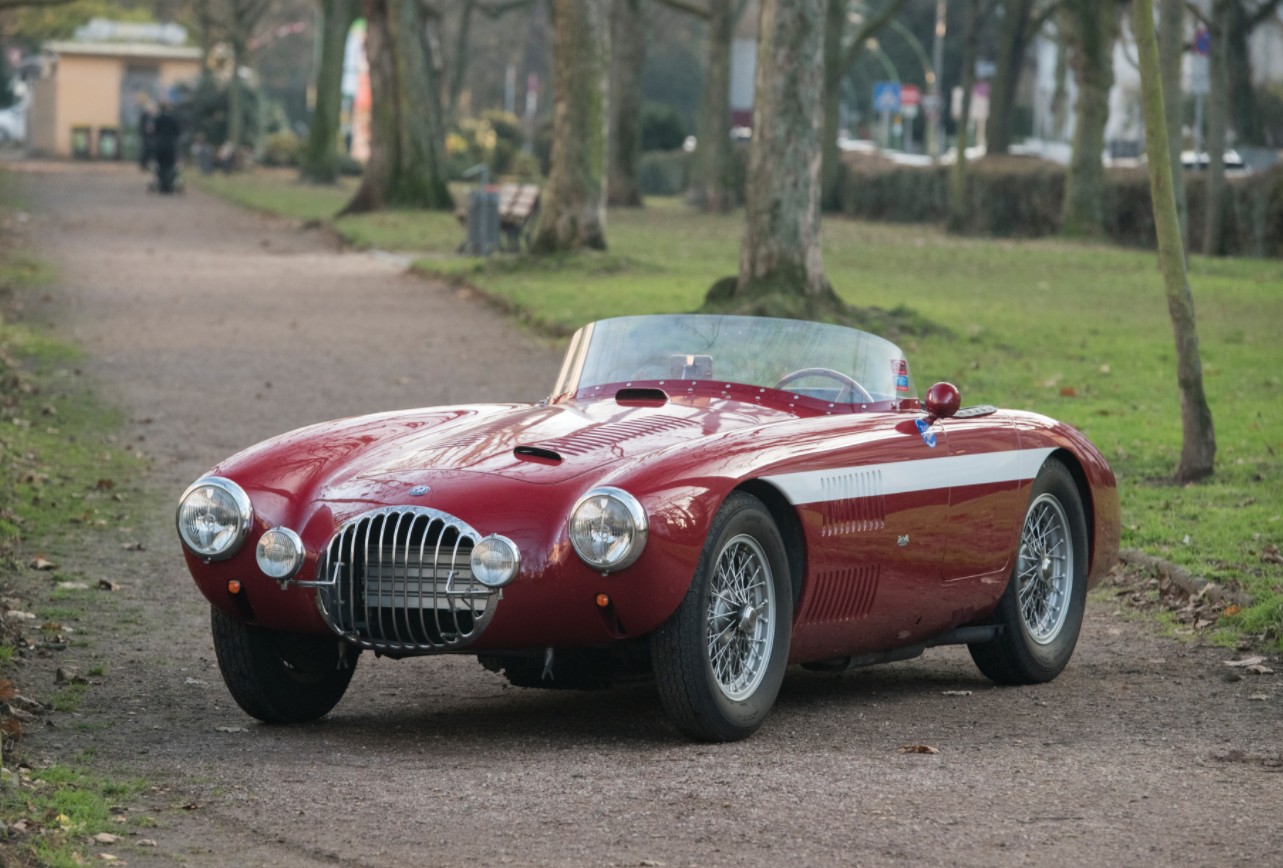
1954 OSCA 2000 S by Morelli

Offered by RM Sotheby’s | Paris, France | February 7, 2018

Photo Courtesy of RM Sotheby’s

Here’s a somewhat beefy-looking Italian sports car from the 1950s. Built by the Maserati brothers, this car features what is perhaps the largest engine stuffed into any OSCA automobile: a 2.0-liter straight-six making 165 horsepower.

While it might look like a small, Italian sports car from the 1950s, this particular car has some serious race cred. It’s first owner won the 1954 12 Hours of Messina race with this chassis before selling it to an Argentinian. It raced in South America at the 1000km of Buenos Aires and remained on that continent until it was discovered in the 1980s.

The original engine was never located, but a comparable six-cylinder lifted from a Maserati was installed and the restoration was completed in 2003. Only five 2.0-liter OSCAs (four of this model) were built and this is one of three carrying open bodywork by Morelli. It should bring between $1,050,000-$1,175,000. Click here for more info and here for more from RM in Paris.

Update: Sold $970,994.

Imperia Fabric Saloon

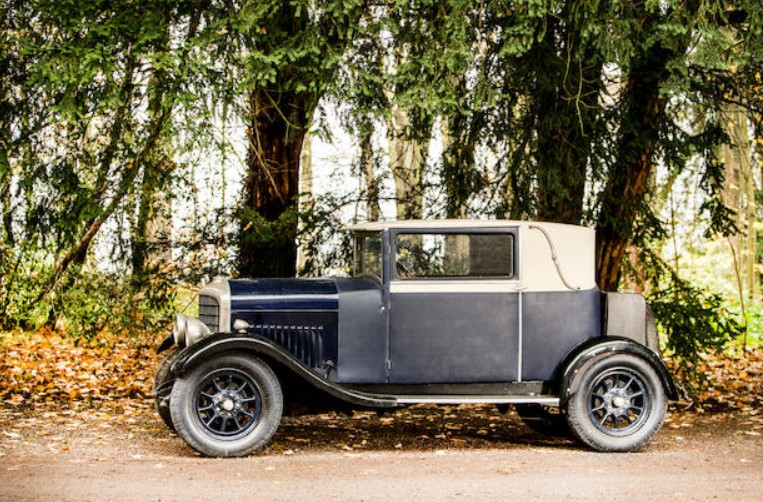
1926 Imperia Type 8-25SS 8HP Fabric Saloon

Offered by Bonhams | Paris, France | February 8, 2018

Photo – Bonhams

Based in Liège, Imperia automobiles were first introduced in 1906. The company would grow throughout the 1910s and into the 20s, acquiring Metallurgique, Nagant, and Excelsior along the way. In 1934 they merged with Minerva but the merger disbanded in 1939. Imperial built a few cars after the war but the marque was gone by 1949.

The most interesting thing about Imperia (I think) was that their factory in Belgium contained a test track along the roof (which you can still see on Google Earth). The car you see here has a fabric roof and it powered by four-cylinder engine that probably displaces 1.1 liters, which would mean it makes 27 horsepower.

Imperias aren’t all that common today and this one has been owned by the consignor for the past 12 years. It’s a small, light, and affordable Belgian classic. It should bring between $24,000-$36,000. Click here for more info and here for more from this sale.

Update: Not sold.