Benz Toy Tonneau

1911 Benz 45/60HP Toy Tonneau by J.E. Demar

Offered by Bonhams | Stuttgart, Germany | July 12, 2014
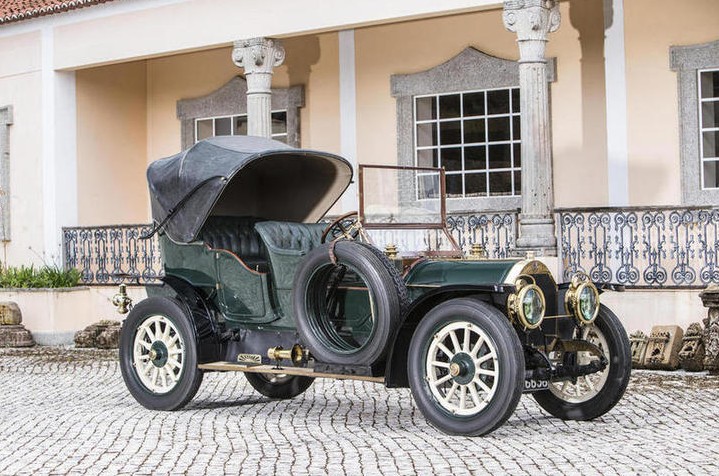
Photo - Bonhams

Photo – Bonhams

Benz built cars as a separate marque up until it merged with Daimler in 1926, but it seems like you so rarely see them. This 1911 45/60HP is a marvelous example. And so is that giant castle of a house in the background.

This car was imported as a bare chassis into New York City from Germany in 1911. In those days, a Benz chassis could cost an insane $8,500. So this was among the highest of luxuries in its day. It uses a 6.75-liter straight-four that makes 45/60 horsepower. The body is by Joseph Edward Demar, a coachbuilder in New York who operated for only four short years.

The car was discovered in Philadelphia around 1980. The restoration was completed in 1984 in the U.K. and the current collection acquired the car in 1994. It has spent some time in a Portuguese museum and has its original engine, body and chassis – rare for a car so old with such little history known. But it really is spectacular – and the price reflects it: there is an estimate of $1,200,000-$2,000,000. Click here for more info and here for the rest of Bonhams’ Mercedes-Benz lineup.

Update: Not sold.
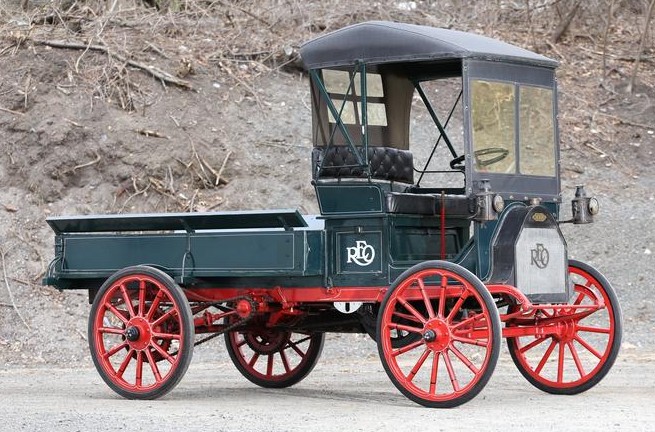
Reo Express

1911 Reo Express Delivery

Offered by Bonhams | Greenwich, Connecticut | June 1, 2014

Photo - Bonhams

Photo – Bonhams

Reo (or REO, depending on who you ask. Both are correct) was Ransom Eli Olds second automobile company after, you know, Oldsmobile. Reo was founded in 1905 and car production start with light cars that gave way to some pretty snazzy stuff along the lines of Oldsmobile. In 1910 the company added a line of trucks. This truck business would keep the Reo name (on trucks) on the road through 1975.

The 1908 Reo Single-Cylinder ‘Model B’ was a successful road car and became the basis for the company’s early trucks – including this one. The engine makes eight horsepower and has a two-speed transmission. It is believed that this truck – like many like it – was built for the railroads to move luggage and cargo around a station platform.

This truck is listed as a “survivor” although it looks amazing. A lot of work has been done to it – although it’s never been restored. It’s a great driver and easy to use. It would be a lot of fun for between $25,000-$35,000. Click here for more info and here for more from Bonhams in Connecticut.

Update: Sold $22,000.

Kelsey Motorette

1911 Kelsey Motorette

For sale at Hyman Ltd | St. Louis, Missouri

1911 Kelsey Motorette

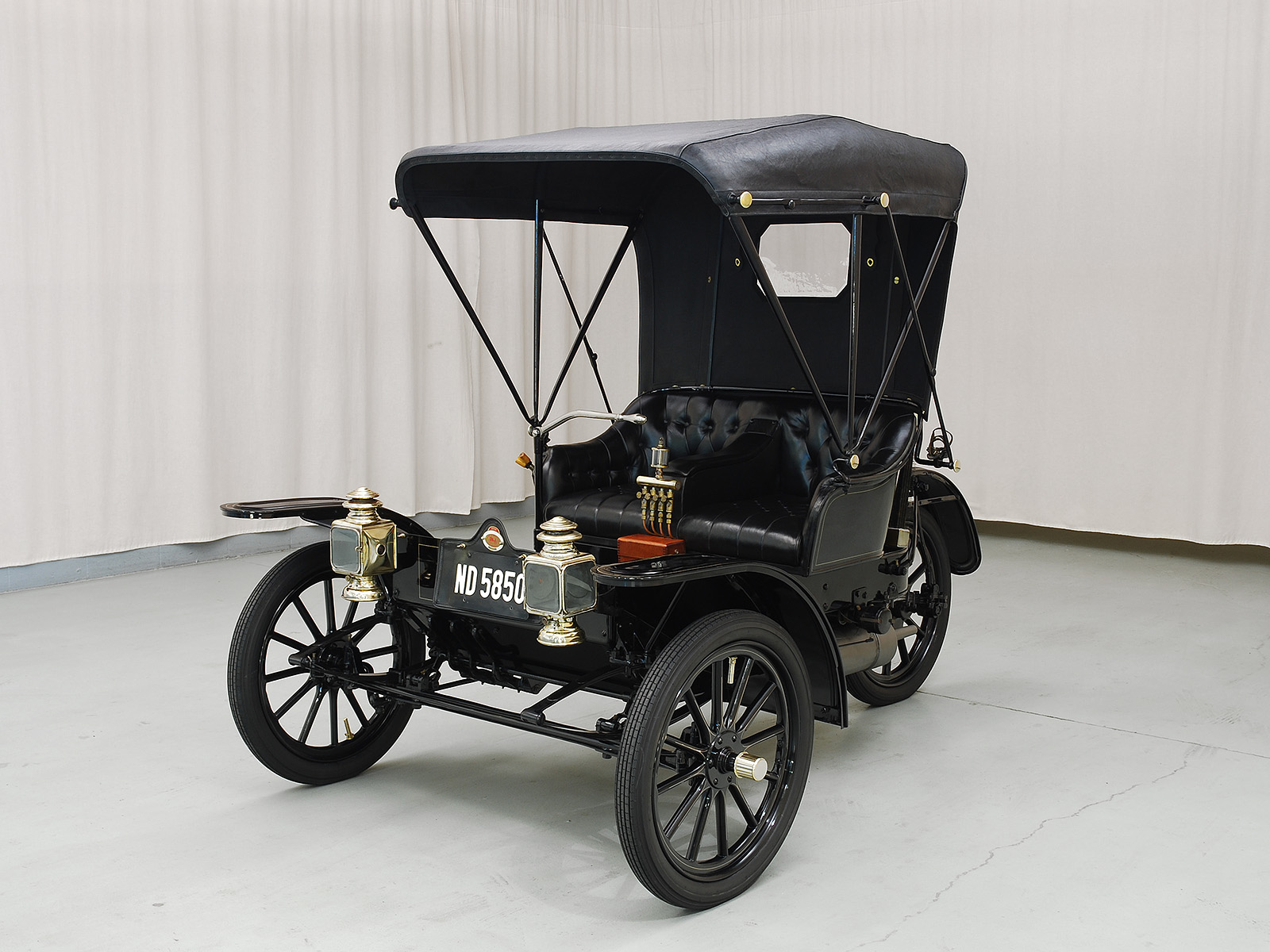
Carl Kelsey started selling cars off-and-on while in college in the early 1900s. Between 1910 and 1912 he built this, the Motorette. After spending a few years as a salesman for Maxwell, he started up the company again in 1920 and sold more traditional (read: four-wheeled) cars until 1924.

The car uses a mid-mounted flat-twin making 10 horsepower. The convertible top folds down, which gives this car a very strange appearance from behind. In all, about 200 Motorettes were built. This one has a meticulous restoration and is likely in nicer shape than when it was new.

I’ve posted prices for cars from this dealership before and got yelled at (by them). So I won’t tell you what they’re asking, but I will say it is right between $70,000-$80,000. In any event, I think you should buy it because it is very cool and looks like it would be a lot of fun to putter around in. You can find more here.

All-Original Stoddard-Dayton

1911 Stoddard-Dayton Model 11A Five-Passenger Touring

Offered by Bonhams | Philadelphia, Pennsylvania | October 7, 2013

1911 Stoddard-Dayton Model 11A Five-Passenger Touring

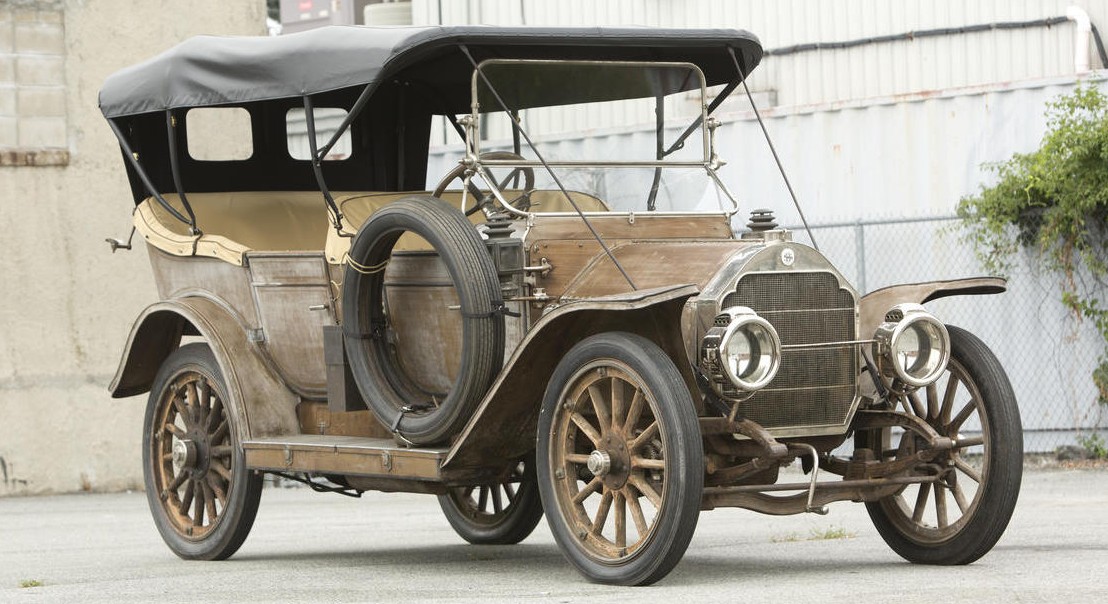
Stoddard-Dayton was one of the early bright spots on the American automobile landscape. The company was founded in Dayton, Ohio, in 1904 by Charles Stoddard using his family’s fortune acquired through various successful businesses. The cars were large, powerful and luxurious. Think Packard.

The company started using engines of their own design in 1907 and they won the first race held at the Indianapolis Motor Speedway in 1909 (prior to the Indy 500). This Model 11A Five-Passenger Touring uses a 40 horsepower 7.1-liter straight-four. By 1912, they would be offering huge 70 horsepower engines.

But 1912 was a bad year for the company – they were sold to become part of the U.S. Motor Company, which failed. It was saved for one year when Maxwell put the cars back into production for 1913, but they were too large and expensive to be successful.

This example is entirely original, which is incredible as it is 102 years old. Even the paint is original (even though it’s basically worn through around most of the car). It has the same tool kit that came with it in 1911 and the interior remains the same as well, albeit covered up for protection. This is an amazing automobile that should bring between $125,000-$175,000. Click here for more info and here for more from this sale.

Update: Sold $148,500.

1911 Lozier Touring Car

1911 Lozier Model 51 Seven-Passenger Touring

Offered by RM Auctions | Amelia Island, Florida | March 9, 2013

1911 Lozier Model 51 Seven-Passenger Touring

Lozier built big, expensive cars first in Plattsburgh, New York, and then in Detroit. They didn’t build many but the ones that they did make are majestic. They were some of the most expensive cars available in their day. This one cost a whopping $5,995 in 1911 – about $150 more than the price of the average house.

The engine is a 51 horsepower (hence the model name) 9.1-liter T-head six-cylinder. But it’s no ordinary 1911 car. This car was once in the Henry Ford Museum before being sold to a private collector in 1968. That collector, Ken Pearson, restored the car for the first time – but he upgraded it along the way. He wanted to be able to drive this thing across the country without worrying about reliability – so he rebuilt it “to modern tolerances.”

With only a few thousand Loziers built, they’re certainly rare. Finding one that has been restored to a state like this one is even harder to do. The restoration is older and has had “tens of thousands of miles” put on it since, but shows near-new. A luxury car through and through, this car should sell for between $400,000-$600,000. Click here for more info and here for more from RM at Amelia Island.

Update: Sold $1,100,000.

Update II: Sold, RM Sotheby’s Arizona 2016, $990,000.

Marion Bobcat

1911 Marion Model 33 “Bobcat” Speedster

Offered by Bonhams | Paris, France | February 7, 2013

1911 Marion Bobcat Speedster

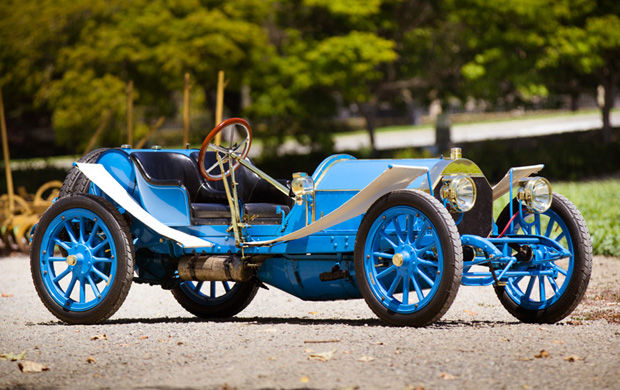
The Marion Motor Car Company of Indianapolis, Indiana, was founded in 1904. You might be thinking “This car sure looks like a Stutz Bearcat.” And you’d be right. Harry C. Stutz was the chief engineer at Marion until he left to form his own company in 1911.

And by that time, he had already designed the Model 33 (or “Bobcat”) Speedster for Marion. He changed some things on his original design and built the car under his own name as the Bearcat beginning in 1912. The idea was simple: power was available, but cars of the period were heavy and had virtually no performance attributes. So Stutz stripped away those big heavy bodies and invented the sports car. The Marion Bobcat was produced from 1911 until 1913 and Marion was out of business in 1915.

It’s a four-cylinder car and it has that super-cool “monocle” windscreen, with the third spotlight below it. These are legitimately rare cars and while a Stutz Bearcat will set you back about $300,000 – the prices for these cars are all over the place. I’ve seen one sell for  $165,000 and one sell for less than $30,000. This one was restored over 30 years ago and is expected to sell for between $26,000-$39,000, which seems like an absolute steal. Click here for more info and here for more from Bonhams in Paris.

Update: Sold $67,800.

The Only S.P.O. in Existence

1911 S.P.O. Raceabout

Offered by Gooding & Company | Monterey, California | August 19, 2012

S.P.O. was a French manufacturer that began selling cars in 1898. They jumped into the American market as soon as they could. The manager of their American operations was also a racing driver and S.P.O.s were seen on the beaches in the early days of speed trials. They also competed for the Vanderbilt Cup. And they inspired some American competition – namely Mercer, who were able undercut S.P.O. on price. By 1911, it was all over for the French firm.

This car, a Raceabout (the first time this was used to describe a car), has a 4.2-liter inline-4 rated at 24 horsepower. Ownership history is known from new and it is believed that this car actually competed in beach races in Maine in 1911 as well as sat on the stand at the 1911 Importer’s Exhibition at the Astor Hotel in New York. It was also part of the Harrah Collection (shocking!) until it was broken up and parted out in the 1980s (the collection, not the car).

This is the only S.P.O. in existence. So the buyer not only has a new toy, but also a responsibility to maintain and preserve something of which there will never be another. The car is gorgeous – a fine example of early sporting cars. I think the cloth “fenders” are fantastic. You won’t get another chance to purchase an S.P.O. Jump at it for $500,000-$650,000. For more information, click here. And for more from Gooding during the Pebble Beach festivities, click here.

Update: Not sold.

Rambler Seven-Passenger Touring

1911 Rambler Model 65 Seven-Passenger Touring

Offered by Gooding & Company, Amelia Island, Florida, March 9, 2012

The Rambler nameplate has a long and winding history that dates back to 1897 when Thomas B. Jeffrey built his first prototype automobile. Production started in 1902 and Rambler was instantly the second-largest American car company behind Oldsmobile. In 1914, Jeffrey’s son replaced “Rambler” with “Jeffrey” and the Rambler name disappeared for the first time. Jeffrey was acquired by Nash in 1916 and Nash re-introduced the Rambler as a Nash model in 1950. When Nash merged with Hudson to form American Motors in 1954, Hudson also shared the Rambler model. In the early 1960s Rambler became its own marque under the AMC corporate umbrella (Nash and Hudson were both unceremoniously killed by this time). Rambler disappeared in the U.S. for the second and final time in 1969 (it survived on dubious licensed built cars until 1983).

Well there’s your history lesson for the day. This particular Rambler is a Model 65 – the only one known to exist. It makes 45 horsepower from its 5.2-liter 4-cylinder T-head engine. But look at this car:

Look how large and imposing this thing is. This is the type of car you go out to a country house for a weekend in with six other people. Unpaved roads and grassy fields. And doing it before the Titanic sank – or at least before WWI. There are numerous examples in film to support my theory (A Midsummer Night’s Sex Comedy and Finding Neverland are two that come to mind. If you’re here from Twitter and wondering where the explanation is, well you’re looking at it).

I love big pre-WWI cars like this. In fact, I want an entire fleet of them. There are so many different makes to choose from. Collect them all. Whoever the next owner caretaker of this machine is or will be, I hope they enjoy it as much as I am in my head.

It was restored in 2008 and looks great. And for $290,000-$340,000, it should. To read more, click here and here for more on the auction.

Update: Sold $275,000.

Update: Sold, RM Sotheby’s Hershey 2019, $266,750.