Nine-Passenger C.G.V.

1904 C.G.V. Type 75 Nine-Passenger Tourer

Offered by RM Sotheby’s | Hershey, Pennsylvania | October 5-6, 2022
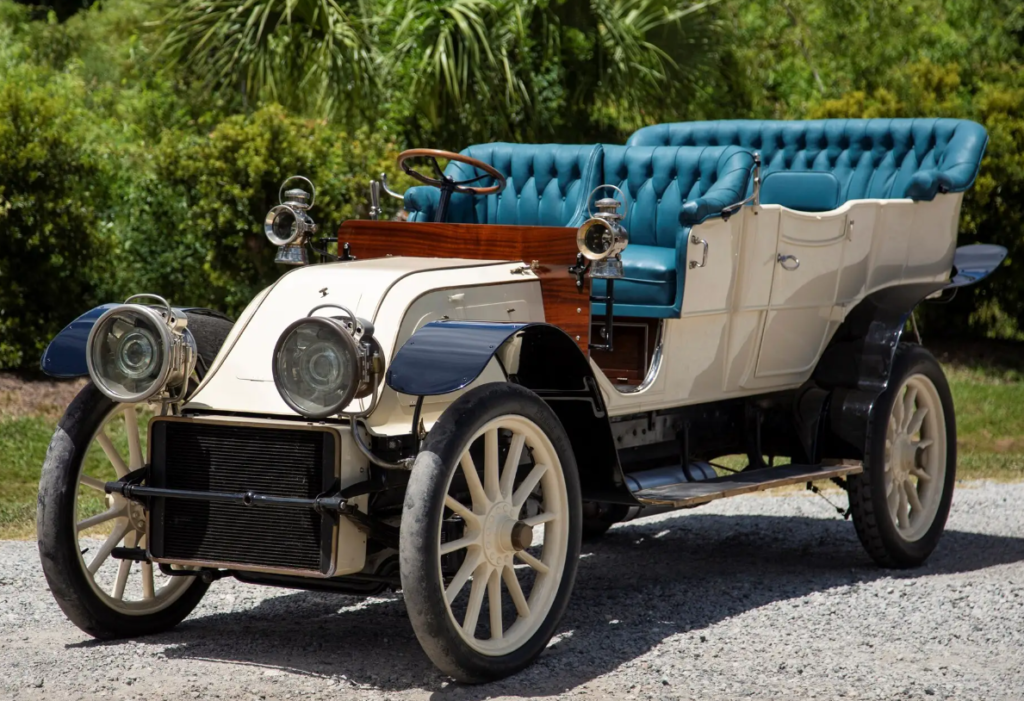
Photo Courtesy of RM Sotheby’s

Two days ago we featured a car called an S.G.V., which was built in Pennsylvania. Well this completely unrelated C.G.V. was built in France. The company was named for its founders, Fernand Charron, Leonce Girardot, and Emile Voigt, the three of which were racing drivers or racing cyclists.

The company built cars between 1901 and 1906, at which time Girardot and Voigt left the firm. Automobiles Charron continued on through 1930. This is a very large car for 1904, and it’s believed to be the only Type 75 that survives.

The auction catalog does not mention what this car would’ve been powered by when new (C.G.V. offered 9.8-liter and later 12.9-liter engines beginning in 1905), but it does say it was fitted with a 75-horsepower Seagrave fire truck engine circa 2000. It was refurbished in the late 2000s and can hit 70 mph in third gear. It has four gears.

C.G.V.s were borderline obscenely expensive when new, but no pre-sale estimate is available for this one. Click here for more info.

Update: Not sold.

S.G.V. Roadster

1912 S.G.V. Two Plus Two Roadster

Offered by Bonhams | Newport, Rhode Island | September 30, 2022

Photo – Bonhams

S.G.V. stood for the last names of company founders Herbert Sternberg, Robert Graham, and Fred Van Tine. The company was based in Reading, Pennsylvania, from 1911 through 1915. Van Tine designed the car, which was based around the ideas of the period Lancia. They were expensive cars in their day and were owned by people with names like Astor and Vanderbilt, not to mention far-flung royalty.

At their peak they were making about 40 cars per month. But not many are left. This one is powered by a 25-horsepower, 3.1-liter inline-four. It’s likely a Model B with some custom coachwork. It has known ownership history since new.

This is the first time, in 110 years, that this car has come up for public sale. It’s got an estimate of $75,000-$125,000. Click here for more info.

Bertone XK150

1957 Jaguar XK150 Coupe by Bertone

Offered by Bonhams | Knokke-Heist, Belgium | October 9, 2022

Photo – Bonhams

Jaguar’s XK120/140/150 series of cars are pretty distinctive, and this looks nothing like them. It actually looks like a Vignale-bodied Ferrari from the mid-1950s. But it is actually an XK150 under there.

The XK150 was built from 1957 through 1961 and was available in three factory body styles and with five different engines. This car was originally powered by the base 3.4-liter inline-six that was rated at 190 horsepower. It now has a 3.8-liter unit underhood. It is one of nine supplied as a bare chassis to coachbuilders, and it is one of three bodied by Bertone.

The car was previously on display at the Blackhawk Museum and was restored in 2020. It’s a one-off mid-1950s beauty with Italian style and British underpinnings. It has a pre-sale estimate of $800,000-$1,000,000. Click here for more info.

Update: Sold $862,500.

Allard J2R

1952 Allard J2R

Offered by Broad Arrow Auctions | Gloversville, New York | October 14-15, 2022

Photo – Broad Arrow Auctions

Allard is best remembered for its J2 and J2X sports cars. They were British-built and powered by American V8s. Styling incorporated cycle fenders, giving the car a near open-wheel look. J2s were popular race cars – even Carroll Shelby raced one back in the day.

The third and final iteration of the J2 was the J2R (sometimes called the JR), of which seven were built between 1953 and 1956. This car, as visible above, had more traditional 1950s sports car body work. Power in this example is provided by an overbored 5.4-liter Cadillac V8.

This was the last J2R built and is said to be the only one originally configured in left-hand drive (and was apparently the only one built with doors on both sides). Why it’s listed/titled as a 1952, I do not know. But it does have a pre-sale estimate of $400,000-$450,000. Click here for more info.

Update: Sold $527,500.

Riley Ulster Imp

1934 Riley Nine Ulster Imp

Offered by Bonhams | Chichester, U.K. | September 17, 2022

Photo – Bonhams

The Riley Nine is one of those British cars that pops up everywhere in a variety of forms. They were successful sports cars in their day, with the production run of the Nine lasting from 1926 through 1938. No less than 19 factory styles were offered in that period.

In 1927, Riley introduced a sporting, or speed, model called the Brooklands. It featured a low chassis and cycle fenders. Development continued through 1931, at which time they sort of hit a wall before shifting to a new sports model, dubbed the Ulster Imp, after the car’s success in the Ulster Rally. One such car also finished 13th at the 1934 24 Hours of Le Mans.

The Imp featured a short-wheelbase chassis and is powered by a 1.1-liter inline-four. It retained the sporty narrow body, tapered tail, and cycle fenders of its predecessor. Imp production lasted from 1933 through 1935. The cars were capable of about 75 mph. This particular car was purchased new by a one Freddie Clifford, who raced it at Ulster. It then was relocated to South Africa with its second owner. Competition history from that point includes:

  • 1937 South African Grand Prix – 2nd (with Buller Meyer)
  • 1938 South African Grand Prix – 3rd (with Ronnie Richardson)

The car was returned to the U.K. in 2008 for use in historic events. It’s now estimated at $185,000-$210,000. Click here for more info.

Update: Not sold.
Hadfield-Bean

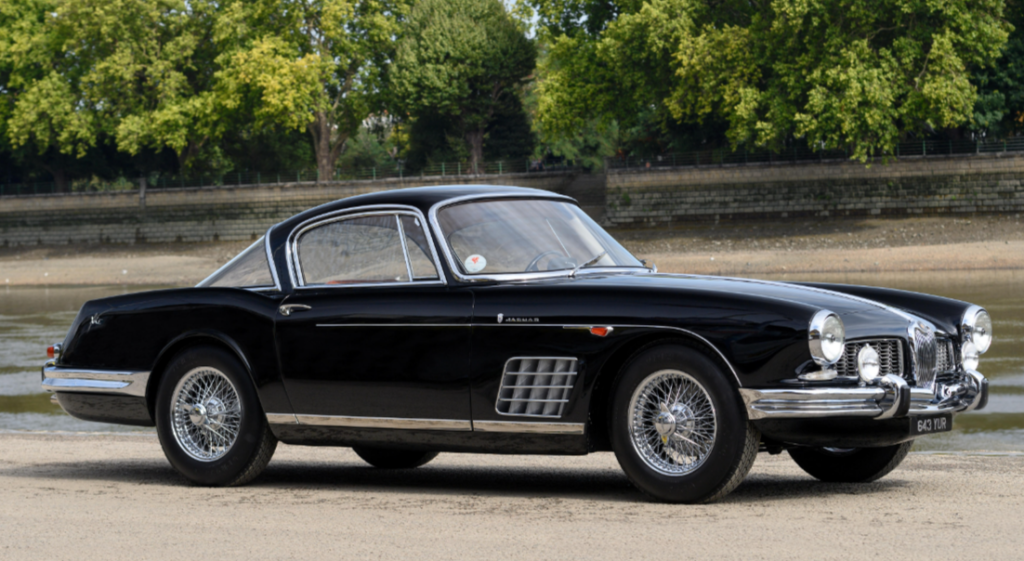
1928 Hadfield-Bean 14/45 Tourer

Offered by H&H Classics | Duxford, U.K. | October 19, 2022

Photo – H&H Classics

Bean Cars first entered the automotive industry as a parts supplier and started producing automobiles in the wake of WWI, which they had tooled up for and now needed a product to push out. So the first Bean cars went on sale in 1919.

They got up to speed quickly, selling a lot of cars for an upstart. But expansion was expensive, especially as the market slowed. Bean was bankrupt by the end of 1920. So in stepped Hadfields Limited, a steel company, among others, saving the company. A few years later debts had mounted again and Hadfields came to the rescue, this time getting a majority share of Bean as a result.

So from 1927, all Bean cars were sold as Hadfield-Bean, and the following year they launched the 14/45 (which I am pretty sure this is). Well, the cars were launched before they were sorted and it tanked the brand value because, well, they weren’t great. Passenger car production ceased in 1929 with commercial vehicles lasting through 1931.

The 14/45 was powered by a 2.3-liter inline-four, and this one has known history back to the 1930s. A restoration was completed in the late 1970s. The pre-sale estimate is $28,000-$32,000. Click here for more info.

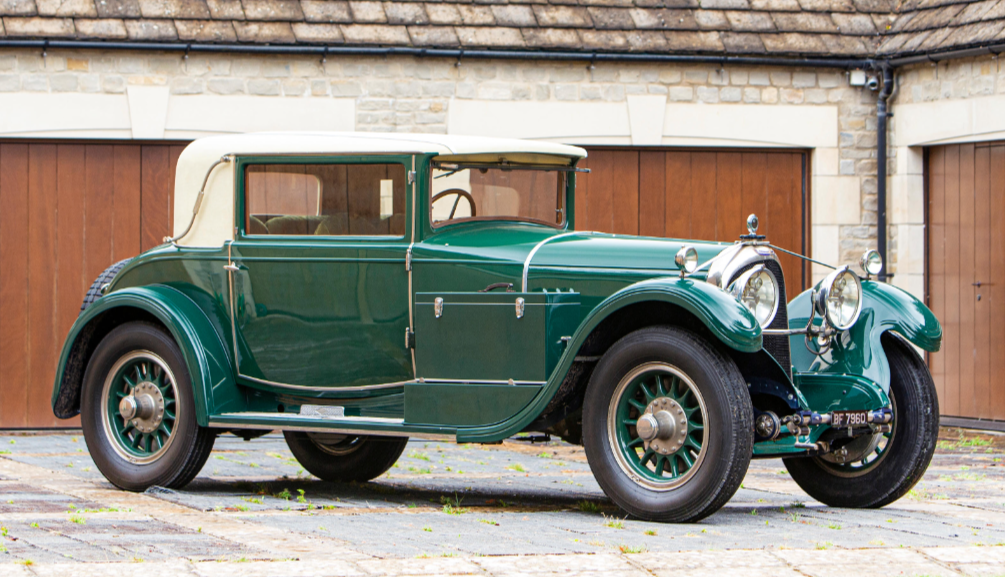
Voisin C5

1925 Voisin C5 Faux Cabriolet by Besset

Offered by Bonhams | Chichester, U.K. | September 17, 2022

Photo – Bonhams

Here’s something I did not know: Voisin’s “Cx” naming convention is in honor of his late brother, Charles. The first Voisin, the M1, was actually developed by Andre Citroen and purchased as a design by Voisin before being re-christened the C1.

Fast forward a few models and we have the C5, which was offered between 1923 and 1928. It is powered by a 4.0-liter Knight sleeve-valve inline-four that produced 100 horsepower and could push the car to 78 mph. More impressive is that the car had power-assisted brakes from the factory.

Carrosserie Besset of Annonay, France, provided the faux cabriolet coachwork with a fabric-covered fixed roof with fake landau bars. The story on this car is that it was discovered in France and restored in Switzerland “over a period of years” that is then listed as “1975-2006.” A period of years is perhaps an understatement. In any case, it now has an estimate of $115,000-$150,000. Click here for more info.

Update: Not sold.

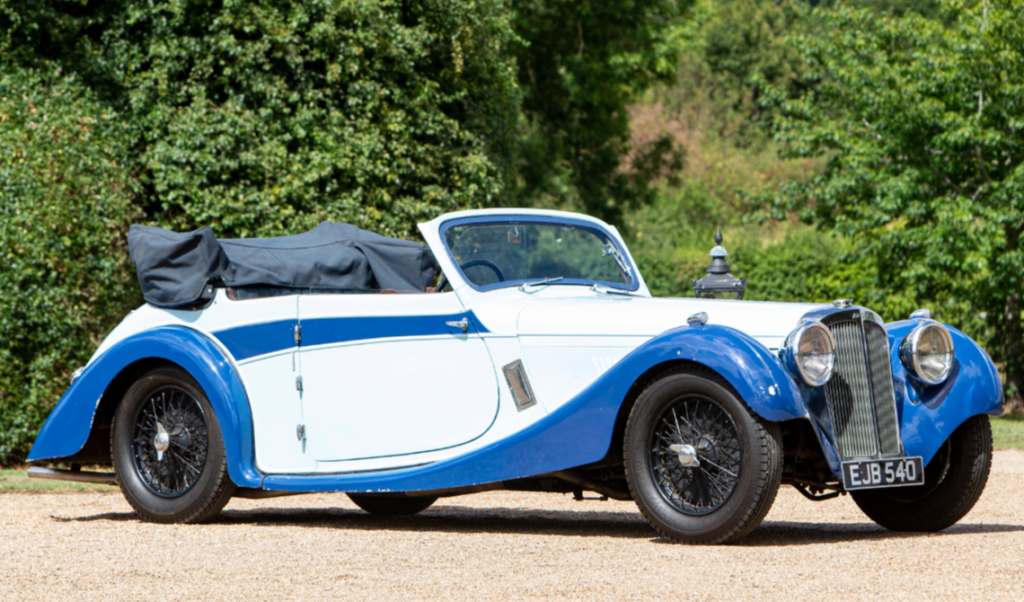
Atalanta V12

1938 Atalanta 4.3-Litre V12 Drophead Coupe

Offered by Bonhams | Chichester, U.K. | September 17, 2022

Photo – Bonhams

Atalantas are very good-looking cars that were produced in small numbers by Atalanta Motors of Middlesex between 1937 and 1939. They were designed by Alfred Gough, who had also designed Frazer Nash‘s overhead-cam engine. Most Atalantas were powered by four-cylinder engines, but a few left the factory with a 4.3-liter Lincoln-Zephyr V12.

This is one of those cars, and Bonhams has a V12 coupe in this sale as well, which is kind of incredible as only 20 Atalanta automobiles were built of all types. The Lincoln-powered cars made 112 horsepower, and all featured a four-wheel independent coil-sprung suspension, an X-brace tubular steel chassis, and 16″ hydraulic drum brakes at each corner.

The cars were quick, stylish, and expensive. Body work here was by Abbott of Farnham, and it was restored a while back. These are pretty great cars, on par with just about anything else coming out of England near the outbreak of WWII. The estimate is $140,000-$210,000. Click here for more info.

Update: Not sold.
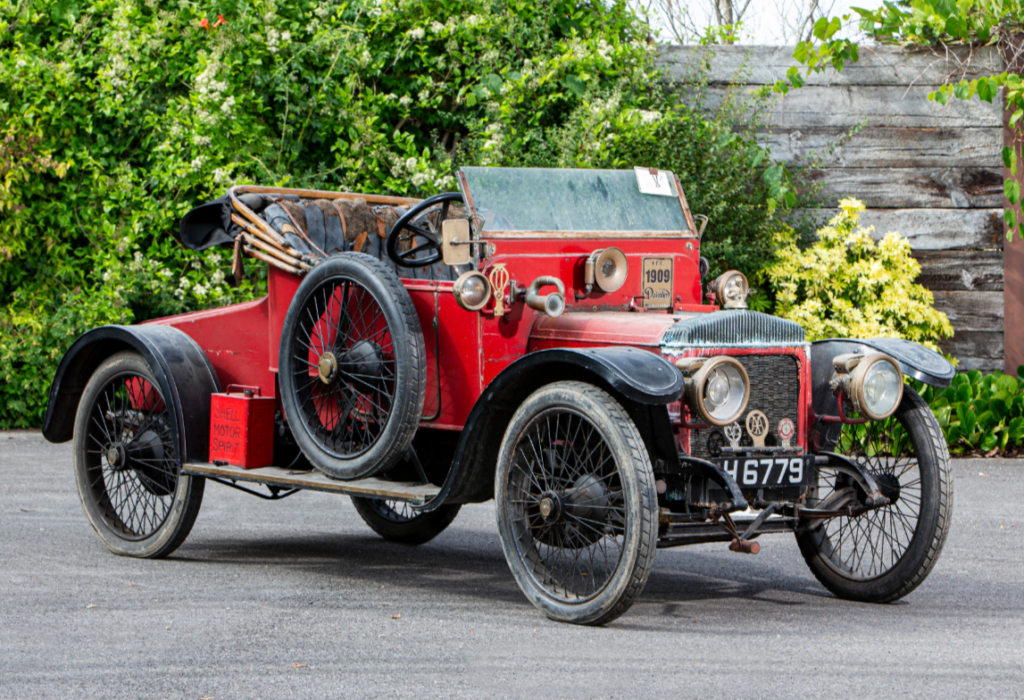
Daimler BT22

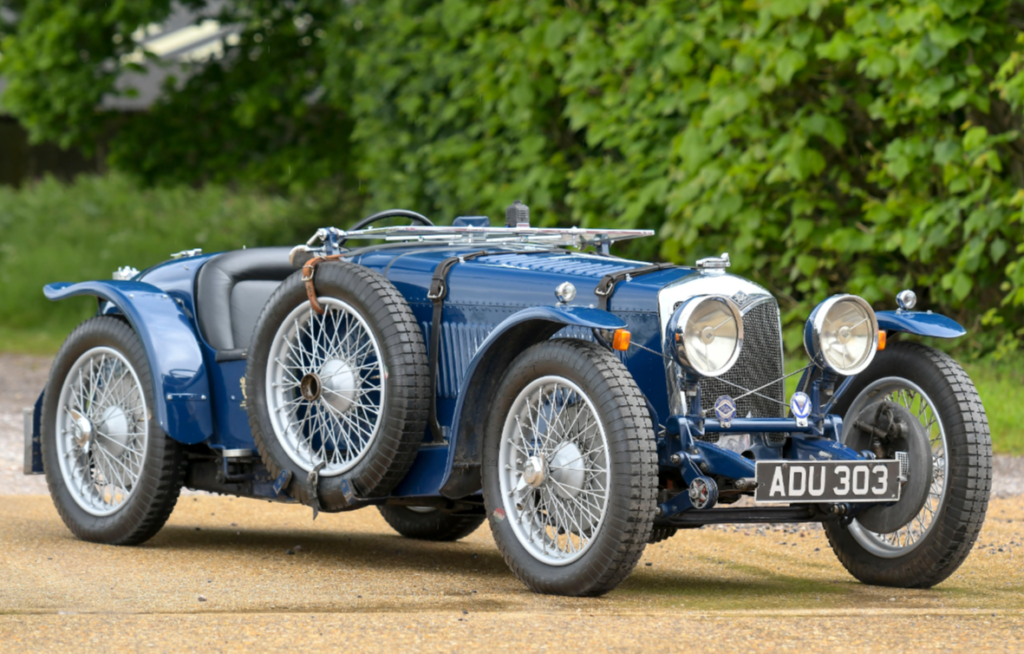
1909 Daimler Model BT22 Drophead

Offered by Bonhams | Beaulieu, U.K. | September 10, 2022

Photo – Bonhams

The Daimler Motor Company Limited was founded in 1896 to build German Daimler products under license in the U.K. As a marque, it outlasted its German namesake by about 100 years and is now owned by Tata along with Jaguar.

This car was bodied by Hewers Car Bodies Ltd of Coventry and is the oldest known Daimler powered by a Knight sleeve-valve engine, which in this car is an inline four that made about 23 horsepower.

The car was parked from the late 1920s until it was purchased around 1953 and recommissioned. It spent decades in a museum and hasn’t seen regular use in quite some time. Bonhams describes it as a restoration project. It’s a rarely-seen model and looks relatively complete. The estimate is $23,000-$35,000. Click here for more info.

Update: Sold $46,943.

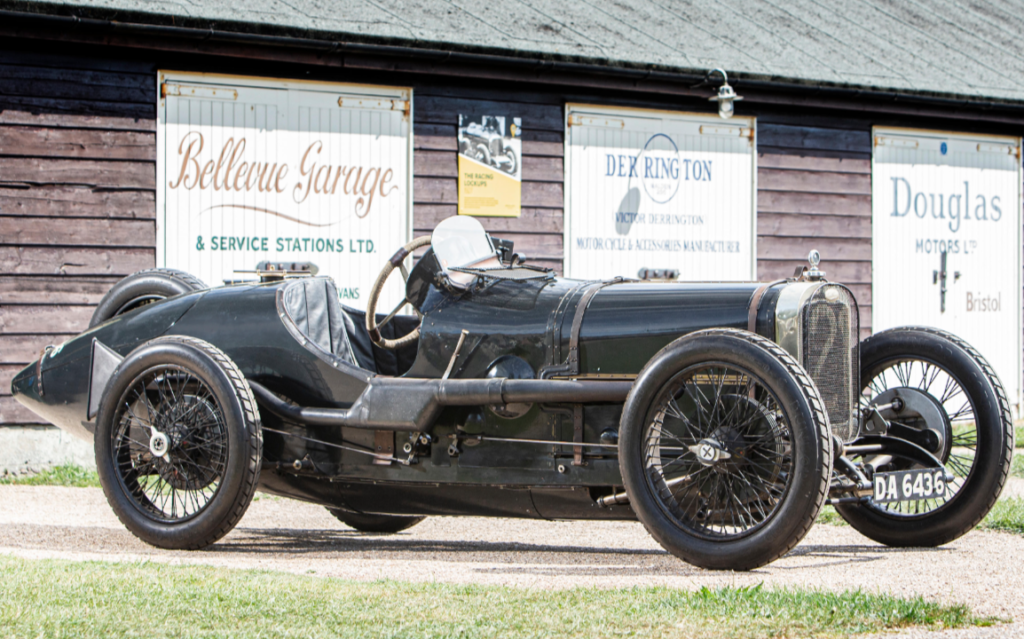
Sunbeam Grand Prix

1922 Sunbeam Grand Prix

Offered by Bonhams | Chichester, U.K. | September 17, 2022

Photo – Bonhams

Something I did not know: according to Bonhams, Sunbeam was Britain’s most successful Grand Prix entrant during the period in which this car was built. I don’t know what the means in terms of wins, but it sounds nice. The first Sunbeam cars were built in 1901, and they got pretty heavily into racing after WWI.

Four Grand Prix racers like this were built in 1922. It was designed to compete under the 2.0-liter rule with it’s inline-four displacing just that and making 88 horsepower. Two-seater body work was required, as was a tail that could extend beyond the rear axle by no more than 1.5 meters.

This is the prototype of the four 1922 Sunbeam GP cars and was initially road registered by driver Jean Chassagne before being put to use on track. It was raced as late as 1938 and was re-bodied by John Wyer in 1942. In 1973, it was restored. It now has an estimate of $805,000-$920,000. Click here for more info.

Update: Sold $686,929.