Venturi Transcup 260

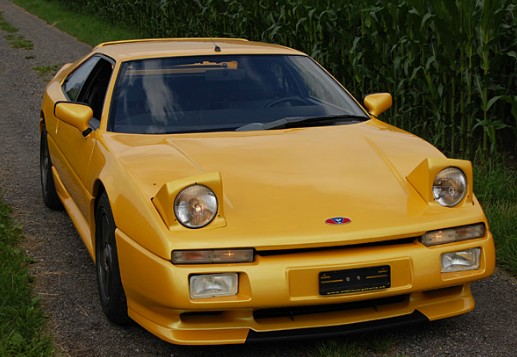
1991 Venturi Transcup 260

For sale at Oldtimer Galerie International | Toffen, Switzerland
1991 Venturi Transcup 260

MVS, or Manufacture de Voitures de Sport, was founded in 1984 by two former Heuliez engineers: Claude Poiraud and Gérard Godfroy. The name was changed to Venturi at some point and the Transcup series was introduced in 1991. There were five different Transcup models, all with different power ratings. This is the top of the line Transcup 260 model.

It uses a 2.9-liter (or 2.85-liter) turbocharged V6 making 253 horsepower – yeah, apparently Venturi rounded up. The car is very sporty looking and doesn’t look as old as it is – even Venturi’s earlier cars looked sporty and semi-modern. They’re quick too.

The seller says there were 128 of these built, but the language is a little choppy and I don’t know if they mean 128 Transcup cars total, or the Transcup 260 in particular. There aren’t many of either, that’s for sure. This one is a 70,000 mile car, which is a little scary and high for a supercar. Then again, it’s over 20 years old and comes with a service booklet. The price is $51,890. Click here for more info.

Nagant Berline

1918 Nagant Four-Cylinder Berline

For sale at Retrolegends | Valkenswaard, Netherlands

Tell me “Valkenswaard” isn’t the most fearsome sounding name for a northern European city. It sounds like a battle in Norse mythology involving a giant anthropomorphic bird and a giant invincible sword. Anyway, this 1918 Nagant has been on sale for a while, and I really like it.

Nagant was an arms manufacturer founded in Liége, Belgium in 1859. The name is probably most familiar to firearms types because of the famous Mosin-Nagant rifle that was put into use by the Russian Empire 1891.

Nagant wasn’t the only firearms manufacturer to turn to automobiles (BSA comes immediately to mind). Cars were introduced in 1900 and they were mostly licensed copies from other manufacturers. Later cars of their own design used high-revving (for the time) engines capable of up to 4,000 rpm. I’m unsure as to the power output of this car, but it may have the sidevalve 14/16hp engine introduced by Nagant in 1913.

These were known to be well-made, fast and highly durable cars. The company was acquired by Imperia in 1931 but production had wrapped up in 1928. Price is “available upon request,” which probably means it is too high, as it hasn’t sold in the years it has seemingly been sitting there. Click here for more info (well okay, less info, but it is the site where it is for sale).

1899 Hurtu

1899 Hurtu Dos-a-Dos

For sale by H&H Auctions | Appleton, England

Hurtu was among the earliest of the automotive pioneers. Founded in 1896, this 1899 Dos-a-Dos isn’t even their earliest model. The company started out in 1880 manufacturing sewing machines. They moved into machine tools and finally bicycles – the launchpad for many an early car maker.

Because my French is terrible (and I actually lived in France for a little bit), I always assumed this was pronounced phonetically. But, as always when it comes to foreign language, I was wrong. It’s French, so the consonants are extraneous. It’s pronounced “ooertoo” (or so says H&H).

Their first cars were Léon Bollée copies. In 1898 they switched to making Benz copies, which is what this happens to be. By 1900 they had their own, more contemporary, designs on sale. The marque lasted until 1930. This car’s engine is a 1.6-liter making 3.5 horsepower. The wood is believed to be original, although the dos-a-dos style seats have been redone (dos-a-dos referring to the seat that is in front of and facing the driver/operator).

About three or four of this type of Hurtu are known to exist. It has been in a Portuguese museum for some years but did complete the London-to-Brighton run in the last five years.  It has been excellently preserved and is ready to run. Price is unknown, but you can find out more here.

Stately Soviet Sedan

1978 GAZ Chaika M13

For sale at Hyman Ltd | St. Louis, Missouri

Russian cars are so weird. But in a really interesting way. The “marque” is usually associated with a particular factory, in this case it is GAZ – which roughly translates to “Gorky Automobile Plant.” It is located in Nizhny Novgorod, which, coincidentally, will be the name of my first-born child.

The Chaika (which kind of translates to “seagull”) was a car used by Soviet government officials – but not the really important ones (they got ZIL limousines). This was for your run-of-the-mill bureaucrats and field officers. You might be thinking “How is this a 1978? It looks like something from the mid-1950s.” Well you’d be right. After WWII, the U.S. government prodded Packard into licensing (or selling) their old body dies to the Soviet Union, presumably to appease them into not nuking us.

Well Packard did just that but Packard also went out of business in the 1950s. So the Chaika (Mark I or “M13”), which was produced from 1959 through 1981 was almost a direct copy of the 1955-1956 Packard Patrician, at least from the outside. The engine was a 195 horsepower 5.5-liter V8. It also used Russia’s first three-speed push-button automatic transmission (which was essentially copied from Chrysler). In 1977, the Chaika M14 was introduced and it was more of an original (and contemporary) design, at least for the time.

Chaikas are really rare – anywhere in the world, especially in the U.S. They were not mass produced by American standards – or anybody’s standards, really. And their limited market ensured not many would be built. It’s really interesting and a piece of Cold War history. This one is in really good shape and can be yours for $69,500. For more information, click here.

Vespa 400

1960 Vespa 400

For Sale at Hyman Ltd | St. Louis, Missouri

Vespa is the world famous scooter manufacturer that produces the classic design that has been popular among so many different groups of people since it went on sale in the late 1940s. They have been featured in many films over the years, but perhaps most famously in Roman Holiday with Gregory Peck and Audrey Hepburn. Sales took off after that and when I think “Vespa” I think someone roaring around the streets on a scooter outside the Colosseum in Rome.

Vespa is owned (and has been since its inception) by Piaggio, the Italian motorcycle conglomerate. In the late 1950s, Piaggio designed a small car and licensed the design to ACMA in France, who built the car as the Vespa 400. ACMA was independent of Piaggio, yet they were still badged as Vespas, which was a Piaggio trademark. While Vespa scooters are Italian, this Vespa car is French. Weird. In any case, ACMA put the car into production in 1957 but they closed up in 1962, a year after Vespa 400 production wrapped.

About 34,000 of these cars were built and this is as nice of one as you’re likely to find. It’s tiny but two people can fit inside. It has a folding fabric top and is powered by a 393cc straight-twin making 20 horsepower. It’s a two-stroke engine mounted in the rear, driving the rear wheels. See that weird looking thing on the front where the grille would normally be? That’s a sliding tray containing the battery.

This is a U.S. market car (it has a 3-speed transmission, other markets got 4-speeds). It will do 50 mph and can be yours for $31,500. For more information, click here.

Update: Sold, Mecum, Kansas City, December 2012, $22,500.

Kissel Gold Bug

1920 Kissel 6-45 Gold Bug Speedster

For Sale at Hyman Ltd | St. Louis, Missouri

Tracing the evolution of sports cars is fairly easy until you get back to about 1945. Cars of the Post-War sports car craze are easy to distinguish from more mundane automobiles. Trying to trace it back before the war gets a little trickier. Sure, there were race cars and specials and cars you could drive to Le Mans, race, and drive home. But as far as the earlier cars go, you’re looking at Genesis (or one of a few that qualify for that title).

The Mercer Raceabout and the Stutz Bearcat are two of America’s first sports cars. The Kissel 6-45 Speedster, nicknamed “Gold Bug” (due to it’s signature color) is the third. The Kissel Motor Car Company was founded by Louis Kissel in Hartford, Wisconsin in 1906. They built high-quality cars, trucks, and emergency vehicles. After WWI ended, they saw a market niche they could fill for the exciting decade to come. So in 1919 they introduced the Gold Bug Speedster and it was far and away their most popular model.

The low-slung two seater – with two additional seats that extend out of the body over the running boards for the crazy and/or brave – is powered by a 61 horsepower six-cylinder engine. Performance is sporty – thus it being known as an early sports car. Kissel closed shop in 1930 after producing some 35,000 vehicles. Only about 150 are known to exist today. This one can be yours for $159,500. For more information and photos, click here.

Here are some videos of a similar car:


1917 Abbott-Detroit

1917 Abbott-Detroit 6-44 Four-Passenger Roadster

For Sale at Hyman Ltd. | St. Louis, Missouri

The Abbott-Detroit Motor Car Company was founded in Detroit in 1909. Cars could be had with either four or six-cylinder Continental engines. This car uses a 3.7-liter straight-six making an estimated 44 horsepower. The body looks like a two-door, two-passenger roadster, but there are actually two seats directly behind the driver – a layout common in modern coupes, but not something you see too often in cars from the 1910s. Also, this car is listed as “bigger than it looks in the pictures,” which sounds about right when you see some of the detail shots.

Abbott-Detroit relocated to Cleveland in 1916 and was renamed the Consolidated Car Company. They badged their cars as “Abbott”s, although the 1917 model you see here is badged as an Abbott-Detroit. The company went bankrupt in 1918 and was liquidated the following year.

Abbott-Detroit cars were guaranteed for life, but unfortunately, the company had long since closed before this car was discovered and restored. It comes with a large amount of documentation including documents from the factory such as stock certificates and correspondence, which is pretty cool.. The asking price is $73,500. For more information, click here.

Update: Sold, Mecum Kansas City, 2014 for $35,000.

Duesenberg J-356

1932 Duesenberg Model J Tourster in the style of Derham

For sale at St. Louis Car Museum & Sales | St. Louis, Missouri

Ordinarily I wouldn’t feature a car on a Saturday, the day I normally reserve for auction results or, well, my day off. But this is a makeup post because two weeks ago I featured J-355, a car which had already been featured. I knew this car was for sale, and it was going to be skipped so I could feature that other car. So I felt dumb, and here we are.

This is a Model J that was constructed from pieces of other Duesenbergs. In total, three cars combined to make this one. A Willoughby Sedan originally sat atop this chassis and the engine came from a Murphy Convertible Sedan. Other parts came from a car that was once a Rollston Cabriolet. But it does have an actual Duesenberg engine, no. J-356.

The body is not original. It is one of a few built by a man named Ted Billings to an exacting standard in the style of a Derham Tourster. This type of Model J isn’t the most desirable, but it will get you in the ever-exclusive “I-own-a-real-Duesenberg” club. The cost of entry? $799,900. For more information, click here.

Update: Failed to sell at Motostalgia, Houston 2014.

Update II: Failed to sell at Bonhams, Greenwich 2015.

Schuppan 962CR Prototype

1992 Schuppan 962CR Prototype

For Sale at Coys | Richmond, U.K.

A couple of weeks ago (or perhaps months ago, the days have been flying by) we featured a Dauer 962 Le Mans, a road car variant of the dominant race car, the Porsche 962. This is a similar idea, although the two cars look quite different – and they should, as they were designed by two different people.

Vern Schuppan, an Australian race car driver who has competed in the Indianapolis 500 and Formula One, designed this car as a tribute to his 1983 24 Hours of Le Mans winning 962. The engine is a 3.3-liter twin turbo flat-6 pushing out about 600 horsepower – basically lifted straight from the race car.

It’s a serious supercar. Sixty miles per hour comes in 3.5 seconds on the way to 230 mph. The chassis and body were designed and built by Schuppan (unlike the Dauer, which were 962s converted for road use). The price when new was $1.5 million. This was the first one built, chassis number one. Funding for the project was pulled shortly after this was built and only five or six were built in total.

This is an extremely rare opportunity to purchase an extremely rare car with unbelievable performance that still holds up against even the most modern of supercars. You’ll never pass another one on the road. To see/read more, click here. Unfortunately, Coys isn’t listing an asking price.

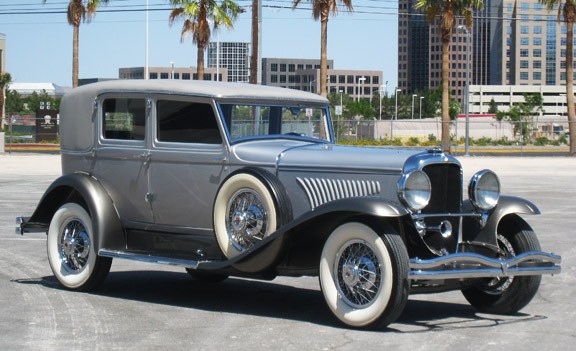
Duesenberg J-127

1932 Duesenberg Model J Sedan by Holbrook

For Sale at The Auto Collections | Las Vegas, Nevada

Since it is our intention to feature as many Model J Duesenbergs as possible on this site, there will come a point where there is nothing new left to say about each car. Yes, they all have the same 265 horsepower straight-eight engine. And they all have custom coachwork from various coachbuilders. Some of them have an interesting story or ownership history, which we’ll try to touch on.

Some are “just Duesenbergs” – if I can say that. This one is a sedan without any former celebrity owners. And since I’ve already exhausted just about everything I can say about this particular car, allow me to furnish the story with a brief history of Holbrook, the company the designed this sedan body.

Founded in 1908 by the merger of two small coachbuilders (one owned by company namesake Harry F. Holbrook, the other by Jack Graham), Manhattan-based Holbrook Company built bodies for all of the top firms of the period, including Rolls-Royce, Isotta-Fraschini, Pierce-Arrow, Cadillac, and of course, Duesenberg. At least three Holbrook-bodied Duesenbergs are known to exist. Harry Holbrook left the company in 1913 and started a competing company in 1927 while partnering with Henry Brewster, who had also left the company bearing his name (it didn’t last). Holbrook was re-organized in 1929, but it spelled disaster and the company was liquidated the following year.

So, how is it that a 1932 Duesenberg could have a body designed by a company that went out of business in 1930? Well, this chassis (#2350) was a 1932 model. It originally contained engine J-338 and a five-passenger sedan body by Derham. At some point, J-127 was installed and the body was switched to the Holbrook sedan you see here.

Price is not listed on the website but this car changed hands in 2004 for $240,000. It popped up later that year for $395,000. I’m sure the price has only increased since. You can find out more here.