Offered by Mecum | Jefferson, North Carolina | June 6, 2020
Photo – Mecum
Doubletake? The only difference between this car and the other Grand Sport is that it is a convertible. Admiral Blue paint with white stripes and red hash marks – meet a white soft top. This car also uses a 5.7-liter V8 making 330 horsepower.
The convertible Grand Sport was much rarer than the coupe, with just 190 built. It’s only covered 162 miles since new, which makes it essentially, well, new. You can read more about it here and see more from this sale here.
Offered by Mecum | Jefferson, North Carolina | June 5, 2020
Photo -Mecum
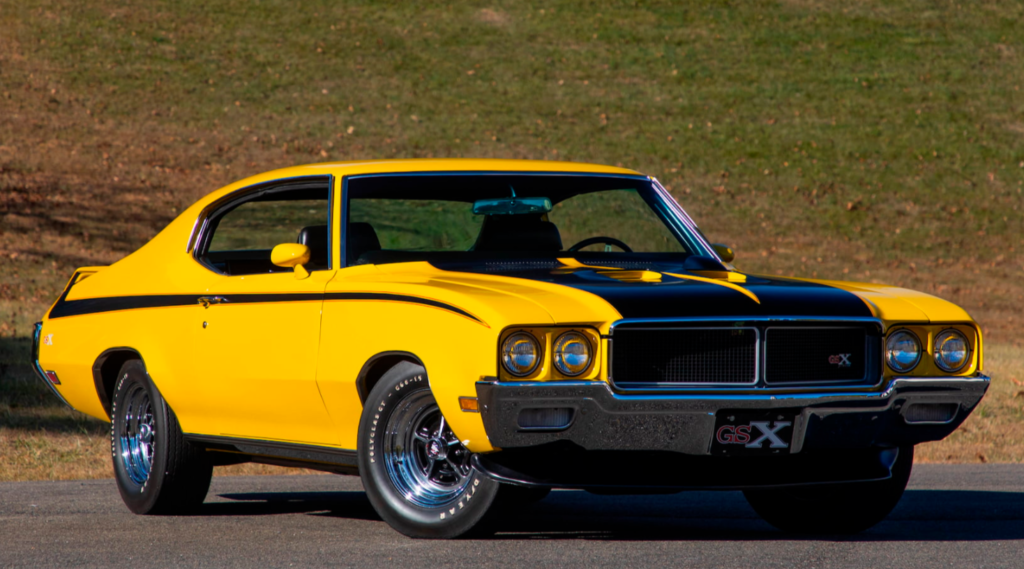
“GS” is Buick-speak for something sporty. It’s been applied to Regals, Wildcats, and Rivieras. In 1966, the Skylark Gran Sport became its own sub-model in the Skylark line. It was broken out as its own model in 1967 in GS350 and GS400 form.
In 1970, Buick updated the model line to base or 445 forms, and it continued in this form through 1972. In the middle of 1970, Buick added the GSX performance package as a $1,196 option on the Gran Sport 455. Equipment included a hood tachometer, a four-speed Hurst shifter, and a 350 horsepower, 445ci (7.3-liter) V8. Only two colors were offered, and this one is finished in Saturn Yellow.
This was the top Buick of the muscle car era, and it debuted right at peak muscle car time. It was sort of downhill after this. In fact, in 1971, the GSX was just an appearance package. This example is one of two offered at this sale (the other one is white). You can see more about it here and see more from Mecum here.
Offered by Mecum | Indianapolis, Indiana | June 23-28, 2020
Photo – Mecum
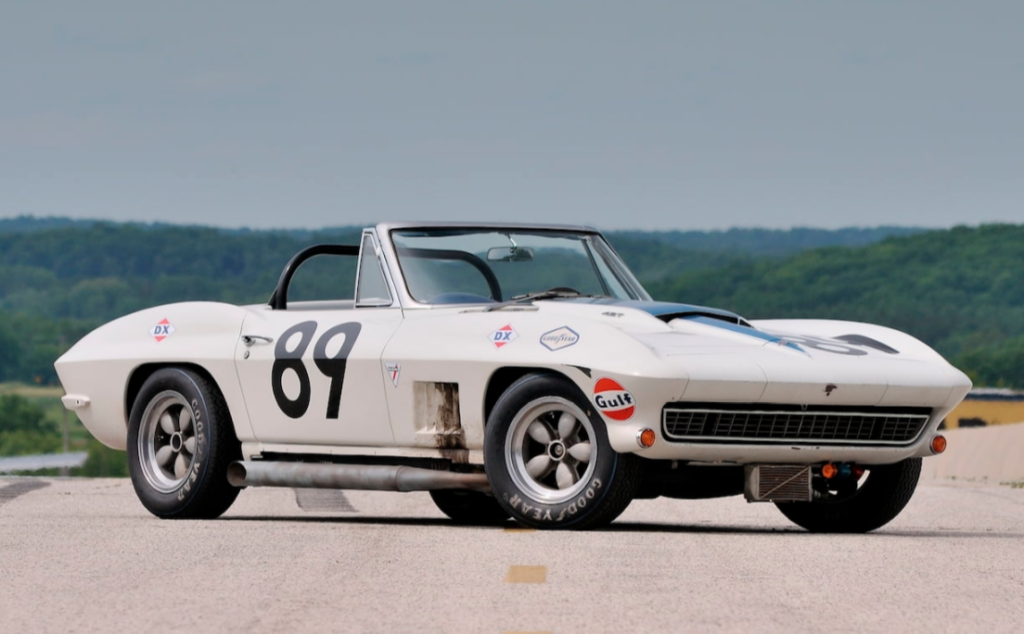
The legendary L88 Corvette was available from 1967 through 1969. That spanned two different generations of the Corvette, which means that 1967 was the only year you could have Chevy’s monstrous V8 in a C2 Corvette. Only 20 were sold that year, and I have no idea about the breakdown between coupes and convertibles.
The high-compression, 7.0-liter V8 was rated at 430 horsepower, even though the actual output was probably over 550. Unfortunately, the car was very expensive and required 103-octane fuel, which wasn’t all that easy to come by at your local service station in 1967. Of the 20 built for the model year, quite a few went direct to racing teams. After all, the car was essentially a race car that happened to be street legal. This one was raced, including at the:
1970 24 Hours of Daytona – 11th, 2nd in class (with Cliff Gottlob and Dave Dooley)
The car competed for eight years, apparently winning 150 races. It was purchased by Dana Mecum in 2013, and he’s now letting it go, assuming it hits what is sure to be a stratospheric reserve (c’mon Mecum, have a little faith in your own event and go no reserve!). Click here for more info and here for more from this sale.
Offered by Mecum | Indianapolis, Indiana | June 23-28, 2020
Photo – Mecum
The first Shelby Mustang was the 1965 GT350. It was also the best Shelby Mustang. It has those classic first-gen looks and isn’t as bulky looking as later models. Plus, they had racing pedigree. But most of those cars were hardtops.
Not this one. Yes, they built convertibles, but just a few of them. Only four were produced for 1966, and this was the first one. It’s an ex-factory test car, and the other three were more-or-less prototypes as well. It was apparently the only first-gen GT350 with gold stripes that wasn’t a Hertz car.
The GT350 is powered by a 4.7-liter V8 rated at 271 horsepower. This one wears an older restoration and will be going under the hammer at Mecum’s Indy sale, which is currently scheduled for June. Click here for more info and here for more from this sale.
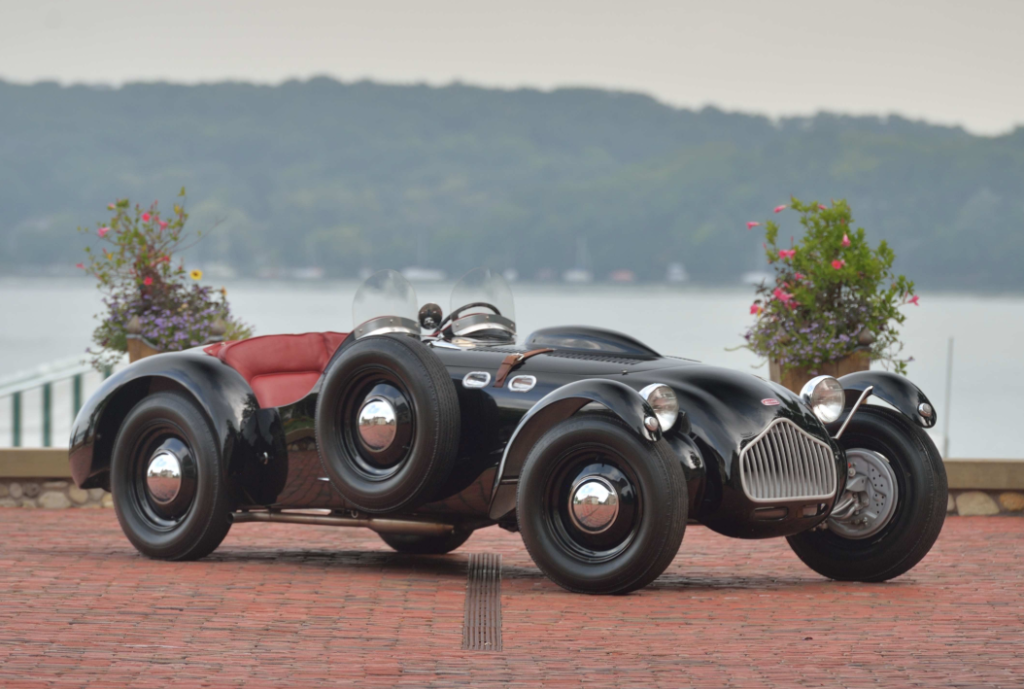
The J1 was built between 1946 and 1947 and was quickly followed by the J2, which was a two-seat aluminum-bodied roadster with inboard rear brakes, a coil-sprung front suspension, and a big American V8. Engines from different manufacturers were used, and this car has a 5.4-liter Cadillac V8. This combo made for quite the performer. J2s raced at Le Mans. One of their drivers happened to be Zora Arkus-Duntov.
Only 90 were produced between 1950 and 1952. This particular car was the final example produced before Allard moved on to the J2X. It was driven in a few SCCA events by an aspiring young racer named Carroll Shelby who would go on to do other things. This car has been restored and is now offered by Mecum. Click here for more info.
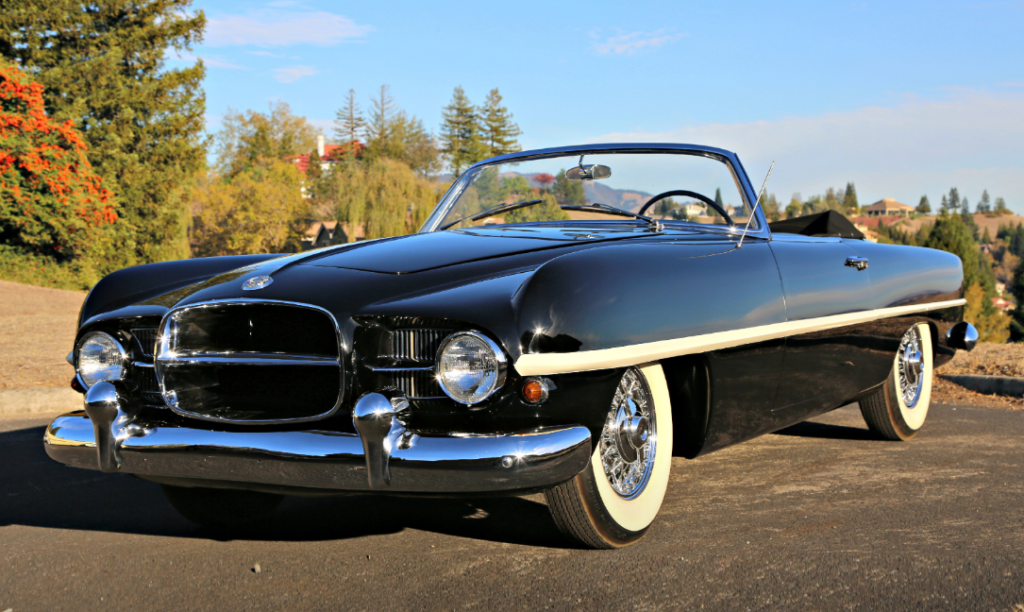
Here’s another classic Dodge concept car from the mid-1950s. This was the final car in the Firearrow series. To recap, the first Firearrow was a mockup, the second was a beautiful convertible, the third was a coupe, and this, the fourth, was a production-ready car that Chrysler decided not to move forward with.
It’s powered by a 150 horsepower, 3.9-liter Red Ram Hemi V8. Like the Firearrow II, it was styled by Virgil Exner and produced in Turin by Ghia. It has a black-and-white checkered interior, which is fantastic. Imagine if Dodge had actually built this and given themselves a legitimate, stylish Thunderbird and Corvette fighter.
This car has changed hands before (it sold for $1.1 million at Barrett-Jackson in 2007) and has been in the Blackhawk Collection for years. And now Mecum appears to be offering it on their behalf. Click here for more info.
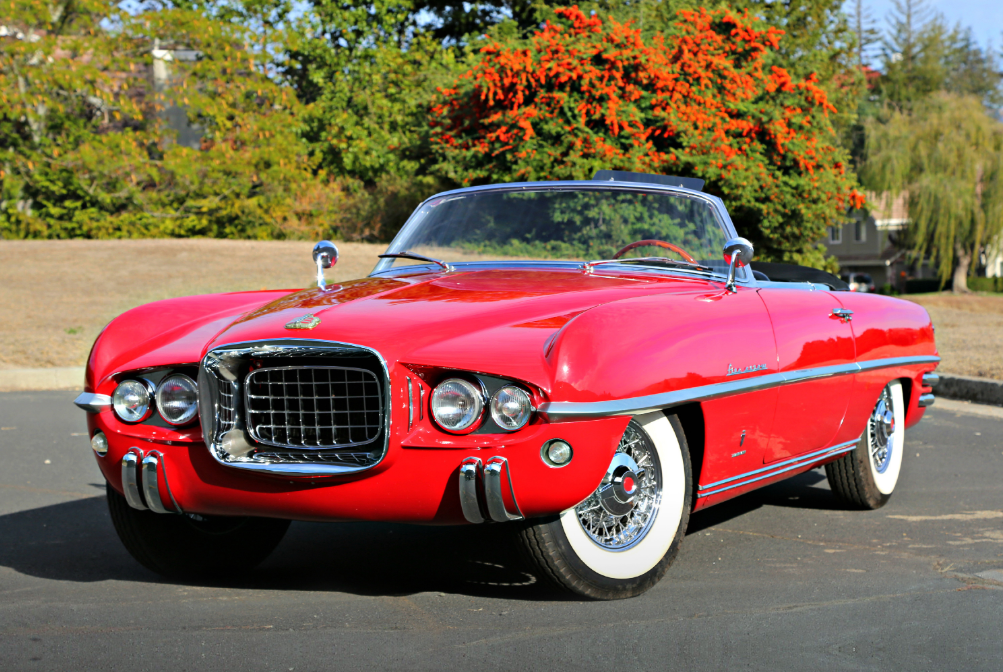
Dodge debuted a series of Firearrow concept cars in the 1950s that showcased their Hemi V8s and their relationship with Ghia in Italy. Only two of the four Firearrow cars were convertibles, including this one.
It’s powered by a 150 horsepower 3.9-liter Red Ram Hemi V8. Not the most powerful thing in the world, but proof that Dodge was trying to move into a more performance-oriented territory.
Styling is by Virgil Exner, and the body was built in Turin by Ghia. The car was shown all over the U.S. in 1954, and it marked the first running, driving Firearrow, as this car’s predecessor was just a static model. This Jet Age concept car is fully usable, and it is for sale by Mecum/the Blackhawk Collection. Click here for more info.
Does this look like a Dual-Ghia to you? Well if it does, that’s because it essentially is. Chrysler had a relationship with Ghia during the 1950s that led to some fantastic concept cars, including this. But Chrysler passed on putting this one into production.
So in stepped Gene Casaroll, a Detroit-area businessman, who arranged to put it into production as the Dual-Ghia. The Firebomb remained a one-off Chrysler concept powered by a 270 horsepower, 5.1-liter V8. This car is also the reason some people refer to the Dual-Ghia as the “Dual-Ghia Firebomb,” which is not accurate.
The car has been hanging around the Blackhawk Collection for years and is now offered for sale as part of Mecum’s “Gallery,” alongside quite a few other Blackhawk cars. You can see more about it here.
Offered by Mecum | Houston, Texas | April 2-4, 2020
Photo – Mecum
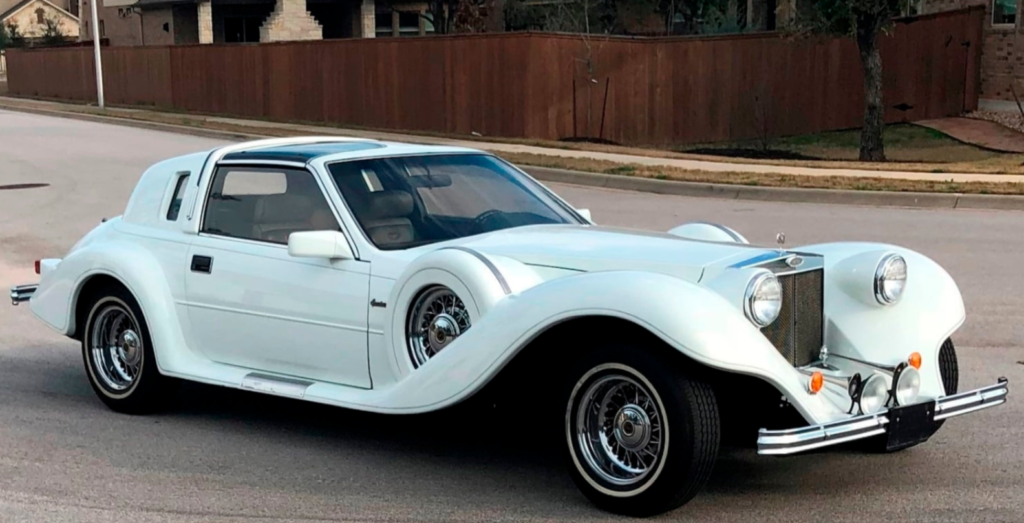
The Spartan was initially produced by Spartan Motors of Santa Ana, California, in about 1983. They later relocated to San Marcos, California, and became the Spartan Motorcar Company. In 1998 – yes the company was still around in 1998 – production was shifted to the Table Mountain Rancheria, an Indian reservation in Friant, California. They wanted to keep building them. It is unknown if they were successful.
While the initial Spartan was based on the Datsun 280ZX (and could be purchased at Datsun dealers, which is insane), the Spartan II was based on the Z31 Nissan 300ZX. It features a 3.0-liter V6 that made 160 horsepower when new.
It’s a polarizing car, I know. But these are one of the more common neo-classics. They were liked enough when new that this company was around for nearly 15 years. Go out and get you one! Click here for more info and here for more from this sale.
Offered by Mecum | Indianapolis, Indiana | May 12-17, 2020
Photo – Mecum
Frank Kurtis built some spectacular race cars in the 1950s, including this 500H. It was from the later years of Kurtis Indy Roadster production. I’m not really sure how many were produced, but if there were multiple, they were probably built between 1958 and 1960. That’s when they were campaigned.
This car is powered by a 252ci (4.1-liter) Offenhauser inline-four. The Kurtis-Offy was a nearly unbeatable combo at the Brickyard in the ’50s. The competition history for this car includes:
1958 Indy 500 – 23rd, DNF (with Johnny Tomson)
1959 Indy 500 – 7th (with Duane Carter)
1960 Indy 500 – 22nd, DNF (with Don Freeland)
Looking at a bunch of old Indy box scores, it’s possible that this was the only “H” example built. It appears to be the only one to run the 500. You can see more about this car here and more from Mecum here.