Alldays & Onions

1908 Alldays & Onions 10/12 HP Four-Seater Swing-Seat Tonneau

Offered by Bonhams | Beaulieu, U.K. | September 7, 2013
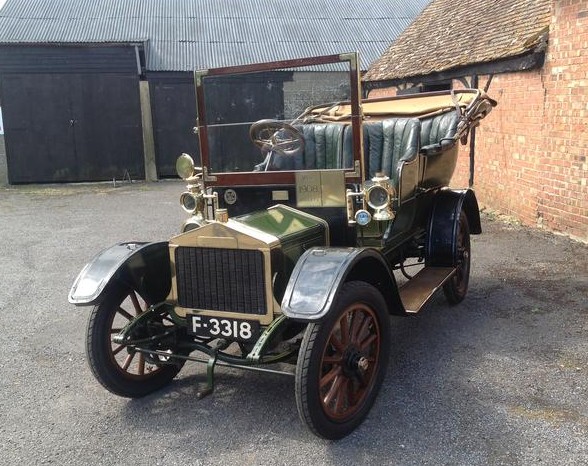
1908 Alldays & Onions 1012 HP Four-Seater Swing-Seat Tonneau

Of all automobile manufacturers, Alldays & Onions has one of the strangest names. You can trace its roots back farther than the merger of two engineering companies in 1889: to Onions (founded in 1650 by a Mr. John Onions) and William Allday & Co. (founded in 1720 by, well, William Allday). When combined, they became a well-known blacksmith equipment and pneumatic engineering company based in Birmingham.

They built their first car in 1898 and by 1918 the company’s name had changed to Enfield-Alldays. This model was introduced in 1905 and it was Alldays & Onions’ most successful model. It uses a 1.6-liter twin-cylinder engine making 10/12 horsepower.

The original owner and registrant of this car is known (it was first registered in 1909). It’s post-WWII history is more or less known. It was “sympathetically” restored sometime prior to 1987 but was still described as “highly original” when it was sold in ’87. It has spent a good deal of its life in private collections not having seen much use. It has been prepped prior to this sale and is usable. It should sell for between $44,000-$50,000. Click here for more info and here for more from Bonhams at the National Motor Museum.

Update: Sold $68,077
Checker Aerobus

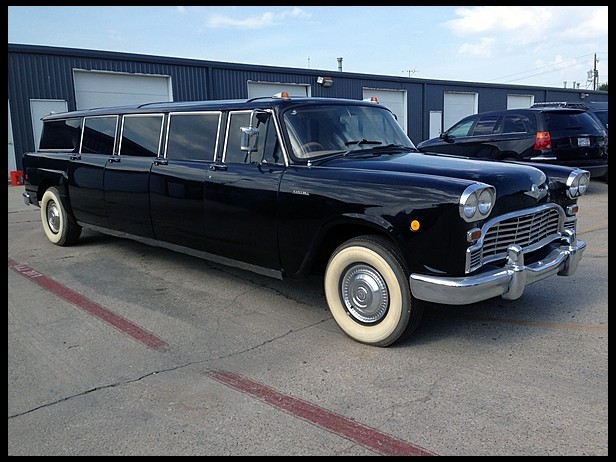
1969 Checker Aerobus

Offered by Mecum | Dallas, Texas | September 5, 2013

1969 Checker Aerobus

So this isn’t technically a bus – but it is rather lengthy. Checker is an interesting marque because they lasted a lot longer than everyone probably thinks – and most people don’t even remember they existed at all off the top of their head anyway. That, and they built basically the same lone model for over 20 years.

The Checker Marathon was introduced in 1960. It was the passenger-car version of the Checker taxi that was the go-to taxicab before the Crown Vic took over. The car remained in production, essentially unchanged, until 1982 when Checker ceased automobile manufacture. Did you remember that there was this “other” American automobile company producing sedans in the early-1980s? I bet you didn’t.

One step beyond (or many steps beyond, depending on how you look at it) the simple four-door Marathon was this, the Checker Aerobus. It was designed as an airport shuttle and I guess it would have been successful, as it seated as many as 15 people. They were available beginning in 1962 and could be had in two different wheelbases. This is the longer wheelbase that has eight side-mounted passenger doors. Which is a little ridiculous. I’ve always considered this the road-going cousin of those stretched golf carts you see in hospital parking lots.

The engine is a 5.7-liter Chevy V-8 making 200 horsepower. Non-taxi Checkers (although most road cars have since been painted in taxi livery) are extremely few and far between. The Aerobus is infinitely rarer. Only 3,568 were built by the time production ended in 1977. This one has a custom interior, but it’s still super cool. There are two other interesting Checkers in this sale. Read more here and check out the rest of Mecum’s Dallas lineup here.

Update: Failed to sell (high bid of $24,000).

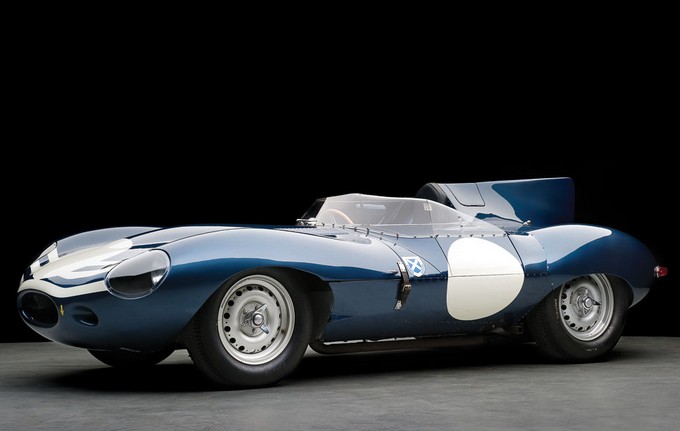
D-Type Jaguar

1955 Jaguar D-Type

Offered by RM Auctions | London, U.K. | September 8-9, 2013

1955 Jaguar D-Type

The Jaguar D-Type is one of the all-time classics. It comes from the Golden Era of Le Mans competition – the mid-1950s. D-Types, while a descendant of the earlier C-Type, look radically different from just about everything else on track in those years. That big fin was mounted at the rear for stability while it blasted down the Mulsanne Straight. It uses monocoque construction and a lot of aluminium.

The engine is a 3.8-liter straight-six pushing out in the neighborhood of 300 horsepower. Production began in 1954 with a debut at the ’54 24 Hours of Le Mans. Production continued through 1957 with road-going versions (called XK-SS) built as well. This particular example was a works tester from the start. It was the first of five long-nose cars built by the factory in 1955. It didn’t race at Le Mans that year (it was the backup car) but was campaigned by Jaguar on at least two occasions (both were retirements).

In 1957, it was sold to Ecurie Ecosse and they ran it all season. Some of it’s racing history is as follows:

  • 1957 1000km Nürburgring – 11th (with Ivor Bueb and Jock Lawrence)
  • 1958 12 Hours of Sebring – 61st, DNF (with Bueb and Ninian Sanderson)
  • 1958 1000km Nürburgring – 34th, DNF (with Bueb and Sanderson)
  • 1958 24 Hours of Le Mans – 54th, DNF (with Sanderson and Lawrence)

There were many more races, but those are the biggest. Later in ’58, it was sold into privateer hands and raced in more minor events. In 1963 it was crashed in destructive fashion and had to be sent to Jaguar for a new frame (from a Le Mans-winning D-Type, which it has today). It was used as a road car in the mid-to-late-60s. It’s been rebuilt a few times over its life but it looks good now and has both successfully and unsuccessfully competed in historic events.

Of old race cars, this is one of the big ones. It’s a must-have for serious collectors (I think) and they are exceptionally rare and almost never come up for sale. RM is selling another one in Monterey with an estimate between $4,000,000-$5,000,000 – but it was not a Jaguar factory team car nor a long-nose example. This one has an estimate between $8,600,000-$10,100,000.

Only 11 long-nose variants were built of the total of about 71 D-Types built (not counting XK-SS). 18 of the 71 were factory team cars. You can read more here and see more from RM’s Mercedes-heavy London sale here.

Update: Not Sold. High bid of $6,292,000.

S/N: XKD 504.

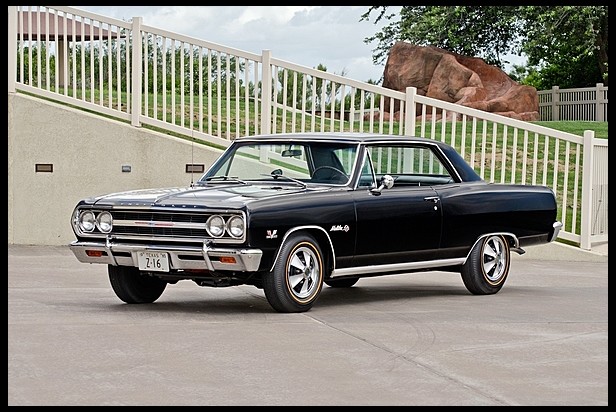
Chevelle Z16

1965 Chevrolet Chevelle Z16

Offered by Mecum | Dallas, Texas | September 7, 2013

1965 Chevrolet Chevelle Z16

The Chevrolet Chevelle was introduced in 1964 to go head-to-head with Ford’s Fairlane. But the muscle car era inadvertently got in the way and the Chevelle became on of the most sought-after muscle cars of the era and the Fairlane disappeared into history.

While Pontiac and Oldsmobile had muscle car offerings in 1964, Chevrolet was sort of left behind. But they changed that in 1965 when they took the Chevelle and added $1,501 worth of goodies to it and called it the “Z16” (it was an optional performance package). What did that package include? How about the Corvette’s 396/425 V-8 (that’s 6.5 liters for those of you playing at home). But because the Corvette was the revered “top dog” – they had to under rate the Chevelle’s horsepower to 375.

They also gave it bigger brakes, an upgraded suspension, and better steering. It was basically an SS 396 on steroids. Chevy only built 201 of them and this is one of three factory black/black cars. The value of these cars has definitely been on the rise – you’re looking at about $150,000 for this car. Check out more info here and more from Mecum here.

Update: Sold $200,000.

A Classic Bus

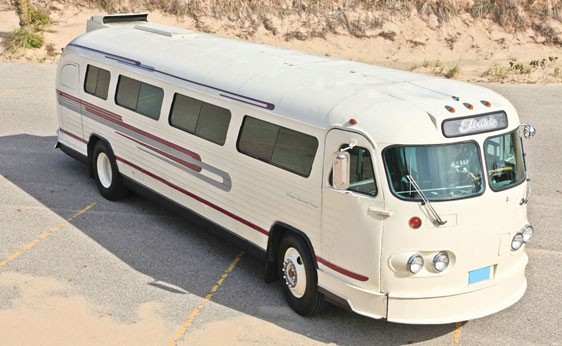
1960 Flxible Starliner

Offered by Auctions America | Auburn, Indiana | August 29-September 1, 2013

1960 Flxible Starliner

So we just had two weeks of multi-million dollar feature cars. Yesterday was a bunch of farm equipment. And now a bus? Hear me out: a few months ago I had this idea that collecting buses would be really fun and interesting. Buses built prior to say, 1970, have really cool lines and designs. They are rolling examples of Americana.

So if you ever see a GM Scenicruiser come up for auction, you can count on me featuring it because that is my dream bus. Yes, I have a dream bus. Anyway, this bus was built by Flxible (yes, the “e” is missing on purpose – it was easier to trademark). In the 1950s, the company built some of the most classic American bus designs.

The Starliner was an intercity coach built from 1957 through 1967. 1960 was the first year for the flat-roof (earlier models had a window on the raised part of the back half of the roof). The engine is a rear-mounted (check out that giant air scoop on the back) 4.7-liter Detroit Diesel straight-four making 160 horsepower.

This bus is offered as “partially-restored” and there are a few detail items missing, but for the most part it is complete and is entirely usable. I can’t imagine how long it takes to restore a bus due to sheer size and especially one with intricate details. On the plus side, the interior is bus-like and has not been converted to a motorhome. Only 276 Starliners were built in 10 years of production, making them pretty rare. I have no idea what this should bring at auction, but I’m very interested because I still believe having an old bus like this would be really fun and interesting. Click here for more info and here for more from Auctions America in Auburn.

Update: Did not sell (high bid of $14,000)

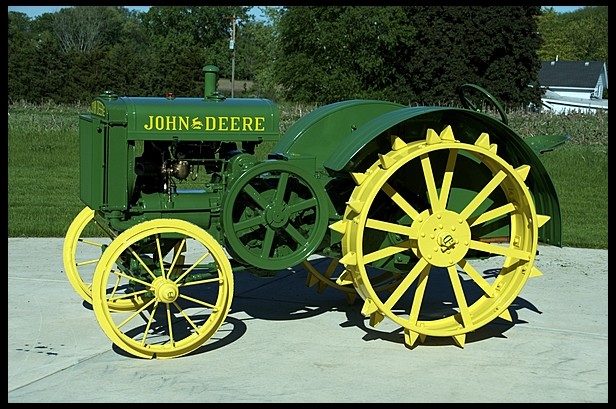
John Deere D

1924 John Deere D

Offered by Mecum | Walworth, Wisconsin | August 8-10, 2013

1924 John Deere D

Photo – Mecum

John Deere is the most famous of all tractor manufacturers with their iconic green and yellow paint scheme. The company, which is still technically Deere & Company, can trace its roots directly back to its founding by John Deere in 1837. Here’s some info on the D model:

Engine: 7.6-liter two-cylinder. About 27 horsepower.

Production: about 160,000.

Produced: 1923-1953.

Update: Not sold, high bid of $42,000.

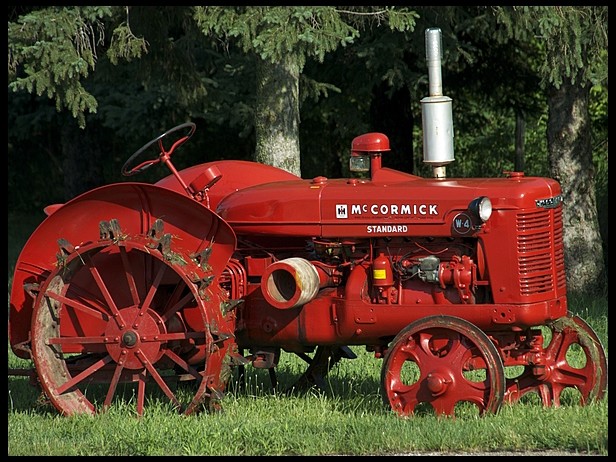
1948 McCormick-Deering W-4

1948 McCormick-Deering W-4

Offered by Mecum | Walworth, Wisconsin | August 8-10, 2013

1948 McCormick-Deering W-4

Tractor collectors are serious and the market for them is strong. They are finally getting the respect in the collector vehicle world that they deserve. That said, I’m not an expert on tractors – I know very little about them. I thought I’d pull some tractors out of their catalog to feature just as something cool and different. I picked ones that I thought were rare and/or interesting. I’ll give you some specs, but won’t go into too much detail.

First up is this 1948 McCormick-Deering W-4. McCormick-Deering was a brand produced by International Harvester. The brand was around from 1923 through 1948. The W-4 was also sold as the Farmall H.

Engine: 2.5-liter straight-four. 23 horsepower.

Production: 24,377.

Produced: 1939-1948.

Update: Not sold, high bid of $2,000.

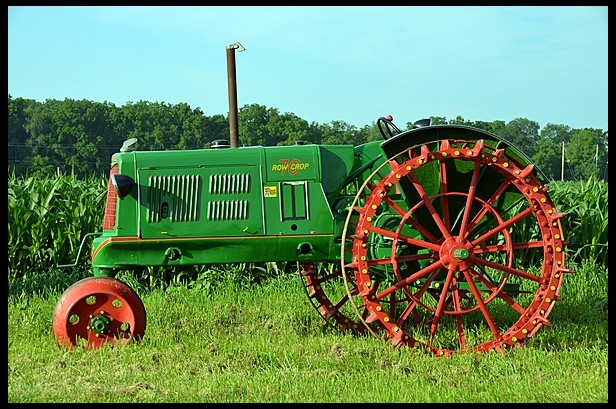
1937 Oliver 70

1937 Oliver 70

All tractors offered by Mecum | Walworth, Wisconsin | August 8-10, 2013

1937 Oliver 70

Photo – Mecum

Like many tractor manufacturers, Oliver was formed by the result of a merger. In their case, it was four companies that came together in 1929 to make Oliver a reality. In 1960, they were bought by the White Motor Company who discontinued the brand in 1974.

Engine: 3.3-liter straight-six. 27 horsepower.

Production: unknown.

Produced: 1935-1948.

Update: Sold $3,200.

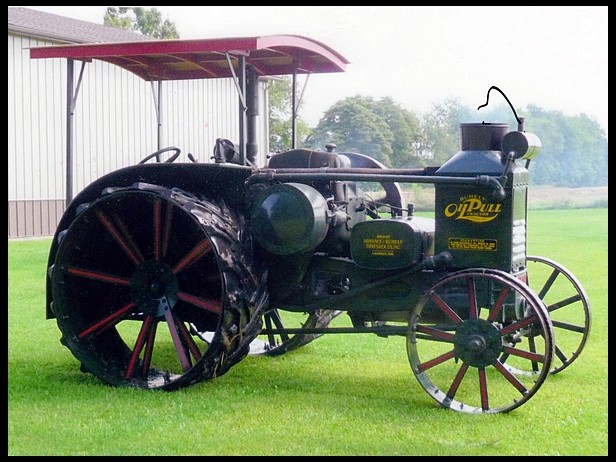
Rumely Oilpull M 20/35

1927 Rumely Oilpull M 20/35

Offered by Mecum | Walworth, Wisconsin | August 8-10, 2013

1927 Rumely Oilpull M 20-35

Photo – Mecum

Rumely Oilpulls were a type of tractor built by Advance-Rumely, a company that was organized in 1915 and acquired by Allis-Chalmers in 1931.

Engine: 9.9-liter two-cylinder. About 35 horsepower.

Production: 3,671.

Produced: 1924-1927.

Update: Sold $35,000.

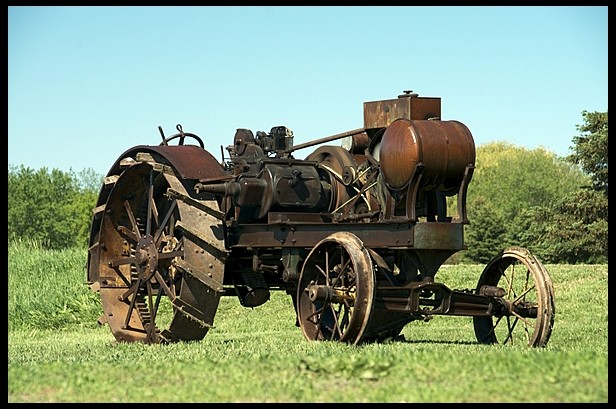
Waterloo Tractor

1919 Waterloo Boy N

All tractors offered by Mecum | Walworth, Wisconsin | August 8-10, 2013

1919 Waterloo Boy N

Photo – Mecum

Founded in 1892, Waterloo Boy was the first company to build and sell gasoline-powered tractors. In 1918, they were bought out by John Deere and the brand name disappeared after 1924. This N model is unrestored and all-original. Some specs:

Engine: 7.6-liter two-cylinder. 25 horsepower.

Production: 21,392.

Produced: 1917-1924.

Update: Not sold, high bid of $68,000.