Offered by RM Sotheby’s | Hershey, Pennsylvania | October 10-11, 2019
Photo Courtesy of RM Sotheby’s
If you’re noticing a trend, yes, Indiana liked their highwheelers before 1910. The Kiblinger was a product of Auburn, Indiana, where they were built between 1907 and 1909. There are a few of them on display at the Auburn-Cord-Duesenberg museum. And this car was once on display there too.
The Model D was one of six models produced by the company, and it’s powered by a 10 horsepower, two-cylinder engine that is shared with similar cars from Sears. Speaking of similar cars, company president W.H. McIntyre shut down and re-branded the company as the McIntyre after they were sued for patent infringement by Success. You can read more about this car here.
1905 De Tamble-Miller High-Wheel Runabout Prototype
Offered by RM Sotheby’s | Hershey, Pennsylvania | October 10-11, 2019
Photo Courtesy of RM Sotheby’s
Edward De Tamble‘s earliest cars were highwheelers. Series production didn’t start until 1908 in Indianapolis (and later, Anderson, Indiana), and this car predates that time. It carries a stamp calling it a De Tamble & Miller, but not much is really known about it.
Mostly original, it is thought that this was the prototype De Tamble, and it uses parts from the era, including the gearbox from a Ford Model F. It’s a one-off piece of early automotive history, and you can read more about it here.
Offered by RM Sotheby’s | Hershey, Pennsylvania | October 10-11, 2019
Photo Courtesy of RM Sotheby’s
Elcar actually traces its roots back to Pratt-Elkhart, which was one of Indiana’s highest-quality early cars. That company later became Pratt, which was quickly reformed as the Elkhart Carriage and Motor Car Company in 1915. They built the Elcar through 1931.
This was the only model available in 1917, and it is one of four body styles offered. The Cloverleaf Roadster retailed for $845 and is powered by a 34 horsepower, Lycoming inline-four. Prediction: this car sells for what would appear to be a great deal. Click here for more info.
Offered by RM Sotheby’s | Hershey, Pennsylvania | October 10-11, 2019
Photo Courtesy of RM Sotheby’s
Somehow we’ve only featured one Auburn car prior to this. Indiana was a force in the early days of the automobile industry, and Auburn was one of its star products, which were offered between 1900 and 1937. They built some pretty fantastic cars in the mid-1930s, but everyone seems to forget that they built “normal”-looking cars like this alongside those wild boattail speedsters.
The 8-98 and the 8-98A were the only models offered in 1931. They were powered by a 98 horsepower straight-eight. Various body styles were available, and this sedan would’ve cost its new owner $1,195. Click here for more info and here for more from this sale.
1905 De Tamble-Miller High-Wheel Runabout Prototype
Offered by RM Sotheby’s | Hershey, Pennsylvania | October 10-11, 2019
Photo Courtesy of RM Sotheby’s
Edward De Tamble‘s earliest cars were highwheelers. Series production didn’t start until 1908 in Indianapolis (and later, Anderson, Indiana), and this car predates that time. It carries a stamp calling it a De Tamble & Miller, but not much is really known about it.
Mostly original, it is thought that this was the prototype De Tamble, and it uses parts from the era, including the gearbox from a Ford Model F. It’s a one-off piece of early automotive history, and you can read more about it here.
Update: Sold $26,400.
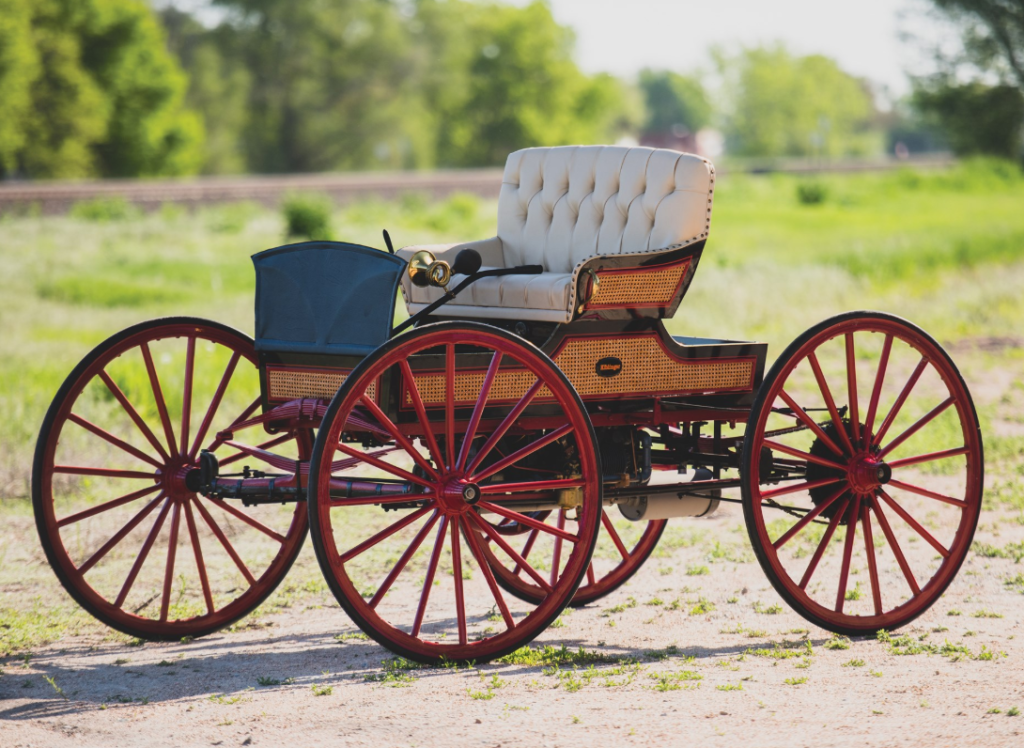
1907 Kiblinger Model D High-Wheel Runabout
Offered by RM Sotheby’s | Hershey, Pennsylvania | October 10-11, 2019
Photo Courtesy of RM Sotheby’s
If you’re noticing a trend, yes, Indiana liked their highwheelers before 1910. The Kiblinger was a product of Auburn, Indiana, where they were built between 1907 and 1909. There are a few of them on display at the Auburn-Cord-Duesenberg museum. And this car was once on display there too.
The Model D was one of six models produced by the company, and it’s powered by a 10 horsepower, two-cylinder engine that is shared with similar cars from Sears. Speaking of similar cars, company president W.H. McIntyre shut down and re-branded the company as the McIntyre after they were sued for patent infringement by Success. You can read more about this car here.
Update: Sold $28,600.
1908 Mier Model A Runabout
Offered by RM Sotheby’s | Hershey, Pennsylvania | October 10-11, 2019
Photo Courtesy of RM Sotheby’s
The short-lived Mier was built by the Mier Carriage and Buggy Company of Ligonier, Indiana in 1908 and 1909. Solomon Mier, and his son A.B., built about 100 cars during that time before returning to the horse-drawn buggy industry, where they managed to stay in business into the 1920s.
This Model A Runabout was one of two models offered in 1908. Power is from a 10 horsepower inline-twin. Of the 100 built, only two remain, making this a great chance to get your hands on a truly rare car. Click here for more info.
Update: Sold $55,000.
1917 Elcar Model E Cloverleaf Roadster
Offered by RM Sotheby’s | Hershey, Pennsylvania | October 10-11, 2019
Photo Courtesy of RM Sotheby’s
Elcar actually traces its roots back to Pratt-Elkhart, which was one of Indiana’s highest-quality early cars. That company later became Pratt, which was quickly reformed as the Elkhart Carriage and Motor Car Company in 1915. They built the Elcar through 1931.
This was the only model available in 1917, and it is one of four body styles offered. The Cloverleaf Roadster retailed for $845 and is powered by a 34 horsepower, Lycoming inline-four. Prediction: this car sells for what would appear to be a great deal. Click here for more info.
Update: Sold $37,400.
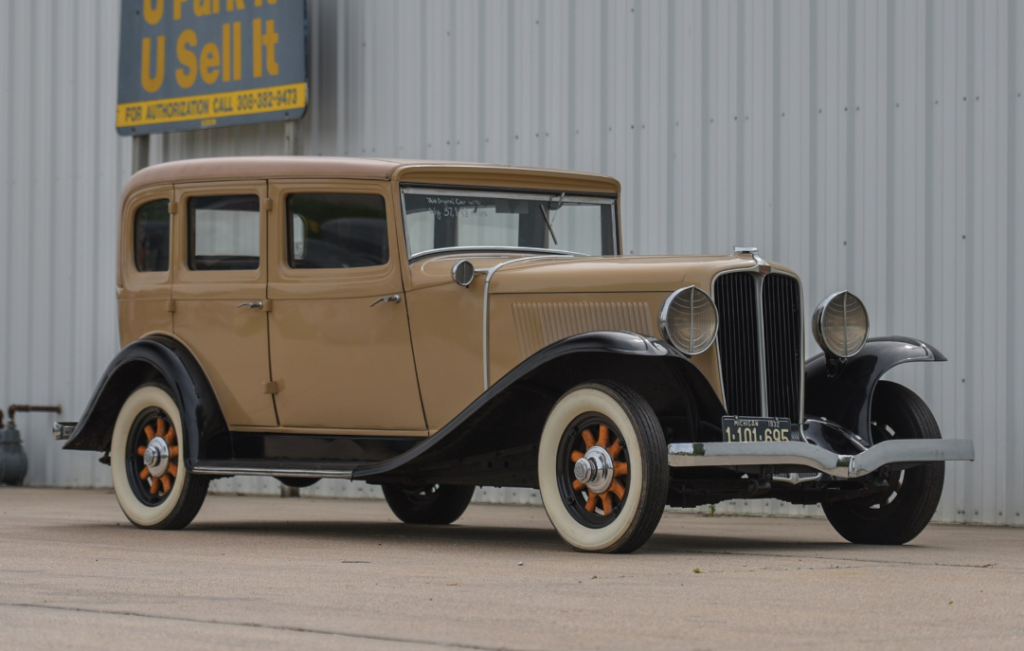
1931 Auburn Model 8-98A Sedan
Offered by RM Sotheby’s | Hershey, Pennsylvania | October 10-11, 2019
Photo Courtesy of RM Sotheby’s
Somehow we’ve only featured one Auburn car prior to this. Indiana was a force in the early days of the automobile industry, and Auburn was one of its star products, which were offered between 1900 and 1937. They built some pretty fantastic cars in the mid-1930s, but everyone seems to forget that they built “normal”-looking cars like this alongside those wild boattail speedsters.
The 8-98 and the 8-98A were the only models offered in 1931. They were powered by a 98 horsepower straight-eight. Various body styles were available, and this sedan would’ve cost its new owner $1,195. Click here for more info and here for more from this sale.
Offered by RM Sotheby’s | Hershey, Pennsylvania | October 10-11, 2019
Photo Courtesy of RM Sotheby’s
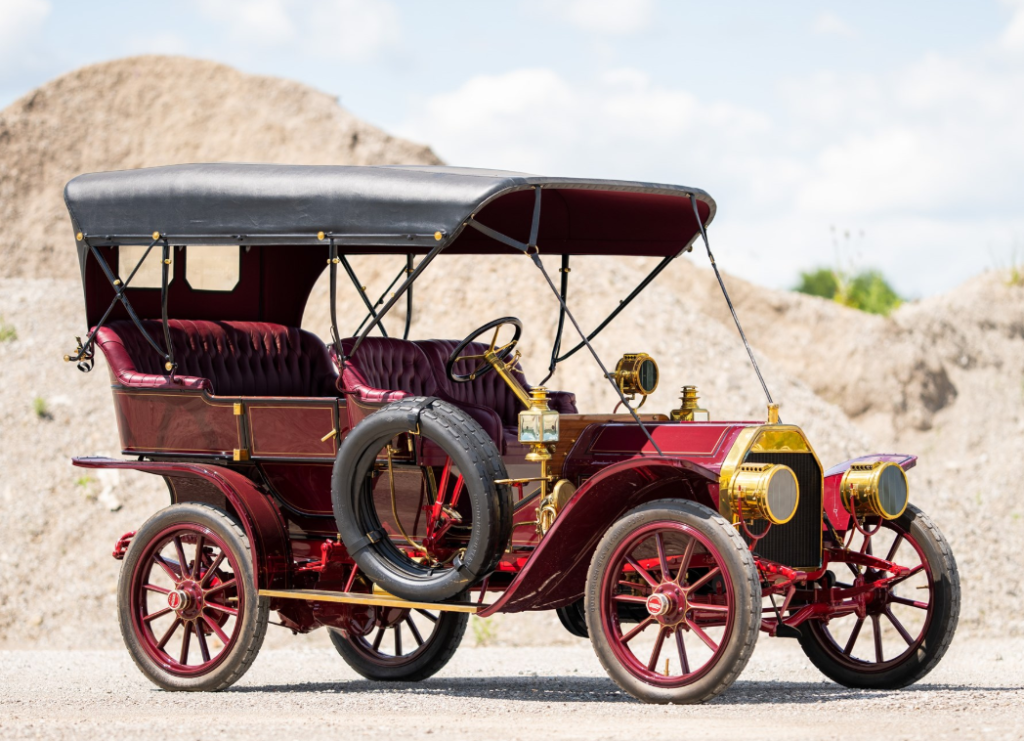
The Wayne Automobile Company was founded in Detroit in 1904 by Charles Palms, E.A. Skae, Roger Sullivan, J.B. Brock, and car designer William Kelly. They started with two-cylinder cars and eventually expanded into four-cylinder offerings before they merged with Northern in 1908.
Almost immediately after the merger, the company was acquired by Walter Flanders and Barney Everitt who turned it into E-M-F. In 1910, Studebaker acquired E-M-F and merged it into their line of cars.
This 1907 Model N is the only surviving “big Wayne,” and it’s powered by a 35 horsepower inline-four. It was acquired by the current owner in 1999, after which it was first restored. You can read more about it here and see more from this sale here.
Offered by RM Sotheby’s | Hershey, Pennsylvania | October 10-11, 2019
Photo Courtesy of RM Sotheby’s
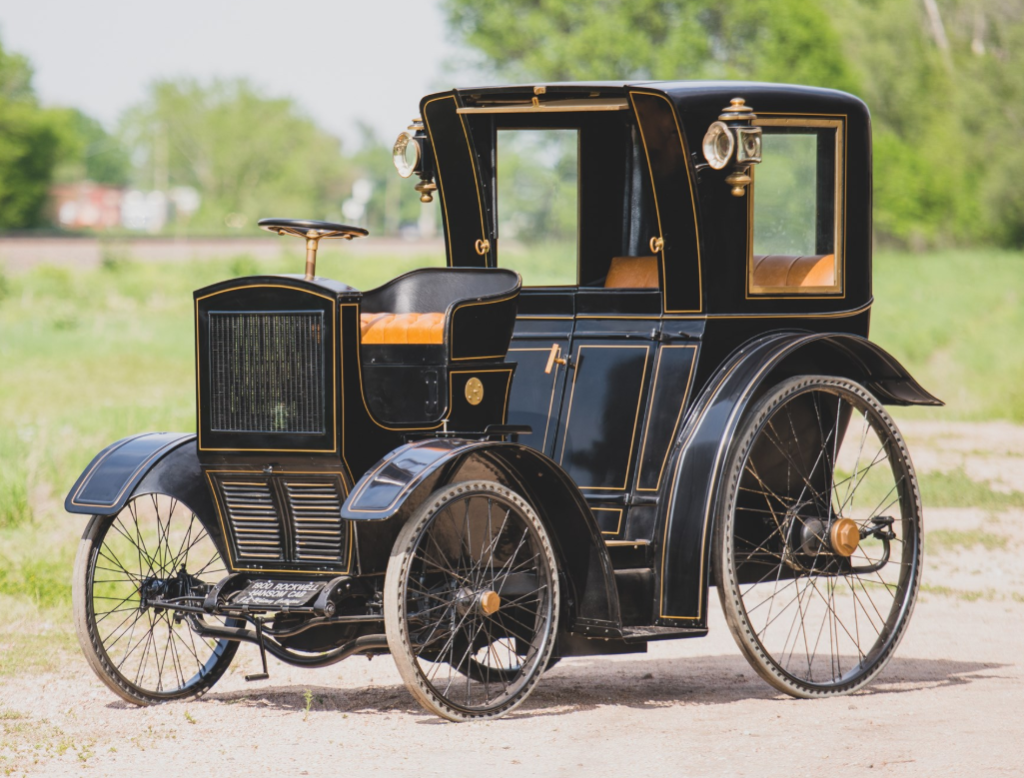
This interesting car is described as the first motorized (non-electric) taxicab in New York City. But something is a little odd. The Rockwell was a car named for Albert Rockwell, who sold the car under the Connecticut Cab Company banner with Charles Treadway, Ira Newcomb, T.H. Holdsworth, and Ernest Burwell. But they didn’t build the cars. The Bristol Engineering Company of Bristol, Connecticut did.
Moreover, they didn’t actually found the company until 1910. The story goes that in 1909 there were 11 of these on the streets, replacing the electric cab business that went under in 1907. By 1910, 200 Rockwell cabs were roaming Manhattan. Shortly after, a new taxi company took over and imported cabs from France.
Furthermore, this car is believed to have been electrically-powered at first, before being converted to its current water-cooled gasoline engine in 1910 for Mr. Rockwell himself. So was it actually built in 1900, a full decade before Rockwell (the company) got off the ground? Or was it built circa 1909? Who knows. The car has spent most of its life in a serious of museums and is seriously interesting, regardless of when it was built. This is what NYC taxis looked like 110 years ago.
It’s unclear how many are left, or if this is the only one. It will sell without reserve. Click here for more info and here for more from this sale.
Offered by RM Sotheby’s | Hershey, Pennsylvania | October 10-11, 2019
Photo Courtesy of RM Sotheby’s
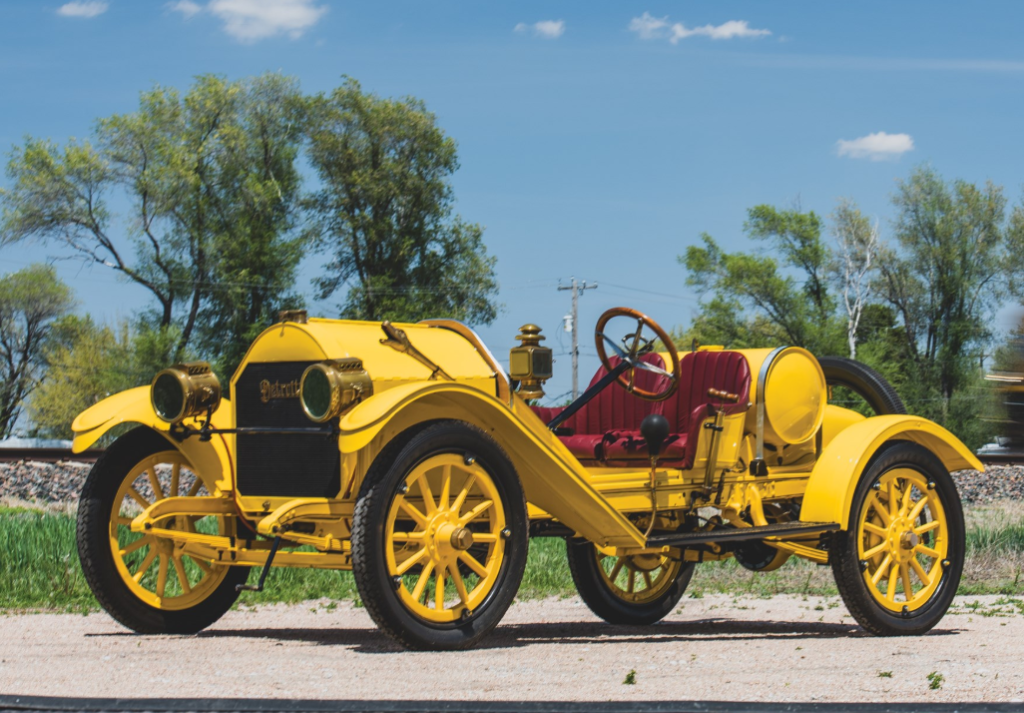
Detroiter was a Detroit, Michigan-based car company that operated from 1912 through 1917. It was founded by Claude Briggs and John Boyle as the Briggs-Detroiter Company. They produced conventional touring cars and coupes using purchased engines.
But they also built some really sharp-looking Speedsters beginning in 1914. This car was actually ordered as a bare chassis by a Detroiter dealer in Indiana. He wanted a Mercer but could get a deal on a Detroiter, so he built a Mercer-style body on the chassis he bought. It ended up being the prototype for later Detroiter Kangaroo Speedsters.
Power is from a 25 horsepower Turner & Moore inline-four cylinder engine. This, the oldest-known Detroiter in existence, will sell at no reserve. Click here for more info and here for more from this sale.
Offered by RM Sotheby’s | Hershey, Pennsylvania | October 10-11, 2019
Photo Courtesy of RM Sotheby’s
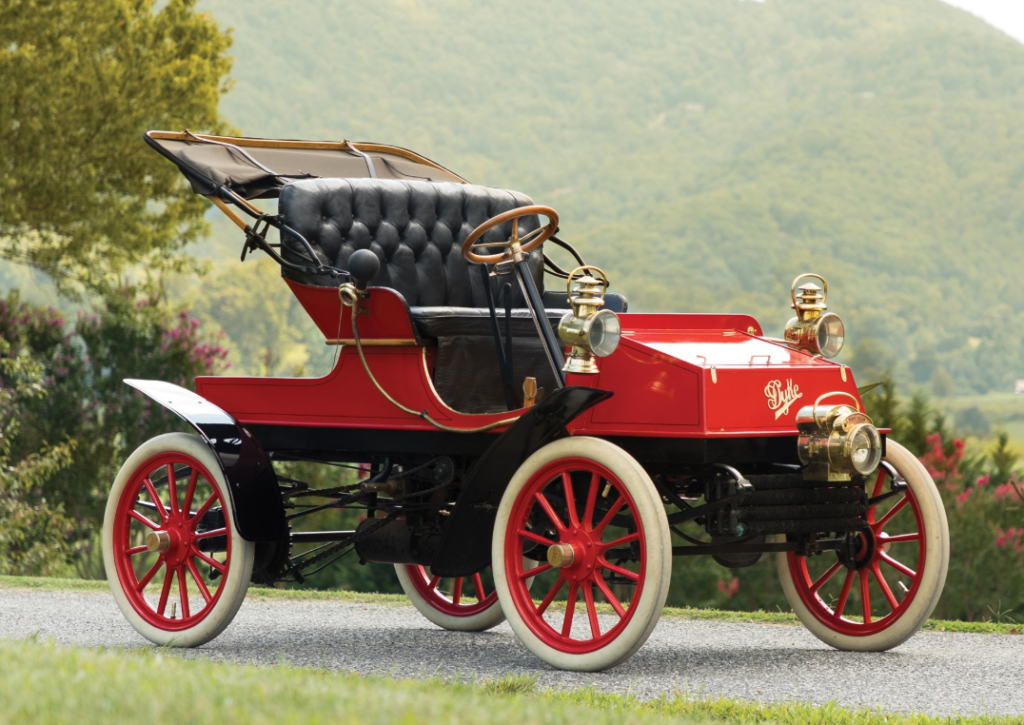
Andrew Dyke founded the first automobile supply catalog business in 1899. But because no one really yet needed parts, he decided to build some cars (and sell some kit cars) while he waiting for the need to arise.
This is one of the kits, as his early cars were electrics, and the 1904 Dyke-Britton was a four-cylinder touring car. Essentially, you bought the running chassis from Dyke and them went about sourcing a body. This is powered by either a one or two-cylinder engine – the auction catalog does not make it clear, and the photos are not of any help.
Only three such cars remain, and the current owner of this car purchased it directly from a Harrah dispersal sale in 1985. It’s been freshened and modified (slightly) for an improved top speed: 30 mph. You can read more about this no reserve car here and see more from RM here.
Offered by Bonhams | Cheserex, Switzerland | September 29, 2019
Photo – Bonhams
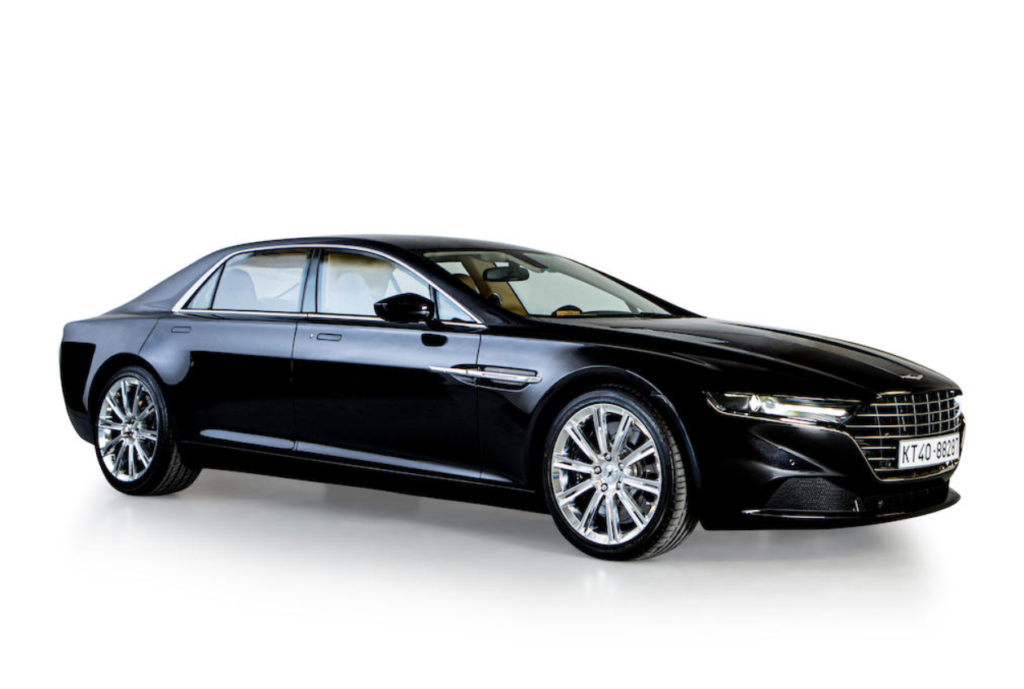
When Aston Martin announced that they would be building a four-door car in the mid-2000s, Lagonda would’ve been a solid choice for a name. After all, they’ve built multiple four-door Lagonda models in the past 50 years, including some as late as the early 1990s. They went with “Rapide” instead.
Lagonda, as a marque, was founded in 1906 and built luxury cars through their acquisition by Aston Martin in 1947. The marque was phased out after 1965 and subsequent Lagondas were models in the Aston line. Until 2015, that is.
Aston resurrected the Lagonda marque for this, the Taraf (which means “side” in Turkish). It’s based on the same platform as the DB9 and Rapide, and it is powered by a 533 horsepower, 6.0-liter V12 paired with an eight-speed automatic transmission that could propel the car to 60 mph in 4.4 seconds on the way to a 195-mph top end.
The target market for the car was the Middle East, which was pretty much the only market. This Kuwait-registered example is one of only 120 built between 2015 and 2016. The goal was to make a Rolls-Royce seem commonplace, and cheap, too, apparently: the Taraf retailed for a cool $1 million. This one has covered only 50 miles and should bring between $850,000-$1,100,000. Click here for more info and here for more from this sale.