A Scuderia Ferrari Alfa 8C-35 Grand Prix Car

1935 Alfa Romeo 8C-35 Grand Prix

Offered by Bonhams | Chichester, U.K. | September 14, 2013
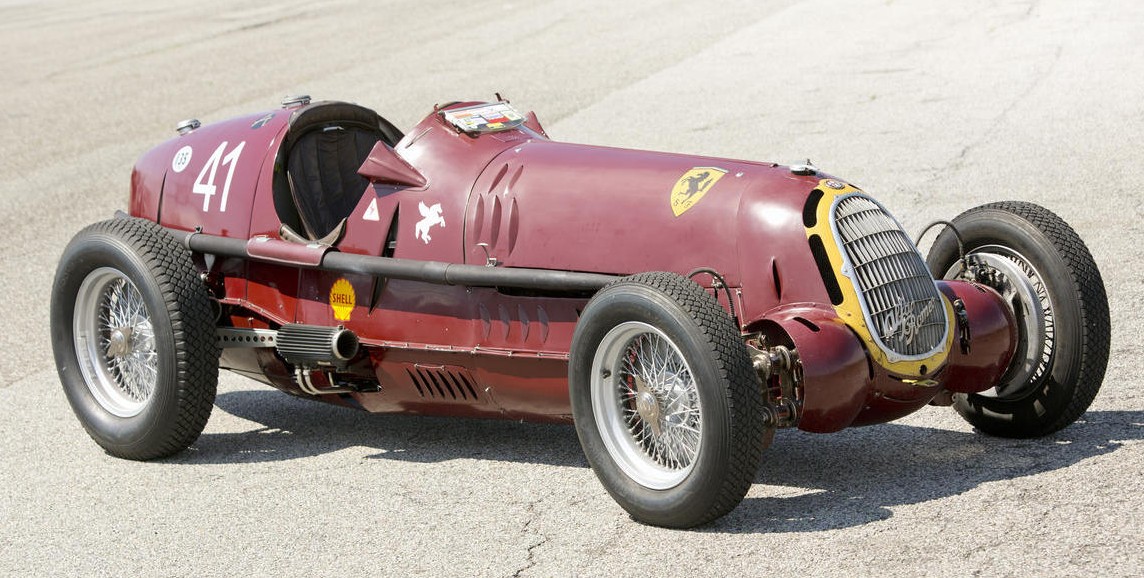
1935 Alfa Romeo 8C-35 Grand Prix

Before Ferrari, Red Bull and McLaren there was Alfa Romeo, Mercedes-Benz, Maserati and Auto Union. The 1930s were a thrilling (and scary) time in Grand Prix racing and some of its all-time stars came from that era: Caracciola, Nuvolari, Rosemeyer, Varzi and more. And so did one other man: Enzo Ferrari. Scuderia Ferrari began as a race team in 1929 – becoming the Alfa Romeo factory team. It wasn’t until after the war that he started building his own cars.

This is a special, special car. It’s an 8C-35 – it uses a supercharged 3.8-liter straight-eight engine making 330 horsepower – quite a sum for 1935. This is an actual Scuderia Ferrari team car driven by Nuvolari (and more). The Ferrari-era history of this car is not known, but legend holds that Nuvolari won the 1936 Coppa Ciano with it. Toward the end of 1936, this car was sold to a privateer – Hans Ruesch, who raced it as often as possible. Some of his driving career in the car is as follows (including 3 European Championship – the precursor to Formula One – eligible races in 1937, as noted by asterisk*):

  • 1936 Donington Grand Prix – 1st (with Ruesch and Dick Seaman)
  • 1936 Mountain Championship at Brooklands – 2nd (with Ruesch)
  • 1937 South African Grand Prix – 4th (with Ruesch)
  • 1937 Grosvenor Grand Prix – 5th (with Ruesch)
  • 1937 Finnish Grand Prix – 1st (with Ruesch)
  • 1937 Grand Prix des Frontieres – 1st (with Ruesch)
  • 1937 Bucharest Grand Prix – 1st (with Ruesch)
  • 1937 German Grand Prix* – 8th (with Ruesch)
  • 1937 Monaco Grand Prix *- 8th (with Ruesch)
  • 1937 Swiss Grand Prix* – 15th, DNF (with Ruesch)
  • 1937 Mountain Championship at Brooklands – 1st (with Ruesch)

Ruesch sold the car in 1939 after much success (and a few major repairs). The car came into the hands of Dennis Poore during the war and he maintained the car for 40 years, using it in a fair number of events. It was sold at auction in 1988 and was restored to its 1930s-era look in the late-1990s. The current owner acquired it about 10 years ago and has used it in some historic events as well. This is the only surviving example of an 8C-35 and it should sell for between $8,600,000-$10,000,000. Click here for more info and here for more from Bonhams at Goodwood.

Update: Sold $9,511,542.

S/N: 50013
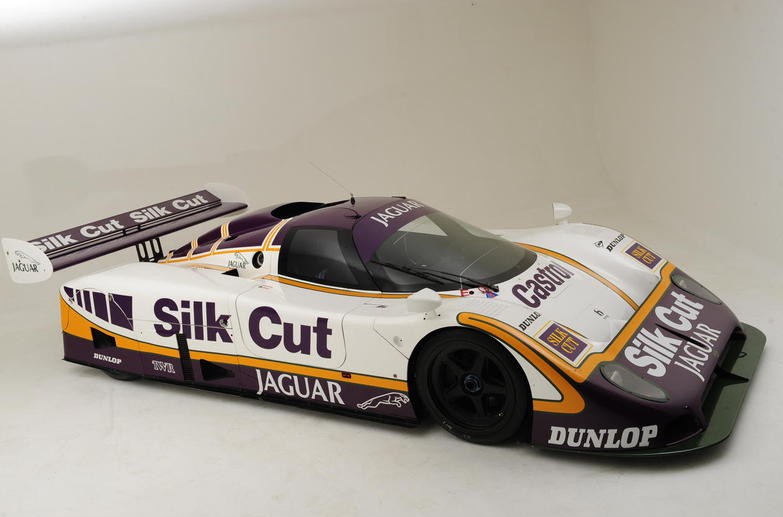
Silk Cut Jaguar

1987 Jaguar XJR-8

Offered by Bonhams | Chichester, U.K. | September 14, 2013

1987 Jaguar XJR-8

The XJR-line of Jaguar sports racing cars was a nine-year program that Jaguar initiated (with the help of the race car specialists at Tom Walkinshaw Racing) with the aim of dominating both the World Sportscar Championship and the IMSA Camel GTP Series. The cars were impressive – winning Le Mans twice – and the experience led Jaguar to produce two other-worldly road-going supercars: the XJ220 and XJR-15.

The XJR-8 was the fourth iteration and it was focused solely on the WSC. The Silk Cut livery began in 1986 and was a staple of Jaguar endurance cars through the early 1990s. The difference between and XJR-6 and the XJR-8 is mostly engine-related, as they share the same basic structure underneath. The engine is a 7.0-liter V-12 making in the neighborhood of 750 horsepower.

The racing resume of this car includes:

  • 1987 24 Hours of Le Mans – 5th (with Eddie Cheever, Raul Boesel, and Jan Lammers)
  • 1987 1000km Spa – 1st (with Martin Brundle, Johnny Dumfries, & Boesel)

Raul Boesel would go on to win the 1987 WSC Driver’s championship, with TWR-Jaguar winning the Teams Championship. After it’s racing career, the car was acquired from the TWR team by an unnamed racing driver who has owned it since. It has been freshened and is ready to run. Apparently, only four were built (or at least run by this team that had factory support). It should sell for between $1,400,000-$1,900,000. Click here for more info and here for more from Bonhams at Goodwood.

Update: Sold for a mysterious sum of less than $1.4 million.

S/N: 3.87

Mercedes 290 Cabriolet A

1934 Mercedes-Benz 290 Cabriolet A by Sindelfingen

Offered by RM Auctions | London, U.K. | September 8-9, 2013

1934 Mercedes-Benz 290 Cabriolet A

What I like about this sale is that there are a bunch of Mercedes-Benzes of intermediate prestige. Yes, 500K and 540K Benzes are wonderful but you never see 380s or 290s at these big, fancy auctions.

Thus, why I’m featuring this car instead of the 540K Special Roadster from the same sale. The Mercedes-Benz 290 was known internally as the W18 and it was available in two different wheelbases. This is the shorter one. The engine is a 2.9-liter straight-six making 60 horsepower. The wheel wells on this car seem to ride really high, giving this an almost-SUV-like appearance. It might be good off-road. It looks like a car that some Nazis would use to chase down Indiana Jones.

Only 3,566 short-chassis cars were built (which is a fairly high number compared to other cars of the era). The Cabriolet A (seen here) was the sportiest of the various body styles offered, but it was almost the most expensive. My favorite feature here is the dual rear-mount spares (I’m a sucker for those). This is a rare car with an older restoration that has had some use. It should still bring between $390,000-$465,000. Click here for more info and here for the rest of RM’s interesting London auction lineup.

Update: Sold $435,000.

S/N: 109942.

Maserati 250S

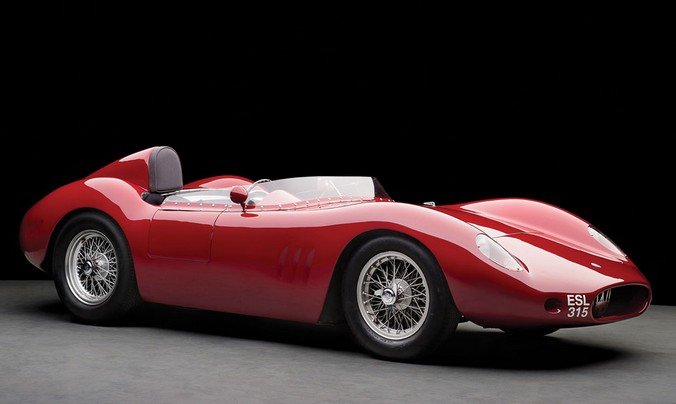
1957 Maserati 250S by Fantuzzi

Offered by RM Auctions | London, U.K. | September 8-9, 2013

1957 Maserati 250S by Fantuzzi

In 1955, Maserati moved to replace its A6GS sports racing cars with a new car called the 200S, later the 200SI. In 1957, they upgraded the 200SI with a bigger engine and re-christened it the 250S. Only four were built. This is one of them.

The engine is a 2.5-liter twin cam straight-four making 253 horsepower. They were enlarged versions of the 2.0-liter from the 200SI and they were very quick cars – faster than the Ferrari V12s they competed against early on. But the program was cancelled when Maserati gave up racing after 1957. The sleek body is by Fantuzzi.

This is the only 250S that was actually born with a 2.5-liter engine (the other three all had 2.0-liter engines that were bored out to 2.5-liters). It went from the factory to the Jim Hall/Carroll Shelby distributorship in Dallas, Texas. Jim Hall raced it in some SCCA events in the South in 1958. Carroll Shelby drove it too.

This car is in almost entirely original condition – which is remarkable because it appears to be exquisite. It’s been used in some historic events and they engine had a massive overhaul in 2010, but the body has never been restored. It is race ready and should sell for between $3,900,000-$4,600,000. Click here for more info and here for more from RM in London.

Update: Sold $3,340,000.

S/N: 2432.

Beautiful 370 S Mercedes

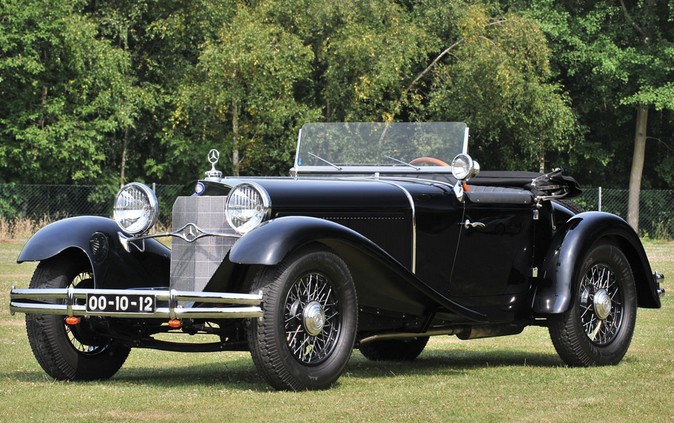
1932 Mercedes-Benz 15/75HP Mannheim 370 S Sport Roadster

Offered by RM Auctions | London, U.K. | September 8-9, 2013

1932 Mercedes-Benz 1575HP Mannheim 370 S Sport Roadster

I think this is a very attractive car. I actually like it a little more than I do those swoopy 500K roadsters. This, the Typ Mannheim 370 S was a version of the Mercedes-coded W10 that was introduced in 1929. It uses a modified version of an earlier Ferdinand Porsche-designed chassis and a 3.7-liter straight-six making 75 horsepower.

The 370 S was the fourth iteration of the W10, being produced from 1930 through 1933. It used the shortest wheelbase of all the cars in the series and was only available in roadster or sport cabriolet form. This one was born as a Sport Cabriolet but was converted to a roadster when restored between 2004 and 2006.

Only 195 370 S cars were built in total and apparently only seven of them carry roadster bodies like this. This style of elegant and sporty early Mercedes-Benz is quickly becoming my favorite MB style of all time. I want this triple black 370 S roadster. It should sell for between $1,115,000-$1,480,000. Click here for more info and here for more from this sale.

Update: Sold $1,208,900.

S/N: 87123.

A Late Benz

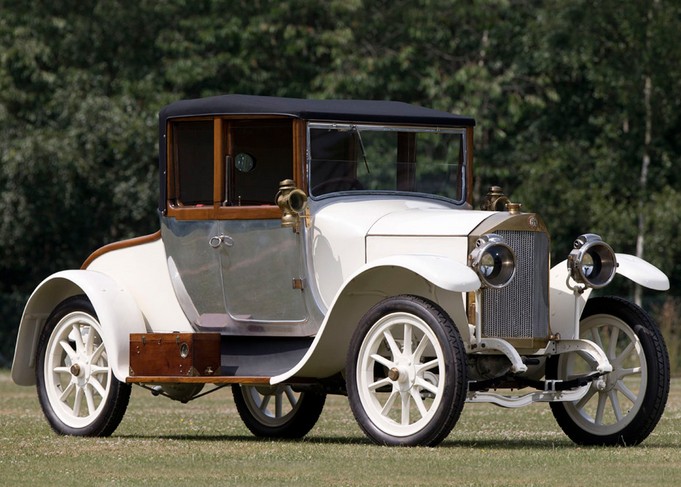
1921 Benz 8/20 HP Doctor’s Cabriolet by Forton & Bettens

Offered by RM Auctions | London, U.K. | September 8-9, 2013

1921 Benz 820 HP Doctor's Cabriolet by Forton & Bettens

The Mercedes and Benz merger happened in 1926. Prior to that, Benz had been building road cars for a remarkable 40 years. This was one of their later designs as it was introduced in the 1910s.

The company actually built two different 8/20 HP models. This was the second type and it used a larger 2.0-liter straight-four engine making 20 horsepower (it was basically 70cc larger than the earlier engine). The body is by an almost-unknown British coachbuilder called Forton & Bettens and this car is one of two existing that uses one of their bodies.

It is a convertible, even though the top looks very rigid. It all folds back and looks rather pleasant. I also like the aluminium side panels. This rare example of a late Benz should sell for between $265,000-$310,000. Click here for more info and here for more from this sale.

Update: Sold $83,500.

S/N: 24782.

500K Cabriolet C

1936 Mercedes-Benz 500K Cabriolet C by Sindelfingen

Offered by RM Auctions | London, U.K. | September 8-9, 2013

1936 Mercedes-Benz 500K Cabriolet C by Sindelfingen

RM Auctions is offering an incredible collection (all from the same owner) of Mercedes-Benzes. Like 70 or 80 cars – it’s an entire day of the auction. Anyway, there are a lot of old Benzes in the sale that I’ve never seen before. Many are more generic, pedestrian models than this 500K (but sometimes that’s even more interesting).

The 500K was the followup model to the 380K. It was introduced in 1934 and uses a 5.0-liter supercharged straight-eight engine making 100 horsepower and 160 with the supercharger engaged. The body is by Sindelfingen – Mercedes’ then in-house coachbuilder. Between the 500K and the 540K, only 122 Cabriolet C bodies were built.

This car has been beautifully restored and the interior shows signs of use. It would make a great driver – something that is rare among these high-dollar Mercedes cabriolets. The pre-sale estimate on this car is $1,100,000-$1,400,000. You can read more here and see more from this auction here.

Update: Not Sold. High Bid of $1,025,000.

S/N: 215011

Duesenberg J-331

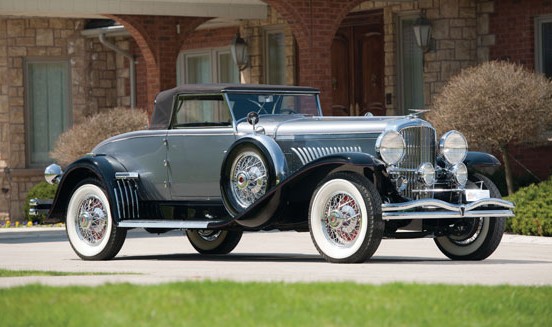
1930 Duesenberg Model J Convertible Coupe by Murphy

Offered by Auctions America | Auburn, Indiana | August 29-September 1, 2013

1930 Duesenberg Model J-331 Convertible Coupe by Murphy

The Convertible Coupe bodystyle by the Walter M. Murphy Company of Pasadena, California, is one of the most-popular bodystyles on Duesenberg Model Js. It’s on the shorter of the two Model J wheelbases, so the proportions are fantastic.

All Model Js had their bodies outsourced to coachbuilders, but there was a factory catalog for customers who purchased the bare chassis and wanted some idea as to where to go for a body. This was the cheapest body in the catalog – at $13,500. About 60 of them were built.

This car was originally built for a member of the du Pont family and delivered new to New York City. It passed through quite a number of owners over the years, having spent a good deal of time recently in a Chicago collection – until now. The restoration is nice but older and it could a “minor freshening.” Look for a price around $900,000. Click here for more info and here for more from Auctions America’s fall Auburn sale.

Update: Sold $1,540,000.

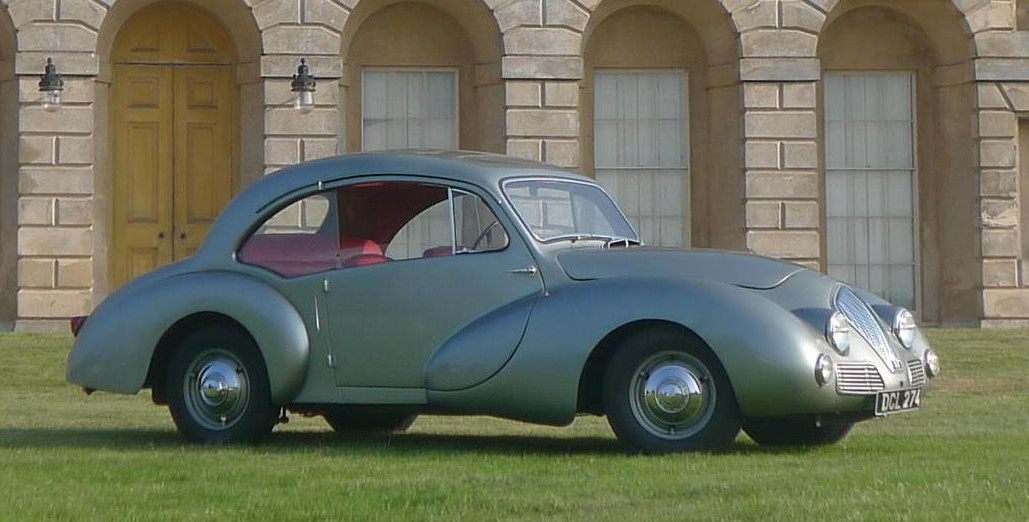
Healey Duncan

1948 Healey Duncan Saloon

Offered by Bonhams | Beaulieu, U.K. | September 7, 2013

1948 Healey Duncan Saloon

Donald Healey started building cars upon completion of World War Two. The Westland and Elliott were the first two cars from the company and they went on sale in 1946. All Healey-branded cars used a 2.4-liter straight-four engine from Riley making 104 horsepower. He built his own chassis.

The Donald Healey Motor Company sent 39 of its chassis (with Riley engines attached) to Duncan Industries Ltd. They bodied 15 of the cars as “Drones” with fairly unattractive and simple bodywork. They then built 23 of these Saloon models with pillarless doors and swoopy lines. They also bodied some Alvis cars with coachwork very similar to this.

Only eight Duncan-bodied Healeys are thought to still exist – six of which are the Saloon model like the one above. Ownership history of this car is known from the 1960s and the it was restored professionally in 1996. It has been used here and there and is in generally great and usable condition. It is estimated to sell for between $28,000-$37,000. You can read more here and check out the rest of this sale’s lineup here.

Update: Sold $59,119.

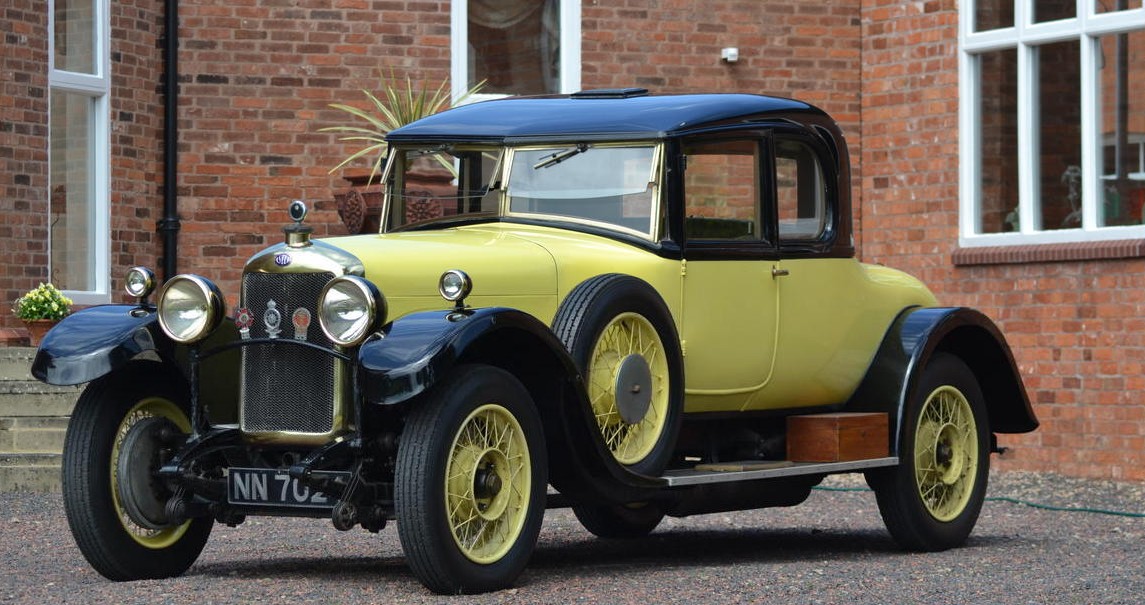
1924 Aster

1924 Aster 18/50HP Coupe

Offered by Bonhams | Beaulieu, U.K. | September 7, 2013

1924 Aster 1850HP Coupe

Photo – Bonhams

Aster started as an engine-building company in Wembley, England. They were building licensed versions of French engines and moved to aircraft engines during WWI, when they acquired the name Aster.

In 1922, they started building luxury automobiles. The 18/50hp was their first model and it was built from 1922 through 1924. It uses a 2.6-liter straight-six making 50 horsepower. They were expensive and bought by well-known people such as the man who would later become King George VI.

In 1924, the engine was upgraded and the model became the 20/55. In 1927, the company merged with Arrol-Johnston and the Aster name disappeared after 1930. This is a car from a short-lived and rarely-heard of marque. Only about 170 Asters were ever built and this is one of two known to survive (both are in this sale and the other one is a half-restored project). This one is in original, unrestored condition and should sell for between $28,000-$37,000 – which seems like a bargain considering it was an expensive car when new and it’s the only one like it left. Click here for more info and here for more from Bonhams’ sale.

Update: Sold $39,413.

Update II: Sold, Brightwells Classic & Vintage, April 2017, $32,292.