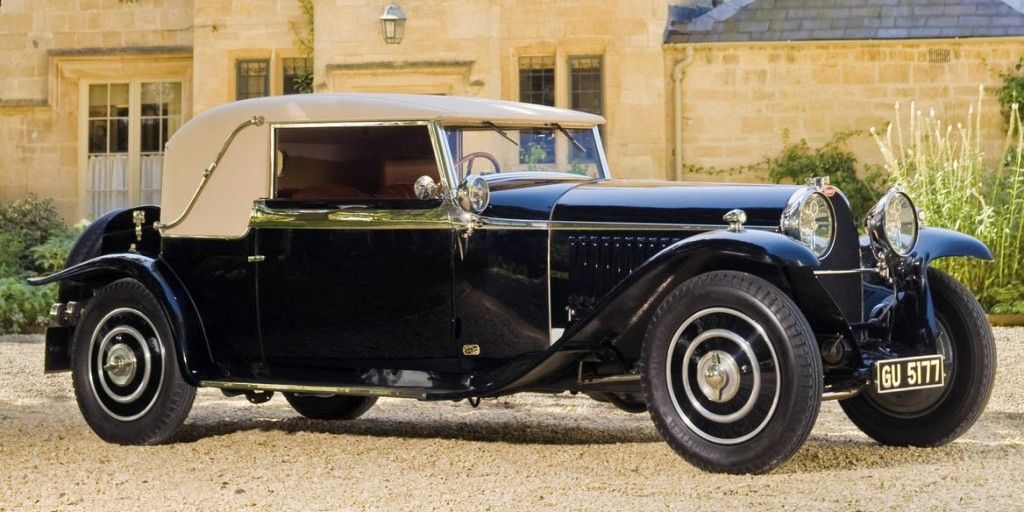
1913 Brasier Berline

1913 Brasier 16hp Berline

Offered by Bonhams | Paris, France | February 7, 2013

1913 Brasier 16hp Berline

Henri Brasier joined the Georges Richard’s automobile company and the new Richard-Brasier company began to produce cars in 1902. That only lasted through 1905, when Richard left the company. So the company that started out with Georges Richard’s full name as the marque, gradually decreased until it was just “Brasier” left.

Brasier started building cars in late 1905/early 1906 and lasted through 1926, after which they were called Chaigneau-Brasier, until the company ultimately closed in 1930. This particular Brasier is a 1913 Sedan with coachwork by Marcel Guilloux of France (if you couldn’t tell where he was from based on his name). It uses a 3.2-liter four-cylinder making 16 horsepower.

The car was bought new by a gentleman in France who walled it up when the First World War broke out. The man perished in the war and the car wasn’t discovered again for 70 years, when the wall he built was demolished during a home redesign. It’s bounced around since, having appeared in a few movies along the way. It is entirely original – a great example of “time warp” condition that makes it perfect for high-class car shows all over the world. It runs well and everything works. It should sell for between $100,000-$130,000. Click here to read more and here for more from this sale.

Update: Not sold.

Update: Not sold, Bonhams Paris 2020.

Lancia Astura Cabriolet

1938 Lancia Astura Series IV Cabriolet by Carrozzeria Boneschi

Offered by Bonhams | Paris, France | February 7, 2013

1938 Lancia Astura Series IV Cabriolet by Carrozzeria Boneschi

Many of the classic Lancias of the 1920s are boxy -like the Lambda and Dilambda and even the first generation of the Astura. But in the mid-to-late 1930s, Lancia’s vehicles began to become a little more shapely at the hands of coachbuilders. This Astura Cabriolet looks fantastic.

The Astura took the place of the Lambda in the Lancia lineup. It was introduced in 1931 and was still a rather boxy car. But by the time this Fourth Series car came around (it was the final Series and was introduced in 1937), these wonderful curves were available from such coachbuilders as Carrozzeria Boneschi – a Milan coachbuilder who had a long relationship with Lancia. It looks like something that could’ve come from the best of the French design houses of the period.

The engine is an 82 horsepower, 3.0-liter V8. This car was purchased new by a “Belgian coal-mining magnate” and was kept in storage for a long time. It has been repainted (in its original color), but everything else is entirely original. This is one of 423 Series IV Asturas built before production ended in 1939. It is one of three bodied by Boneschi and the only one still in existence. It should bring between $520,000-$660,000. Read more here and check out more from this sale here.

Update: Sold $893,800.

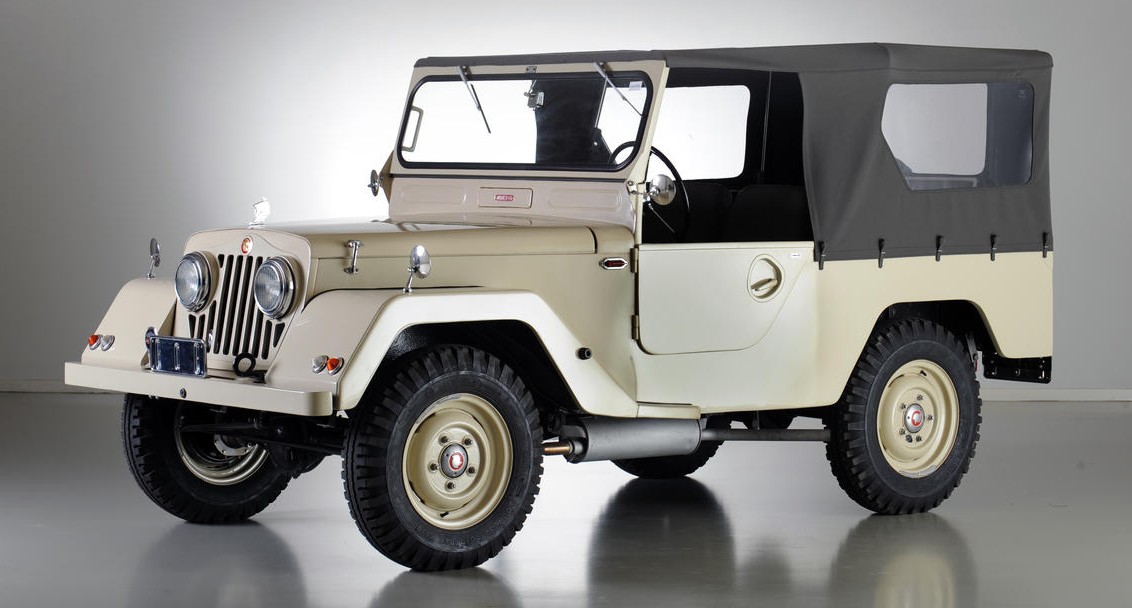
Minerva Off-Roader

1957 Minerva C22

Offered by Bonhams | Paris, France | February 7, 2013

1957 Minerva C22

Minerva built some of the grandest European automobiles of the 1930s. But then war broke out and ruined their business model – as happened to just about every other manufacturer (some adapted well and prospered during the war by building military vehicles).

So when the war ended, Minerva was borderline broke and couldn’t develop anything on their own. So they looked to the U.K. and some of their manufacturers to see if there was anything they could license. They found a few, among them, the Land Rover. The Series I Land Rover was introduced in 1948 and Minerva picked up the license shortly thereafter. The trucks arrived in Belgium as complete knock-down kits, which they then assembled, badged as “Minerva”s and sold to the Belgian army. The difference being that Land Rover’s were aluminium-bodied and the Minervas used steel.

By 1956, the licensing agreement ended and Minerva developed its “own” version of the Land Rover. There were two versions: a long wheelbase and a short wheelbase. The C22 was the LWB version and both were intended for civilians. The engine is a 2.3-liter straight-four. Very few of either model were made before Minerva shuttered its factory. In fact, it is estimated that only three C22s were built and only a few dozen C20s. So it’s very rare. It should sell for between $33,000-$46,000. Click here for more info and here for more from Bonhams in Paris.

Update: Sold $55,500.

Ettore’s Bugatti

1938 Bugatti Type 57C Special Coupe

Offered by Bonhams | Paris, France | February 7, 2013

1938 Bugatti Type 57C Special Coupe

Photo – Bonhams

The Bugatti Type 57 was introduced in 1934 after having been designed by Jean Bugatti, founder Ettore’s son. It featured a 3.3-liter straight-eight. When the Type 57C came along in 1937, a Roots-type supercharger was added, bumping horsepower to 160. This particular 57C underwent continuous factory fiddling for an extra 20 years and is likely a little more powerful.

The special body was designed by Jean Bugatti himself. I can’t help but think how cool it would look if those rear wheels matched the green paint on the body instead of being black. When this car was finished, it was retained by the factory and given to Ettore Bugatti himself as a gift. It was then used as a demonstrator and loaned to the factory racing drivers.

It is one of ten Bugattis ever retained by the factory for such use and the fact it belonged to Ettore and had Jean’s custom bodywork means it is one of a kind. Many Bugattis have exceptional history… but this one was owned by the big boss man himself. It was hidden during the war and returned to the factory afterward. It wasn’t sold until the factory closed down. It passed between three owners before being acquired by John O’Quinn. The car has never been restored and is described as being as close as you can get to driving a 57C off the Bugatti factory floor. It should sell for between $1,000,000-$1,300,000. Click here for more info and here for more from Bonhams in Paris.

Update: Sold $924,600.

Pierce Motorette

1904 Pierce Motorette Model 8M Stanhope

Offered by Bonhams | Paris, France | February 7, 2013

1904 Pierce Motorette Model 8M Stanhope

George N. Pierce started manufacturing vehicles at the end of 1900. The company would later become Pierce-Arrow (1909), but at the time, Pierce was producing De Dion engines under license and small little cars like this. In fact, the Motorette was the first production model from Pierce.

It uses a single-cylinder engine (of eerily similar design to the De Dion engine they had previously been paying royalties to manufacture under license) making eight horsepower. The stanhope bodystyle is interesting – the driver is in the rear and the passengers sit up front in an expandable front seat. It’s like a reverse rumble seat.

This car is largely original – it has been “refreshed” in the past after sitting for a while in order to take part in the London to Brighton Run. It has been in museums and large private collections, including James Melton’s Autorama. This rare car is a great example of George Pierce’s smaller, earlier cars. It should sell for between $66,000-$85,000. Click here for more info, and here for more from Bonhams.

Update: Sold $80,100.

Marion Bobcat

1911 Marion Model 33 “Bobcat” Speedster

Offered by Bonhams | Paris, France | February 7, 2013

1911 Marion Bobcat Speedster

The Marion Motor Car Company of Indianapolis, Indiana, was founded in 1904. You might be thinking “This car sure looks like a Stutz Bearcat.” And you’d be right. Harry C. Stutz was the chief engineer at Marion until he left to form his own company in 1911.

And by that time, he had already designed the Model 33 (or “Bobcat”) Speedster for Marion. He changed some things on his original design and built the car under his own name as the Bearcat beginning in 1912. The idea was simple: power was available, but cars of the period were heavy and had virtually no performance attributes. So Stutz stripped away those big heavy bodies and invented the sports car. The Marion Bobcat was produced from 1911 until 1913 and Marion was out of business in 1915.

It’s a four-cylinder car and it has that super-cool “monocle” windscreen, with the third spotlight below it. These are legitimately rare cars and while a Stutz Bearcat will set you back about $300,000 – the prices for these cars are all over the place. I’ve seen one sell for  $165,000 and one sell for less than $30,000. This one was restored over 30 years ago and is expected to sell for between $26,000-$39,000, which seems like an absolute steal. Click here for more info and here for more from Bonhams in Paris.

Update: Sold $67,800.

Bonhams’ Scottsdale Highlights 2013

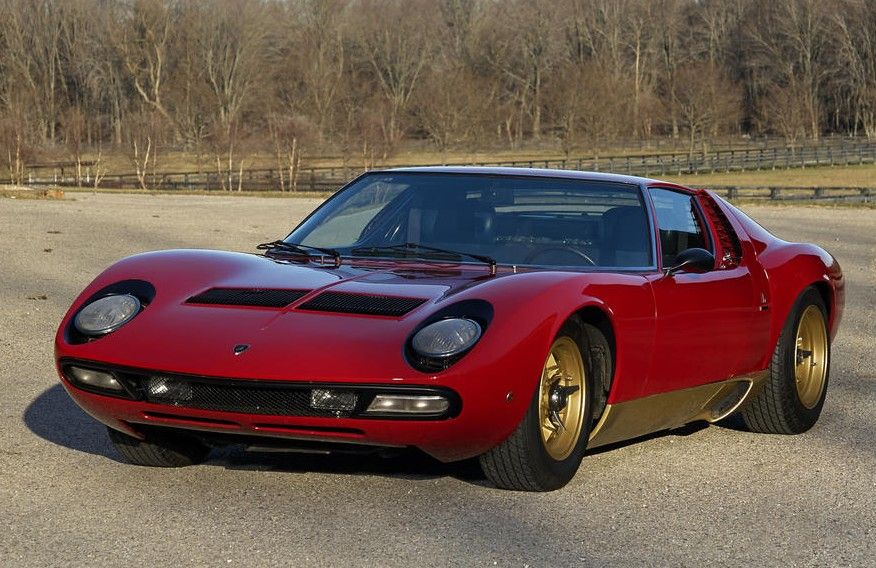
Bonham’s sale in Scottsdale, Arizona was two days ago (look at this turnaround time!). They were also super-quick in posting their results (thank you). Top sale went to this 1972 Lamborghini Miura SV for $1,215,000.

1972 Lamborghini Miura SV

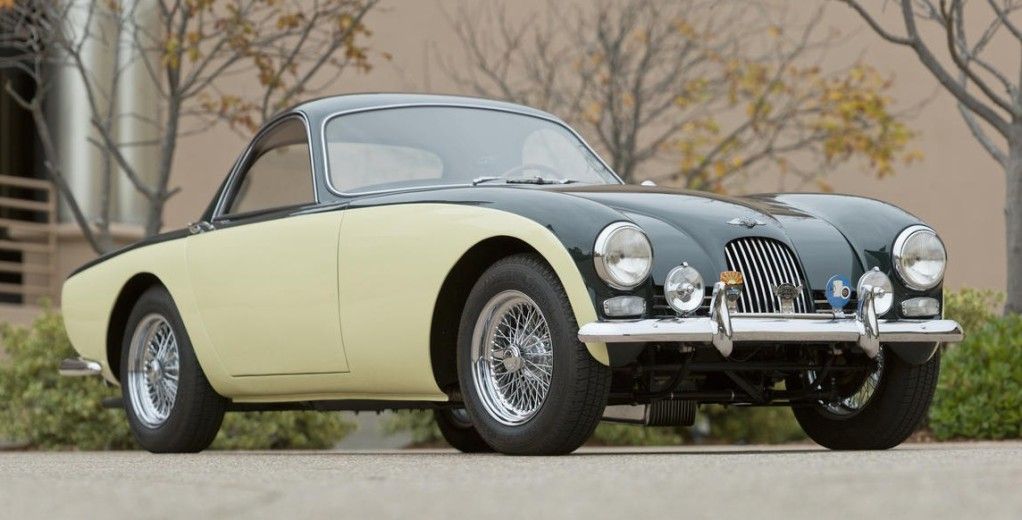
The top sale would have been our featured Mercedes-Benz 540K Cabriolet A, but it failed to sell (actually it sold late, or Bonhams didn’t publish the result at the same time they published the rest of them: it sold for $1,312,500). As did our featured Minerva Convertible Sedan. Another interesting car at this sale was the how-did-I-fail-to-feature-it 1964 Morgan +4+. It’s not a Morgan Plus Four, but a “Plus Four Plus.” These are extremely rare – only 26 were made. This one sold for $230,500.

Two of feature cars did sell. The 1928 Stearns-Knight Roadster sold for $126,000. And the one-off Ferrari 365 GTC Speciale doubled the lower end of its estimate and sold for $885,000 with buyer’s premium. Another interesting car was this 1930 Bugatti Type 46 Faux Cabriolet by Veth & Zoon (one of the more fun among coachbuilder names). It sold for a serious $951,000.

Click here for complete results.

1928 Stearns-Knight

1928 Stearns-Knight F-6-85 6-Passenger Roadster

Offered by Bonhams | Scottsdale, Arizona | January 17, 2013

1928 Stearns-Knight F-6-85 6-Passenger Roadster

Frank Ballou Stearns founded the F.B. Stearns company in 1899 to build cars under the Stearns name. Around this time, Charles Knight was developing his “Silent Knight” sleeve-valve engine and in 1911, Stearns became the first American automaker to use a Knight sleeve-valve engine in their cars. It was at this time that the Stearns name disappeared on the cars and was replaced by the Stearns-Knight moniker.

Stearns continued to run the company until 1925, when he sold it to John North Willys, who kept the company operating and separate from his WillysOverland mini-empire. Willys kept it open as long as he could, shutting it down in December of 1929 at the beginning of the Depression. This 1928 F-6-85 Roadster is one of two known Roadsters still extant with the 8.5-liter straight-six. The model was only offered from 1927-1929.

This car has known ownership from new and has recently undergone a five-year $300,000 restoration that concluded in 2000. It’s a big convertible, the sportiest of models offered from Stearns-Knight, a marque you don’t see very often. It should sell for between $125,000-$150,000. Click here for more info, and here for the rest of the Bonhams lineup.

Update: Sold $126,000.

A [Mostly] Original 540K Cabriolet A

1938 Mercedes-Benz 540K Cabriolet A

Offered by Bonhams | Scottsdale, Arizona | January 17, 2013

1938 Mercedes-Benz 540K Cabriolet A

Hmm, three maroon cars in a row. I didn’t plan that. We’ll need something more colorful for tomorrow. But color isn’t a big issue here because this is a Mercedes-Benz 540K. One of the most desirable cars on earth.

The 540K was, essentially, an updated 500K with a bigger engine. Introduced in 1936, the 540K used a supercharged 5.4-liter straight eight making 180 horsepower with the supercharger engaged. How it worked was, the engine made 115 horsepower as is, but when you floored the accelerator, the compressor kicked in and bumped the power up considerably – allowing the car to attain speeds up to 110 mph.

But what really catches everyone’s attention is that body by Sindelfingen, Mercedes’ in-house coachbuilder. Their cars are gorgeous, this Cabriolet A-style body being no exception. The 540K lasted until 1940, with a total of 83 Cabriolet As built. This car was originally delivered to Paris, but was brought home with a U.S. soldier after the war (what a war prize!). He kept it until 1970 when it was purchased by famed car rescuer Paul Karassik, who painted it the burgundy color you see, replaced the top, and refurbished the leather on the seats. Other than that, this car is original.

Mercedes 540K Cabriolet A’s have an average sale price over the past few years of about $2.5 million. The fact that this car is pretty much original is a wild card – but look for it to bring in the neighborhood of that amount, as Bonhams declined to publish an estimate. You can read more here and check out more from this sale here.

Update: Sold $1,312,500.

One-Off Ferrari 365 GTC

1967 Ferrari 365 GTC Speciale

Offered by Bonhams | Scottsdale, Arizona | January 17, 2013

1967 Ferrari 365 GTC Speciale

This is an interesting car. It is a one-off Ferrari built specifically for the head of Pirelli. On the rear of the car, it says “330 GTC” but the chassis lists it as a “365 GTC,” which didn’t technically go on sale until 1968.

Here’s what happened: Leopoldo Pirelli, President of the tire company the bears his name,  wanted a 330 GTC – but he knew the model was at the end of its road. So he asked Enzo Ferrari to fit it with the engine from the forthcoming 365 GTC and custom made five-spoke Campagnolo magnesium alloy wheels – the first Ferrari ever built with this style wheel (they showed up on a lot of cars after this). So what Pirelli got was basically a prototype vehicle – a 330 GTC fitted with next year’s engine. Ferrari would have called it a “Speciale.”

The engine is a 4.4-liter 320 horsepower V12. The car has been mechanically restored and has been shown at a variety of museums. Only 150 365 GTCs were built and this is the first one – and the only one like it. It can be yours for $400,000-$500,000. Click here for more info. And here for more from Bonhams in Scottsdale.

Update: Sold $885,000.