Buckmobile Runabout

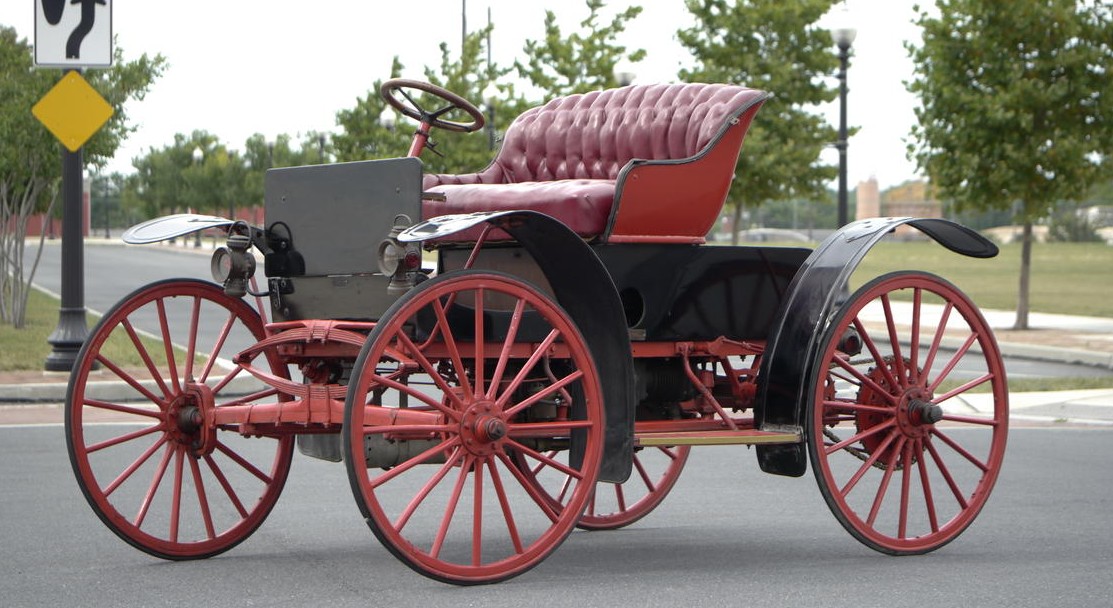
1904 Buckmobile Twin Cylinder 15hp Runabout

Offered by Bonhams | Philadelphia, Pennsylvania | October 8, 2012

How strange – nowhere on this car does the word “Buckmobile” appear. It is entirely unidentifiable without an outside source – in this case, early advertisements that show a clear resemblance (as in: dead-on) to a Buckmobile.

Founded in Utica, New York in 1903 by Albert J. Seaton, the Buckmobile Company produced a two-cylinder runabout making 15 horsepower. The body was spartan but the premiere of the car led to numerous orders. This led Seaton to try quick expansion of the company – which led to its being acquired by the Black Diamond Automobile Company  in 1904. Buckmobile ceased production in 1905.

Short-lived companies from the founding days of the automobile industry have rarely left us any surviving examples. Only three of the about 40 Buckmobiles ever built are known to exist. This example has been cared for since new and has never properly restored. It has had some work done to it recently, but could use a freshening before any serious use. It is expected to sell for between $20,000-$30,000. For more information, click here. And for more cars at this interesting sale from Bonhams, click here.

Update: Sold $46,000.

Update II: Sold, Bonhams Scottsdale 2016, $44,000.

A Pre-Underslung American

1906 American Tourist Roi des Belges Touring

Offered by RM Auctions | Hershey, Pennsylvania | October 11-12, 2012

Photo – RM Auctions

This car, offered from the endless estate of John O’Quinn, was built by the American Motor Car Company of Indianapolis, Indiana. That company is more famously known as “American Underslung” – the name by which their vehicles were badged beginning in 1907, when they introduced their revolutionary (and awesome looking) “underslung” chassis (where the frame is low and between the axles).

But in 1906, their first year for production, the cars were more traditional in design. In fact, the chassis here was designed by non other than Harry C. Stutz – prior to him making it big on his own. The engine is a 35/40 horsepower 5.5-liter L-head straight-four with a three-speed manual transmission sending power through the rear wheels.

The name of the car is simply “American” with “Tourist” being the model designation. I don’t know if I need to explain that, but I’m used to car companies where the word “American” is directly followed by something like “Austin” or “Bantam” or “Underslung” and my mind wants to refer to this as an “American Tourist” – but I guess if that were true it would have to be wearing shorts and gym shoes and shouting loudly in slow, plain English (what a European once told me “gives you away as an American”).

In any case, this car was restored in the 1960s but has been preserved in a museum-quality state ever since. It is expected to sell for between $175,000-$250,000. For more information, click here. And for more from RM at Hershey, click here.

Update: Sold $110,000.

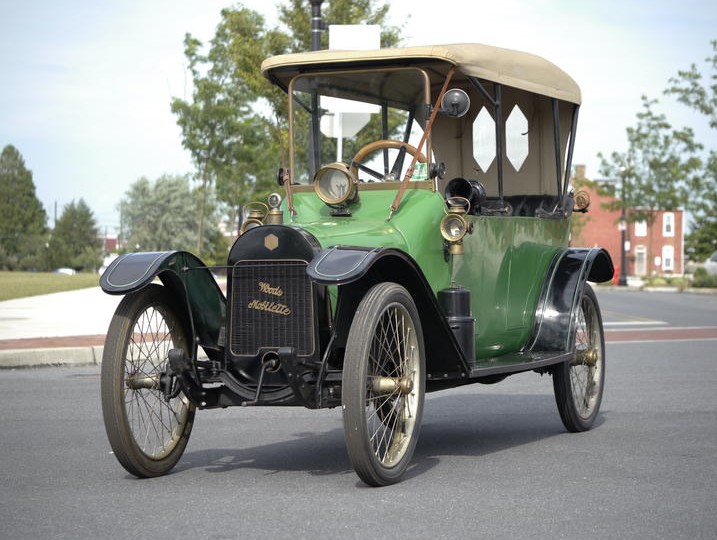
Woods Mobilette Cyclecar

1914 Woods Mobilette Tandem Roadster

Offered by Bonhams | Philadelphia, Pennsylvania | October 8, 2012

How cool is this car? It’s a tandem-seat cyclecar. It seats two, the driver in front and the passenger directly behind him or her. This car is long, tall, and skinny and looks like it would tip over if a curve was taken too quickly, but with practically no weight (less than 500 lbs), it would probably stay on the ground just fine.

Francis A. Woods built his first prototype in 1910 but the Woods Mobilette Company of Harvey, Illinois didn’t begin production on this cyclecar until early 1914. Bonhams lists this as a “circa 1913” and 1914 is certainly “circa 1913.” The engine is a 12 horsepower, 1.1-liter L-head four-cylinder. It would do 40 mph and retailed for $380.

Cyclecars were a big thing in the Teens and this is one of the best of the hundreds of different marques produced in the United States. They were affordable and basic, but the Model T managed to undercut them all – and kill off the fad. Production ceased at the end of 1916. This is one of only a few examples of the Woods Mobilette still extant and it’s way cool. It is expected to sell for between $20,000-$30,000. For more info, click here. And for more from Bonhams “Preserving the Automobile” sale, click here.

Update: Sold $48,300.

McIntyre Runabout

1910 McIntyre Model B-1 Runabout

Offered by Bonhams | Philadelphia, Pennsylvania | October 8, 2012

Auburn, Indiana was one of the early meccas of automobile manufacturing. The W.H. McIntyre Company was founded in 1909 on the heels of Mr. McIntyre’s purchase of the W.H. Kiblinger Company, also of Auburn. (I can’t be the only one to find it odd that the two men who founded these companies had the same first two initials, can I?)

McIntyre was the factory manager at Kiblinger and bought the company out when it was faced with a company-ending patent infringement lawsuit. He changed the name of the company and the design of the car – at least enough so that the lawyers went away.

But it was still, like the Kiblinger, a high-wheeler – a car with big solid-state wagon wheels and enough ground clearance to function in even the most remote sections of the new automobile marketplace. This car has a 14 horsepower flat-twin and a two-speed transmission with chain drive. 1910 was the last year for high-wheelers from McIntyre, although the company soldiered on through 1915.

This one is expected to sell for between $20,000-$30,000. For more information, click here. And for more from Bonhams at the Simeone Foundation, click here.

Update: Sold $37,950.

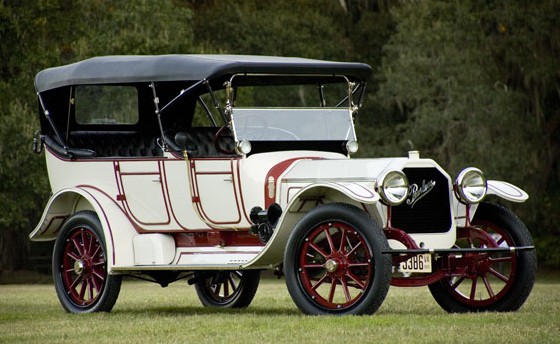
1915 Peerless Touring Car

1915 Peerless 48 HP Seven-Passenger Touring

Offered by RM Auctions | Hershey, Pennsylvania | October 11-12, 2012

This big WWI-era touring car is beautiful. Then again, I’m usually pretty crazy for these cars – but to be one from the “Three P’s” (Peerless, Packard, Pierce-Arrow) makes it even more special. Peerless got off to kind of a slow start in the early 1900s, but by the Teens, production was in full swing and they were turning out some of the finest cars you could buy.

The cars were built in Cleveland and this one has a 48 horsepower 9.5-liter T-head straight-six. The car seats seven and the original owner had five kids – making this their minivan. When the owner, a wealthy Pennsylvanian businessman, died in 1933, the car was put into storage for the next 30 years.

Light work was done on the car over that period by the purchaser’s grandson, but it wasn’t until 2003 that the car was fully restored, making its show circuit debut in 2010, reaping awards wherever it went. It is believed that this car has only covered 24,500 miles since new and it is the only 1915 Peerless 48 HP Seven-Passenger Touring known to exist and it is being sold from the same family that bought it in 1915. For more information, click here. And for more from RM in Hershey, click here.

Update: Not sold.

Duesenberg J-299

1931 Duesenberg Model J Dual Windshield Barrelside Phaeton by LeBaron

Offered by RM Aucitons | Hershey, Pennsylvania | October 11-12, 2012

This Duesenberg has two things – okay three things – going for it. First, it’s a Duesenberg. So score a point over just about all competition. Second, it carries a rare and desirable bodystyle. And third, it has a story.

The body is by LeBaron and it’s a rare “barrelside” dual-windshield phaeton – one of only seven built. “Barrelside” just means that the body has a bit of a curve to it – it’s not extremely noticeable in the pictures.

But the story is the interesting part here. This car was delivered new to Phil Berg, a wealthy Hollywood agent. He and his wife, actress Leila Hyams, were at Al Jolson’s house when Zeppo and Chico Marx roared up in their Mercedes S-Type (I feel like Regis Philbin telling one of his heavy-on-the-name-dropping Hollywood tales). The gathering shifted focus to the two cars parked outside and eventually Chico Marx bet Berg that his Mercedes could beat the Duesenberg in a race from Al Jolson’s house to Santa Monica beach.

Instead of a Depression-era The Fast and the Furious-style race through Hollywood, they decided to move the race to Muroc Dry Lake in the Mojave Desert. Two engineers/racers were grabbed to drive the cars and the friendly wager ballooned to $25 grand – a princely sum in the 1930s. They stripped the cars down to nothing – the Duesenberg looking very awkward without fenders or any unnecessary body panels (pictures available at RM’s site).

There were a few hundred invited celebrity guests in attendance and this Duesenberg was victorious. The car passed through numerous owners before being restored in 1985. It’s an exceptional car with an exceptional history. For more information, click here. And for more from RM in Hershey, click here.

Update: Sold $1,292,500.

Hemi Superbird

1970 Plymouth Hemi Superbird

Offered by Barrett-Jackson | Las Vegas, Nevada | September 20-22, 2012

The Plymouth Superbird is the most outlandish of all muscle cars. Nothing competes with that wing. It’s original purpose was a homologation model for the road so Chrysler could go beat up Ford and General Motors in NASCAR.

Basically, they took a Plymouth Road Runner (the sister car, the Dodge Charger Daytona was based on, well, a Dodge Charger). From there, a streamlined nosecone was added to the front and there were cutouts above the front wheels, covered by rear-facing scoops. Then there was that wing. Why is it so tall? Well, so they could still open the trunk. There were also some cool decals here and there.

Engine choices were limited to the base 440 Super Commando V8 making 375 horsepower. A step up from there was to the six barrel carb setup for 390 horsepower. Or you could go all out and get the 426 Hemi making 425 horsepower.

The car was pretty successful in NASCAR, enough so to get itself banned for 1971. Chrysler only needed to produce 500 road cars to satisfy NASCAR, but, in total, 1,290 Superbirds were built – but only 135 had that oh-so-wonderful and sought-after Hemi engine. This is a matching-numbers Hemi car in Lemon Twist Yellow with 20,000 original miles. It has been restored and looks great. My best guess for price would be around $275,000. For more info, click here. And from more from Barrett-Jackson in Vegas, click here.

Update: Sold $297,000.

GAZ-69

1964 GAZ 69

Offered by H&H Auctions | Newbury, England | September 19, 2012

Pretty beefy, eh? This Cold War-era Russian military truck is a cheap way to have fun with both an old car and a serious off-roader. Although it is listed as a GAZ-69, it is most likely a UAZ 69. What’s the difference?

Well, GAZ (or Gorkovsky Avtomobilny Zavod… which translates to Gorky Automobile Plant)  is and has been one of Russia’s largest vehicle producers for a very long time. Founded in 1932 as NAZ (roughly, Nizhny Novgorod Automobile Plant, named after it’s location), it was a company set up by the Soviet Union and Ford. Well, the Soviets and western business never really got along and Ford was ousted after a year and it was renamed in honor of Maxim Gorky, a Soviet author and political activist.

GAZ has built cars over the years, but commercial and military vehicles are their specialty. The GAZ-69 was introduced as a light off-road truck for the Soviet Army in 1953. GAZ only built them through 1955, when production was taken over by UAZ (a similar, but different, company). UAZ built them through 1972. So this is technically a UAZ 69, but all UAZ models were referred to as GAZs, thus heightening confusion.

These were also built in Romania as ARO IMS-57. You can learn more about ARO vehicles on other parts of this website, namely here. The truck you see here has a 2.1-liter  straight-four making 55 horsepower. You can expect to pick it up for between $6,400 and $9,600. For more information, click here. And for more from H&H at Newbury Racecourse, click here.

Update: Sold $8,000.

Auctions America Auburn Fall Highlights

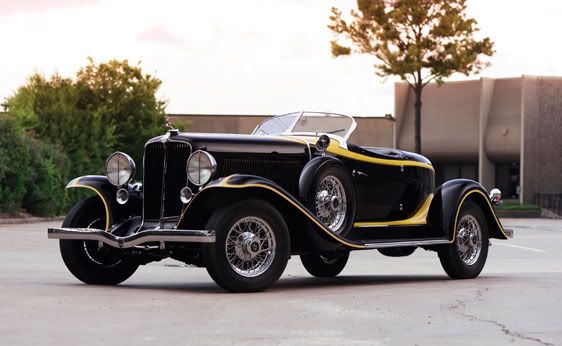
Auctions America’s 2012 Fall Auburn auction featured a boatload – perhaps two boatloads – of cars. The top sale was our featured Duesenberg Model J Derham Sedan for $456,500. Second place went to another local product, a 1932 Auburn 12 Boattail Speedster for $275,000.

1932 Auburn 12 Boattail Speedster

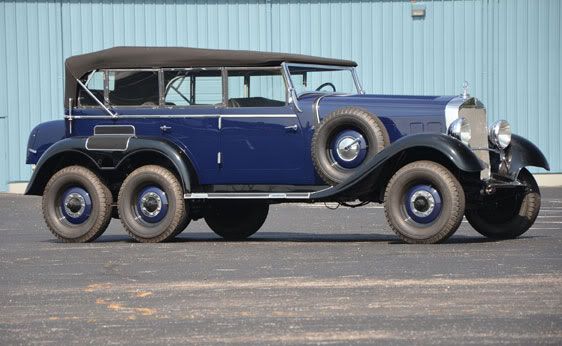
The next highest selling car is kind of a weird one. It’s a recreation of a three-axle Mercedes-Benz Type G4. These monstrous automobiles were originally built for the Germany military and high-ranking Nazi officials. What you see here is one of three faithful re-creations of said cars that was offered at this sale. Two sold, one did not. All were built from scratch at a very high cost. This one brought $269,500 – much less than you could acquire a real one for (if you were to even be able to find one).

Recreation G-4 W131 Grosser Six Seven-Passenger Convertible Sedan

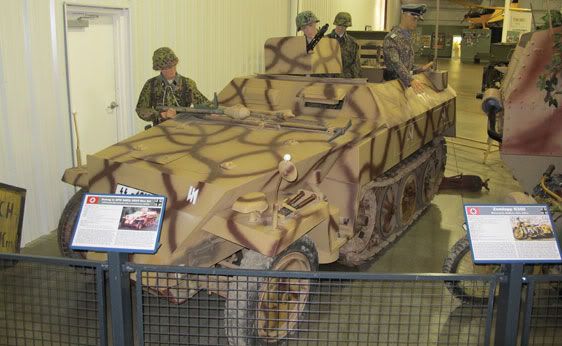
Other interesting sales including this 1944 Demag Half-Track for $93,500.

1944 Demag IE SPW SDKFZ 250/5 Neu Art

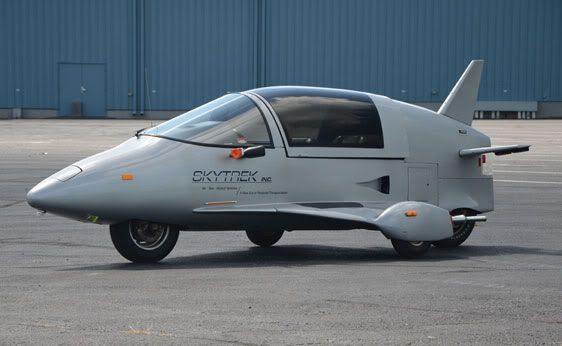
This 1990 Pulse Litestar was one of 360 built. It’s four-cylinder engine was capable of 100 mpg and doing 140 mph. It sold for $22,000.

1990 Pulse Litestar

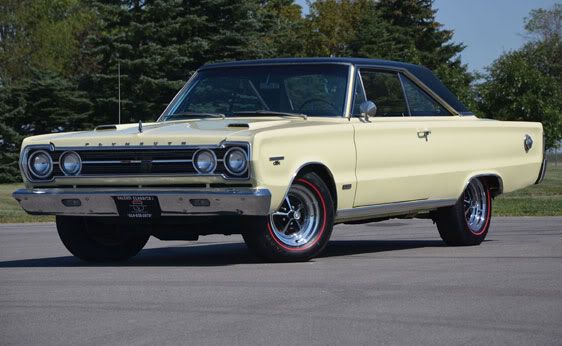
One of my favorite muscle cars (although I prefer the convertible option) is the 1967 Plymouth Hemi GTX. There was one at this sale and it sold for $47,300.

1967 Plymouth Hemi GTX

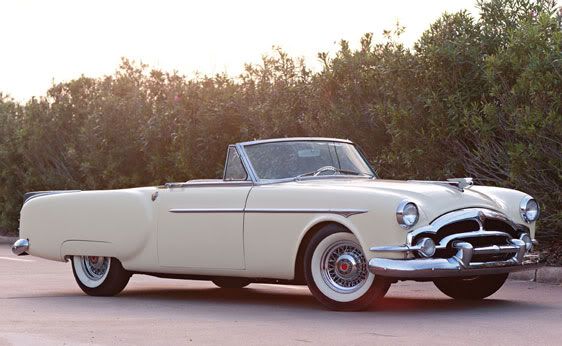
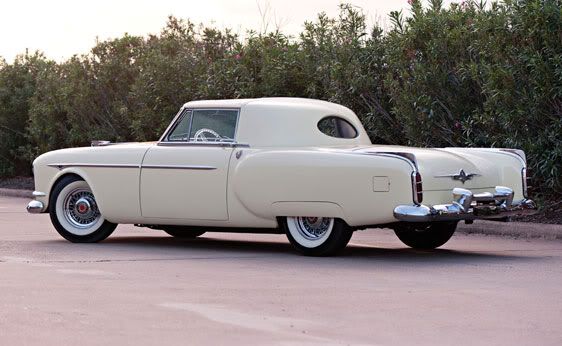
One car that is quite fascinating is this 1952 Packard Pacifica Concept. The car was designed in 1952, but never built. In 2001, someone found the drawings, bought some 1951 Packards and set about building this very attractive retractable hardtop. It sold for $88,000.

1952 Packard Pacifica Concept

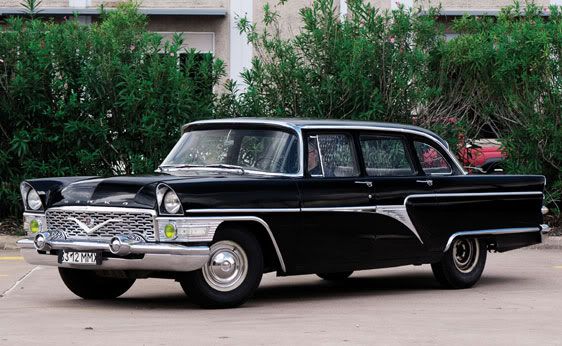
And finally, the coolest car of the whole sale has to be this 1977 GAZ Chaika M-13 Limousine. These cars were based on 1950s Packard designs and were used by the upper echelon of the USSR Communist Party. These are very rare in the United States and about as quirky of a production car as you can find. A time warp to the Cold War, it sold for $40,700.

1977 GAZ Chaika M-13 Limousine

For complete results, click here.

Invicta Bluebird

1931 Invicta 4½-Litre S-Type Low-Chassis Tourer

Offered by Bonhams | Goodwood, England | September 15, 2012

Invictas – especially the low-chassis models – are some of the sportiest cars of the era. They are aggressive looking with a low center of gravity, meaning handling and road holding were areas were Invicta cars excelled over their competitors – which included Bentley and Lagonda, among others. The cars were expensive and only about 1,000 Invicta cars of all models were built.

This is a 4.5-liter S-Type meaning the engine is a 4.5-liter straight-six that has been supercharged to produce speeds capable of 100 mph. All Invictas used Meadows engines built by Henry Meadows (except the first three prototypes). The supercharged Meadows six was a torquey monster – you can drive this car in top gear down to 6 mph!

Invictas never saw the racing success of Bentley. They went after a different niche – cars that could be throttled by their owners – just wrung out. High speeds for extensive distances with no wear or tear. The cars were so solidly built that 68 of the 77 S-Types built still survive.

This car, nicknamed “Bluebird,” has known ownership history since the 1960s and a three-year restoration was completed in 2011. It’s kind of weird, but pre-war cars were available in many different guises: big tourers, racing cars, etc. But this is a sports car. It’s made to go fast – but it’s not a competition car. There aren’t a lot of pre-war cars that are worthy of this designation. And this is among the best of them. The pre-sale estimate is $870,000-$1,100,000. For more information, click here. And for more from Bonhams at Goodwood, click here.

Update: Not Sold.