Renault 5 Turbo Touring Car

1987 Renault 5 Turbo Supertouring

Offered by Silverstone Auctions | Online | November 14, 2020
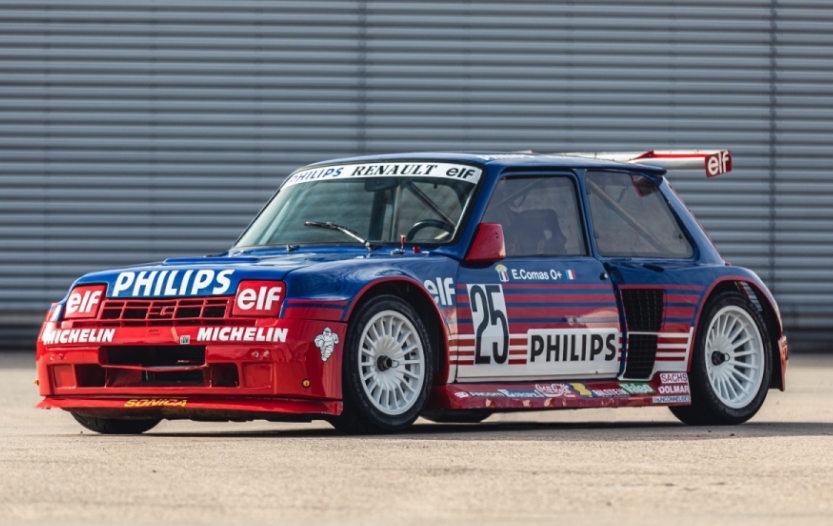
Photo – Silverstone Auctions

The Renault 5 Turbo was the coolest hot hatch of the 1980s. The rally car variants are legendary. But I don’t think I’ve seen an R5 Turbo that I’ve wanted more than this one. It was built as a touring car for the French Supertouring Championship, which was a series that existed between 1976 and 2005.

Only six R5 Turbos were converted to this spec in 1986. Half of those were updated in 1987 (including this car) with a wider track, a lowered suspension, and a revised 1.4-liter stroker version of the turbocharged inline-four. Output was 410 horsepower. The other two updated versions have been retained by Renault.

This car had two race wins during the 1987 season, and it was also the championship-winning car. It was sold after the season to a hillclimb driver who managed to finagle factory support for his privateer effort. It broke after it was “out of warranty,” so he refinished it in its Supertourisme livery and lent it to the Prince of Monaco for display in his collection. It’s since been refreshed and now carries a pre-sale estimate of $390,000-$450,000. Click here for more info and here for more from this sale.

Update: Not sold.
Samson Truck

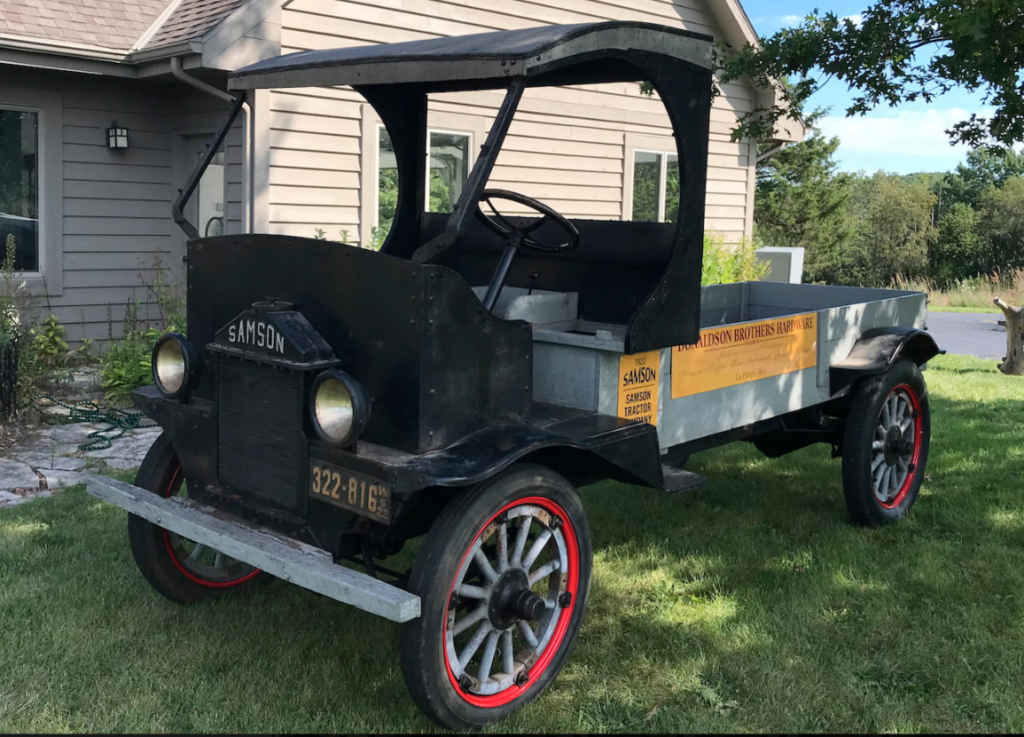
1922 Samson Model 15

Offered by Mecum | Davenport, Iowa | November 19-21, 2020

Photo – Mecum

I agree that the title of this post is lame. “Samson Truck.” I could’ve called it “Samson Model 15,” but the likelihood of ever featuring another Samson truck is so low that I don’t think it’s getting confused with a different one. Why so unlikely? Well, Samson was a tractor manufacturer originally based out of Stockton, California…

Founded in 1900, the company eventually caught the eye of one Billy Durant in 1917. He shifted the company’s headquarters to Janesville, Wisconsin. Between 1920 and 1923, the brand turned out trucks in addition to tractors (along with a prototype passenger car). GM shuttered the brand in 1923 and shifted Chevrolet/GMC production to Janesville, which continued to operate until 2008.

Samson trucks were powered by a Chevy-sourced 26-horsepower inline-four. It’s unknown if this is the original body, but the radiator/cowl area certainly looks correct. The rest of the body could’ve been changed over the years. No windshield is present. This is a cool piece of forgotten GM history, and it’s selling at no reserve. Click here for more info and here for more from this sale.

Update: Sold $11,000.

Bedford TK Box Truck

1973 Bedford TK 220D Box Truck

Offered by Brightwells | Online | November 5, 2020

Photo – Brightwells

The BK was a heavy truck produced by Bedford for an eternity. It debuted in 1960, and the final versions rolled off the line in 1992, although the last Bedford-branded truck was built in 1986. Bedford was essentially the commercial vehicle arm of Vauxhall, which was a GM subsidiary since 1925. GM shed itself of Bedford‘s heavy-truck division in 1987, and the final BKs were badged “AWD”s until 1992.

What I like about this truck is the fact that, like all classic commercial vehicles, it has defied the odds and survived well past the end of its useful life. It’s a moving truck, and who saves a moving truck? The original owner, that’s who. Whoever was using this in the 1970s eventually placed it into storage and still owns it today.

Power is from a diesel inline-four. It’s probably excruciatingly slow, but speed isn’t the point. If you get it, you get it. And if you want to get it, it’ll probably run you between $7,750 and $10,000. Click here for more info and here for more from this sale.

Update: Sold $10,761.

Heron Europa

1967 Heron Europa

Offered by Brightwells | Online | November 2-5, 2020

Photo – Brightwells

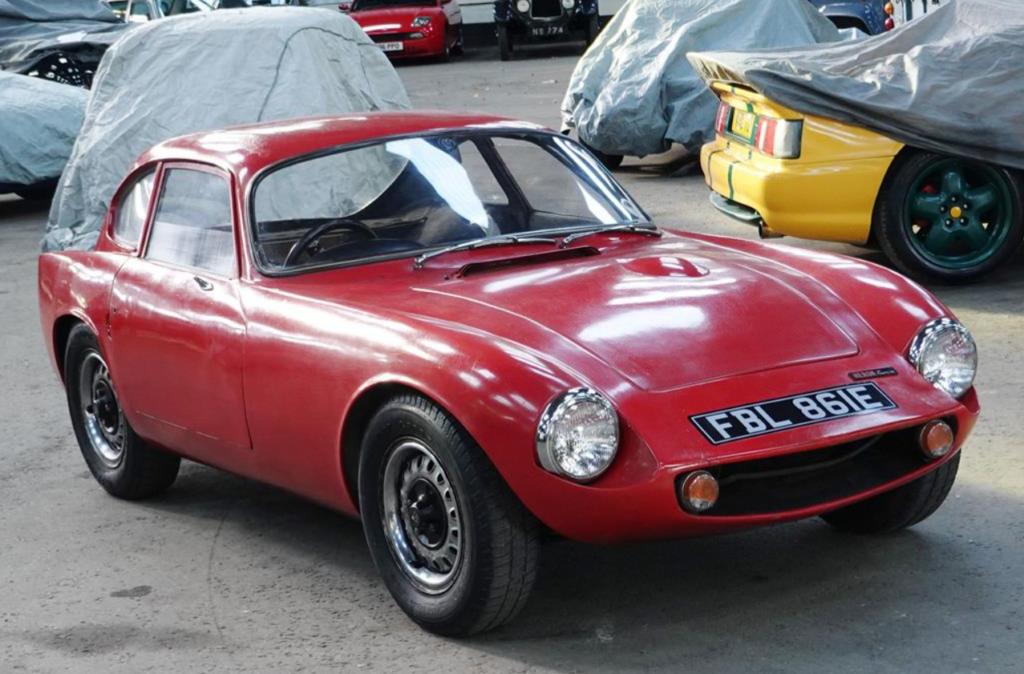
Heron Plastics was based in London and got its start in 1960 building fiberglass shells for Austins. In 1962, they introduced their own car, the fiberglass-bodied Europa. It was sold for a few years, and the catalog estimates that only 12 were made.

It features a steel backbone chassis, independent suspension, and front disc brakes. Power is from a Ford inline-four, which was offered in 1.0- and 1.5-liter forms. No word on what this car has. The Europa was available as a kit or as a complete car.

Brightwells claims this is the only surviving example, though a quick Google search turns up at least one more car out there. Fun fact: this car was the inspiration for Monteverdi‘s MBM Tourismo. The pre-sale estimate on this Europa project is $10,000-$13,000. Click here for more info and here for more from this sale.

Update: Sold $8,635.

Westcott C-48

1920 Westcott Model C-48 Sedan

Offered by RM Sotheby’s | Online | November 12-19, 2020

Photo – RM Sotheby’s, obviously

Sweet watermark. The Westcott Carriage Company was based in Richmond, Indiana, beginning in 1895. They didn’t build their first car until 1909, and it was a simple buggy. The following year they launched right into the production of a four-cylinder car. Westcotts were assembled cars, meaning they were built using off-the-shelf parts from other manufacturers.

They relocated to Springfield, Ohio, in 1916 and continued building cars through 1925. The C-48 was offered in 1920 and 1921, and it was the larger of the two models offered in each of those years. It is powered by a 51-horsepower inline-six and was actually less powerful than the smaller Model C-38 that was sold alongside.

Three body styles were offered, and this seven-passenger sedan is one of 1,850 Westcotts of all types built in 1920. It was actually used as the mayor’s car on Boardwalk Empire. It is now offered without reserve. Click here for more info and here for more from this sale.

Update: Sold $27,500.

The Lion

1932 Fowler 10HP B6 Showman’s Locomotive

Offered by Bonhams | London, U.K. | October 30, 2020

Photo – Bonhams

Well here’s a new class of vehicle we haven’t featured before. The Showman’s Road Locomotive. It’s basically a steam traction engine that is made to go down the road, helping transport a circus or carnival. And then once it gets to where it’s going, it’s the powerplant for the show. They are very large and very ornate.

This one was manufactured by John Fowler & Co. of Leeds. The company built four B6 “Super Lion” road locomotives. These were the last such machines built, as steam’s popularity was on the wane. The last road locomotive ceased operation in 1958, and most of them ended up scrapped. This example is the first of the four Super Lions, two others of which also survive.

When new, it was used to power carnival rides until it was retired in 1946. It had two owners between 1950 and 2018, and it was restored over a two-year period in the mid-1990s. Like many other showman’s locomotives, it features a full canopy, a front dynamo, and a lot of brass.

Steam traction engines are impressive beasts in the own right, but once you add this sort of over-the-top glamour to them, they really just become awe-inspiring. This one is expected to sell for between $1,000,000-$1,600,000. Why not? Click here for more info and here for more from this sale.

Update: Sold $1,195,794.

B.A.T. 9

1955 Alfa Romeo B.A.T. 9d

Offered by RM Sotheby’s | New York, New York | October 28, 2020

Photo Courtesy of RM Sotheby’s

And then there was this one, the final Alfa Romeo B.A.T. concept car of the 1950s (they actually produced a B.A.T. 11 concept in 2008 as a sort of tribute to the first three). Scaglione’s styling on this one was a little more subdued. The rear wings shrunk down, and the front end actually carried an Alfa Romeo corporate look, foreshadowing the Giulietta Sprint Speciale.

This one also debuted at the Turin Motor Show, albeit in 1955. Ownership history is known since new, and the powertrain was again sourced from Alfa’s 1900.

The story of the three of these being united is interesting. Nuccio Bertone was in Pasadena, California, in 1989, and the organizers of the Pebble Beach Concours arranged to have all three cars displayed at their show, which Bertone ended up attending. While there, a collector made offers on all three, and it worked. The cars later spent ~10 years at the Blackhawk Museum and are all three now being offered as a single lot. Click here for more info.

Update: All three B.A.T. cars sold as a single lot for $14,840,000.

Woods Dual Power

1917 Woods Dual Power Type 44 Roadster

Offered by Bonhams | London, U.K. | October 30, 2020

Photo – Bonhams

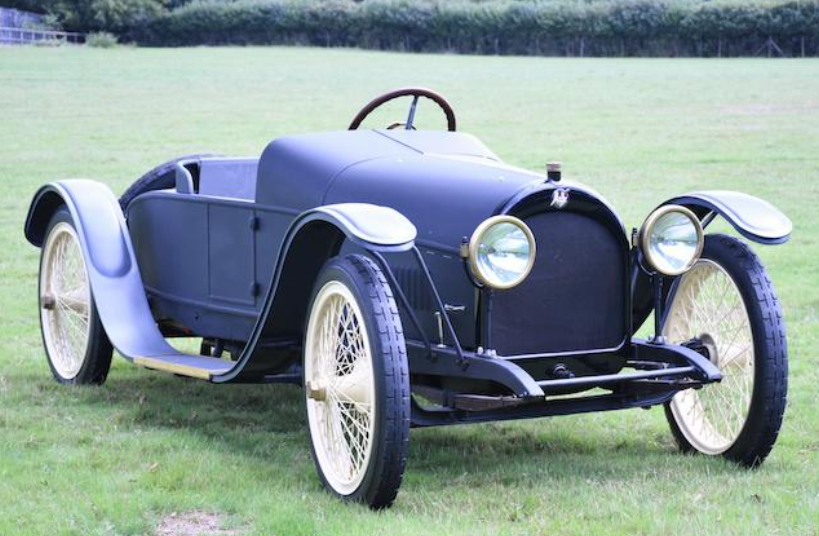
I’m not a huge fan of featuring project cars (this one is described as 80% complete), but the car itself is interesting – and rare – enough that I had to. The Woods Motor Vehicle Company was founded in Chicago in 1899. They produced electric vehicles through 1916, though they did sell gas-powered cars under the Woods Electric brand for a few years.

In 1917, the company rebranded as Woods Dual Power, a new marque that would last only through 1918. The new cars had an inline-four gas engine rated at 14 horsepower, in addition to an electric motor. Below 15 mph, the car drove on electricity (though the gas engine was still idling). After it hit 15, the gas motor would take over, pushing the car up to 35 mph. It was essentially a very early hybrid.

Only 1,900 examples were produced, and only four are known to survive. Three are in museums, and this example was restored in the 1980s. It was later present in a private German collection when a fire swept through and a beam landed on the Woods, crushing it. The current owner straightened the chassis, sourced a replacement gas engine, and rebuilt the electrics to roughly mimic the original running procedure. It now carries a roadster body and still needs some additional touches to be complete. In this state, it should sell for between $41,000-$45,000. Click here for more info and here for more from this sale.

Update: Not sold.

B.A.T. 7

1954 Alfa Romeo B.A.T. 7

Offered by RM Sotheby’s | New York, New York | October 28, 2020

Photo Courtesy of RM Sotheby’s

This is the second of the three Alfa Romeo B.A.T. concept cars that RM Sotheby’s is offering as a single lot later this week in New York. It was also styled by Franco Scaglione at Bertone and carries a similar look as BAT 5, except that those rear wings are pulled so far inward they look like the spiraling vapor trails off the end of a plane’s wing.

The driveline was sourced from Alfa’s 1900, meaning that this car has a 115-horsepower 2.0-liter inline-four. Designed without the aid of computers (and likely little-to-no windtunnel time), the BAT 7 boasts a drag coefficient of 0.19. That’s better than a Prius, a car designed specifically to slip through the air.

This car debuted at the 1954 Turin Motor Show and was later sent to the U.S. by Alfa Romeo. It even ran in SCCA races in 1955. The rear wings were removed at one point before being re-installed during a late-1980s cosmetic restoration. Click here for more info.

Update: All three B.A.T. cars sold as a single lot for $14,840,000.

Mignonette-Luap

1900 Mignonette-Luap 2.25HP Voiturette

Offered by Bonhams | London, U.K. | October 30, 2020

Photo – Bonhams

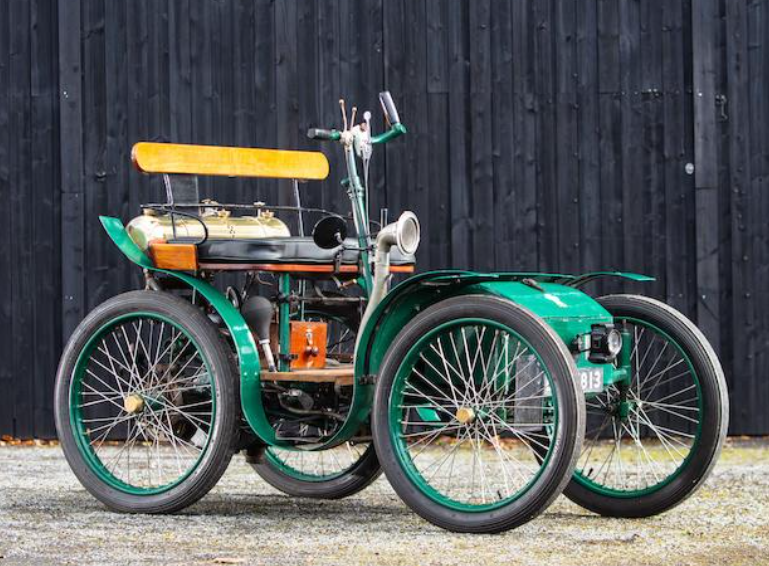
Well here’s a car that probably shouldn’t still exist. Mignonette-Luap was a short-lived product of Jiel-Laval et Cie of Bordeaux, France. Produced only between 1899 and 1900, this small voiturette could potentially be the only remaining example of the marque.

Power is from a 2.25-horsepower De Dion-Bouton single-cylinder engine mounted at the rear. In a case of making customers feel good about their purchase, the car was also equipped with pedals should you need to bike it the rest of the way home after the engine failed.

But no fear, it has completed the London-to-Brighton three times since 2011. It has tiller steering, a two-speed gearbox, and an Amal carburetor from a much later motorcycle. It also has a pre-sale estimate of $65,000-$71,000. Click here for more info and here for more from this sale.

Update: Not sold.