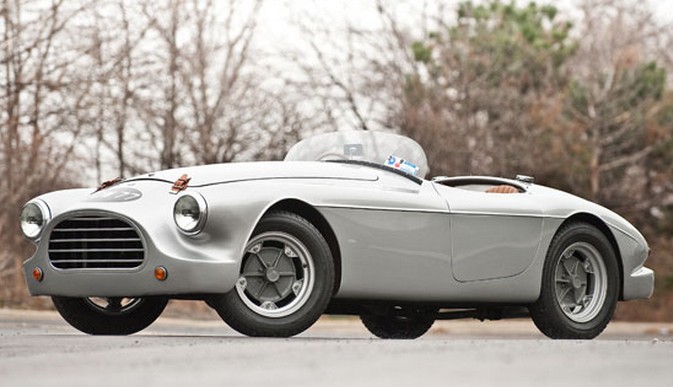
1945 Deutsch-Bonnet Race Car

1945 Deutsch-Bonnet Type DB Sport

Offered by Osenat | Fontainebleau, France | June 23, 2013
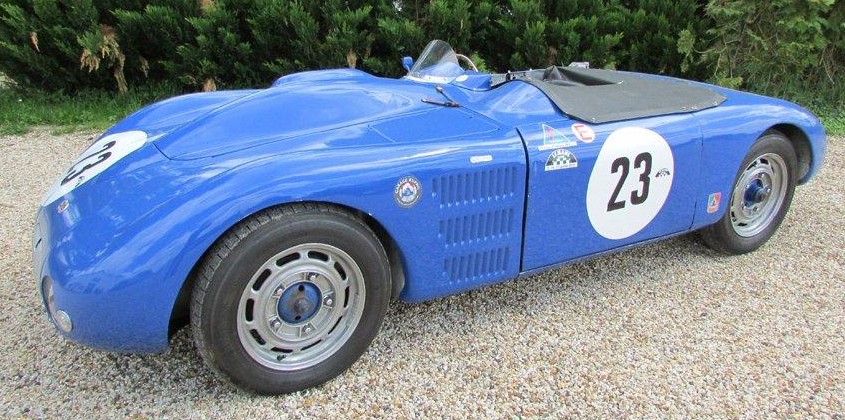
1945 Deutsch-Bonnet Type DB Sport 2

Deutsch-Bonnet (which would later become known simply as “D.B.”) began building racing cars in the late-1930s, just prior to war breaking out. They picked up right where they left off immediately after the conclusion of World War II.

This car competed in the first race held in France after the war and it was one of only two cars entered that had actually been built after the war (both were Type DBs) – and they had front-wheel drive and four-wheel independent suspension. This car uses a 2.0-liter straight-four engine.

I’ll attempt to break down this car’s complete racing record:

  • 1945 Coupe de Paris – 6th (with René Bonnet)
  • 1946 Grand Prix of Nice – DNF (with Bonnet)
  • 1946 Grand Prix of Marseille – 3rd (with Bonnet)
  • 1946 Coupe de la Ville de Saint Etienne – 2nd (with Bonnet)
  • 1946 120km Cup – 2nd (with Bonnet)
  • 1946 Belgian Grand Prix – DNF (with Bonnet)
  • 1946 Grand Prix de Bourgogne – DNF (with Bonnet)
  • 1946 Cup of Nantes – DNF (with Bonnet)
  • 1947 Coupe de Paris – DNF (with Bonnet)
  • 1948 Coupe de Pairs – 5th (with Bonnet)
  • 1948 12 Hours of Paris – 14th (with Bonnet)
  • 1949 Grand Prix d’Aix-les-Bains – 3rd (with René Abbo)
  • 1949 24 Hours of Le Mans – 24th, DNF (with Bonnet and Charles Deutsch)
  • 1949 Grand Prix de l’ACF du Comminges – DNF (with René Simone)
  • 1949 Côte de Bellevue – 2nd (with Simone)
  • 1949 Coupes du Salon – 7th (with Simone)
  • 1950 Coupe de Marseille – 2nd (with Simone)
  • 1950 Coupes de Vitesse – 5th in class (with Simone)
  • 1950 Mille Miglia – DNF (with Simone and Bruno Marchio)
  • 1950 24 Hours of Le Mans – 50th, DNF (with Simone and Michel Arnaud)
  • 1950 Grand Prix de Rouen – 2nd (with Simone)
  • 1950 German Grand Prix (at Nurburgring) – 8th in Class (with Simone)
  • 1950 Grand Prix of Cadours – 1st (with Simone)

It competed here and there from 1951 through 1958, but it had quite the important race history up to then. It spent the next 25 years being driven around Nice on the French Riviera. In 1974 it was purchased by the current owner who dug into the history of the car to find out what he had. Yes, he had scored big.

The chassis (chassis no. 5) is original and it is stated that so is 80% of the bodywork. The car has competed in a number of historic races including five appearances in the Le Mans Classic. It is eligible for almost every historic event and is road legal. This is one of the first race cars (actually the second) built in France (and maybe Europe) after the conclusion of the Second World War. No estimate is given so that should be a sign that it could be rather pricey. Click here for more info and for a ton of old photos. And here for the rest of Osenat’s auction lineup.

Update: Not sold.
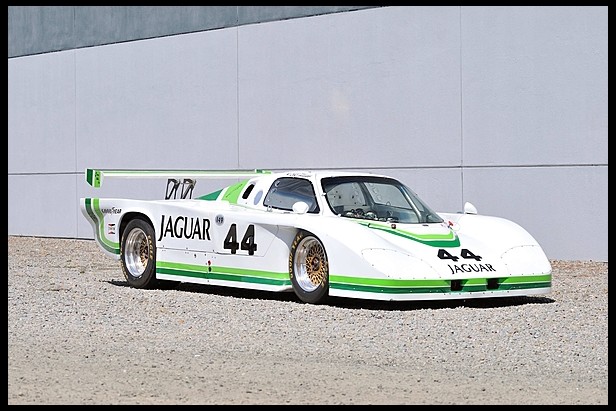
Jag XJR-5

1982 Jaguar XJR-5

Offered by Mecum | Monterey, California | August 17, 2013

1982 Jaguar XJR-5

Jaguar really didn’t do much for itself as a sporting marque between the years of about 1955 and 1980. Sure, some of their cars competed in the hands of privateers over the years, but a factory effort was missing. That changed when Bob Tullius’ Group 44 race team was staring down a shut down.

Jaguar came calling and essentially absorbed the race team to be their factory effort in the prototype arena. The goal was to compete in IMSA GTP and the FIA World Endurance Championship (and later, Le Mans). It’s very aerodynamic and uses an aluminium tub, Kevlar composite body panels and Lockheed disc brakes. The engine is a mid/rear-mounted 6.0-liter V-12 making 625 horsepower. If geared correctly, this thing can do 217 mph.

You’re looking at the first XJR-5 built. It wears serial number 001 and it’s race history consists of the following:

  • 1982 Road America 500 Miles – 3rd overall, 1st in class (with Bob Tullius and Bill Adams)
  • 1982 Six Hours of Mid-Ohio – DNS after a practice crash (with Tullius and Adams)
  • 1983 100 Mile Laguna Seca – 2nd (with Tullius)

Bob Tullius owned this car after its brief racing career ended and he drove it at the 2000 Goodwood Festival of Speed. It was acquired directly from him by its current owner. It has been recently restored and track-tested.

This is a historically significant race car: it was the first XJR prototype and it spawned a series of successful prototypes (and even a sports car) that were competitive for the next 11 years. One of these last sold in 2006 for less than $250,000. Things may have changed little since then. We’ll see. Click here for more info and here for more from this sale.

Update: Failed to sell (high bid of $475,000).

S/N: 001

Barzoi 2

1977 Fournier-Marcadier Barzoi 2

Offered by Osenat | Fontainebleau, France | June 23, 2013

1977 Fournier-Marcadier Barzoi 2

Photo – Osenat

Okay, so this isn’t the greatest picture in the world, but I can’t tell you the last time I saw one of these come up for sale. And you get the idea of how freakish this thing really looks from this photo.

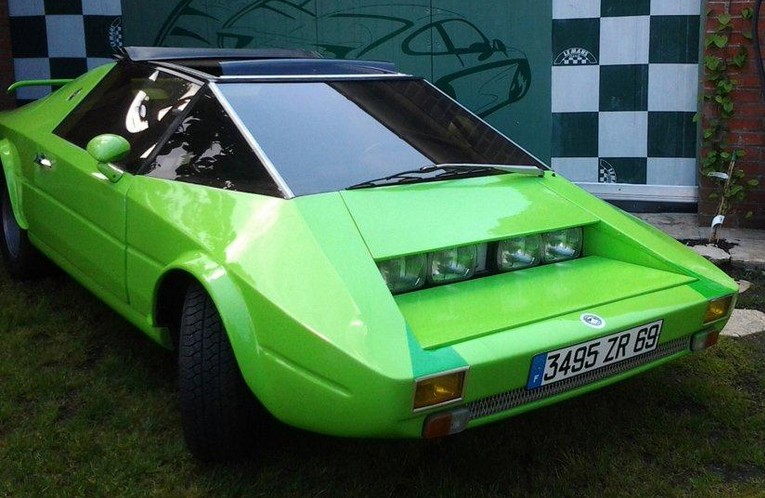
The weird inset reverse-pop-up headlights are one of the strangest things I’ve ever seen – it’s like KITT’s nerdy kid brother. If you look at the panel in front of the lights, you’ll notice that it pops up and shield the lights when not in use, creating a slick aerodynamic front profile. The lot description describes it as “James Bond”-ish and I think that is apt. If I didn’t know any better, I could picture this thing as a submarine.

This was not a kit car, unlike the Barquette above. Well – not kits that consumers could put together anyway. The chassis is out from under a Simca 1000 Rallye (this one is from a ’73 model). The engine is also from the same car – it’s an 80 horsepower straight-four unit of 1.3-liters. It is also rear-engined.

The Barzoi 2 was the last road car Fournier-Marcadier built and only 50 were made. This is expected to bring between $20,700-$28,500. Click here for more info and here for more from Osenat.

Update: Not sold.

A Pair of Fournier-Marcadiers

1966 Fournier-Marcadier Barquette

Offered by Osenat | Fontainebleau, France | June 23, 2013

1966 Fournier-Marcadier Barquette

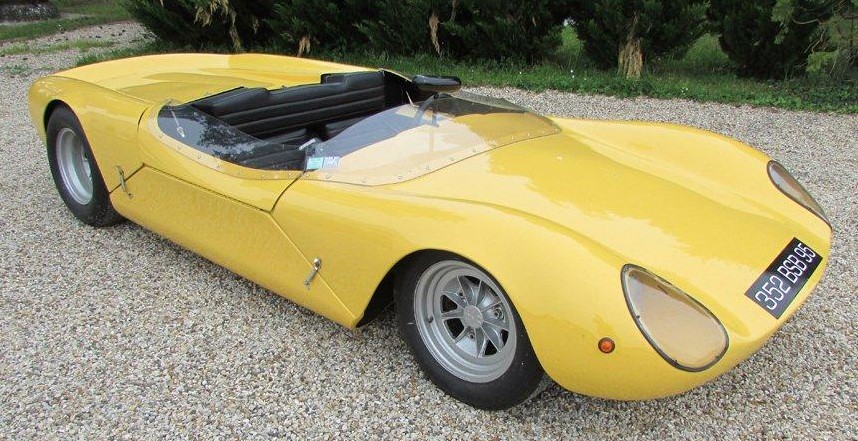
André Marcadier built bicycles in France after World War II. In the early 1960s, he also began building go kart chassis and shortly thereafter met Colin Chapman. He liked what Lotus was doing in the U.K. and wanted something similar in France. So he teamed up with Marcel Fournier and, in 1963, launched France’s first kit car.

The FM 01 Barquette, as it was first called, was offered in kit form from 1963. The engine is from a Renault 8 Gordini – it’s a 1.1-liter straight-four tuned to make 89 horsepower that sits behind the driver and passenger. The car was supposed to be the sort of French kit version of the Lotus 23. In all, about 60 kits were sold through 1966.

This car should sell for between $32,000-$45,000. Click here for more info and here for more from this sale.

Update: Sold $32,750.


1977 Fournier-Marcadier Barzoi 2

Offered by Osenat | Fontainebleau, France | June 23, 2013

1977 Fournier-Marcadier Barzoi 2

Okay, so this isn’t the greatest picture in the world, but I can’t tell you the last time I saw one of these come up for sale. And you get the idea of how freakish this thing really looks from this photo.

The weird inset reverse-pop-up headlights are one of the strangest things I’ve ever seen – it’s like KITT’s nerdy kid brother. If you look at the panel in front of the lights, you’ll notice that it pops up and shield the lights when not in use, creating a slick aerodynamic front profile. The lot description describes it as “James Bond”-ish and I think that is apt. If I didn’t know any better, I could picture this thing as a submarine.

This was not a kit car, unlike the Barquette above. Well – not kits that consumers could put together anyway. The chassis is out from under a Simca 1000 Rallye (this one is from a ’73 model). The engine is also from the same car – it’s an 80 horsepower straight-four unit of 1.3-liters. It is also rear-engined.

The Barzoi 2 was the last road car Fournier-Marcadier built and only 50 were made. This is expected to bring between $20,700-$28,500. Click here for more info and here for more from Osenat.

Update: Not sold.

Fournier-Marcadier Barquette

1966 Fournier-Marcadier Barquette

Offered by Osenat | Fontainebleau, France | June 23, 2013

1966 Fournier-Marcadier Barquette
Photo – Osenat

André Marcadier built bicycles in France after World War II. In the early 1960s, he also began building go-kart chassis and shortly thereafter met Colin Chapman. He liked what Lotus was doing in the U.K. and wanted something similar in France. So he teamed up with Marcel Fournier and, in 1963, launched France’s first kit car.

The FM 01 Barquette, as it was first called, was offered in kit form from 1963. The engine is from a Renault 8 Gordini – it’s a 1.1-liter straight-four tuned to make 89 horsepower that sits behind the driver and passenger. The car was supposed to be the sort of French kit version of the Lotus 23. In all, about 60 kits were sold through 1966.

This car should sell for between $32,000-$45,000. Click here for more info and here for more from this sale.

Update: Sold $32,750.

One of the Earliest Sports Cars

1908 Isotta Fraschini Tipo FENC Two-Seater

Offered by Mecum | Monterey, California | August 17, 2013

1908 Isotta-Fraschini Tipo FENC

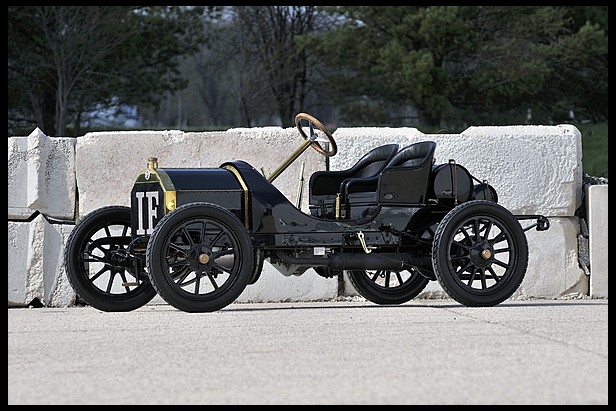
Milan-based Isotta Fraschini began building cars of their own design in 1904. This car came not long after that. The Type FE was a race car built by Isotta to compete in the great European races of the day. Its predecessor, the Type D, used a 17.2-liter straight-four engine. That’s “train-size.”

Well that big engine didn’t fare so well in competition, detonating itself after one lap. So, for the 1908 races, Isotta tried something different. Instead of brute power via displacement, they went for the whole package. The cars were light and handled well – weight was only 1,342 pounds – which is probably close to what the 17.2-liter engine weighed. And then they fitted it with a light 1.2-liter straight-four.

They were more successful at the track and Isotta Fraschini built some for the road and dubbed them “FENC.” The engine was enlarged to 1.3-liters and makes about 17 horsepower. It is capable of 60 mph. You could call it a sports car. Only about 100 FENCs were built and only two are known to survive. This one was discovered in 1985 in bad shape and then thoroughly restored. It sold at auction in 2008 for $166,500. We’ll see how it goes this time around. Click here for more info and here for more from Mecum in Monterey.

Update: Sold $145,000.

S/N: 6023

B.N.C. Type 53

1929 B.N.C. Type 53

Offered by Osenat | Fontainebleau, France | June 23, 2013

1929 BNC Type 53

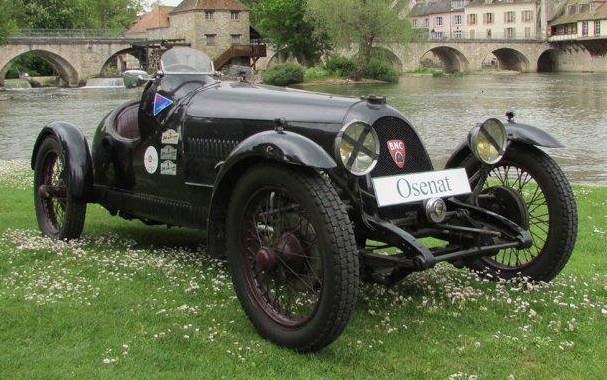
B.N.C. was a French automobile company founded in 1923 by Lucien Bollack and René Netter (the “B” and the “N” – the “C” stands for “et Cie” or “and company”). They hired an engineer who had experience building cyclecars and a cyclecar was the basis for their first model. The cyclecars were successful in competition but sales were always slow.

In the late 1920s, the company shifted toward larger, more expensive cars – and sales grew dimmer. Even super sporty cars like this didn’t help and both founders were forced out in 1928. The company closed for good in 1935.

This car uses a 1.1-liter straight-four by Ruby and has been campaigned in the Le Mans Classic four times in the past 11 years (as B.N.C. raced at Le Mans in period, just not this car). It is said that this car has serious pace for its age. It is certainly rare and rather sporty looking. It is expected to sell for between $105,000-$160,000. Click here for more details and here for more from Osenat’s sale.

Update: Sold $104,800.

Artcurial 6/10/13 Paris Sale Highlights

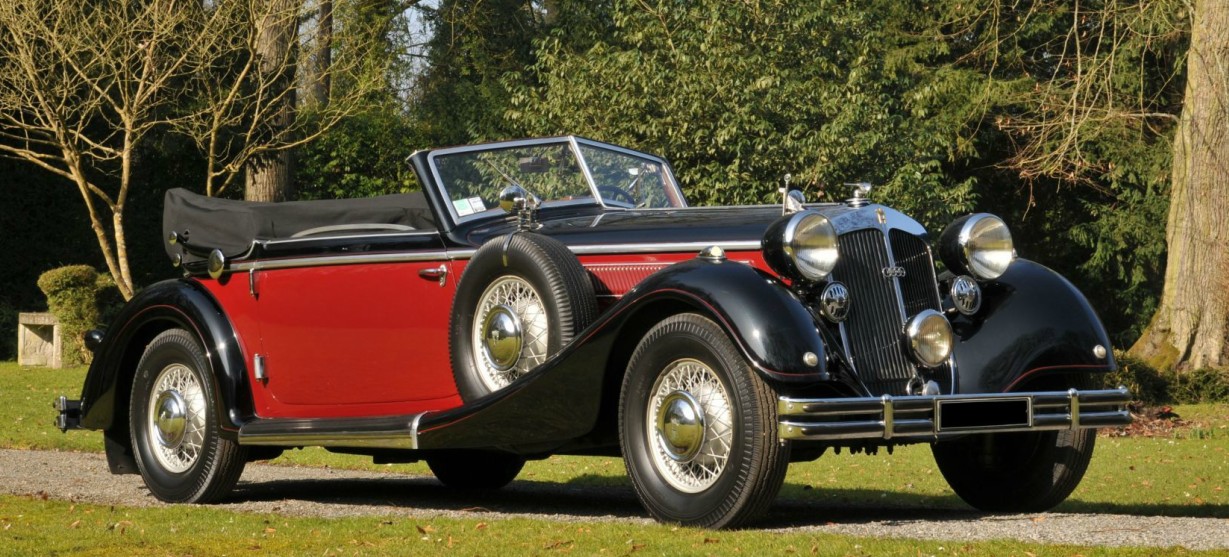
Artcurial held a relatively large sale in Paris on Monday and we featured a couple of cars from it. The top sale was this 1939 Horch 853A Cabriolet for $873,553.

1939 Horch 853A Cabriolet

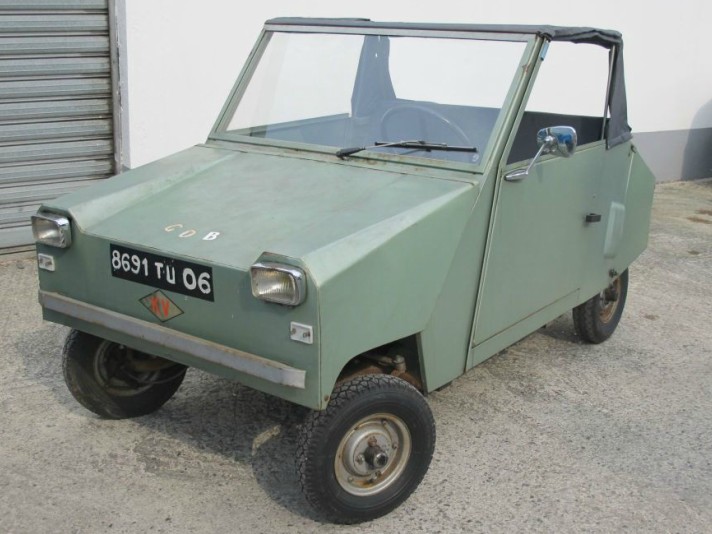
Among our feature cars, there were two ASAs. Both sold: the race car RB 613 brought $291,184 while the road car 411 GT brought $237,545 – more than double the high end of the pre-sale estimate! Interesting cars were led by this 1974 KV Mini 1. It was built by KV using a 125cc engine. It’s a rare microcar of which not many were built. It sold for $2,759. Arrested Development fans take note – the hood appears to read “GOB.”

1974 KV Mini 1

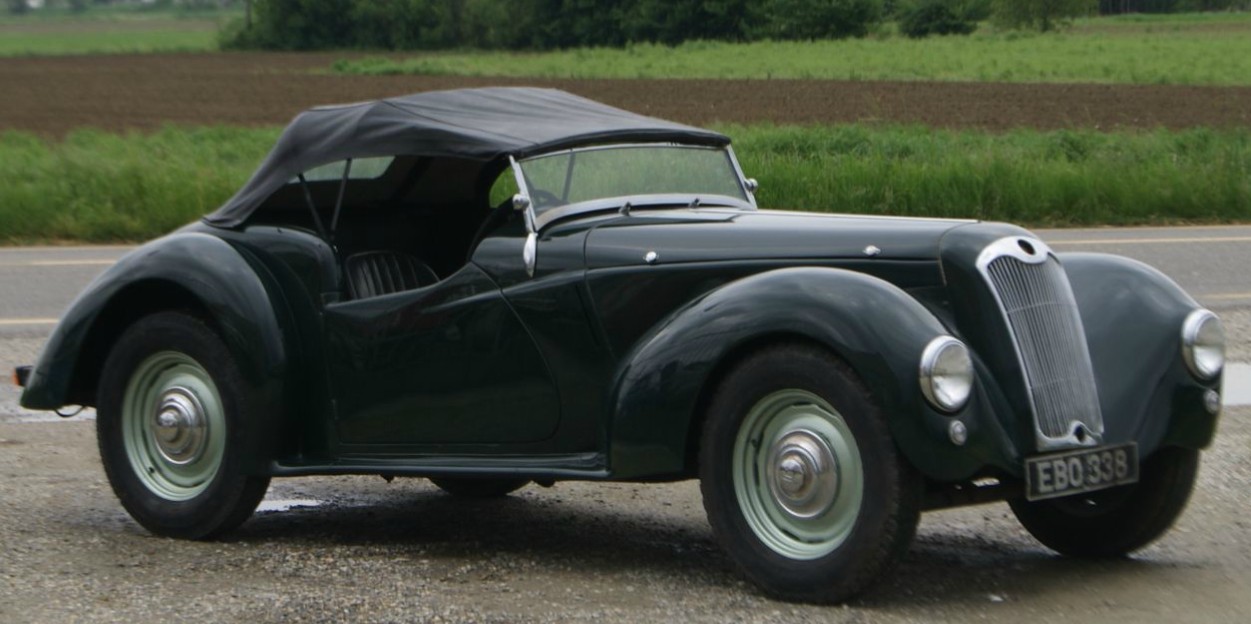
Other interesting sales included this 1948 Lea-Francis 14HP Roadster. It sold for $49,042.

1948 Lea-Francis 14HP Roadster

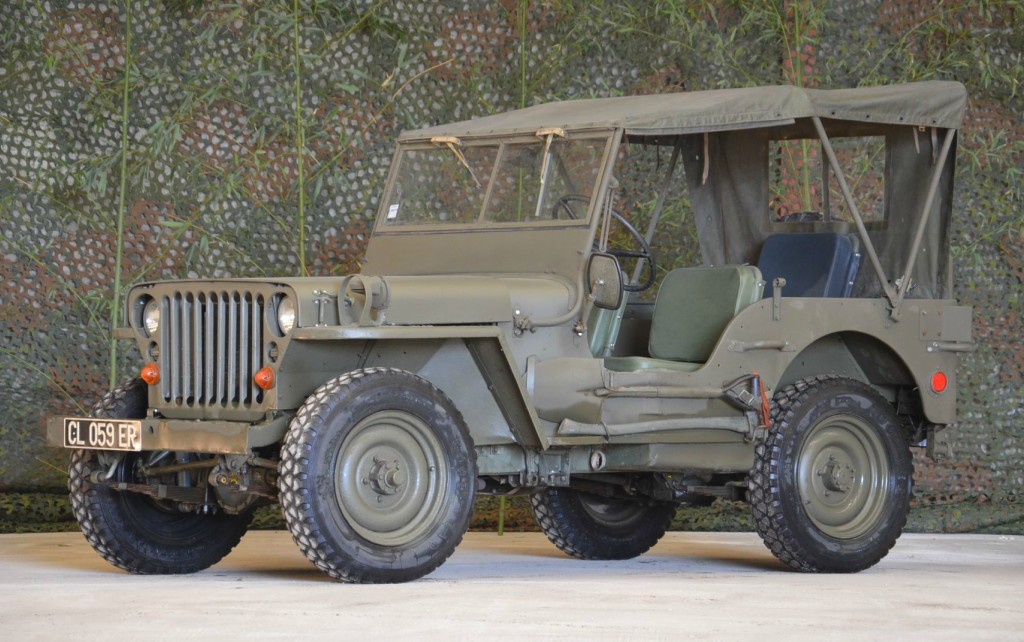
One of our featured cars was an incredible military vehicle – a barn find condition World War I Nash Quad. It sold for $21,456. There were other military vehicles here as well, including this 1964 Hotchkiss M201 which sold for $15,325.

1964 Hotchkiss M201

There were a number of really nice, pretty French cars at this sale as well, including a trio of Bugattis, highlighted by this 1935 Type 57 Gangloff Coupe. It sold for $712,635. And our featured Renault Nervastella sold for $324,844 – almost three times its original estimate. Check out complete results here.

1935 Bugatti Type 57 Gangloff

Tojeiro Barchetta

1952 Tojeiro Barchetta

Offered by Russo & Steele | Newport Beach, California | June 20-21, 201

1952 Tojeiro Barchetta

John Tojeiro was born in Portugal but relocated to England when he was very young. That move was important because after World War II, in which John served, England would become a hotbed for race car building.

Tojeiro made his name as a chassis engineer and once he was established, customers were contacting him and commissioning him to build one-off race cars. Tojeiro’s first car was powered by a Bristol engine and the body was supposed to look like a Ferrari 166 MM. Shortly after that, Tojeiro built two or three MG powered cars with a similar body. This is one of those cars.

The engine is a 1.5-liter MG straight-four, power output unknown – but likely less than 125. One of the three cars like this was driven to the AC headquarters and AC repainted it blue, put one of their engines in it, and displayed it as the AC Ace. So this car (which was not used by AC) is sort of the prototypical AC Ace. Which is pretty cool if you think about it (and if you refuse to think about it, I’ll tell you: the Ace became the Cobra. Shelby Cobras can directly trace their origin to this car).

This car was raced on road courses by privateers until the end of the 1954 season. It finished every race. It has bounced between owners quite a bit since then (and even a fair amount in the past five years). This car sold in Monterey last year at a different auction for a touch more than $150,000 and it sold twice in 2011 for about the same price (a little less). We’ll see what it brings this time around as the market continues to improve. Click here for more info and here for the rest of Russo & Steele’s Newport Beach lineup.

Update: Sold $159,500.

Update: Not sold, RM Sotheby’s, Arizona 2021.

Javan R1

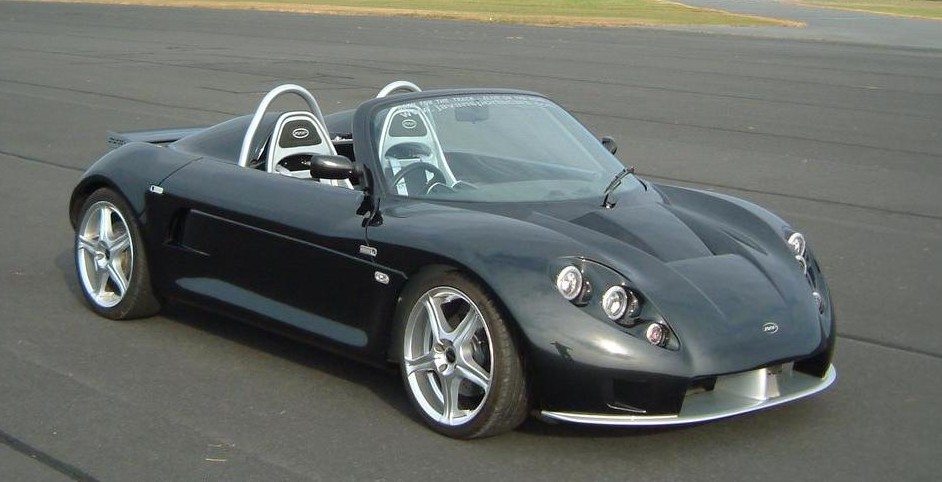
2008 Javan R1 Roadster

Offered by Bonhams | Oxford, U.K. | June 15, 2013

2008 Javan R1

The Strathcarron SC-5A was a track-day sports car introduced in 1999. The company folded in 2001. Javan Smith set up Javan Sports Cars in 2002. In 2006, the company debuted the Javan R1 at the Goodwood Festival of Speed – it’s an evolution of the Strathcarron that is aimed at the Ariel Atom, Lotus Elise and Caterham Seven replicas.

This is the second R1 built (which didn’t happen until 2008) and it was the company demonstrator. It uses a 2.0-liter straight-four Honda VTEC making 220 horsepower and screams to a 9000-rpm redline. Acceleration numbers are impressive as 62 mph comes in 3.6 seconds and the top speed is 140 mph.

This was their publicity car and it has only covered about 3,000 miles. It would be a fun track day car for a lot less money than an Elise or an Atom. I’m pretty sure the cars are still available for purchase but I think you have to order one to have it built – but only a handful have been built thus far, so it’s definitely rare. This one should sell for between $11,000-$15,000 – which is extremely affordable for a track day car. Click here for more info and here for the rest of Bonham’s auction lineup.

Update: Sold $17,068.