Motobécane KM 2U

1962 Motobécane KM 2U

Offered by RM Auctions | Madison, Georgia | February 15-16, 2013

1962 Motobécane

Photo – RM Auctions

Another mini commercial vehicle to round out our second-to-last edition of Microcar Mondays. This has everything a big truck would have – except smaller – even a spare tire underneath. Motobécane was a major motorcycle and bicycle manufacturer in France from 1923 until 1981. In 1962, they introduced a small car prototype called the KM 2 that never made it to production. There was also a utility version produced (KM 2U) – a lone prototype example. It is believed that this is that truck. It uses a 125cc single-cylinder engine making six horsepower. This unrestored mini-truck should sell for between $5,000-$10,000. Click here for more info. And click here to check out more microcars.

Update: Sold $16,100.

Manocar

1953 Manocar Prototype

Offered by RM Auctions | Madison, Georgia | February 15-16, 2013

1953 Manocar Prototype

This rough-looking tiny car was one of two prototypes built by Établissements Manom in Saint Ouen, France between 1952 and 1953. It uses a four horsepower 125cc single-cylinder and was supposed to set the microcar world on fire due to its ease of access and “roomy” interior. Needless to say, this was as far as the project got. It’s all-original and should sell for between $5,000-$10,000. Click here for more info.

Update: Sold $6,900.

Microcar Mondays Part VII

The Bruce Weiner Microcar Collection

Offered by RM Auctions | Madison, Georgia | February 15-16, 2013

_____________________________________________________

1959 King S-7

1959 King S-7

This King S-7 was not manufactured by the same “King” company we talked about last week. This one was built in Sweden. The S-7 was originally built as a Fuldamobil in Germany but they were licensed all over and some licensed versions were exported. Sweden received some NWF cars but later they built there own S-7 version of the Fuldamobil and called it the Fram-King-Fulda. When that factory burned down, the assets were purchased and production restarted in 1958 or 1959 and it was called the King S-7. It was built until 1962 and 411 were made. It uses a 9.5 horsepower 191cc single-cylinder and should sell for between $35,000-$45,000. Click here for more info.

Update: Sold $47,150.

_____________________________________________________

1956 B.A.G. Spatz
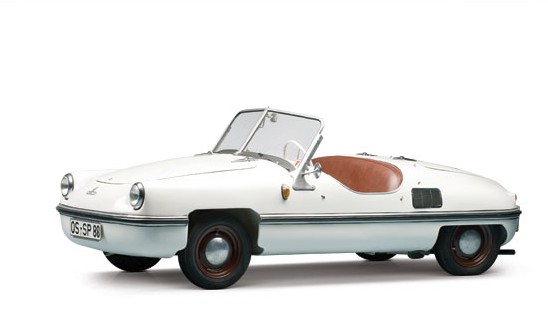
1956 B.A.G. Spatz

Egon Brütsch built a small two-seat convertible called the 200 or “Spatz.” He allowed prospective licensees to drive it and one, Harald Friedrich, liked it but realized Brütsch’s car was essentially crap. He hired an engineer to fix the issues with it and then put it into production under the name of a new company he formed, Bayerische Autowerke GmbH – or B.A.G. It was powered by the ubiquitous 9.5 horsepower 191cc single-cylinder Sachs motor that really got around in those days. Brütsch was not amused and threatened to take Friedrich to court (he eventually took the next group of people to court, and lost because the design was significantly improved over his original and therefore not an infringement) and Friedrich left the company – but not before 859 could be built and sold. This one should sell for between $30,000-$40,000. Click here for more info.

Update: Sold $32,200.

_____________________________________________________

1957 Voisin Biscooter C31

1957 Voisin Biscooter C31

Gabriel Voisin’s post-war fortunes were not quite as bright as those leading up to war. He designed the tiny Biscooter but, because he no longer controlled his own company, could not get it into production. In fact, no one wanted it – even though he racked up close to 1,000 orders for it. He sold the rights to the Spanish and moved on – sort of. At some point, he went back and designed another Biscooter, an enhanced version – the C31. Some things were different, but it was largely the same. The Spanish were not interested in this model (the one you see here). It uses a 197cc single-cylinder engine making nine horsepower. Still, 16 were built and this one should bring $60,000-$80,000. Click here for more info.

Update: Sold $80,500.

_____________________________________________________

1961 Taylor-Dunn Model R Trident

1961 Taylor-Dunn Trident

If you weren’t aware, California was a weird place in the 1960s. Still is, really. But this was their idea of a car. Originally introduced as a glorified grocery kart in 1955, the three-wheeled electric runabout was called the Taylor-Dunn PG. In 1959, the Trident was introduced. It still used a one horsepower electric motor – but it also had road-going capability. In today’s world of SUVs, you would need a death-wish to drive this down the street in suburban L.A. But 1961 was a different time – and you could always just hop up onto the sidewalk to get away from traffic – no one would be able to tell where you belonged anyway. This should sell for between $15,000-$20,000. Click here for more info.

Update: Sold $29,900.

_____________________________________________________

1947 Rovin D2

1947 Rovin D2

Hard work pays off – the brothers Rovin showed their first cyclecar in 1927 and when France was occupied during the war, the continued to work and design on a new car, knowing that the war and its restrictions would eventually end. They had a prototype done in 1945 and were ready to go once France began to get back on its feet. The production version was called the D2 and it uses a 10 horsepower 425cc two-cylinder engine. Their products were quality and they were able to stick around for a while – until about 1959, producing different models. The D2 was short-lived and only 200 were made. This one should bring between $30,000-$40,000. Click here for more info.

Update: Sold $43,700

_____________________________________________________

1953 Manocar Prototype

1953 Manocar Prototype

This rough-looking tiny car was one of two prototypes built by Établissements Manom in Saint Ouen, France between 1952 and 1953. It uses a four horsepower 125cc single-cylinder and was supposed to set the microcar world on fire due to its ease of access and “roomy” interior. Needless to say, this was as far as the project got. It’s all-original and should sell for between $5,000-$10,000. Click here for more info.

Update: Sold $6,900.

_____________________________________________________

1963 Goggomobil TL-250 Transporter

1963 Goggomobil T-250 Transporter

We’ve already featured the even-rarer pickup variant of the Goggomobil Transporter. This is the van version. It’s also a TL-250 model, which means it uses the smaller 245cc two-cylinder engine making 14 horsepower. These vans actually had a useful load-carrying capacity for their size and the German postal service used them – in fact, they were more or less responsible for their production, buying up about 2/3 of all vans built. This one (of 3,665 built) has been painted up in Double Bubble Gum colors. All of the Goggomobil Transporters in this sale have some “cute” paint scheme. The price isn’t as cute: $80,000-$100,000. click here for more info.

Update: Sold $132,250.

_____________________________________________________

1953 Bond Minicar Mk C

1953 Bond Minicar Mk C

Only the Mark F version of the Bond Minicar outsold the Mark C – and it was by less than 100 units. In total, 6,399 Mark Cs were built between 1952 and 1956. The Mark C was a marked improvement in design and quality over the earlier Mark Bs – it looked more like a car from the front – and less like a rolling coffin. The style really fit in with the times. It used a 197cc single-cylinder making nine horsepower. There were various trim levels available – which also helped make this seem more like a real car. This one should bring between $10,000-$15,000. Click here for more info.

Update: Sold $13,800.

_____________________________________________________

1958 Solyto

1958 Solyto

New-Map, the motorcycle manufacturer (who also built a few cars called the “Baby”), shifted focus to small three-wheeled commercial delivery vehicles in the late-1950s. They were sold under the “Solyto” name. What separated them from their competitors is the two-seat closed cab design that gives it a more car-like appearance than the obviously-scooter-based Vespa delivery trucks and the like. This one uses a 125cc single-cylinder making 4.5 horsepower. These were also sold under license in Spain as the Delfín. This one should sell for between $15,000-$20,000. Click here for more info.

Update: Sold $25,300.

_____________________________________________________

1962 Motobécane KM 2U

1962 Motobécane

Another mini commercial vehicle to round out our second-to-last edition of Microcar Mondays. This has everything a big truck would have – except smaller – even a spare tire underneath. Motobécane was a major motorcycle and bicycle manufacturer in France from 1923 until 1981. In 1962, they introduced a small car prototype called the KM 2 that never made it to production. There was also a utility version produced (KM 2U) – a lone prototype example. It is believed that this is that truck. It uses a 125cc single-cylinder engine making six horsepower. This unrestored mini-truck should sell for between $5,000-$10,000. Click here for more info. And click here to check out more microcars.

Update: Sold $16,100.

Rovin D2

1947 Rovin D2

Offered by RM Auctions | Madison, Georgia | February 15-16, 2013

1947 Rovin D2

Photo – RM Auctions

Hard work pays off – the brothers Rovin showed their first cyclecar in 1927 and when France was occupied during the war, the continued to work and design on a new car, knowing that the war and its restrictions would eventually end. They had a prototype done in 1945 and were ready to go once France began to get back on its feet. The production version was called the D2 and it uses a 10 horsepower 425cc two-cylinder engine. Their products were quality and they were able to stick around for a while – until about 1959, producing different models. The D2 was short-lived and only 200 were made. This one should bring between $30,000-$40,000. Click here for more info.

Update: Sold $43,700

B.A.G. Spatz

1956 B.A.G. Spatz

Offered by RM Auctions | Madison, Georgia | February 15-16, 2013

1956 B.A.G. Spatz

Photo – RM Auctions

Egon Brütsch built a small two-seat convertible called the 200 or “Spatz.” He allowed prospective licensees to drive it and one, Harald Friedrich, liked it but realized Brütsch’s car was essentially crap. He hired an engineer to fix the issues with it and then put it into production under the name of a new company he formed, Bayerische Autowerke GmbH – or B.A.G. It was powered by the ubiquitous 9.5 horsepower 191cc single-cylinder Sachs motor that really got around in those days. Brütsch was not amused and threatened to take Friedrich to court (he eventually took the next group of people to court, and lost because the design was significantly improved over his original and therefore not an infringement) and Friedrich left the company – but not before 859 could be built and sold. This one should sell for between $30,000-$40,000. Click here for more info.

Update: Sold $32,200.

King S-7

1959 King S-7

Offered by RM Auctions | Madison, Georgia | February 15-16, 2013

1959 King S-7

Photo – RM Auctions

This King S-7 was not manufactured by the same “King” company we talked about last week. This one was built in Sweden. The S-7 was originally built as a Fuldamobil in Germany but they were licensed all over and some licensed versions were exported. Sweden received some NWF cars but later they built there own S-7 version of the Fuldamobil and called it the Fram-King-Fulda. When that factory burned down, the assets were purchased and production restarted in 1958 or 1959 and it was called the King S-7. It was built until 1962 and 411 were made. It uses a 9.5 horsepower 191cc single-cylinder and should sell for between $35,000-$45,000. Click here for more info.

Update: Sold $47,150.

King S-7

1959 King S-7

Offered by RM Auctions | Madison, Georgia | February 15-16, 2013

1959 King S-7

Photo – RM Auctions

This King S-7 was not manufactured by the same “King” company we talked about last week. This one was built in Sweden. The S-7 was originally built as a Fuldamobil in Germany but they were licensed all over and some licensed versions were exported. Sweden received some NWF cars but later they built there own S-7 version of the Fuldamobil and called it the Fram-King-Fulda. When that factory burned down, the assets were purchased and production restarted in 1958 or 1959 and it was called the King S-7. It was built until 1962 and 411 were made. It uses a 9.5 horsepower 191cc single-cylinder and should sell for between $35,000-$45,000. Click here for more info.

Update: Sold $47,150.

Russo & Steele/Mecum January Highlights

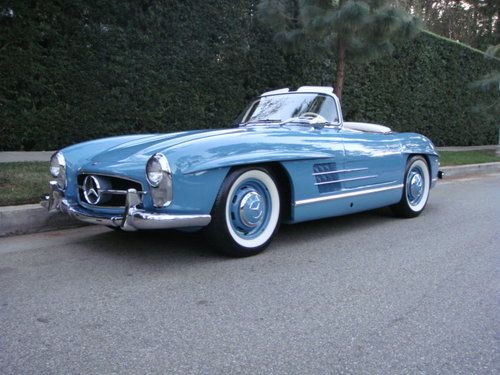
I’m combining two auction highlights into one post: Russo & Steele’s Scottsdale sale as well as Mecum’s Kissimmee Sale. First up, Russo & Steele. Their top sale was a 1958 Mercedes-Benz 300SL Roadster. It sold for $727,100.

1958 Mercedes-Benz 300SL Roadster

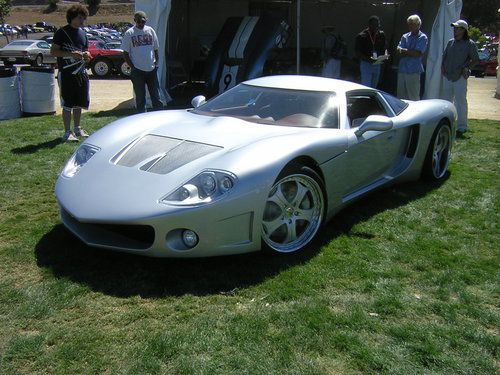
Our featured car from this sale, the Yenko Camaro, failed to sell. On the interesting sales front: this 2008 Mulsanne GT, a sports car based on the Factory Five GTM, sold for $57,750.

2008 Mulsanne GT Coupe

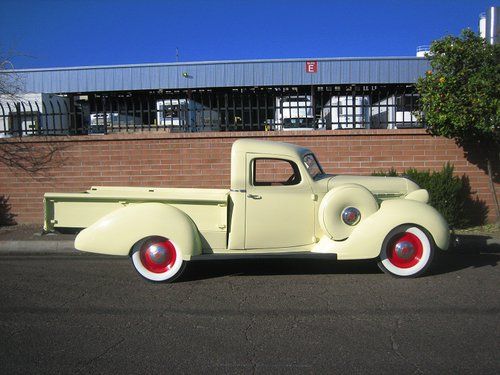
This 1937 Hudson Terraplane Pickup is a rare sight. It brought $41,800.

1937 Hudson Terraplane Pickup

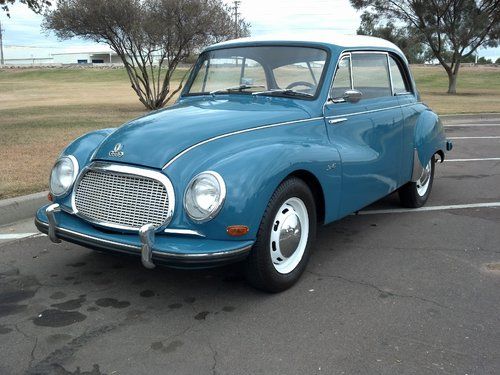
Actually, my favorite car from this sale (and the one I would have rather featured) was this 1957 DKW 3=6 (which is not the most intelligent-looking name for a car I’ve ever seen) sold for a downright affordable $8,800. Russo & Steele had a lot of cool cars for really good prices. I’m keeping that in the back of my mind for their next sale. Check out full results here.

1957 DKW 3=6

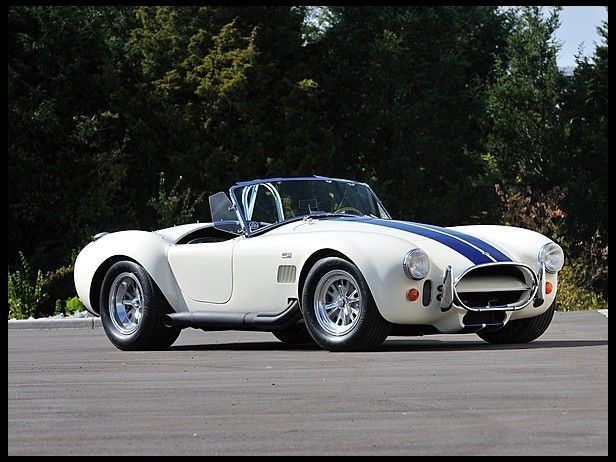
On to Mecum’s Kissimmee sale. The top sale there was a white and blue 1966 Shelby Cobra 427 Roadster for $735,000.

1966 Shelby Cobra 427

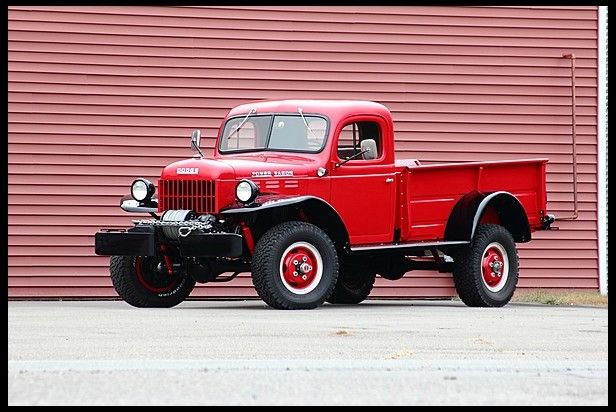
The interesting sales were topped by this 1952 Dodge Model B-3 Power Wagon. Trucks really don’t come any meaner. It sold for $57,000.

1952 Dodge Model B-3 Power Wagon

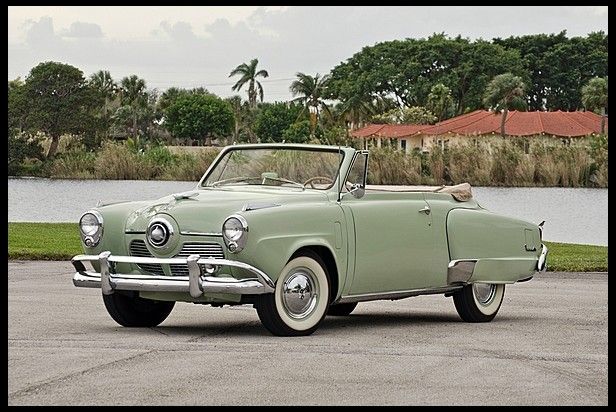
From the pretty iconic and iconically pretty department: this 1951 Studebaker Commander Convertible sold for $37,500.

1951 Studebaker Commander Convertible

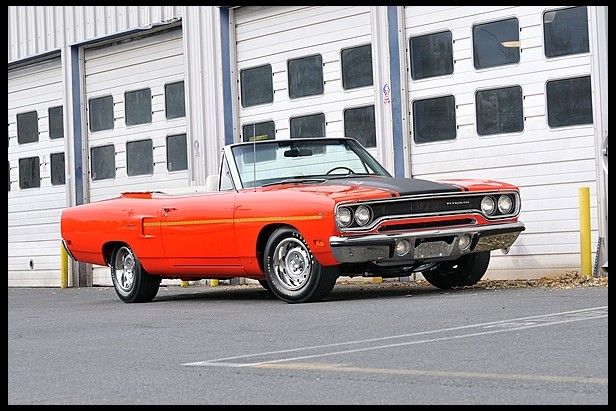
And finally, one of my favorite cars of all time – the Chrysler B-Body convertible. In this case, a wonderful 1970 Plymouth Road Runner Convertible with a 440 Six Pack underhood. It sold for $195,000. Our featured Fuel-Injected Corvette Big Brake Tanker sold for $242,000. Complete results can be found here.

1970 Plymouth Road Runner Convertible

Duesenberg J-219

1929 Duesenberg Model J Cabriolet by Murphy

Offered by Artcurial | Paris, France | February 8, 2013

1929 Duesenberg Model J-219 Cabriolet by Murphy

Well isn’t this a pretty car. This Model J was introduced for 1929 and it used a 265 horsepower Lycoming straight-eight engine of 420 cubic inches (6.9-liters). Top speed was about 115 mph – depending on what body was attached to it.

This one has a gorgeous cabriolet body by the Walter M. Murphy Company of Pasadena, California. It was sold new to a partner in the Standard Oil Company for an astonishing $14,500 in pre-Depression-era American dollars. It passed between a few owners and was restored for the first time in 1957 and again 20 years later and won Best in Show at Pebble Beach in 1981. Shortly after the dawn of the new Millennium, this car was sold to a Belgian collector and it has remained in Europe since. It currently sports Dutch registration.

Duesenbergs pop up often at collector car auctions but finding the right one can be tricky. You surely can’t go wrong with this Murphy Cabriolet. It is expected to sell for between $1,130,000-$1,450,000. Click here for more well-shot pictures and info. And here for more from Artcurial at Rétromobile.

Update: Sold $1,319,888.

Bugatti Type 54 Grand Prix

1931 Bugatti Type 54 Grand Prix

Offered by Bonhams | Paris, France | February 7, 2013

1931 Bugatti Type 54 Grand Prix

Whoa. Bonhams dug up a treasure for their Paris sale this year – this is one of only nine Bugatti Type 54 Grand Prix cars built. The Type 54 was an evolution of the Type 51. It was used for the 1931 Grand Prix season. The engine is a 300 horsepower 4.9-liter supercharged straight eight. It was entered in the “Above 3-Liters” category, which was essentially an “anything goes” class. Most of the important pieces on the Type 54 were sourced from other Bugattis. Essentially, they took the best bits of every car they built until one super machine was finished. This particular car won the 1931 Grand Prix of Monza with Achille Varzi driving.

I’d like to list the entire race history of this car, but Bonham’s catalog description looks like it was written in French and run through a mediocre translator to get the English version. As it is, it is almost unreadable and very vague. If you’re thinking of buying this thing and provenance is important to you, I’d get someone on the phone first to make sure you know what you’re getting yourself into.

This car left the Bugatti team ranks at the end of 1931 and was sold to Prince Georg Christian Lobkowicz of Czechoslovakia. He was a “gentleman driver” so to speak and was unfortunately killed in this car during his first outing in it at AVUS in 1932. The car was given to his teammate, Zdenek Pohl, who had it rebuilt but didn’t really use the car until it was obsolete. So he turned it into a two-seat roadster with beautiful coachwork by Oldrich Uhlik (the body for this new car now resides on another chassis and is owned by a 1930s European car hoarder in California – just kidding, Mr. Mullin!).

The next owner, who acquired the car in 1970, had the roadster body removed and an original-style Grand Prix body was constructed for the car by the Peel coachbuilding company. It was re-bodied again in 2005 by Rod Jolley in painstaking detail back to 1931 Monza race condition. It is being offered as one of four surviving Type 54s of the original nine built and the only one whose original mechanical parts have never been removed/separated from the car. It is expected to sell for between $3,300,000-$4,700,000. Read more here (it’s better if you speak French) and check out the rest of the Bonhams lineup here.

Update: Not sold.