Offered by RM Sotheby’s | Essen, Germany | June 24-27, 2020
Photo Courtesy of RM Sotheby’s
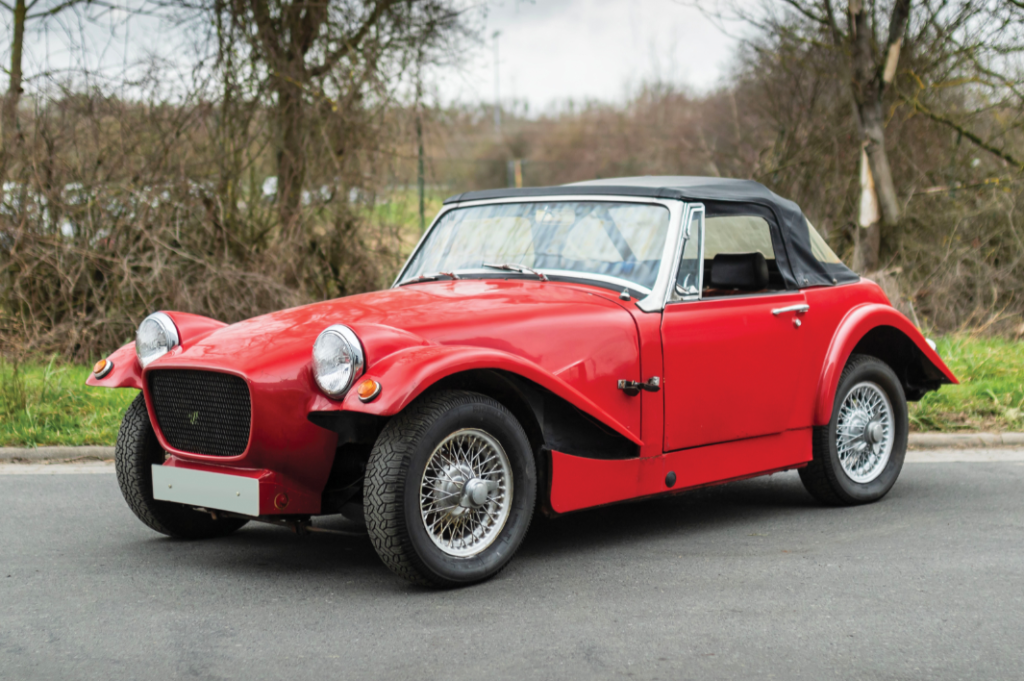
John Britten’s Arkley was a kit car launched in 1970. The SS was a fiberglass re-body for cars such as the MG Midget or Austin-Healey Sprite. This car is based on a 1966 Austin-Healey Sprite.
Power is from a 1.1-liter inline-four from a Morris Minor, and the car features front cycle fenders with the headlights perched between them and the hood. You can still clearly see the Sprite underpinnings along the sides of the car near the doors.
About 1,000 Arkley kits were produced during the initial run. The rights were sold in the late 1980s and were available again for a short time thereafter. This one is offered at no reserve from RM’s “Essen” sale, which has been pushed back to June and is now online-only. You can read more about the car here and see more from this sale here.
Offered by RM Sotheby’s | Elkhart, Indiana | October 23-24, 2020
Photo Courtesy of RM Sotheby’s
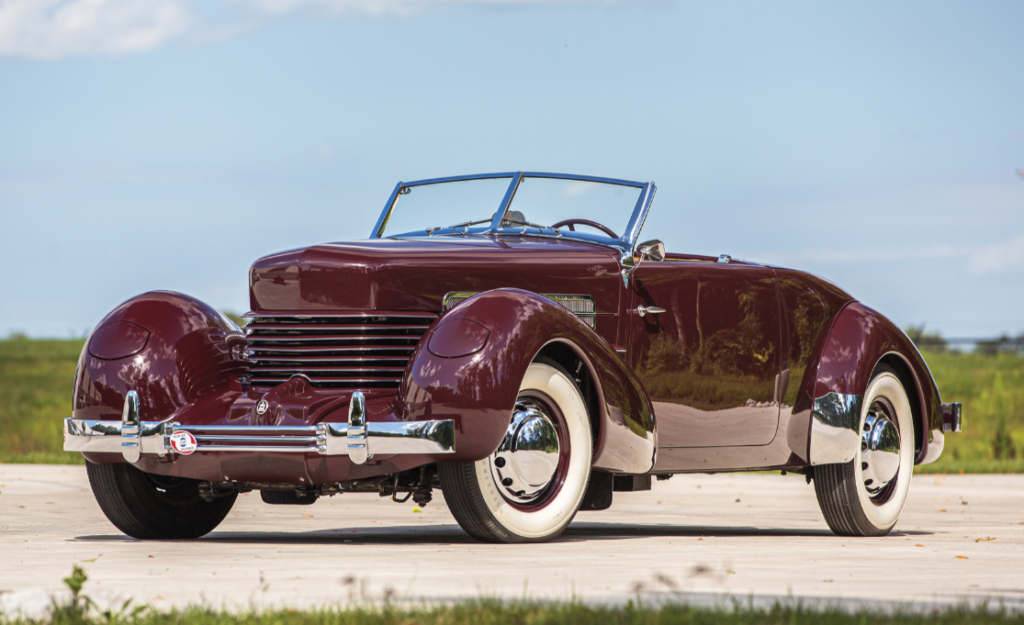
This is the ultimate iteration of the Cord 810/812. Introduced in 1936, the front-wheel-drive 810 was styled by Gordon Buehrig and featured an independent front suspension and a design like nothing else in the world at the time. The car was renamed the 812 for 1937, which was more-or-less an attempt to spruce up the fact that they had a lot of leftover 810s from the year before. Supercharging also became an option in 1937.
The supercharger bumped power from the 4.7-liter Lycoming V8 to 170 horsepower. Two different wheelbases were used in ’37, and four body styles were offered on the shorter of the two, including the $2,585 Sportsman two-door cabriolet. The supercharger bumped the price by another $2,000, which is insane. Imagine adding 77% of the car’s price back on as options. Oh wait, you can probably do that on a Porsche.
Reliability issues early in production really put a wet blanket over the initial enthusiasm for the model, which was originally envisioned as a “baby Duesenberg.” About 3,000 examples were built in total, only 64 of which were reportedly SC Sportsmans. This one is now going to sell at no reserve. Click here for more info and here for more from this sale.
Offered by RM Sotheby’s | Elkhart, Indiana | October 23-24, 2020
Photo Courtesy of RM Sotheby’s
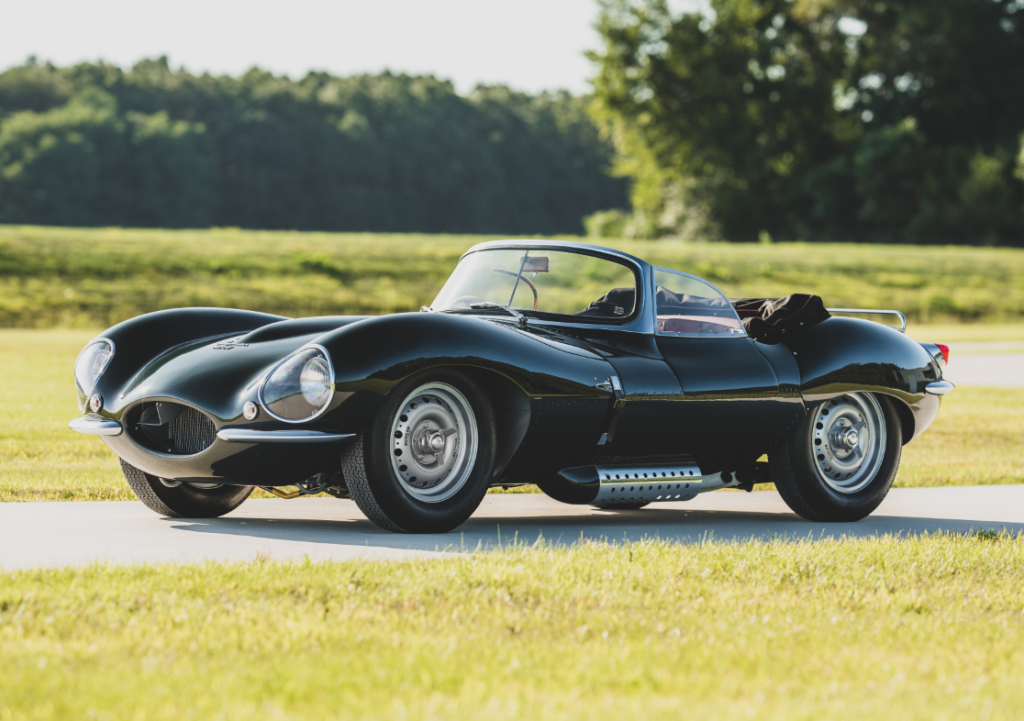
This time last week we were talking about Jaguar’s XKSS continuation series of cars. This week, it’s time to talk D-Types. This is, perhaps, the most legendary Jag. The D-Type won Le Mans three straight years: 1955, 1956, and 1957. The company managed to get 71 built, though they planned on building 100.
Which leads us to this. A couple of years ago Jaguar announced that they would finish off the 25 cars to get them to the 100 they initially wanted (though the 25 they didn’t build were intended to be XKSS examples, and nine of those never got built due to a fire… the math works, trust me).
These continuation cars were built by Jaguar using the same processes they used in 1955. Power is from a 3.4-liter inline-six. You could get them in short or long-nose form, and this is an example of the former. It’s covered less than 200 miles with its first owner.
The D-Type we featured in 2013 failed to sell with a high bid of $6.2 million. This one, supposedly built the same way, should bring significantly less. Click here for more info and here for more from this sale.
Offered by RM Sotheby’s | Elkhart, Indiana | October 23-24, 2020
Photo Courtesy of RM Sotheby’s
The XKSS was the road-going version of the Jaguar D-Type racing car. Basically, Jaguar had unsold D-Types that they converted to sell to Americans who wanted a high-performance sports car. They planned to build 25 of them, but a fire broke out at the factory in February 1957 after only 16 were sold.
So in 2016, Jaguar decided they would build the other nine that never got completed back in the day. From scratch. They digitally scanned a few surviving XKSS cars and built the new ones using the same construction methods from the 1950s. Major changes include a modern fuel cell and redesigned seats. Power is from a 3.4-liter inline-six that Jaguar rated at 250 horsepower in 1957.
So what do we have here exactly? Well, it depends on how much of an asshole you want to be (pardon my French). Whoever edited the Wikipedia article for these referred to them as “replicas” (presumably the page was edited by an actual XKSS owner or some Jag purist). At the same time, this is a factory-built XKSS. It wasn’t built by Tempero or some other actual “replica” builder. True, it might not be an “actual” XKSS from 1957, but it’s still a Jaguar product. It’s almost certainly more authentic than any “continuation” Cobra out there.
When Jaguar announced this program, they noted that they were going to charge over $1 million for them. And they sold. But this is the first time one of the “new” ones has come up for sale. An XKSS from the ’50s will run you over $10 million. This one, which was built in 2017 and has 51 miles on it, will sell without reserve. So we’re all about to find out its real value. Click here for more info and here for more from this sale.
Offered by RM Sotheby’s | Elkhart, Indiana | October 23-24, 2020
Photo – Courtesy of RM Sotheby’s
The Grifo GL is a Bertone-styled Italian muscle car. It was designed by Giotto Bizzarrini and styled by Giorgetto Giugiaro. It was introduced in 1963, and a racing variant, the Grifo A3/C, debuted alongside
The grand touring Grifo was slightly restyled before entering production as the Grifo GL. Meanwhile, Bizzarrini got irritated, took the A3/C, and went and produced it as the Bizzarrini 5300 GT.
The Grifo GL road car soldiered on under the Iso marque. Early examples were powered by 5.4-liter V8 from a 327 Corvette that made 350 horsepower. That’s what this car originally had. But later Grifos received a 7.0-liter Corvette 427 V8 advertised at 435 horsepower. It’s what this car currently has under that mean hood with a very serious-looking vent.
This car received a six-digit restoration in 2005 and is now offered at no reserve. Check out more about it here and more from RM here.
Offered by RM Sotheby’s | Elkhart, Indiana | October 23-24, 2020
Photo Courtesy of RM Sotheby’s
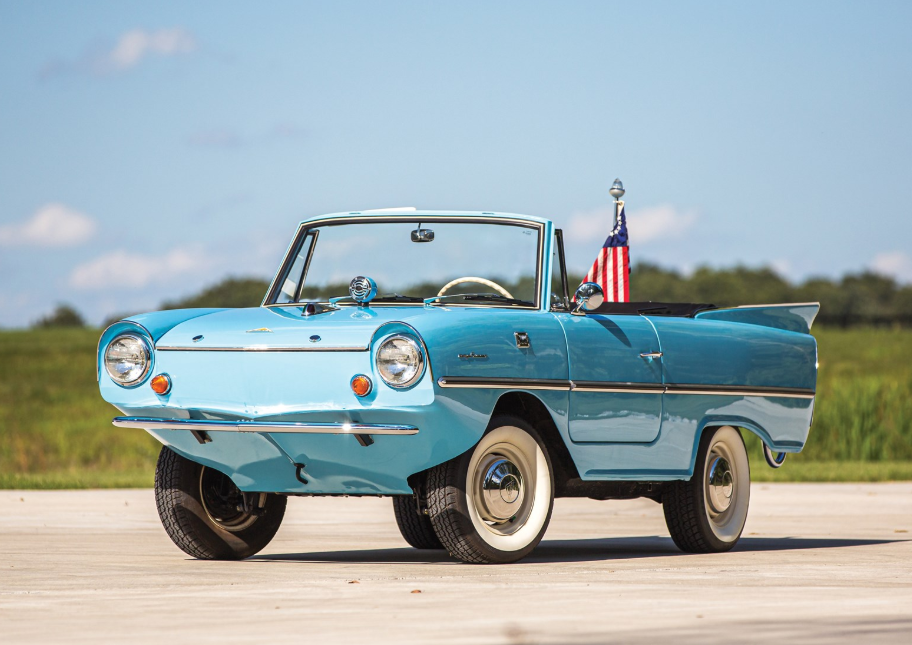
Here’s one I can’t believe we haven’t covered yet. The Amphicar was designed by Hans Trippel and produced by the Quandt Group in Germany between 1960 and 1965. The model was dubbed the “770” because it would do seven knots on the water and 70 mph on land.
A few different engines were used throughout production. This car is powered by a 1.5-liter Triumph inline-four that was capable of up to 75 horsepower. The same engine drives the car on land or water, and once you splash down, the engine drives a pair of reversible propellers. The car could even drive itself back out of the water.
Amphicars are remarkably usable. They can be found in waterways throughout the world every year (I once saw one on the back of a large private boat in Paris. It’s the ultimate dinghy). And I think their continued use is a wonderful sign of how well made they were. Only 3,878 were produced in total, and it seems like there’s always a few for sale somewhere. This one is selling at no reserve in Indiana. Click here for more info and here for more from this sale.
Offered by RM Sotheby’s | Elkhart, Indiana | October 23-24, 2020
Photo Courtesy of RM Sotheby’s
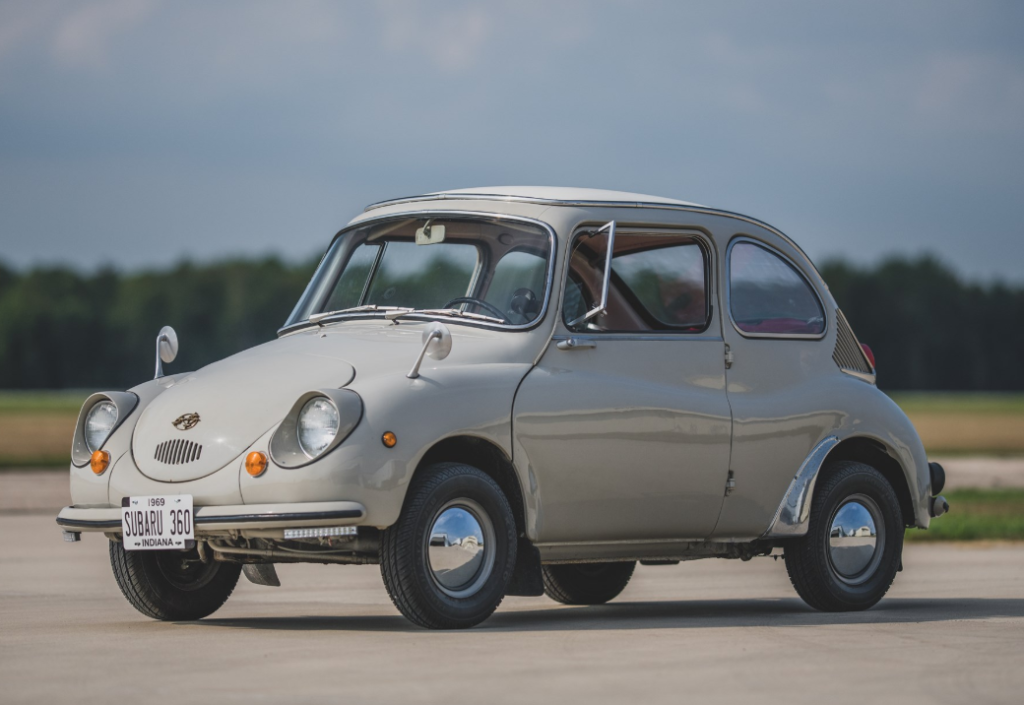
The 360 was Subaru’s first production car. From this came the WRX, the Outback, and every other Subaru passenger vehicle. It was built from 1958 through 1971, and there were convertible and station wagon variants.
Power is from a 356cc inline-twin, and the model’s “360” name is also derived from the engine’s displacement. Horsepower at the end of production was a healthy 25, and the price when new in the U.S. was $1,297.
Subaru built 392,000 of them, about 10,000 of which were sold new in the U.S. This one was on eBay long ago, and that is perhaps where the current collection acquired it. It will now sell at no reserve. Click here for more info and here for more from this sale.
Offered by RM Sotheby’s | Elkhart, Indiana | October 23-24, 2020
Photo Courtesy of RM Sotheby’s
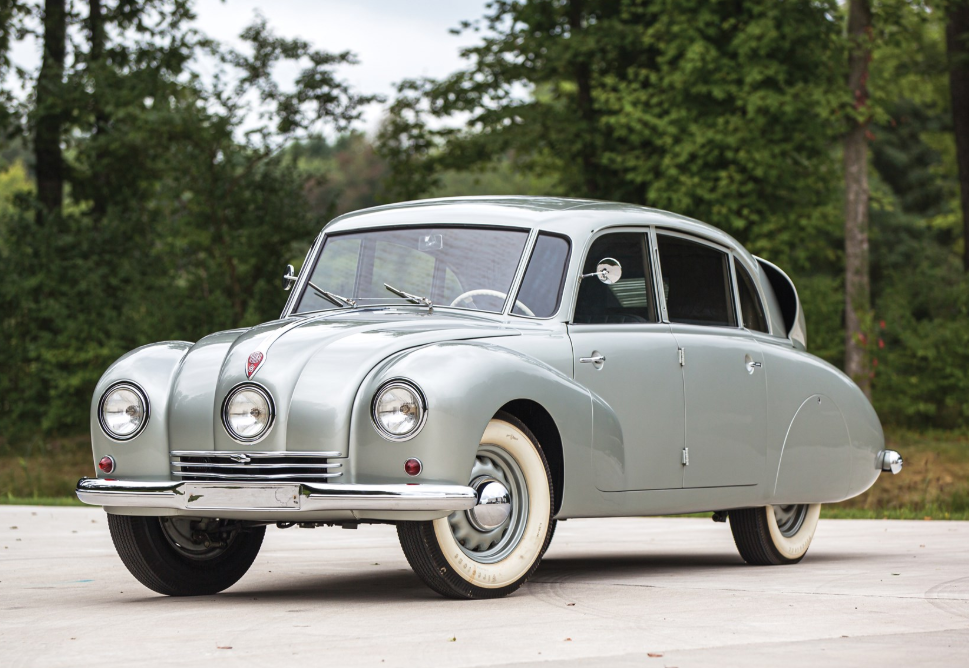
The Tatra T87 is a special car. Designed by Hans Ledwinka and Erich Ubelacker, it was based on the earlier T77, which was a very low-production car from the mid-1930s. The T87 went on sale in 1936 and lasted through 1950… you know, with an interruption for the war.
It had a streamlined body, a rear-mounted 3.0-liter V8, and suicide front doors. Horsepower was a modest 85, but the car had an incredibly low drag coefficient and could hit 100 mph. After production ceased, Tatra retrofitted some of the T87s with the 2.5-liter V8 from the 603. This is one of those cars.
Not a cheap car in its day, the T87 was produced in limited numbers with just 3,056 examples completed. It’s a beautiful, streamlined masterpiece, with design elements lifted from the German zeppelins of the era. It’s one of the coolest cars in this sale, and, like the others, it will sell at no reserve. Click here for more info and here for more from RM.
Offered by RM Sotheby’s | Elkhart, Indiana | October 23-24, 2020
Photo Courtesy of RM Sotheby’s
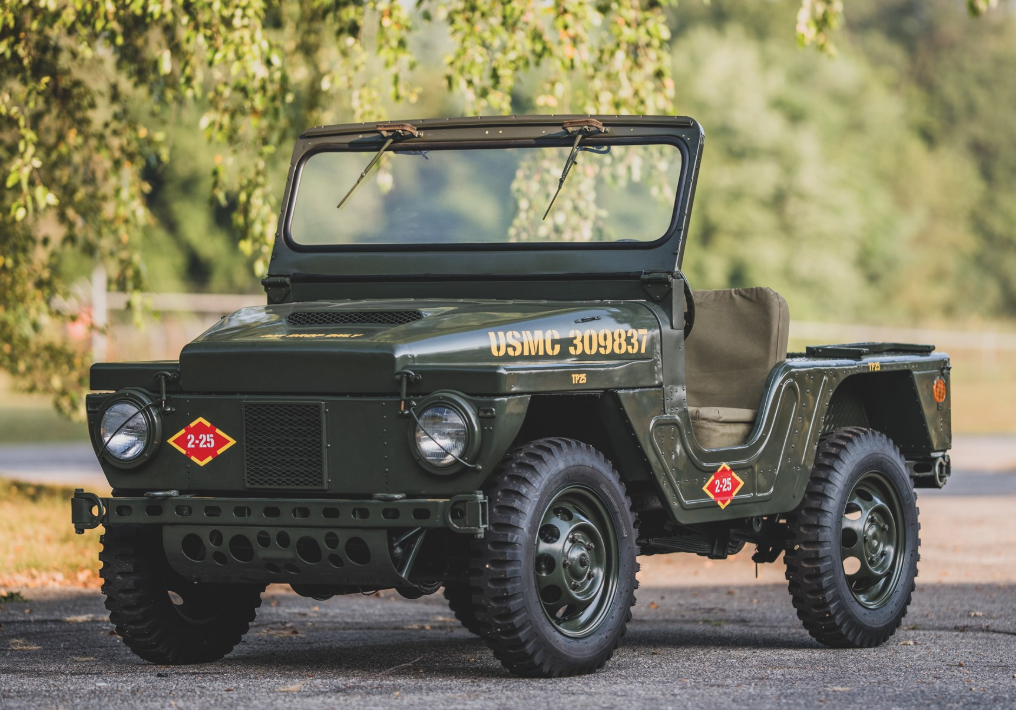
A couple of companies have built Jeeps or Jeep-like vehicles. It started with American Bantam, then there was Willys, Ford, Jeep (of course), and more. American Motors produced the prototype for this tactical truck in 1946, and it was further refined by some of the engineers from the original Bantam Jeep project.
The 1/4-ton “Mighty Mite” was produced for the Marine Corps between 1959 and about 1962. It is powered by a 55 horsepower 1.8-liter V4. It has four-wheel drive and tops out at about 62 mph. This is the “long wheelbase” version, as the M422 variant was six inches shorter.
Just 2,672 examples of the M422A1 were produced. When compared to WWII-era Jeeps, that’s just a tiny, tiny percentage. This well-restored example is going to sell at no reserve. Click here for more info and here for more from this sale.
Offered by RM Sotheby’s | Elkhart, Indiana | October 23-24, 2020
Photo Courtesy of RM Sotheby’s
Mazda Motor Corporation was founded in 1920 as the Toyo Cork Kogyo Company. In 1931 they introduced the Mazda-Go, a motorcycle-based three-wheeled delivery truck. It had no top and a cargo box out back.
In 1959, that vehicle was replaced by the K360. Production lasted for 10 years, and about 280,000 of them were built in total. Once quite popular in Japan, they aren’t seen very often today, especially in the U.S.
This ex-Weiner Microcar Museum car is powered by a 356cc twin that made 11 horsepower. It sold for just over $25,000 in 2013 and is now selling at no reserve. Click here for more info and here for more from this sale.