Bonhams VMCC Banbury Run Sale, Oxford

Bonhams sold a bunch of motorcycles and cars at their June 16 sale in Oxford, England. The top sale was a tie between a 1936 Alvis Speed Twenty-Five Tourer (below) and a 1950 Healey Silverstone – at about $100,000 each.

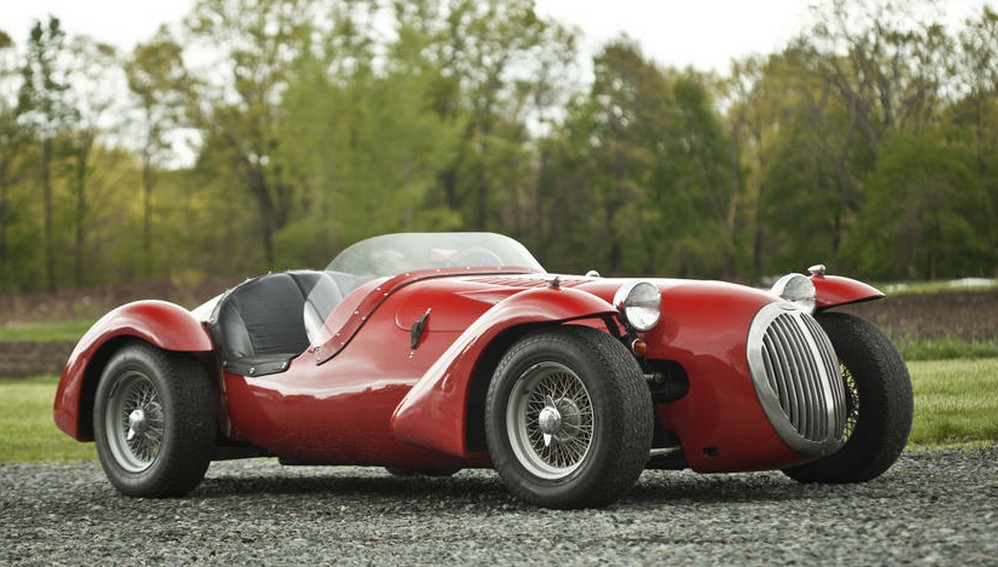
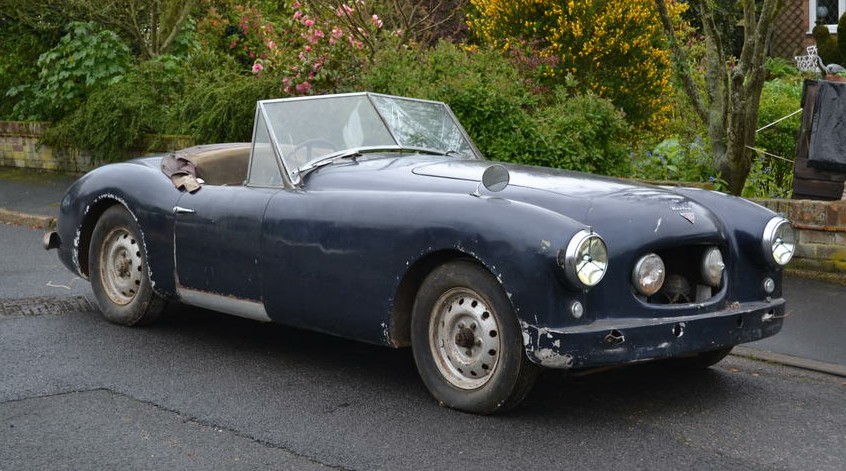
The Healey Silverstone (above) was among a collection of barn-find condition Healey-related automobiles that went across the block. Three other Healeys begin our “other interesting sales” bit of the program: first, this 1948 Healey Duncan that sold for $16,500.
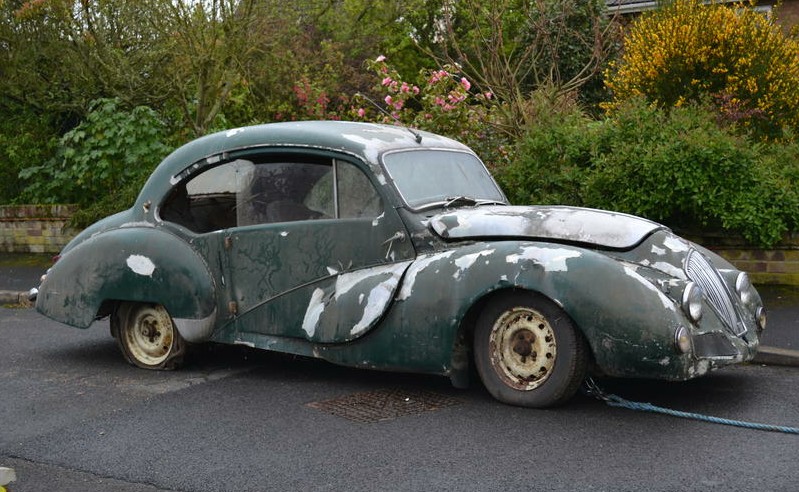
Then there was this 1947 Healey Duncan Drone Roadster, likely the only in existence and ripe for restoration. It brought $43,000.

And, the final Healey, a 1952 Alvis-Healey Sports Convertible, which looks kind of like a period Jensen 541, sold for $61,000.
Interesting motorcycle sales include a 1909 Moto-Rêve 2.5hp V-Twin. Moto-Rêve isn’t a marque you see everyday and this example sold for about $12,500.

Another rare motorcycle is this 1902 Kerry 308cc. It is the earliest surviving (of about six) Kerrys. On display in a motorcycle museum since 1956, it was sold in 2006 and freshened to running condition. It sold here for $25,000.

Our feature car, the 1992 Maserati 222 SE sold for a paltry $4,500 – or about as cheap as you’re likely to find anything wearing a trident. And now for something completely different: a 1983 Bentley Mulsanne Turbo… Estate. That’s right, a Bentley station wagon. It was a 30,000 mile car that had spent its life on the Channel Islands before heading to the mainland in 2003 when it was sent to coachbuilder Coway Ltd and turned into the wagon – in striking maroon and yellow colors – you see here. You aren’t likely to find another. It sold for $31,500.

For complete results, click here.
Alfa 8C 2300

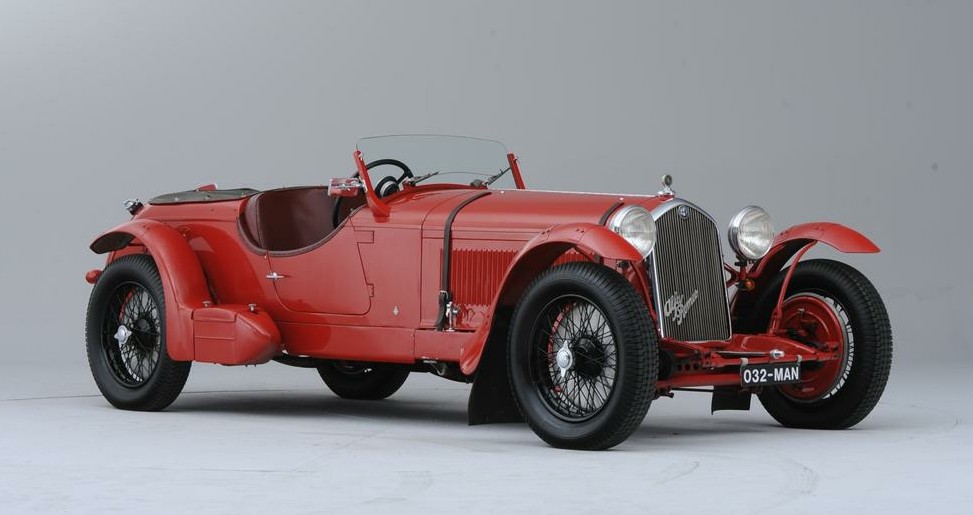
1932 Alfa Romeo 8C 2300 Spyder

Offered by Bonhams | Goodwood, England | June 29, 2012

The Alfa Romeo 8C was introduced in 1931. The first two years of production consisted of the 2300 model – the engine being a 2.3-liter straight-8 with a Roots supercharger good for more than 165 horsepower. This car was from the second year of production and was used as the third of Alfa Romeo’s three works entries for the 1932 24 Hours of Le Mans.

The car was piloted by the winners of the 1931 race – Henry “Tim” Birkin and Lord Earl Howe (they won in 1931 in a different 8C 2300). They placed 12th in this car in 1932 – a DNF due to a blown head gasket. After repair, it was run at the 1932 RAC Tourist Trophy race at Ards, Ulster, placing 4th (with Howe driving). Afterward, the car went back to Alfa Romeo and was sold to driver Giuseppe Campari, who sent the car to Carrozzeria Touring so they could turn it into a road-friendly Drophead Coupe.

It was then sold to Italo Balbo – a rising star in Mussolini’s fascist regime. He was to become the Marshal of the Italian Air Force and Governor of Libya before his plane was shot down in 1940 and he was killed. Before he died (actually in 1935) he sold the car. It passed through numerous owners until it was acquired by its current owner in 1996, who had the body re-configured back to a more appropriate Le Mans-style body.

The 8C is the big dog among pre-war Alfa Romeos – comparable to a “Blower” Bentley. And like the Bentley, they aren’t common and they aren’t cheap. This one, albeit with its impressive, known history, is estimated to sell for between $3,900,000-$6,200,000. For more information – including a mini-biography of Italo Balbo – click here. For the rest of the Bonhams auction lineup, click here.

Update: Sold $4,217,674.

Lotus Etna

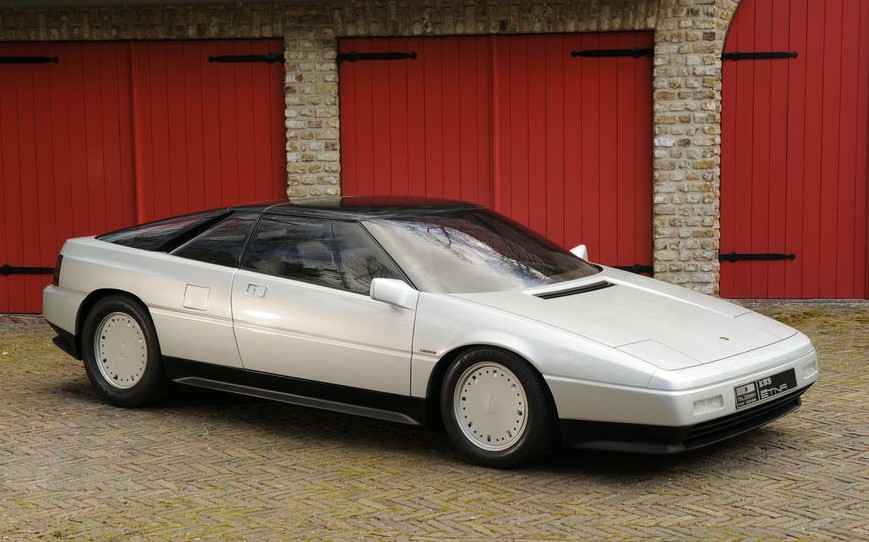
1984 Lotus Etna V8 Berlinetta Concept

Offered by Bonhams | Goodwood, England | June 29, 2012

There are a few Lotus concept cars/styling models on offer at Bonhams’ Goodwood sale. I chose to feature this one because it of its somewhat sad 1980s-vision-of-the-future styling – which is both a plus and a minus. It’s only a minus because it looks so dated. But that’s part of what makes it cool. The instrument panel looks like it was taken from KITT from Night Rider or something. The exterior was designed by Giorgetto Giugiaro and is very 80s.

It is based on a Lotus Esprit and you can tell. There is a lot of Esprit in there – maybe because both were designed by Giugiaro. It has a 4.0-liter V8 putting out 335 horsepower. It was also to have futuristic things such as traction control, anti-lock brakes, self-leveling suspension and active noise cancelling. The concept car was a hit on the show circuit in 1984.

But then General Motors trundled along in 1986 and bought up Lotus. The Etna was sent to storage. Fortunately, it was sold to the public in 2001 and the then-owner got the car into running condition. So here is your chance to buy a fully-functional road-going, one-of-a-kind Lotus. The price? $140,000-$200,000. For more information, click here. To check out some of the other Lotus concepts, click here.

Update: Not sold.

Unrestored 1907 Daimler

1907 Daimler Type TP 45 10.6-Litre Four-Seat Tourer

Offered by Bonhams | Goodwood, England | June 29, 2012

The Daimler name is one of the more storied in automotive history – and one of the more confusing. H.J. Lawson founded the Daimler Motor Company Ltd in Coventry, England. The name Daimler, of course, belonged to Gottlieb Daimler of Germany, builder of the first four-wheeled automobile, who had set up his own company bearing his name in 1890 in Germany. Lawson licensed the name – and the patents – of his German elder.

Gottlieb’s company would become Daimler-Benz in 1926, DaimlerChrysler in 1998 and Daimler AG, as it is currently known, in 2008. With the exception of those very early cars (up through 1908), everything badged as a “Daimler” was built by the English company founded by H.J. Lawson. As you can see, this car falls into the period where both companies were building cars using the same name.

This one was built in England and spent its early years as transport for the noble Craven family. After the original owner’s death, it was used little, being set up on blocks between the 1920s and 1980s and was acquired by its current owner in 1983. Ownership history is known and undisputed and there was even a log of every trip this car took when it was with its original owner – or should I say, chauffeur.

The engine is monstrous – a 10.6-liter four-cylinder that could propel the car to 80 mph – in 1907! And it’s in original condition – it has never been restored. I would rate this car as “above fantastic,” as if such an inane rating means anything. The dark red leather interior shows no cracking and looks far better than the leather in the last 10-year-old Acura I rode in. The paint still reflects light at 105 years old and the little brass and wood pieces here and there make this car look like it just drove out of a time warp. The only thing not original are the wire wheels, which were added during the First World War – making them far more period correct than anyone who will ever drive this car again.

This Brass Era automobile/80 mph horseless carriage – is an incredible machine. The more I look at it, the more I fall in love with it. Unfortunately I will not be able to pony up the $390,000-$620,000 required to take it home. Cheers to whoever does. For more information, click here and for more on Bonhams in Goodwood, click here.

Update: Sold $564,395.

HRG 1500

1951 HRG 1500 Sports

Offered by Bonhams | Goodwood, England | June 29, 2012

HRG was founded in 1936 by Major Edward Halford, Guy Robins, and Henry Ronald Godfrey (the H, the R, and the G coming from the first letters of their last names). They introduced the 1500 model in 1939. The 1.5-liter four makes 58 horsepower and is good for 85 mph “under favourable conditions,” which, I think, is an understated, British way of saying “when going downhill.”

The 1500 model was produced unchanged until the company closed its doors in 1956 – hence the very pre-war design you see here on a car from the early-1950s. The 1500 was far and away the most popular HRG, with 111 built. Only 241 HRGs were built in total, so they are quite rare – especially one this nice.

British Racing Green is an excellent color for this car and will not hurt when it comes to the final price, which is expected to be between $70,000-$85,000. For more information, click here. And for more from Bonhams in Goodwood, click here.

Update: Sold $57,710.

Lotus Eleven

1956 Lotus Eleven Le Mans

Offered by Bonhams | Goodwood, England | June 29, 2012

Photo – Bonhams

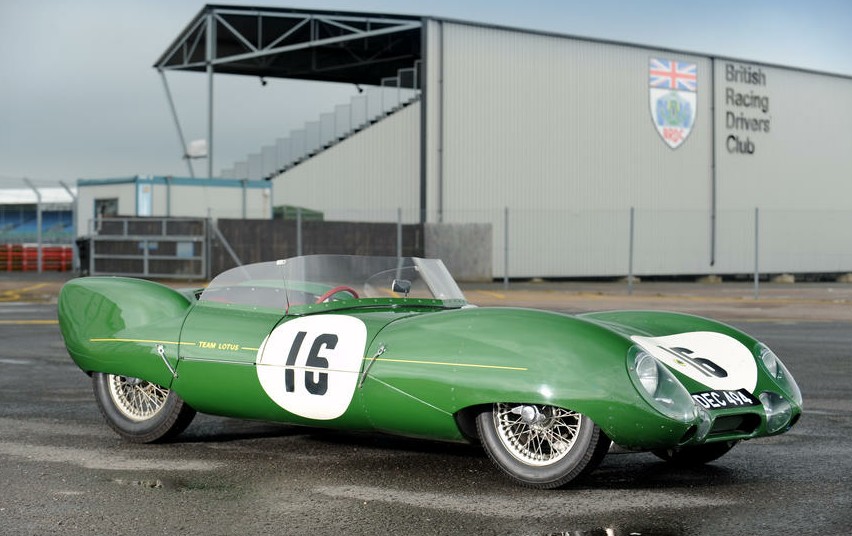
Bonhams’ Goodwood sale includes the Glasius Lotus Collection, featuring quite a few rare, storied Lotuses (Loti?) including race cars, road cars, and concepts. This 1956 Eleven is a wonderfully restored example that has an important competitive background.

The Lotus Eleven was introduced by Colin Chapman in 1956. It featured this slippery body designed by Frank Costin, brother of Cosworth co-founder Mike Costin. (Frank Costin would go on to co-found Marcos before building a few cars that bore his last name in its entirety).

The ‘Le Mans’ spec car had the option of a 1.1-liter (FWA) or 1.5-liter (FWB) Coventry-Climax straight-four. This one has the 1.1-liter and the standard tubular space frame, for a weight around 1,100 pounds – making it capable of over 130mph. This car does not have the headrest that was fitted to some of the later models (the Eleven was produced up to 1958). About 270 were built, inclusive of all versions.

Proper sporting cars should have a competition history – as this one does. It was a factory Lotus team car that competed in the 1956 24 Hours of Le Mans with drivers Cliff Allison and Keith Hall. A retirement – when Allison hit a dog on the Mulsanne Straight – placed the car 26th in the standings. After the race, the car ended up in the hands of an American and passed through an unknown number of owners before it was finally restored to the as-or-better-than-new condition it is in today.

This Eleven – with Lotus factory racing history – is being offered in this glorious condition for the first time. It is estimated to sell for between $210,000-$270,000. For more information click here. And for more from Bonhams in Goodwood, click here.

Update: Sold $239,464.

Itala Grand Prix Car

1908 Itala Grand Prix Car

Offered by Bonhams | Goodwood, England | June 29, 2012

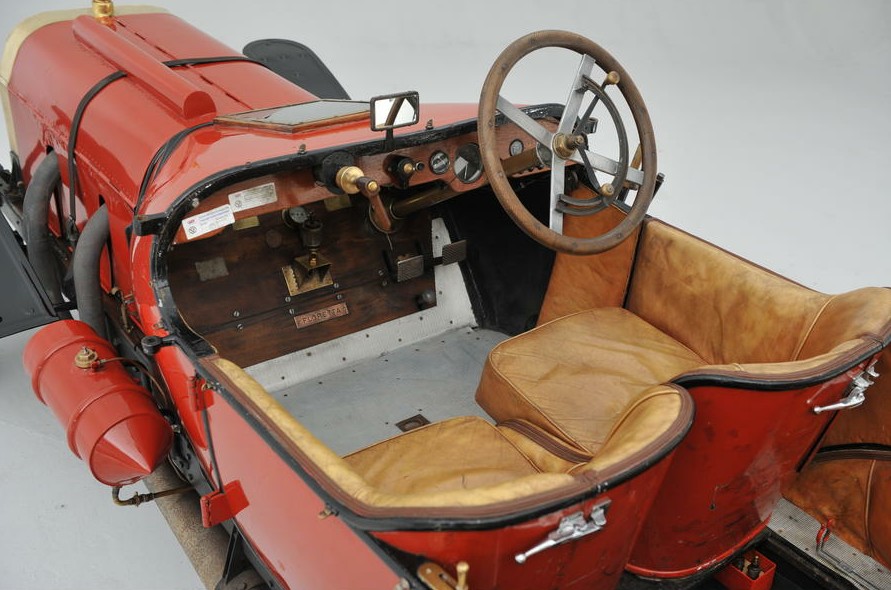
The Itala marque was founded in 1904 and is fairly well-known among enthusiasts and collectors for its racing prowess prior to 1910. The company existed until bought out by Fiat in the mid-1930s. That’s 30 years of history but it’s so rare to see one come up for public sale. And yet here is one – but not just any Itala. This car, known as “Floretta” is a somewhat famous model with known, detailed history.

Itala racing cars won the Coppa Florio in 1905, the Targa Florio in 1906 and the Peking-to-Paris race in 1907. 1908 was the first year for a fixed “formula” for the Grands Prix of Europe. Itala built three four-cylinder cars for the 1908 season, utilizing drivers Alessandro Cagno, Henri Fournier and Giovanni Piacenza. It was thought until very recently that this car was the one driven by Cagno. New evidence (such as wheelbase and weight comparisons) suggest that this may have been the one driven by Piacenza, as it had a longer wheelbase and thus, more weight, than either of the other team cars.

In 1909, the car was in possession of a Mr. R. Wil-de-Gose who lapped the Brooklands circuit at 93mph. The next year he returned and eventually bumped the speed up to 101mph, faster than the Mercedes race cars it competed against in 1908. Shortly after this, the original racing body was replaced with the four-seat touring body you see here. After World War I, the car was parked in a garage in England until discovered in 1927. The car was brought back to life and has changed hands only a few times since. I highly recommend going to Bonhams site here and reading the entire description, which includes snippets of stories by people who have driven this monstrous machine. It’s very interesting.

The engine is a massive 12-liters in capacity. It has four-cylinders with cylinders cast in two blocks. It makes about 100 horsepower and is good for cruising comfortably at speeds over 80 mph. The last Itala I can find that sold at auction went for less than $100,000. The estimate on this one is slightly more at $2,300,000-$3,900,000. It’s an amazing machine and an amazing opportunity. For more info click here and for more on Bonhams in Goodwood, click here.

Update: Sold $2,724,748.

Maserati 222

1992 Maserati 222 SE

Offered by Bonhams | Oxford, U.K. | June 16, 2012

The Maserati Biturbo was in production in various forms from 1981 through 1994. The original models were all called “Biturbo” something or other. In the late 1980s, the models were named 222, the SE model being offered from 1990 through 1992. There were also four-door sedans with various numerical names from 420 through 430.

While the Biturbo was the first twin-turbocharged production car, the engines that the turbos were attached to varied based on model. The 222 SE had a 2.8-liter twin-turbo V6 making 225 horsepower. It was good for 143 mph.

Only 210 of these cars were built and this one has 53,000 original miles. This one was in storage for eight years, but has been freshened and serviced and is ready to drive. Biturbos aren’t known for their reliability – in fact, they are more well known for leaking, bursting into flame and generally falling into disrepair. It was born out of Maserati’s De Tomaso ownership – and cash was not plentiful. But as a cool, cheap exotic, this car could be a lot of fun… you know, until you have to fix it. And I wouldn’t recommend trying to use it as a daily driver.

The car is to sell without reserve with an estimate between $7,700 and $11,000. And it does have that Maserati badge on it. I am seriously tempted. For more information, click here. For more from Bonhams Oxford sale, click here.

Update: Sold $4,500.

Bonhams Greenwich Concours 2012 Highlights

Bonhams set a record at their Greenwich Concours d’Elegance 2012 sale with a 1965 Ferrari 275 GTB/6C Berlinetta that brought $1,244,500 – the highest price a car has sold for at this particular sale, which has been going on for eight years now.

Two of our feature cars, the 1915 Crane-Simplex and the 1962 Moretti 2500 SS, both failed to sell. The highest selling of our feature cars was the 1922 Cunningham V-4 Town Limousine which brought $128,000.

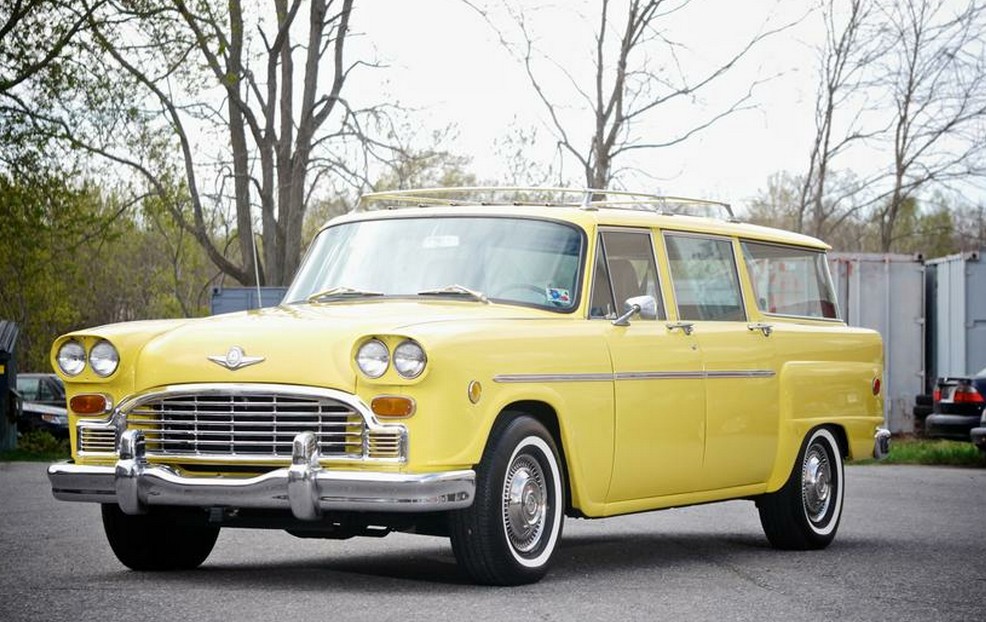
Other highlights included a rare 1971 Checker Marathon Station Wagon that, while never actually used as a taxi, was presented as one. It sold for $19,305.

Other interesting sales included a 1929 Stutz Series M Speedster with coachwork by Lebaron that brought $139,000.

And finally, this 1979 Kougar Sports 3.8 Liter Roadster formerly owned by David E. Davis Jr. These were sports cars built around a Jaguar XJ6 with fiberglass bodywork. It sold for $42,120.

Our other feature cars included the 1900 Parisienne Victoria Combination, which sold for $56,160 as well as the 1919 Locomobile Model 48 6-Fender Town Car which was hammered away for $65,000. For complete results, click here.

Locomobile Model 48

1919 Locomobile Model 48 6-Fender Town Car

Offered by Bonhams | Greenwich, Connecticut | June 3, 2012

Locomobile was one of the first big American automakers and the marque is a testament to the importance of the Stanley brothers in the history of the automobile. The publisher of Cosmopolitan magazine, John B. Walker, bought the design of the Stanley’s first steam car and put it into production. The Stanley brothers were General Managers until they left in 1902 to start Stanley, which would become Locomobile’s largest rival.

The Model 48 was introduced in 1911 and it had a wheelbase almost 30 inches longer than that of a modern Chevrolet Suburban. The 8.6-liter straight-six makes around 48 horsepower. Most of the powertrain components were cast in bronze and the chassis was made of chrome-nickel steel – which helps explain  why so few of these imposing automobiles survive to this day: scrap drives during the Second World War made these cars a lot more valuable in pieces than they did as a 20-something-year-old used car. This car was made using only the finest materials – the only thing, I guess, they could have done to make it even more over-the-top would have been to build it entirely out of gold and platinum – although it wouldn’t be quite so solid.

The body was built by Demarest and the layout is one you don’t see that often – a six-fendered town car. The fifth and six fenders sit just in front of the rear passenger compartment and I suppose exist to make each and every passenger feel a little like Cinderella being helped from her carriage. Bonhams claims that this car cost, when new, three times that of an open-bodied Model 48 – which I’ve read elsewhere would have cost around $10,000 in 1920 – which helps explain why Locomobile failed along with parent company Durant Motors at the onset of the Great Depression

This was about as grand a car as you could buy in 1919. And all of this grandeur will set you back somewhere between $60,000-$80,000. Which is a deal. For the complete description, click here. And for the rest of Bonhams’ lineup at the Greenwich Concours, click here.

Update: Sold $70,200.