Invicta Bluebird

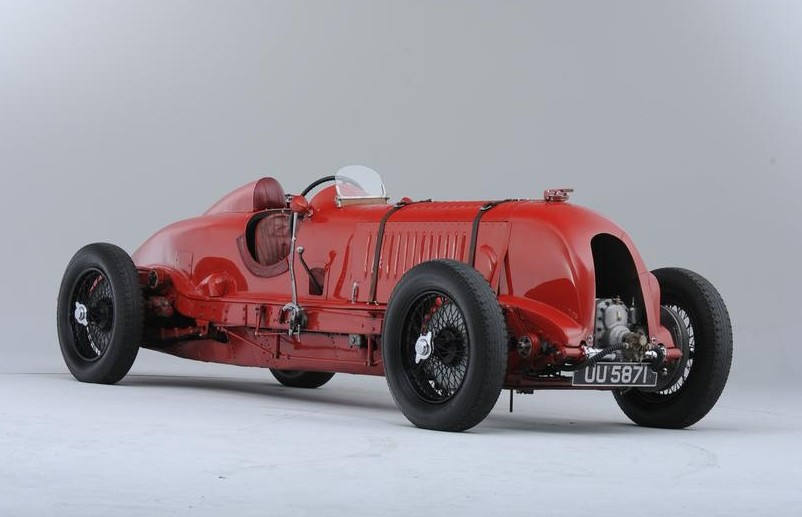
1931 Invicta 4½-Litre S-Type Low-Chassis Tourer

Offered by Bonhams | Goodwood, England | September 15, 2012

Invictas – especially the low-chassis models – are some of the sportiest cars of the era. They are aggressive looking with a low center of gravity, meaning handling and road holding were areas were Invicta cars excelled over their competitors – which included Bentley and Lagonda, among others. The cars were expensive and only about 1,000 Invicta cars of all models were built.

This is a 4.5-liter S-Type meaning the engine is a 4.5-liter straight-six that has been supercharged to produce speeds capable of 100 mph. All Invictas used Meadows engines built by Henry Meadows (except the first three prototypes). The supercharged Meadows six was a torquey monster – you can drive this car in top gear down to 6 mph!

Invictas never saw the racing success of Bentley. They went after a different niche – cars that could be throttled by their owners – just wrung out. High speeds for extensive distances with no wear or tear. The cars were so solidly built that 68 of the 77 S-Types built still survive.

This car, nicknamed “Bluebird,” has known ownership history since the 1960s and a three-year restoration was completed in 2011. It’s kind of weird, but pre-war cars were available in many different guises: big tourers, racing cars, etc. But this is a sports car. It’s made to go fast – but it’s not a competition car. There aren’t a lot of pre-war cars that are worthy of this designation. And this is among the best of them. The pre-sale estimate is $870,000-$1,100,000. For more information, click here. And for more from Bonhams at Goodwood, click here.

Update: Not Sold.

Maserati Tipo 26 Four-Seater

1930-31 Maserati Tipo 26 Sport

Offered by Bonhams | Goodwood, England | September 15, 2012

If you can believe it, there are actually two 1930 Maserati Tipo 26s up for auction at this sale. One is a two-seater, and the one seen here is a four-seater – you know, the more useful of the two when hauling the kids to soccer practice. Both cars come out of the same collection and having similar histories, as they were both imported into the U.K. for racing purposes in 1930. We’ll focus on the four-seater from here on.

The car is powered by a supercharged 2.5-liter straight-8, taking direct aim at Alfa Romeo’s 8C competition cars. This car competed against Alfa 8Cs, driven by the likes of Henry “Tim” Birkin, in the 1931 Eireann Cup in Dublin, Ireland. This car finished second to Birkin in an 8C. It was driven by Giuseppe Campari, who mid-race, was temporarily blinded when mud and debris from another car came off the track and shattered his goggles, sending glass into one of his eyes. Giulio Ramponi, a sometimes riding mechanic who was working in the pits, took over the car while Campari had his eye tended to. Before long, Campari ran back onto the track, flagged Ramponi down, and resumed his race.

The car was entered at Brooklands earlier that year, but only one of the two cars offered here actually competed (chassis unknown, based on price, I’d say likely this one). This car did compete at Brooklands in 1933 and a few other races over the next few years. It passed through numerous hands – and numerous drivetrain configurations – before being acquired by its current owner in 1952. All of its original pieces were located and reinstalled, making this a highly original example of an already extremely rare car.

It is very impressive, in both history, rarity and condition. It is an exquisite alternative to the comparatively common Alfa Romeo 8C. The pre-sale estimate is $2,900,000-$3,500,000. For the complete lot description, click here. And from more from Bonhams at Goodwood, click here.

Update: Sold $2,727,000.

All-Original Mercedes-Benz S-Type

1928 Mercedes-Benz 680 S-Type Four-Seat Open Tourer

Offered by Bonhams | Goodwood, England | September 15, 2012

Well check this out. This 1928 Mercedes-Benz S-Type Tourer has been in the same family for the last 84 years. That’s single-family ownership from new. And it has never been restored and has covered only 8,375 miles. This is an incredible car and an example of one of those cars that proves there is always something out there that will surprise you when it surfaces.

Mercedes-Benz introduced the S-Type in 1927. It featured a 6.8-liter straight-six with supercharger that was designed by Ferdinand Porsche. Power was around 180 and the top speed was in excess of 100 mph. The big brothers of this car, the SS, SSK and SSKL are legendary for their performance.

This car was ordered by an Army Captain in early 1928. It was delivered to England as a bare chassis and bodied by Cadogan Motors Ltd. of London with this lightweight, four-seat, fabric open tourer-style body. It was road-registered up through 1937 and by the 1950s it was set on blocks in the custom-made garage built specifically for this car.

The original owner’s grandson acquired the car in 2012 and brought it back to life. It runs and drives and has been inspected by a Daimler-Benz Classic engineer. This was the first great car produced by Mercedes-Benz and everything is just as it was in 1928 (well, the tires are new and the transmission was replaced by the owner in the 1930s). You won’t find a car this rare and interesting that hasn’t been seen in 60 years anytime soon. Then again, who knows what else will drive out of the woodwork tomorrow.

The pre-sale estimate is $2,400,000-$3,200,000. For the complete lot description, click here. And for more from Bonhams at Goodwood, click here.

Update: Sold $4,544,000.

Wolseley Seven

1922 Wolseley Seven Tourer

Offered by Bonhams | Beaulieu, U.K. | September 8, 2012

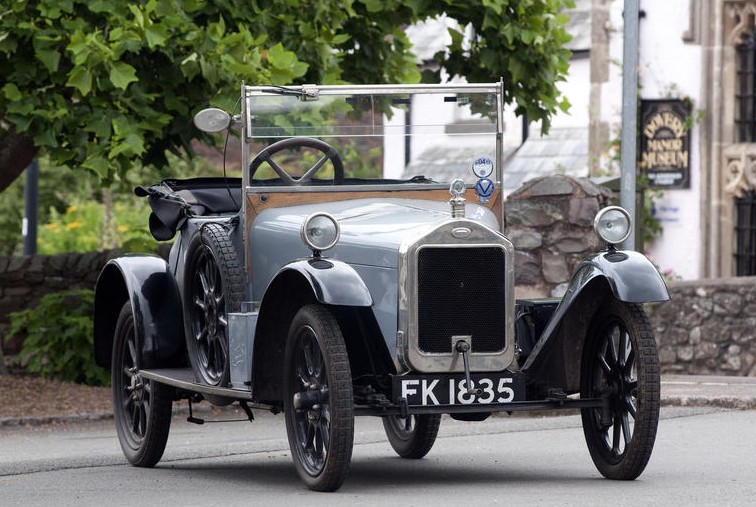
Here’s another small British convertible. The name Wolseley is probably familiar to you, as they produced cars in Birmingham from 1901 until 1975. The Seven name might also be familiar to you, as the Austin Seven (or 7, as it is usually seen) was one of the most popular British cars during the years of its production of 1922 through 1939. I kind of think of the Austin 7 as the British Ford Model T. Sure, the Model T came first and the British had them too, but the Austin 7 had the same kind of effect on the British automotive market as the Model T did in the U.S.

Wolseley and Austin were independent manufacturers in the 1920s, although Austin tried to buy Wolseley in 1927, but were outbid by Morris. But Austin and Morris merged in 1952 anyway as British automotive firms began to consolidate time and again. For a while  thereafter, Austin and Wolseley produced badge-engineered versions of the same cars.

But this was not the case in 1922 when the Wolseley Seven was introduced. The car was high in quality but it was at the bottom end of the market with its flat-twin engine of 986cc making just 8.5 horsepower. The Austin 7, introduced the same year, used a 747cc straight-four making 10.5 horsepower. And, to make matters worse, the Wolseley was considerably more expensive. This led to only about 1,000 being made before production halted at the end of 1923.

Only about 10 of these very rare cars survive today – and this one is in drop-top form. It’s a former museum car in good shape. The pre-sale estimate is between $13,000-$19,000. For more information, click here. And for the rest of Bonhams’ lineup for this sale, click here.

Update: Sold $18,773.

1913 Humberette

1913 Humber Humberette 8HP Two-Seater

Offered by Bonhams | Beaulieu, U.K. | September 8, 2012

Like many automotive manufacturers, Humber began as a bicycle company. Founded as such in 1868 by Thomas Humber, their first car didn’t appear until 1898, a three-wheeler. Four-wheelers appeared in 1901. “Humberette” was applied to light (single-cylinder) Humbers in 1903 and 1904 and then it went missing until after 1910.

The cyclecar fad was sweeping the U.K. in the early teens and Humber eagerly opted in, bringing the Humberette name back from the great beyond for their v-twin powered cyclecars, like the one you see here. This has a 996cc V-Twin making eight horsepower. Unlike most of its competition, this cyclecar has shaft drive, as Humber was not a fan of the much more common chain drive.

Humberette was not technically its own marque but the cars are often referred to as if they were. The Humberette name disappeared again at the start of WWI. The Humber name lasted until 1976, being killed during the Chrysler Europe fiasco. This car was restored at some point and has seen little use over the last quarter century in the hands of its current owner. The pre-sale estimate is $17,000-$22,000. For the complete description, click here and for more from Bonhams at the National Motor Museum, click here.

Update: Sold $36,809.

Waldron Wayfarer

1928 Waldron Wayfarer

Offered by Bonhams | Beaulieu, U.K. | September 8, 2012

The Waldron Wayfarer – that’s right the, there was only one made, was built over a period of years ranging from 1928 until 1931 by Frederick Barnes Waldron in Lancashire, England. Waldron was a mechanical engineer by trade and designed the car from the ground up – designing and building his own engine during a time when many automobile manufacturers used engines from other, larger companies. His was a 1.3-liter straight-four.

The body was designed and built by St. Helen’s Carriage Works, a firm that specialized in commercial vehicles. Waldron drove the car approximately 20,000 miles by the end of the 1930s, when he dismantled the car.

In 1976, the car was acquired and re-assembled using Waldron’s original drawings and all of the original parts, including the body panels. In 2005 it was purchased at auction and used as reliable summer transportation in the English countryside. It has had another owner since and is being offered with an estimate between $13,000-$16,000 – not too steep considering it’s one of a kind. For the complete description, click here. And for more from Bonhams at the National Motor Museum, click here.

Update: Withdrawn.

Bonhams 2012 Pebble Beach Highlights

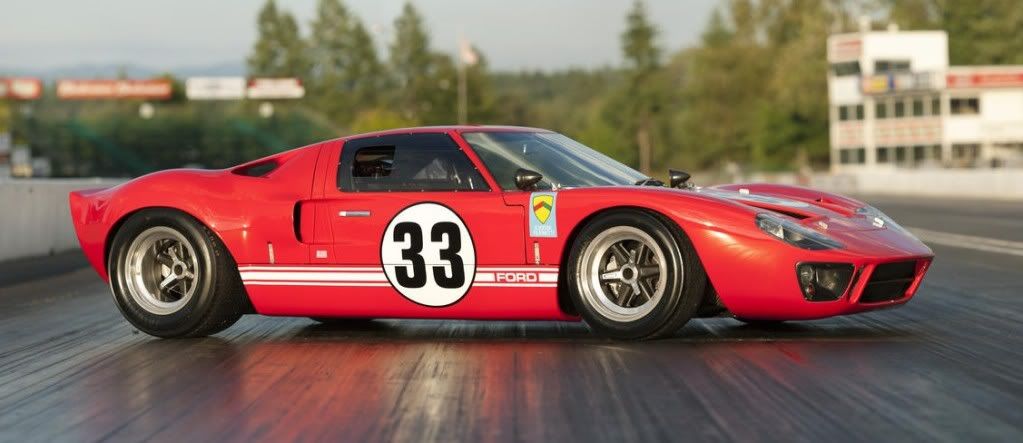
I think this is a new record with regards to auction coverage turnaround time. This sale was held on August 17, just three days ago and here we are presenting results! Big thanks to Bonhams for posting the final numbers about as quickly as could possibly be expected. Both of our feature cars, the 1895 Buffum and the Gulf McLaren F1 Longtail, failed to sell. The top sale of the auction went to this 1966 Ford GT40 for a cool $2,205,000. It is chassis #GT40P/1033, if you’re keeping score at home.

1966 Ford GT-40

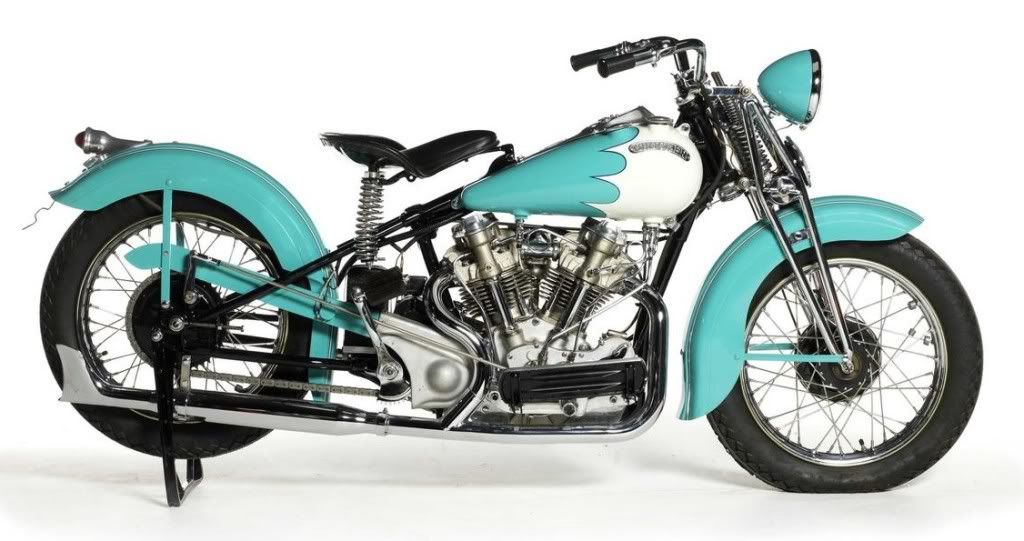
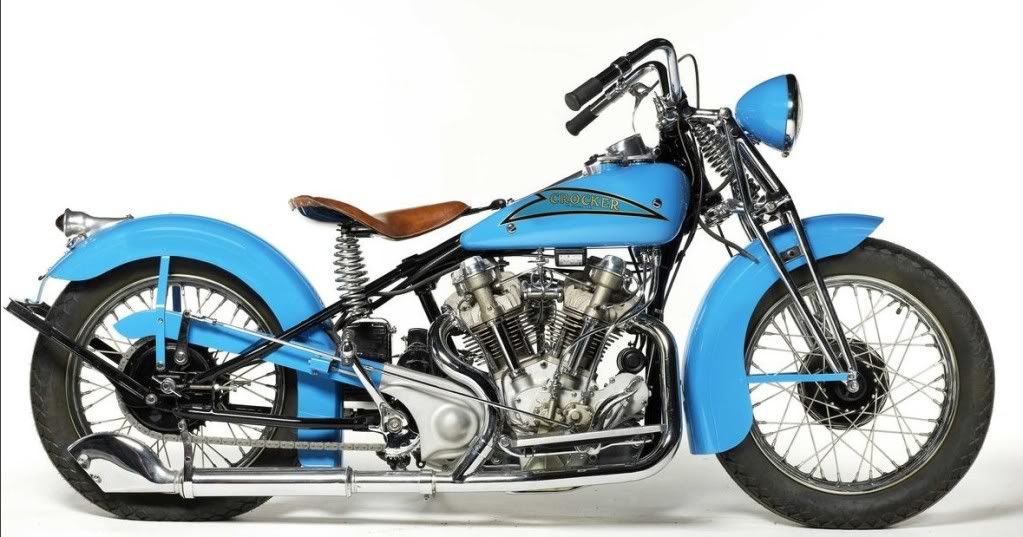
There were some pretty impressive motorcycle results at this sale as well. Top honors went to a 1940 Crocker “Big Tank” V-Twin for an eye-wattering $302,000.

1940 Crocker "Big Tank" V-Twin

There were two other Crockers that sold as well, both 1937 V-Twins. One sold for $302,000 and the one below brought slightly less at $291,000 (but it’s in a better color).

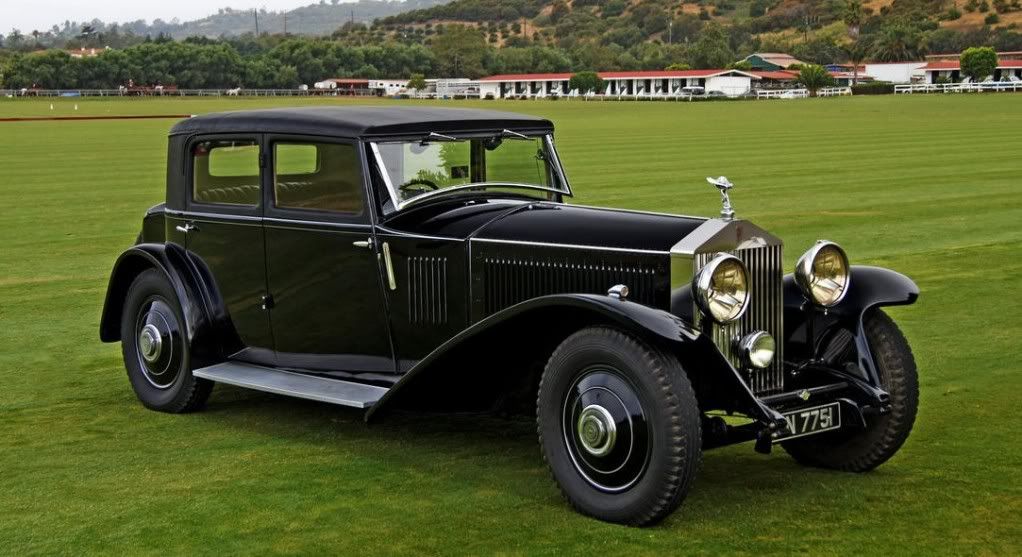
Road cars that really caught my attention included this 1931 Rolls-Royce Phantom II Continental Touring Saloon by Mulliner. It sold for $178,800.

1931 Rolls-Royce Phantom II Continental Touring Saloon

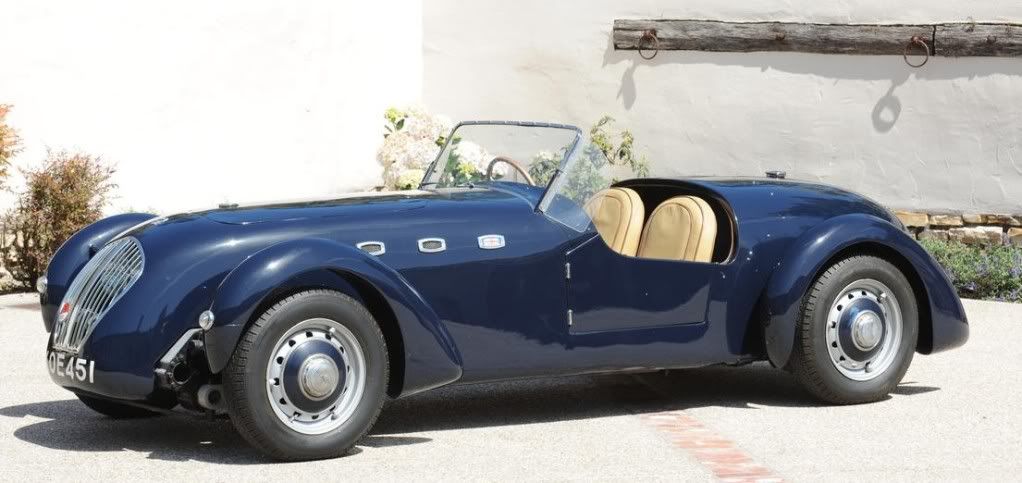
There was also a super-rare 1949 Healey Silverstone that sold for $134,250.

1949 Healey Silverstone

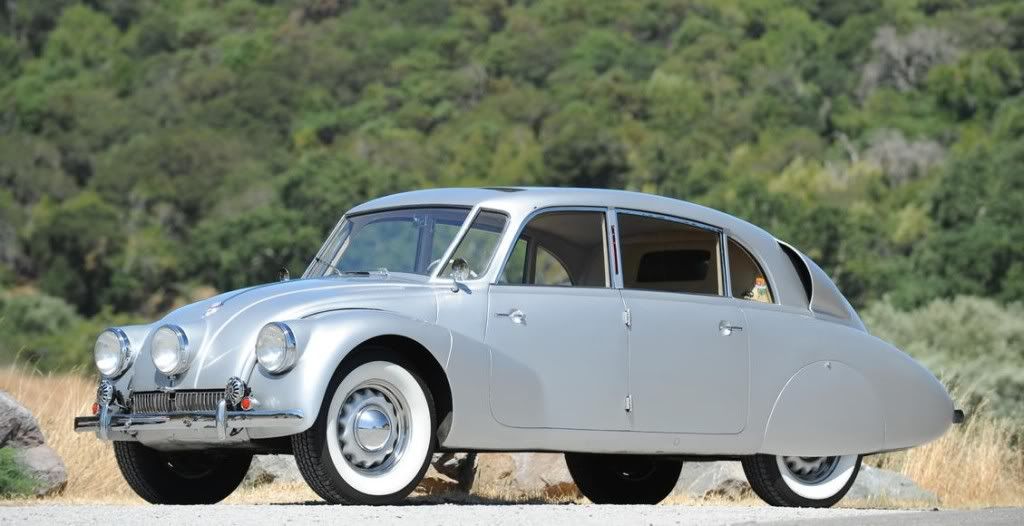
But, by far, the coolest car Bonhams had on offer was this 1941 Tatra T87. These air-cooled beauties are magnificent. I really think it’s one of the loveliest designs of all time. They are quite rare in the U.S. and the price reflected that at $280,000.

1941 Tatra T87

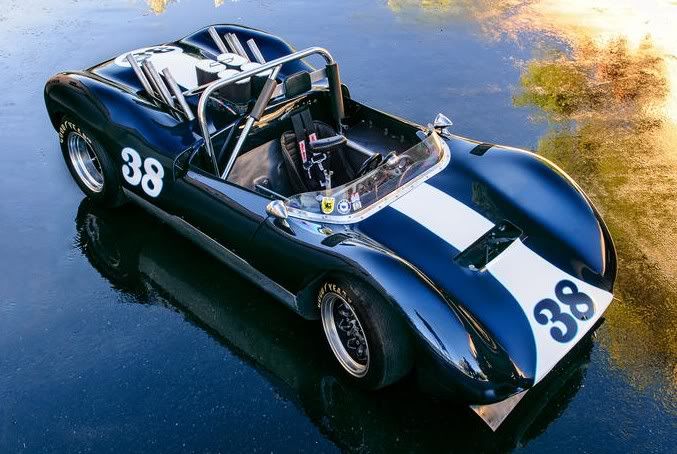
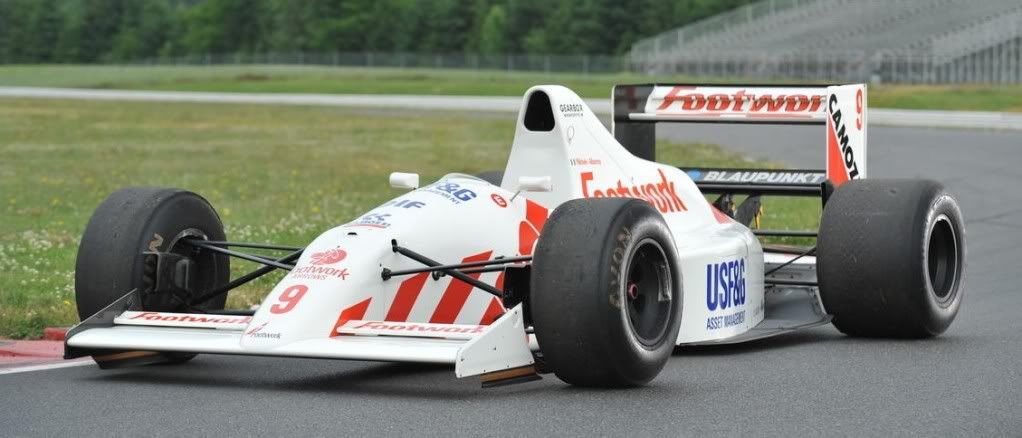
Race cars were a major theme and some of my favorites included a 1964 Huffaker-Genie Mk 10 and an ex-Michele Alboreto 1990 Footwork-Arrows FA11B Formula One car. The Genie brought $142,500 and the Footwork $54,050.

1964 Huffaker-Genie Mk 10

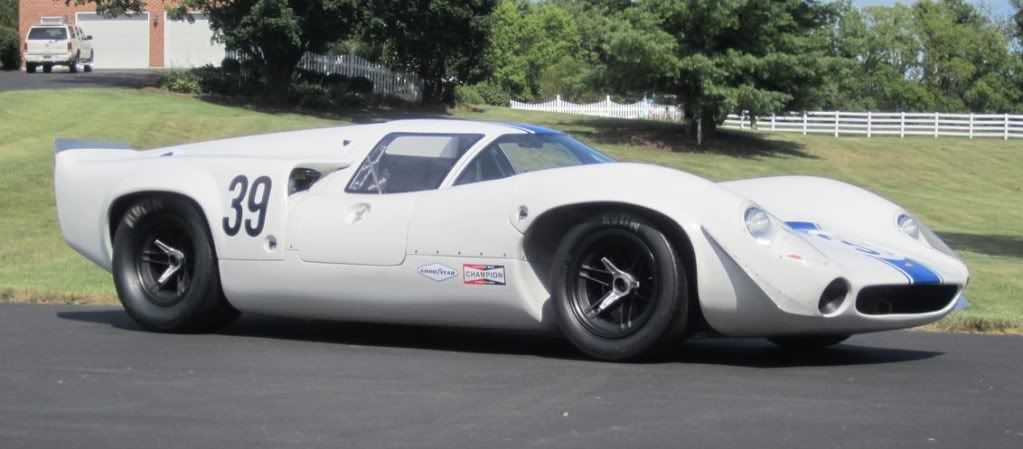
The second-highest selling car of the sale was also a race car (as was the top-selling GT40). It was a 1966 Lola T70 Mk II GT that brought $324,000.

1966 Lola T70 Mk II GT

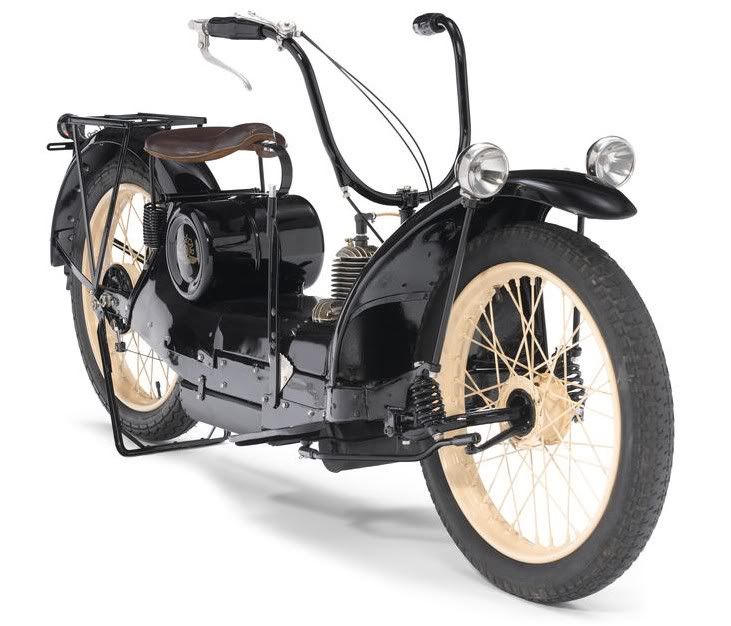
Two of the more obscure things to sell at this auction included an ex-Otis Chandler 1924 (circa) Ner-a-Car. These things are way cool and this one sold for $14,375.

c. 1924 Ner-a-Car

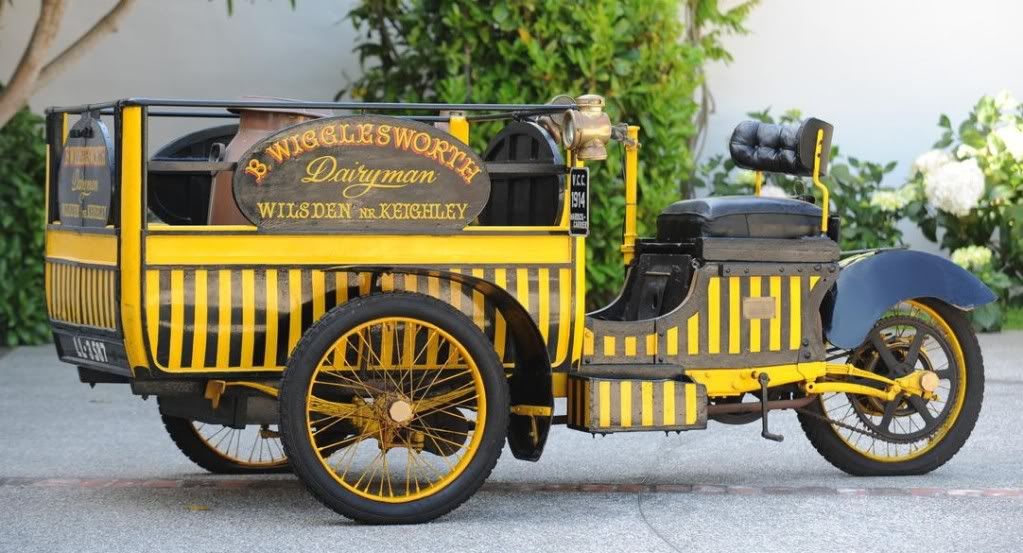
And finally, there was this 1914 Warrick 6hp Carrier Tri-Car Milk Float (which is kind of a mouthful of a name). It’s a British dairy truck – er, trike. The driver sits in the back and the product is up front. I’ve never seen one before. It sold for $25,300.

1914 Warrick 6hp Carrier Tri-Car Milk Float

For complete results, click here.

World’s First 4-cylinder Car

1895 Buffum Four-Cylinder Stanhope

Offered by Bonhams | Carmel, California | August 17, 2012

You’re looking at the oldest American car ever offered for auction and the oldest American gasoline-powered car in private ownership. It was also the first four-cylinder car ever built – anywhere in the world. And you’ve likely never heard of it.

Herbert H. Buffum built his first car in 1895 (actually he started it in 1894). Anyway, this is it. While other early automotive manufacturers where attaching single and twin-cylinder engines, Buffum had an idea for something a little more useful but just as compact. A designer and builder of machines for the shoe industry, Buffum had the technical know-how to accomplish what he wanted. And what he accomplished was building the world’s first four-cylinder gasoline engine for an automobile. It was a inline-four.

A chassis was needed to house this technical marvel – and for that Buffum turned to a local carriage builder named George Pierce, a name that would go on to be synonymous with high-quality automobiles in the next decade. Buffum was secretive with his new car, keeping it locked away in a shed when not using it, but eventually he hand-built six others for customers prior to 1900, when he entered production as an official manufacturer. The cars he produced until 1906 were front-engined cars, unlike most of their American competitors.

Other Buffum firsts included America’s first eight-cylinder car (of 80 horsepower) in 1904. In 1905 saw the world’s first V8. Buffum died in 1933 and his widow sold this car the following year from the secretive shed where he kept it stashed. It has changed hands numerous times and has appeared in a number of museums. It is operational and presents an extremely rare opportunity to acquire a pre-1898 American car (as almost all of the others reside in museums).

The pre-sale estimate is $200,000-$280,000. For more details, click here. And for the rest of the lineup from Bonhams in Carmel, click here.

Update: Not sold.

Update II: Sold, $182,000 at Bonhams Veteran Motor Car sale, 2012.

Gulf McLaren F1 GTR Longtail

1997 McLaren F1 GTR Longtail

Offered by Bonhams | Carmel, California | August 17, 2012

If this doesn’t make you drool all over your keyboard, I don’t know what will. But seriously, if anyone out there would be kind enough to buy this car for me, I would be eternally grateful, as I have been really wanting one of these since I knew what they were. And I’m a sucker for anything painted in Gulf livery.

Where to start? I’m going to leave out the interesting tidbits about the McLaren F1 road car except that I will say that it was the greatest road car ever built (sorry, Volkswagen). Racing versions first appeared for the 1995 season, having to have been detuned from road-car spec to make it legal for certain racing series – including Le Mans, which it won in it’s debut season. Nine race chassis were built for 1995 (the GTR denotes a race chassis – some were converted to street legal versions after their racing lives had concluded and a number of GTR road cars exist today).

For 1996, nine more GTRs were built (with two additional 1995 cars upgraded). They had slightly different bodywork that was a little longer both front and rear to stay competitive. 1997 saw even more improvements and a move to the “Longtail” specification to compete against the Mercedes-Benz CLK GTR and Porsche 911 GT1. Ten Longtail cars were built with none of the previous cars being upgraded. This took the total to 28 cars. This was #28, the final GTR built.

Chassis 028R was originally 027R, but 027R was destroyed in a testing crash. When it was rebuilt, it was rebadged as 028R. The competition history of this car includes:

  • 1997 FIA GT Nürburgring 4 Hours – 44th, DNF (with Andrew Gilbert-Scott & Anders Olofsson)
  • 1997 FIA GT Spa 4 Hours – 44th, DNF (with Gilbert-Scott & Olofsson)
  • 1997 FIA GT Zeltweg 4 Hours – 30th, DNF (with Geoff Lees & Gilbert-Scott)
  • 1997 Suzuka 1000km – 6th (with John Nielsen, Lees & Gilbert-Scott)
  • 1997 FIA GT Donington Park 4 Hours – 7th (with Olofsson & Lees)
  • 1997 FIA GT Mugello 4 Hours – 8th (with Olofsson & Lees)
  • 1997 FIA GT Sebring 3 Hours – 10th (with Olofsson & Lees)
  • 1997 FIA GT Laguna Seca 3 Hours – 6th (with Olofsson & Lees)

Since the end of the 1997 season, this car was “preserved” at McLaren before being sold to someone in Japan in 2004 where it remained for two years. The current owner acquired it in 2006 but it hasn’t seen a track day since 1997. The engine, the 6.1-liter BMW V12 (which in this car has a somewhat neutered 600 horsepower) was last run in January – but McLaren has offered to do a full technical inspection free of charge once this sale is complete.

The McLaren F1 was a legend from day one and it continues to grow. These cars will do nothing but appreciate and by the time the kids – who had McLaren F1 posters on their walls in the 1990s – grow up and become financially successful (hopefully) adults in their 50s, 60s, and 70s, these cars will be worth untold fortunes. Road cars started at about $600,000-$900,000 back in the 90s and have sold for upwards of $4 million since 2008. I remember seeing them sitting on used-supercar dealer lots in the early 2000s. Times change fast. Bonhams wasn’t sporting enough to publish an estimate, so we’ll have to wait and see. For more info, click here. And for more from Bonhams in the amazing little town of Carmel, click here.

Update: Not sold.

S/N: 028R

Bonhams’ Collectors’ Cars at Goodwood Highlights (06/12)

Bonhams’ sale held during 2012’s Goodwood Festival of Speed had some impressive results. Like, really impressive. The George Daniels Collection was responsible for over $12 million worth of sales alone. Top sale came from said collection – it was this 1929-31 Bentley 4.5-Litre Supercharged “Blower” Bentley Single-Seater. This car held the Brooklands Outer Circuit lap record. It remains, some 80 years later, a seriously fast car. It sold for $7,900,000.

The Bentley just edged out this glorious 1912 Rolls-Royce 40/50hp Silver Ghost Double Pullman Limousine by Barker. Known as “The Corgi,” this all-original Rolls is about as awe-inspiring as they come. It brought a world-record price for a Rolls-Royce at $7,300,000 (the Bentley above was also a record setter for the marque).

The next two highest-selling cars were two of our feature cars. First, the Alfa Romeo 8C 2300 with Le Mans history brought $4,200,000. Then there was the 1908 Itala Grand Prix car, which sold for $2,725,000. The only other million dollar sale was $1,200,000 for a 1928 Bentley 4.5-Liter Supercharged Tourer, which was my personal favorite Bentley of the handful on offer.

Top sale among the large collection of Lotuses went to the 1962 Type 19 “Monte Carlo” with Buick V8 power (below). It sold for $248,000. One of our feature Lotuses didn’t sell – the 1984 Etna Concept. The other one did: the ex-works 1956 Eleven Le Mans brought $239,000.

Our other two feature cars both sold. The 1951 HRG 1500 brought $57,000. And the 1907 Daimler Type TP Tourer sold for $564,000. Other interesting sales included a rare 1963 Sunbeam Alpine Harrington hardtop for $30,600.

Two other cars I liked (and would’ve featured had there been time) were this 1924 Ballot 2LT/2LTS Torpedo with coachwork by Lagache & Glaszmann (top) for $61,000. And this 1926 Amilcar Model G (bottom) for $54,000.

And finally, and this might have as much to do with the picture as the car, an ex-Elton John, 1985 Aston Martin V8 Vantage. It sold for $122,600. This has to be the most reflective shade of purple I’ve ever seen. It looks awesome. For complete results, click here.