Hudson Sport Phaeton

1929 Hudson Model L Dual-Cowl Sport Phaeton

Offered by Bonhams | Scottsdale, Arizona | January 2024
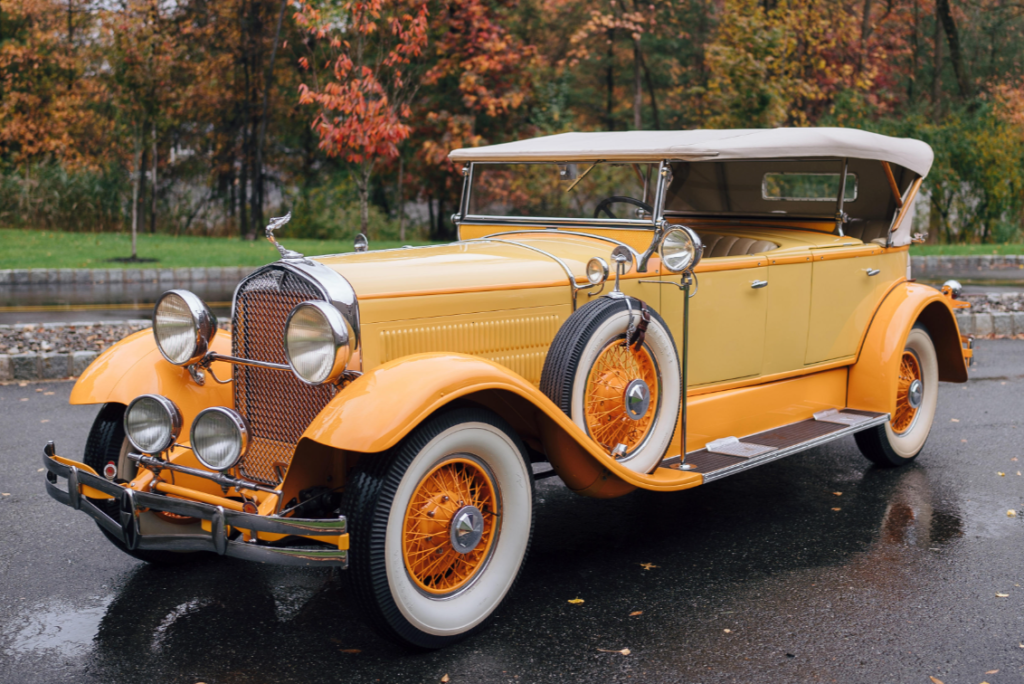
Photo – Bonhams

Hudson was one of a very small percentage of U.S. automakers to make it both through the Depression and come out the other side of WWII. In fact, they lasted from 1909 through 1957, by which time they had merged with Nash to form AMC. Hudsons were never top-tier luxury cars, but during the ’20s and ’30s, they introduced entry-level brands, which allowed Hudson to inch farther upmarket.

Which is how this coachbuilt Model L came to be. The Sport Phaeton bodywork is from Biddle & Smart, who built all bodies for the Model L, which was Hudson’s flagship offering in 1929. Power is from a 4.7-liter inline-six rated at 92 horsepower. Hudson was America’s #3 automaker behind Chevrolet and Ford in 1929.

Only 17 Phaetons were built in 1929, and just seven remain. The car has been restored to, interestingly, colors from a period Hudson advertisement. It’s a pretty slick car, and head and shoulders above what you could’ve got from Chevy or Ford in the same year. The estimate is $150,000-$180,000. Click here for more info.

Update: Sold, price lamely withheld.

Norsjo Shopper

1972 Norsjo Shopper

Offered by Mecum | Kissimmee, Florida | January 2024

Photo – Mecum

The Shopper is barely a microcar, it’s almost more of a mobility scooter – the kind you find at the grocery store. It has a single seat and is usually equipped with a small basket behind the seat to place your goods. This one has been retrofitted with a metal basket and Coke graphics everywhere.

Norsjo M.V.A.B. of Forshaga, Sweden, built the prototype Shopper in 1962, and they remained on sale for a few decades afterward. The front canopy here tilts to the side, and power is provided by a 47cc two-stroke single that could push this three-wheeler to about 35 mph.

These aren’t very common, especially in the U.S. This one doesn’t have a title but does seem to have a reserve, which is kind of odd. Click here for more info.

Update: Sold $19,800.

Talbot-Lago T-15

1955 Talbot-Lago T15 Baby Coach by Barou

Offered by Bonhams | Scottsdale, Arizona | January 2024

Photo – Bonhams

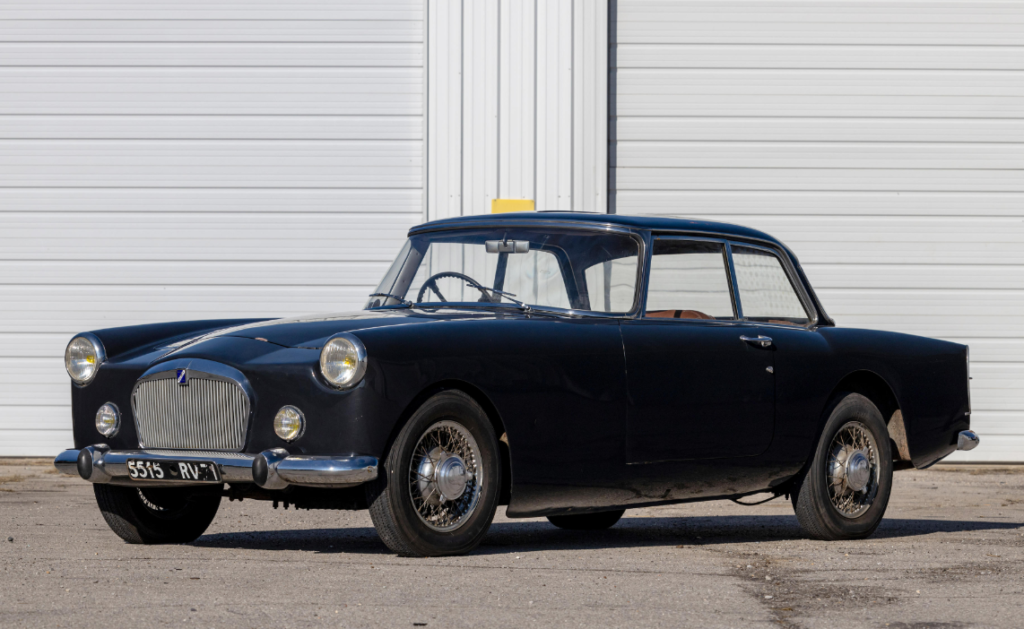
Before WWII, Talbot-Lago debuted a car that they called the Baby. Very few were produced between 1936 and 1940 while the company focused on its established offerings. The Baby wasn’t really an entry-level car (it was still expensive), it was just a little smaller.

As the company faltered after the war, they tried to launch a new Baby in 1951/1952. Two versions were available, with the T-15 receiving a lower taxable horsepower rating. Actual output of the 2.7-liter inline-six was around 120 horsepower. It also has a Wilson pre-selector gearbox.

The car was supposed to be a performance car, but the bodies were too heavy and not many were sold. By the end of 1953 they had stopped advertising it. Just 70 are thought to survive, with this on clothed in one-off coachwork by Jean Barou. “Largely unrestored” – whatever that means – the car has an estimate of $90,000-$120,000. Click here for more info.

Update: Sold $57,120.

1922 Winton Touring

1922 Winton Model 40 Seven-Passenger Touring

Offered by Bonhams | Scottsdale, Arizona | January 2024

Photo – Bonhams

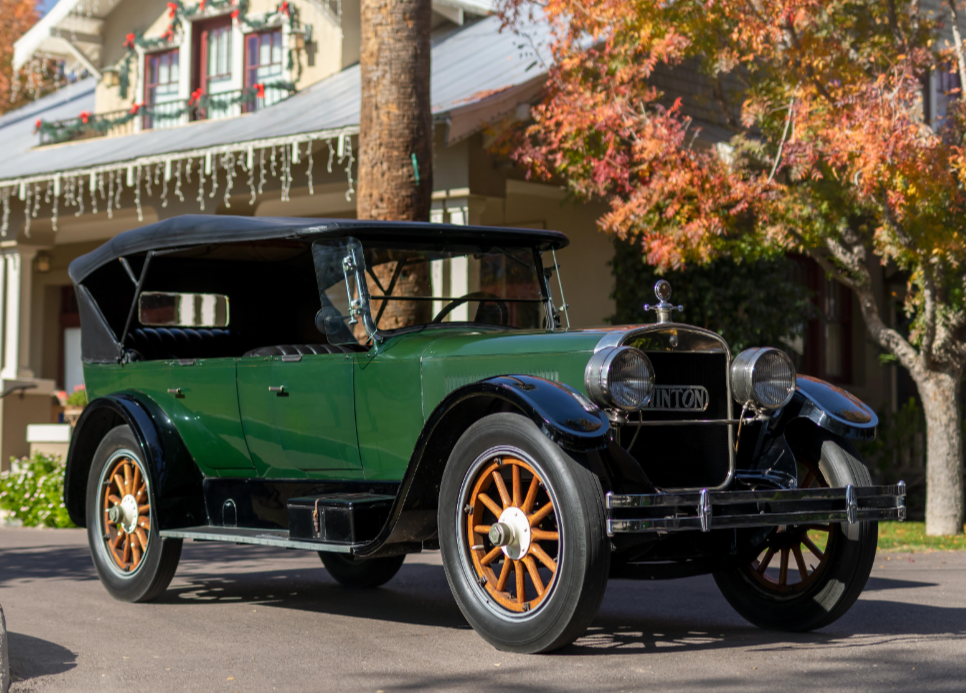
The Winton Motor Carriage Company was one of America’s most important early manufacturers. Alexander Winton was the first to really set up a dedicated production system for motorcars in the U.S., and his head-to-head loss against Henry Ford in a 1901 race set Ford on his path. Winton sold cars from 1898 to 1924, a short time given the company’s importance.

Winton’s had been six-cylinders-only since 1908, and post-WWI models moved upmarket, at least in terms of price. The Model 40 was offered the final two years of production: ’23 and ’24. Power is from a 5.7-liter inline-six rated at 72 horsepower in 1923 and 78 in 1924.

Body styles aplenty were available, but most cars of this era look best in open touring configuration. The car was at one time owned by Alexander Winton Jr., and it has mostly known ownership history, which is remarkable at over 100-years old. The estimate here is $45,000-$55,000. Click here for more info.

Update: Sold $40,320.

Auburn-Powered Special

1947 Bigata Douze Special

Offered by RM Sotheby’s | Paris, France | January 31, 2024

Photo Courtesy of RM Sotheby’s

This interesting contraption was built by Georges Bigata to demonstrate that you could build a fast sporting car powered by natural gas. And he did it in the late 1940s. But why? Well, because his family owned a natural gas company of course.

His starting point was his 1932 Auburn Twelve. The chassis was flipped upside down (to lower the car) and the 6.4-liter V12 was converted to run on natural gas. The aluminum body was supplied by Dassault – yes, the aircraft company. It is said to be capable of 125 mph with its three-speed manual transmission.

The car was later discovered still in the Bigata family and returned to operable condition. The current collection acquired it in 2008. The estimate is $165,000-$220,000. More info can be found here.

Update: Sold $156,989.

Duesenberg J-446

1931 Duesenberg Model J Convertible Sedan by Franay

Offered by Bonhams | Scottsdale, Arizona | January 2024

Photo – Bonhams

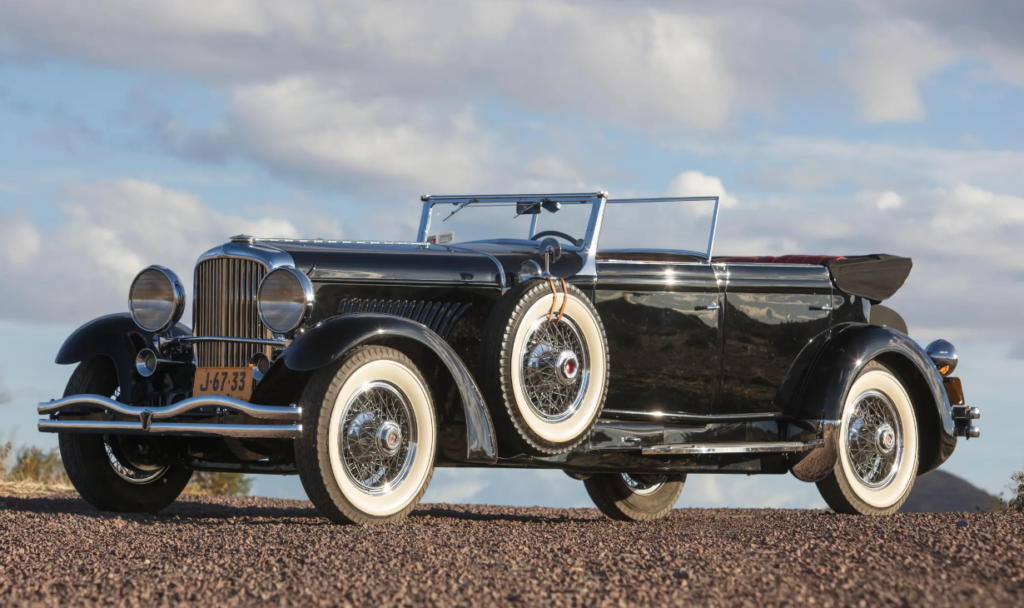
Here’s another great Duesenberg, one that has been off the market since 2002, when it was acquired by its current owner. The convertible sedan body style is not an unusual one on a Model J, and this looks like many other such cars.

Except it looks slightly different. This car is among not all that many Model Js that were bodied by European coachbuilders. It wears coachwork by Franay and was one of two Js on the 1931 Paris Salon stand. It was purchased new by the Queen of Yugoslavia.

It then went to a Peruvian owner in Paris. A restoration was completed in 1996, and the car is powered by a 265-horsepower, 6.9-liter straight-eight. You can read more about it here.

Update: Not sold.

Reliant Regal

1957 Reliant Regal Mk III

Offered by Bonhams | Scottsdale, Arizona | January 2024

Photo – Bonhams

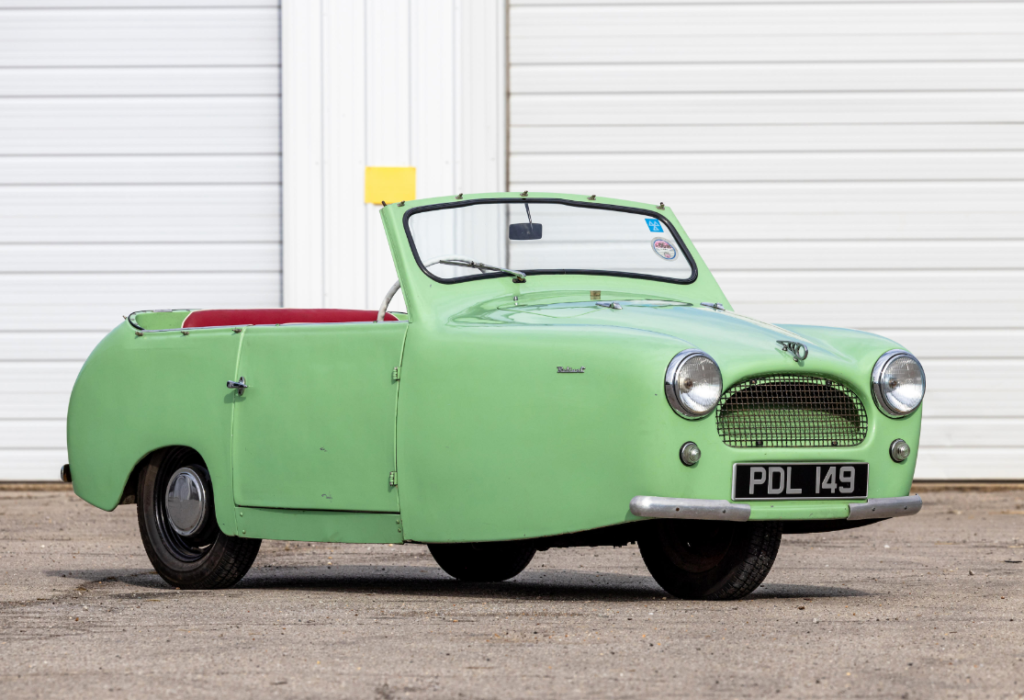
The Reliant Motor Company is most famous for its three-wheeled vehicles, notably the Robin (and by extension, the Rialto). But prior to the Robin there was this, the Regal. It went on sale in 1952 and lasted for over 20 years before being replaced by the Robin in 1973.

Over that 20 years, they produced seven different series of Regal. This is a Mk III, which was introduced in 1956. It featured an all-fiberglass body and a 747cc inline-four that made 16 horsepower. The Mk IV arrived in 1958.

Bigger engines came later, but this could get to 60 mph if you tried (and how fast do you really want to go on three wheels?). Plus it’s a convertible. These are rarely seen in the U.S., and this one is going at no reserve. Click here for more info.

Update: Sold $11,760.

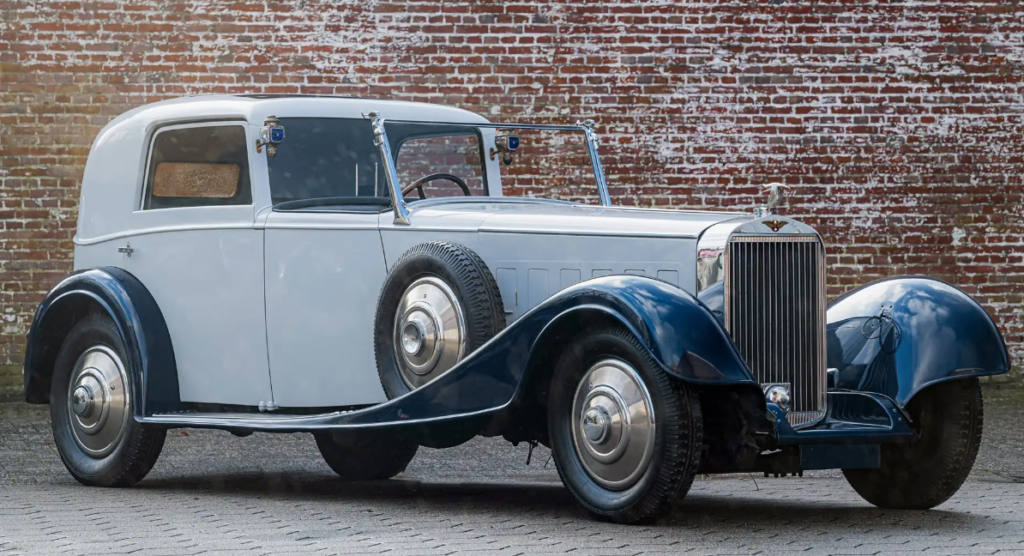
Hispano-Suiza J12

1934 Hispano-Suiza J12 Coupe Chauffeur by Kellner

Offered by RM Sotheby’s | Paris, France | January 2024

Photo Courtesy of RM Sotheby’s

The J12 was Hispano-Suiza‘s grandest automobile. It entered production in 1931 in Hispano-Suiza‘s factory in France. Designed by the company’s longtime chief engineer, Marc Birkigt, it was offered to customers as a bare chassis only.

Power is from a 9.4-liter V12 that was rated at 220 horsepower. This was a stout car for the period, right up there with the Model J Duesenberg. This example wears town car coachwork by Kellner and was originally delivered to the owner of Christian Dior.

It has known ownership back to the 1970s and entered its current collection in 2003. It, like a few other cars from this collection, is absent its headlights. But no mention of that – or anything about its mechanical condition, in the catalog (just a passing mention that its restoration needs to be completed). So spend your $330,000-$440,000 at your own risk. Click here for more info.

Update: Sold ~$241,523.

1917 Case Touring

1917 Case Model T Touring

Offered by Mecum | Kissimmee, Florida | January 2024

Photo – Mecum

Jerome Increase Case founded the J.I. Case Threshing Machine Company in 1842. By the end of the 1800s, they were one of the largest producers of steam traction engines. Gasoline-engined tractors appeared in 1895, and about 15 years later, they would parlay that knowledge into road cars.

Case-branded road cars were available from 1911 through 1927. The Model T of 1916 and 1917 was powered by a 40-horsepower, inline-four. Two body styles were offered in 1917, a roadster and a touring car, both retailing for $1,190.

The catalog only has four photos of this car, so there’s not much info to glean. It does look nice, especially on unpainted wood-spoke wheels. Click here for more info.

Update: Sold $27,500.

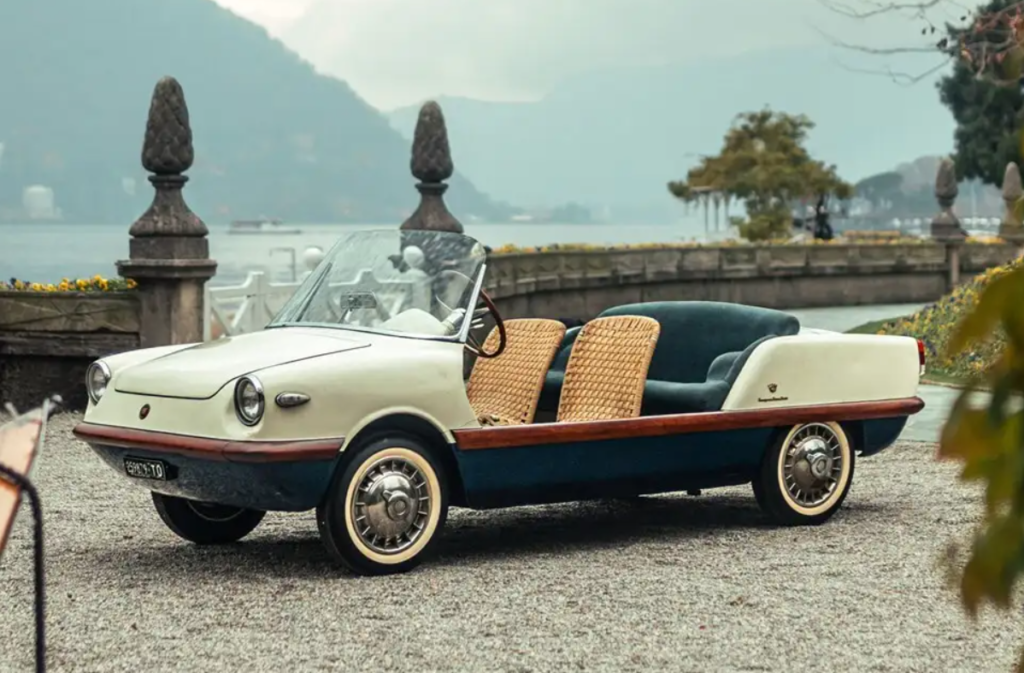
Fiat 500 Beach Car

1958 Fiat 500 Spiaggina by Boano

Offered by RM Sotheby’s | Paris, France | February 2024

Photo Courtesy of RM Sotheby’s

This beach car was bodied by Boano on a (presumably modified) Fiat 500 platform. It is one of two such like it built and the only known survivor. As it is low production, it is of course claimed to be the inspiration for every similar beach car and Jolly that followed. Seemingly every coachbuilt beach car (or similar) auction catalog listing makes this same claim.

Many of these are based on the larger Fiat 600 or 850 platforms, so it’s unusual to see one that started out as a 500 (even though the front end looks much more like an 850). It appears to have been stretched to fit that somewhat-comfortable looking upholstered rear sofa. More comfortable than the wicker up front anyway.

This doorless wonder was originally built for Mr. Fiat: Gianni Agnelli for use at his French villa. The other example went to Aristotle Onassis. 500s were powered by inline twins, but it’s unclear which version this has. It’s neat and apparently unrestored. The estimate is $295,000-$315,000. More info can be found here.

Update: Sold ~$389,193.