K-R-I-T Roadster

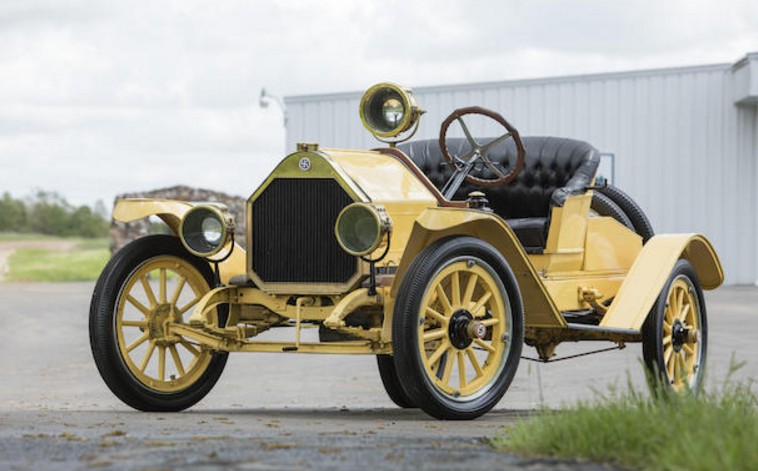
1912 K-R-I-T Model A Roadster

Offered by Bonhams | Greenwich, Connecticut | June 5, 2016

Photo - Bonhams

Photo – Bonhams

If you’ve even ever heard of the K-R-I-T Motor Car Company of Detroit, the one thing you probably know about them is that their emblem was a swastika. Fun fact. Fortunately, K-R-I-T, which was founded in 1909, went out of business in 1916 – well enough in advance of the downfall of the original meaning of the swastika, which means lucky or auspicious.

Krit (as the marque was spelled from 1913 onward) offered four different models of its four-cylinder model in 1912. The Model A was the short wheelbase version and the least expensive. It was the Roadster form and cost $800 new. It’s powered by a 22.5 horsepower 2.9-liter straight-four.

It’s an attractive and sporty early American car from a little-known, short-lived manufacturer. This example was actually used in Boardwalk Empire, which is pretty cool. It should sell for between $20,000-$25,000. Click here for more info and here for more from this sale.

Update: Sold $24,200.

Flanders Touring

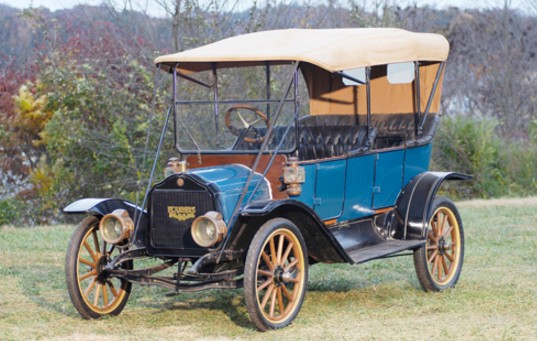
1912 Flanders Model 20 Touring

Offered by Auctions America | Auburn, Indiana | May 7, 2016

Photo - Auctions America

Photo – Auctions America

Walter Flanders was one third of the automobile company E-M-F (along with Bernard Everitt and William Metzger). Studebaker acquired E-M-F in 1910 (and phased it out in 1913). So Flanders set up shop producing a car under his name. This too was part of Studebaker and it was gone after 1912.

Interestingly enough, Flanders started another company after this one. It lasted only a brief time because Flanders himself went to help Benjamin Briscoe and his United States Motor Company. Walter Flanders started killing off weak brands (including Flanders). Only Maxwell survived that fiasco.

This is a 1912 Model 20 (the final year for the model and marque). It is powered by a 20 horsepower straight-four. The Touring model cost $800 when new and 31,512 Model 20 cars were built over three years. This one presents nicely and should bring between $20,000-$30,000. Click here for more info and here for more from this sale.

Update: $6,600.

Mitchell Baby Six Roadster

1912 Mitchell Model 5-6 Baby Six Roadster

Offered by RM Sotheby’s | Hershey, Pennsylvania | October 8-9, 2015

Photo - RM Sotheby's

Photo – RM Sotheby’s

Like Case, Mitchell was also from Racine, Wisconsin. The company was founded as a wagon maker by Henry Mitchell and his son-in-law (William Lewis) would help steer the company toward automobile production in 1903. Mitchell would produce cars for the next 20 years.

The 1912 catalog offered five modes, with the Model 5-6 Baby Six as the second most powerful. The engine is a 6.0-liter straight-four making almost 34 horsepower. The Roadster was one of two body styles offered and this one is mostly original (although it had been repainted). It should bring between $100,000-$150,000. Click here for more info.

Update: Not sold.

Five Final Cars from RM in Hershey

1911 National Model 40 Speedway Roadster

Offered by RM Sotheby’s | Hershey, Pennsylvania | October 8-9, 2015
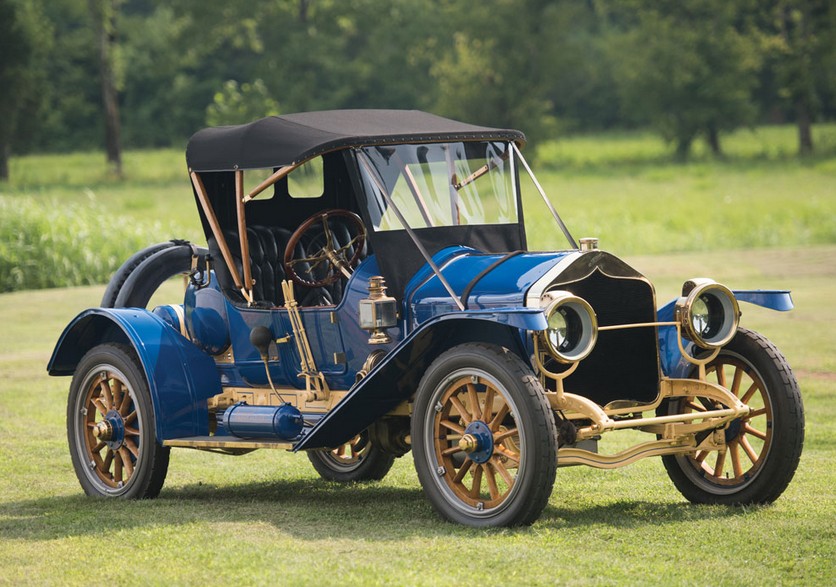
Photo - RM Sotheby's

Photo – RM Sotheby’s

The 1911 National was offered as a single model – the Model 40. The Speedway Roadster was the smallest and most affordable style. Its name is a reference to the Indianapolis Motor Speedway – a nearby motoring landmark, as National was based in Indianapolis. In fact, Arthur Newby, who founded National, also co-founded the Speedway – and 1911 was the inaugural year of the Indy 500.

This car is powered by a 40 horsepower 7.3-liter straight-four. National won the 1912 Indy 500 with a car closely resembling this one. Discovered in Atlanta in the 1950s, this car has been restored twice, the most recent of which was in the last 10 years. It should bring between $200,000-$275,000. Click here for more info.

Update: $385,000.


1914 Case Demonstrator Delivery Truck

Offered by RM Sotheby’s | Hershey, Pennsylvania | October 8-9, 2015
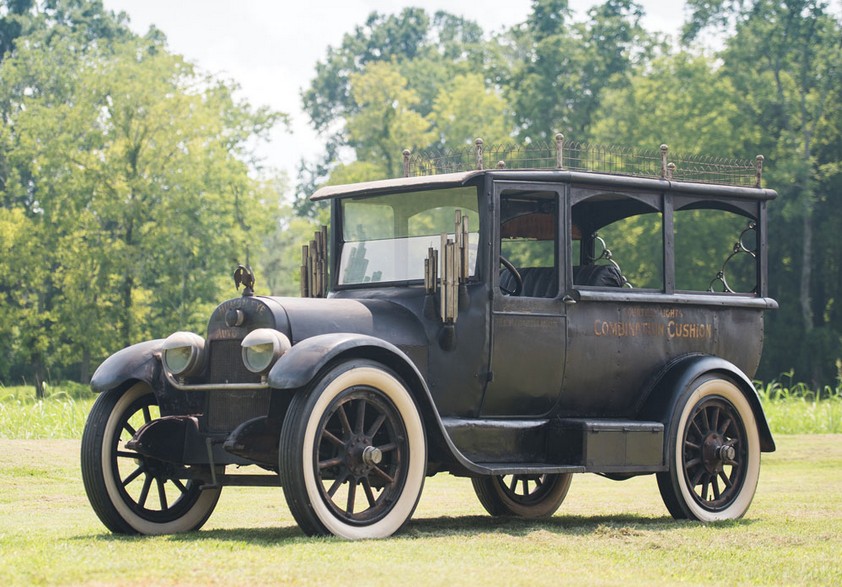
Photo - RM Sotheby's

Photo – RM Sotheby’s

The Case automobile was produced by the same company that made agricultural equipment in Racine, Wisconsin, between 1911 and 1927. The 1914 Case Model 35 was only offered as a five-passenger touring car. This is obviously not one of those. John Dorton was an inventor and salesman from Kansas. He invented the Human Eye Auto Lamp, a kind of headlight that steers with the car. This was his demonstrator vehicle.

It’s fitted with a bunch of other one-off features including a steam organ that could be operated from the driver’s seat. It’s a really interesting one-of-a-kind truck and is powered by a 35 horsepower 5.1-liter straight-four. It should sell for between $75,000-$125,000. Click here for more info. It’s really worth checking out.

Update: Sold $47,000.


1912 Mitchell Model 5-6 Baby Six Roadster

Offered by RM Sotheby’s | Hershey, Pennsylvania | October 8-9, 2015
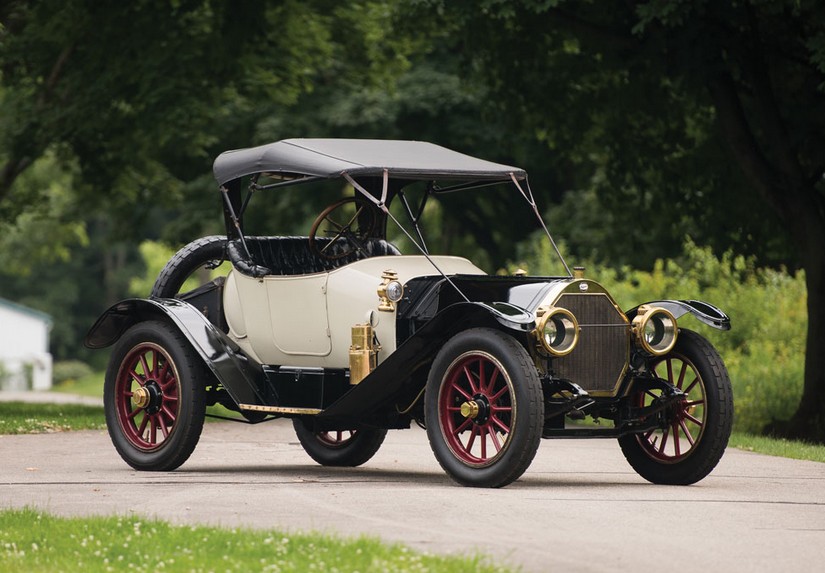
Photo - RM Sotheby's

Photo – RM Sotheby’s

Like Case, Mitchell was also from Racine, Wisconsin. The company was founded as a wagon maker by Henry Mitchell and his son-in-law (William Lewis) would help steer the company toward automobile production in 1903. Mitchell would produce cars for the next 20 years.

The 1912 catalog offered five modes, with the Model 5-6 Baby Six as the second most powerful. The engine is a 6.0-liter straight-four making almost 34 horsepower. The Roadster was one of two body styles offered and this one is mostly original (although it had been repainted). It should bring between $100,000-$150,000. Click here for more info.

Update: Not sold.


1916 Republic Beer Truck

Offered by RM Sotheby’s | Hershey, Pennsylvania | October 8-9, 2015
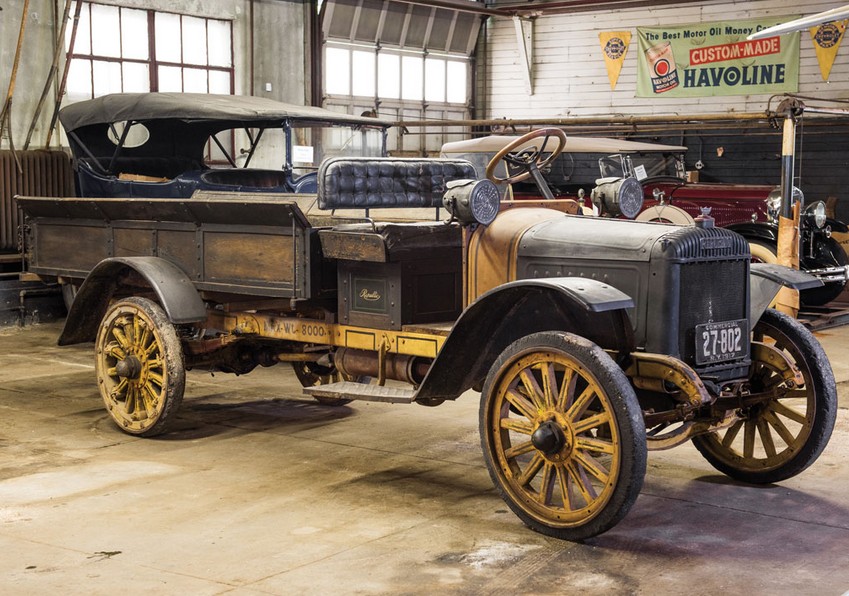
Photo - RM Sotheby's

Photo – RM Sotheby’s

Microbreweries are everywhere these days. If one of them were looking for an absolutely great promotional vehicle, this would be that. This is an all-original truck from the Republic Motor Truck Company of Alma, Michigan. They built trucks from about 1913 through 1929 (at which point they merged with American-LaFrance).

The engine in this beast is a 3.6-liter Continental straight-four. The truck has not run in a long time so it would require a pretty hefty mechanical overhaul to be usable. And those solid rubber tries are probably older than just about anybody reading this. Which is pretty amazing. This is one of two known 1916 Republics to survive and this one should bring between $10,000-$15,000. Click here for more info.

Update: Sold $19,800.


1905 Thomas Flyer Model 25 Five-Passenger Touring

Offered by RM Sotheby’s | Hershey, Pennsylvania | October 8-9, 201
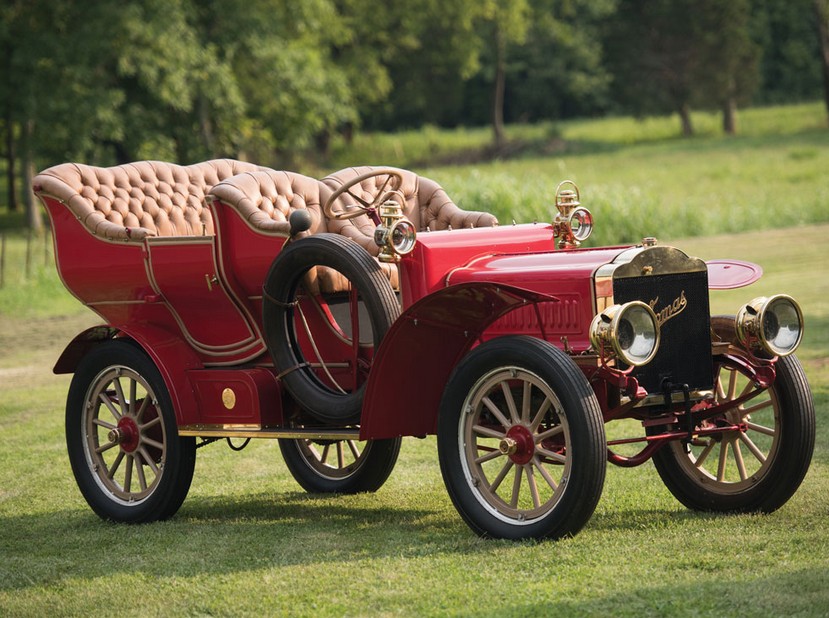
Photo - RM Sotheby's

Photo – RM Sotheby’s

We featured another Thomas Flyer a week or two ago and here is another one from the same collection. While that other car was constructed using various Thomas parts, this car is considered to be “the most authentic 1905 Thomas.”

It has been restored – many years ago – and driven quite a bit since. It has resided it some large collections over the years – but not the Harrah Collection, although it is said that this is a car Harrah tried to get his hands on for years. The Model 25 is powered by a 40 horsepower 7.1-liter straight-four. This would be a great classic to own. The estimate is a wide $375,000-$500,000. Click here for more info and here for the rest of RM’s awesome lineup.

Update: Sold $220,000.
Stearns-Knight Toy Tonneau

1912 Stearns-Knight Toy Tonneau Runabout

Offered by RM Sotheby’s | Hershey, Pennsylvania | October 8-9, 2015

Photo - RM Sotheby's

Photo – RM Sotheby’s

F.B. Stearns began building cars n 1901 in Cleveland. The company built big, luxurious cars for a number of years. In 1912, they adopted the Knight sleeve-valve engine – the first automobile manufacturer to do so – and used it until the company went under in 1929. 1912 was also the year that the company became known as Stearns-Knight.

Only one model was offered in 1912 – in two wheelbases. This is the short-wheelbase version and uses a 5.1-liter sleeve-valve straight-four originally rated at 28 horsepower (although 40 horsepower is more likely). The car was original until 2011 when the mechanicals were restored and the body was “restored” to look like a barn find. It’s a very nice, big touring car. Click here for more info.

Update: Sold $115,500.

Five Pre-WWI Cars

1912 Stearns-Knight Toy Tonneau Runabout

Offered by RM Sotheby’s | Hershey, Pennsylvania | October 8-9, 2015

Photo - RM Sotheby's

Photo – RM Sotheby’s

F.B. Stearns began building cars n 1901 in Cleveland. The company built big, luxurious cars for a number of years. In 1912, they adopted the Knight sleeve-valve engine – the first automobile manufacturer to do so – and used it until the company went under in 1929. 1912 was also the year that the company became known as Stearns-Knight.

Only one model was offered in 1912 – in two wheelbases. This is the short-wheelbase version and uses a 5.1-liter sleeve-valve straight-four originally rated at 28 horsepower (although 40 horsepower is more likely). The car was original until 2011 when the mechanicals were restored and the body was “restored” to look like a barn find. It’s a very nice, big touring car. Click here for more info.

Update: Sold $115,500.


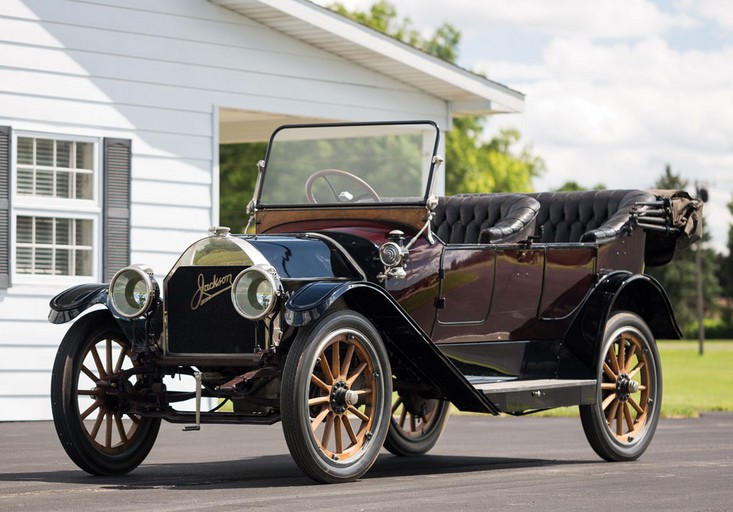
1913 Jackson Sultanic Five-Passenger Touring

Offered by RM Sotheby’s | Hershey, Pennsylvania | October 8-9, 2015

Photo - RM Sotheby's

Photo – RM Sotheby’s

Many earlier car makers labeled their models such as “Model 1” or “Model A”, etc. Very few had actual names. In 1913, the company founded by Byron J. Carter and named after its home of Jackson, Michigan, started using words to name their models. The Sultanic was the top of the line model. It was offered as a five-or-seven-passenger tourer or as a Duck – which had bizarre rear-seat steering.

The Sultanic (which is definitely not the same as “Satanic”) was built between 1913 and 1914. The engine is a 40 horsepower 6.2-liter straight-four. This car is all original and has somehow only covered less than 2,400 miles in its 102 years of life. Incredible! Click here for more info.

Update: Sold $30,250.


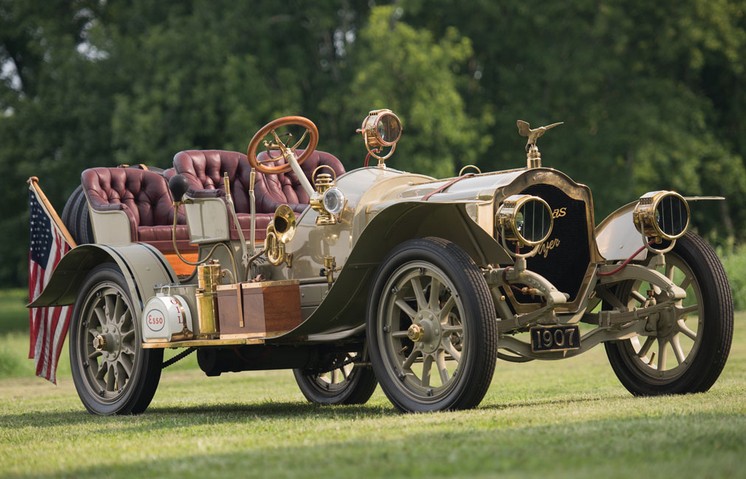
1907 Thomas Flyer 4-60 Four-Passenger Runabout

Offered by RM Sotheby’s | Hershey, Pennsylvania | October 8-9, 2015

Photo - RM Sotheby's

Photo – RM Sotheby’s

If this car looks familiar that’s because it’s the exact same year, make, and model of the famous Harrah-owned New York-to-Paris race-winning car. That car is one of the most famous cars in the world (and it’s priceless). This car is your best bet at getting to drive it – and own it.

The 1907 Thomas Flyer 4-60 uses an 8.6-liter straight-four making 60 horsepower. This car has an original Thomas chassis and engine but the body was constructed to match the Harrah car when it was restored. Thomas Flyers were some of America’s greatest cars in the early days and this one would be a blast to own. Click here for more info.

Update: Sold $330,000.


1916 White Model Forty-Five G.E.D. Touring

Offered by RM Sotheby’s | Hershey, Pennsylvania | October 8-9, 2015

Photo - RM Sotheby's

Photo – RM Sotheby’s

The White Motor Company was around for 80 years. They started building cars in 1900 and did some pioneering work with steam power. Passenger car production lasted through 1918 but the company continued to build heavy trucks until being phased out by new corporate overlord AB Volvo in the 1980s.

The Model Forty-Five was built in 1915 and 1916 only. This all-original example is powered by a 5.9-liter straight-four making about 29 horsepower (although the factory rated it at 45). Click here for more info and yes, I know this chunk of cars is titled “Pre-WWI” but technically this is pre-end-of-WWI. So there.

Update: Sold $36,300.


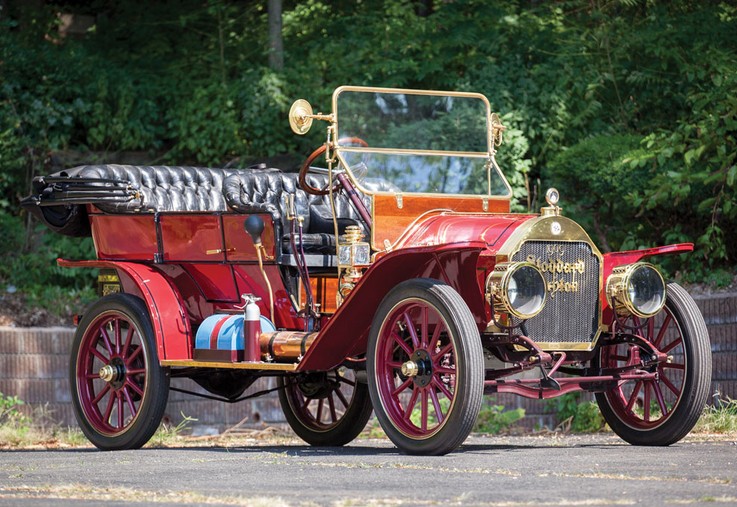
1909 Stoddard-Dayton Model 9-A Touring

Offered by RM Sotheby’s | Hershey, Pennsylvania | October 8-9, 2015

Photo - RM Sotheby's

Photo – RM Sotheby’s

This nicely restored touring car is from one of America’s best manufacturers of nice, early cars. The Dayton, Ohio-area was responsible for some great cars – and motorcycles, with the Flying Merkel being built not too far away.

Stoddard-Dayton’s catalog of cars for 1909 was impressive. The Model 9-A fell in the middle of their range with a 35 horsepower 4.1-liter straight-four under the hood. It was available in three body styles (the most of any car they offered that year). The Five-Passenger Touring is a very attractive style. Click here for more info and here for more from RM in Hershey.

Update: Not sold.

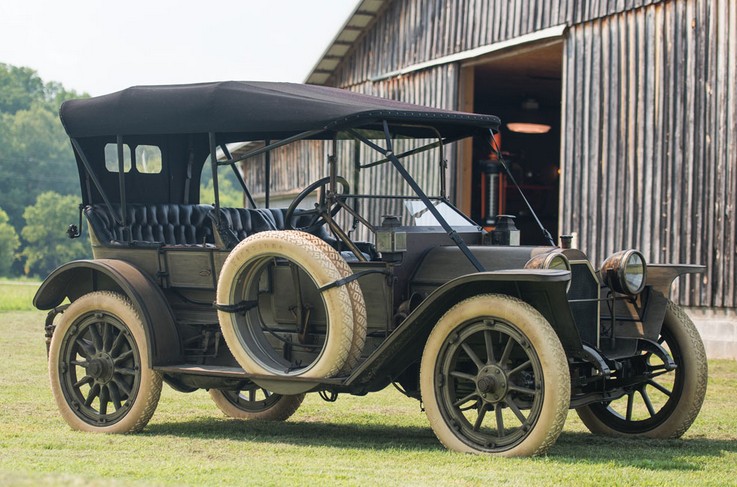
1912 Packard Touring

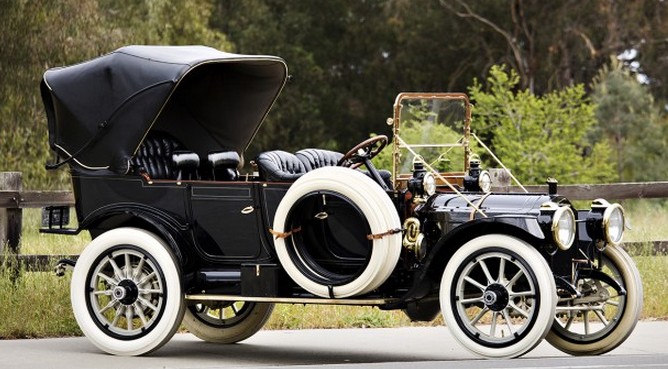
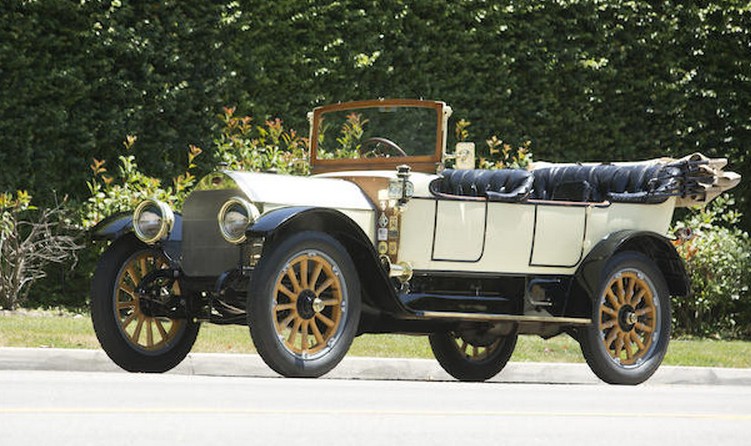
1912 Packard Model 30 Seven-Passenger Touring

Offered by Gooding & Company | Pebble Beach, California | August 15-16, 2015

Photo - Gooding & Company

Photo – Gooding & Company

What I like most about this car is that I can imagine it being 1912 (well, as best I can) and being the rich guy who is being chauffeured around in this giant thing. The looks such a giant touring car must’ve gotten back in the day must have been awesome. The Model 30 was an expensive ride in 1912, costing around $4,200 in Seven-Passenger Touring form. It was the cheapest body style you could get on this, Packard’s big four for 1912.

The engine is a 7.1-liter straight-four making 30 horsepower. This car has a nice Victoria top to shade wealthy passengers while the chauffeur bakes up front. White tires on white rims accented by body color paint really make this thing pop visually. We love white tires.

Of the 1,250 Model 30s built in 1912 (which was the final year for the model introduced in 1907), it is thought that there are only about 10 left, with this being, perhaps, the best. Actually it is the best as the interior is remarkably original. It was formerly in the Harrah Collection and should bring between $325,000-$375,000. Click here for more info and here for the rest of Gooding’s auction lineup.

Update: Sold $280,000.

An American Fiat

1912 American Fiat Model 56 7-Passenger Touring

Offered by Bonhams | Carmel, California | August 14, 2015

Photo - Bonhams

Photo – Bonhams

A lot of European firms opened an American arm in the early days of the automobile: De Dion-Bouton, Austin, Berliet, Napier, and perhaps most famously, Rolls-Royce, among others. Fiat did, too, and unlike Rolls-Royce (but like the others mentioned above), these cars are often referred to as American Fiats with “American” in the brand name, and not simply specified in the model name (like a Rolls-Royce “Springfield” Ghost).

Anyway, American Fiat was around from 1910 through 1918, when it was cheaper to open another factory than to pay import taxes. The Type 56 was built between 1912 and 1916, the largest car offered in any of those years. It is powered by an 8.6-liter straight-six making an estimated 50 horsepower.

The body is a Seven-Passenger Touring, which was just one of two body styles offered in 1912 (the range would proliferate with time). They were big cars and they weren’t cheap. It’s thought that this car cost in the neighborhood of $4,500 when new. The man who restored this car acquired it in 1952 and it was in his family until 2013. While I don’t know how many were built, not many of these survive. It’s pretty awesome, actually, and should bring between $175,000-$225,000. Click here for more info and here for more from Bonhams.

Update: $130,000.

1912 Imperial

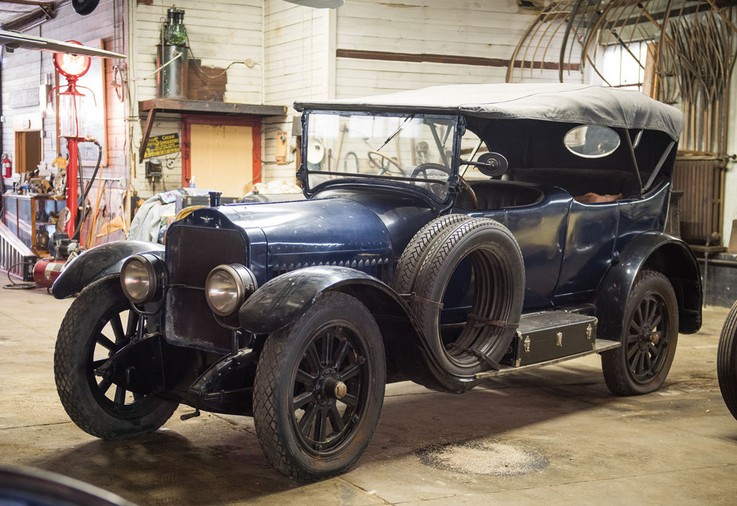
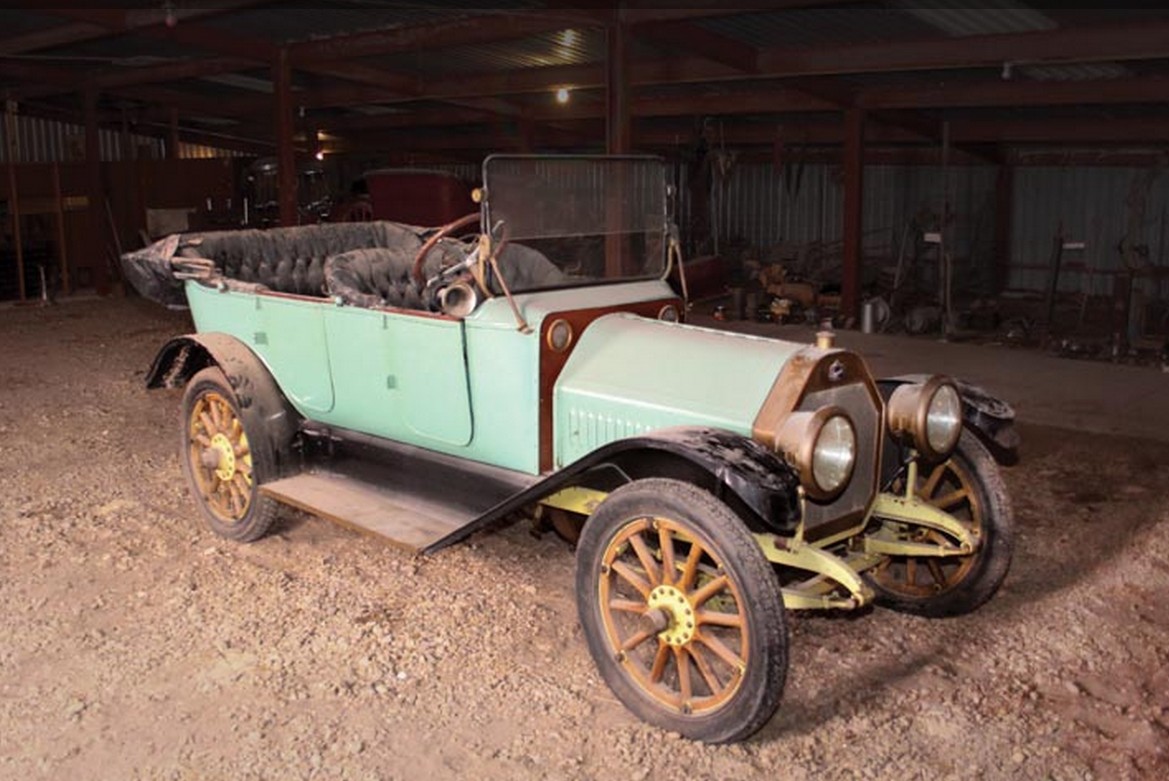
1912 Imperial Model 34 Touring

Offered by Worldwide Auctioneers | Houston, Texas | April 25, 2015

Photo - Worldwide Auctioneers

Photo – Worldwide Auctioneers

The Imperial Automobile Company was founded by brothers T.A. and George N. Campbell – owners of the Jackson Carriage Company in Jackson, Michigan. They undertook automobile production in 1908, offering four-cylinder touring cars and roadsters from the start.

The Model 34 was built from 1912 through 1914. It uses a four-cylinder engine making 40 horsepower. In 1912, the Model 34 was only offered in the Five-Passenger Semi-Torpedo Touring body style you see here. The Campbell brothers sold out in 1914, merging their company with Marion. But the Imperial name was gone after 1916 (although Chrysler would use it in an unrelated manner years later).

This car was in collections as far back as the 1950s and spent a long time in a museum. It is offered “barn fresh” from said dissipated museum. It’s a large, sturdy touring car that would be a lot of fun if fixed up. It is expected to bring between $40,000-$60,000. Click here for more info and here for more from this sale.

Update: Sold $13,750.

Packard Sightseeing Bus

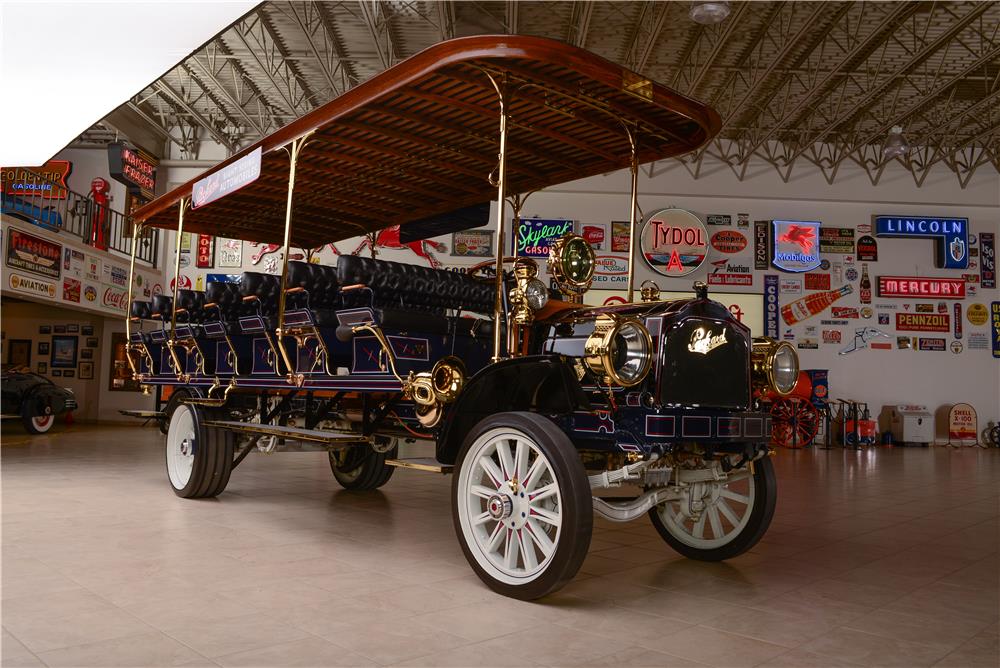
1912 Packard ATD 3-Ton Sightseeing Bus

Offered by Barrett-Jackson | Scottsdale, Arizona | January 17, 2015

Photo - Barrett-Jackson

Photo – Barrett-Jackson

Packard built some of the finest American cars of all time – but they also built commercial vehicles, especially in the pre-WWI era and immediately following the war. They offered chassis in a variety of configurations and tonnage. The ATD was introduced in 1911 and could be had as a fire engine, platform truck, or cab & chassis combo.

This gorgeous sightseeing bus is immaculate – but then again, how would it get dirty? It’s not exactly the easiest thing to cruise around town in and probably doesn’t see the light of day all that often. The engine is a 7.1-liter T-head straight-four making 24 horsepower. Top speed is probably slightly faster than walking pace, considering the sheer size of this vehicle and the lowly power rating.

It seats 42 people and may have been used as a tour bus around Yellowstone National Park (apparently motorized vehicles weren’t actually allowed on park roads 100 years ago). It’s the only surviving example and was once in the Otis Chandler collection (it’s coming from Ron Pratte’s collection this time around). It brought nearly half a million dollars when it left Chandler’s collection in 2006. That seems like a good number this time around. Click here for more info and here for more from this sale.

Update: Sold $291,500.