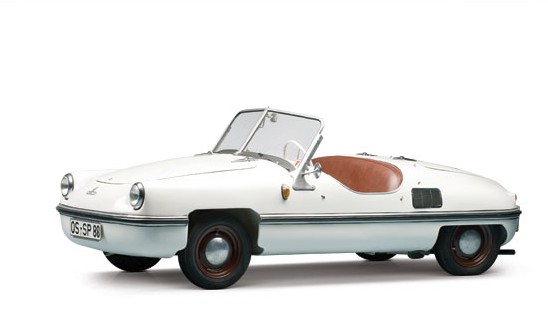
Avia III

1956 Avia III

For Sale at Fantasy Junction | Emeryville, California

Photo - Fantasy Junction

Photo – Fantasy Junction

Avia is a Czech company that is still in the auto business. They were founded in 1919 and had become part of Skoda by 1928. They built aircraft beginning in 1920 and throughout WWII. After WWII, the company was nationalized and aircraft production ceased. By the 1960s, they had launched heavy vehicle production under their own name (after years of producing trucks for other brands).

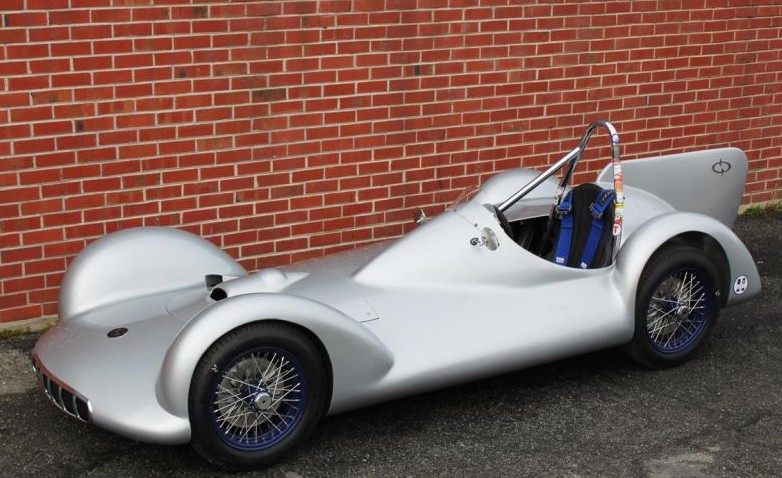
Between 1956 and 1957, Avia experimented with cars, building between 12 and 15 light cars. One was a streamliner – the car you see here. And it was raced in hillclimbs in period by designer and Avia employee Miroslav Jurca, who had built the Avia cars as an after-hours project. This car uses a 750cc BMW twin making 15 horsepower. The body is lightweight aluminium.

This car lived incorrectly for years as a BMW-Veritas until Jurca’s grandson correctly identified the car after it had been presented at Pebble Beach. The car has since been completely restored and has seen track time at events like the Monterey Historics. Only two Avia road cars still survive, as heavy truck production continues to this day. This is the only Avia streamliner. It is for sale in California for $325,000. Click here for more info.

Update: Not sold, Mecum Monterey 2014, high bid of $185,000.

Maserati 450S Prototype

1956 Maserati 450S Prototype by Fantuzzi

Offered by RM Auctions | Monaco | May 10, 2014

Photo - RM Auctions

Photo – RM Auctions

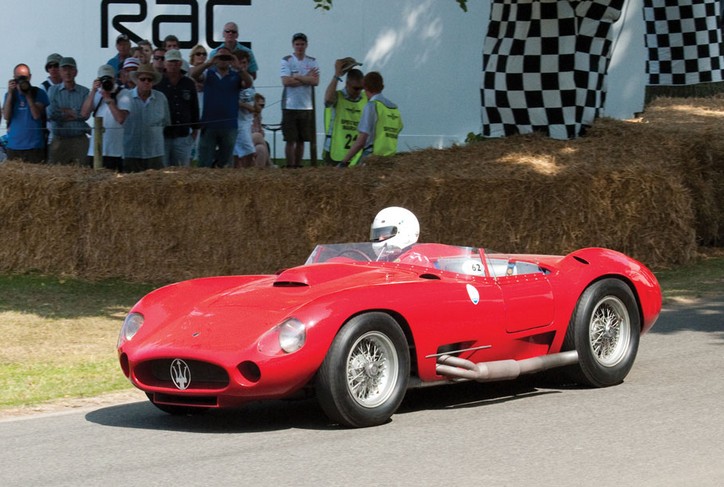
The Maserati 450S was an evolution of the Maserati 350S. The chassis was lengthened to house the new monster V-8. The car was a racing success in the latter half of the 50s and would give way to the legendary Birdcage Maseratis.

The engine is a 5.7-liter V-8 making a whopping 520 horsepower. Good Lord. This thing must fly. The car you see here is the prototype version of the 450S. It’s the first one – and it was originally a 350S. It’s competition history as a 350S includes:

  • 1956 Mille Miglia – DNF (with Stirling Moss and Denis Jenkinson)

The car was more or less totaled in that race when Moss lost his brakes and blasted through a barrier and into a tree. So Maserati turned this into a test mule for the forthcoming 450S. This car’s race history as a 450S, you’ll have to read on RM’s site. This car has had three owner’s since it left Maserati and has been meticulously restored. It will fetch between $5,500,000-$7,500,000. Click here for more from this sale.

Update: Not sold, high bid of $4,816,350.

The Real McCoy

1956 Chevrolet Corvette SR Prototype

Offered by Mecum | Kissimmee, Florida | January 25, 2013

1956 Chevrolet Corvette SR Prototype

It seems like there’s always at least one more Corvette out there that will come along and smash price records for the model. This is one of those cars that has that opportunity. In all honesty though, I have no idea what it will bring – but it is a very important Corvette.

In 1955, Ford introduced the Thunderbird and it promptly walloped the Corvette, stealing a large portion of its sales. Zora Arkus-Duntov, the father of the Corvette, was afraid that GM was about to give it the axe and realized that the supposed sports car lacked any sort of sporting credentials.

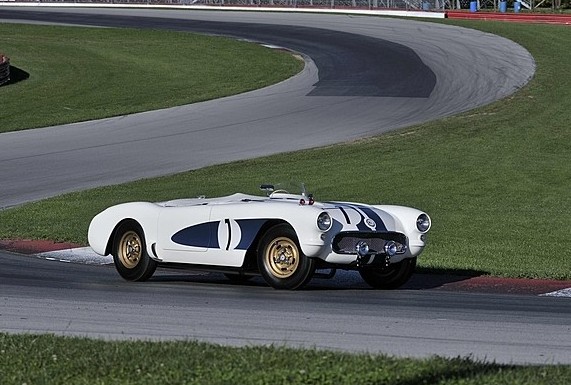
So he and his team put together a special prototype – the car you see here – and fitted it with a 255 horsepower 5.0-liter V-8. He promptly took the car to Daytona Speed Week and set a world record for the Flying Mile at just a tick over 150 mph, obliterating the record. This happened just before the 1956 GM Motorama in New York City. It drew a lot of interest, but more had to be done.

Ed Cole, head of GM at the time, announced that Chevrolet would be attacking the 12 Hours of Sebring. Duntov felt strongly that the track was not safe and that the car would not be able to last, so Cole replaced him as a driver with John Fitch and partnered him with Walt Hansgen.

Ed Cole put three-time Indy 500 winner Mauri Rose in charge of the team and Rose selected legendary NASCAR mechanic Smokey Yunick to prepare the Corvettes for Sebring (there’s a lot of famous name dropping going on here, sorry). In all, Chevy entered four cars – three of which were 1955 bodies on 1956 chassis – and one special prototype – the car you see here.

Two of the Corvettes failed early in the race. Fitch had a clutch slipping on this car on the second lap but somehow this car managed to win its class and finish 9th overall. Corvettes never did much factory-backed racing (until the C5-R anyway) and this car was the first and it brought the brand its most important victory – one that would keep Corvette around for another 60 years.

When Chevrolet publicized the win, they referred to the car as “The Real McCoy” – which is what this car is known as today. It is full of one-off, custom-built-by-GM parts for racing and is one of the most important Corvettes in existence. And it is going to cross the block. Read more here and check out more from this sale here.

Update: Sold $2,300,000.

Supersonic Aston Martin

1956 Aston Martin DB2/4 Mk II Supersonic by Ghia

Offered by RM Auctions | New York, New York | November 21, 2013

1956 Aston Martin DB24 Mk II Supersonic by Ghia

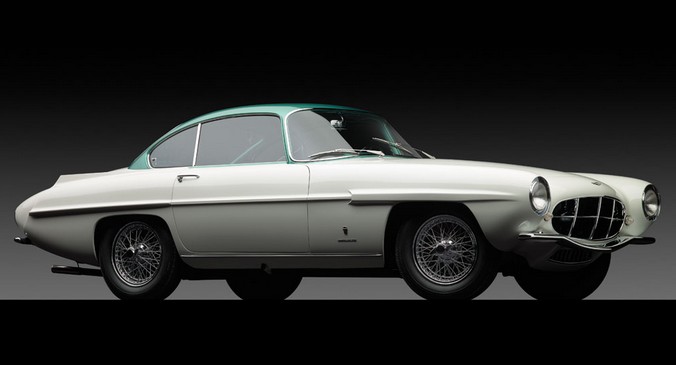
 The Aston Martin DB2/4 was the follow-up model to the Aston DB2 (on which this car was based). It was introduced in 1953 and the Mk II model came in 1955. Coachbuilt Astons from any coachbuilder are very rare. Ghia built a run of 15 “supersonic” cars in the 1950s and this was the last one built. It is also the only Supersonic attached to an Aston Martin chassis.

The engine in this car is likely the 2.9-liter straight six making either 140 or 165 horsepower, depending on compression (the catalog is vague on technical details. This auctions is being held in conjunction with Sotheby’s and is called “The Art of the Automobile,” so maybe it’s more about styling than driving, which is a shame). This car was acquired new by racing driver Harry Schell who sold it the following year to an American in New York. In 1974, the car was discovered outside a Detroit gas station by a young man who was able to track it down again in 2003 when he purchased it and began restoring it.

The restoration is exquisite and has proven successful, as this car wins awards just about every time it is shown. The DB2/4 is rare enough, with only 764 built. But this car has one-of-a-kind 1950s Space Age coachwork from one of the most famed coachbuilders of all time. It will likely bring between $1,800,000-$2,400,000. Click here for more info and here for more from this sale.

Update: Sold $2,310,000.

Microcar Mondays Part VII

The Bruce Weiner Microcar Collection

Offered by RM Auctions | Madison, Georgia | February 15-16, 2013

_____________________________________________________

1959 King S-7

1959 King S-7

This King S-7 was not manufactured by the same “King” company we talked about last week. This one was built in Sweden. The S-7 was originally built as a Fuldamobil in Germany but they were licensed all over and some licensed versions were exported. Sweden received some NWF cars but later they built there own S-7 version of the Fuldamobil and called it the Fram-King-Fulda. When that factory burned down, the assets were purchased and production restarted in 1958 or 1959 and it was called the King S-7. It was built until 1962 and 411 were made. It uses a 9.5 horsepower 191cc single-cylinder and should sell for between $35,000-$45,000. Click here for more info.

Update: Sold $47,150.

_____________________________________________________

1956 B.A.G. Spatz

1956 B.A.G. Spatz

Egon Brütsch built a small two-seat convertible called the 200 or “Spatz.” He allowed prospective licensees to drive it and one, Harald Friedrich, liked it but realized Brütsch’s car was essentially crap. He hired an engineer to fix the issues with it and then put it into production under the name of a new company he formed, Bayerische Autowerke GmbH – or B.A.G. It was powered by the ubiquitous 9.5 horsepower 191cc single-cylinder Sachs motor that really got around in those days. Brütsch was not amused and threatened to take Friedrich to court (he eventually took the next group of people to court, and lost because the design was significantly improved over his original and therefore not an infringement) and Friedrich left the company – but not before 859 could be built and sold. This one should sell for between $30,000-$40,000. Click here for more info.

Update: Sold $32,200.

_____________________________________________________

1957 Voisin Biscooter C31

1957 Voisin Biscooter C31

Gabriel Voisin’s post-war fortunes were not quite as bright as those leading up to war. He designed the tiny Biscooter but, because he no longer controlled his own company, could not get it into production. In fact, no one wanted it – even though he racked up close to 1,000 orders for it. He sold the rights to the Spanish and moved on – sort of. At some point, he went back and designed another Biscooter, an enhanced version – the C31. Some things were different, but it was largely the same. The Spanish were not interested in this model (the one you see here). It uses a 197cc single-cylinder engine making nine horsepower. Still, 16 were built and this one should bring $60,000-$80,000. Click here for more info.

Update: Sold $80,500.

_____________________________________________________

1961 Taylor-Dunn Model R Trident

1961 Taylor-Dunn Trident

If you weren’t aware, California was a weird place in the 1960s. Still is, really. But this was their idea of a car. Originally introduced as a glorified grocery kart in 1955, the three-wheeled electric runabout was called the Taylor-Dunn PG. In 1959, the Trident was introduced. It still used a one horsepower electric motor – but it also had road-going capability. In today’s world of SUVs, you would need a death-wish to drive this down the street in suburban L.A. But 1961 was a different time – and you could always just hop up onto the sidewalk to get away from traffic – no one would be able to tell where you belonged anyway. This should sell for between $15,000-$20,000. Click here for more info.

Update: Sold $29,900.

_____________________________________________________

1947 Rovin D2

1947 Rovin D2

Hard work pays off – the brothers Rovin showed their first cyclecar in 1927 and when France was occupied during the war, the continued to work and design on a new car, knowing that the war and its restrictions would eventually end. They had a prototype done in 1945 and were ready to go once France began to get back on its feet. The production version was called the D2 and it uses a 10 horsepower 425cc two-cylinder engine. Their products were quality and they were able to stick around for a while – until about 1959, producing different models. The D2 was short-lived and only 200 were made. This one should bring between $30,000-$40,000. Click here for more info.

Update: Sold $43,700

_____________________________________________________

1953 Manocar Prototype

1953 Manocar Prototype

This rough-looking tiny car was one of two prototypes built by Établissements Manom in Saint Ouen, France between 1952 and 1953. It uses a four horsepower 125cc single-cylinder and was supposed to set the microcar world on fire due to its ease of access and “roomy” interior. Needless to say, this was as far as the project got. It’s all-original and should sell for between $5,000-$10,000. Click here for more info.

Update: Sold $6,900.

_____________________________________________________

1963 Goggomobil TL-250 Transporter

1963 Goggomobil T-250 Transporter

We’ve already featured the even-rarer pickup variant of the Goggomobil Transporter. This is the van version. It’s also a TL-250 model, which means it uses the smaller 245cc two-cylinder engine making 14 horsepower. These vans actually had a useful load-carrying capacity for their size and the German postal service used them – in fact, they were more or less responsible for their production, buying up about 2/3 of all vans built. This one (of 3,665 built) has been painted up in Double Bubble Gum colors. All of the Goggomobil Transporters in this sale have some “cute” paint scheme. The price isn’t as cute: $80,000-$100,000. click here for more info.

Update: Sold $132,250.

_____________________________________________________

1953 Bond Minicar Mk C

1953 Bond Minicar Mk C

Only the Mark F version of the Bond Minicar outsold the Mark C – and it was by less than 100 units. In total, 6,399 Mark Cs were built between 1952 and 1956. The Mark C was a marked improvement in design and quality over the earlier Mark Bs – it looked more like a car from the front – and less like a rolling coffin. The style really fit in with the times. It used a 197cc single-cylinder making nine horsepower. There were various trim levels available – which also helped make this seem more like a real car. This one should bring between $10,000-$15,000. Click here for more info.

Update: Sold $13,800.

_____________________________________________________

1958 Solyto

1958 Solyto

New-Map, the motorcycle manufacturer (who also built a few cars called the “Baby”), shifted focus to small three-wheeled commercial delivery vehicles in the late-1950s. They were sold under the “Solyto” name. What separated them from their competitors is the two-seat closed cab design that gives it a more car-like appearance than the obviously-scooter-based Vespa delivery trucks and the like. This one uses a 125cc single-cylinder making 4.5 horsepower. These were also sold under license in Spain as the Delfín. This one should sell for between $15,000-$20,000. Click here for more info.

Update: Sold $25,300.

_____________________________________________________

1962 Motobécane KM 2U

1962 Motobécane

Another mini commercial vehicle to round out our second-to-last edition of Microcar Mondays. This has everything a big truck would have – except smaller – even a spare tire underneath. Motobécane was a major motorcycle and bicycle manufacturer in France from 1923 until 1981. In 1962, they introduced a small car prototype called the KM 2 that never made it to production. There was also a utility version produced (KM 2U) – a lone prototype example. It is believed that this is that truck. It uses a 125cc single-cylinder engine making six horsepower. This unrestored mini-truck should sell for between $5,000-$10,000. Click here for more info. And click here to check out more microcars.

Update: Sold $16,100.

B.A.G. Spatz

1956 B.A.G. Spatz

Offered by RM Auctions | Madison, Georgia | February 15-16, 2013

1956 B.A.G. Spatz

Photo – RM Auctions

Egon Brütsch built a small two-seat convertible called the 200 or “Spatz.” He allowed prospective licensees to drive it and one, Harald Friedrich, liked it but realized Brütsch’s car was essentially crap. He hired an engineer to fix the issues with it and then put it into production under the name of a new company he formed, Bayerische Autowerke GmbH – or B.A.G. It was powered by the ubiquitous 9.5 horsepower 191cc single-cylinder Sachs motor that really got around in those days. Brütsch was not amused and threatened to take Friedrich to court (he eventually took the next group of people to court, and lost because the design was significantly improved over his original and therefore not an infringement) and Friedrich left the company – but not before 859 could be built and sold. This one should sell for between $30,000-$40,000. Click here for more info.

Update: Sold $32,200.

NWF 200

1956 NWF 200

Offered by RM Auctions | Madison, Georgia | February 15-16, 2013

1954 NWF 200

Photo – RM Auctions

Fuldamobil had a brand new design in 1953 called the S-1 and they contracted a company called VGM to build the rounded aluminium bodies. It cost more than Fuldamobil was willing to pay and they ended the deal after only three cars were built. VGM contacted NWF, a coachbuilder also in Germany (they built bus bodies) and NWF decided to put it into production. It was identical to the Fuldamobil, but with a different engine – this one being a 197cc single-cylinder making 9.5 horsepower. Only 701 were built and quite a number of those were sold back to Fuldamobil to cover licensing costs. This one is all original and needs some work, but is still expected to fetch between $15,000-$20,000. Click here for more info.

Update: Sold $16,100.

Microcar Mondays Pt V

The Bruce Weiner Microcar Collection

Offered by RM Auctions | Madison, Georgia | February 15-16, 2013

_______________________________________________________________

1953 Ardex
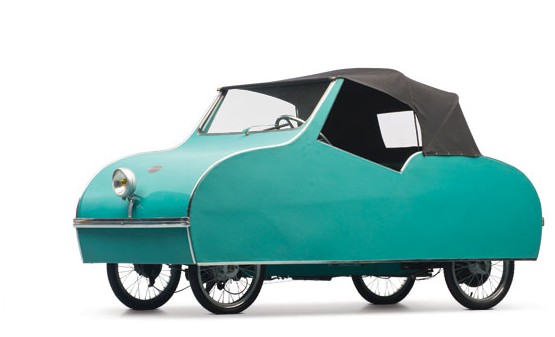
1953 Ardex

Ardex was originally founded in France in 1934 but by the time war broke out in 1939, production stopped. But in 1952, it sprang back up out of nowhere, producing two (as seen here) or four seat microcars using single-cylinder engines of 100cc or 125cc. Production lasted until 1955 and only a few were built. This one should sell for between $15,000-$25,000. Click here for more info.

Update: Sold $13,800.


_______________________________________________________________

1953 Messerschmitt KR 175
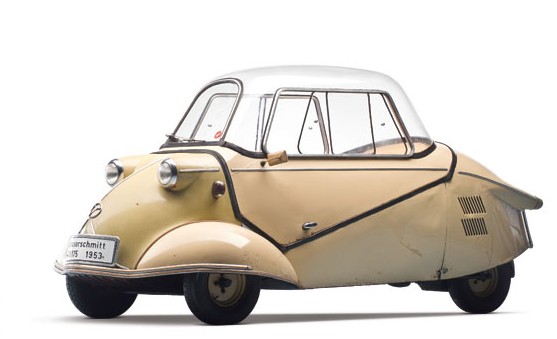
Messerschmitt KR 175

We already featured a Messerschmitt KR 200, which was the successor to this car, the original Kabinenroller, the KR 175. Introduced for 1953, the Fend Flitzer offshoot used a rear-mounted 174cc single-cylinder making nine horsepower. Top speed was 50 mph and the bubble canopy was used instead of a door. As production only lasted through 1955, total output was much smaller than the KR 200, with about 15,000 KR 175s built. They cost 2,100 DM back in 1953 but today should sell for $35,000-$45,000 USD. Click here for more info.

Update: Sold $23,000.


_______________________________________________________________

1956 Paul Vallée Chantecler

1956 Paul Vallée Chantecler

SICRAF (Société Industrielle de Construction et de Racherches Automobiles de France) – yeah, that’s one hell of an acronym – produced scooters in Aubervillers, France, from 1947 through 1953. In 1955, Paul Vallée, the head of SICRAF, introduced a three-wheeled micro-bubble of a car using a frame from one of his scooters as a base. Engines were either 125cc or 175cc. Not many were made. This one should sell for between $45,000-$55,000. Click here for more info.

Update: Sold $98,900.


_______________________________________________________________

1950 Rolux Baby

1950 Rolux Baby

The Rolux Baby was identical to the New-Map Baby. New-Map reintroduced their pre-war “Baby” design in 1946 but the following year the company relocated and was renamed Société Rolux. The model remained unchanged from the pre-war design. It uses a rear-mounted 125cc single-cylinder engine. Rolux lasted until 1952 and about 300 cars were made. Three of them are offered in this sale. This is the nicest one and it should bring between $35,000-$45,000. Click here for more info.

Update: Sold $48,875.


_______________________________________________________________

1959 Nobel 200

1959 Nobel 200

The Nobel 200 was a licensed copy of the Fuldamobil. While the Fuldamobil was built in Germany, the Nobel was built in the U.K. – Northern Ireland to be exact. They were available from 1958 to 1962 and it uses a 191cc single-cylinder making 10 horsepower (the same one used the Messerschmitt KR 200). It could do 55 mph. This one is obviously in need of a restoration – but it is in better condition than the other Nobel 200 offered in this sale. This one is estimated to bring somewhere between $10,000-$15,000. Click here for more info.

Update: Sold $10,350.


_______________________________________________________________

1955 Inter 175A Berline

1955 Inter 175A Berline

The Inter was built by S.N.C.A.N. of Lyons, France from 1953 to 1956. As its name suggests, it uses a 175cc engine. Only about 300 were built. What I like about it is the boat-ness of it. It has that one headlight poking out the front and that lone windshield wiper that comes down from the roof of the car. That and how the body is narrow with a chrome belt line (or water line) and the wheels are located outboard – it kind of looks like the Reyonnah we featured a few weeks ago. It should sell for between $40,000-$50,000. Click here for more info.

Update: Sold $161,000.


_______________________________________________________________

1953 Champion 400H

1953 Champion 400H

If this looks like the Maico MC 400 we featured a month or two ago, that’s because it is pretty much the same car. Champion Automobil presented the 400 in 1951. It was a two-door saloon with a folding canvas roof – not a complete convertible, but more like a giant cloth sunroof. In 1953, the 400 became the 400H. The engine was a two-cylinder of about 400cc making 16 horsepower, an increase of two horses over the 400. Only 1,941 were built in 1953 before the company collapsed and was purchased by Maico. This one should sell for between $40,000-$50,000. Click here for more info.

Update: Sold $57,500.


_______________________________________________________________

1958 Brütsch Mopetta

1958 Brütsch Mopetta

Egon Brütsch founded the company that bore his name in 1950. By 1958, he had designed and produced 11 different models of microcars, perhaps none more “micro” than this Mopetta. It rocks a single seat and a 50cc engine but it’s actually (a little) bigger than it looks. While I don’t think I’d fit comfortably in this thing, I might be able to actually squeeze into it. Its only about five feet long, so maybe I couldn’t. Maybe Germans in 1958 were just tiny. Only 14 were built. This one should bring $25,000-$35,000. Click here for more info.

Update: Sold $66,125.


_______________________________________________________________

1950 Bond Minicar Mk A
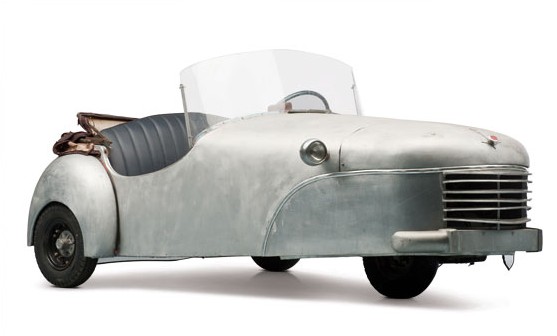
1950 Bond Minicar Mk A

The Bond Minicar (retroactively given the “Mk A” identifier) was introduced in 1949 and was sold through 1951. The body, as you can see in this unpainted example, is aluminium and the whole car weighed in at 308 pounds. This non-Deluxe model uses a 122cc single-cylinder making five horsepower. In total, 1,973 were made and it was deemed successful enough to spawn six successors with a total combined production of over 20,000 cars. This was the one that started it all for Bond. It should sell for between $10,000-$15,000, much more than the about £260 it originally cost. Click here for more info.

Update: Sold $10,350.


_______________________________________________________________

1953 BMA Hazelcar

1953 BMA Hazelcar

The BMA Hazelcar was constructed by the Battery Manufacturing Association, a company located in Hove, England. They introduced the Hazelcar in 1952 and made them into 1954. It’s an electric car, powered by a 1.5 horsepower electric engine. It has a range of 60 miles and a top speed of 20 mph. The price was rather steep for 1953, at £535 and only about 25 were built. This one should go for between $5,000-$10,000. Click here for more info.

Update: Sold $9,200.
Paul Vallée Chantecler

1956 Paul Vallée Chantecler

Offered by RM Auctions | Madison, Georgia | February 15-16, 2013

1956 Paul Vallée Chantecler

Photo – RM Auctions

SICRAF (Société Industrielle de Construction et de Racherches Automobiles de France) – yeah, that’s one hell of an acronym – produced scooters in Aubervillers, France, from 1947 through 1953. In 1955, Paul Vallée, the head of SICRAF, introduced a three-wheeled micro-bubble of a car using a frame from one of his scooters as a base. Engines were either 125cc or 175cc. Not many were made. This one should sell for between $45,000-$55,000. Click here for more info.

Update: Sold $98,900.

Chrysler Diablo Concept

1956 Chrysler Diablo Concept by Ghia

Offered by Barrett-Jackson | Scottsdale, Arizona | January 19, 2013

1956 Chrysler Diablo Concept

Barrett-Jackson always seems to get some old concept cars to cross the block at their Scottsdale sale. This year is no exception. This Chrysler Diablo Concept was offered at RM’s 2008 Monterey sale, where it reached a high bid of $1.2 million and failed to sell. It was also listed as a 1958 for that sale. Barrett-Jackson lists it as a 1956 and I’ve seen it listed elsewhere as a 1957.

When Virgil Exner arrived at Chrysler, he was tasked with creating their concept cars from 1954. As many of the classic American coachbuilders had gone by the wayside, Exner turned to Italy and Ghia, one of the most respected Italian coachbuilders to construct the body for this car, which was designed by Exner with the use of a wind tunnel, hence its streamlined, aerodynamic look. The car is giant – based on the Chrysler 300 platform, it is one of the largest convertibles ever built by Ghia. The engine is a modified 6.4-liter V8.

This car is one of one and is in perfect condition. The details are fantastic – to emblem-ize the Diablo name, Exner used a pitchfork, which can be found on the rear fins. This car has been in a private collection for the past 25 years. Like I said before, this car failed to sell four and a half years ago for $1.2 million, but that’s about the price it should bring here. Click here for more info and here for the rest of Barrett-Jackson’s auction lineup.

Update: Sold $1,375,000.