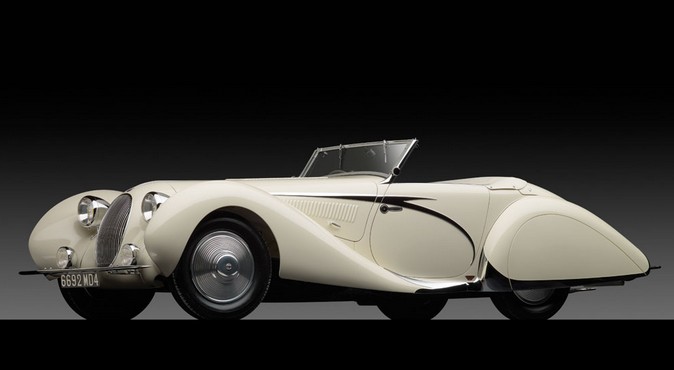
Alfa Romeo Tipo 256

1939 Alfa Romeo Tipo 256 Cabriolet Sportivo by Pinin Farina

Offered by Gooding & Company | Pebble Beach, California | August 16-17, 2014

Photo - Gooding & Company

Photo – Gooding & Company

The Alfa Romeo Tipo 256 was actually a racing car, despite the svelte body you see here. It was developed as a racing version of the 6C 2500 by Scuderia Ferrari. It has a shortened frame, huge fuel tank, and stiffer suspension.

The engine is a 2.5-liter straight-six making 125 horsepower – 35 more than the standard 6C 2500. Alfa raced these cars in the Mille Miglia and at Le Mans. It was the last race car Alfa built before WWII.

This car began life as a racing car, but when war broke out, most racing was suspended and many of the Tipo 256s were re-bodied. This one went to Pinin Farina in 1940. Later that year, this very car was sold to Piero Dusio – race car driver and future founder of Cisitalia.

It was restored (or refinished, depending on how you see it) in 2008 which consisted mostly of a new top and new paint. The interior is original. This is one of between eight and 20 Tipo 256s built and it is the only one that looks like this wonderful Cabriolet Sportivo by Pinin Farina. It will likely sell for between $5,000,000-$7,000,000. Click here for more info and here for the rest of Gooding & Company’s lineup.

Update: Sold $4,000,000.

Coachbuilt Jaguar Mk VII

1953 Jaguar Mk VII Cabriolet Prototype by Beutler

Offered by Artcurial | Le Mans, France | July 5, 2014

Photo - Artcurial

Photo – Artcurial

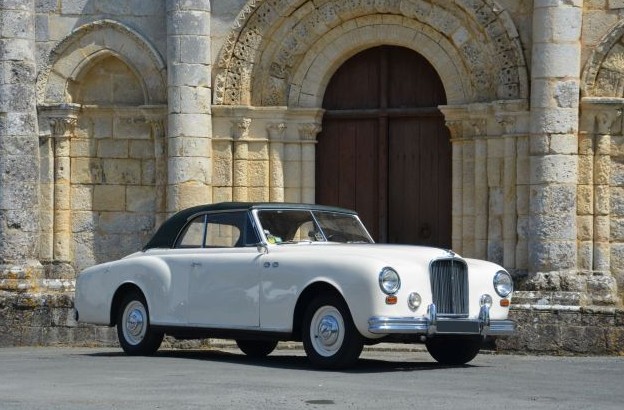
The Jaguar Mk VII wasn’t an exciting car. It shared a similar style to the Bentleys and Rolls-Royces of the era – or really, any large British sedan. It was built between 1950 and 1956 as four-door sedan only. And if that’s the case, then what do we have here?

A two-door version, of course, built as a stylish (for the era, although you could argue “plain” today) by Swiss coachbuilder Beutler. It features an all-aluminium body around the base Mk VII mecahnicals: a 3.4-liter straight-six making 160 horsepower. The car was shown initially at the Geneva Motor Show before being packed away back at Jag headquarters and eventually sold and registered in 1964.

The car retains its original engine, which as been refurbished, and the interior has been “renovated.” The catalog description does not mention a “restoration” anywhere. At any rate, this is a one-of-a-kind Jaguar that can be yours for between $82,000-$110,000. Click here for more info and here for more from Artcurial in Le Mans.

Update: Sold $217,162.

Aries CB 4

1929 Aries CB 4 Cabriolet

Offered by Osenat | Fontainebleau, France | June 22, 2014

Photo - Osenat

Photo – Osenat

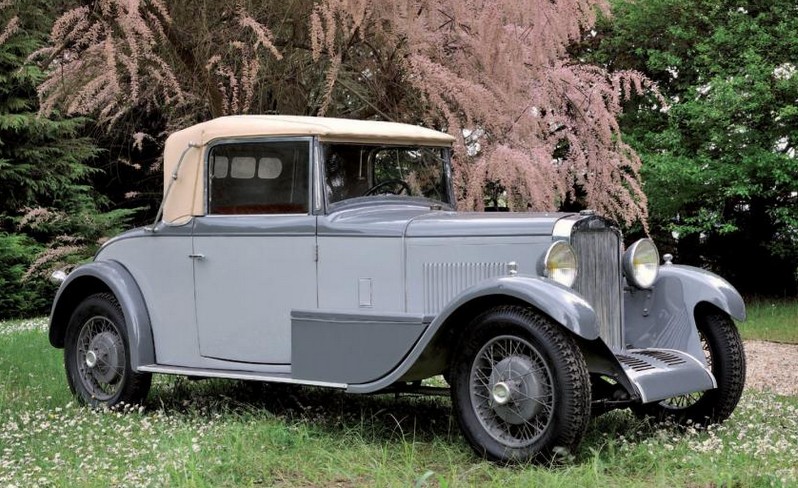
Aries (which actually has an accent on the “e” but this lovely computer can’t handle that functionality) was a French auto manufacturer that got its start with cars in 1903. The company lasted until 1938, producing about 20,000 cars during its 35 years. The company was known as one of the first French manufacturers to produce their vehicles in left-hand drive.

The CB 4 model seems to have been built in 1929 and 1930 only, before giving way to a slightly larger model. The engine is a 1.5-liter straight-four making 40 horsepower. Only about 290 CB 4 models were produced.

The restoration was carried out a few years ago, and it still looks nice. This is a fine chance to grab a rare French convertible from the 1920s. It will cost you between $34,000-$47,000. Click here for more info and here for more from this sale.

Update: Sold $50,320.

Hansa Cabriolet

1937 Hansa 1100 Cabriolet

Offered by Oldtimer Galerie | Toffen, Switzerland | April 26, 2014

Photo - Oldtimergalerie

Photo – Oldtimergalerie

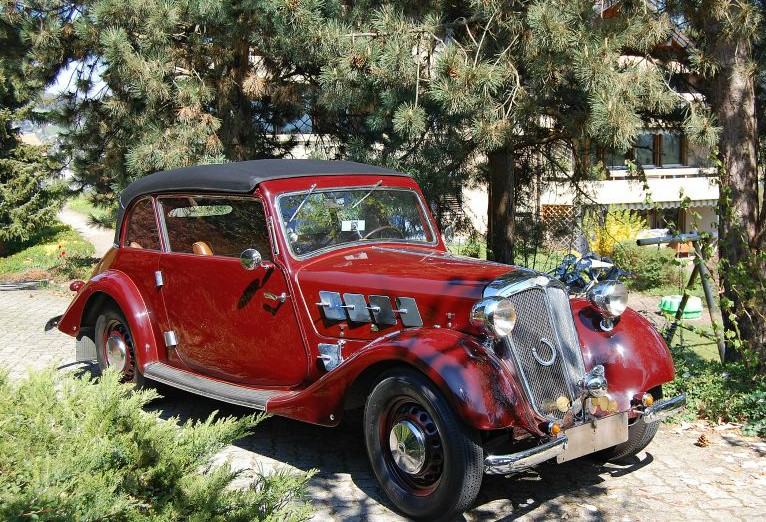
Hansa was a German car manufacturer and, in my mind, I consider it a sort of German version of one of those British manufacturers that went through so many owners and mergers over the years. The company started as Hansa in 1906 and in 1921, Hansa-Lloyd was formed by the amalgamation of Hansa and Lloyd. But Hansa remained as a stand-alone marque, producing cars up to 1939.

Carl Borgward took over after that and Borgward became the marque of note, with Hansa coming back around to supplement the Goliath range later on. Anyway, the auction catalog has this car listed as a Hansa-Lloyd – which is accurate insofar as it was produced by Hansa-Lloyd und Goliath-Werke Borgward & Tecklenborg. But the marque for the 1100 model was actually just Hansa.

The 1100 was introduced in 1934 and uses a 1.1-liter straight-four making 28 horsepower. The model was available as a two-door sedan or two-door cabriolet, as you see here. It will do 57 mph and about 20,000 were built before war broke out in 1939 and Hansa production ceased. This nice example should bring between $27,500-$29,500. Click here for more info and here for the rest of this sale’s lineup.

Four Beautiful Delages

1937 Delage D6 70 Coach Panoramique by LeTourneur et Marchand

Offered by Artcurial | Paris, France | February 7, 2014
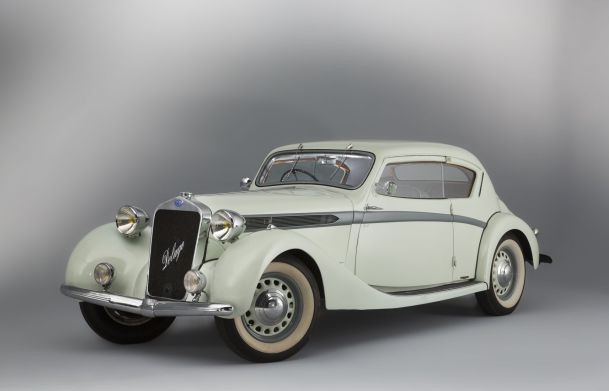
1937 Delage D6 70 Coach Panoramique by LeTourneur et Marchand

This sale is packed with amazing cars and I don’t have time to feature them all (why does Retromobile have to be so close to the Arizona auctions!?). I’m stacking today’s post with four beautiful Delage automobiles, starting with my favorite of the bunch.

The Delage D6 was in production (in several different iterations) from 1930 through 1954 (with a break for the war). The D6-70 was built for 1937 and 1938 only. It uses a 2.8-liter straight-six making 78 horsepower. The body is the remarkable Coach Panoramique style by LeTourneur & Marchand.

This is a very desirable, very usable car and it is expected to sell for between $135,000-$200,000. Click here for more info and here for more from Artcurial.

Update: Sold $101,342

_____________________________________________________________________

1936 Delage D6 70 Cabriolet Mylord by Figoni et Falaschi

Offered by Artcurial | Paris, France | February 7, 2014
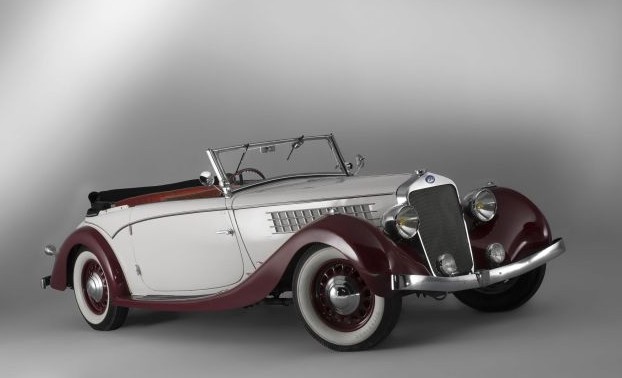
1936 Delage D6 70 Cabriolet Mylord by Figoni et Falaschi

Here’s another D6-70 that was built toward the end of 1936 and first registered in August of 1936. It uses the standard 2.8-liter straight-six making 78 horsepower. This was the top-of-the-line six-cylinder Delage you could buy – although any car bodied by Figoni et Falaschi could be considered pretty top-of-the-line.

The “Cabriolet Mylord” bodystyle is pretty and very regal-looking. The top can either be all the way down, all the way up, or sort of halfway in between where only the back seats are covered and it creates sort of a parachute effect. At any rate, this is a beautiful car that should bring between $250,000-$325,000. Click here for more info and here for more from this sale.

Update: Not sold.

_____________________________________________________________________

1933 Delage D8 S Cabriolet by Pourtout

Offered by Artcurial | Paris, France | February 7, 2014
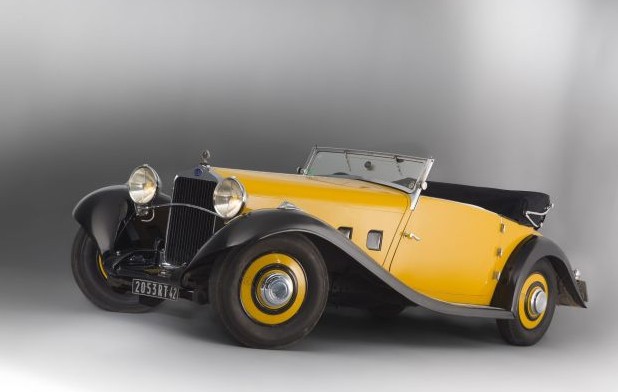
1933 Delage D8 S Cabriolet by Pourtout

The Delage D8 was the biggest car Delage built. It also had the biggest engine. The D8 S had an even bigger engine than the standard D8. Only 145 examples of the D8 S were constructed. It uses a 4.0-liter (or 4.1… it was 4,061cc) straight-eight making 120 horsepower.

This car is original and preserved. The Cabriolet bodystyle is by legendary French coachbuilder Marcel Pourtout. One design aspect I really like are the 1920s/1930s-style body-colored Rudge wheels. This is one of stars of the show and a really beautiful automobile that evokes the period brilliantly. It should sell for between $1,360,000-$1,630,000. Click here for more info and here for more from this sale.

Update: Sold $1,281,647

_____________________________________________________________________

1931 Delage D8 Roadster by Chapron

Offered by Artcurial | Paris, France | February 7, 2014

1931 Delage D8 Roadster by Chapron

The Delage D8 was introduced in 1929 and this 1931 model uses the 4.1-liter straight-eight, in this case making 102 horsepower. The body is by Henri Chapron and I would describe it as “restrained elegance.” It’s not flashy – but it is also earlier than the other three cars in this post. Dramatic design really flared up the farther they got into the 1930s.

This car was restored in the 1960s and has been maintained since. It would be a relatively inexpensive way to get behind the wheel of a Delage D8 – it’s expected to sell for between $550,000-$675,000. Click here for more info and here for more from Artcurial.

Update: Sold $438,318.
Delage D8 S

1933 Delage D8 S Cabriolet by Pourtout

Offered by Artcurial | Paris, France | February 7, 2014

1933 Delage D8 S Cabriolet by Pourtout

The Delage D8 was the biggest car Delage built. It also had the biggest engine. The D8 S had an even bigger engine than the standard D8. Only 145 examples of the D8 S were constructed. It uses a 4.0-liter (or 4.1… it was 4,061cc) straight-eight making 120 horsepower.

This car is original and preserved. The Cabriolet bodystyle is by legendary French coachbuilder Marcel Pourtout. One design aspect I really like are the 1920s/1930s-style body-colored Rudge wheels. This is one of stars of the show and a really beautiful automobile that evokes the period brilliantly. It should sell for between $1,360,000-$1,630,000. Click here for more info and here for more from this sale.

Update: Sold $1,281,647

Update II: Not sold, Gooding & Company Pebble Beach 2015.

Delage D6-70 Figoni et Falaschi

1936 Delage D6 70 Cabriolet Mylord by Figoni et Falaschi

Offered by Artcurial | Paris, France | February 7, 2014

1936 Delage D6 70 Cabriolet Mylord by Figoni et Falaschi

Photo – Artcurial

Here’s another D6-70 that was built toward the end of 1936 and first registered in August of 1936. It uses the standard 2.8-liter straight-six making 78 horsepower. This was the top-of-the-line six-cylinder Delage you could buy – although any car bodied by Figoni et Falaschi could be considered pretty top-of-the-line.

The “Cabriolet Mylord” bodystyle is pretty and very regal-looking. The top can either be all the way down, all the way up, or sort of halfway in between where only the back seats are covered and it creates sort of a parachute effect. At any rate, this is a beautiful car that should bring between $250,000-$325,000. Click here for more info and here for more from this sale.

Update: Not sold.

Series I Pininfarina Cabriolet

1958 Ferrari 250 GT Series I Cabriolet by Pinin Farina

Offered by Gooding & Company | Scottsdale, Arizona | January 17, 2014

1958 Ferrari 250 GT Series I Cabriolet by Pinin Farina

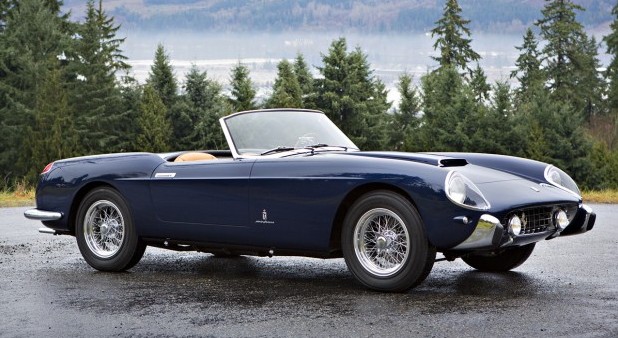
The Ferrari 250 GT line of cars is not only one of the longest model runs in Ferrari history – but also the most legendary. What started with the 250 Europa GT in 1954 would cycle through a number of well-known road and race models. The 250 GT Cabriolet by Pinin Farina would be the first one to lose its top.

New for 1957, the Series I Cabriolet from Pinin Farina went head-to-head against the California Spider (which was from rival design house Scaglietti). This car cost almost $15,000 in 1958 – strangely about $3,000 more than a California Spider. The California is worth more than twice as much today.

There are differences between the two cars. This one is a little bit softer, the nose a little lower and more aerodynamic. A quick glance at it might fool the unsuspecting, but it is clearly not a California Spider. The engine is still a 3.0-liter Colombo V-12 making 240 horsepower.

This car has had just four owners from new and is one of only 40 Series I Cabriolets built (Pinin Farina would build about 200 more “Series II” Cabriolets after Series I production ended in 1959). This car has a pre-sale estimate of $4,000,000-$5,000,000 which is a nice price when compared to a California Spider. And I have to say, I think this car just might be prettier. Click here for more info and here for more from Gooding & Co.

Update: Sold $6,160,000.

Frazer Nash-BMW

1937 Frazer Nash-BMW Type 319/2 Cabriolet

Offered by Bonhams | Oxford, U.K. | December 9, 2013

1937 Frazer Nash-BMW Type 3192 Cabriolet

We featured a Frazer Nash last week and described a bit of the history of the company. In the early years, Archibald Frazer-Nash (why is his name hyphenated and the company not?) formed AFN Ltd. after the GN cyclecar failed.

Their original purpose and business model was to import BMWs from Germany and assemble them in the U.K. The cars were marketed as “Frazer Nash-BMW”s and not BMWs. The company was the official British BMW importer between 1934 and 1939, before things between Germany and Britain got a little tense – to say the least.

The BMW 319 was introduced in 1935 and lasted through 1937. It was a version of the 303, which dated back to 1933. The engine is a 1.9-liter straight-six making 45 horsepower. This car has known ownership before the war and it picks up again in the 1960s. The current family who owns the car acquired it in 1978.

This car has covered about 54,000 miles in its life and shows an older restoration that could use attention in spots. It’s been in a museum recently and might need a little work to get it roadworthy. A total of 6,646 BMW 319s were built – a small fraction of which were sold as Frazer Nash-BMWs. This is a cool car that will bring between $65,000-$73,000. Click here for more info and here for more from Bonhams’ Oxford sale.

Update: Failed to sell.

Figoni & Falaschi Teardrop Cabriolet

1938 Talbot-Lago T150-C SS Teardrop Cabriolet by Figoni et Falaschi

Offered by RM Auctions | New York, New York | November 21, 2013

1938 Talbot-Lago T150-C SS Teardrop Cabriolet by Figoni et Falaschi

Talbot-Lago is one of those French marques that is widely associated with swoopy Art Deco coachwork from some of the most renown French coachbuilders of the pre-war era. The T-150C was introduced by Talbot-Lago in 1937. It had a competition chassis and the “SS” refers to it having a short wheelbase.

The engine is a 4.0-liter straight-six putting out 140 horsepower. Many of the cars were bodied by Figoni & Falaschi and the Teardrop bodystyle is their signature look. This Teardrop also happens to be a cabriolet. This is said to be the only short-wheelbase example with its original chassis, engine, and body.

Only 11 T-150C SS models were built and only two received Figoni Teardrop Cabriolet bodies (they did a third cabriolet on the longer wheelbase). This, the first one one has an interesting history: it was acquired by a merchant in Lille in 1941. He later moved to Paris and became a double agent under the Germans and had to flee to Brazil toward the end of the War.

It was confiscated and sold and by the mid-1950s, it found its way to Chicago. The current owner acquired it in 2008 and commissioned a stunning restoration that will easily win the car awards. These are truly amazing cars with flowing lines and a downright beautiful design. This is what RM is talking about when they call a sale “The Art of the Automobile.” It is art in motion. It will bring millions (between $8,000,000-$10,000,000). Click here for more info and here for more from RM.

Update: Sold $7,150,000.