Bugatti Type 101C

1954 Bugatti Type 101C Coupe by Antem

Offered by Bonhams | Chantilly, France | September 5, 2015
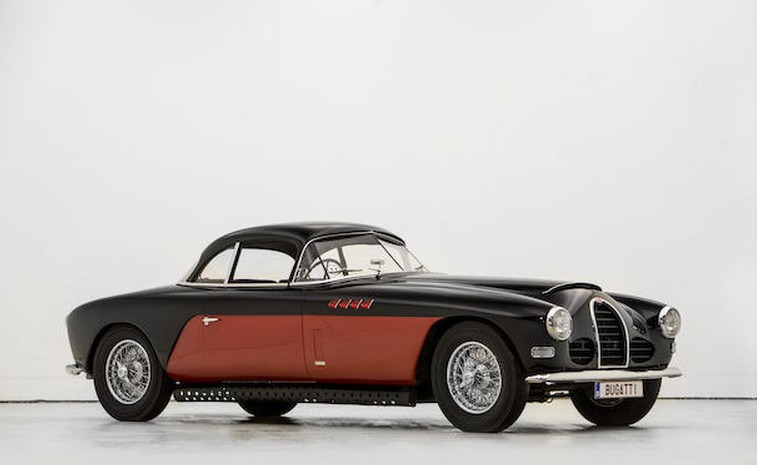
Photo - Bonhams

Photo – Bonhams

Post-war Bugattis are essentially impossible to come by. The company Ettore founded built its final pre-war car, the Type 57, in 1940. The Molsheim factory was destroyed during the war and Bugatti no longer controlled it. Ettore died in 1947 and his son Roland attempted the bring the company back in 1949 supposedly building a handful of Type 57s.

In 1951, the revived Bugatti announced that they would be building a new Type 101 (or 101C in supercharged form) which was based on the pre-war Type 57 chassis. The engine (in this case) is a supercharged 3.3-liter straight-eight making 190 horsepower. Only seven would end up being built, including the prototype (two more Type 57s would later be converted to 101 spec).

The hoarders Schlumpf had three Type 101s, including the prototype, and they remain in that collection. One more is in a museum. The remaining three are in private hands. Bugatti only built one more prototype after the 101 (the 252). And that was it. So that means this is one of about 10 post-war Bugattis ever built.

It is the only Type 101 bodied by Antem and has a very racy two-door coupe body. The final 101 wasn’t fitted with a body until 1965. This car entered the Harrah collection in 1964 and would later be owned by Nicolas Cage and John O’Quinn. It was sold in 2009 to its current Belgian owner. It’s the only one like it and this has to be the easiest way to acquire a post-war Bugatti (before the whole 1990s supercar revival thing). It should sell for between $1,700,000-$2,000,000. Click here for more info and here for more from this sale.

Update: Not sold.
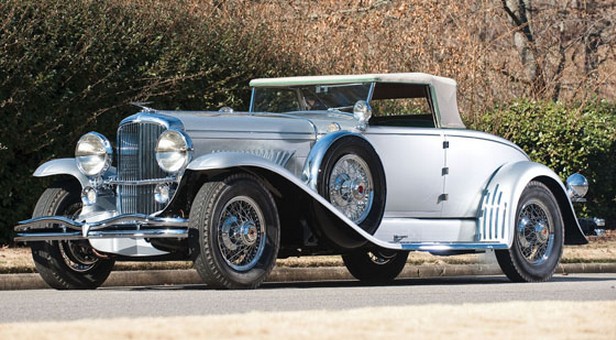
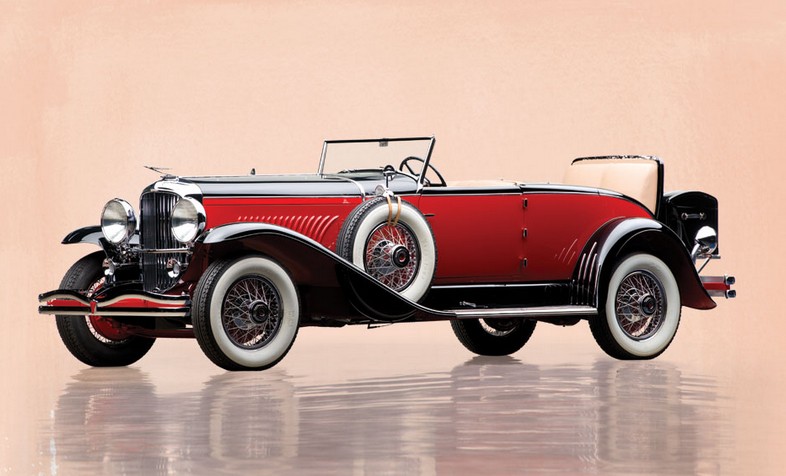
Duesenberg J-147

1929 Duesenberg Model J Convertible Coupe by Murphy

Offered by Auctions America | Auburn, Indiana | September 5, 2015

Photo - Auctions America

Photo – Auctions America

It’s amazing the history that can be found when you have the right car. It’s sort of like a royal bloodline – you can trace it all the way back. And this car has known ownership history from new.

This Model J (powered by the 6.9-liter straight-eight making 265 horsepower) is not wearing its original clothes. When it was new, it had a LeBaron Sweep Panel Phaeton body on it. The body you see here was originally on J-121, which was owned by one of Chicago’s Wrigleys.

Murphy was the most prolific of Duesenberg coachbuilders and this was their most popular two-door body style. Since its original owner (who owned a radio station in Chicago), this car has spent time at the Blackhawk Collection, the Imperial Palace Collection, and the collection of Dean Kruse. It’s been restored since 2007 and is immaculate. It should sell for between $1,500,000-$1,750,000. Click here for more info and here for more from this sale.

Update: Sold $1,402,500.

Update: Sold, RM Sotheby’s Monterey 2017, $1,430,000.

Gordon-Keeble

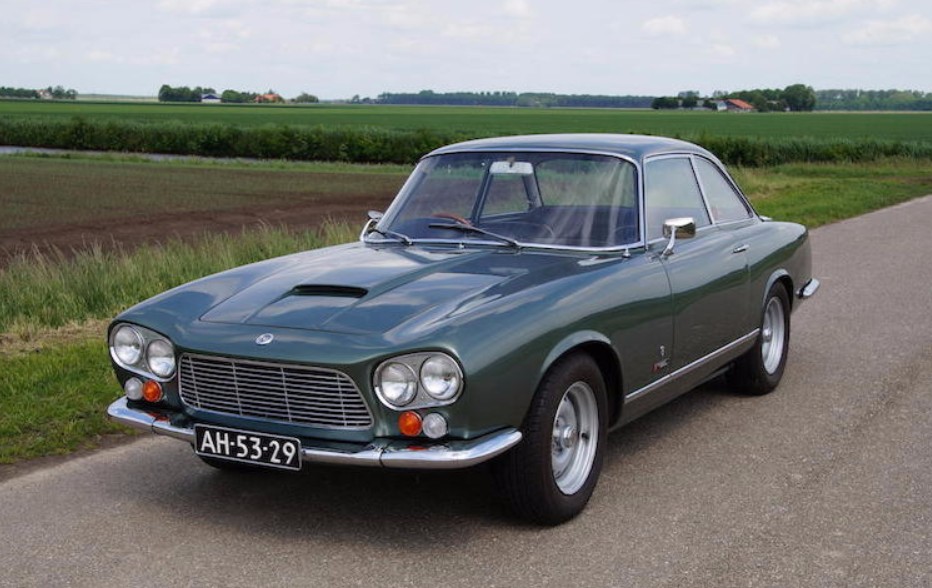
1964 Gordon-Keeble Coupe

Offered by Bonhams | Goodwood, England | June 26, 2015

Photo - Bonhams

Photo – Bonhams

There were some great, low-production British marques of the 1950s and 1960s that had style and performance and perhaps none are better than the Gordon-Keeble. The car came together because of the design talents of John Gordon and Jim Keeble. The steel body was designed by Bertone and it debuted in 1960 as the Gordon.

Production started in 1964 and the coupe was powered by a 5.4-liter V-8 from a Corvette good for 300 horsepower. Top speed was 140 mph and it could hit 60 in six seconds. The price was a little steep and in 1965 the company was re-organized and the final car was built in 1966.

Only 99 of these were built (until a 100th example was constructed in 1967 out of spare parts). They’re good-looking, powerful, fast cars. And their rarity is ensured forever. This example should bring between $92,000-$140,000. Click here for more info and here for more from this sale.

Update: Sold $125,550.

The First McLaren Road Car

1969 McLaren M6GT Coupe

Offered by Bonhams | Francorchamps, Belgium | May 24, 2015

Photo - Bonhams

Photo – Bonhams

New Zealander Bruce McLaren founded the racing team that still bears his name to this day in 1963. McLaren was killed in 1970 in his own Can-Am car in a crash at Goodwood. Needless to say, his legacy is alive and well.

McLaren Can-Am cars were some of the best in the late-60s and early-70s. The M6A was their car for 1967. 1968 brought the M6B and for the 1969 24 Hours of Le Mans, the company was developing a closed-coupe sports car called the M6GT. In order to race it in a sports car class, they had to build models for the road. The plan didn’t work out, and only three prototypes were completed – two of which were converted from M6B Can-Am cars, and one, which was a road car built from scratch. The first road car was sold to a customer in the U.S.

The two converted M6Bs were converted to road cars and Bruce McLaren used one as a daily driver. This is the other one. It was sold to a racer named David Prophet who actually raced it for a little while. It was restored in 1996 and is perfect for the road today. It uses a 5.0-liter Chevrolet V-8 making 370 horsepower. It’s as sleek as a race car and can do 180 mph. While it may look like a kit car or something, this is a legitimate McLaren road car – the grandfather of the F1. It should sell for between $210,000-$260,000.  Click here for more info and here for more from Bonhams.

Update: Not sold.

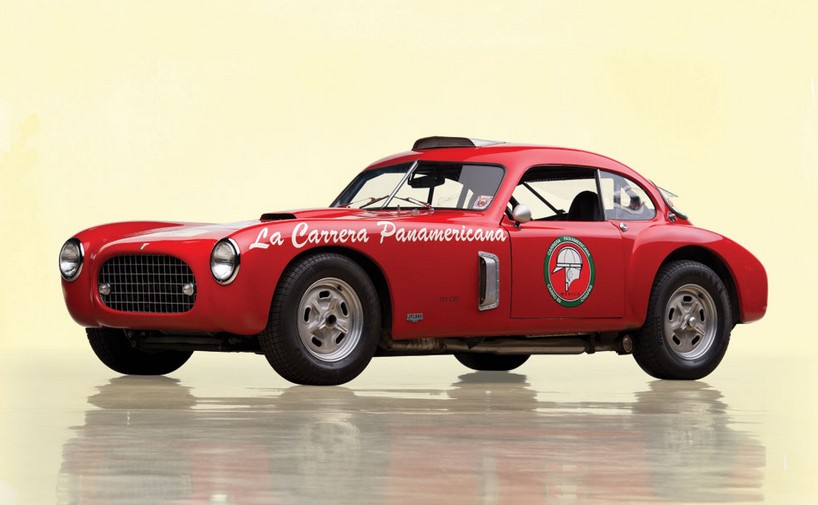
Kurtis 500 Coupe

1955 Kurtis 500 Swallow Coupe by Allied

Offered by RM Sotheby’s | Ft. Worth, Texas | May 2, 2015

Photo - RM Sotheby's

Photo – RM Sotheby’s

Frank Kurtis began building race cars in the 1930s. They were midgets and the first one he built was for himself. But he was good at it – and people recognized that. His cars were so good that Frank Kurtis was the first non-driver inducted into the National Midget Racing Hall of Fame. After WWII, he tried his hand at fiberglass road cars and would go on to build five Indy 500-winning roadsters.

The Kurtis Kraft 500 was a racing car – an Indy Roadster. They built a (barely) fendered road version as well. What we have here is a KK500 racing chassis. The body is by a company called Allied that built bodies, specifically near-copies of the Cisitalia 202. It’s a short-wheelbase car and uses a 5.2-liter V-8 from a Lincoln that has been tuned to make 257 horsepower.

The car was built to compete in the legendary Carrera Panamericana, but the 1955 race was cancelled. It would, however, get to compete in the 1990 version of that race and some other vintage events as well. It’s one of only two Allied-bodied Kurtis cars known to have been built and should sell for between $140,000-$200,000. Click here for more info and here for more from this sale.

Update: Sold $220,000.

Update: Not sold, Bonhams Scottsdale 2020.

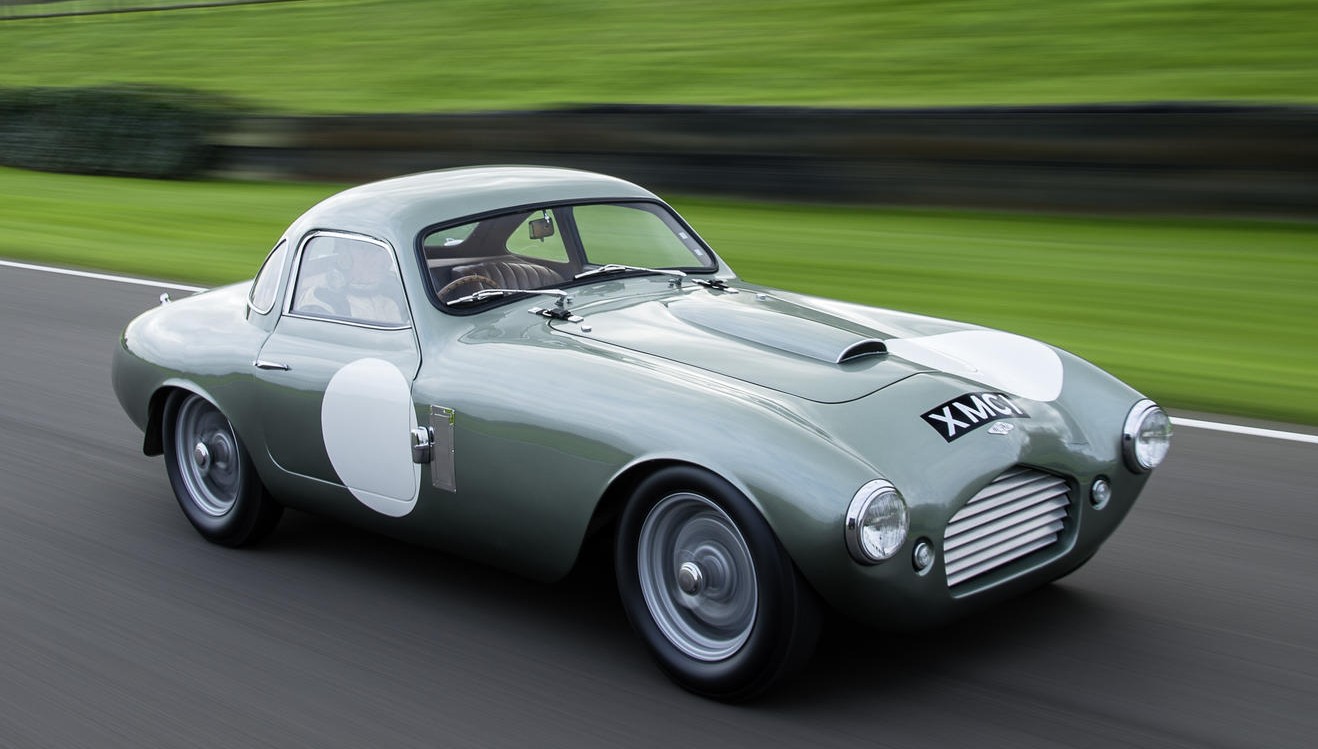
Frazer Nash Le Mans

1955 Frazer Nash Le Mans Coupe

Offered by Bonhams | Chicester, England | March 21, 2015

Photo - Bonhams

Photo – Bonhams

Archibald Frazer-Nash built some really cool cars under his own name (he also imported and attached his name to some BMWs). One such car was the Frazer Nash Targia Florio, a sleek convertible built between 1952 and 1954. The company experimented with putting a hard top on one of the Targa Florios and the Frazer Nash Le Mans Coupe was born (not to be confused with the Frazer Nash Le Mans Replica).

The Le Mans Coupe was built between 1953 and 1956. It was the first Frazer Nash closed-top car offered and it featured a 2.0-liter straight-six making 100 or 140 horsepower. This car was actually prepped for the 24 Hours of Le Mans and competed there in 1959. It was driven by William Wilks and John Dashwood, who crashed the car and they were a DNF in 47th place. It was the final race for Frazer Nash at Le Mans.

The car was repaired and has had a number of owners of the years. It is in great condition and is very rare in that only nine were built and this is one of three to compete in the 24 Hours of Le Mans. It should sell for between $850,000-$1,00,000. Click here for more info and here for more from Bonhams.

Update: Sold $695,854.

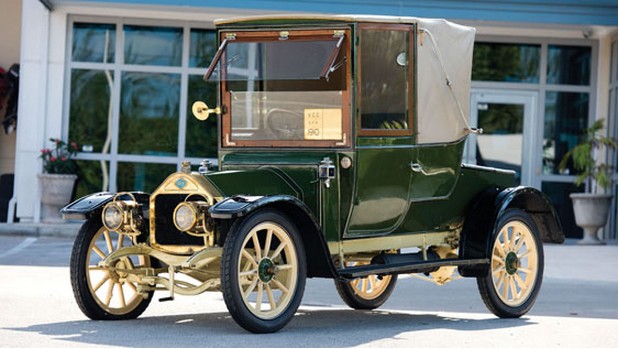
DFP Coupe

1909 DFP Coupe

Offered by Auctions America | Ft. Lauderdale, Florida | March 29, 2015

Photo - Auctions America

Photo – Auctions America

DFP stands for Doriot, Flandrin and Parant and they started producing cars under the DFP marque in 1908. Between 1906 and early 1908, Doriot-Flandrin was the brand name prior to the Parant Brothers joining the company. DFP remained in business through 1926 when Lafitte took the plant over.

Single-cylinder DFP cars were made until 1910. This car uses a Chapuis-Dornier straight-four engine. There were three four-cylinder engines offered in 1909, 2.0, 2.4, and 2.8-liter. It is not mentioned which engine this car carries.

The body is attractive, simple, and light and was constructed by Darlington Garage Ltd. The car is being offered from the collection of a museum in the Cayman Islands. It is expected to sell for between $40,000-$50,000. Click here for more info and here for more from this sale.

Update: mysteriously disappeared from auction catalog.

Duesenberg J-395

1931 Duesenberg Model J Disappearing Top Convertible Coupe by Murphy

Offered by RM Auctions | Fort Worth, Texas | May 2, 2015

Photo - RM Auctions

Photo – RM Auctions

Here is another Duesenberg from the Andrews Collection. This is also a highly desirable version. The Disappearing Top Convertible Coupe is a very attractive, very sporty body style and it was done by the Walter M. Murphy Company, the most prolific Duesenberg coachbuilder.

Unlike the car we featured a week ago, this is an un-supercharged Model J, meaning that the 6.9-liter straight-eight puts on “only” 265 horsepower. This car has an interesting history as, for a large portion of its life, it was in collection of Pacific Auto Rentals – who provided cars for movies. This car has a number of credits to its name, regularly showing up on screen between 1949 and the late 1970s.

In the 80s, it became part of the Imperial Palace Collection and was eventually acquired by Dean Kruse of Kruse Auctions. It has been in the Andrews Collection likely since 2008, when it sold at an RM sale for $2,640,000. Click here for more info and here for more from this sale.

Update: Sold $3,520,000.

Update: Sold, RM Sotheby’s Amelia Island 2023, $4,295,000.

Bentley “Honeymoon Express”

1939 Bentley 4¼ Litre Sports Coupe “Honeymoon Express” by Park Ward

Offered by RM Auctions | Paris, France | February 4, 2015

Photo - RM Auctions

Photo – RM Auctions

The Bentley 4¼ Litre was an offshoot of the Bentley 3½ Litre, which was introduced in 1933. When the engine was enlarged in 1936, the name of the model was changed to reflect it. Note, this model is not the same as the Bentley 4½ Litre or even the plain old Bentley 4 Litre.

Bentleys of this period were actually built under new corporate overlord Rolls-Royce and are sometimes referred to as “Derby Bentleys” because they were produced at Rolls-Royce’s Derby plant. The engine in this car is a 4.3-Liter straight-six making 126 horsepower. But it’s the body that is really interesting.

This was Park Ward’s 1938 Earl’s Court Motor Show car. It’s a two-seater, which was rare for this platform. Instead of rear seats, it has luggage space – just enough for two newlyweds to go off on a jaunt around England. The head of Park Ward kept the car for himself after the show. It later passed to an American serviceman in the 1960s and he kept it until 2002.

A five year restoration was completed in 2011 and it is gorgeous. Bentleys are drivers’ cars and this one is no different. It will prove to be a lot of fun for its new owner. Look for it to bring between $700,000-$840,000. Click here for more info and here for the rest of RM’s Paris lineup.

Update: Sold $769,440.

Renault DP Coupe-Chauffeur

1913 Renault Type DP 22/24HP Coupe-Chauffeur by Renaudin et Besson

Offered by Artcurial | Paris, France | February 6, 2015

Photo - Artcurial

Photo – Artcurial

What you can’t see in this image (and what you’ll have to go to Artcurial’s website to check out) are pictures of this car’s interior. It looks like a haunted house in there (and it’s kind of frightening in a kids-in-Victorian-clothing kind of way from the outside too). We sometimes think of the Twentieth Century as “modern times,”  but if you think about it, our knowledge of pop culture doesn’t really go back any farther than the 40s or 30s, or, in some cases, the 20s. But pop culture in the 1900s and 1910s is a mystery to most of us – and so is what they considered stylish and what constituted general day-to-day life. Look at the interior of this car and you can see how far we’ve come.

That was a bit of rant, but here’s some info about this car: the Type DP was built between 1913 and 1914 only. It uses a 5.0-liter, water-cooled straight-four making 24 horsepower. The body here is by Renaudin et Besson of Paris and it is mostly wooden.

This was Renault’s flagship car prior to WWI and this example has been in the same family since new (it is now owned by the great-great grandson of the original owner). It has never been restored and is ripe for preservation awards the world over. It’s really an incredible time capsule and can be yours for between $350,000-$590,000. Click here for  more info and here for more from this sale.

Update: Not sold.
Update: Sold, Gooding & Company Pebble Beach 2023, $78,400.