Bugatti 44 Berline

1930 Bugatti Type 44 Berline by Alin & Liautard

Offered by Osenat | Fontainebleau, France | June 18, 2017

Photo – Osenat

Most of Bugatti models are all part of a line of cars that trace back to an earlier model. In this case, the Type 44 can trace its heritage back to the Type 30 of 1922. The Type 44 was built between 1927 and 1930 and was the most popular series of all of the “8-cylinder line” of 1922-1934.

It’s powered by a 3.0-liter straight-eight making 80 horsepower. This car was sold new in Paris and was sent to Alin & Liautard to be bodied as a sedan, a body style not many Bugattis still exist as. The large roof has a big piece of fabric that can be rolled back like a giant cloth sunroof.

Ownership is known back to the 1950s, but it is known that the car was registered in Pairs up until that point. Any restoration this car has ever underwent is extremely old and predates the current owner who acquired the car some time ago. The Type 44 was one of the most popular Bugattis sold, with production totaling 1,095 cars. This one should sell for between $200,000-$260,000. Click here for more info and here for more from this sale.

Update: Sold $321,130.

Bugatti 46 by Weymann

1930 Bugatti Type 46 Sportsman’s Saloon by Weymann

Offered by Bonhams | Chichester, England | June 30, 2017

Photo – Bonhams

In 1929, Bugatti introduced a new road car dubbed the Type 46. It would spawn a very rare supercharged variant the following year (the Type 46S) and a short-wheelbase cousin called the Type 50. The Type 50B was the only racing version of the Type 46 family. Production on the Type 46 ended in 1936.

These cars are powered by a 5.4-liter straight-eight making 140 horsepower. It was a pretty large and heavy chassis at 138 inches (eight inches longer than a modern Chevy Suburban), so it’s no wonder Bugatti chose the short wheelbase version for the race car.

This car was one of 35 Bugatti chassis ordered by its London distributor and was bodied in the U.K. by Weymann. It’s history goes back to new but the current family has owned it for 42 years. The Type 46 was a popular Bugatti, with 400 built. This one should bring between $210,000-$260,000. Click here for more info and here for more from this sale.

S/N # 46219

Update: Sold $365,332.

Talbot M67 Sedan

1930 Talbot M67 11CV Sedan

Offered by Osenat | Obenheim, France | May 1, 2017

Photo – Osenat

The Talbot marque has one of the messiest histories of any automobile brand in history. There were British and French Talbots and they manufactured cars simultaneously. And there were numerous prefixes and suffixes attached to the name. What we have here is a French Talbot, from the brand that sold cars from 1922 (prior to this they were sold as Darracq-Talbots) through 1936 (after which they were badged as Talbot-Lagos).

Yeesh. Anyway, the M67 was built between 1927 and 1930. It was a relatively nice car in its day and is powered by a 2.0-liter straight-six making 38 horsepower. Different body styles were offered, but this car wears a fairly standard sedan body.

The restoration on this particular example is about 10 years old but this is the same body, engine, and chassis combination from when it was new. It kind of reminds me of a taxi, based on its livery (which is the color it was when new) – but it isn’t. It’s a driver and should bring between $21,700-$32,500. Click here for more info and here for more from this sale.

Update: Sold $24,263.

Update II: Not sold, Osenat Strasbourg 2018.

Duesenberg J-237

1930 Duesenberg Model J Dual Cowl Phaeton

Offered by Barrett-Jackson | Scottsdale, Arizona | January 14-22, 2017

Photo – Barrett-Jackson

The Model J Duesenberg has always been a collectible car. People started buying these up when they were just 10-year-old cars and hoarding them. This action saved many of them and they have a fantastic survival rate for their age. Prices have undergone fluctuations, as this car sold in 2011 for just $363,000.

They were powerful cars in their day, with a 265 horsepower, 6.9-liter straight-eight providing the motivation. All sorts of body styles were offered by coachbuilders (as Duesenberg only sold the bare chassis/engine combination… you had to provide your own body). Among the most popular bodies was the Dual Cowl Phaeton seen here.

This car is far from original, unfortunately. It’s composed of original, period parts, but it was more or less assembled that way. For instance, it rides on a replacement chassis, the body was crafted in the style of LaGrande – but the engine is real. At any rate, it is wonderfully presented and should top the price it brought five years ago. Click here for more info and here for more from Barrett-Jackson.

Update: $880,000.

Duesenberg J-347

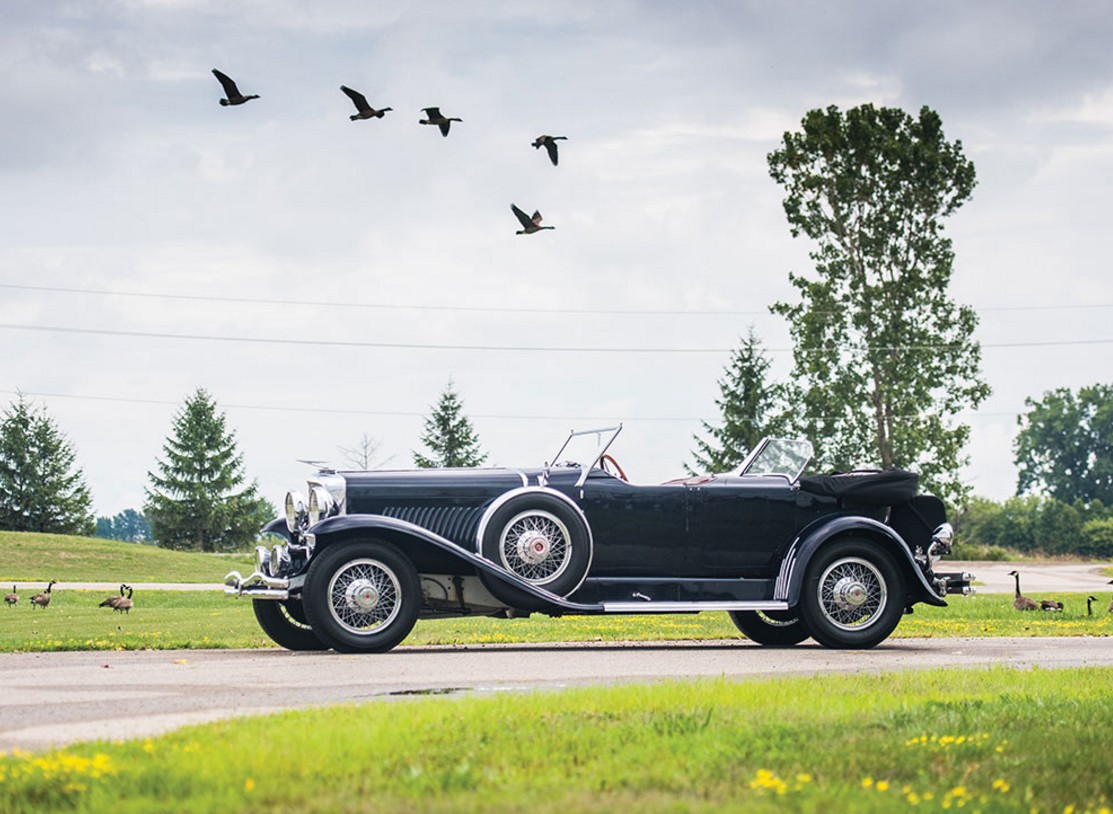
1930 Duesenberg Model J Dual Cowl Phaeton by Murphy

Offered by RM Sotheby’s | Hershey, Pennsylvania | October 6-7, 2016

Photo Courtesy of RM Sotheby's

Photo Courtesy of RM Sotheby’s

This Duesenberg Model J – which is beautifully photographed, despite the fact that geese are evil – is one of the more desirable body styles that was ever produced in a more-than-one-off quantity. The Dual Cowl Phaeton is one of the most interesting bodies you can have on an old touring car because it’s not something you can find and any new car. Anywhere.

The second windshield provided some wind and weather protection for backseat passengers (and notice just how far back they really are). On this car, Murphy has actually angled the rear glass like the front, making the rear seat compartment look quite sporty if taken alone. And, as is the case with all Model Js, this car is powered by a 6.9-liter straight-eight making 265 horsepower.

Murphy only built three Dual Cowl Phaetons and this is one of those cars. It is numbers matching from new (which is rare in itself). The car was restored in the early 1960s and has been maintained since. There’s an interesting history here, too: J-347 was sold new in Massachusetts but the owner moved to Mexico and in 1945, sold the car to a Mexican businessman. It was later featured in a film and then walled up in an airport parking garage by its next owner for years until being discovered and relocated to America.

The same family has owned this car for 54 years meaning this will be the first time it has changed hands in the modern era. It’s a stunning design on an incredible chassis and should bring big money. Click here for more info and here for more from RM Sotheby’s.

Update: Sold $2,090,000.

Hispano-Suiza H6B

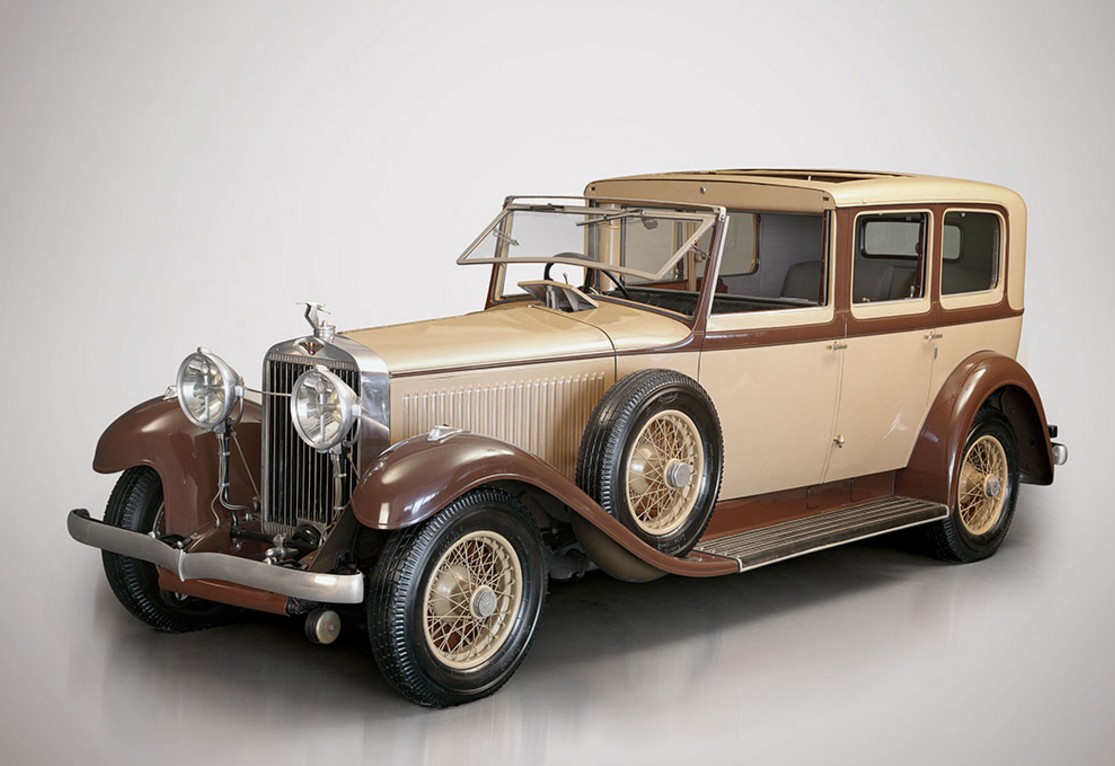
1930 Hispano-Suiza H6B Coupe Chauffeur by Binder

Offered by RM Sotheby’s | Monaco | May 14, 2016

Photo - RM Sotheby's

Photo – RM Sotheby’s

The Hispano-Suiza was a combination of the Spanish and Swiss… so it only makes sense that a number of their greatest cars were actually built by the French. Many of the models were Spanish built, but the French firm was responsible for the H6B, H6C, HS26, K6, and J12 models.

This H6B differs from the later H6C in that it has a smaller, less powerful engine and a lower top speed. It is powered by a 135 horsepower, 6.6-liter straight-six with a top speed of 85 mph. This model was available from 1919 through 1929.

The business-like Coupe Chauffeur was a car built just for that – to be chauffeured around in. The body is by French coachbuilder Henri Binder and the restoration is described as “older.” What that means I’m not sure, but the car has been in the same collection since 1962. Click here for more info and here for more from RM.

Update: Sold $120,340.

Stutz SV-16

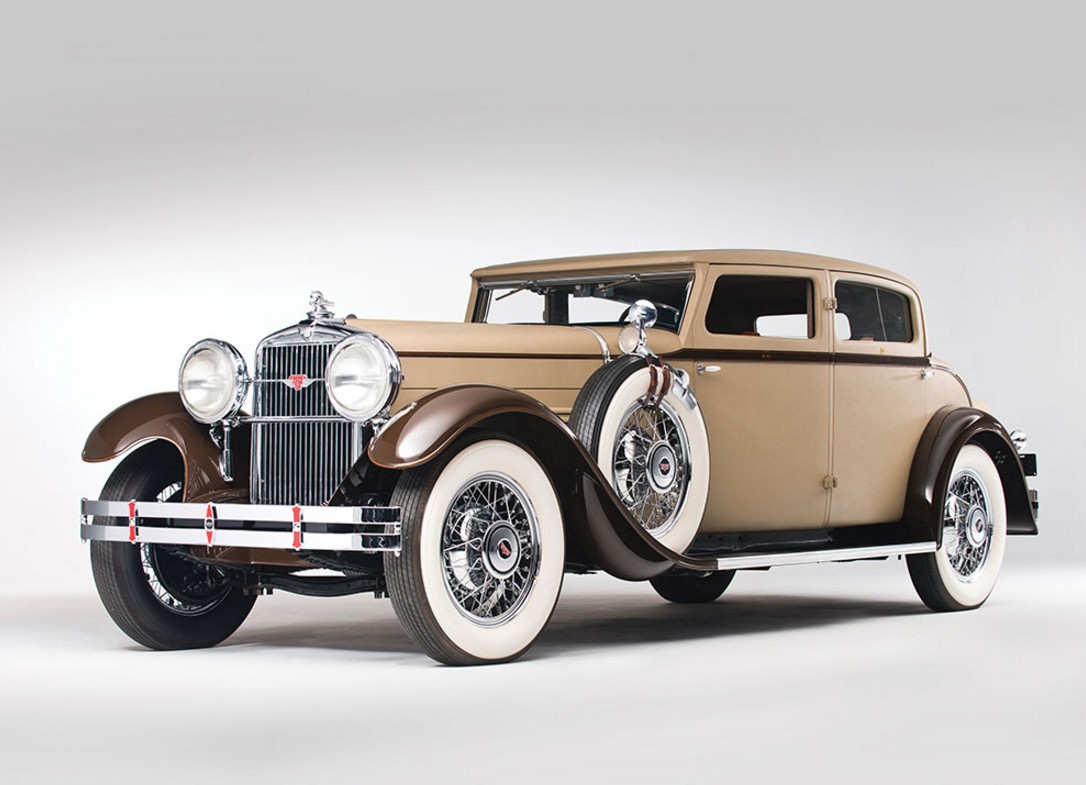
1930 Stutz SV-16 Monte Carlo by Weymann

Offered by RM Sotheby’s | Amelia Island, Florida | March 12, 2016

Photo - RM Sotheby's

Photo – RM Sotheby’s

Harry C. Stutz’s motor company was one of America’s finest in pre-war America. Right there with Auburn, Cord, and Duesenberg, it was a flag-carrier for Indiana’s motor industry. Their eight-cylinder models were introduced in 1926 and by the time the Depression rolled around, some of these cars had become fabulously expensive and stylish.

The SV-16 – also called the Model MB – is powered by a 5.3-liter straight-eight making 115 horsepower. It was Stutz’s premier offering in 1930 and the Monte Carlo body style by Weymann was one of a few “European” styles that could be had.

It is thought that three SV-16 Monte Carlos were built in 1930. Costing $4,495 when new, they have appreciated significantly in value with this car carrying a pre-sale estimate of $550,000-$650,000. It has an RM restoration and is an award-winner. Click here for more info and here for more from this sale.

Update: Sold $550,000.

Update: Not sold, Bonhams Quail 2019.

Phantom II Torpedo Sports

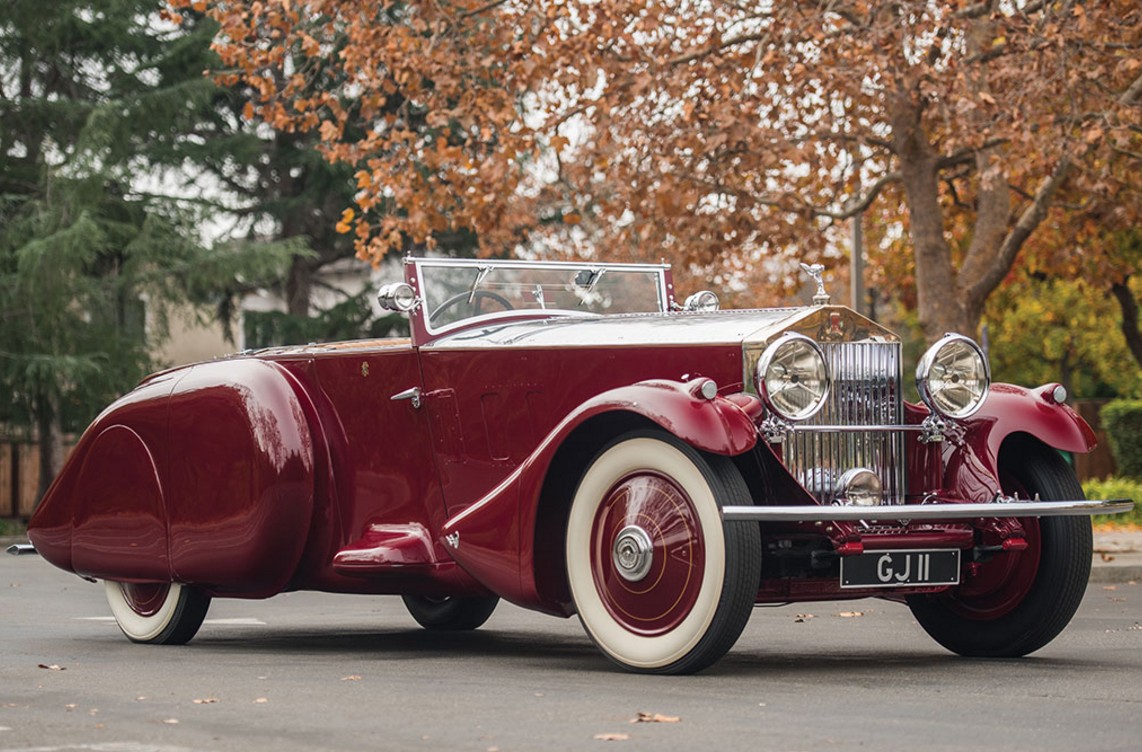
1930 Rolls-Royce Phantom II Torpedo Sports by Barker

Offered by RM Sotheby’s | Phoenix, Arizona | January 28-29, 2016

Photo - RM Sotheby's

Photo – RM Sotheby’s

When you think of 1930s streamlined automobiles, you probably think of those Art Deco French beauties. Well here is an English example. It’s a Rolls-Royce Phantom II, which was produced between 1929 and 1936.

It is powered by a 120 horsepower 7.7-liter straight-six. Barker & Co. of London was one of the more common coachbuilders for Rolls-Royce. Most of their designs were relatively traditional – sedans and the like. But obviously not all of their designs were stodgy. This Torpedo Sports looks like something from the late 1930s, not the dawn of the decade.

Built for a man in New York (but never delivered), this car has windswept fenders, rear wheel covers, and the upper part of the rear decklid comes to a boattail-like point. The first owner isn’t actually known for sure (it is thought to be a Maharaja), but from the second owner on, the history of this car is known. The current owner bought it in the early 1990s and it has since been restored.

Only 1,402 Phantom IIs were built and this is the only one quite like this. It’s also one of the sportiest Phantom IIs, too. If you want to see more, click here. And find the rest of RM’s catalog here.

Update: Not sold.

Duesenberg J-330

1930 Duesenberg Model J Disappearing Top Roadster by Murphy

Offered by Bonhams | Ebeltoft, Denmark | September 26, 2015

Photo - Bonhams

Photo – Bonhams

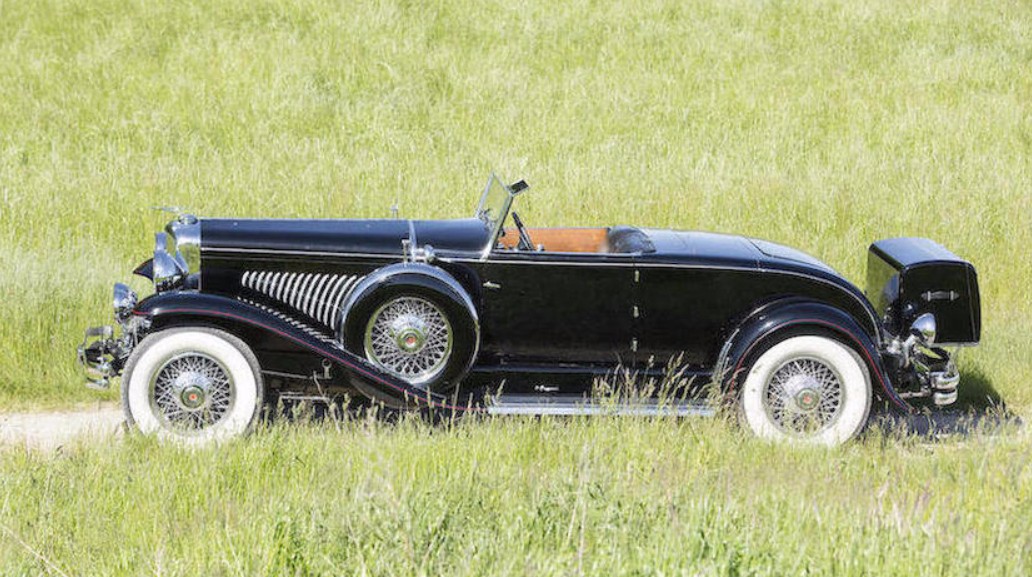
That’s quite the profile you see above. The term “Disappearing Top” was no misnomer – the top is completely hidden, resulting in a sleek rear end interrupted only by the rather functional trunk (when trunks were literal trunks).

This Model J has known ownership history back to brand new, when it was first bought by (or actually for, as it was a gift) the great-grandson of Cornelius Vanderbilt. The car has had many owners since and in 1959 it sold for $6,000 (which was a lot then but seems awfully cheap today). This Duesey has been in the current collection for about a decade or so. It has never been restored.

The 265 horsepower 6.9-liter straight-eight engine is all original. This car looks restored and has been scored in the highest possible category of Duesenbergs. It’s one of, if not the, best, original survivor Model J in the world. It should sell for between $2,500,000-$3,100,000. Click here for more info and here for the rest of this sale’s lineup.

Update: Sold $2,664,538.

Rugby Pickup

1930 Rugby S4 Closed Cab Express

Offered by Mecum | Houston, Texas | April 9-11, 2015

Photo - Mecum

Photo – Mecum

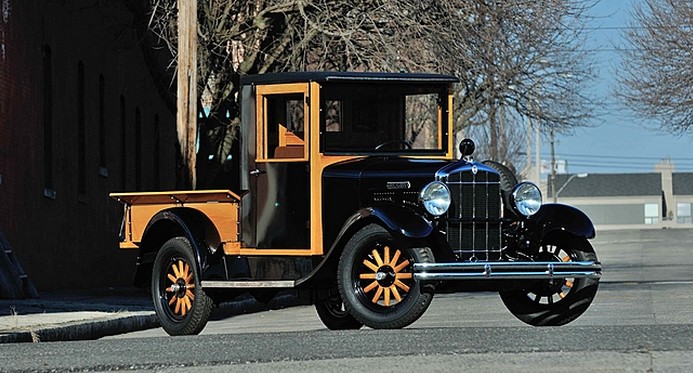
Rugby was an automotive brand sold by Durant Motors outside of the U.S. In the U.S., the Rugby passenger cars were sold under the Star brand. However, between 1928 and 1931, Americans and Canadians alike could purchase a Rugby pickup truck.

This truck is in beautiful condition. Look how sharp that paint is. And the woodwork looks great too. Old trucks are hard to come by because they were used until there was nothing left and thrown away, more or less. The S4 was powered by the same 2.2-liter straight-four found in Star motorcars.

Durant Motors closed in 1931 and Rugby went down with them. This is about as nice an example of a Rugby truck you’re likely to find. You can check out more pictures here and see more from Mecum here.

Update: Sold $35,000.