Osenat, June 17, 2012, Sale Highlights

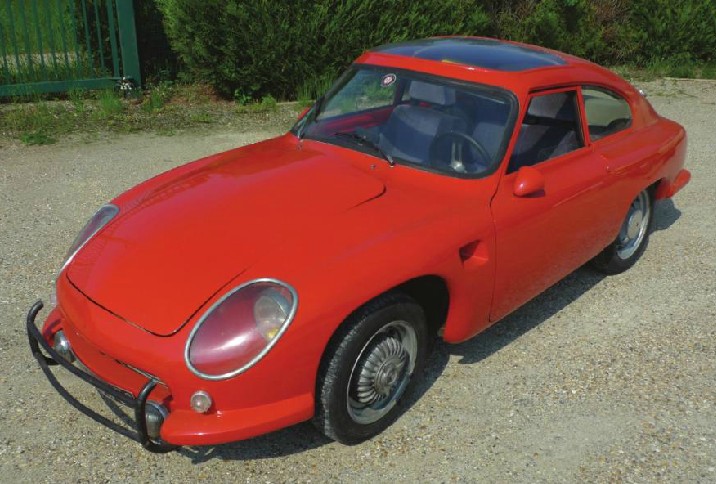
Osenat’s recent sale had a number of unique – at least to those of us not in France – cars that sold. Unfortunately, the D.B. Le Mans we featured, didn’t. However, the other D.B. in the sale did. It’s a 1960 D.B. Type HBR 5 and it brought $28,000.

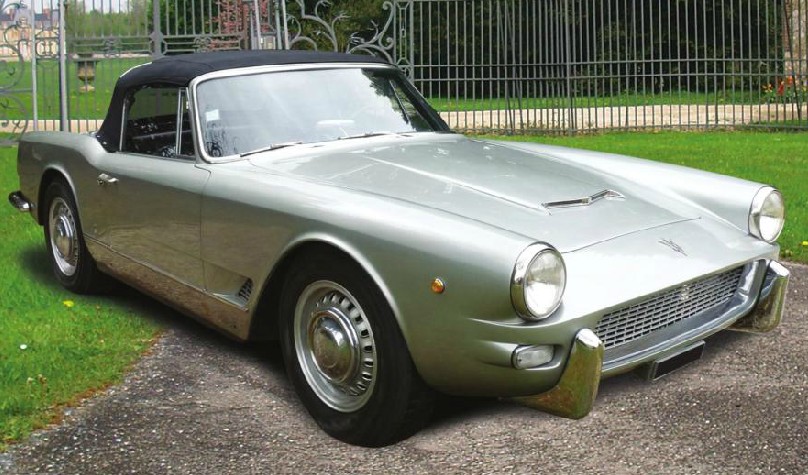
Top sale went to this 1960 Maserati 3500 GT Spider Vignale – in all it’s wondrous Photoshopped glory. It sold for $303,000 – about three times more than the next highest-selling car.

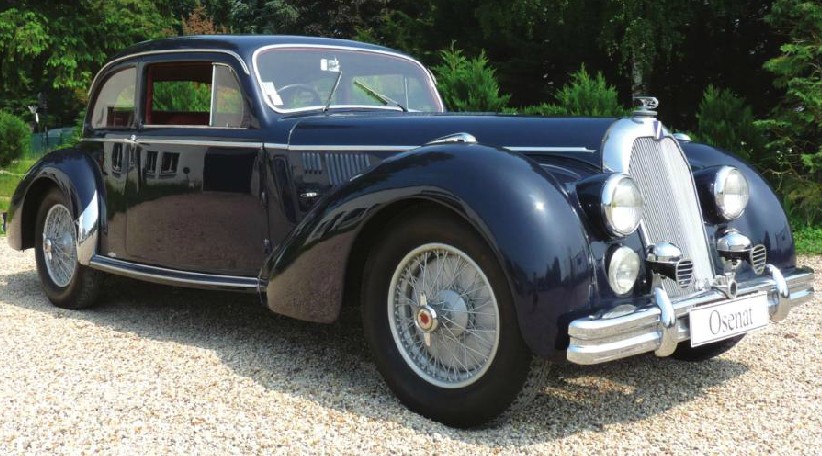
Other interesting sales included a 1926 Hispano-Suiza T49 (below) for $38,000 and a 1951 Talbot-Lago T26 Record for $76,500 (second below).

This 1954 Panhard Dyna Junior convertible really popped in this shade of gold. I can’t tell if it’s attractive or hideous, but it certainly grabbed my attention. It was one of two Dyna Juniors that sold. This one for $19,000 and one in blue for $20,000.

And finally, one car I found quite pretty was this 1962 Simca Plein Ciel – which was the hardtop coupe version of the Simca Aronde. It sold for a touch under $23,000. For complete results, click here.

Duesenberg J-272

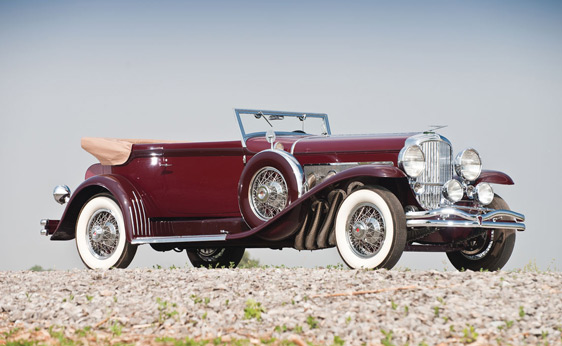
1930 Duesenberg Model SJ Convertible Victoria by Rollston

Offered by RM Auctions | Plymouth, Michigan | July 28, 2012
I’ve always imagined the 1920s to have been just one big party. The “war to end all wars” was over and things would continue to improve until the end of time. The Jazz Age, in full swing for some time, was reaching its zenith when the Model J Duesenberg was introduced. Unfortunately it would end almost immediately thereafter.

If there is any single thing in my mind that defines the Jazz Age, it is George Gershwin’s “Rhapsody in Blue” – a near-perfect combination of classical music and jazz. Many people consider it one or the other but I happen to think it is the greatest example of both. This absolutely amazing piece of music was commissioned in 1924 by Paul Whiteman, a bandleader referred to in the media as “The King of Jazz.” His arrangement of “Rhapsody in Blue” for full orchestra is the definitive version this song. A shellac 78 record of Whiteman’s version is spinning across the room as I write this.

So what does any of this have to do with this car? Well, this car was purchased new by Paul Whiteman with the original body being a LeBaron Sport Phaeton. Whiteman sold the car in 1932 and the new owner replaced the original body with the Convertible Victoria style by Rollston you see here, making it one of 16 Rollston Convertible Victorias built and one of 57 Rollston-bodied Duesenbergs in total. The new owner also had a supercharger installed, bumping horsepower from 265 to 320. This move also elevated this car into a whole new realm of collectability.

When it comes to American cars, the SJ Duesenberg is exceeded in price by few and in desirability by even fewer. For me, this SJ (engine no. J272) would be the one to have because of its direct connection to the Jazz Age – an era like no other. If I had the means, this car would soon be in my garage – and while it’s no yellow Rolls-Royce, I would drive this thing around town like I was Jay Gatsby himself.

The pre-sale estimate is $850,000-$1,200,000 – putting it just out of my reach. To read more about this car, click here. And to see more from RM at St. John’s, click here.

Update: Sold $957,000.

Update: Sold, Mecum Indianapolis 2021, $2,970,000.
Peugeot 905 Evo

1991 Peugeot 905 Evo 1B

Offered by Artcurial | Le Mans, France | July 7, 2012

Photo – Artcurial

Earlier this week we talked about Audi’s rivalry with the Peugeot 908. Say hello to the 908’s older brother: the Peugeot 905. Built to the World Sportscar Championship’s new-for-1991 rules, the 905 was a little slow at first, being beaten regularly by Jaguar’s mighty XJR-14. It also suffered from reliability problems. And it was ugly.

For 1992, Peugeot made some revisions and the car was much more competitive (and attractive) – sweeping the podium at Le Mans and winning the WSC outright. Unfortunately for Peugeot (you know, because of all that money invested), the WSC ceased to exist in 1993. But that didn’t stop them from sweeping the podium at the 24 Hours yet again.

This car, chassis EV13, debuted in 1991 and was upgraded to Evo 1B specifications later on. It has a 3.5-liter V10 making something like 715 horsepower at a screaming 12,500 rpm. The carbon fiber chassis was produced by aircraft manufacturer Dassault. Eight of these machines were built. Here is the competition history for this one:

  • 1991 430km of Suzuka – 1st (with Mauro Baldi and Philippe Alliot)
  • 1991 430km of Monza – 11th, DNF (with Keke Rosberg and Yannick Dalmas)
  • 1991 430km of Silverstone – 6th (with Baldi and Alliot)
  • 1991 24 Hours of Le Mans – 36th, DNF (with Baldi, Alliot and Jean-Pierre Jabouille)
  • 1991 430km of Nurburgring – 11th, DNF (with Baldi and Alliot)
  • 1991 430km of Magny-Cours – 2nd (with Baldi and Alliot)
  • 1991 430km of Mexico City – 2nd (with Baldi and Alliot)
  • 1991 430km of Autopolis – 4th (with Baldi and Alliot)
  • 1992 500km of Silverstone – 8th, DNF (with Baldi and Alliot)
  • 1992 24 Hours of Le Mans – 3rd (with Baldi, Alliot and Jabouille)
  • 1993 24 Hours of Le Mans – 3rd (with Baldi, Alliot and Jabouille)

This was an awesome race car in the early 1990s. And it would be an awesome race car to take on the historical circuit today. You can do it – for somewhere between $875,000-$1,500,000. For more information click here. And for more from Artcurial at Le Mans, click here.

Update: Sold $833,855.

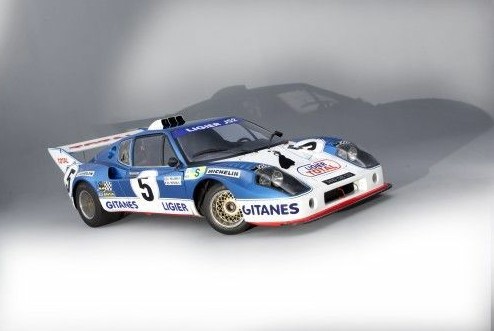
Ligier JS2

1974 Ligier JS2

Offered by Artcurial | Le Mans, France | July 7, 2012

Guy Ligier began his career as a rugby player before he went sportscar racing in the 1960s, which led to a brief Formula One ride with a privateer team. He moved on to his own race team but after his partner and friend, Jo Schlesser, was killed racing one of their Honda F1 cars, Ligier retired from driving and focused on building cars instead. The “JS” prefix is so named for Schlesser.

The JS2 was the second model made by the company and it was introduced in 1971. They were produced for both the road and the track – with racing being the focus (the Ligier name would appear on Formula One cars for 20 years). Only 280 copies of the JS2 were built. The one you see here is a race car – and an important one.

I like the “competition history” format we’ve used on other posts, so I’m doing it here again, too – even though the history is somewhat short:

  • 1974 Tour de France Automobile – 1st (with Gérard Larrousse, Jean-Pierre Nicolas and Johnny Rives)
  • 1975 24 Hours of Le Mans – 2nd (with Jean-Louis Lafosse and Guy Chasseuil)

The engine in this car is a 3.0-liter Cosworth DFV V8 making 460 horsepower and is one of only three factory JS2 race cars built and raced by Ligier. Only two survive and this one has more competition success than the other. However, it has been a while since this car was last used. As such, it is being sold “in need of an overhaul” and comes with a variety of spares.

There are other rare Ligers at this sale – you can find them here. This one is expected to bring between $935,000-$1,350,000. For more information, click here.

Update: Did not sell.

1962 Mobile Propane Tank

1962 Simca 1000 Butagaz

Offered by Artcurial | Le Mans, France | July 7, 2012

This attractive vehicle is not your standard Simca 1000. This car… or truck… or advertising vehicle was built for the Tour de France. It has nothing to do with cycling, but it actually drove the course ahead of the competitors as a roving advertisement for the French butane and propane distributor Butagaz – who had seven of these built by French coachbuilder Rotrou in 1962. It’s designed to look like a propane tank and there are even speakers built into the body so you can blast whatever propaganda you wish (Butagaz played their slogan while driving around).

The base car underneath is a 1962 Simca 1000. The rear-engined layout of the Simca 1000 was favorable for this conversion for two reasons as it helped offset the weight of the driver’s compartment and allowed for the driver’s compartment in general, which is very far forward and very low. These cars came standard with straight-four engines ranging from 800cc to 1.3-liters.

If you’re in to advertising (either mobile or otherwise), this all-original propane tank on wheels can be yours for somewhere in the neighborhood of $25,000-$50,000. Think of the looks you could get driving it around. For more information click here. And for more from Artcurial at Le Mans, click here.

Update: Sold $30,346.

Audi R10 TDI

2007 Audi R10 TDI

Offered by Artcurial | Le Mans, France | July 7, 2012

Oh boy. This is one of my all-time favorite cars. A few months ago we featured this car’s largest rival – the Peugeot 908 HDi FAP. The Peugeot is very pretty and very fast. But it did not dominate everything quite like the Audi R10 did. That Peugeot was the first 908 to come up for public sale and this is the first Audi R10 to come up for auction.
The R10 TDI was introduced to replace the other-worldly Audi R8 (a car that only lost 16 races in seven years. It never lost at Le Mans with factory backing). What was shocking, was that the R10 was diesel-powered. Only a handful of diesel-powered cars had ever competed at Le Mans (1949, 1950 and 2004 all saw one diesel entry). But for a powerhouse team to switch its power plant after being so dominant? How would it play out?

Splendidly. The R10 never lost a race at Le Mans before it was replaced by its successor, the R15. The engine is a 5.5-liter diesel V12 making somewhere around 650 horsepower. Torque is monstrous at 811 lb/ft. The R10 was capable of great things in the right hands. It was the first diesel to win the 24 Hours of Le Mans and the 12 Hours of Sebring. One particular memory of these cars occurred at the 2008 Petit Le Mans at Road Atlanta, when Allan McNish wrecked the car on the warmup lap on the way to the grid. The team had to replace most of the front end of the car. It basically started the race two laps down. Co-drivers Emanuele Pirro and Dindo Capello put in solid drives throughout the 1000km event. But a determined drive by McNish in the final stint gave the team the win. It was one of the most incredible performances from a driver I’ve ever seen. McNish is a god among men in Audi prototypes. But I have to admit the car probably had something to do with it.

Anyway, the competition history of this car (chassis #201) is as follows:

  • 2007 Grand Prix of Mosport – 4th (with Marco Werner and Emanuele Pirro)
  • 2007 Petit Le Mans – 17th (with Lucas Luhr and Werner)
  • 2007 Monterey Sports Car Championships at Laguna Seca – 3rd (with Mike Rockenfeller and Werner)
  • 2008 12 Hours of Sebring – 3rd, and 1st in class (with Rinaldo Capello, Allan McNish and Tom Kristensen)
  • 2008 1000km of Nurburgring – 3rd (with Alexandre Prémat and Rockenfeller)
  • 2008 1000km of Silverstone – 4th (with Prémat and Rockenfeller)
  • 2009 1000km of Catalunya – 27th (with Michael Krumm, Charles Zwolsman Jr. and Andrew Meyrick)
  • 2009 1000km of Spa – 6th (with Narain Karthikeyan, Meyrick and Zwolsman)
  • 2009 24 Hours of Le Mans – 7th (with Karthikeyan, Zwolsman and André Lotterer)
  • 2009 1000km of Algarve – 27th, DNF (with Karthikeyan, Meyrick and Zwolsman)
  • 2009 1000km of Nurburgring – 4th (with Karthikeyan, Meyrick and Zwolsman)
  • 2009 1000km of Silverstone – 6th (with Karthikeyan, Meyrick and Zwolsman)
  • 2009 1000km of Okayama – 5th in race one and 6th in race two (with Christijan Albers, Matteo Cressoni and Hideki Noda)
  • 2010 24 Hours of Le Mans – 32nd, DNF (with Christian Bakkerud, Oliver Jarvis and Albers)

Yeah, that’s quite the history. The list of names that have driven this car is amazing – legends of contemporary motorsport. I really wanted that Peugeot 908 when it went up for auction. But my want for this car exceeds the Peugeot by a factor so big I can’t even describe it. These are amazing machines. And they don’t come cheap. The pre-sale estimate for this car is $1,625,000-$2,000,000 – which is nothing as it cost Audi about $15 million per year to operate this team. For more information, click here. And for more from Artcurial at Le Mans, click here.

Update: Did not sell.

H&H Rockingham Castle (6/16/12) Highlights

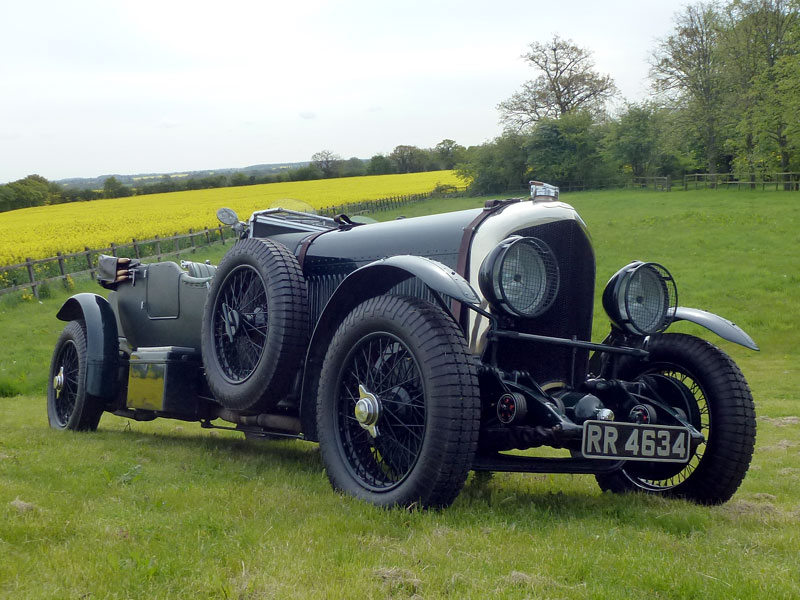
H&H Auctions held a small but profitable sale at Rockingham Castle in Northamptonshire, England on June 16. The sale seemed to be mostly Rolls-Royces and Bentleys – and in one instance, a combination of both. Top sale went to a 1926 Bentley 6.5-Litre Le Mans-style Tourer at about $575,000. “Le Mans-style” means that this isn’t the original body – but it is a popular style commonly fitted to period Bentleys because everyone wants to feel like Woolf Barnato or one of the other Bentley Boys. The original body was a sedan, so changing it to this open tourer did not hamper the price.

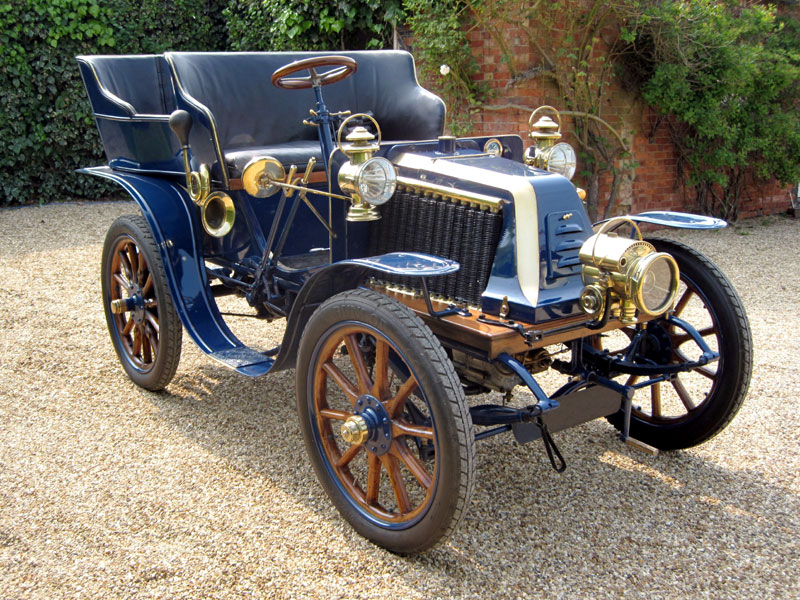
One car that I had actually planned on featuring before I ran out of time prior to the sale, was this 1904 Renault Type T Tonneau. It’s a rear-entry tonneau and, because the body sits so high on the chassis, the back door is rather tall, resembling a full size door – for an open bodied car. This one has been in the same family since 1959 – which might seem like a long time, but it’s less than half of the life of the car, which is pretty amazing. It brought about $100,000.

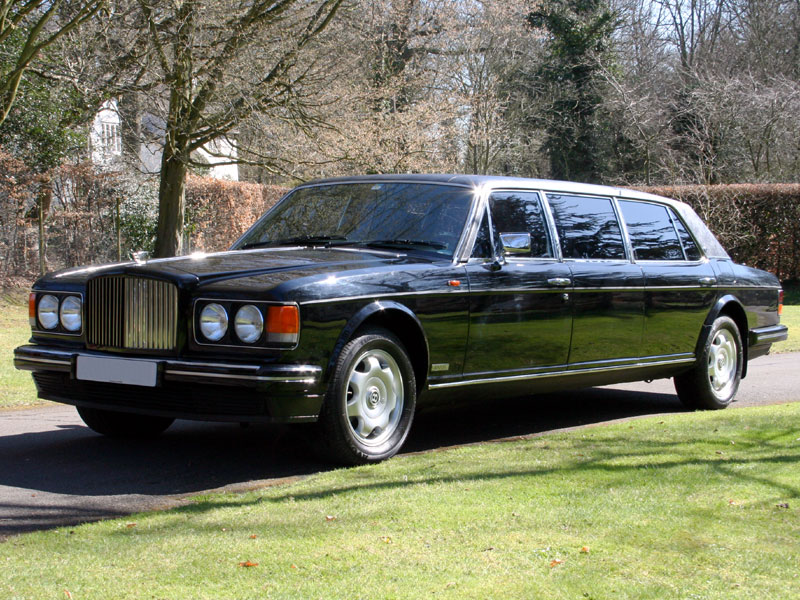
And finally, the oddball of the show: a 1985 Rolls-Royce Bentley Jankel – which sounds like something that was built in someone’s backyard. It began life as a 1985 Rolls-Royce Silver Spur sedan. A little while later it was converted into a limousine by the coachbuilder Jankel. In about 2002 it was again converted – this time into a Bentley – meaning the badges, grille and wheels were replaced with the appropriate Bentley parts. All I can think of are those people who turn their Chevy pickups into “Cadillacs” by strapping the grille of an Escalade to the front of their Silverado, which is probably where I made the backyard connection. It sold for a little less than $25,000 and doesn’t look too bad.

For complete results, click here.

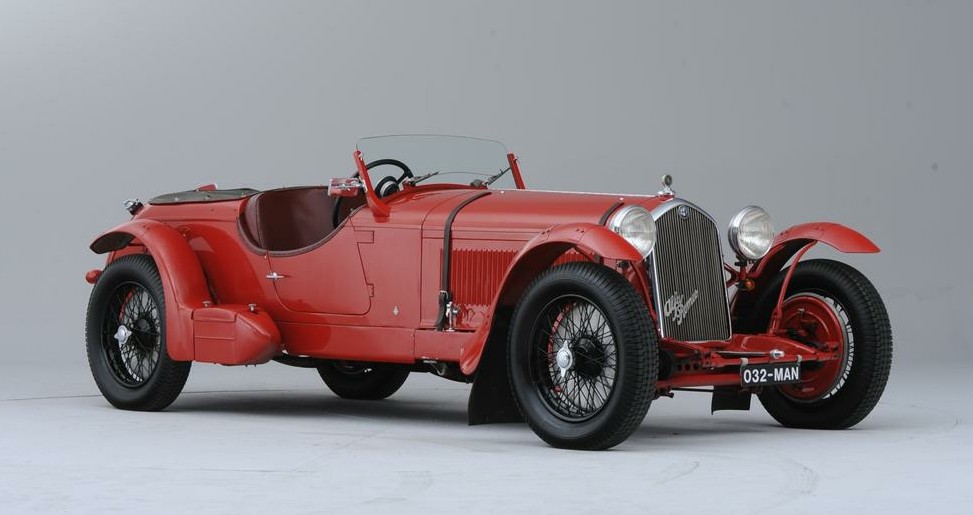
Alfa 8C 2300

1932 Alfa Romeo 8C 2300 Spyder

Offered by Bonhams | Goodwood, England | June 29, 2012

The Alfa Romeo 8C was introduced in 1931. The first two years of production consisted of the 2300 model – the engine being a 2.3-liter straight-8 with a Roots supercharger good for more than 165 horsepower. This car was from the second year of production and was used as the third of Alfa Romeo’s three works entries for the 1932 24 Hours of Le Mans.

The car was piloted by the winners of the 1931 race – Henry “Tim” Birkin and Lord Earl Howe (they won in 1931 in a different 8C 2300). They placed 12th in this car in 1932 – a DNF due to a blown head gasket. After repair, it was run at the 1932 RAC Tourist Trophy race at Ards, Ulster, placing 4th (with Howe driving). Afterward, the car went back to Alfa Romeo and was sold to driver Giuseppe Campari, who sent the car to Carrozzeria Touring so they could turn it into a road-friendly Drophead Coupe.

It was then sold to Italo Balbo – a rising star in Mussolini’s fascist regime. He was to become the Marshal of the Italian Air Force and Governor of Libya before his plane was shot down in 1940 and he was killed. Before he died (actually in 1935) he sold the car. It passed through numerous owners until it was acquired by its current owner in 1996, who had the body re-configured back to a more appropriate Le Mans-style body.

The 8C is the big dog among pre-war Alfa Romeos – comparable to a “Blower” Bentley. And like the Bentley, they aren’t common and they aren’t cheap. This one, albeit with its impressive, known history, is estimated to sell for between $3,900,000-$6,200,000. For more information – including a mini-biography of Italo Balbo – click here. For the rest of the Bonhams auction lineup, click here.

Update: Sold $4,217,674.

Lotus Etna

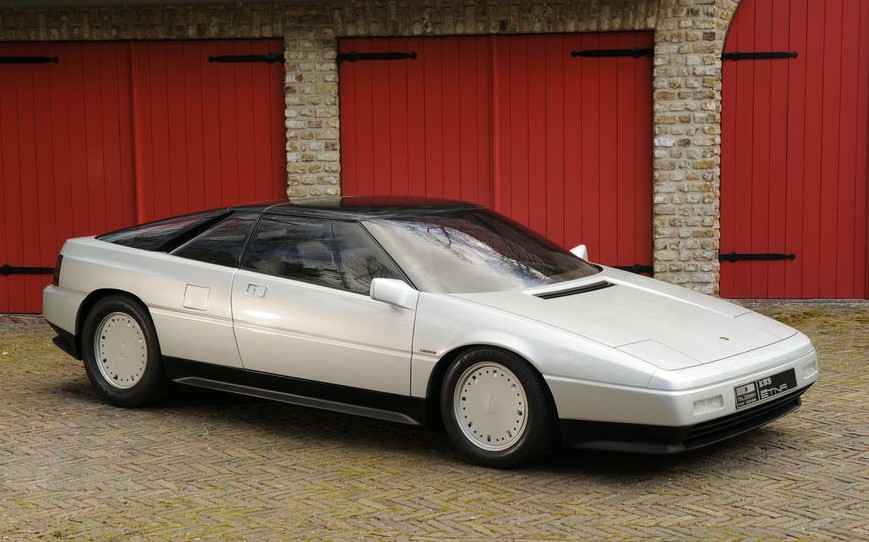
1984 Lotus Etna V8 Berlinetta Concept

Offered by Bonhams | Goodwood, England | June 29, 2012

There are a few Lotus concept cars/styling models on offer at Bonhams’ Goodwood sale. I chose to feature this one because it of its somewhat sad 1980s-vision-of-the-future styling – which is both a plus and a minus. It’s only a minus because it looks so dated. But that’s part of what makes it cool. The instrument panel looks like it was taken from KITT from Night Rider or something. The exterior was designed by Giorgetto Giugiaro and is very 80s.

It is based on a Lotus Esprit and you can tell. There is a lot of Esprit in there – maybe because both were designed by Giugiaro. It has a 4.0-liter V8 putting out 335 horsepower. It was also to have futuristic things such as traction control, anti-lock brakes, self-leveling suspension and active noise cancelling. The concept car was a hit on the show circuit in 1984.

But then General Motors trundled along in 1986 and bought up Lotus. The Etna was sent to storage. Fortunately, it was sold to the public in 2001 and the then-owner got the car into running condition. So here is your chance to buy a fully-functional road-going, one-of-a-kind Lotus. The price? $140,000-$200,000. For more information, click here. To check out some of the other Lotus concepts, click here.

Update: Not sold.

Unrestored 1907 Daimler

1907 Daimler Type TP 45 10.6-Litre Four-Seat Tourer

Offered by Bonhams | Goodwood, England | June 29, 2012

The Daimler name is one of the more storied in automotive history – and one of the more confusing. H.J. Lawson founded the Daimler Motor Company Ltd in Coventry, England. The name Daimler, of course, belonged to Gottlieb Daimler of Germany, builder of the first four-wheeled automobile, who had set up his own company bearing his name in 1890 in Germany. Lawson licensed the name – and the patents – of his German elder.

Gottlieb’s company would become Daimler-Benz in 1926, DaimlerChrysler in 1998 and Daimler AG, as it is currently known, in 2008. With the exception of those very early cars (up through 1908), everything badged as a “Daimler” was built by the English company founded by H.J. Lawson. As you can see, this car falls into the period where both companies were building cars using the same name.

This one was built in England and spent its early years as transport for the noble Craven family. After the original owner’s death, it was used little, being set up on blocks between the 1920s and 1980s and was acquired by its current owner in 1983. Ownership history is known and undisputed and there was even a log of every trip this car took when it was with its original owner – or should I say, chauffeur.

The engine is monstrous – a 10.6-liter four-cylinder that could propel the car to 80 mph – in 1907! And it’s in original condition – it has never been restored. I would rate this car as “above fantastic,” as if such an inane rating means anything. The dark red leather interior shows no cracking and looks far better than the leather in the last 10-year-old Acura I rode in. The paint still reflects light at 105 years old and the little brass and wood pieces here and there make this car look like it just drove out of a time warp. The only thing not original are the wire wheels, which were added during the First World War – making them far more period correct than anyone who will ever drive this car again.

This Brass Era automobile/80 mph horseless carriage – is an incredible machine. The more I look at it, the more I fall in love with it. Unfortunately I will not be able to pony up the $390,000-$620,000 required to take it home. Cheers to whoever does. For more information, click here and for more on Bonhams in Goodwood, click here.

Update: Sold $564,395.