Pungs-Finch

1906 Pungs-Finch Limited Touring

Offered by RM Sotheby’s | Monterey, California | August 14-15, 2015
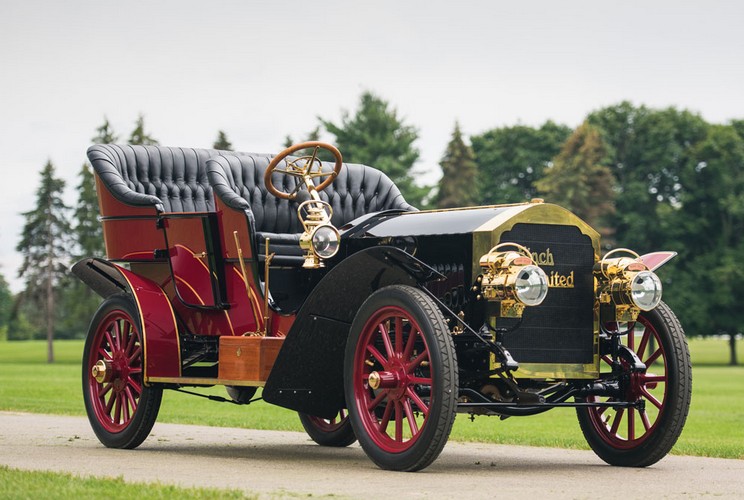
Photo - RM Sotheby's

Photo – RM Sotheby’s

This is a car you’ve likely never heard of. W.A. Pungs and his son-in-law, E.B. Finch, joined forces in late 1904 to create an automobile company. Finch was the engineer and Pungs was the money. They built a couple hundred cars through 1910 when, um, “familial issues” caused the two to part ways.

In 1906, they built a car called the Limited. It was available as a two-passenger Roadster or a seven-passenger Touring. This is an example of the seven-passenger Touring and it is likely the only example ever built. Henry Ford said it was the finest car he had ever seen.

This car is wonderfully engineered. It features shaft drive and hemispherical combustion chambers. The engine is an absolutely massive 10.6-liter straight-four making 50 horsepower. That’s right, each cylinder displaces almost as much as the engines in the two cars in my garage combined.

The Pungs-Finch – which really isn’t a great name for an automobile, let’s be honest – Limited Touring likely never progressed beyond this, the prototype stage. It was found and rescued in the 1950s and was once owned by Henry Austin Clark, Jr. The restoration is somewhat new, as is the body (it is a faithful recreation of the original, as the original was lost). At any rate, it’s the only Pungs-Finch in existence and, as much as I don’t want to sounds like a teenager, this car is epic. Click here for more info and here for more from this sale.

Update: Sold $852,500.
An American Fiat

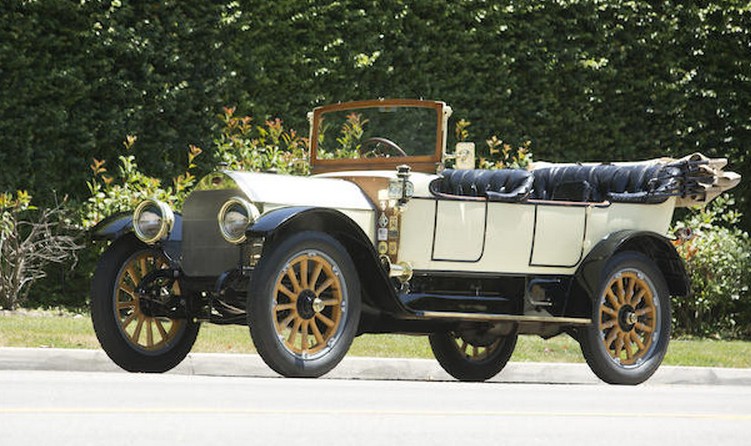
1912 American Fiat Model 56 7-Passenger Touring

Offered by Bonhams | Carmel, California | August 14, 2015

Photo - Bonhams

Photo – Bonhams

A lot of European firms opened an American arm in the early days of the automobile: De Dion-Bouton, Austin, Berliet, Napier, and perhaps most famously, Rolls-Royce, among others. Fiat did, too, and unlike Rolls-Royce (but like the others mentioned above), these cars are often referred to as American Fiats with “American” in the brand name, and not simply specified in the model name (like a Rolls-Royce “Springfield” Ghost).

Anyway, American Fiat was around from 1910 through 1918, when it was cheaper to open another factory than to pay import taxes. The Type 56 was built between 1912 and 1916, the largest car offered in any of those years. It is powered by an 8.6-liter straight-six making an estimated 50 horsepower.

The body is a Seven-Passenger Touring, which was just one of two body styles offered in 1912 (the range would proliferate with time). They were big cars and they weren’t cheap. It’s thought that this car cost in the neighborhood of $4,500 when new. The man who restored this car acquired it in 1952 and it was in his family until 2013. While I don’t know how many were built, not many of these survive. It’s pretty awesome, actually, and should bring between $175,000-$225,000. Click here for more info and here for more from Bonhams.

Update: $130,000.

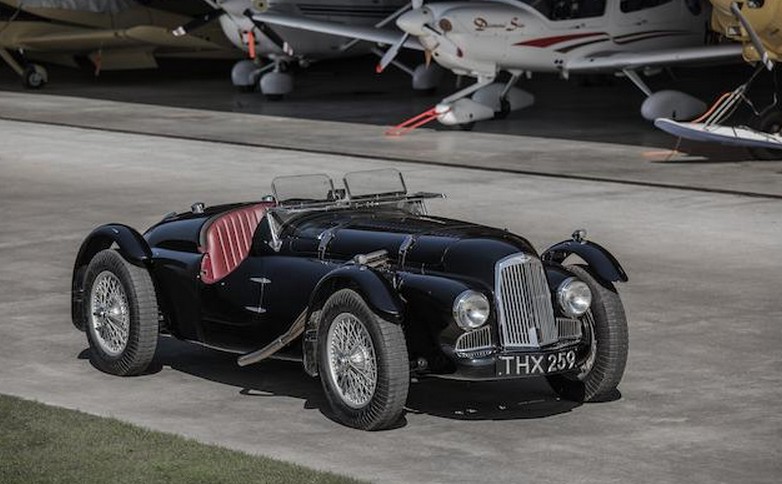
The First Post-War Aston Martin

1948 Aston Martin 2-Litre Sports

Offered by Bonhams | Carmel, California | August 14, 2015

Photo - Bonhams

Photo – Bonhams

A few weeks ago we featured the last Aston Martin sold prior to the outbreak of WWII. Well here is the bookend to that car: the first Aston Martin built after the war ended. It is the first car built in the David Brown era – and in fact, the 2-Litre Sports (as it was originally called) would become the DB1. Only 15 examples of the DB1 were built (the 2-Litre Sports included).

Designed by Claude Hill, the 2-Litre Sports features a – you guessed it – 2.0-liter straight-four engine making 90 horsepower. Because they wanted to race this car to get Aston’s name back on the minds of the motoring public, the body was a rush job. It is cycle-fendered while the successive DB1s were all fully-fendered roadsters.

That race they were in such a hurry to enter was the 1948 24 Hours of Spa. And they won it with drivers St. John “Jock” Horsfall and Leslie Johnson. Then David Brown wanted to show the car at the ’48 London Motor Show so they re-bodied it slightly (to what you see here). They didn’t sell it (so David Brown gave it to his son) but they ended up taking orders for more cars (the 14 DB1s). This car put Aston Martin on a path to success that is still going strong.

This car, one of one, is one of the most important Aston Martins in existence. It should sell for between $600,000-$900,000. Click here for more info and here for more from this sale.

Update: Sold $781,000.

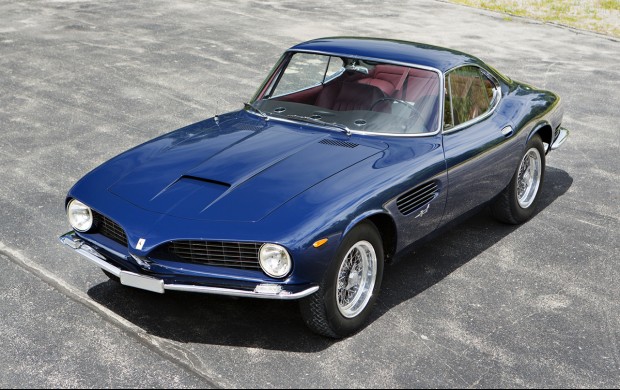
250 GT Speciale by Bertone

1962 Ferrari 250 GT SWB Berlinetta Speciale by Bertone

Offered by Gooding & Company | Pebble Beach, California | August 15-16, 2015

Photo - Gooding & Company

Photo – Gooding & Company

Of the myriad of sub-models in the Ferrari 250 range, the SWB Berlinetta is one of the most sought after today. They were race cars, introduced in 1959, and this one is powered by a 3.0-liter V-12 making 240 horsepower.

This car was actually bought new by Nuccio Bertone – yes, of that Bertone. He had a young man working in his coachbuilding business named Giorgetto Giugiaro who he co-designed this car with. The car was modeled after earlier Ferrari race cars with “sharknose” styling.

This 250 GT debuted at the 1962 Geneva Auto Show and was Bertone’s personal ride for a short time before he sold it to a parts supplier in Milan. It had a few more owners before coming stateside in 1966. It later spent 35 years in a Mexican collection. It sports a fantastic restoration and is one of the most recognizable coachbuilt Ferraris of all time. This one-off should bring between $14,000,000-$16,000,000. Click here for more info and here for more from this sale.

Update: Sold $16,500,000.

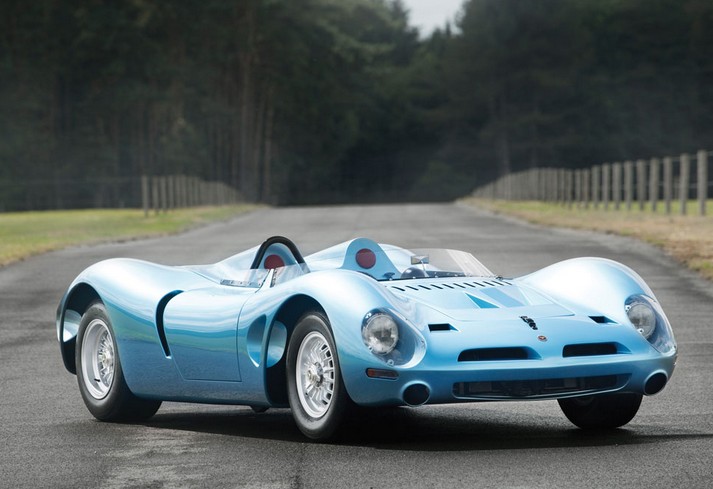
Bizzarrini P538

1967 Bizzarrini P538

Offered by RM Sotheby’s | Monterey, California | August 14-15, 2015

Photo - RM Sotheby's

Photo – RM Sotheby’s

We’ve actually tried to feature one of these before but there was a problem. You see, there are two kinds of Bizzarrini P538s. The first batch were built by Bizzarrini in the 1960s. The other batch were built to-order by former-Bizzarrini engineer Salvatore Diomante between the mid-1970s and early 1990s. Not many of either were built. The car we were going to feature months ago was of the latter variety. But this is a true, Bizzarrini-built P538.

It was a race car that debuted at Le Mans in 1966. This wild prototype racer is powered by a 5.3-liter Chevrolet V-8 engine making 365 horsepower. At least two of these were built with Lamborghini V-12 engines.

It’s unknown how many were built in total. It is thought about eight were built by Diomante and at least four by Bizzarrini (at least two of which are V-8 cars like this one). If you’re familiar with numbers, you’ll know that “two” is super rare for just about anything. It’s been beautifully restored and price reflects its greatness: a pre-sale estimate of between $700,000-$900,000. Click here for more info and here for more from this sale.

Update: Not sold.

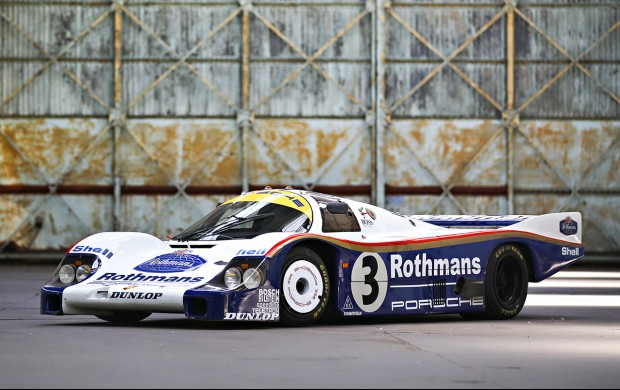
The 1983 24 Hours of Le Mans Winner

1982 Porsche 956

Offered by Gooding & Company | Pebble Beach, California | August 15-16, 2015

Photo - Gooding & Company

Photo – Gooding & Company

Group C was new for 1982 and a whole new wave of closed coupe prototype race cars came flying out just about of all of the world’s major manufacturers. Porsche (and their 956 and 962 models) defined the Group C age with unrivaled success. The 956 was built between 1982 and 1984, with the 962 replacing it for 1985. They are different cars, but one could be forgiven for not being able to immediately differentiate between the two.

This car is powered by a 2.7-liter twin-turbo flat-6 making 630 horsepower. It is not a slow car. The 956 holds the lap record at the Nürburgring. This was one of 10 Porsche factory race cars and it’s competition history includes:

  • 1982 24 Hours of Le Mans – 2nd (with Jochen Mass & Vern Schupppan)
  • 1982 1000km Spa – 1st (with Jacky Ickx & Mass)
  • 1983 24 Hours of Le Mans – 1st (with Al Holbert, Hurley Haywood, & Schuppan)

It was raced a few times after that and then Porsche sold it to Vern Schuppan who kept it until 1996. The new owner restored the car and it has led a privileged life since, having been kept mostly off the track and in the hands of a few other owners. Only 22 Porsche 956s were built and only 10 were lucky enough to be factory race cars. They do not come up for sale often, and this, a Le Mans winner, is one of the best. It should sell for between $7,000,000-$9,000,000. Click here for more info and here for more from this sale.

Update: Sold $10,120,000.

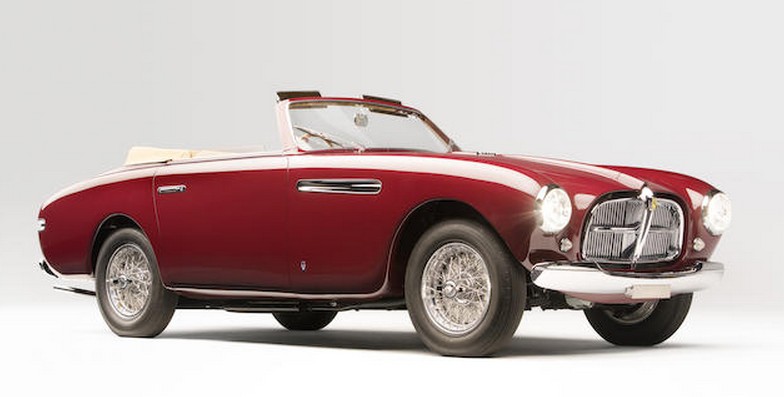
212 Inter Cabriolet

1951 Ferrari 212 Inter Cabriolet by Vignale

Offered by Bonhams | Carmel, California | August 14, 2015

Photo - Bonhams

Photo – Bonhams

Another high-dollar Ferrari – but recently, aren’t they all? Even Ferrari 308s are commanding sums into the hundreds of thousands of dollars. Is there a Prancing Horse bubble? Well if there is, this is the kind of Ferrari to have your money in. These early, Colombo V-12 cars are the roots of Ferrari.

The 212 Inter (not to be confused with the race-bred 212 Export) was a grand touring car built between 1951 and 1952 only. The bodies were all by the leading Italian coachbuilders of the day, with this car sporting a distinctive Vignale drop-top body. The car looks sort of Aston Martin and Maserati-ish.

The engine is a 2.6-liter V-12 making 170 horsepower. This was car #16 of 78 Inters built and one of only four with this Vignale coachwork. This car spent most of its life in Switzerland and has known ownership history from new. The restoration was completed last year and it’s being offered fresh off an award-winning debut at Pebble Beach in 2014. It should bring between $2,400,000-$2,800,000. Click here for more info and here for more from this sale.

Update: Sold $2,200,000.

Update: Sold, Bonhams Scottsdale 2020, $1,930,000.

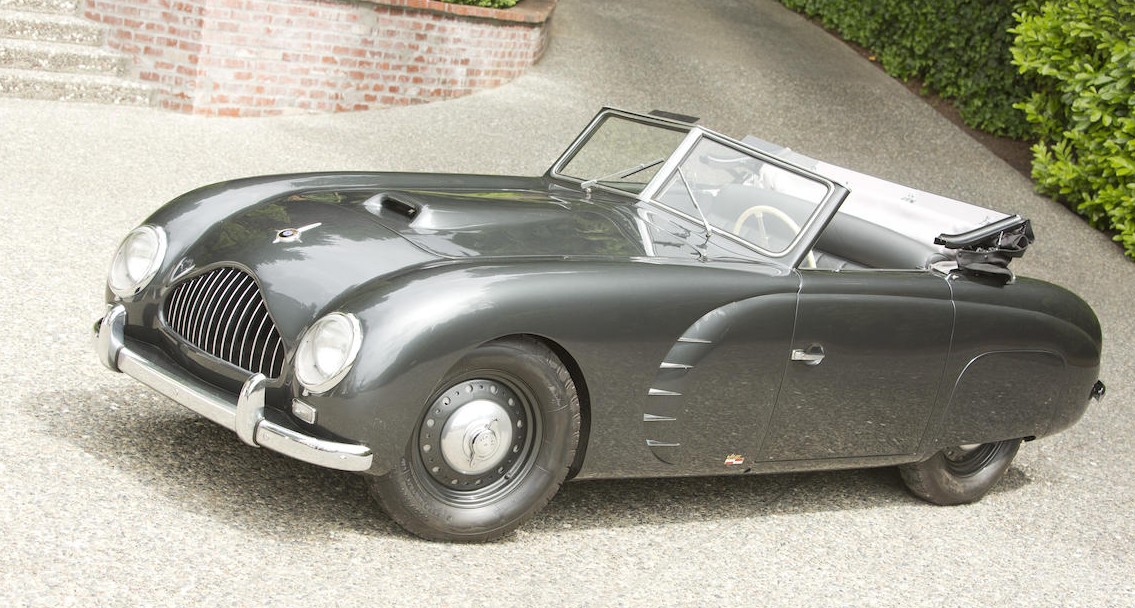
Veritas Scorpion

1949 Veritas Scorpion Cabriolet by Spohn

Offered by Bonhams | Carmel, California | August 14, 2015

Photo - Bonhams

Photo – Bonhams

Veritas cars were built in the aftermath of WWII in Germany by Ernst Loof, Georg Meier and Lorenz Dietrich based on pre-war BMW machinery, namely the BMW 328 – a car they all worked with prior to the war at BMW. The 2.0-liter BMW 328 straight-six powers this car, making 100 horsepower.

Veritas introduced three road models in 1949, the Scorpion among them. The Scorpion was a convertible and the bodies were outsourced to Spohn of Ravensburg (I wanted to say “Spohn, based near Berlin” or some such thing but Ravensburg is in the middle of nowhere. So much for that).

The funding behind Veritas dried up in 1953 and BMW swallowed them whole in a sort of I-brought-you-into-this-world-and-I’m-going-to-take-you-out sort of way. Ownership history on this car goes back to its first American owner in the early-1960s. Only two Scorpions are known in the U.S. with less than a handful in Europe. In all, Veritas built about 78 cars, so anything from them is considered a rarity. This one just happens to be magnificent. It is also one of a few cars not associated with a pre-sale estimate at Bonhams’ sale, which makes it big. Click here for more info and here for more from this sale.

Update: Sold $907,500.

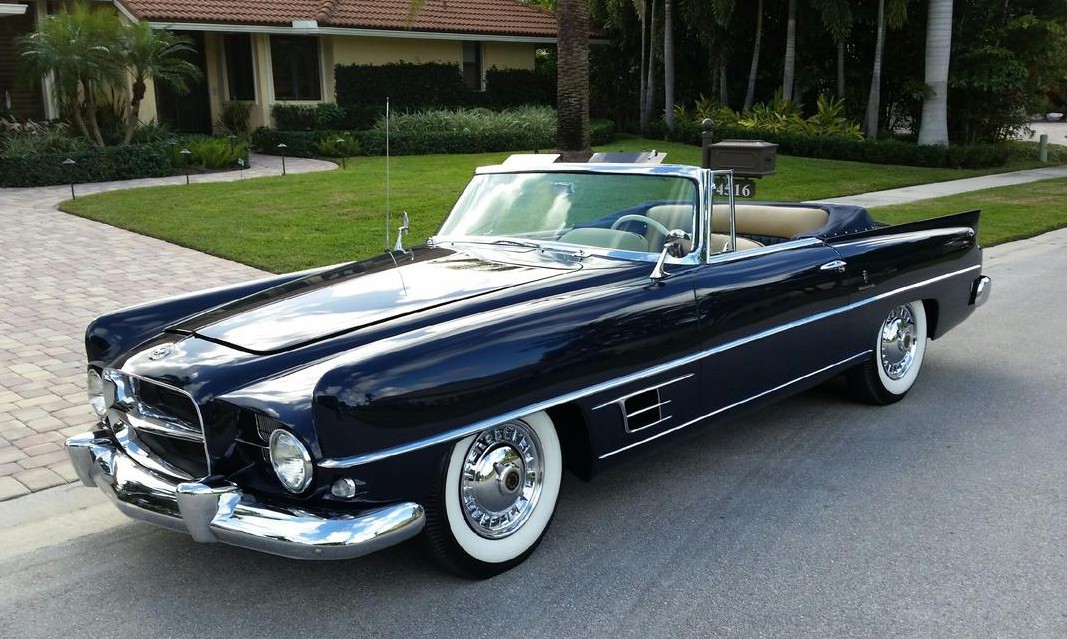
Dual-Ghia

1958 Dual-Ghia Convertible

Offered by Russo & Steele | Monterey, California | August 13-15, 2015

Photo - Russo & Steele

Photo – Russo & Steele

You’re looking at one of the most beautiful American cars of all time (yes, even though the body is all Italian). Dual Motors of Detroit was founded by Eugene Casaroll. He bought the rights to the Ghia-designed 1955 Dodge Firebomb concept car and put it into production. He called it the Dual-Ghia. And it’s great.

Dual Motors shipped a Dodge chassis to Turin where Ghia would add this gorgeous body and then ship it back. Once home in Detroit, the cars were fitted with a 5.2-liter Dodge D-500 V-8 making 230 horsepower. The engine sounds fantastic and is throaty enough that if the sleek European body threw you off, the engine would definitely alert you to its inherit American-ness.

The cars were only built in 1957 and 1958 and they were the expensive favorites of celebrities like Frank Sinatra. Around 100 of these were built (some say 117) and 73 remain. They’re crazy rare but come up for sale at a startling rate for their rarity. But that’s not to say that trend will continue. So if you want one, get your hands on it ASAP. They sell in the $300,000-$400,000 range. Click here for more info and here for more from this sale.

Update: Sold $412,500.

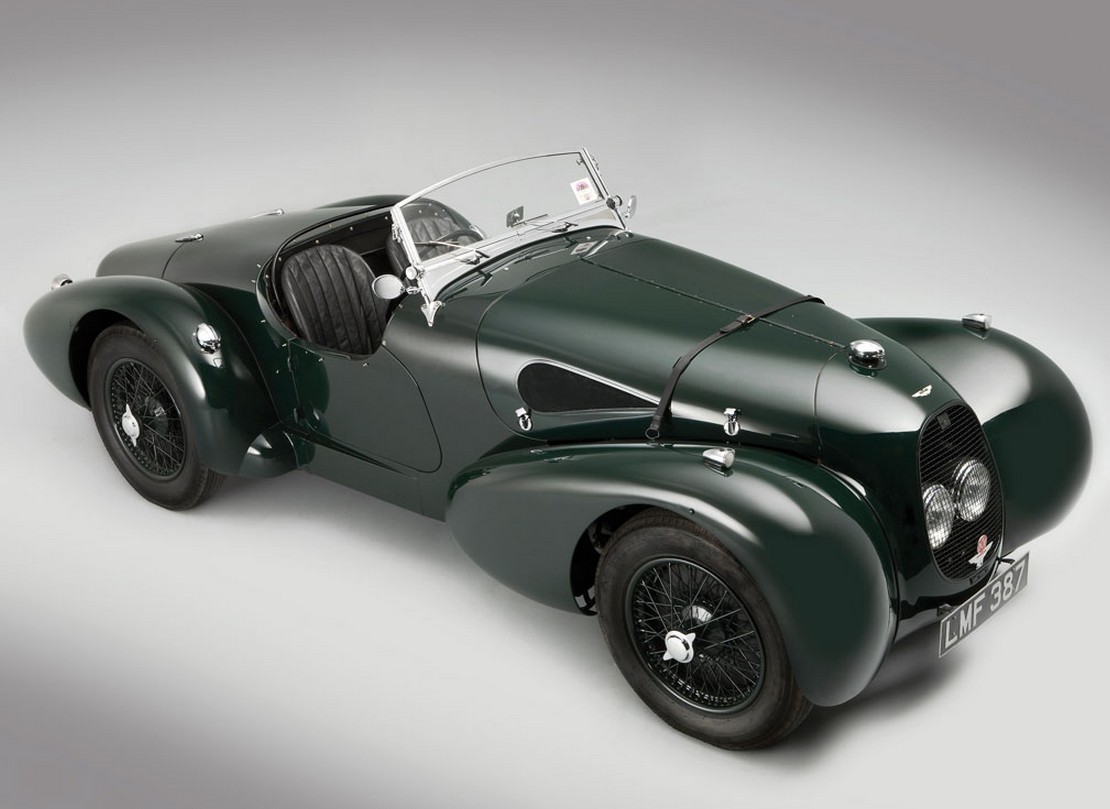
Aston Martin Speed Model

1940 Aston Martin Speed Model Type C

Offered by RM Sotheby’s | Monterey, California | August 14-15, 2015

Photo - RM Sotheby's

Photo – RM Sotheby’s

This car looks like the grandchild of those early speed trials cars (like the Beast of Turin, the Fiat S76). While the rear is streamlined and racy, it has an abrupt shape at the front and a tall engine compartment. The headlights seem like an afterthought, located in the grille – and perhaps this is the singular feature that gives us this impression. The passenger compartment is just a way to attach a human to an otherwise monstrous machine. I think it can best be described as “chunky.”

But unlike the ridiculous 28-liter engine in the S76, this pre-war Aston uses a 2.0-liter straight-four rated at 125 horsepower. This was a competition car and the first examples were built in 1936. The last were built in 1940 – and this car is believed to be the final Aston Martin sold before the outbreak of WWII.

Of the 23 Speed Models built, only the final eight had the Type C streamlined body. This car has known ownership since new and has been restored in the past five years. When you see one of these in person, it will stand out because it’s rather different from other cars of similar vintage. This one is the prettiest I’ve seen. You can read more here and see more from RM in Monterey here.

Update: Sold: $1,155,000.