Post-War Alfa 6C 2500

1947 Alfa Romeo 6C 2500 Sport Cabriolet by Pinin Farina

Offered by Bonhams | Francorchamps, Belgium | May 25, 2013

1947 Alfa Romeo 6C 2500 Sport Cabriolet by Pinin Farina

You know what I love about this car? Its simplicity. While it has attractive coachwork by Pinin Farina, it isn’t overly extravagant and ridiculous. It’s subtle and restrained. It also looks like a big car and like a car that, if you owned it, you would want to drive.

The post-war 6C 2500 was a carryover of the model introduced by Alfa Romeo in 1938. Production restarted in 1946 after serious effort to get their ravaged factory back to operational status. As you can see, there was a restraint with post-war designs that came from a more subdued Europe that had spent too long in the throes of war. The engine was also carried over, the 2.5-liter straight six, which, in Sport trim, made 90 horsepower.

This is one of three Pinin Farina-bodied aluminium (with steel doors) Cabriolets built as a 6C 2500 Sport. It has been in the same family since 1975 and used “sparingly” as it is all-original. It’s a very wonderful car and should sell for between $280,000-$340,000. Click here for more info and here for the rest of Bonhams’ auction lineup.

Update: Did not sell.

Maserati Bellagio

2009 Maserati Touring Bellagio Fastback by Touring Superleggera

Offered by RM Auctions | Lake Como, Italy | May 25, 2013

2009 Maserati Touring Bellagio Fastback by Touring Superleggera

This is the wagon version of the Maserati Quattroporte that Maserati never built. It’s one of those aftermarket “bespoke” customs – like the couple of Aston Martins we featured in the past.

So Carrozzeria Touring took a Quattroporte sedan and turned it into this functional fastback “shooting brake” style wagon. As someone who likes wagons, I think this is pretty cool. As someone who loves the Maserati Quattroporte, I think this is very cool. The only thing I don’t like are the wheels and tires which are hideous and look insanely cheap. RM calls them “stunning” but I think the use of that word is born out of the fact that RM makes more money for every extra dollar this thing sells for.

Most of it is Maserati, like the 395 horsepower, 4.2-liter V-8. There are the nice additions of a champagne refrigerator and a shotgun compartment inside – for those nice British fox-hunt days – or a hip-hop shootout on the L.A. freeway – both of which fit this car perfectly. Only four of these were built and this one was constructed for the president of Ducati. It should sell for between $105,000-$155,000. Click here for more info and here for the rest of RM’s lineup in Italy.

Update: Sold $152,880.

Koenig Ferrari 512

1981 Ferrari 512 BBi by Koenig

Offered by Bonhams | Francorchamps, Belgium | May 25, 2013

Ferrari 512BBi by Koenig

The Berlinetta Boxer was Ferrari’s rear/mid-engined two-seater for most of the 1970s and 1980s. The 512 BBi was the last iteration of the Berlinetta Boxer and it was introduced in 1981. What set it apart was that it was fuel-injected.

But this car is slightly different. Willy Koenig was a race car driver in the 1960s through 1990. In 1974 he turned to tuning – and not your run-of-the-mill road cars either. Koenig Specials is his company (it is still around today) and they take outrageous cars and make them more, um, outrageous-er. Cars like the Lamborghini Countach, Mercedes SEC, road-going Porsche 962s and the Ferrari 512 – among others.

This car was tuned when new and spent most of its life in the U.S. before being sold to an owner in Europe in 2008. Most Koenig 512 BBis had their fuel-injected 4.9-liter flat-12 upped 110 horsepower in output from stock – to 450. This particular Koenig 512 had twin turbos strapped to it, pushing output to a ludicrous 650 horsepower. The top speed? A claimed 205 mph. To keep it on the ground, a Koenig body kit has been added as well and many other parts of the car upgraded to handle the power.

About 50 Ferrari 512s were modified by Koenig (either by the factory or by the owners). Koenig doesn’t build super specials like this anymore (although they do still build Ferrari accessories). This car is expected to bring between $100,000-$160,000. Click here for more info and here for more from this sale.

Update: Did not sell.

Porsche Pre-A Speedster

1955 Porsche 356 Pre-A 1500 Speedster by Reutter

Offered by RM Auctions | Lake Como, Italy | May 25, 2013

1955 Porsche 356 Pre-A 1500 Speedster by Reutter

The Porsche 356 was introduced in 1948 in coupe and cabriolet form. In 1954, the U.S. importer for Porsche, Max Hoffman, saw a potential market opportunity for a stripped-out 356 roadster.

They called it the Speedster and it had a short windshield, bucket seats and a basic folding top. It was race-ready and a big hit in the U.S. What makes this particular car even more special is that it is a “Pre-A” Speedster. Porsche 356s are broken down by their letter: there was the 356, 356A, 356B and 356C (the last of which was built in 1966 – almost 20 years after the first model). The 356A was introduced in 1955, meaning that Pre-A Speedsters are very rare and were only produced for a short time. Pre-A was not a company designation and the differences between them and the 356A are mostly cosmetic.

This car has been completely restored and is magnificent in Signal Red with red wheels and whitewall tires and a light cream interior. The engine in this car is not original. When it was restored, an upgraded, period-correct 1500 Super engine was installed – at 1.5-liters, the flat-four makes 70 horsepower – 15 more than the non-Super engine.

This is a really rare car and one of (if not the) most desirable variant of the 356. The body by Reutter is an updated version of the original Gläser 356 body. This is expected to sell for between $210,000-$260,000. Click here for more info and here for more from this sale.

Update: Sold $247,520.

The Only 1962 Davies Special

1962 Davies Special

Offered by Bonhams | Francorchamps, Belgium | May 25, 2013

1962 Davies Special

Can-Am was one of the most interesting race series ever devised. The rules were essentially “anything goes” when it came to car construction – something that leads to innovation, unlike most of the “spec” series that operate in the U.S. today. The lot description calls this a “Cam-Am” Special but Can-Am didn’t start until 1966. This car was likely intended for the USRRC, which was also innovative and interesting.

Fred Davies was a race car engineer who worked for Bill Sadler (who built cars that looked similar to this in Canada). In 1961 he left Sadler and moved to California to build cars under his own name and design. He built one car – this one – with the intention of entering it into American road races.

The engine is a Chevrolet V-8 (displacement unknown, although I know it’s big) and the body is aluminium. The gearbox is by Huffaker – a name heavily associated with road racing back in the day. But Davies never ended up racing it. In fact, he used is as a road car for a few years before parking it. In 1975 he sold it to a dealer overseas who sold it three years later to a Belgian – who had no idea what it was. He registered it with the FIA as a Huffaker Genie – a car it resembles.

He restored it once and raced it until he sold it in 1983 to a Swedish amateur driver. It was raced in Sweden until 2004 when the current Belgian owner acquired it. This is a one-off race car and the only “Davies” out there. It is entirely raceable and can be yours for $120,000-$160,000. Click here for more and here for more from Bonhams at Spa.

Update: Did not sell.

Proud to be British: Historical Cars

When you think of British cars, you will automatically think of sports cars, Rolls-Royce, along with the typically British Land Rover and Mini! Britain has been an established car manufacturer since the late 1800s. With exquisite iconic brands such as Aston Martin, McLaren, Lotus, TVR, Bentley and Jaguar exporting the epitome of British-ness to over 170 countries.

It was in 1860, when Thomas Rickett, made the first British steam-powered car… The rest is history. It was then car manufacturer Rootes, who fast tracked Britain in to becoming Europe’s largest motor distributing company by 1926.
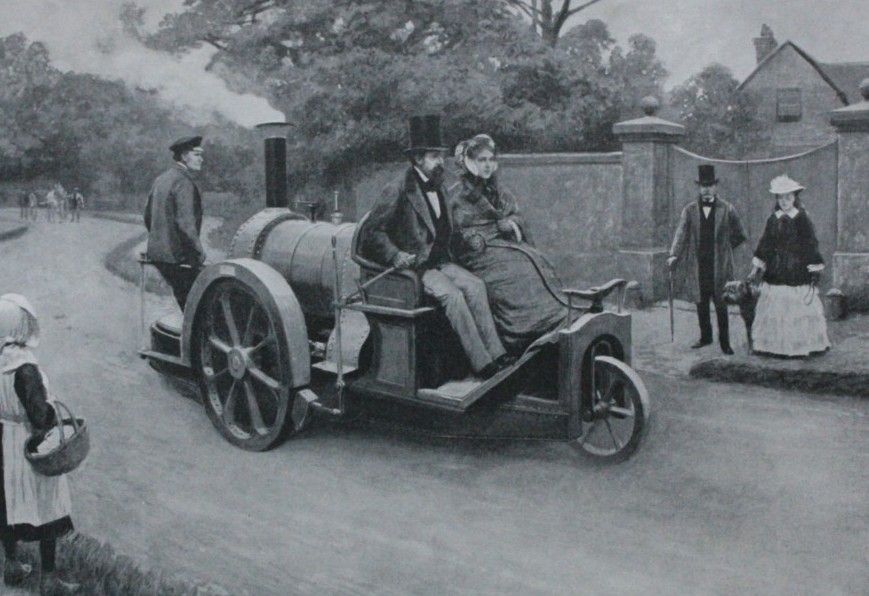
1860 Rickett Steam Carriage photo 1860RickettSteamCarriage_zpsf033c0ee.jpg

1860 Rickett Steam Carriage (drawing)

Car business was booming as people wanted to find new ways of achieving that adrenaline rush. In 1909, Louis Coatalen was appointed as chief engineer at Sunbeam and began designing cars capable of achieving high-speed records at Brooklands racetrack in Surrey.

The car industry truly flourished around the time of the war. There was a rush for new technology, safer and quicker transport, and this only fed our need for speed. British sports cars are iconic, and popularity increased significantly during the 1950s. The war was finally over, and many people had disposable income to play with. Motor racing was also thriving, and more people wanted to feel that rush.

In 1973, Caterham Cars in Surrey opened its doors, developing specialist lightweight sports cars.  It was Colin Chapman that launched the Lotus Seven, which has since been evolved in to the Caterham Seven, still in production today.

Surrey itself is rich in car manufacturing history, with Invicta gaining sporting success when it won awards for reliability in 1926 driving 5,000 miles. Recently, the name was revived for the Invicta S1 sports car produced between 2008 and 2012. The company Auto Carriers Ltd, also known as “AC”, also moved to moved to Surrey in 1911. Their first four-wheeled car was produced in 1913; it was another little sporty number that Britain could be proud of. Be sure to find a car dealer in surrey, which can help find you that perfect car. Be proud to be British.

_________________________________________________________________________

This post is the first of a number of weekend guest posts that are currently in the works. It comes to us courtesy of Amanda Walters, a journalist, blogger, poet and an artist. She have written for various websites including Huffington Post, DailyWaffle and had her concrete poetry work exhibited at university events in the UK. She love to network, attend events across the UK, and loves to learn in order to expand my horizons and gain inspiration from those around her. Follow her on twitter.
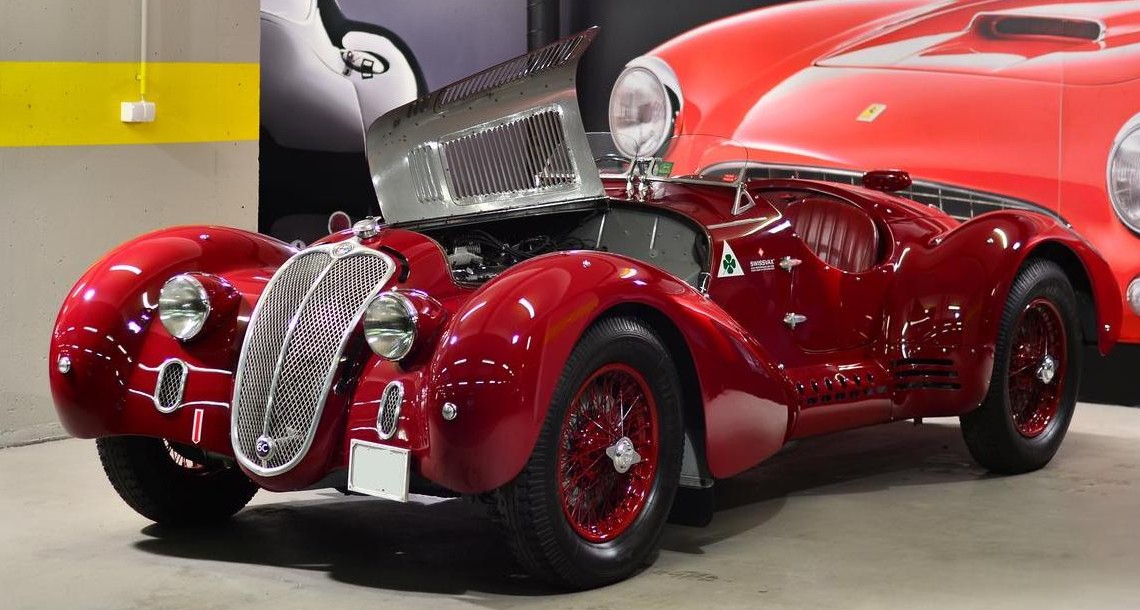
Diamante-bodied Alfa 6C

1942 Alfa Romeo 6C 2500 Series III Sport by Diamante

Offered by Bonhams | Francorchamps, Belgium | May 25, 2013

1942 Alfa Romeo 6C 2500 Series III Sport by Diamante

The Alfa Romeo 6C line entered production in 1925 but the 2500 model you see here didn’t come along until the end of 1938. Production ramped up in the face of war, which would seize Europe and disrupt automotive production and design – setting both back by nearly a decade.

But this car is tastefully appointed and used Alfa’s race-bred 2.5-liter straight-six. It wasn’t some last-minute car cobbled together in a warehouse. These were wonderful, well-engineered cars. Power output was 95 horsepower in the Sport model. The cars were bodied by many famed design houses and sold to royalty the world over. Alfa managed to build a few hundred of these before war broke out, with production continuing afterward and ending in 1952.

This chassis originally sported a cabriolet body by Touring but when it was rediscovered in 1998 the body had already been replaced by this sporty roadster body by Diamante (a coachbuilder I know almost nothing about). It was acquired by the most recent owner in 2008 who had it restored further than what was carried out ten years prior. It has competed in a number of historic events and is eligible for even more. It should sell for between $490,000-$690,000. Click here for more info and here for more from this sale.

Update: Did not sell.

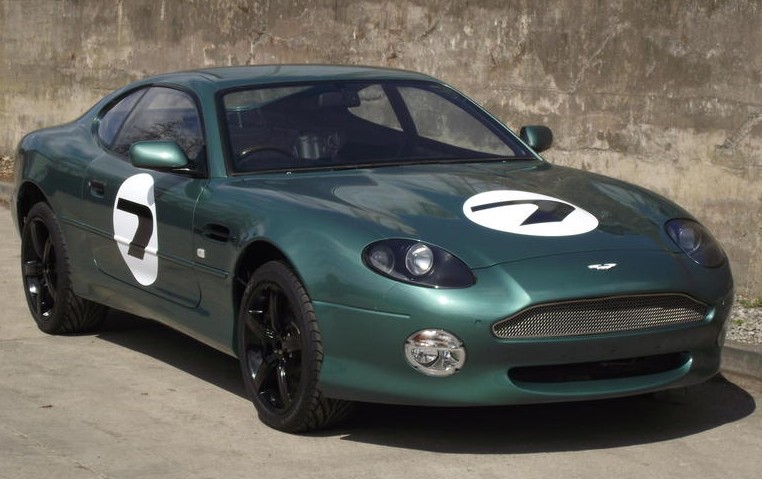
DB7 V12 Prototype

1998 Aston Martin DB7 V12 Coupe Prototype

Offered by Bonhams | Newport Pagnell, U.K. | May 18, 2013

1999 Aston Martin DB7 V12 Coupe Prototype

The DB7 is my favorite Aston. I think it’s gorgeous – especially the convertibles. But when Ford first put the DB7 out – it was powered by a less-than-exciting straight-six. While that engine followed the long line of Aston sixes from back in the day, it was out of line with modern luxury car buyers.

Thankfully they figured this out and decided to stuff a 6.0-liter V12 underhood. The output was 420 horsepower – about a hundred more than the six. The car went on sale in March of 1999.

But prior to that, Aston had to do some development work on the new engine. Enter this car, chassis DP 001. It’s a DB7 – and it’s listed in the lot description as a “circa 1999” but I would assume that, if the car went on sale in March of 1999, they started development work in 1998 or prior – hence my labeling it as a 1998. Anyway, this car was used as a test mule with the new powerplant. Later, it was sold by a dealer (on behalf of Aston Martin) in England in 2004 under the condition it never be road-registered and used on track days only. And that’s what it has been doing. Recently, windows have been added and the interior cleaned up – but it currently is not running.

This is a chance to own a piece of Aston Martin history – a factory prototype (even though it isn’t too exciting, I still think it’s cool). It is expected to sell for between $23,000-$31,000. Click here for more info and here for the rest of this auction’s lineup.

Update: Sold $34,663.

Update II: Sold, Bonhams, Newport Pagnell 2015 $35,612.

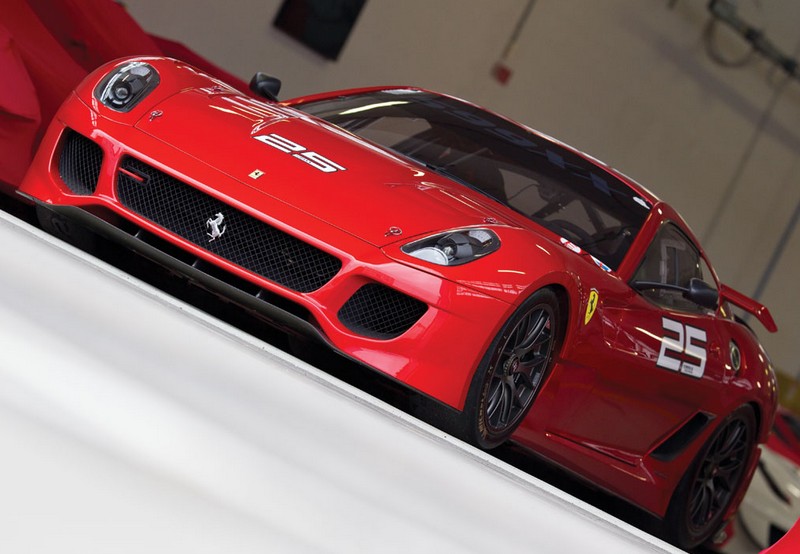
Ferrari 599XX

2010 Ferrari 599XX

Offered by RM Auctions | Lake Como, Italy | May 25, 2013

2010 Ferrari 599XX

Every once in a while – more so lately than ever – Ferrari goes about building some ridiculous race-going variant of one of their road-going models. They aren’t street legal but they look like they could be. They build the cars, sell them, and offer track days to go with ownership. This car is eligible for Ferrari track events all over the world.

The 599XX is the balls-to-the-wall track variant of the 599 GTB Fiorano. This version was produced for 2009 and 2010 while the Fiorano was built from 2006 through 2012. In 2011 Ferrari would up the stakes even more by offering an “Evolution” package for the 599XX. But let’s stick with what we’ve got.

And what we’ve got is the 6.0-liter V-12 with horsepower upped to 720. Ferrari threw everything they had at this car to make it faster around the track. It was faster around the Nürburgring than the Enzo and faster around Ferrari’s test track than super-Enzo: the FXX. It was about as fast as Ferrari’s Formula One lap record at the Nürburgring from the 1970s.

This car is eligible for the Evo upgrade and is a one owner car that has seen a track only once. In fact, it has been stored at the Maranello factory its entire life. It is one of only 29 built and it’s basically brand new. The brand new price for a 599XX in 2010? $1,500,000.  The pre-sale estimate? $1,000,000-$1,400,000. Click here for more info and here for more from RM in Italy.

Update: Sold $1,193,920.

Bugatti Type 40 Roadster

1929 Bugatti Type 40 Roadster Luxe

Offered by RM Auctions | Lake Como, Italy | May 25, 2013

1929 Bugatti Type 40 Roadster

The Bugatti Type 40 was the follow-up model to the successful Brescia. It was the “light” Bugatti, introduced in 1926 and built through 1930, making this car from the second-to-last year of manufacture. In all, more than 780 were built.

The engine was a 1.5-liter straight-four making 45 horsepower. This car is one of 42 built with Jean Bugatti’s “Roadster Luxe” bodywork. It is a highly desirable pre-war sports car design. This is one of four delivered new to Paris, but the identity of the first owners is not known.

The current owner acquired it in 1984 and had it repainted to match the color combination of Jean Bugatti’s personal Type 40 Roadster – black and red. The black wheels are a nice touch, too. This car has all of its original parts and is highly original. It is the 22nd Jean Bugatti Roadster built and one of only 13 that still survive today. A couple hundred thousand dollars is a reasonable price (as in the $325,000-$390,000 range). Click here for more info and here for more from RM at Villa Erba.

Update: Sold $422,240.