Unrestored 1907 Daimler

1907 Daimler Type TP 45 10.6-Litre Four-Seat Tourer

Offered by Bonhams | Goodwood, England | June 29, 2012

The Daimler name is one of the more storied in automotive history – and one of the more confusing. H.J. Lawson founded the Daimler Motor Company Ltd in Coventry, England. The name Daimler, of course, belonged to Gottlieb Daimler of Germany, builder of the first four-wheeled automobile, who had set up his own company bearing his name in 1890 in Germany. Lawson licensed the name – and the patents – of his German elder.

Gottlieb’s company would become Daimler-Benz in 1926, DaimlerChrysler in 1998 and Daimler AG, as it is currently known, in 2008. With the exception of those very early cars (up through 1908), everything badged as a “Daimler” was built by the English company founded by H.J. Lawson. As you can see, this car falls into the period where both companies were building cars using the same name.

This one was built in England and spent its early years as transport for the noble Craven family. After the original owner’s death, it was used little, being set up on blocks between the 1920s and 1980s and was acquired by its current owner in 1983. Ownership history is known and undisputed and there was even a log of every trip this car took when it was with its original owner – or should I say, chauffeur.

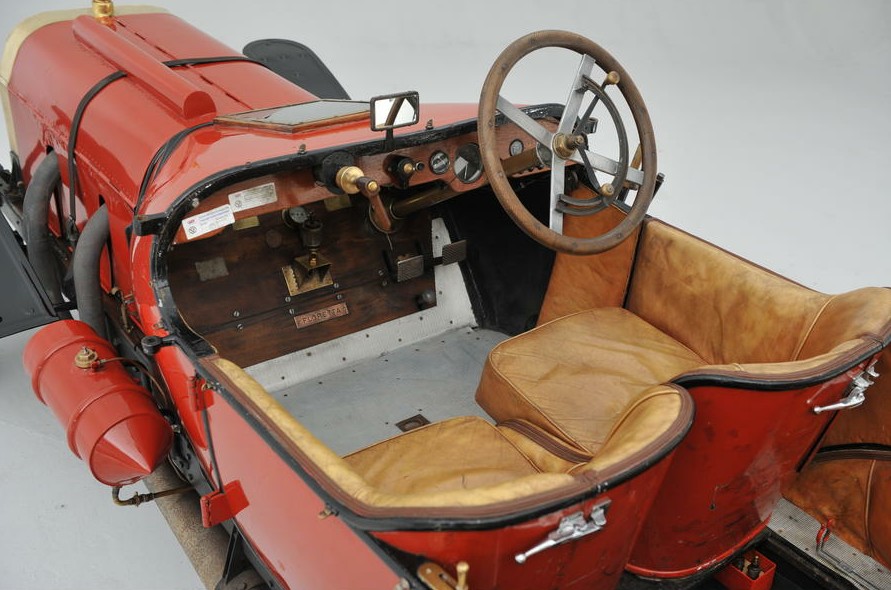
The engine is monstrous – a 10.6-liter four-cylinder that could propel the car to 80 mph – in 1907! And it’s in original condition – it has never been restored. I would rate this car as “above fantastic,” as if such an inane rating means anything. The dark red leather interior shows no cracking and looks far better than the leather in the last 10-year-old Acura I rode in. The paint still reflects light at 105 years old and the little brass and wood pieces here and there make this car look like it just drove out of a time warp. The only thing not original are the wire wheels, which were added during the First World War – making them far more period correct than anyone who will ever drive this car again.

This Brass Era automobile/80 mph horseless carriage – is an incredible machine. The more I look at it, the more I fall in love with it. Unfortunately I will not be able to pony up the $390,000-$620,000 required to take it home. Cheers to whoever does. For more information, click here and for more on Bonhams in Goodwood, click here.

Update: Sold $564,395.

HRG 1500

1951 HRG 1500 Sports

Offered by Bonhams | Goodwood, England | June 29, 2012

HRG was founded in 1936 by Major Edward Halford, Guy Robins, and Henry Ronald Godfrey (the H, the R, and the G coming from the first letters of their last names). They introduced the 1500 model in 1939. The 1.5-liter four makes 58 horsepower and is good for 85 mph “under favourable conditions,” which, I think, is an understated, British way of saying “when going downhill.”

The 1500 model was produced unchanged until the company closed its doors in 1956 – hence the very pre-war design you see here on a car from the early-1950s. The 1500 was far and away the most popular HRG, with 111 built. Only 241 HRGs were built in total, so they are quite rare – especially one this nice.

British Racing Green is an excellent color for this car and will not hurt when it comes to the final price, which is expected to be between $70,000-$85,000. For more information, click here. And for more from Bonhams in Goodwood, click here.

Update: Sold $57,710.

2012 Ault Park Concours d’Elegance

The 2012 Ault Park Concours d’Elegance, held in one of Cincinnati’s most beautiful parks in one of Cincinnati’s most uppity neighborhoods, was held two weekends ago. The show was full of some of the finest cars from around the mid-west. This year’s featured marque was “A Century of American Power.” Classic Car Weekly was in attendance and here are some of our favorites.

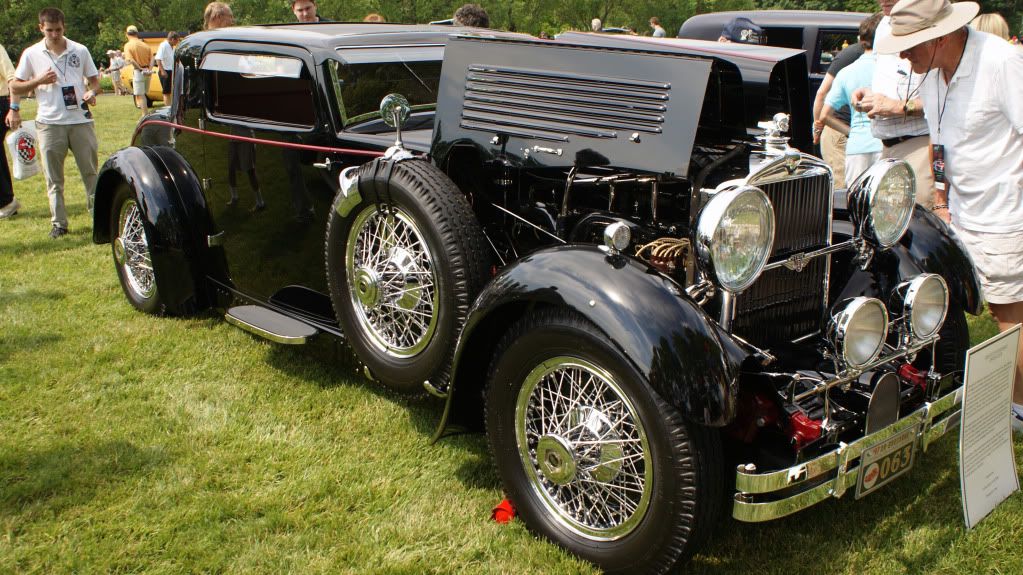
Our pick for best in show was this 1929 Stutz Model M Lancefield Supercharged Coupe.  It came out of the Mitchell Collection in Texas and is the only surviving example of the five originally built. The low roof-line and gives this car a truly sporting presence.

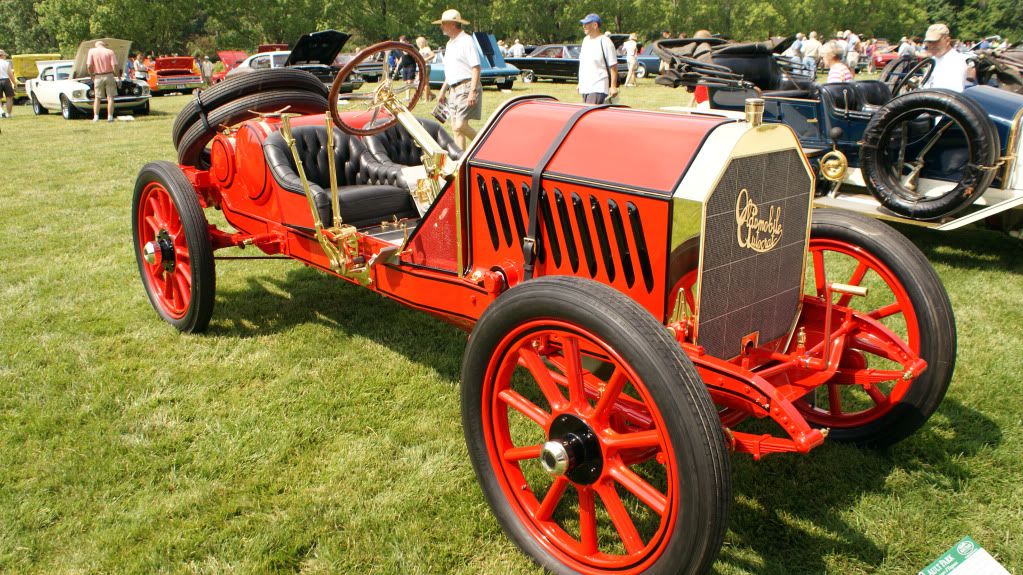
One of the other awesome rides was this 1910 Oldsmobile Autocrat Prototype Race Car built for the 1910 Vanderbilt Cup. Old race cars like this are fascinating – they’re as big as trucks and the driver and riding mechanic were just hanging on, completely exposed to the elements in tiny little seats with absolutely no protection whatsoever. Also, don’t forget about the 7.7-liter four-cylinder hanging out front.

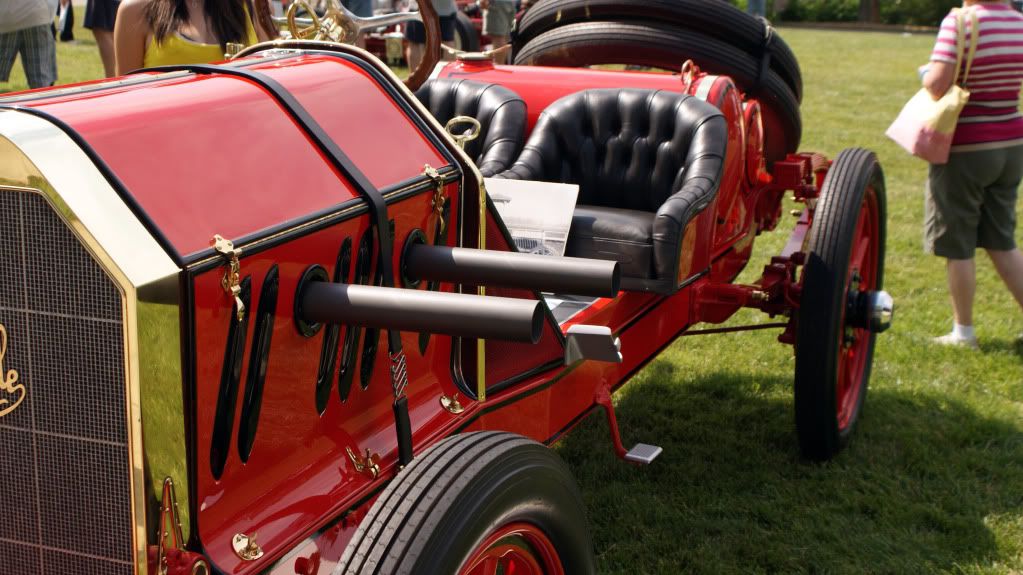
Oh, and check out these exhaust, which look like something of a battle tank:

I really enjoyed this 1911 Lozier Briafcliff, as it was gigantic. A gentlemen hanging around it all day tried to convince me that it was worth $40 million. I nodded and smiled but politely declined to tell him he was insane.

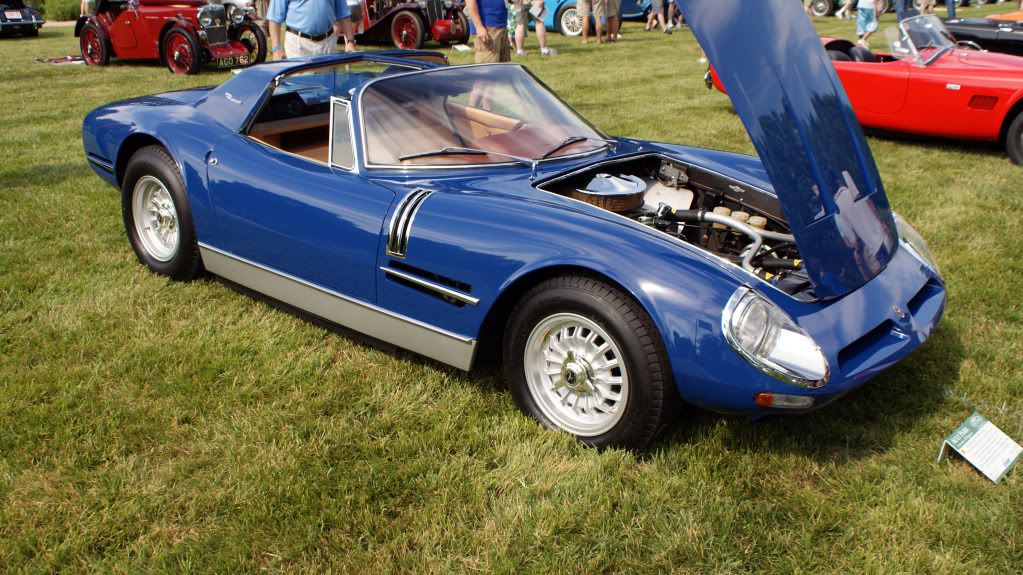
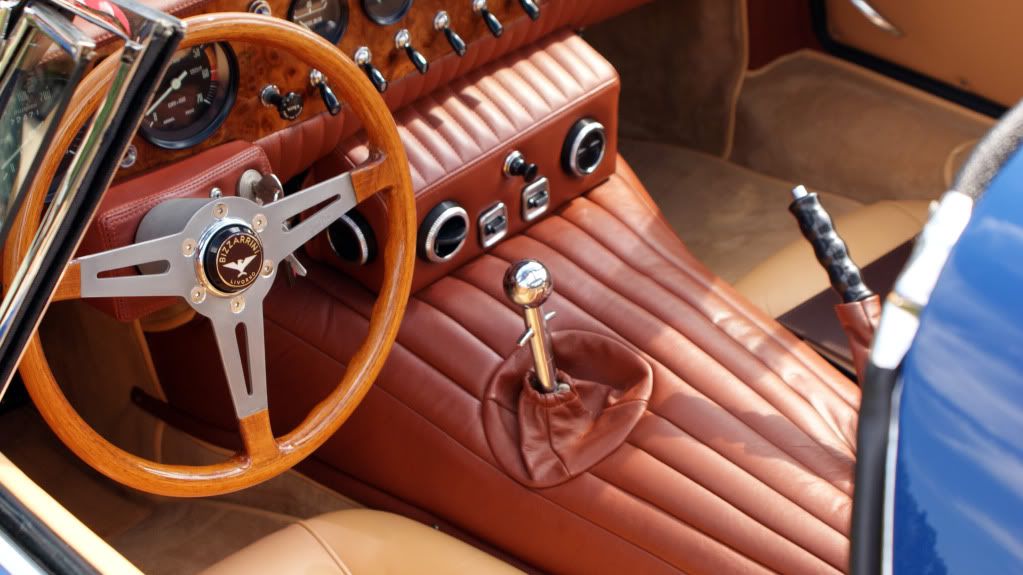
This 1968 Bizzarrini 5300 Spyder is one of three 5300 Spyders built. It has a 327 Corvette engine making 350 horsepower and a stunning interior.

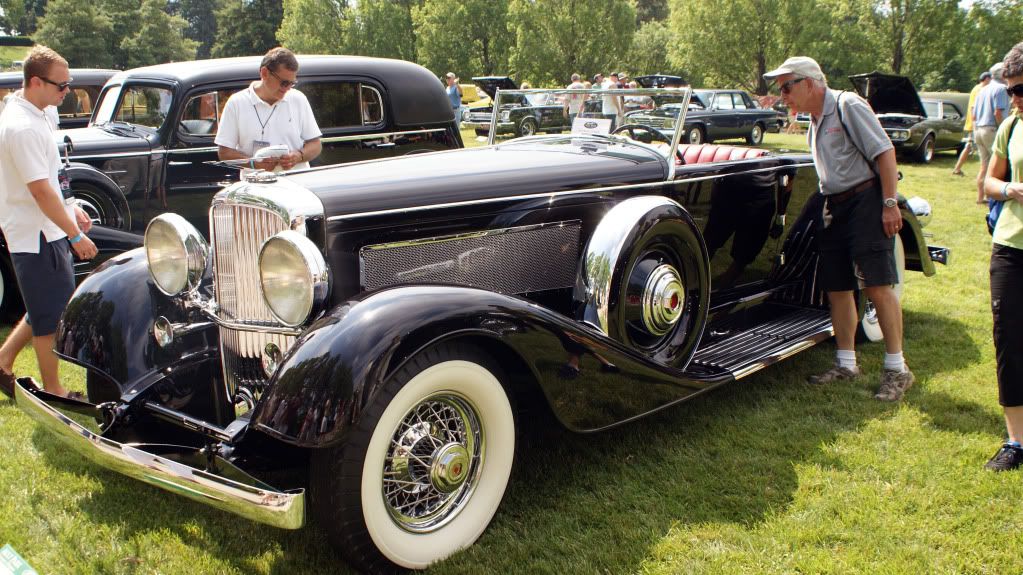
One of the most mind-blowing aspects of this show, was that, on either side of the Stutz mentioned above, there was an SJ Duesenberg. Not a bad day when there are multiple SJ Duesenbergs vying for your attention. This one is a 1929 Bohman & Schwartz Disappearing Top Roadster. 320 horsepower and 140 mph in 1929 must have been incredible.

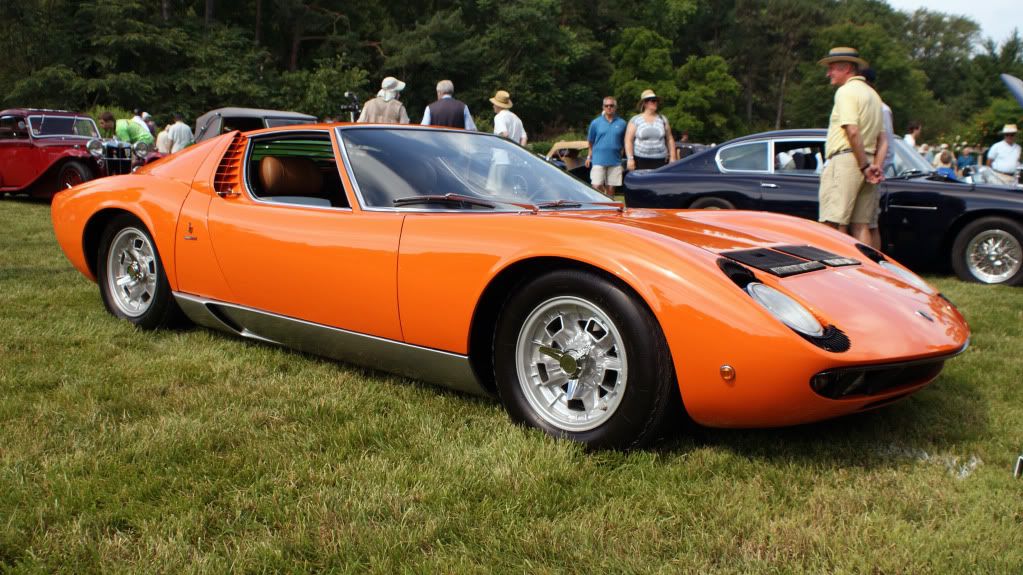
Another exotic was this 1969 Lamborghini Miura S, one of 338 built. Only when standing next to one of these do you realize how impossibly low they sit to the ground. What a wonderful machine.

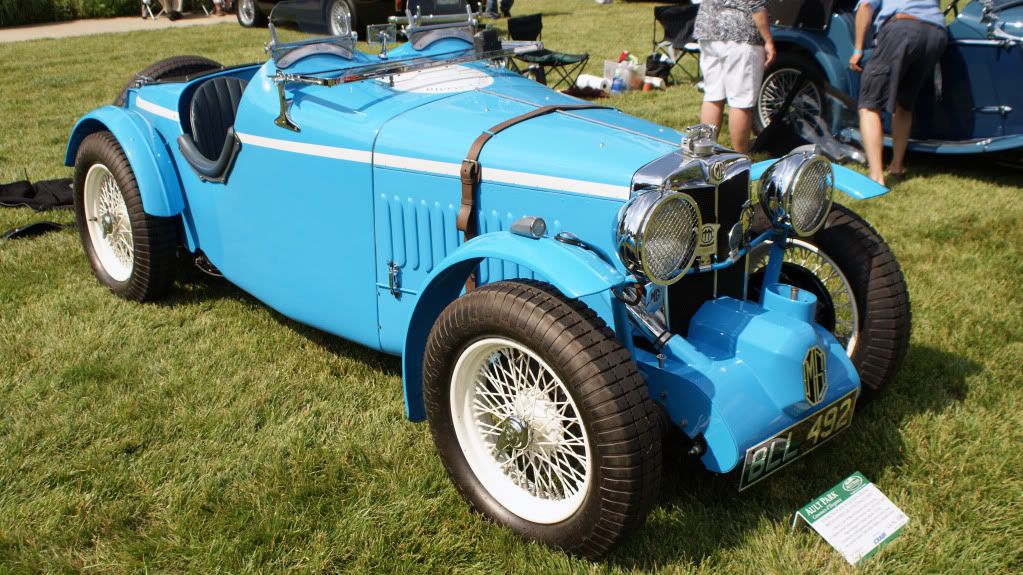
MG was a featured marque this year. Two cars that really stood out included this brilliant blue 1934 NA Evans-Wilkinson Special, one of three built.

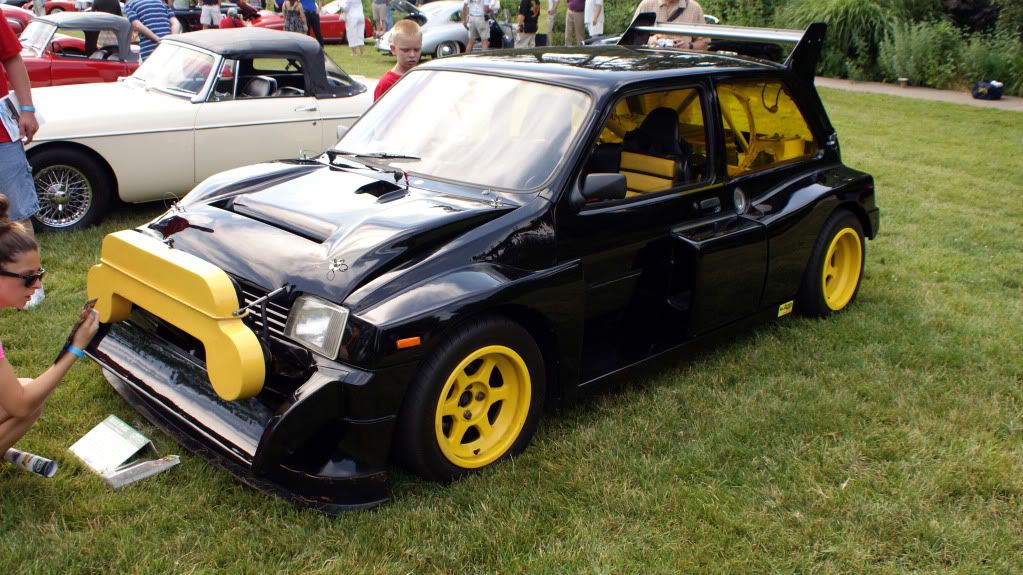
There other super-cool MG was this crazy 1985 Metro 6R4 Group B Rally Car from the Lane Motor Museum in Nashville, Tennessee. It was built by Williams F1 for the rally circuit and, yes, crazy is the correct word.

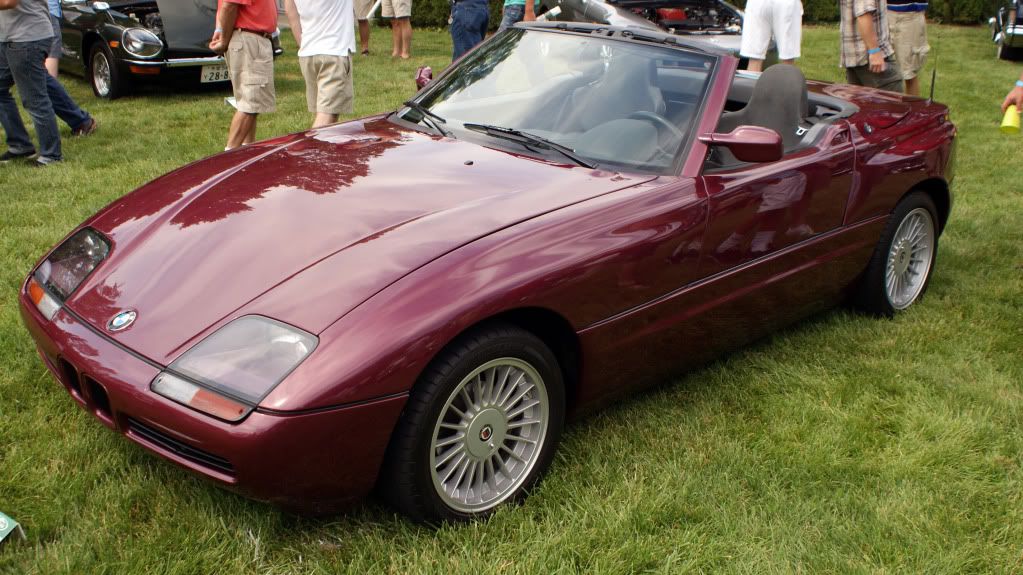
Some other interesting, newer cars include this 1991 BMW Z1, a car you don’t see often, especially in America.

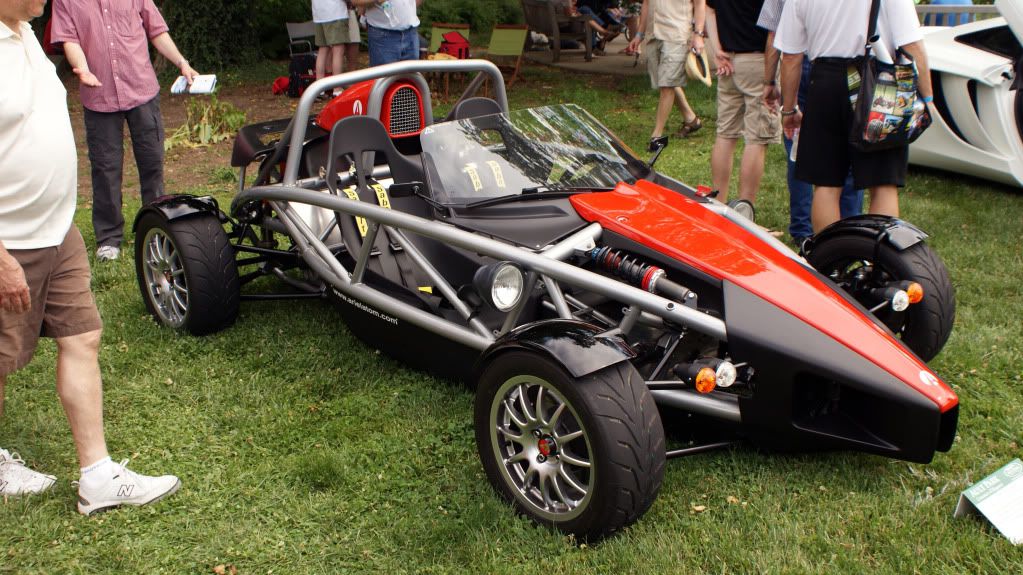
This track-day special (although it was listed as “street-legal”) 2009 Ariel Atom 3 drew a crowd, as you could look around it and see just about every part on/in/within it.

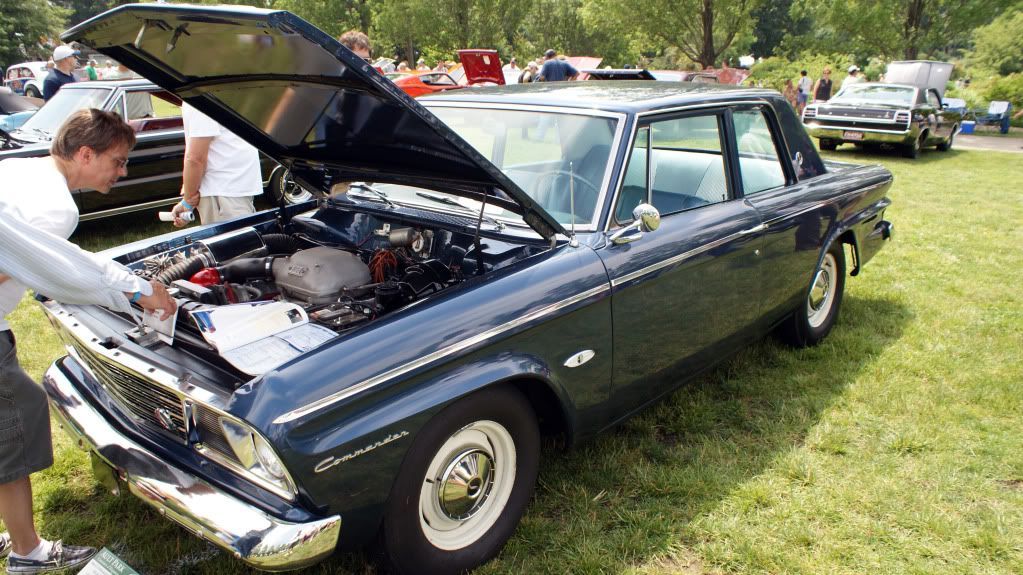
American classics (and muscle cars) were prevalent, with muscle cars being part of the featured “American Power” motif. Easily the most interesting among them was this 1964 Studebaker Commander Super Lark – the only production steel-bodied R-3 package car with the 5.0-liter supercharged V8, which was built for Studebaker by the Granatelli Brothers. It was the fastest compact car in the U.S. when it was built, turning sub-13 second 1/4 miles in excess of 110 mph.

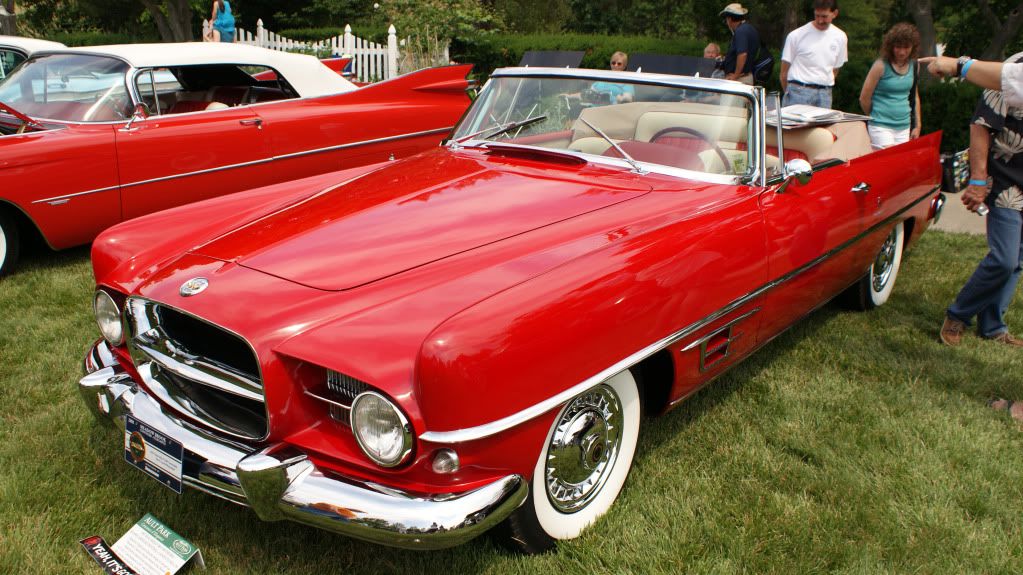
Other fantastic American (or semi-American) classics include this 1957 Dual-Ghia D-500 Convertible. Dual-Ghias are simply beautiful cars and this one in red was no exception.

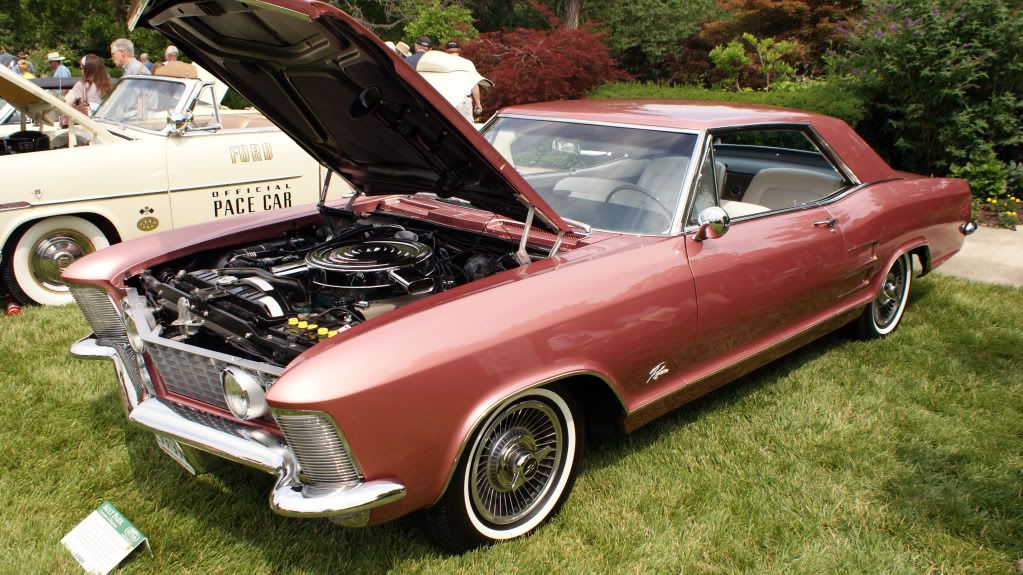
And finally, this 1964 Buick Riviera looked amazing in Coral Mist, my new favorite automotive color. It has the 425 cubic inch Super Wildcat V8, making 360 horsepower.

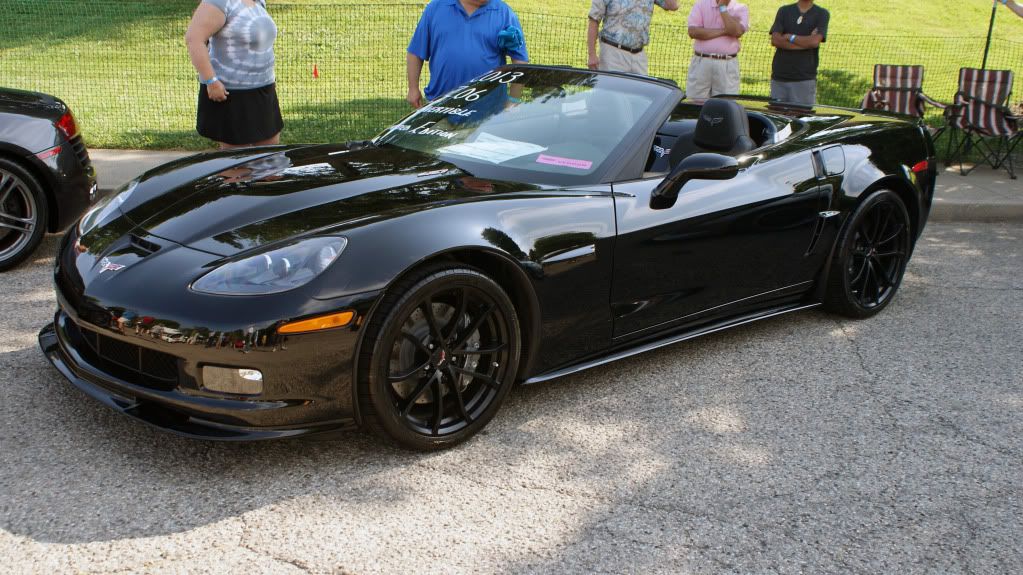
And what would any good car show rundown be without a trip through the parking lot, a car show in itself. Some of the more impressive cars I saw included a 2013 Chevrolet Corvette Z06 Convertible. It looked mean, and made me wonder why GM hadn’t built these before.

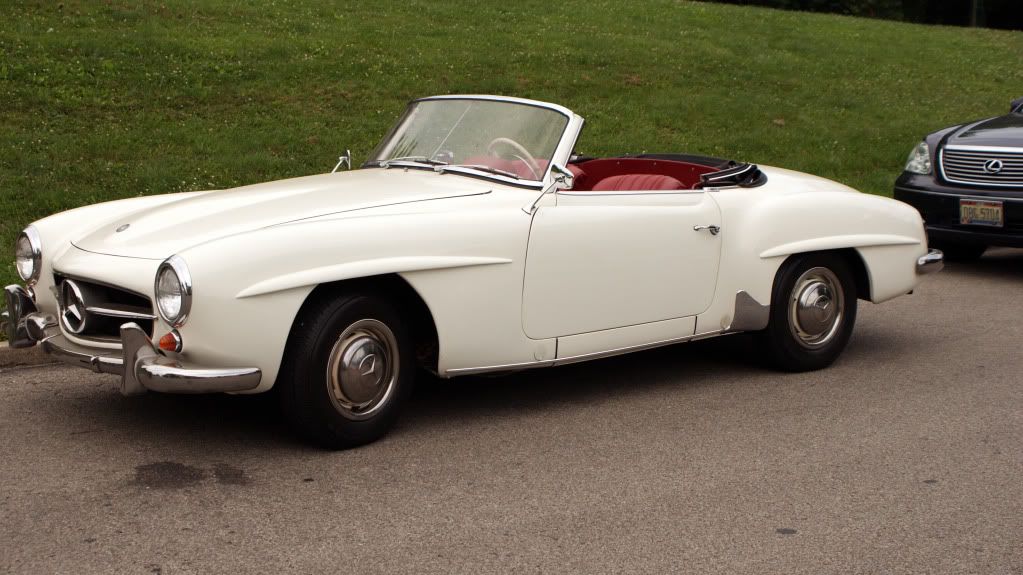
This Mercedes-Benz 190SL Roadster was pretty classic and it looked fun, as it drove past me with four people packed in and on it, having a good time.

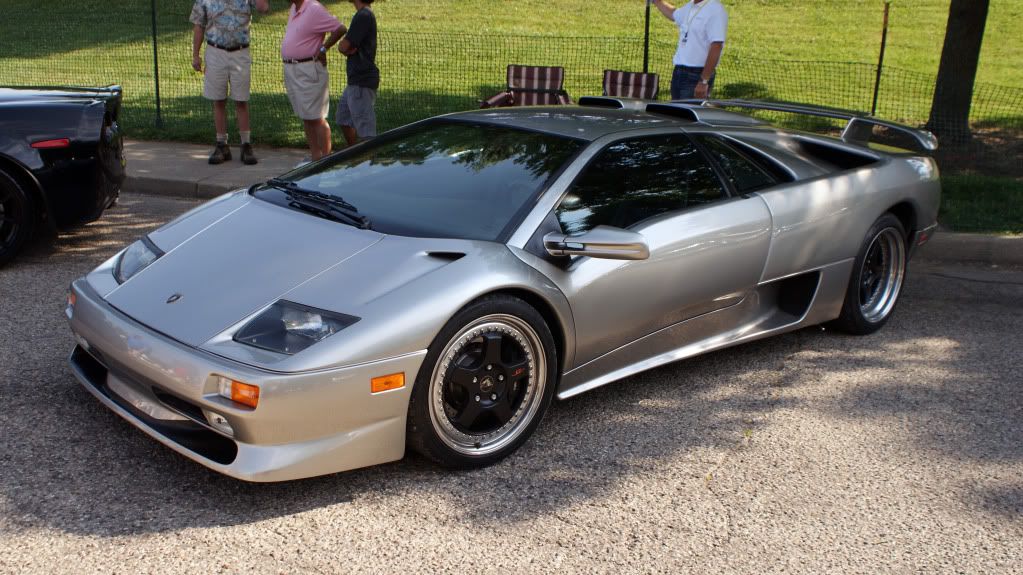
This Lamborghini Diablo SV got the attention of the high-school student within me – and plenty of others.

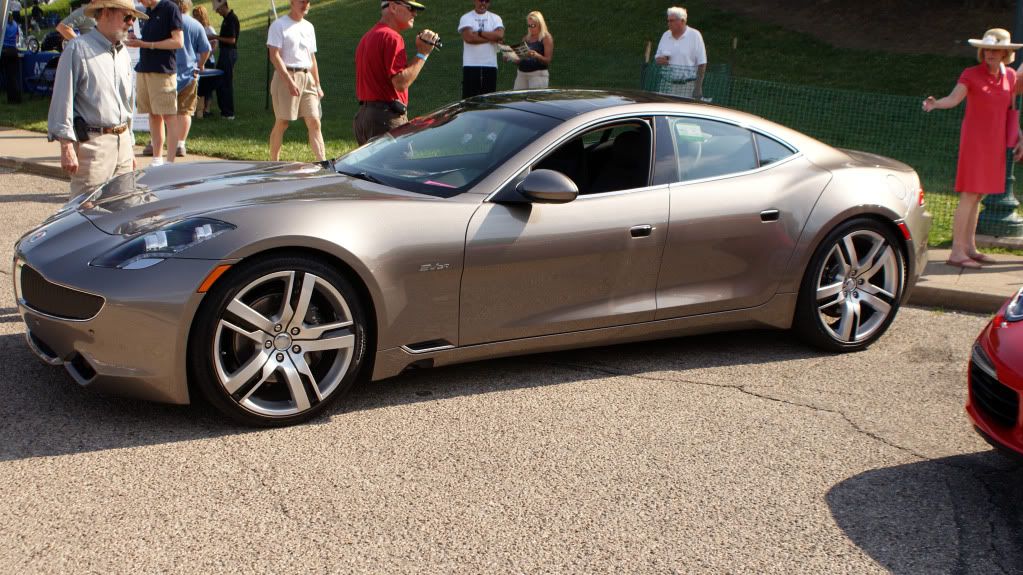
And finally, from the environmentally responsible crowd, this Fisker Karma gathered a lot of interest from onlookers saying things like “What is that?” and “I’ve never seen one of these.” While this car might look like some kind of extended coupe, it is actually a very long car in person – much bigger than you’d think.

Lotus Eleven

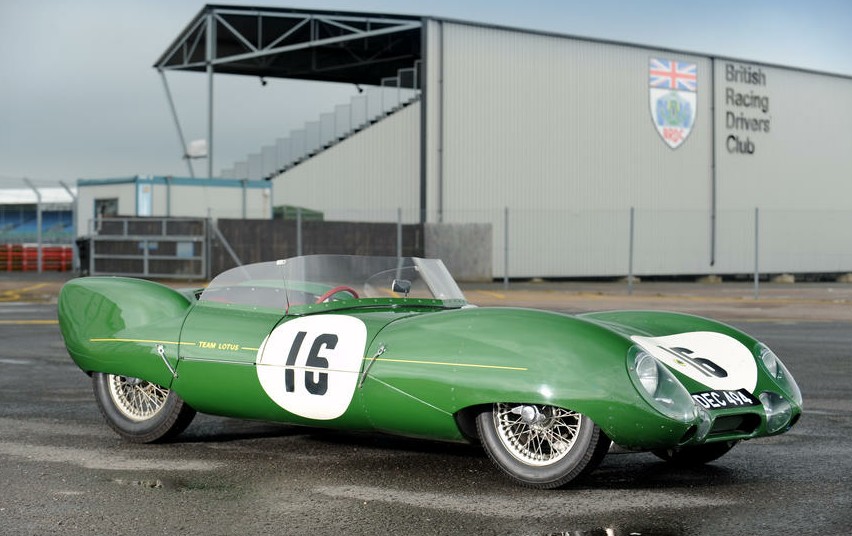
1956 Lotus Eleven Le Mans

Offered by Bonhams | Goodwood, England | June 29, 2012

Photo – Bonhams

Bonhams’ Goodwood sale includes the Glasius Lotus Collection, featuring quite a few rare, storied Lotuses (Loti?) including race cars, road cars, and concepts. This 1956 Eleven is a wonderfully restored example that has an important competitive background.

The Lotus Eleven was introduced by Colin Chapman in 1956. It featured this slippery body designed by Frank Costin, brother of Cosworth co-founder Mike Costin. (Frank Costin would go on to co-found Marcos before building a few cars that bore his last name in its entirety).

The ‘Le Mans’ spec car had the option of a 1.1-liter (FWA) or 1.5-liter (FWB) Coventry-Climax straight-four. This one has the 1.1-liter and the standard tubular space frame, for a weight around 1,100 pounds – making it capable of over 130mph. This car does not have the headrest that was fitted to some of the later models (the Eleven was produced up to 1958). About 270 were built, inclusive of all versions.

Proper sporting cars should have a competition history – as this one does. It was a factory Lotus team car that competed in the 1956 24 Hours of Le Mans with drivers Cliff Allison and Keith Hall. A retirement – when Allison hit a dog on the Mulsanne Straight – placed the car 26th in the standings. After the race, the car ended up in the hands of an American and passed through an unknown number of owners before it was finally restored to the as-or-better-than-new condition it is in today.

This Eleven – with Lotus factory racing history – is being offered in this glorious condition for the first time. It is estimated to sell for between $210,000-$270,000. For more information click here. And for more from Bonhams in Goodwood, click here.

Update: Sold $239,464.

Itala Grand Prix Car

1908 Itala Grand Prix Car

Offered by Bonhams | Goodwood, England | June 29, 2012

The Itala marque was founded in 1904 and is fairly well-known among enthusiasts and collectors for its racing prowess prior to 1910. The company existed until bought out by Fiat in the mid-1930s. That’s 30 years of history but it’s so rare to see one come up for public sale. And yet here is one – but not just any Itala. This car, known as “Floretta” is a somewhat famous model with known, detailed history.

Itala racing cars won the Coppa Florio in 1905, the Targa Florio in 1906 and the Peking-to-Paris race in 1907. 1908 was the first year for a fixed “formula” for the Grands Prix of Europe. Itala built three four-cylinder cars for the 1908 season, utilizing drivers Alessandro Cagno, Henri Fournier and Giovanni Piacenza. It was thought until very recently that this car was the one driven by Cagno. New evidence (such as wheelbase and weight comparisons) suggest that this may have been the one driven by Piacenza, as it had a longer wheelbase and thus, more weight, than either of the other team cars.

In 1909, the car was in possession of a Mr. R. Wil-de-Gose who lapped the Brooklands circuit at 93mph. The next year he returned and eventually bumped the speed up to 101mph, faster than the Mercedes race cars it competed against in 1908. Shortly after this, the original racing body was replaced with the four-seat touring body you see here. After World War I, the car was parked in a garage in England until discovered in 1927. The car was brought back to life and has changed hands only a few times since. I highly recommend going to Bonhams site here and reading the entire description, which includes snippets of stories by people who have driven this monstrous machine. It’s very interesting.

The engine is a massive 12-liters in capacity. It has four-cylinders with cylinders cast in two blocks. It makes about 100 horsepower and is good for cruising comfortably at speeds over 80 mph. The last Itala I can find that sold at auction went for less than $100,000. The estimate on this one is slightly more at $2,300,000-$3,900,000. It’s an amazing machine and an amazing opportunity. For more info click here and for more on Bonhams in Goodwood, click here.

Update: Sold $2,724,748.

1995 Indy Pace Car

1995 Chevrolet Corvette Indy Pace Car

Offered by Mecum | St. Charles, Illinois | June 22-23, 2012

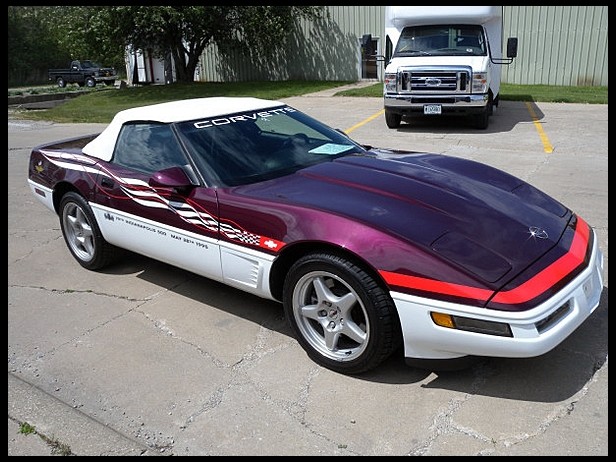
The Chevrolet Corvette has (of this writing, including the 2012 race) paced the Indianapolis 500 ten times, the first being in 1978. It was there for a second time in 1986 and 1995 marked the third time. This is one of 527 (actually it’s #46) of the special “Indy 500 Pace Car” optioned replicas sold for street use.

It was based on the C4, the fourth-generation Corvette, which was introduced for the 1984 model year, so it was 11 years old by this point – more than a little long in the tooth. The paint scheme is actually quite nice with Dark Purple Metallic over White. 1995 was in the midst of ZR-1 production but this car is not a ZR-1 – even though it sports ZR-1 wheels and brakes.

It has the LT1 under the hood, the 350 cubic inch (or 5.7-liter) V8 makes 300 horsepower and 340 lb-ft of torque. 1996 would be the final year for the C4, so this is one of the final special edition C4 Corvettes – and it’s a rare one. Get it, it won’t be too terribly expensive. For more information click here and to see the rest of Mecum’s Bloomington Gold Corvette Auction, click here.

Update: Sold $18,500.

1895 Millot

1895 Millot Vis-a-Vis

For Sale at Oldtimer Galerie International | Toffen, Switzerland

From the “Wow, That’s Old!” files, we present this archaic 1895 Millot Vis-a-Vis, built by Millot Frères (the Millot Brothers) in Gray, France. The company was founded in 1805 to produce farming equipment. By 1892 they were making stationary engines and sometime around 1895 they began building these rather crude-looking vehicles. It looks like something that just drove off the railroad tracks and onto the street.

It’s referred to as a “saw-bench” and they built an unknown number of them (at least three survive). It is powered by a nine horsepower, 2.0-liter single-cylinder engine. I can’t even begin to imagine the noise that this thing makes – or how it drives, handles or rides. It is simply something from another era that very few will get to experience.

This is showcased as an 1895, but various sources suggest different dates for the first Millot automobile – some as late as 1899. The company did build more traditional cars beginning in 1901 (through 1902), but none are known to survive. I’ve seen a photo of one and it looks light years ahead in terms of design when compared to the car shown here, even though only a few years separate them. Cars simply just don’t come much older than this. Price is “on request.” Click here for more info.

Dauer 962

1989 Dauer 962 Le Mans

For Sale at Taylor & Crawley | London, England

The 1990s were a crazy time for supercars. Little (and large) companies were coming out with more and more over-the-top race cars for the road. This is about right at the top of the list, as it is literally a race car for the road.

Jochen Dauer drove Porsches in various racing series’ before concentrating full-time on team ownership in 1987. This car was once his team’s Porsche 962 and it was raced by Bob Wolleck, Hans-Joachim Stuck, Derek Bell, Henri Pescarolo and one of the Unsers. In 1992, the World Sportscar Championship altered its rules, essentially barring the 962 from competition. Porsche, being the clever motorsports company it is, found a loophole that would allow them to keep the 962s on the track.

Basically, the GT rules said that the race cars had to be based on a road-going car – with no minimum production number. Dauer had converted one of their 962s to a road-going car and, because of it, Porsche was back in business on the track. A Dauer 962 won the 24 Hours of Le Mans in 1994, beating all comers in classes with cars that were supposed to be higher-performing. The ACO (who sets the rules for Le Mans) quickly closed that loophole and the 962 was set out to pasture for historic racing.

But Dauer wasn’t done. They received a few orders here and there for road-car conversions of the 962. About 13 in total were built between 1993 and around 1997. The cars were amazing – using a twin-turbocharged 3.0-liter flat-6 making an insane 730 horsepower. Because they were essentially built on the back of a race car (a new, wider body made of carbon-kevlar was fit so a passenger could ride along in terror), the cars were sleek and capable of about 251 mph!

It has leather interior, air conditioning and hydraulic suspension so you don’t scrape the chin on any curbs. It also has what appears to be a DVD player, because if you can afford this car, it is likely you don’t also own some large theater in which to watch your movies, so a cramped cabin of a two-seat race car is the next logical option. It’s listed as a 1989, but that is likely the date on the racing chassis, as the conversion was performed sometime after 1993.

The price is, not surprisingly, withheld. I’ve never seen another come up for sale (this is one of those cars that is so rare that no one is exactly sure how few were actually built), so I don’t know what it’ll cost you. But you can check out more pictures and get some more information from the dealer’s website here.

Darmont-Morgan

1921 Darmont-Morgan Three-Wheel Runabout

Offered by RM Auctions | Nysted, Denmark | August 12, 2012

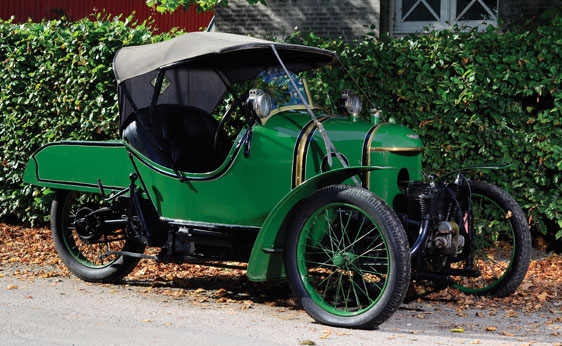
I don’t think there is any way, without breaking my legs into smaller pieces, that I would be able to fit in this car – which is a shame because I think it is really cool. H.F.S. Morgan began marketing his three-wheelers in 1911 and within a few years he was exporting them to France where a few many handled the importing duties. There are a few names on the importers list – two of them being the brothers Darmont (Roger and Andre).

Three-wheeled Morgans became popular in motorsports for a few reasons. One, they were light, and their small v-twin motorcycle engines weren’t necessarily overworked trying to keep them moving. They began taking victories in Europe and after World War One, a Morgan Three-Wheeler scored an improbable victory at a race in France. Roger Darmont quickly entered an agreement with Morgan to build the cars in France, where their popularity had exploded. These were called Darmont-Morgans.

Built in a Parisian suburb, the cars were, initially, the same as those being built in Malvern Link, but over time they grew into their own and in the mid-1930s, Darmont introduced a four-wheeled car of his own design. The company closed at the outbreak of the Second World War.

This rare survivor is a fine example of an early Morgan but in even scarcer form – a Darmont. It’s also a great example of a cyclecar – a style very popular in 1920s France. This car looks like it’s probably been in a museum for quite a while – tended to as needed, but never restored. It’s really cool.

No estimates have been published yet for this sale, but for more information, click here. And for more from this incredible sale, click here.

Update: Sold $41,700.

Ford Lightning

1993 Ford SVT Lightning

Offered by Mecum | North Little Rock, Arkansas | June 16, 2012

Until the early 1990s, pickup trucks were utilitarian vehicles used by people to haul things and drive through less-than-glamorous areas. But then Ford and GM decided they could be sporty as well. GM introduced the 454SS in 1990 and the GMC Syclone followed the next year. Dodge offered a Shelby Dakota. Not wanting to be left out of this strange new game, Ford’s Special Vehicle Team stepped up to the plate in 1993 with the Lightning.

The first generation of the Lightning was made between 1993 and 1995 with 11,563 built. It has a 5.8-liter V8 making 240 horsepower. And it looked pretty much like a standard F-150, but with a few giveaway touches like sporty wheels, painted grille, and, on this particular truck, an exhaust exit in front of the rear tires.

The second generation Lightning would be even more extreme and sporty and you see them quite a bit more than these. Chevy 454SS trucks show up at auction almost regularly – but they always seem like just another used pickup. However, this Lightning looks pretty nice and it is rarer than its bow-tie competitor. It would be a lot of fun, just don’t ruin it by hauling stuff. For more information click here and to see the rest of the Salmon Brothers Collection, click here.

Update: Sold $8,500.