Offered by RM Sotheby’s | Hershey, Pennsylvania | October 10-11, 2019
Photo Courtesy of RM Sotheby’s
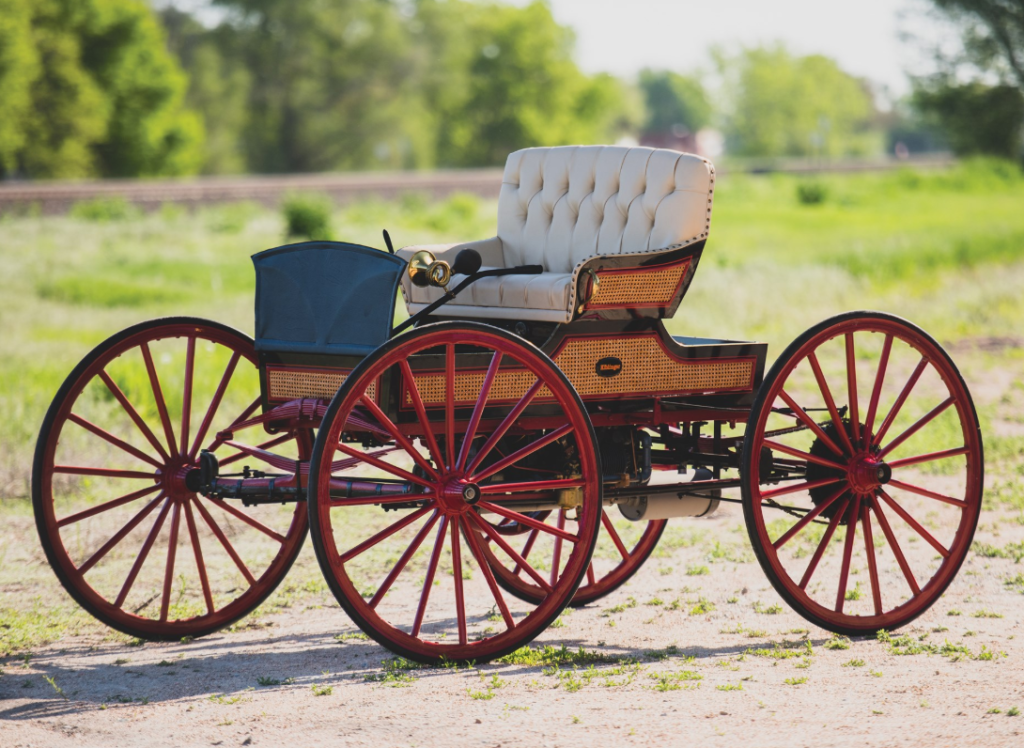
The Grout was built in Orange, Massachusetts between 1899 and 1912. The company was founded by brothers C.B., Fred, and Carl Grout, along with their father William who happened to own a sewing machine business. The company history was full of family drama, and the brothers left town after trying to force their dad out (and failing).
Steam cars came first, and gasoline vehicles followed. The Model H was likely built in 1903 and was the cheapest car they offered that year at $775. This steam-powered runabout is London-to-Brighton eligible and has spent quite a few years in museums.
It should sell for between $30,000-$50,000. Click here for more info and here for more from this sale.
We start in September with Worldwide Auctioneers’ Auburn sales results, which somehow were posted before their Pacific Grove sale. We’ll get to those later. But to start, the top seller here was a 1948 Tucker for $990,000.
Photo – Worldwide Auctioneers
The Epperly-Offy we featured sold for $385,000, and the Surlesmobile went for $30,800. The Gray-Dort was a steal at $6,600, and, not surprisingly, the 1904 Carter brought only $1,925. Full results can be found here.
Across town (or on the other side of the highway), was RM’s Auburn Fall sale. The top seller here was this 2005 Ford GT for $302,500.
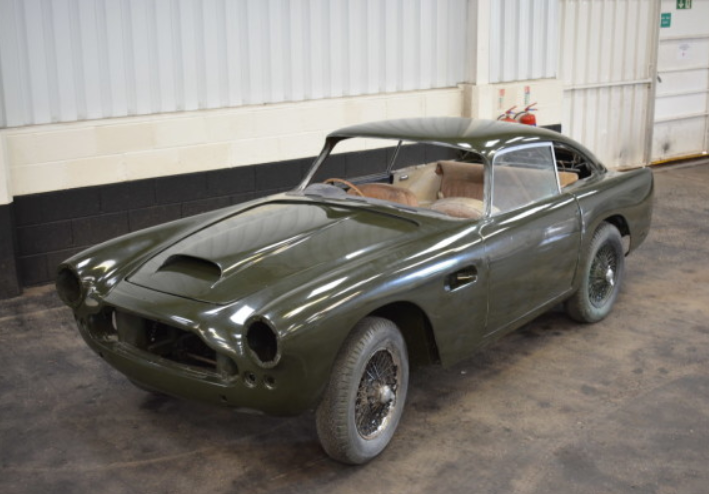
Next up, Brightwells Leominster Classic & Vintage sale. The Bristol 412 we featured sold for $17,258. The top sale was $259,565 paid for this 1960 Aston Martin DB4 project. More results can be found here.
Photo – Brightwells
Following up on Worldwide’s Pacific Grove sale, the Riker electric car and the Simplex failed to sell. The Stevens-Duryea brought $115,500. The top sale was a 1958 Porsche 356 1600 Speedster for $264,000, but they’ve taken the photos off of their website. 🙁
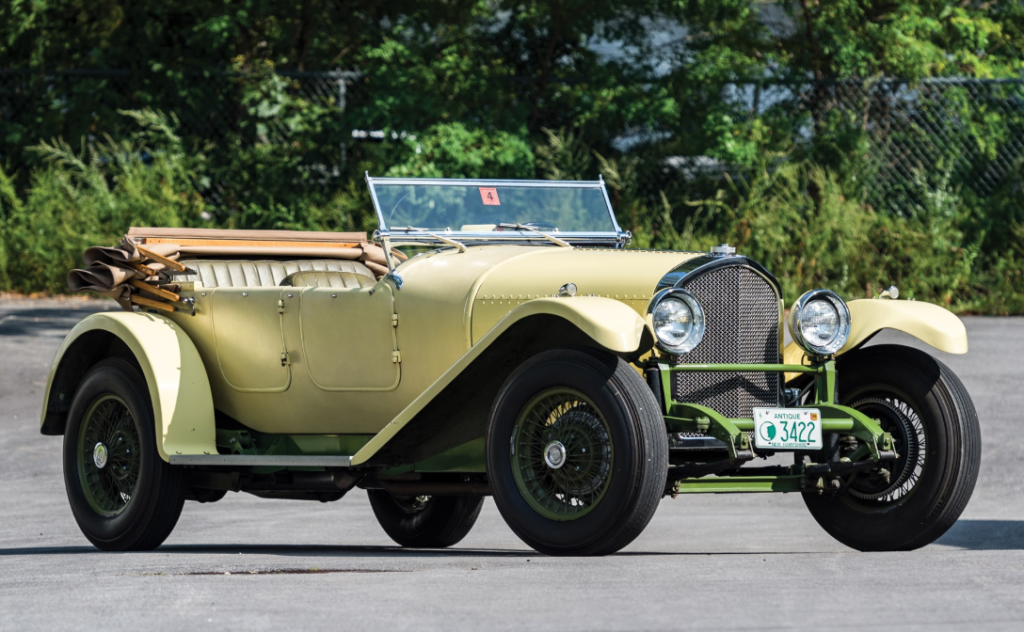
Offered by RM Sotheby’s | Hershey, Pennsylvania | October 10-11, 2019
Photo Courtesy of RM Sotheby’s
This is the second of two prototypes built by William B. Ruger that bore his name. Powered by a 7.0-liter Ford V8, the cars are built in the style of old Bentleys, etc., and this one very much has some Bugatti looks to it.
According to the auction catalog, the development of the prototypes cost $800,000 in 1969. They were too expensive to ever put into production, but the Ruger family really didn’t need a car company as they were making a killing selling guns.
You’d be hard-pressed to notice that this car was built in 1970 and not 1929. The details are great, and it’s covered almost 15,000 miles since it was built. It’s like if someone tried to build the best 1970-model-year car today with all of the new engine and chassis technology available (oh wait, that’s what Dodge has been doing for the last decade #burn). This isn’t a replica or a neo-classic. It’s a brand-new 1930 Bentley-style tourer. It just happened to be built in 1970.
This car was featured in Motor Trend in 1970. It’s the first time either of the Ruger-branded cars has ever been offered for sale, as the family has retained them since new. It’s being sold without reserve. You can read more about it here and see more from this sale here.
Offered by RM Sotheby’s | Hershey, Pennsylvania | October 10-11, 2019
Photo Courtesy of RM Sotheby’s
The short-lived Mier was built by the Mier Carriage and Buggy Company of Ligonier, Indiana, in 1908 and 1909. Solomon Mier, and his son A.B., built about 100 cars during that time before returning to the horse-drawn buggy industry, where they managed to stay in business into the 1920s.
This Model A Runabout was one of two models offered in 1908. Power is from a 10 horsepower inline-twin. Of the 100 built, only two remain, making this a great chance to get your hands on a truly rare car. Click here for more info.
Offered by RM Sotheby’s | Hershey, Pennsylvania | October 10-11, 2019
Photo Courtesy of RM Sotheby’s
If you’re noticing a trend, yes, Indiana liked their highwheelers before 1910. The Kiblinger was a product of Auburn, Indiana, where they were built between 1907 and 1909. There are a few of them on display at the Auburn-Cord-Duesenberg museum. And this car was once on display there too.
The Model D was one of six models produced by the company, and it’s powered by a 10 horsepower, two-cylinder engine that is shared with similar cars from Sears. Speaking of similar cars, company president W.H. McIntyre shut down and re-branded the company as the McIntyre after they were sued for patent infringement by Success. You can read more about this car here.
1905 De Tamble-Miller High-Wheel Runabout Prototype
Offered by RM Sotheby’s | Hershey, Pennsylvania | October 10-11, 2019
Photo Courtesy of RM Sotheby’s
Edward De Tamble‘s earliest cars were highwheelers. Series production didn’t start until 1908 in Indianapolis (and later, Anderson, Indiana), and this car predates that time. It carries a stamp calling it a De Tamble & Miller, but not much is really known about it.
Mostly original, it is thought that this was the prototype De Tamble, and it uses parts from the era, including the gearbox from a Ford Model F. It’s a one-off piece of early automotive history, and you can read more about it here.
Offered by RM Sotheby’s | Hershey, Pennsylvania | October 10-11, 2019
Photo Courtesy of RM Sotheby’s
Elcar actually traces its roots back to Pratt-Elkhart, which was one of Indiana’s highest-quality early cars. That company later became Pratt, which was quickly reformed as the Elkhart Carriage and Motor Car Company in 1915. They built the Elcar through 1931.
This was the only model available in 1917, and it is one of four body styles offered. The Cloverleaf Roadster retailed for $845 and is powered by a 34 horsepower, Lycoming inline-four. Prediction: this car sells for what would appear to be a great deal. Click here for more info.
Offered by RM Sotheby’s | Hershey, Pennsylvania | October 10-11, 2019
Photo Courtesy of RM Sotheby’s
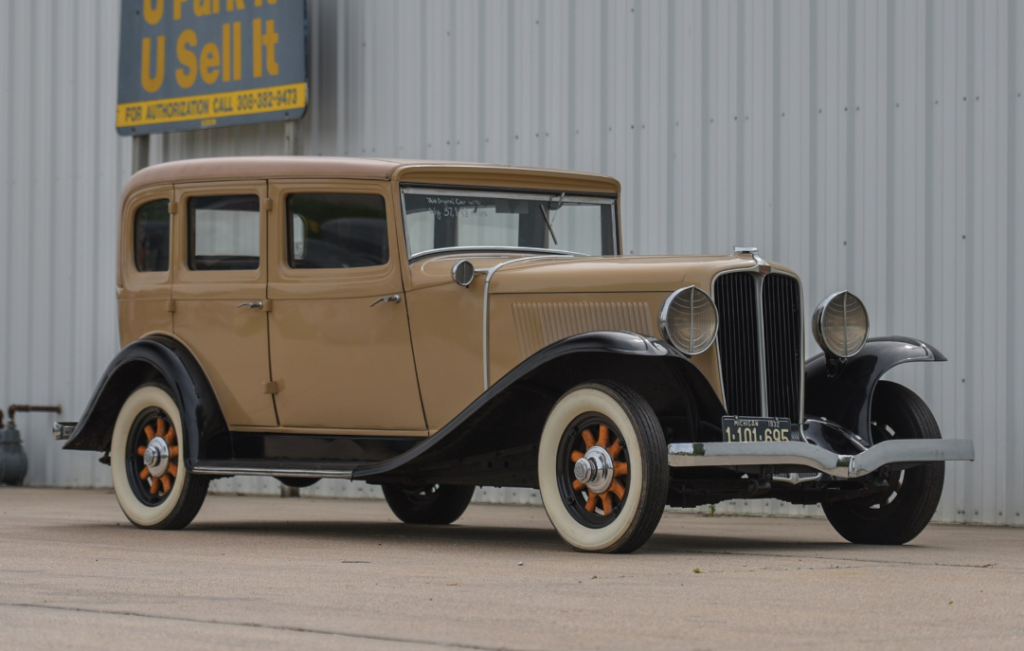
Somehow we’ve only featured one Auburn car prior to this. Indiana was a force in the early days of the automobile industry, and Auburn was one of its star products, which were offered between 1900 and 1937. They built some pretty fantastic cars in the mid-1930s, but everyone seems to forget that they built “normal”-looking cars like this alongside those wild boattail speedsters.
The 8-98 and the 8-98A were the only models offered in 1931. They were powered by a 98 horsepower straight-eight. Various body styles were available, and this sedan would’ve cost its new owner $1,195. Click here for more info and here for more from this sale.
1905 De Tamble-Miller High-Wheel Runabout Prototype
Offered by RM Sotheby’s | Hershey, Pennsylvania | October 10-11, 2019
Photo Courtesy of RM Sotheby’s
Edward De Tamble‘s earliest cars were highwheelers. Series production didn’t start until 1908 in Indianapolis (and later, Anderson, Indiana), and this car predates that time. It carries a stamp calling it a De Tamble & Miller, but not much is really known about it.
Mostly original, it is thought that this was the prototype De Tamble, and it uses parts from the era, including the gearbox from a Ford Model F. It’s a one-off piece of early automotive history, and you can read more about it here.
Update: Sold $26,400.
1907 Kiblinger Model D High-Wheel Runabout
Offered by RM Sotheby’s | Hershey, Pennsylvania | October 10-11, 2019
Photo Courtesy of RM Sotheby’s
If you’re noticing a trend, yes, Indiana liked their highwheelers before 1910. The Kiblinger was a product of Auburn, Indiana, where they were built between 1907 and 1909. There are a few of them on display at the Auburn-Cord-Duesenberg museum. And this car was once on display there too.
The Model D was one of six models produced by the company, and it’s powered by a 10 horsepower, two-cylinder engine that is shared with similar cars from Sears. Speaking of similar cars, company president W.H. McIntyre shut down and re-branded the company as the McIntyre after they were sued for patent infringement by Success. You can read more about this car here.
Update: Sold $28,600.
1908 Mier Model A Runabout
Offered by RM Sotheby’s | Hershey, Pennsylvania | October 10-11, 2019
Photo Courtesy of RM Sotheby’s
The short-lived Mier was built by the Mier Carriage and Buggy Company of Ligonier, Indiana in 1908 and 1909. Solomon Mier, and his son A.B., built about 100 cars during that time before returning to the horse-drawn buggy industry, where they managed to stay in business into the 1920s.
This Model A Runabout was one of two models offered in 1908. Power is from a 10 horsepower inline-twin. Of the 100 built, only two remain, making this a great chance to get your hands on a truly rare car. Click here for more info.
Update: Sold $55,000.
1917 Elcar Model E Cloverleaf Roadster
Offered by RM Sotheby’s | Hershey, Pennsylvania | October 10-11, 2019
Photo Courtesy of RM Sotheby’s
Elcar actually traces its roots back to Pratt-Elkhart, which was one of Indiana’s highest-quality early cars. That company later became Pratt, which was quickly reformed as the Elkhart Carriage and Motor Car Company in 1915. They built the Elcar through 1931.
This was the only model available in 1917, and it is one of four body styles offered. The Cloverleaf Roadster retailed for $845 and is powered by a 34 horsepower, Lycoming inline-four. Prediction: this car sells for what would appear to be a great deal. Click here for more info.
Update: Sold $37,400.
1931 Auburn Model 8-98A Sedan
Offered by RM Sotheby’s | Hershey, Pennsylvania | October 10-11, 2019
Photo Courtesy of RM Sotheby’s
Somehow we’ve only featured one Auburn car prior to this. Indiana was a force in the early days of the automobile industry, and Auburn was one of its star products, which were offered between 1900 and 1937. They built some pretty fantastic cars in the mid-1930s, but everyone seems to forget that they built “normal”-looking cars like this alongside those wild boattail speedsters.
The 8-98 and the 8-98A were the only models offered in 1931. They were powered by a 98 horsepower straight-eight. Various body styles were available, and this sedan would’ve cost its new owner $1,195. Click here for more info and here for more from this sale.
Offered by RM Sotheby’s | Hershey, Pennsylvania | October 10-11, 2019
Photo Courtesy of RM Sotheby’s
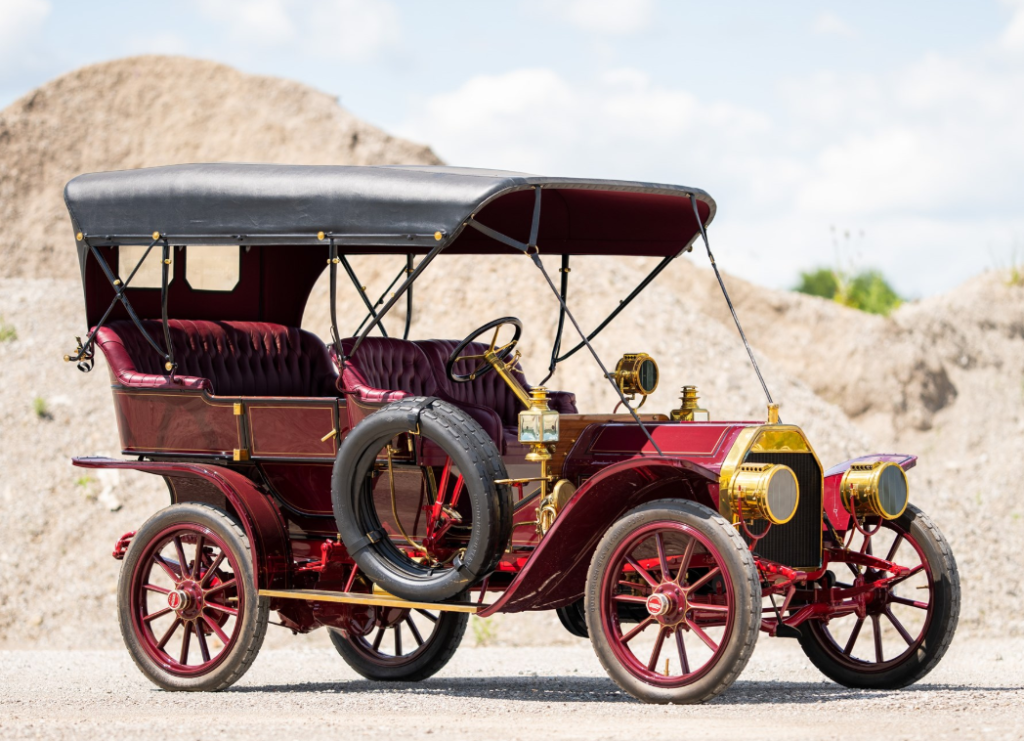
The Wayne Automobile Company was founded in Detroit in 1904 by Charles Palms, E.A. Skae, Roger Sullivan, J.B. Brock, and car designer William Kelly. They started with two-cylinder cars and eventually expanded into four-cylinder offerings before they merged with Northern in 1908.
Almost immediately after the merger, the company was acquired by Walter Flanders and Barney Everitt who turned it into E-M-F. In 1910, Studebaker acquired E-M-F and merged it into their line of cars.
This 1907 Model N is the only surviving “big Wayne,” and it’s powered by a 35 horsepower inline-four. It was acquired by the current owner in 1999, after which it was first restored. You can read more about it here and see more from this sale here.