Epperly-Offenhauser Streamliner

1955 Epperly-Offenhauser Streamliner

Offered by Worldwide Auctioneers | Auburn, Indiana | August 31, 2019
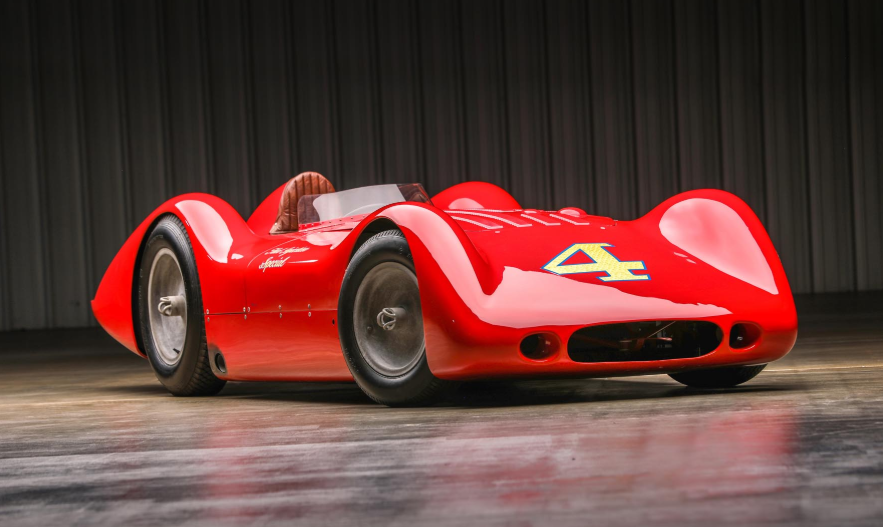
Photo – Worldwide Auctioneers

Though not as well-known, Quin Epperly is a name that sits right there with Frank Kurtis, A.J. Watson, Eddie Kuzma, and Lujie Lesovsky when it comes to legendary builders of race cars during the “Roadster” era of the Indianapolis 500. Epperly actually worked for Kurtis before opening his own shop in the mid-1950s. His cars appeared at Indy from 1955 through 1960 and beyond.

The history of this car is interesting. Howard Keck had just won two consecutive 500s with Bill Vukovich driving his cars and was going for number three in 1955. Epperly had designed this streamlined special for Vuky to drive, but it wasn’t completed in time for the race. Instead, Vukovich drove a Kurtis for another owner. He was killed while leading the race.

Epperly completed the car with Keck’s help (money) anyway and installed a 385 horsepower, 4.4-liter Offenhauser inline-four instead of the V8 that was originally planned. IMS president Tony Hulman knew of the car and wanted it in the ’56 race, paying the entry fee for it in advance. But with Vukovich’s death, Keck lost all interest in racing and the car ended up stored in his shop until 1985.

The car became more or less legend until it was purchased and restored in 1990. And now it’s being offered for public sale. Click here for more info and here for more from this sale.

Update: Sold $385,000.
Carter Electric Motorette

1904 Carter Electric Motorette

Offered by Worldwide Auctioneers | Auburn, Indiana | August 31, 2019

Photo – Worldwide Auctioneers

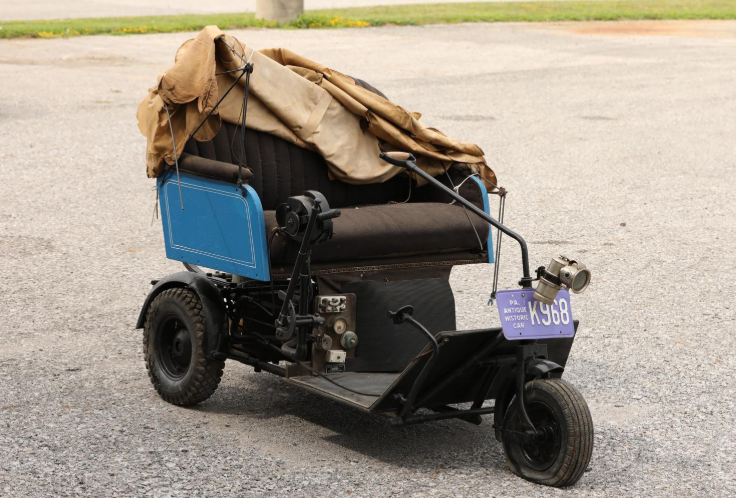
This is a pretty tiny vehicle. Although Worldwide Auctioneers doesn’t provide anything in the background of these photos to help with scale, I would imagine it’s about wide enough to seat a person and a half. In England, these were known as “invalid cars” – basically street-legal motorized wheelchairs.

But… it has a US license plate and is street legal here, too. It was built in England by a company I have no further information about. Its first owner purchased it there and later imported it into Vermont, where it was used regularly up through 1942. It’s been on long-time museum display and still shows fairly well, save for a flat front tire.

It has a convertible top, tiller steering, and 20-mile range when traveling at a top speed of 18-20 mph. Not bad for 115 years old. You will likely never see another, and this one will sell at no reserve. Click here for more info and here for more from this sale.

Update: Sold $1,925.

Update: Sold, Worldwide Auctioneers, “Scottsdale in Auburn” 2020, $19,040.

1966 Duesenberg

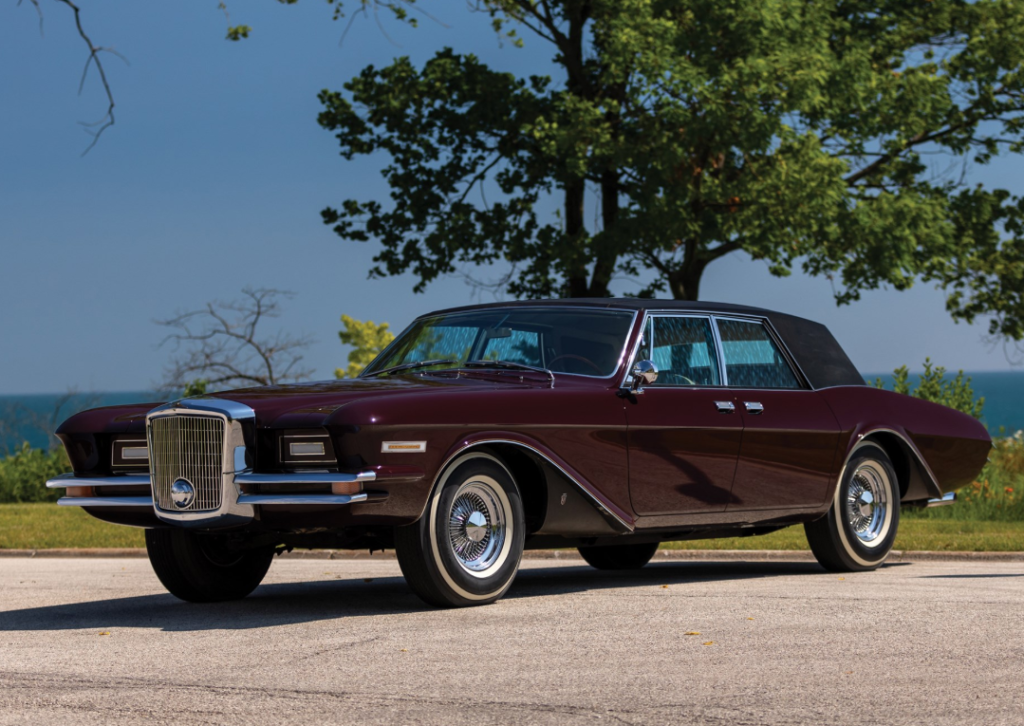
1966 Duesenberg Model D Concept

Offered by RM Sotheby’s | Auburn, Indiana | August 29-September 1, 2019

Photo Courtesy of RM Sotheby’s

What’s rarer than a Model J Duesenberg? A Model D, of course. The Duesenberg name – and its associated automobiles – have retained such an aura around them since the company originally went out of business in the 1930s that it’s no wonder there have been multiple attempts to restart it. Someone built a “Duesenberg” in 1959 using a Model J engine and a Packard chassis.

In the 1960s, Augie Duesenberg‘s son arranged financing (which ultimately fell apart) to restart the company with serial production. This prototype was conceived and it. Is. Lavish. Boasting features that wouldn’t be standard for another 30+ years, the car is powered by a 425 horsepower, 7.2-liter Chrysler V8.

The body was styled by Virgil Exner and crafted by Ghia in Italy. Yes, it evokes the Stutz reboot that occurred just a few years after this car debuted. And there’s a good reason: Exner styled that one as well.

Apparently, the company received around 50 orders before it all went wrong. This car stayed in the ACD Museum in Auburn for over three decades before joining a prominent collection. It’s more-or-less as it was the day it was built, with just 800 miles on the clock. RM estimates $300,000-$350,000 to take it home, which still means it’s cheaper than the comparatively-common Model J. Click here for more info and here for more from this sale.

Update: Not sold.

Surlesmobile Streamliner

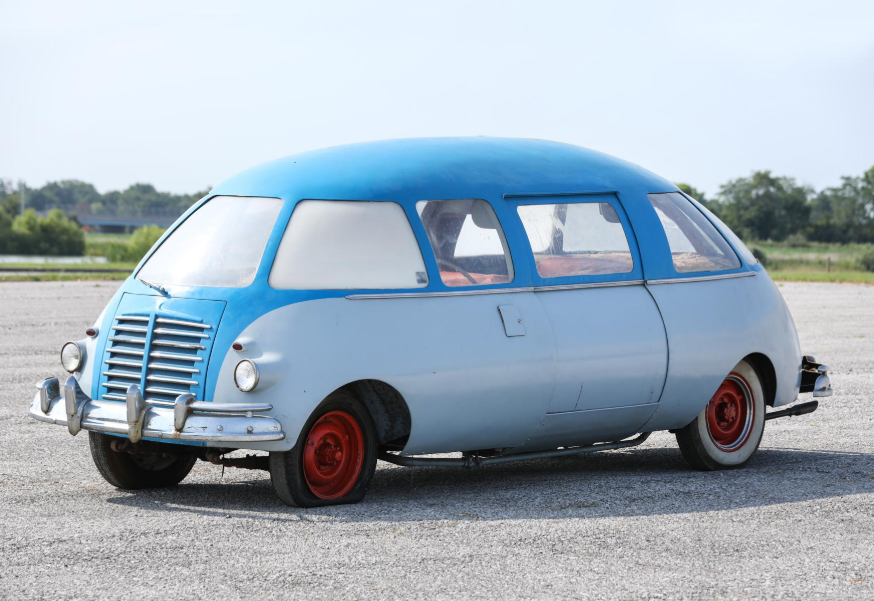
1945 Surlesmobile Streamliner

Offered by Worldwide Auctioneers | Auburn, Indiana | August 31, 2019

Photo – Worldwide Auctioneers

This bubble was designed by Don Surles in the 1930s and was built in the Tokyo Bus Works. So it is technically Japanese. The prototype was built to showcase innovative features such as doors that split in the middle, sliding up and down to allow entry. It also has bench seating that folds into a bed, shatter-proof glass, and a shape that would allow the car to roll over in an accident with a “90% chance” that it lands back on its wheels.

It features four-wheel-drive and is powered by a 50 horsepower, 1.5-liter Continental inline-four. Within hours of its arrival in San Francisco, it was hit while driving. It was later repaired and was last repainted in 1966.

The car has resided in a museum since 1966 and is now being sold at no reserve. Looking it at, the only place I can imagine it ending up is in the Lane Motor Museum. We’ll see in a week or so. Click here for more info and here for more from this sale.

Update: Sold $30,800.

Miniature Velox

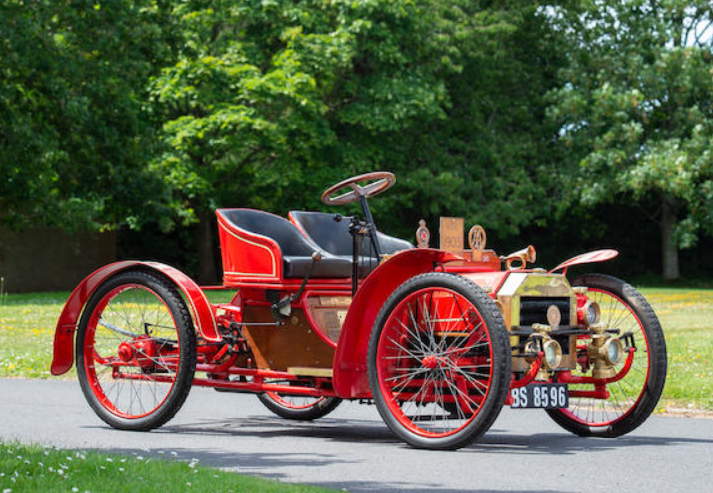
1903 Velox Miniature Velox

Offered by Bonhams | Beaulieu, U.K. | September 7, 2019

Photo – Bonhams

The Velox Motor Co. Ltd. of Coventry began producing cars in 1902. They offered at least three models during their short history (they went out of business in 1904), ranging from 20 horsepower touring cars to this, the Miniature Velox.

It is powered by a single-cylinder engine rated at 3.5 horsepower. The car included some pretty bizarre features for 1903: a tubular frame, an inverted suspension, and a front-engine/rear-wheel-drive layout, and dual chain drive (one going from the engine to the mid-mounted gearbox, and one going from there to the live rear axle).

Though they were around for three years and offered multiple models, the company only produced 21 automobiles. Total. And this is the only one that survives. It is London-to-Brighton eligible and should sell for between $48,000-$60,000. Click here for more info and here for more from this sale.

Update: Sold $64,454.

Harroun Touring

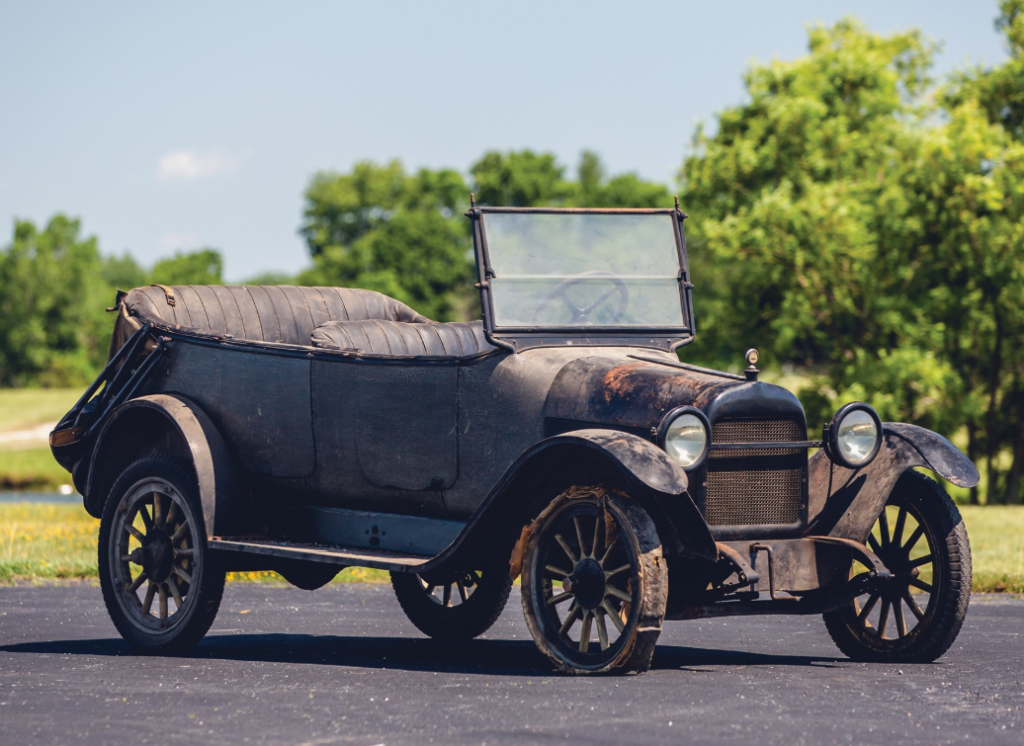
1918 Harroun Model A-1 Touring

Offered by RM Sotheby’s | Auburn, Indiana | August 29-September 1, 2019

Photo Courtesy of RM Sotheby’s

To win the very first Indianapolis 500 is kind of a big deal. Ray Harroun will be remembered for as long as that race continues… and then for another century or so. But after that 1911 victory, he retired from racing. And most people who know who he is have no idea what became of him after that.

Well, let’s backtrack. In 1905, Mr. Harroun built his own racing car before he got a job as a riding mechanic. So he knew his way around the mechanical parts of a car. In 1917, he set up shop in Wayne, Michigan, to build automobiles. And unlike some people who just slapped their name on the front of cars for the promotional benefit, Harroun actually designed the cars that carried his name.

The Model A-1 was built in 1917 and 1918. It’s powered by a 43 horsepower inline-four. This example is a little rough, but it’s believed to be one of two such examples in existence (and one of only 326 built in 1918). All-original, it’ll need a little TLC (and tires, at least) to get going again. But once it’s up and running it will be a roaming part of history. Harroun Motors closed in 1922. This car is estimated to sell for between $15,000-$20,000. Click here for more info and here for more from this sale.

Update: SOld $33,000.

1913 Isotta Indy Car

1913 Isotta Fraschini Tipo IM

Offered by Gooding & Company | Pebble Beach, California | August 16, 2019

Photo – Gooding & Company

We’re kind of saving the best for last for this year’s Monterey auctions. What we have here is an early Isotta Fraschini… with period Indianapolis 500 race history. Isotta was founded in 1900, and most of their surviving cars in private hands tend to be the big, beautiful ones from the late 1920s and early 1930s.

To see one this “early” – 13 years into their production – is pretty rare. The engine is a 135 horsepower, 7.2-liter inline-four. A monster. The Tipo IM was built specifically to compete at Indy at a time when many manufacturers were hoping for glory at the Brickyard for the promotional benefit that would surely follow. If only Indy still had that kind of manufacturer pull and aura of innovation. The racing history for this chassis includes:

  • 1913 Indianapolis 500 – 17th, DNF (with Teddy Tetzlaff)
  • 1914 Indianapolis 500 – 27th, DNF (with Ray Gilhooey)

Only six examples of the Tipo IM were built. This one DNF’d at Indy twice, first with a broken drive chain and again in 1914 after a blown tire resulting in a driver-ejecting spin and subsequent rollover. Gilhooey and his riding mechanic survived.

By 1917 it had been re-bodied in New York and sold to a private owner as a road car. It was restored by a later owner in the 1960s and was purchased by the consignor in 1995. Since then, the car has been restored again, this time to its 1914 Indy 500 specification. Many early 500 cars didn’t survive. This one has, and it’s wonderful. The pre-sale estimate is $3,000,000-$4,000,000. Click here for more info and here for more from this sale.

Update: Sold $2,645,000.

1912 Simplex

1912 Simplex Model 38 Touring

Offered by Worldwide Auctioneers | Pacific Grove, California | August 15, 2019

Photo – Worldwide Auctioneers

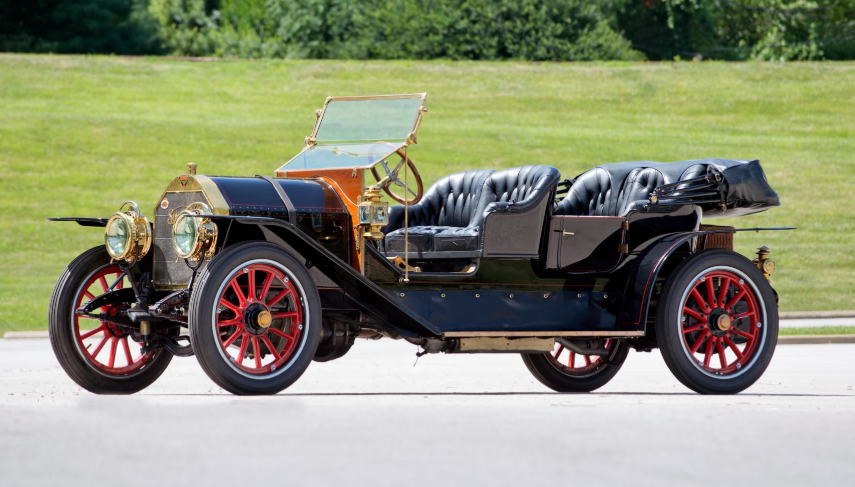
The “Three Ps” of Packard, Peerless, and Pierce-Arrow get all of the glory as America’s best early cars. But there were some pretty good “S”s too. And Simplex was foremost among them. Between 1907 and 1914, Simplex turned out some of the greatest cars you could buy at the time. For 1915, they became Crane-Simplex (or Simplex Crane).

The Model 38 sat at the lower end of the 1912 and 1913 Simplex lineup. Powered by a 38 horsepower, 7.8-liter inline-four, the cars could be had in two wheelbases. The car you see here is the short wheelbase at 127″. It’s a four-passenger touring car, which would’ve cost $4,850 when new. That was a lot in 1912.

The body appears to be a replacement, as it is described as being “in the style of Holbrook.” It also has kind of a funky inward lean to it, but I think it may just be an odd photo angle. Completely restored, this is a useable brass era car, with enough power to comfortably use on tours. Click here for more info and here for more from this sale.

Ferrari 250 Monza

1954 Ferrari 250 Monza by Scaglietti

Offered by Mecum | Monterey, California | August 15-17, 2019

Photo – Mecum

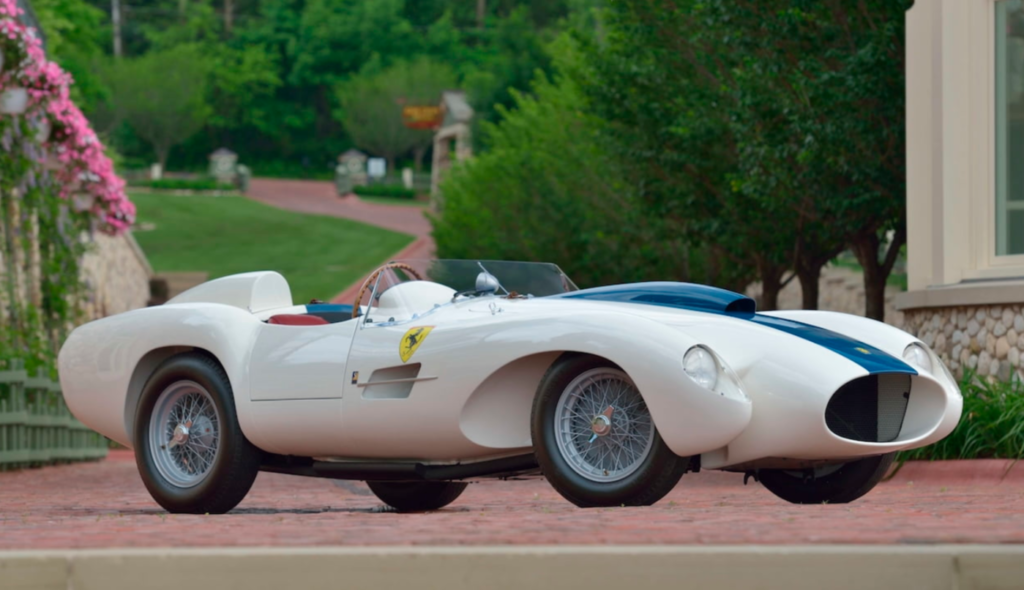
It’s a little amusing how much the Mecum catalog is hedging on the description of this car. It is in the catalog as “1954/1959 Ferrari 0432M.” Which is useless info. This car has a nuanced history, that’s for sure. I guess when you own the auction house you want to lay out the facts and let others draw their own conclusions – which I will now do. This car was born in 1954 as a Pinin Farina-bodied 250 Monza Spider.

Only four examples of the 250 Monza were built and they were essentially the 750 Monza with a 3.0-liter V12 instead of a 3.0-liter inline-four. Output was 260 horsepower. This particular car won the 1954 12 Hours of Hyeres with Maurice Trintignant and Luigi Piotti.

Sometime in 1956 or 1957, the car returned to Ferrari, who had it re-bodied by Scaglietti with the pontoon fender-style body you see here. The interesting bit is that this was done at approximately the same time Scaglietti was designing the 250 Testa Rossa. Maybe it’s like a proto-Testa Rossa?

In 1959, it arrived at Luigi Chinetti’s place in New York, and it was shown at the 1959 New York Auto Show. From there it’s had a few owners, including Dana Mecum who had the car restored in 2014. The catalog makes this car seem mysterious. But old cars changed bodies here and there. No big deal. It’s a factory-re-body of a 250 Monza. And it’s wonderful. I look forward to your hate mail telling me why my assumptions are wrong. Check out more info on this car here, and see more from Mecum here.

Update: Not sold, high bid of $20,000,000.

Stevens-Duryea Model X

1908 Stevens-Duryea Model X Touring

Offered by Worldwide Auctioneers | Pacific Grove, California | August 15, 2019

Photo – Worldwide Auctioneers

Stevens-Duryea was founded in 1901 when J. Frank Duryea got pissed off at his brother and left their joint company to work elsewhere. He designed a car and convinced The J. Stevens Arms and Tool Company to build it. They continued to offer very expensive cars through 1927.

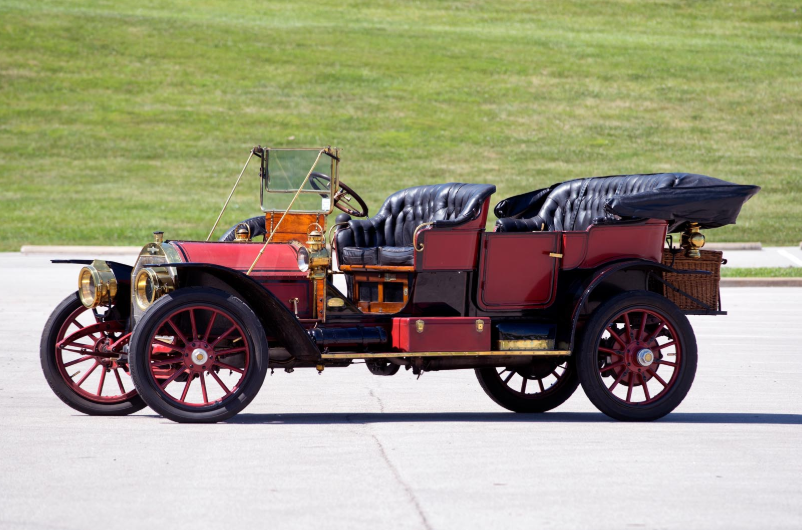
This Model X, which is listed as a 1908 but was first purchased in 1911, was from the heydey of Stevens-Duryea. The Model X was produced from 1909 through 1912. Power is from a 36 horsepower, L-head four-cylinder engine. The car is wonderful, especially if you start looking at the details. And it’s all-original apart from a 1950s repaint.

But the big story here is the car’s history. It was retained by its first owner for many years before being willed to Henry Austin Clark Jr. in the 1950s. Clark kept it in his museum and used it on tours (of which video exists on YouTube). It’s currently on only its fourth owner. No pre-sale estimate is provided, but it failed to sell on BringaTrailer for $125,000. Click here for more info and here for more from this sale.

Update: Sold $115,500.