Nash Statesman Fastback

1951 Nash Statesman Custom Brougham

Offered by Mecum | Kissimmee, Florida | August 27-29, 2020

Photo – Mecum

The Statesman was a full-sized car offered by Nash for a short period of time. It wasn’t their only full-sized car, but it slotted in below the Ambassador in the Nash product line. Despite being on sale for only six years (1950-1956), it spawned two distinct generations.

This Statesman Custom Brougham was from the final year of the first generation. The Custom was the top of three trim levels, and was offered in three body styles: a two-door sedan, a four-door sedan, and a two-door Brougham. The latter had a distinct fastback style that is pretty awesome for 1951.
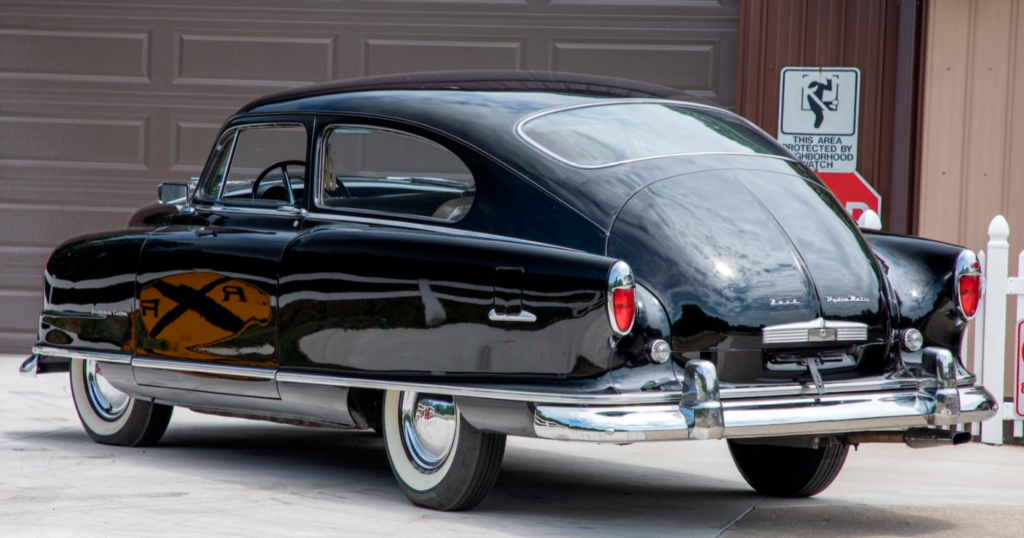
Photo – Mecum

Two-door Broughams were the rarest of all 1951 Nash cars, regardless of what model and trim combo you picked. For instance, only 38 Statesman Custom examples were built. Thirty-eight. That’s it. Could you imagine a major car company today producing less than 50 examples of one of their models? It’s crazy.

Power is from a 3.0-liter inline-six that made 85 horsepower when new. This is a cool car from a once-great manufacturer. And I can’t imagine how rare it is today. Click here for more info and here for more from this sale.

Update: Sold $19,800.

Update: Sold, Mecum, Indianapolis, October 2020, $27,500.
Brooke Double R

2009 Brooke 260RR

Offered by Historics Auctioneers | Windsorview Lakes, U.K. | July 18, 2020

Photo – Historics Auctioneers

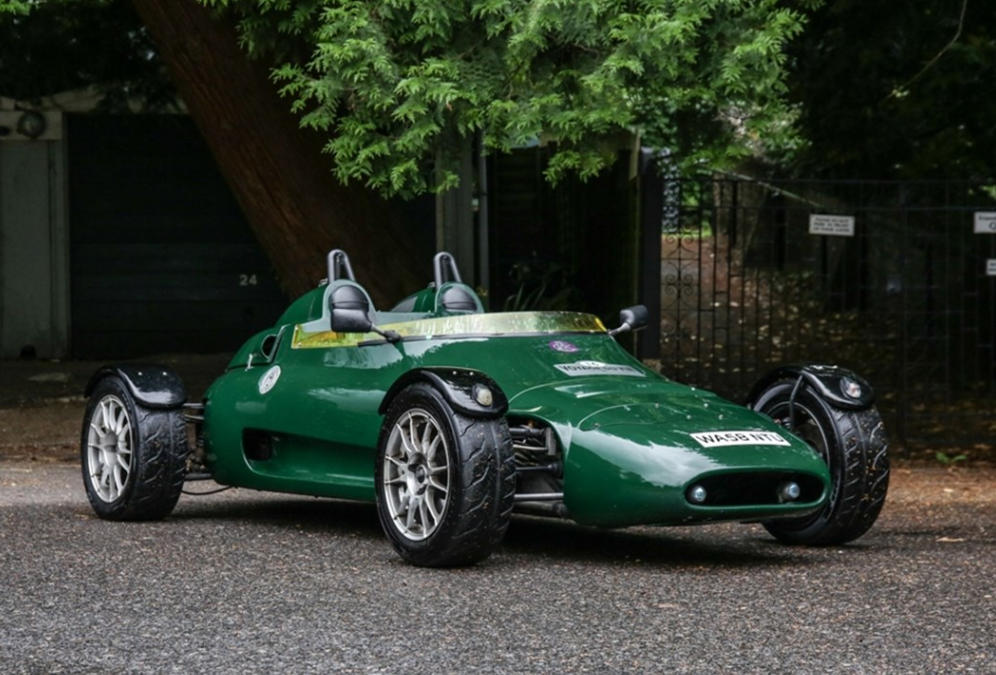
Brooke Kensington was a company that produced a road-legal open-wheeled two-seater in the 1990s. They only built nine cars before the design was sold to a new company, Brooke Cars Ltd. The cars were similar, though the new Double R models were updated and better-looking.

The two-seat side-by-side layout remained, but the engine choices changed. This car is powered by a 260 horsepower, 2.3-liter Cosworth inline-four. Power output on other cars ranged from 200 to 400 horsepower. I can’t imagine how the 400-horse version drives. Other equipment includes a six-speed gearbox, a Quaife limited-slip differential, OZ Racing wheels, and a carbon-fiber engine cover.

The Double R only weighs 1,120 pounds, making the car a complete rocket. Production remained very limited like its predecessor, although I’m not sure how many were actually built. This car has a pre-sale estimate of $15,000-$20,000. Click here for more info and here for more from this sale.

Update: Sold $24,648.

Bugatti 57S Atalante

1937 Bugatti Type 57S Atalante

Offered by Gooding & Company | London, U.K. | TBD…

Photo – Gooding & Company

Gooding & Company calls this “the most desirable of all road-going Bugattis,” which seems a tad hyperbolic considering some of the other Bugattis out there. The Type 57 S was a lowered version of the already-great Type 57, which was introduced in 1934.

This car was built with a naturally aspirated 3.3-liter inline-eight, but after Bugatti sold a few Type 57 SCs with superchargers, most of the base 57 S cars came back to the factory to get fitted with a supercharger, which this car has (though it was added much later on). Output is rated at 220 horsepower.

Jean Bugatti was company founder Ettore’s son and designed an aluminum body for the 57 S dubbed “Atalante.” It’s a low two-door coupe very similar to the famed Atlantic. Only 17 were built, four of which are locked away in a French museum that I don’t much care for. This one carries a pre-sale estimate “in excess of $8,500,000”. Click here for more info and here for more from this sale, whenever it ends up being held.

Update: Sold $10,016,185.

Fram-King Fulda

1961 Fram-King Fulda

Offered by Dorotheum | Vosendorf, Austria | July 10, 2020

Photo – Dorotheum

History lesson: the Fuldamobil was a microcar built in Fulda, Germany, originally by Elektromaschinenbau Fulda and later by a company whose initials were NWF. The first Fuldamobils went on sale in 1950. Fulda didn’t have the capacity to build that many cars, so they contracted with NWF in 1954 to build them.

NWF built the smaller-engined cars, including some under their own name, while Fulda introduced better versions of theirs. The Fulda S7 debuted in 1957 in Sweden as the Fram-King Fulda, which was built there under license. Power should be from something approximating a 191cc single making just shy of 10 horsepower.

The Fram-King Fulda was built for a short time… until the factory burned down. Production resumed in 1958/1959, and the cars were then sold as the King S-7. So either this car is actually earlier than it is registered as, or it’s really a King (FKF is what many Fuldamobils are known as). Either way, they’re the same car. Click here for more info on this one.

Update: Sold $11,566.

Alta A200

1968 Alta A200

Offered by Dorotheum | Vosendorf, Austria | July 10, 2020

Photo – Dorotheum

Well, we’ve already covered the early history of the Fuldamobil. But, with the exception of Sweden, we didn’t really touch on the export markets or the license-built versions. It was sold as the Nobel in a few markets and was even produced in India.

Two different companies built them in Greece: Attica and Alta. Alta was based in Athens between 1962 and 1978 and built microcars, motorcycles, and light commercial vehicles. The A200 is powered by a Heinkel 200cc single.

It was the last Fuldamobil variant still in production when it was axed in 1974. This is a nice one, and you can read more about it here. More cars from this sale can be viewed here.

Update: Sold $10,778.

Cougar Eliminator

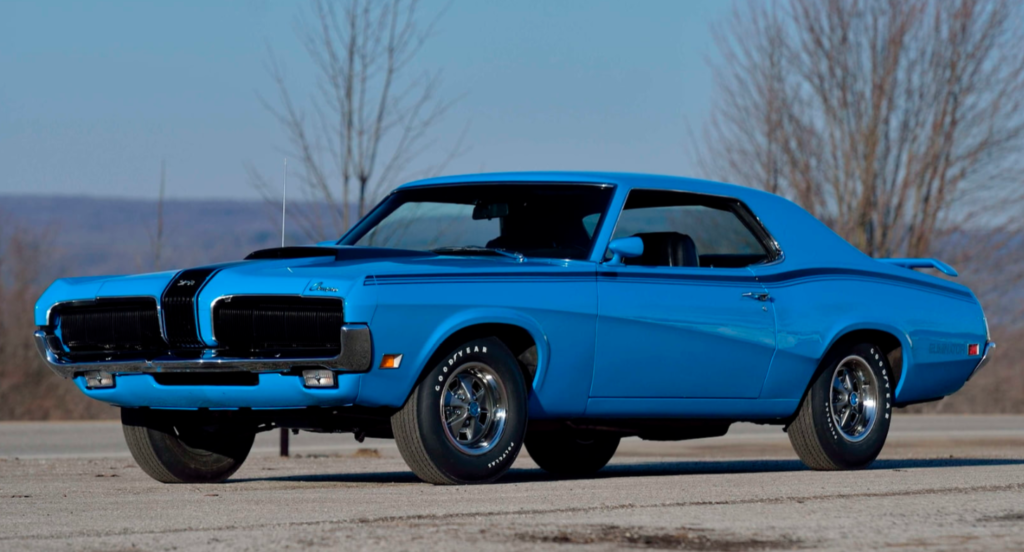
1970 Mercury Cougar Eliminator Boss 302

Offered by Mecum | Indianapolis, Indiana | July 17, 2020

Photo – Mecum

The Cougar was Lincoln-Mercury’s version of the Mustang, and it went on sale in 1967. It was restyled in 1969 to coincide with Ford’s Mustang update, and the ’69 and ’70 Cougars are probably the best of the breed.

Offered in those two years only was the Eliminator, which was the performance-oriented model. It was essentially Mercury‘s version of the Mustang Mach 1, and it came with an upgraded suspension, a front air dam, a rear spoiler, black body trim, and stripes. You could only get it as a hardtop, and any Cougar engine was available, in addition to the Mustang’s Boss 302 motor.

Which is what this car has. The 4.9-liter V8 was rated at 290 horsepower. Only 2,200 Eliminators were built in 1970, and only 323 were produced with the Boss 302 and a four-speed manual transmission. This car is finished in Bright Blue Metallic, one of four colors available on the Eliminator. It carries a pre-sale estimate of $115,000-$130,000, and you can read more about it here. See more from Mecum in Indy here.

Update: Sold $104,500.

Two Three-Wheelers

1974 Meister K6

Offered by Dorotheum | Vosendorf, Austria | July 10, 2020

Photo – Dorotheum

Fahrzeugbau Ing. Hans Meister was a car company that operated in Austria between 1962 and 1979. They built a few models over the years, including the GN roadster, the K5, and this, the K6, which was offered between 1969 and 1974.

Power is from a Puch-sourced 49cc two-stroke single rated at 3.5 horsepower. Only 205 examples were built, and it features a fixed roof, two doors, and two seats. Meister only built about 700 cars in total, all of them with three wheels.

You can read more about this one here.

Update: Sold $3,680.


1970 Megu Mopetta

Offered by Dorotheum | Vosendorf, Austria | July 10, 2020

Photo – Dorotheum

Megu, whose official company name began “Megu Metall,” which is kind of awesome, was an Austrian company that started out producing cast metal goods. It was later acquired by Ragnar Mathey who had experience selling scooters, something he would apply to Megu’s future products.

From there, things get kind of cloudy. Production of vehicles is thought to have started in Vienna around 1966 and maybe wrapped up in 1974. The company hung around for decades though, not officially dissolving until 2005. I have no idea what they did for the last 30 years.

The Mopetta was one of a few models offered on Megu’s three-wheeled layout. Power is from a 49cc Puch single good for 3.5 horsepower. You sort of rode it like a moped, steering with handlebars, but it has a windshield, roof, a mirror, and a luggage rack! You can see more about this three-wheeler here and more from this sale here.

Update: Sold $2,365.

GT350R Prototype

1965 Shelby GT350R Prototype

Offered by Mecum | Indianapolis, Indiana | July 10-18, 2020

Photo – Mecum

The GT350 was the most badass 1965 Mustang. But how do you take that up a notch? You turn it into a factory race car, of course. That’s what Shelby did with 34-ish of their launch-year GT350s. The R was built for SCCA B-Production competition.

This car is the first GT350R built and was used by Shelby American as a factory race car, racking up 10 B-Production victories in 1965, along with the national championship – the latter with driver Jerry Titus. It was also the test mule for Shelby before they built the 34 customer cars.

Famed drivers Ken Miles, Bob Bondurant, Chuck Cantwell, and Peter Brock all also drove this car in period. It’s been restored and retains a 4.7-liter 289 V8 that made somewhere north of 300 horsepower. Mecum bills this as the “most historically significant Shelby Mustang in the world” which might be a little much. In any case, it’s likely to be among the most expensive. Click here for more info and here for more from this sale.

Update: Sold $3,850,000.

Update: Sold, Mecum Kissimmee 2022, $3,750,000.

Lancia Lambda

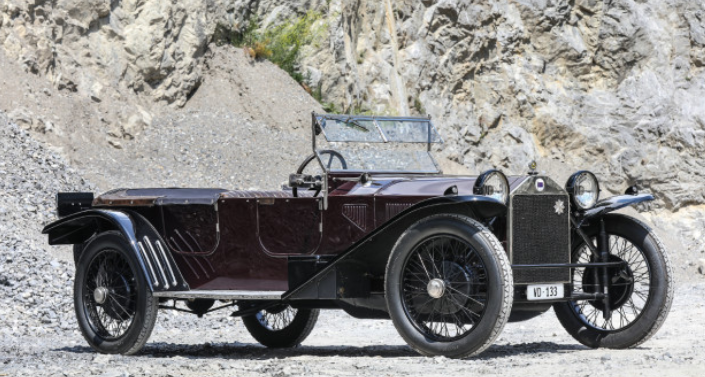
1924 Lancia Lambda 3rd Series Torpedo

Offered by Gooding & Company | London, U.K. | TBD…

Photo – Gooding & Company

Lancia’s Lambda was a groundbreaking car. It was the first unibody production car and featured an independent front suspension and a narrow-angle V4 powerplant. The Lambda was produced in nine series between 1922 and 1931. Lancia also produced a “Dilambda,” which was less interesting.

The 3rd Series Lambda was built in 1924 and featured an updated 2.1-liter V4 that produced 49 horsepower. This Torpedo-bodied roadster was sold new in Uruguay and later spent time in Briggs Cunningham‘s museum.

About 800 examples of the 3rd Series were built. This example looks incredibly sporty for 1924, and it’s burgundy finish is quite striking. Gooding lists a pre-sale estimate of $405,000-$510,000. Click here for more info and here for more from this sale.

Update: Sold $498,577.

Mercedes-Benz 630K Sports

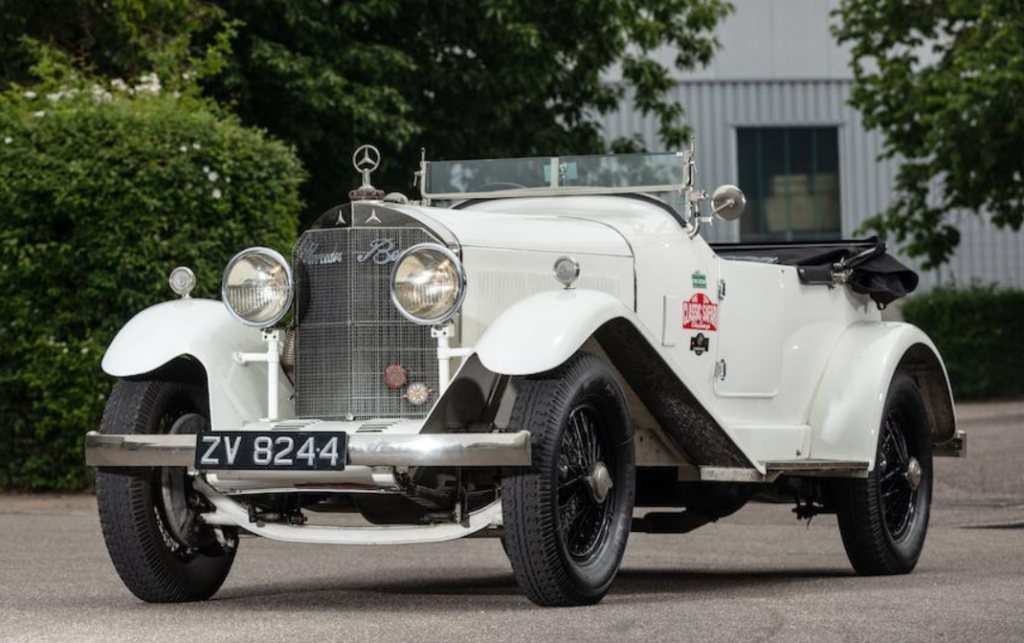
1928 Mercedes-Benz 630K Sports Tourer by Sindelfingen

Offered by Bonhams | Brussels, Belgium | September 6, 2020

Photo – Bonhams

What would become the Mercedes-Benz 630K actually started out as the pre-merger Mercedes 24/100/140 in 1924. Beginning in 1926, the line was renamed the 630, and short-wheelbase K variants went on sale later that year.

They were powered by a supercharged 6.3-liter inline-six that made 138 horsepower with the supercharger engaged, which was done by matting the gas pedal. It was an expensive car, and not all that many were sold before the model went away at the end of 1929. Only 377 630Ks were built after the merger.

This example was bodied by the factory and was first used as a Mercedes-Benz display car. It’s first owner used it competitively until the Nazis came to power, causing him to flee to Finland, where he would later crash the car. It remained in its wrecked state until 1989, when it was discovered and brought back to Germany to be restored.

The work wrapped up in the 1990s, and the car is now being offered with a pre-sale estimate of $680,000-$1,000,000. Click here for more info and here for more from this sale.

Update: Not sold.