HRG 1500

1951 HRG 1500 Sports

Offered by Bonhams | Goodwood, England | June 29, 2012

HRG was founded in 1936 by Major Edward Halford, Guy Robins, and Henry Ronald Godfrey (the H, the R, and the G coming from the first letters of their last names). They introduced the 1500 model in 1939. The 1.5-liter four makes 58 horsepower and is good for 85 mph “under favourable conditions,” which, I think, is an understated, British way of saying “when going downhill.”

The 1500 model was produced unchanged until the company closed its doors in 1956 – hence the very pre-war design you see here on a car from the early-1950s. The 1500 was far and away the most popular HRG, with 111 built. Only 241 HRGs were built in total, so they are quite rare – especially one this nice.

British Racing Green is an excellent color for this car and will not hurt when it comes to the final price, which is expected to be between $70,000-$85,000. For more information, click here. And for more from Bonhams in Goodwood, click here.

Update: Sold $57,710.

Salmon Brothers Collection Highlights

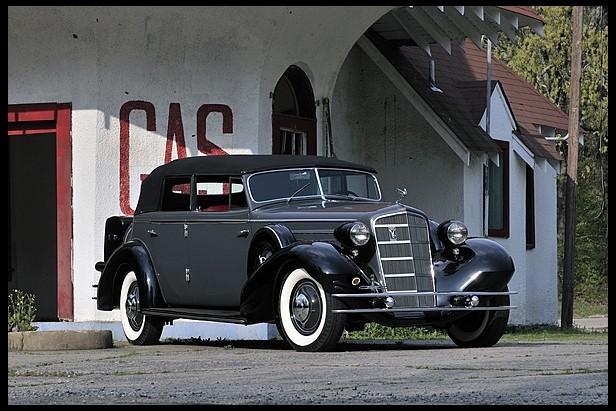
Mecum Auctions recently sold off the Salmon Brothers Collection in North Little Rock, Arkansas. The top sale was the second of three 1934 Cadillac Fleetwood V12 All-Weather Phaetons built. A big, stately, American convertible, it sold for an even $200,000.

Interesting sales included this rare (less than 1,500 built) 1954 Willys Aero Deluxe Coupe for $11,500.

Our feature cars, the 1951 Henry J and the 1993 Ford SVT Lightning, came in at the lower-end of things, selling for $16,000 and $8,500 respectively. This 1956 Chevrolet Del Ray Sedan was the only Del Ray in a sale that included many Bel Airs. The Del Ray was an upscale trim line on the 210. It sold for $36,500.

And finally, this rare 1948 International KB Woody Wagon is an interesting alternative to the plethora of Ford & Chrysler woodies that you see so often. It could’ve been yours for $57,500.

For complete results, click here.

Lotus Eleven

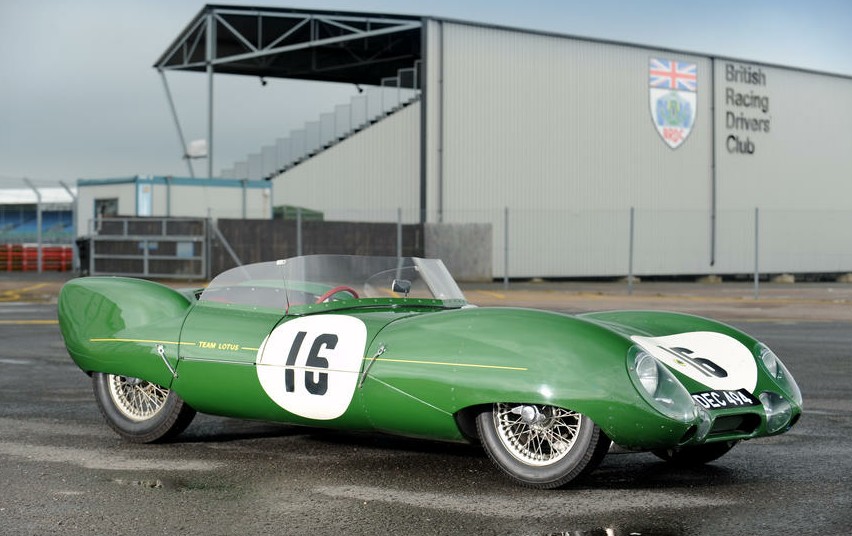
1956 Lotus Eleven Le Mans

Offered by Bonhams | Goodwood, England | June 29, 2012

Photo – Bonhams

Bonhams’ Goodwood sale includes the Glasius Lotus Collection, featuring quite a few rare, storied Lotuses (Loti?) including race cars, road cars, and concepts. This 1956 Eleven is a wonderfully restored example that has an important competitive background.

The Lotus Eleven was introduced by Colin Chapman in 1956. It featured this slippery body designed by Frank Costin, brother of Cosworth co-founder Mike Costin. (Frank Costin would go on to co-found Marcos before building a few cars that bore his last name in its entirety).

The ‘Le Mans’ spec car had the option of a 1.1-liter (FWA) or 1.5-liter (FWB) Coventry-Climax straight-four. This one has the 1.1-liter and the standard tubular space frame, for a weight around 1,100 pounds – making it capable of over 130mph. This car does not have the headrest that was fitted to some of the later models (the Eleven was produced up to 1958). About 270 were built, inclusive of all versions.

Proper sporting cars should have a competition history – as this one does. It was a factory Lotus team car that competed in the 1956 24 Hours of Le Mans with drivers Cliff Allison and Keith Hall. A retirement – when Allison hit a dog on the Mulsanne Straight – placed the car 26th in the standings. After the race, the car ended up in the hands of an American and passed through an unknown number of owners before it was finally restored to the as-or-better-than-new condition it is in today.

This Eleven – with Lotus factory racing history – is being offered in this glorious condition for the first time. It is estimated to sell for between $210,000-$270,000. For more information click here. And for more from Bonhams in Goodwood, click here.

Update: Sold $239,464.

1995 Indy Pace Car

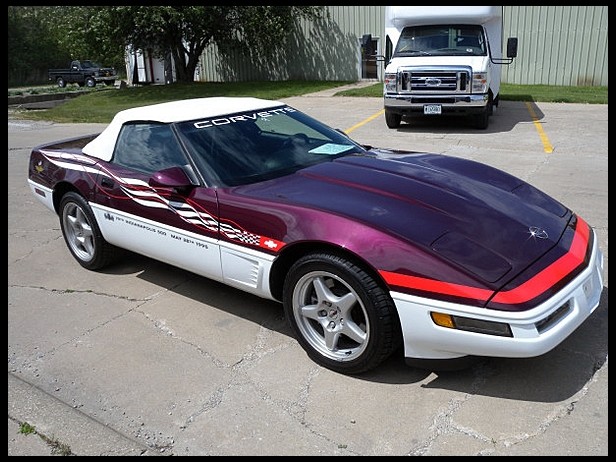
1995 Chevrolet Corvette Indy Pace Car

Offered by Mecum | St. Charles, Illinois | June 22-23, 2012

The Chevrolet Corvette has (of this writing, including the 2012 race) paced the Indianapolis 500 ten times, the first being in 1978. It was there for a second time in 1986 and 1995 marked the third time. This is one of 527 (actually it’s #46) of the special “Indy 500 Pace Car” optioned replicas sold for street use.

It was based on the C4, the fourth-generation Corvette, which was introduced for the 1984 model year, so it was 11 years old by this point – more than a little long in the tooth. The paint scheme is actually quite nice with Dark Purple Metallic over White. 1995 was in the midst of ZR-1 production but this car is not a ZR-1 – even though it sports ZR-1 wheels and brakes.

It has the LT1 under the hood, the 350 cubic inch (or 5.7-liter) V8 makes 300 horsepower and 340 lb-ft of torque. 1996 would be the final year for the C4, so this is one of the final special edition C4 Corvettes – and it’s a rare one. Get it, it won’t be too terribly expensive. For more information click here and to see the rest of Mecum’s Bloomington Gold Corvette Auction, click here.

Update: Sold $18,500.

Dingman Collection Highlights

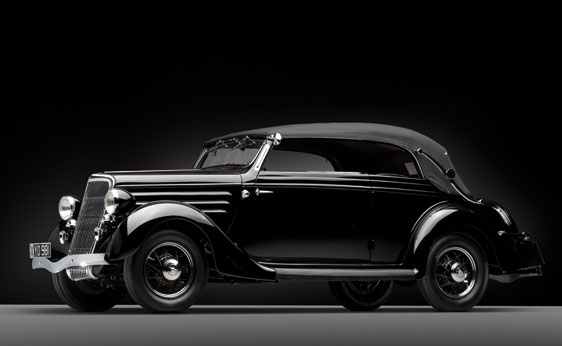
RM Auctions recently held a reserve-less auction of the Dingman Collection in Hampton, New Hampshire. There were a lot of 1940s-era Ford’s – a lot of woodies too. Our feature car, the 1947 Ford Super Deluxe Sportsman Convertible sold for $253,000. The top sale was a 1936 Ford Custom Cabriolet with a coachbuilt body by Glaser. It bettered the upper end of its reserve by more than $100,000, selling for $396,000.

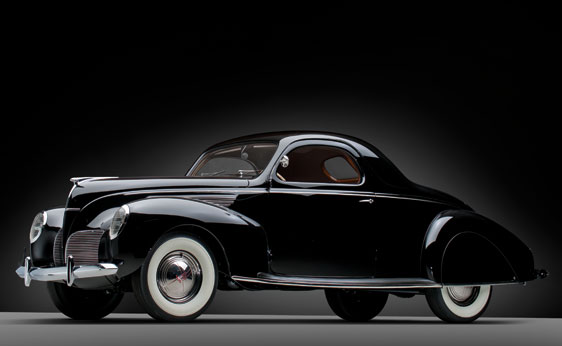
The next biggest sale was also the top-selling Lincoln – a 1938 Lincoln-Zephyr Coupe. As one of the all-time great automotive designs, it commanded a premium at $330,000.

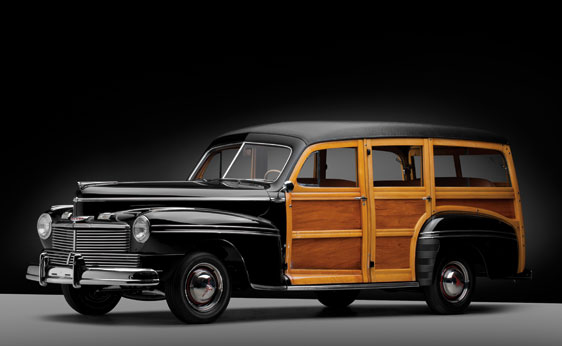
The top selling Mercury was $187,000 for this 1942 Model 29A Station Wagon.

And finally, on a brighter note, this 1940 Lincoln Continental Cabriolet in a brilliant shade of blue sold for $93,500. For complete results, click here.

Darmont-Morgan

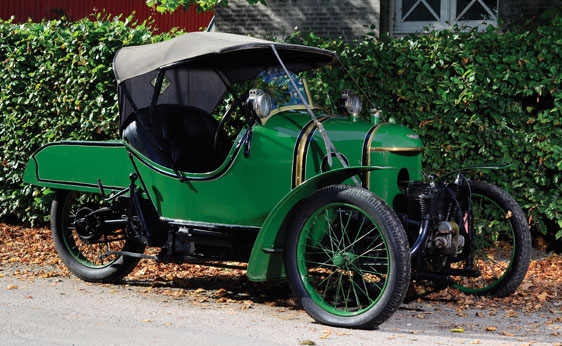
1921 Darmont-Morgan Three-Wheel Runabout

Offered by RM Auctions | Nysted, Denmark | August 12, 2012

I don’t think there is any way, without breaking my legs into smaller pieces, that I would be able to fit in this car – which is a shame because I think it is really cool. H.F.S. Morgan began marketing his three-wheelers in 1911 and within a few years he was exporting them to France where a few many handled the importing duties. There are a few names on the importers list – two of them being the brothers Darmont (Roger and Andre).

Three-wheeled Morgans became popular in motorsports for a few reasons. One, they were light, and their small v-twin motorcycle engines weren’t necessarily overworked trying to keep them moving. They began taking victories in Europe and after World War One, a Morgan Three-Wheeler scored an improbable victory at a race in France. Roger Darmont quickly entered an agreement with Morgan to build the cars in France, where their popularity had exploded. These were called Darmont-Morgans.

Built in a Parisian suburb, the cars were, initially, the same as those being built in Malvern Link, but over time they grew into their own and in the mid-1930s, Darmont introduced a four-wheeled car of his own design. The company closed at the outbreak of the Second World War.

This rare survivor is a fine example of an early Morgan but in even scarcer form – a Darmont. It’s also a great example of a cyclecar – a style very popular in 1920s France. This car looks like it’s probably been in a museum for quite a while – tended to as needed, but never restored. It’s really cool.

No estimates have been published yet for this sale, but for more information, click here. And for more from this incredible sale, click here.

Update: Sold $41,700.

Ford Lightning

1993 Ford SVT Lightning

Offered by Mecum | North Little Rock, Arkansas | June 16, 2012

Until the early 1990s, pickup trucks were utilitarian vehicles used by people to haul things and drive through less-than-glamorous areas. But then Ford and GM decided they could be sporty as well. GM introduced the 454SS in 1990 and the GMC Syclone followed the next year. Dodge offered a Shelby Dakota. Not wanting to be left out of this strange new game, Ford’s Special Vehicle Team stepped up to the plate in 1993 with the Lightning.

The first generation of the Lightning was made between 1993 and 1995 with 11,563 built. It has a 5.8-liter V8 making 240 horsepower. And it looked pretty much like a standard F-150, but with a few giveaway touches like sporty wheels, painted grille, and, on this particular truck, an exhaust exit in front of the rear tires.

The second generation Lightning would be even more extreme and sporty and you see them quite a bit more than these. Chevy 454SS trucks show up at auction almost regularly – but they always seem like just another used pickup. However, this Lightning looks pretty nice and it is rarer than its bow-tie competitor. It would be a lot of fun, just don’t ruin it by hauling stuff. For more information click here and to see the rest of the Salmon Brothers Collection, click here.

Update: Sold $8,500.

D.B. Le Mans

1961 D.B. Le Mans

Offered by Osenat | Fontainebleau, France | June 17, 2012

Known as Deutsch-Bonnet until 1947, D.B. was a French manufacturer founded by Charles Deutsch and René Bonnet, who left the firm in the early 1961 to start his own company. D.B. started in 1938 building Citroen-based racing specials and turned to road cars in 1952.

The Le Mans model was introduced in 1958 and lasted until the company closed up shop in 1961. All their road-going models were Panhard-based using Panhard flat-twin engines. The Le Mans had an 850cc version making about 60 horsepower.

The Le Mans name was not wishful thinking – D.B.s won their class at the 24 Hours three separate times. These were legitimate sports cars. Approximately 200 Le Mans models were built and they might not be the most powerful European sports car of the 1960s, but they are certainly rare. For more information (in French), click here. And fore the rest of Osenat’s auction lineup (including another rare D.B.), click here.

Update: Not sold.

Henry J

1951 Henry J Deluxe

Offered by Mecum | North Little Rock, Arkansas | June 16, 2012
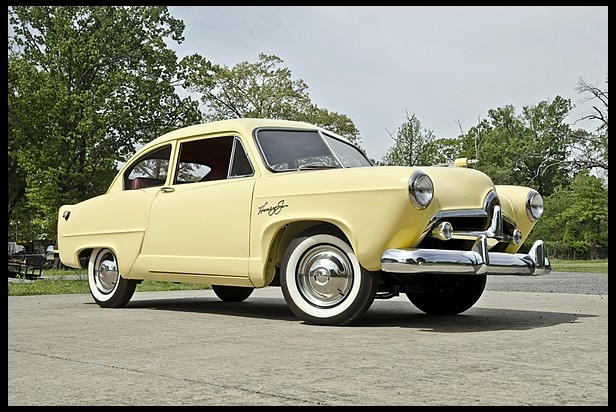
Henry J. Kaiser’s vision of what his post-war automotive empire would look like was, well, optimistic. Kaiser, along with Joseph Frazer, took the remnants of Graham-Paige and bought Ford’s wartime Willow Run production plant to build automobiles under the Kaiser and Frazer nameplates. In 1950, Kaiser decided to try and bolster production of his cars by pulling a play out of the Henry Ford playbook: build a small, inexpensive car for the masses. The Henry J was born (and it was marketed as its own make).

So how did they do it? Kaiser wanted a car that seated five adults and could do 50 mph “for sustained periods of time.” It also had to retail for $1,300 (about $12,500 in 2012). To hit these marks, they had to cut some corners: there was no trunk lid – you had to go through the rear seats, which was probably difficult as the car was only offered with two doors. The base model also lacked armrests, a glove compartment, a sun visor and flow-through ventilation. Fortunately, the car you see here is a Deluxe model.

Which means it has the straight-six (instead of the four-banger). It’s a 2.6-liter making 80 horsepower. Unfortunately, even though it was very cheap, it only cost a few dollars less than a Chevrolet 150 – which had a functioning trunk, armrests, and more interior room. Sales declined steadily through 1954 when the Henry J was axed.

They didn’t build millions of these cars – which was part of the problem originally, as Kaiser needed mass production to make a profit. He didn’t get it and the Kaiser nameplate disappeared from passenger cars in 1955. The company went on to focus on it’s recently acquired Willys and Jeep business, which went on to become part of AMC.

It was a pioneering compact car, but you just don’t see Henry Js everyday. And this one looks to be in exceptional condition. We’ll see what it brings when it sells. For more information and photos, click here. And for more on the Salmon Brothers Collection, click here.

Update: sold $16,000.

Maserati 222

1992 Maserati 222 SE

Offered by Bonhams | Oxford, U.K. | June 16, 2012

The Maserati Biturbo was in production in various forms from 1981 through 1994. The original models were all called “Biturbo” something or other. In the late 1980s, the models were named 222, the SE model being offered from 1990 through 1992. There were also four-door sedans with various numerical names from 420 through 430.

While the Biturbo was the first twin-turbocharged production car, the engines that the turbos were attached to varied based on model. The 222 SE had a 2.8-liter twin-turbo V6 making 225 horsepower. It was good for 143 mph.

Only 210 of these cars were built and this one has 53,000 original miles. This one was in storage for eight years, but has been freshened and serviced and is ready to drive. Biturbos aren’t known for their reliability – in fact, they are more well known for leaking, bursting into flame and generally falling into disrepair. It was born out of Maserati’s De Tomaso ownership – and cash was not plentiful. But as a cool, cheap exotic, this car could be a lot of fun… you know, until you have to fix it. And I wouldn’t recommend trying to use it as a daily driver.

The car is to sell without reserve with an estimate between $7,700 and $11,000. And it does have that Maserati badge on it. I am seriously tempted. For more information, click here. For more from Bonhams Oxford sale, click here.

Update: Sold $4,500.