Renault-Alpine A442

1976 Renault-Alpine A442

Offered by RM Sotheby’s | Le Castellet, France | November 19, 2021
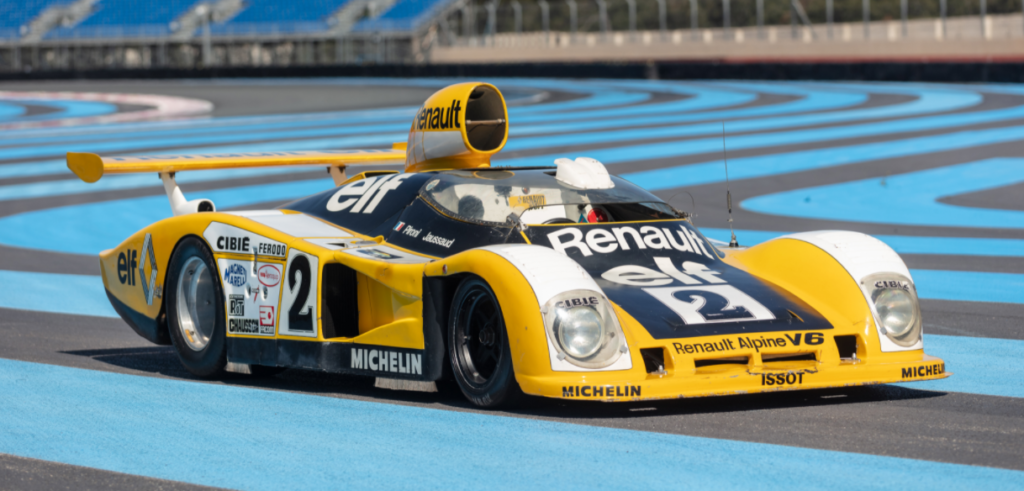
Photo Courtesy of RM Sotheby’s

Sports prototype race cars were kind of getting a little out of hand in the 1970s. Think about Porsche’s Can-Am killer and some of the other wild cars that came out of that era. And look at the intake on this thing. I’m pretty sure there are smaller jet engines.

Alpine was owned by Renault at this time, but this car was designed and built by Alpine (with Renault power and funding, of course). Power is from a turbocharged 2.0-liter Renault-Gordini V6 capable of 490 horsepower. Only four examples of the A442 were built, and the competition history for this one, chassis 4422, includes:

  • 1977 24 Hours of Le Mans – 22nd, DNF (with Patrick Depailler and Jacques Laffite)
  • 1978 24 Hours of Le Mans – unknown

What? Yeah, there were two A442As, a single A442B, and an A443 entered in 1978’s race. The A442B won the race. But whether that car was chassis 4422 or 4423 has apparently been disputed. Renault says it was car 4423, but RM presents evidence that it could’ve been 4422. You can make up your own mind, but this car is the only A442 in private hands. It carries a pre-sale estimate of $4,600,000-$6,000,000. Click here for more info and here for more from this sale.

Update: Sold $2,553,471.
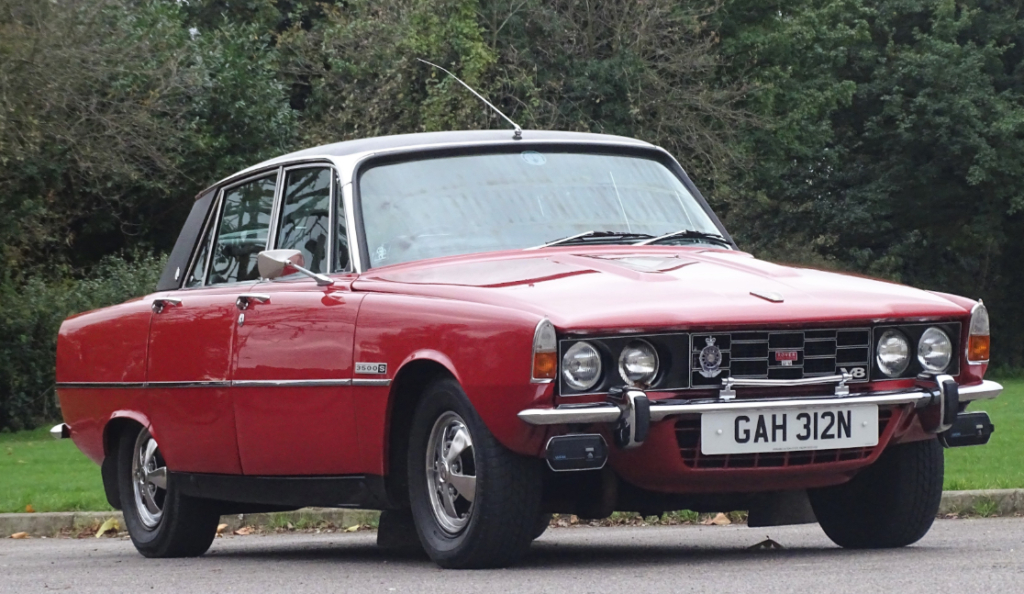
Rover P6 3500S

1974 Rover P6 3500S

Offered by H&H | Duxford, U.K. | November 17, 2021

Photo – H&H

The Rover P6 was produced between 1963 and 1977 in a range of different models. They were all four-door sedans, save for some aftermarket wagons. The later cars, especially the top trim, big engine models, were quite good looking. This one especially.

The 3500 went on sale in 1968 and remained in production through the end of the P6 in 1977. It features a 3.5-liter Buick-based V8 rated at 150 horsepower when new. The “S” models featured a four-speed manual transmission and went on sale in 1971. Top speed was 123 mph.

This car is a five-owned example with just under 55,000 miles on the clock. It carries a pre-sale estimate of $16,000-$19,000. Click here for more info and here for more from this sale.

Update: Sold $15,116.

Frazer-Tickford Metro

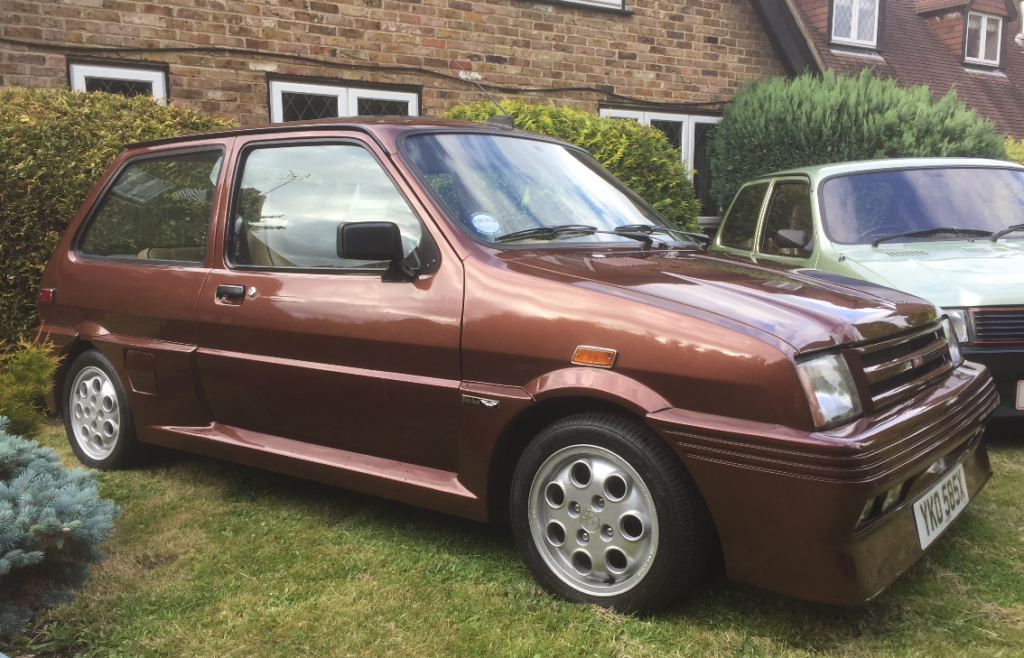
1982 Frazer-Tickford Metro

Offered by H&H | Duxford, U.K. | November 17, 2021

Photo – H&H

There’s a lot going on here. Let’s start with the Metro part: this car started out as an Austin Metro, which was a small hatchback introduced by British Leyland in 1980. It was a no-frills economy car. But what if you wanted one all tarted up?

Enter Tickford, a coachbuilder whose roots dated back to the 1820s. They bodied all manner of British cars before and after WWII, and in 1955, the company was purchased by David Brown, owner of Aston Martin. In 1981, with Aston Martin company under new ownership, they created an engineering subsidiary called Aston Martin Tickford.

That company helped other manufacturers build high-performance models, including helping Ford with the Tickford Capri, Sierra Cosworth RS500, and the RS200.

Then there was a guy called Mike Bletsoe-Brown, who owned Sywell Aerodrome in Northamptonshire. He set up a company called Frazer (unrelated to the American one) and contracted with Tickford to build the best Metro they could.

And so the Frazer-Tickford Metro was born. Think of it as the Aston Martin Cygnet‘s grandfather. They took a Metro 1.3 S and stripped it down. A fiberglass body kit was added, as were Aston Martin badges, a sunroof, and an interior worthy of an Aston. The engine was beefed up too, and the 1.3-liter inline-four now put out 80 horsepower.

Aston Martin bought out the project in 1982, and a dumbed down version called the Tickford Metro was available in 1983. Only 26 examples of the Frazer-Tickford car were built, three of which were destined for the American market, including this one. It’s back in England now and has a pre-sale estimate of $47,000-$61,000. Click here for more info and here for more from this sale.

Update: Not sold.

Marcos Mantula

1988 Marcos Mantula Spyder

Offered by H&H | Duxford, U.K. | November 17, 2021

Photo – H&H

Marcos built some interesting, if not a little awkward-looking, sports cars in the 1960s. By 1972, the company was out of business. However, in 1981, Jem Marsh, who had co-founded Marcos initially, brought the company back to life. A stream of more modern cars followed until everything went belly-up again in the late 2000s.

The Mantula was introduced in 1983 and was sold as a coupe or a spyder. Just 119 spyder variants were produced through 1993. Externally, they carried many of the same visual cues as Marcos cars of the ’60s, but everything was just a little sleeker to fit the times. Power is from a 3.5-liter Rover V8 that was much lighter than the previous sixes the company used previously.

This 30,000-mile example is expected to sell for between $16,000-$19,000. Click here for more info and here for more from this sale.

Update: Sold $19,651.

March Formula One

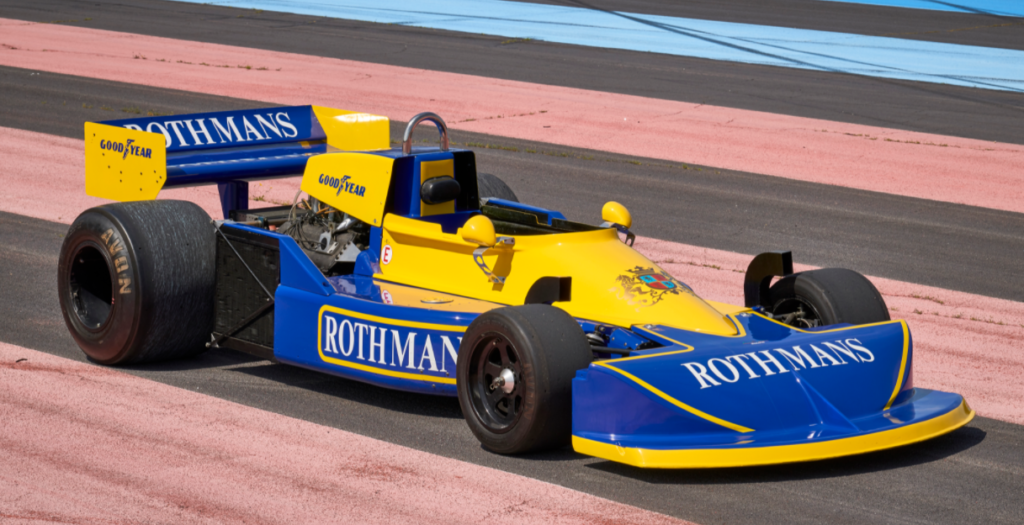
1977 March-Cosworth 771

Offered by RM Sotheby’s | Le Castellet, France | November 19, 2021

Photo Courtesy of RM Sotheby’s

Not only was March Engineering a fairly long-lasting Formula One team, but they were also a race car and chassis constructor for other series for quite a long time. The F1 team first appeared on the grid in 1970, and they would continue to participate through the 1992 season.

The 771 was one of two chassis the team used for 1977. This is the first of two such examples built, and it’s powered by a 3.0-liter Cosworth DFV V8. The competition history for this chassis includes:

  • 1977 Canadian Grand Prix – 18th, DNF (with Ian Scheckter)

It was also used as a test car during the season and was actually merged with the second chassis prior to its Canadian Grand Prix outing. Later use included U.K. hill climb events, which must’ve been pretty exciting in a contemporary F1 car. It has an FIA Historical Technical Passport and had some decent refreshes about six years ago. It’s expected to bring between $345,000-$435,000. Click here for more info and here for more from this sale.

Update: Sold $355,985.

Huron 4A

1970 Huron 4A Sports Prototype

Offered by RM Sotheby’s | Le Castellet, France | November 19, 2021

Photo Courtesy of RM Sotheby’s

Huron Auto Racing Developments Ltd. was founded by Jack Smith and Roy Ireland in the U.K. when they met up with former McLaren designer Jo Marquart. Marquart wanted to design something that wasn’t a McLaren, and thus the Huron was born.

The 4A was a single-seat sports prototype based around a Cosworth 1.8-liter engine. Today, this car, chassis number one of three built, is powered by a 2.0-liter Ford-Cosworth inline-four. The history of the Huron 4A is interesting. Cars number one and two debuted at the 1971 BOAC 1000 at Brands Hatch. Then they failed to qualify at Le Mans, causing Camel to pull their sponsorship funding.

In an effort to make some money, Huron sent the cars to DAF, who fitted car #2 with a Variomatic gearbox. The two cars remained together through their next few owners, including an American SCCA racer. This car has retained its original Hewland gearbox since new. It’s now expected to sell for between $115,000-$160,000. Click here for more info and here for more from this sale.

Update: Sold $110,688.

Arrows A11B

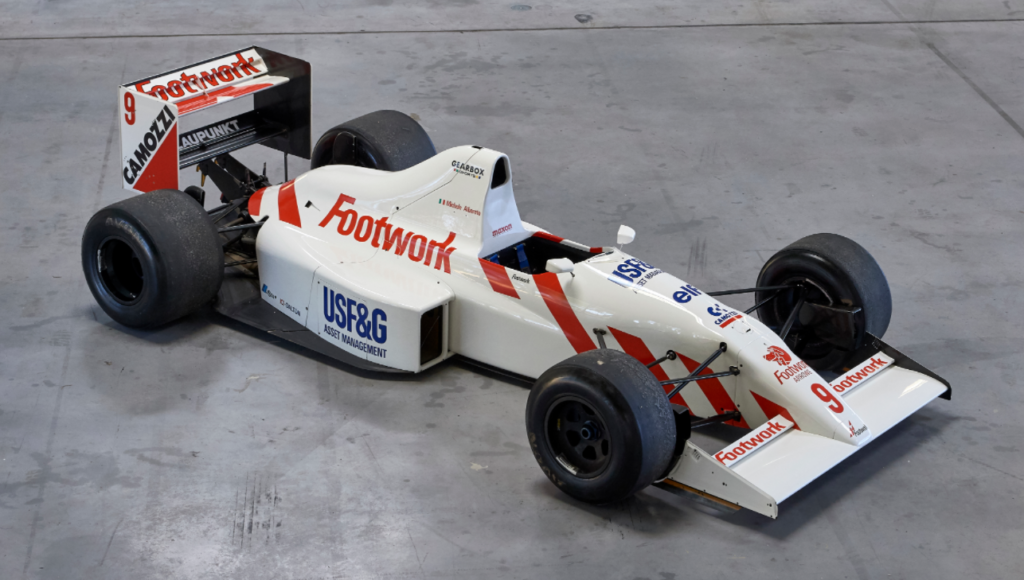
1990 Arrows A11B

Offered by RM Sotheby’s | Le Castellet, France | November 19, 2021

Photo Courtesy of RM Sotheby’s

Arrows was around in F1 for quite a while: from 1978 through 2002, although they were known as Footwork Arrows for five years in the ’90s. The A11, and its derivatives, the A11B and A11C, were the team’s entries for the 1989, 1990, and 1991 seasons.

The A11 was designed by Ross Brawn, and the B variant was largely the same as the earlier car aside from some suspension modifications. The car was originally powered by a 3.5-liter Ford-Cosworth V8, although this chassis is currently engine-less. The competition history for this chassis, A11B03, includes:

  • 1990 San Marino Grand Prix – DNQ
  • 1990 Monaco Grand Prix – DNQ
  • 1990 Canadian Grand Prix -25th, DNF (with Michele Alboreto)
  • 1990 Mexican Grand Prix – 17th (with Alboreto)
  • 1990 French Grand Prix – 10th (with Alboreto)
  • 1990 British Grand Prix – 20th, DNF (with Alboreto)
  • 1990 German Grand Prix – 22nd, DNF (with Alboreto)
  • 1990 Hungarian Grand Prix – 12th (with Alboreto)
  • 1990 Belgian Grand Prix – 13th (with Alboreto)
  • 1990 Italian Grand Prix – 12th (with Alboreto)
  • 1990 Portuguese Grand Prix – 9th (with Alboreto)
  • 1990 Spanish Grand Prix – 10th (with Alboreto)
  • 1990 Japanese Grand Prix – 13th, DNF (with Alboreto)

If you’ve got a spare Cosowrth DFV lying around, this could be a fun project. You can read more about it here and see more from this sale here.

Update: Sold $182,309.

1906 Stuart

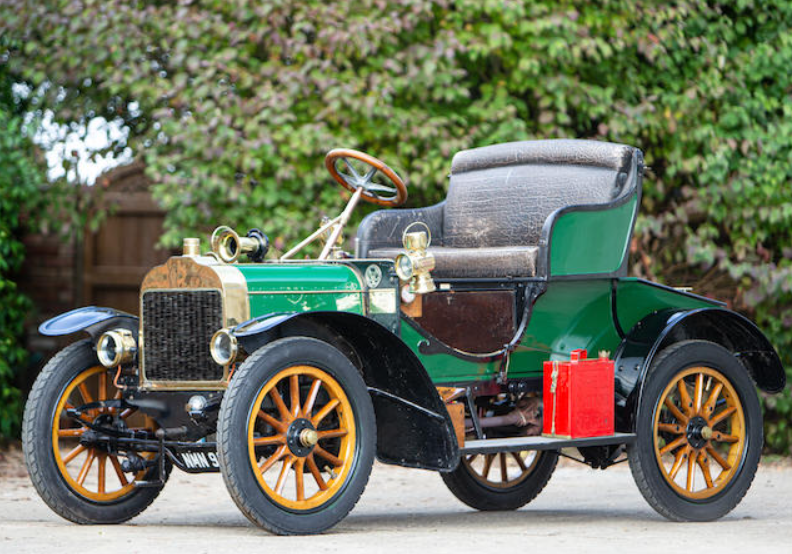
1906 Stuart 7HP Two-Seater

Offered by Bonhams | London, U.K. | November 5, 2021

Photo – Bonhams

Star was one of Britain’s largest automobile manufacturers prior to WWI. In 1905 they decided to produce a less expensive, entry-level car, and they called it the Starling. The Starling featured chain drive and a De Dion engine.

The shaft-driven version of the Starling, which was sold from 1906 through 1908, was called the Stuart. Both the Starling and Stuart were under the control of the Star Cycle Company, which became Briton in 1909. This Stuart is powered by a 1.4-liter inline-twin rated at seven horsepower.

Both two- and four-seater bodies were offered on the Stuart, while the Starling was two-seater only. This one has ownership history back to the late 1940s and is said to cruise at 28 mph. It should sell for between $21,000-$34,000. Click here for more info and here for more from this sale.

Update: Sold $23,139.

Honker II

1967 Holman-Moody Ford Honker II

Offered by RM Sotheby’s | Le Castellet, France | November 19, 2021

Photo Courtesy of RM Sotheby’s

Ralph Moody was a NASCAR driver who ran 47 races in four seasons between 1956 and 1962. In ’56, he won four races driving for Ford and their chief mechanic, John Holman. When Ford pulled out of NASCAR in 1957, the two teamed up and bought Ford’s former Charlotte workshop, forming Holman-Moody. By the mid-1960s, they were the American racing powerhouse, with cars they built dominating NASCAR.

They also dabbled in sports car racing, entering Sebring in 1962 with a Ford Falcon. They wanted to compete in Can-Am, so the Honker II was built for that purpose. It’s powered by a 6.2-liter V8 with Gurney-Weslake cylinder heads. Paul Newman put up the cash to have the car campaigned in the 1967 Can-Am season with Mario Andretti behind the wheel. In five races, the best result it managed was an 8th position.

Newman later used the car in the film Winning. It sat in the Holman-Moody workshop until the mid-1980s, when the company had it restored in its original Passino Purple. The car sold at a Gooding auction in 2013 for $200,000. I’d think the price has gone up significantly since then. Click here for more info and here for more from this sale.

Update: Sold $285,920.

1909 Cooper

1909 Cooper 22.5HP Torpedo Tourer

Offered by Bonhams | London, U.K. | November 5, 2021

Photo – Bonhams

If your tiny car company built six cars over 110 years ago, you’d think the chances of any of them surviving would be essentially nil. But don’t tell that to the long-deceased Thomas Cooper of the Cooper Steam Digger Company Ltd of Norfolk, England. His company typically built steam traction engines and farm equipment. But in 1909 he designed a two-stroke 3.3-liter inline-four that he debuted in a motorcar at that year’s Olympia Motor Show.

It had a three-speed gearbox and a two-speed rear axle. Only six cars were built, each of them different. This is the only survivor. It was parked in 1921 and re-discovered in 1951, where its history trail picks up.

It was later restored and acquired by its current owner in 1994. Museum duty followed, with the car last driven in 2014. It now carries a pre-sale estimate of $55,000-$83,000. Click here for more info and here for more from this sale.

Update: Sold $44,735.