1913 Chalmers

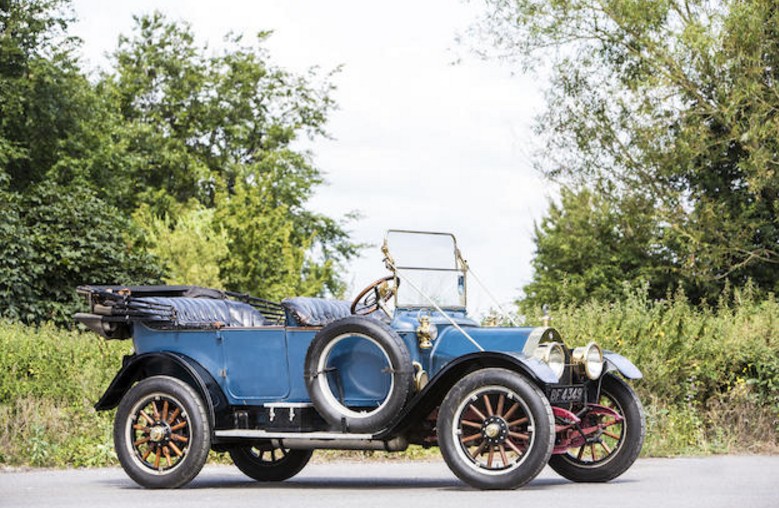
1913 Chalmers Model 17 36HP Five-Passenger Tourer

Offered by Bonhams | Beaulieu, U.K. | September 3, 2016

Photo - Bonhams

Photo – Bonhams

Chalmers was formed in 1908, sort of, when Hugh Chalmers bought out ER Thomas from Thomas-Detroit. Early cars were badged Chalmers-Detroit, before becoming just Chalmers in 1911. The marque lasted through 1924 after merging with Maxwell in 1922. This merged company is known today as “Chrysler.”

The 1913 Model 17 was the mid-range model, offered in six body configurations with the Five-Passenger Tourer being the least expensive at $1,950. It is powered by a 36 horsepower straight-four. This example was imported into the U.K. in 2005 and mechanically restored shortly thereafter. It’s a runner and driver, with a lot of original pieces left, like the interior. It should sell for between $26,000-$32,000. Click here for more info.

Update: Sold $39,879.

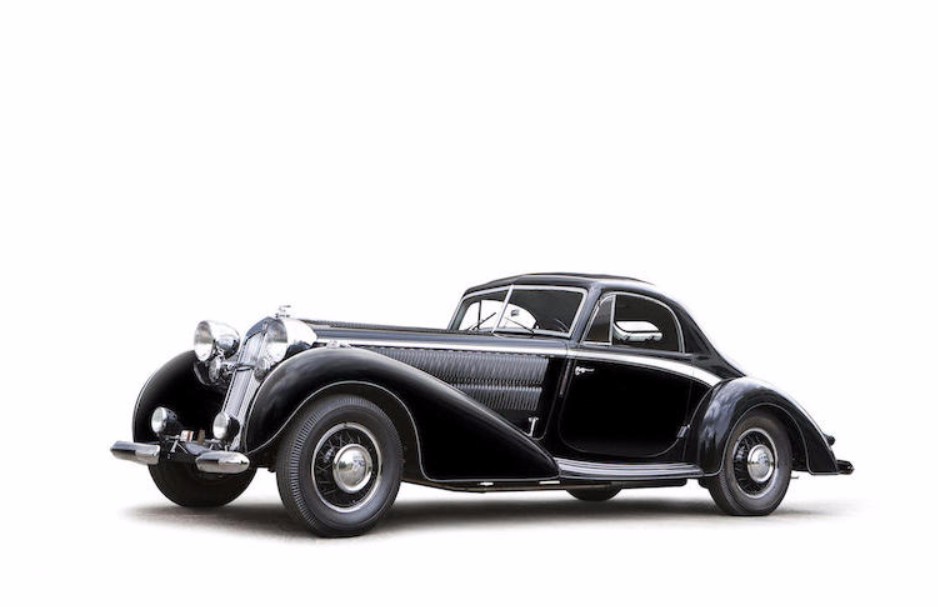
Horch Stromliniencoupe

1937 Horch 853 Stromliniencoupe

Offered by Bonhams | Paris, France | September 3, 2016

Photo - Bonhams

Photo – Bonhams

The 853 is the grandest car that August Horch’s company ever produced. It was also one of the last models that the original, pre-war, Horch marque produced – even though they had already become a part of Auto Union five years prior to this car’s introduction in 1937.

The 853 is powered by a 4.9-liter straight-eight making 100 horsepower. They weren’t the most powerful or fastest cars of their day, but with the right coachwork, they could compete, beauty-wise, with the likes of the Mercedes-Benz 500/540K. This car sports a very fancy streamlined coupe body – a style that is not seen often.

But that’s partly because Horch cars aren’t seen that often to begin with. This car spent its post-war life in Belarus and the Ukraine until 2005 when it was restored in Germany. It is likely to be one of those rare European cars that makes waves at Pebble Beach sometime in the future and everyone will wonder where it came from and where it has been hiding all these years. Well here’s your chance to grab it – for a cost between $670,000-$1,000,000. Click here for more info and here for more from this sale.

Update: Withdrawn from sale.

Update II: Not sold, Bonhams Paris, September 2017.

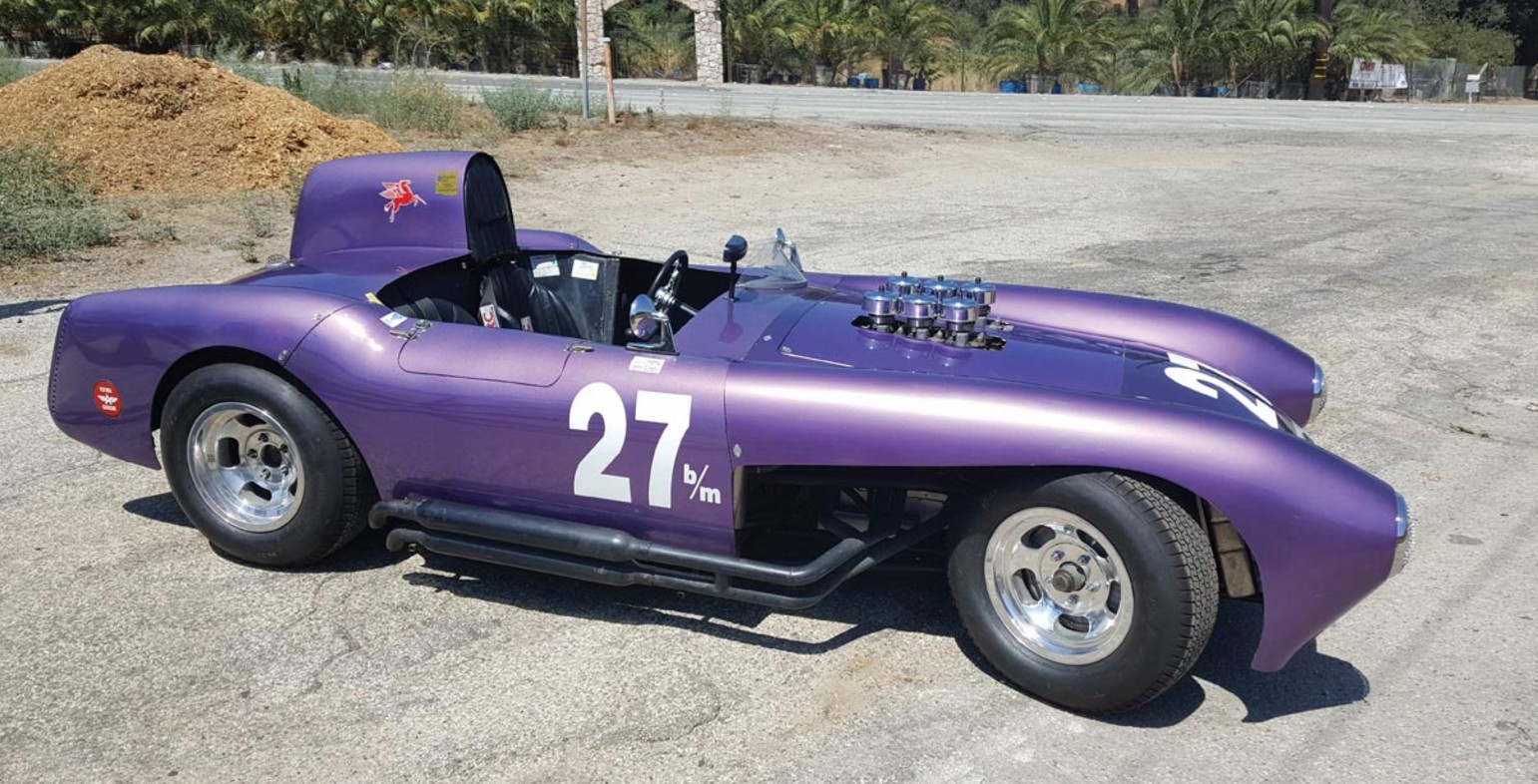
Townsend Typhoon

1957 Townsend Typhoon Mk II

Offered by Worldwide Auctioneers | Auburn, Indiana | September 3, 2016

Photo - Worldwide Auctioneers

Photo – Worldwide Auctioneers

We’ve featured another car called “Typhoon” from the same era as this one – but that one was British and this car was built by Frank Townsend of Tucson, Arizona during the fiberglass sports car craze of the 1950s. The first Typhoon was based on a ’49 Plymouth and was actually built by Townsend while in high school.

The second car was dubbed the Typhoon Mark I. A second one was later built (this car), that was originally a Mark I, but once the fenders behind the front wheels were cut away and the front end redone, they renamed it “Mark II.” It is powered by an Oldsmobile V-8.

It had a period race history in the NHRA and SCCA and is known as the “Purple People Eater.” Frank Townsend only managed to sell two additional Typhoon bodies after this car, putting total Townsend production at five cars – and they are all a little bit different. Fully restored and eligible for historic racing events, this car should bring between $150,000-$200,000. Click here for more info and here for more from this sale.

Update: Not sold.

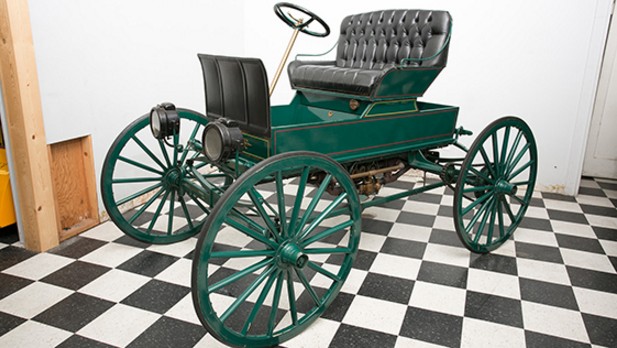
Dart Highwheeler

1909 Dart

Offered by Auctions America | Auburn, Indiana | September 4, 2016

Photo - Auctions America

Photo – Auctions America

The Dart Manufacturing Company was a very short-lived automobile marque from Anderson, Indiana. And by short-lived, we mean short: the Dart was available for about a year between 1909 and 1910.

Not only that, but the company didn’t actually sell complete cars. The specialized in building gasoline engines, but because every other company on earth was getting into the car business, they tried their hand at it too. A running chassis/engine combo was available to the public, but the owners had to find their own body. In this case, a Highwheeler-type carriage was mounted to the chassis. The 10 horsepower engine sports two cylinders and drives the rear wheels via twin chains.

It looks identical to many other highwheelers of the era and carries an older restoration that isn’t perfect, but good enough that you can both show and drive it. It may be the only remaining Dart in existence and it should bring between $15,000-$25,000. Click here for more info and here for more from Auctions America.

Update: Sold $14,300.

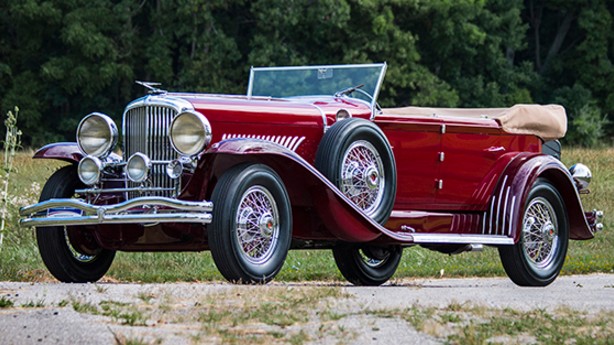
Duesenberg J-420

1931 Duesenberg Model J Convertible Sedan by Murphy

Offered by Auctions America | Auburn, Indiana | September 3, 2016

Photo - RM Sotheby's

Photo – RM Sotheby’s

Numerologists take note! The 265 horsepower 6.9-liter straight-eight engine that powers all standard Duesenberg Model Js displaces 420 cubic inches. And this car carries engine number J420. It’s a sign.

This car was sold new in Michigan and was a Murphy Convertible Sedan when new. However, this car carried a different engine than the one it has now. The second owner acquired this car after WWII and it is believed that he swapped the engine out.

It had a bunch of other owners over the years, spending time in the Imperial Palace Collection and the ownership of mega-collector John O’Quinn. It has been in private ownership since the dispersion of O’Quinn’s collection. The restoration is described as “older” but it looks fantastic – not that it matters much, because, despite their beauty, these are drivers’ cars. This one should bring between $800,000-$1,000,000. Click here for more info and here for more from this sale.

Update: Sold $880,000.

Saoutchik Cadillac

1948 Cadillac Series 62 Cabriolet by Saoutchik

Offered by Gooding & Company | Pebble Beach, California | August 20-21, 2016

Photo - Gooding & Company

Photo – Gooding & Company

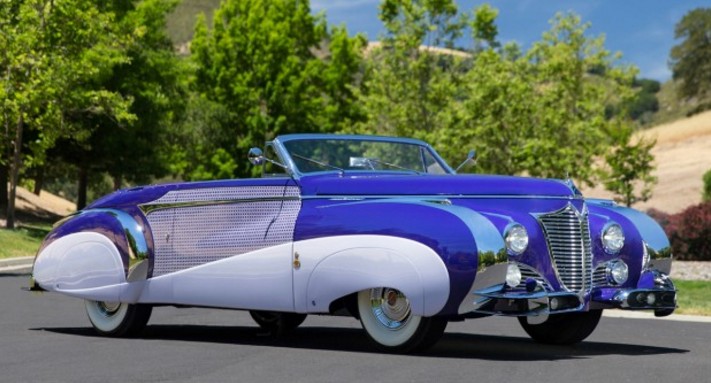
The Cadillac Series 62 was introduced in 1940 and the third generation was introduced in 1948 (and was built through 1953). The cars were barely distinguishable from the down-market Series 61, but you tell them apart by their extra chrome and the fact that the Convertible was not available on the 61. But this is no ordinary Series 62. Nor is it any ordinary Cadillac.

Only two bare chassis were sold by Cadillac in 1948 and both went to Saoutchik in France for dramatic coachbuilt bodies. This windswept design on this Three-Position Cabriolet is similar to Talbot-Lagos of the period. It is powered by a 5.7-liter V-8 making 150 horsepower.

Not much is known about the early history of this car but it was restored in the 1990s and is beautiful, from the design to the colors. Just everything about it. Only two of these were built, and good luck getting your hands on the other one. It should bring between $1,000,000-$1,500,000. Click here for more info and here for more from Gooding & Company.

Update: Sold $907,500.

Two Valuable Alfa Romeo 8Cs

1939 Alfa Romeo 8C 2900B Lungo Spider by Touring

Offered by RM Sotheby’s | Monterey, California | August 19-20, 2016
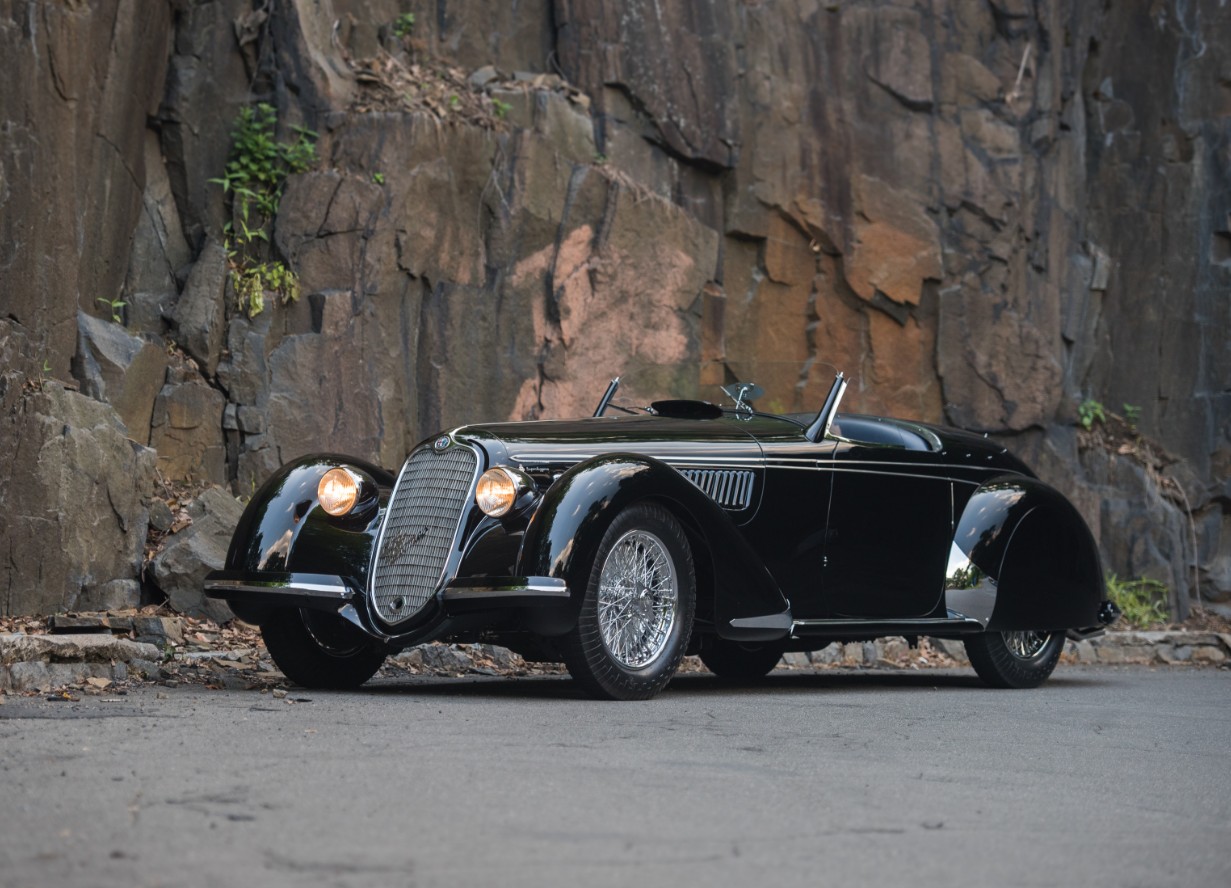
Photo Courtesy of RM Sotheby's

Photo Courtesy of RM Sotheby’s

The Alfa Romeo 8C was Alfa’s largest, most powerful, pre-war road car. It was available from 1931 through 1939 and came in a few different models, beginning with the 8C 2300 and culminating in the 8C 2900B. They were powerful, fast, and sporty. In fact, RM says that it was sportiest car money could buy in 1939 – on par or above the Bugatti Atlantic.

This car is powered by a 180 horsepower, supercharged 2.9-liter straight-eight – enough to allow this car to cruise along at over 100 mph all day long. The Carrozzeria Touring-built body is aluminium and it is beautiful. This is a “Lungo” 8C, meaning it has the longer of the two wheelbases offered.

The earliest known history of this car goes back to 1949, when it was racing in Brazil. The body was separated from the chassis and for the next few decades they remained apart in hands of separate owners. By some miracle, they were reunited in Switzerland in the early 1990s. The restoration was completed by the end of 1997 and, remarkably, the current owners have driven more than 12,000 miles in this car – which is a huge number for a car this rare and valuable.

Only 32 8C 2900 chassis were built and twelve of those are Touring Spiders. Of the 12, only seven are on the long-wheelbase chassis. This is where it gets even more mind-blowing: the pre-sale estimate is between $20,000,000-$25,000,000. Incredible all around. Click here for more info and here for more from RM Sotheby’s.

Update: Sold $19,800,000.


1933 Alfa Romeo 8C 2300 Monza

Offered by Gooding & Company | Pebble Beach, California | August 20-21, 2016
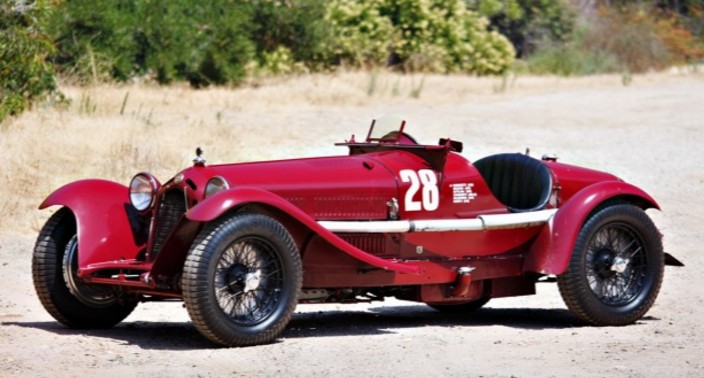
Photo - Gooding & Company

Photo – Gooding & Company

The 8C 2300 was the initial Alfa Romeo 8C offered and it was introduced in 1931. It was a sports car, through and through, and they were raced heavily in their day – both by the factory and privateers and winning Le Mans four times (in a row!).

The 8C 2300 Monza is a short-chassis model based on a car Alfa ran at Monza in 1931 (basically they just cut some length out of a Spider chassis and put the exhaust down the side of the car). The first Monzas were just shortened Spiders, but for 1932 and 1933, the Monza was a model unto itself. Alfa didn’t build many, but race teams – like Scuderia Ferrari – converted some Spiders into Monzas.

And what we have here is an actual, Alfa Romeo factory-built 8C 2300 Monza. It carries a Brianza-built body and was sold new in Italy. It is one of the last Series 3 Monzas built and is powered by a supercharged 2.9-liter straight-eight making in excess of 180 horsepower (when new, it would’ve have a 2.3-liter engine). Only about 190 8C 2300s were built and very few were factory-build Monzas. This one should bring between $12,000,000-$15,000,000. Click here for more info and here for more from Gooding & Company.

Update: Sold $11,990,000.
8C 2300 Monza

1933 Alfa Romeo 8C 2300 Monza

Offered by Gooding & Company | Pebble Beach, California | August 20-21, 2016

Photo - Gooding & Company

Photo – Gooding & Company

The 8C 2300 was the initial Alfa Romeo 8C offered and it was introduced in 1931. It was a sports car, through and through, and they were raced heavily in their day – both by the factory and privateers and winning Le Mans four times (in a row!).

The 8C 2300 Monza is a short-chassis model based on a car Alfa ran at Monza in 1931 (basically they just cut some length out of a Spider chassis and put the exhaust down the side of the car). The first Monzas were just shortened Spiders, but for 1932 and 1933, the Monza was a model unto itself. Alfa didn’t build many, but race teams – like Scuderia Ferrari – converted some Spiders into Monzas.

And what we have here is an actual, Alfa Romeo factory-built 8C 2300 Monza. It carries a Brianza-built body and was sold new in Italy. It is one of the last Series 3 Monzas built and is powered by a supercharged 2.9-liter straight-eight making in excess of 180 horsepower (when new, it would’ve have a 2.3-liter engine). Only about 190 8C 2300s were built and very few were factory-build Monzas. This one should bring between $12,000,000-$15,000,000. Click here for more info and here for more from Gooding & Company.

Update: Sold $11,990,000.
Alfa 8C 2900B Lungo Spider

1939 Alfa Romeo 8C 2900B Lungo Spider by Touring

Offered by RM Sotheby’s | Monterey, California | August 19-20, 2016

Photo Courtesy of RM Sotheby's
Photo Courtesy of RM Sotheby’s

The Alfa Romeo 8C was Alfa’s largest, most powerful, pre-war road car. It was available from 1931 through 1939 and came in a few different models, beginning with the 8C 2300 and culminating in the 8C 2900B. They were powerful, fast, and sporty. In fact, RM says that it was sportiest car money could buy in 1939 – on par or above the Bugatti Atlantic.

This car is powered by a 180 horsepower, supercharged 2.9-liter straight-eight – enough to allow this car to cruise along at over 100 mph all day long. The Carrozzeria Touring-built body is aluminium and it is beautiful. This is a “Lungo” 8C, meaning it has the longer of the two wheelbases offered.

The earliest known history of this car goes back to 1949, when it was racing in Brazil. The body was separated from the chassis and for the next few decades they remained apart in hands of separate owners. By some miracle, they were reunited in Switzerland in the early 1990s. The restoration was completed by the end of 1997 and, remarkably, the current owners have driven more than 12,000 miles in this car – which is a huge number for a car this rare and valuable.

Only 32 8C 2900 chassis were built and twelve of those are Touring Spiders. Of the 12, only seven are on the long-wheelbase chassis. This is where it gets even more mind-blowing: the pre-sale estimate is between $20,000,000-$25,000,000. Incredible all around. Click here for more info and here for more from RM Sotheby’s.

Update: Sold $19,800,000.

Voisin C28 Aérosport

1935 Voisin C28 Aérosport

Offered by RM Sotheby’s | Monterey, California | August 19-20, 2016

Photo Courtesy of RM Sotheby's

Photo Courtesy of RM Sotheby’s

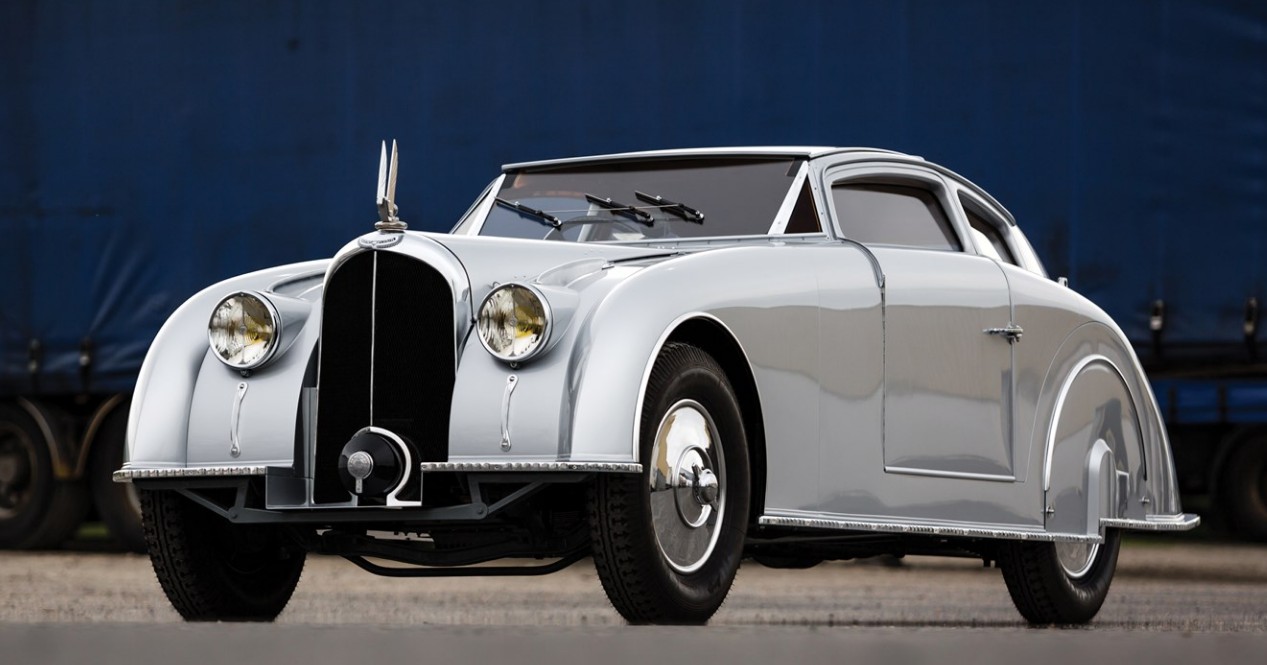
Avions Voisin was Gabriel Voisin’s car company that he set up in 1919. He had already sort of conquered the air with his planes, so he switched his focus to the earth and its roads. If Voisin built cars today, they’d be called wildly impractical and flashy. But because he did it in the 1930s, they are called gorgeous. All of these words are correct, but gorgeous is the most correct.

Interestingly, Voisin chose the Knight-type sleeve-valve engines for use in his cars – the true engineer’s choice. This car uses a 3.3-liter straight-six making 102 horsepower. This was not the fastest car of its day (it’ll do 90+), but good lord, once you start looking at the details and the flawless design, power and speed cease to matter.

Something to note about Voisin’s cars: there aren’t a lot of them that have some fancy coachbuilt body. In fact, Gabriel himself designed this body and it exceeds what you will find from most coachbuilders. It’s Art Deco from front to rear and this two-door sedan has an unbelievable retractable sunroof that opens the entire top above the driver and front-seat passenger. As is the case with most Voisin’s, the interior is outstanding.

This was the first of two C28 Aerosports built. This one was actually damaged in WWII and rebuilt as a four-door sedan afterward. Discovered in 1980, the car was restored to its original glory after the current owner acquired it in 1998. With this car you are buying a moving, driving, piece of art. Click here for more info and here for more from RM Sotheby’s.

Update: Withdrawn from sale.