Offered by Bonhams | Bicester, U.K. | March 20, 2021
Photo – Bonhams
Lagonda has an interesting history of being a marque, then a model, then a marque again. The 2.6-Litre was the first model produced by Lagonda after the company was acquired by David Brown, who paired it with his other baby, Aston Martin.
The 2.6 was produced between 1948 and 1953, and just 510 examples were built, split between four-door sedans and two-door drophead coupes. The engine is a 2.6-liter inline-six that, in Mk II form as seen here, made 125 horsepower.
The current owner of this car bought it five years ago, and it was restored prior to that. It carries a pre-sale estimate of $83,000-$110,000. Click here for more info and here for more from this sale.
Offered by Aguttes | Neuilly, France | March 21, 2021
Photo – Aguttes
Reading is hard. It has taken me far too long to realize that this car was built by Demeester, of Courbevoie, France, and not by Deemster, of London. Automobiles Demeester was founded in late 1905 by Leon Demeester and Dominique Lambejack.
The company built small cars, starting with twins and singles and eventually progressing to a line of four-cylinder cars before the company closed in 1914. This very early example is powered by a 1.1-liter inline-four that made eight horsepower. Demeester bragged that its eight-horsepower four-cylinder engine was the smallest such powerplant in the world.
This car has been in the ownership of the same family since 1966. It even retains its original bodywork. Side note, based on other sources, the 1.1-liter four may not have been introduced until 1907, meaning this car could’ve been built a little later than it is currently titled. It should sell for between $24,000-$36,000. Click here for more info and here for more from this sale.
Offered by Historics Auctioneers | Ascot Racecourse, U.K. | April 17, 2021
Photo – Historics Auctioneers
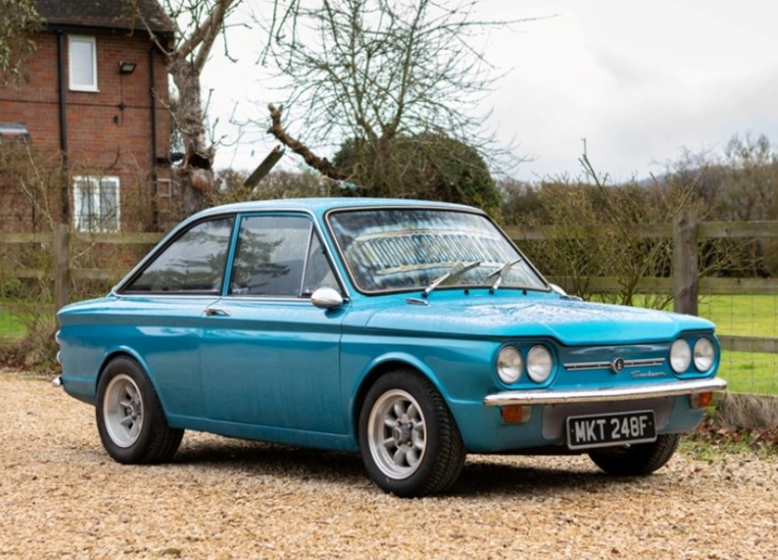
The Rootes Group was like England’s version of AMC, and to continue the metaphor, that would make BMC Britain’s GM. So, BMC had a hit on their hands with the Mini, and Rootes introduced a small car competitor called the Hillman Imp. It featured a rear-mounted engine and a rear-wheel-drive layout.
Much like the Mini, the Imp was sold under a few different nameplates, including the Singer Chamois, Hillman Husky, and the Sunbeam Stiletto. The Stiletto was a “sporty” version of the Imp and it went on sale in 1967. The body style was different too, as this car is more of a fastback coupe than the 2-door sedan Imp. Production lasted through 1972.
The stock engine was a 55-horsepower, 875cc inline-four. This hot-rodded example has a Rover K-Series 1.8-liter inline-four making 120 horsepower. It is also teal (check) and has Minilite-style wheels (check). Stilettos are rare: only 4,735 of the first series examples were produced. This one will sell at no reserve. Click here for more info and here for more from this sale.
The Jet Age was about more than just planes. Jet-inspired styling was all over cars of the era. Different companies even teased jet-powered cars. But none of those companies moved the needle more than Chrysler did with their Turbine Car.
The body was designed by Ghia, and the car was meant to be a public-road test program to study, I guess, the real-world viability of this whacky concept. Kind of like how autonomous Volvos are running over people in Arizona in today’s world.
Power is from a Chrysler-designed turbine engine that weighed 410 pounds and made 130 horsepower at 36,000 rpm (!) and 425 lb-ft of torque. The car could do 120 mph – and it could run on just about any fuel aside from leaded gasoline, including diesel and cooking oil.
They built 55 of these between 1963 and 1964. 50 of those were lent to the general public on three-month leases that wrapped up in 1966. Much like GM did with their EV1, Chrysler had 45 of the cars destroyed at the end of the program. Nine cars ended up being saved, all of which still exist. Only two are in private hands, with this being one of them.
These are cars that don’t change hands often. This one went from Chrysler to the Harrah collection, stopped at Tom Monaghan’s collection, and then to the current collection in the 1980s. It is operational but hasn’t been used much. This is a rare chance to get a car that is impossible. Impossible that it was built. Impossible that it works. And impossible to find. Click here for more info.
Offered by Silverstone Auctions | Online | March 27, 2021
Photo – Silverstone Auctions
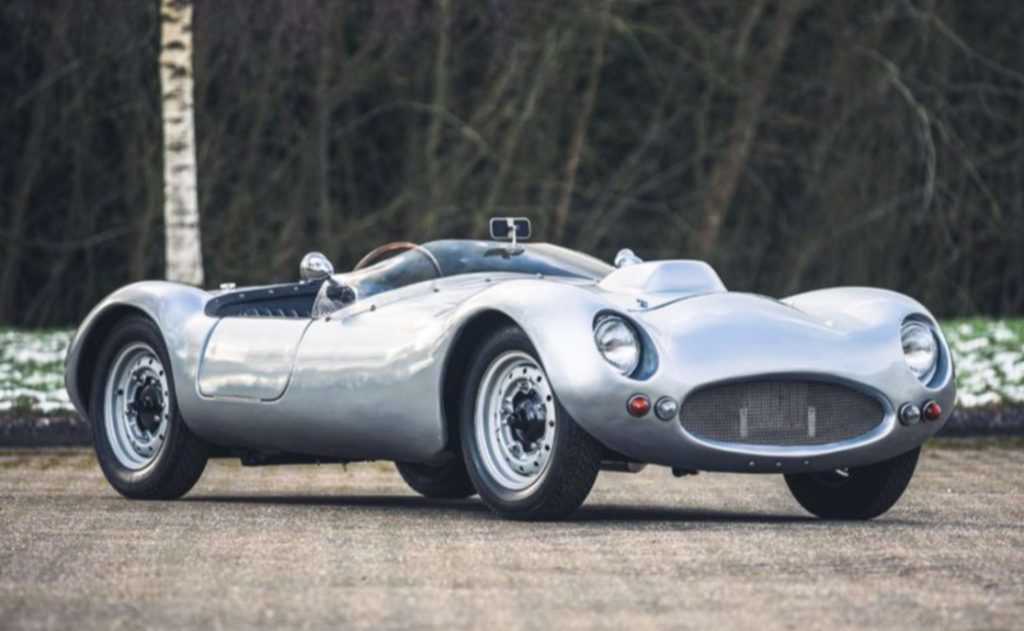
Falcon Shells produced kit cars and fiberglass sports car bodies in England between 1956 and 1965. The Mk II was, well, their second model, and it was a take on the Ashley, which company founder Peter Pellandine produced before starting Falcon.
The model was on sale from the get-go, as the company introduced a hardtop in 1957. The Mk II was really just a body that you’d buy and fit to the chassis of your choice. Their next car, the Competition (or Mk III) was sold as a full kit.
This one is based on a Ford Prefect and is powered by a 1.2-liter inline-four. It’s a cool piece of 50s sports racing history and should sell for between $35,000-$42,000. Click here for more info and here for more from this sale.
Offered by Bring a Trailer Auctions | Online | March 2021
Photo – Bring a Trailer Auctions
Elwood Haynes and the Apperson brothers (Elmer and Edgar) were American automotive pioneers. In 1894, they built one of the country’s first gasoline-powered automobiles. Four years later, they were selling cars to the public under the Haynes-Apperson brand. But it wouldn’t last long, as it appears Haynes wasn’t all that easy to get along with (he would later take credit for building America’s first car… by himself).
The Appersons started their own company, and Haynes soldiered on with the hyphenated marque for about two years until he dropped the Apperson name in 1904. Cars built thereafter were just known as Haynes, making this 1906 Model O a very early example of the marque, which lasted through 1925.
The Model O was only sold in 1906 and was offered as a touring car or a runabout. It’s powered by a 4.6-liter inline-four rated at 30 horsepower. This particular car has been in the Indianapolis Motor Speedway Museum collection since 1968, having been restored about a decade earlier. It comes with its “winter body” – a closed coupe sort of thing to keep the weather out when it was cold. The bidding is off to a strong start, and the auction is slated to end tomorrow. Click here for more info.
Offered by Bonhams | Bicester, U.K. | March 20, 2021
Photo – Bonhams
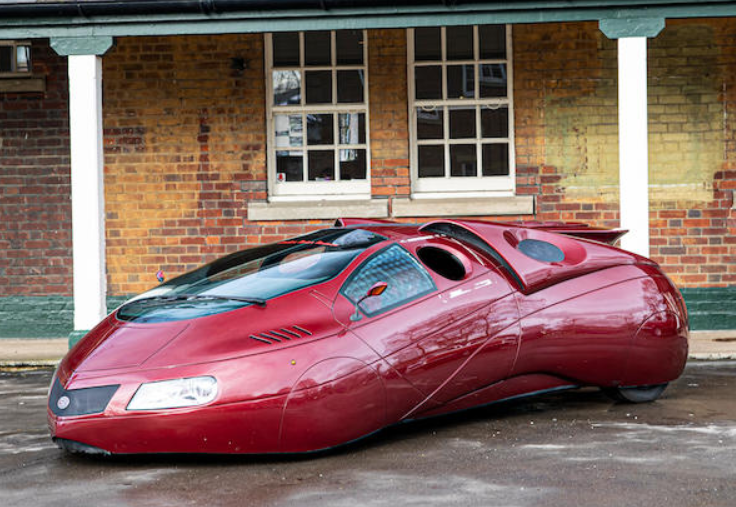
ETV is an acronym for Extra-Terrestrial Vehicle, and this car was built by Mike Vetter of MTV Concepts in some altered state of mind, somewhere in the US. It looks like something from Minority Report.
It has batwing-style doors, two a 2+2 seating arrangement, and some wild styling. The big scoops behind the doors are a little misleading because this thing is front-engined. That’s right, a 1.6-liter inline-four from a Chevrolet Aveo is stuffed up front under the dashboard.
I have no idea what is in back or how you even get to the tiny rear seats. The photos aren’t much help. Apparently it has front and rear parking cameras and an air ride suspension – neither of which work because it’s been on museum display for some time.
A quick search will return a few photos of the ETV in different colors, which would lead you to believe there are a couple of them out there. This one is expected to sell for between $11,000-$17,000. Click here for more info and here for more from this sale.
Offered by Mecum | Houston, Texas | April 8-10, 2021
Photo – Mecum
Here is a car that was around forever. The Lada, which is what the cars were known as in the U.K. and much of mainland Europe, were actually produced by VAZ in the Soviet Union and, later, Russia from 1980 through 2012. 2012! Inside of Russia they were known as VAZ (with various model designations hyphenated thereafter) or Zhiguli.
They were actually based on the Fiat 124 platform, which was licensed like crazy all over Eastern Europe. That car debuted in 1966. And VAZ was still making versions of it in 2012. 2012!
The 2107 model was in production in various forms beginning in 1982, and it was the “Deluxe Sedan,” which means it had a big chrome front grille. This is sort of the base deluxe model, which is powered by a carbureted 1.5-liter inline-four. It’s bare-bones proletariat transportation. But it’s a pretty rare sight in the U.S. (or anywhere in this condition). Click here for more info and here for more from Mecum.
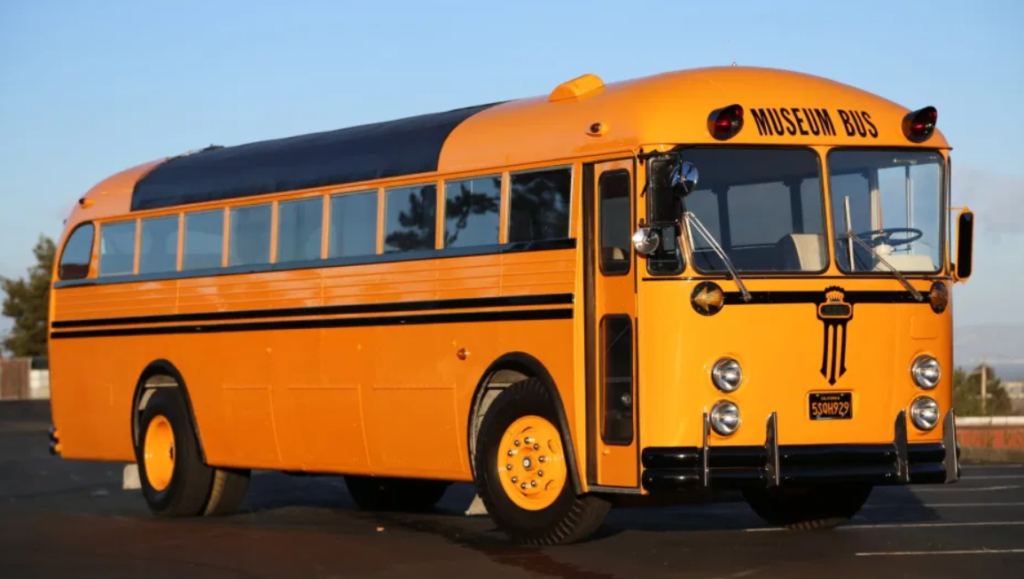
This is a school bus. That is probably obvious. But it is from 1961. I’m guessing they built a lot of these, but there are probably very few left. And based on the records shared in the auction listing, there are probably even fewer that have had this kind of money lavished upon them.
The Crown Coach Corporation produced buses (and some fire trucks) in Los Angeles between 1904 and 1991. The final few months were under the control of GE before the brand was phased out. The Supercoach was a product they introduced in 1948 and continued to iterate on until the end of the line in 1991.
This one has a replacement drivetrain. The 7.0-liter Detroit Diesel inline-six is located in the middle of the bus (underneath it). It also has a more modern five-speed automatic transmission instead of the old school five-speed manual with a two-speed rear axle. Remember your bus driver constantly shifting gears? Yeah, this one is easier to drive.
I always love an old bus, and this one is pretty great. The seats have been stripped out of the interior, which is a shame, but it’s still a winner. It was in service with a school district from new until 1999, which is insane. It makes me wonder just how old the back-up buses I rode on as a kid actually were. Click here for more info about this bus.
1934 Cadillac Series 452D Aerodynamic Coupe by Fleetwood
Offered by Mecum | Glendale, Arizona | March 18-20, 2021
Photo – Mecum
Wow. Cadillac built V16-powered cars for 10 years between 1930 and 1940. The Series 452D was built for 1934, and quite a few body styles were offered, perhaps none more dramatic than this “Aerodynamic Coupe” designed and built by Fleetwood. Mecum refers to this as “the world’s first fastback coupe.”
That’s right, this is a two-door coupe. On a 154″ wheelbase. That’s 20 inches longer than a 2021 Chevrolet Suburban, which has two additional doors. This car does have a spacious rear passenger area, though. But still, ye gods.
The 7.4-liter (452ci) V16 made 169 horsepower, and the car could hit 100 mph. This is one of America’s greatest-ever cars. And this is perhaps its best body style. Not to mention, it’s purple.
So how rare is it? Well, for a combination of 1934 and 1935, Cadillac produced just 150 examples of the V16. Just three Aerodynamic Coupes were built. This one spent a decade in the Blackhawk Collection before being purchased by its current owner in 2007. Mecum is not auctioning this car but is sort of “presenting it for sale” at their Glendale sale. If you have to ask how expensive it is, you cannot afford it. Click here for more info.