The Fanciest Pre-Jaguar

1939 SS 100 2.5-Litre Roadster by Van den Plas

Offered by RM Sotheby’s | Phoenix, Arizona | January 28-29, 2016
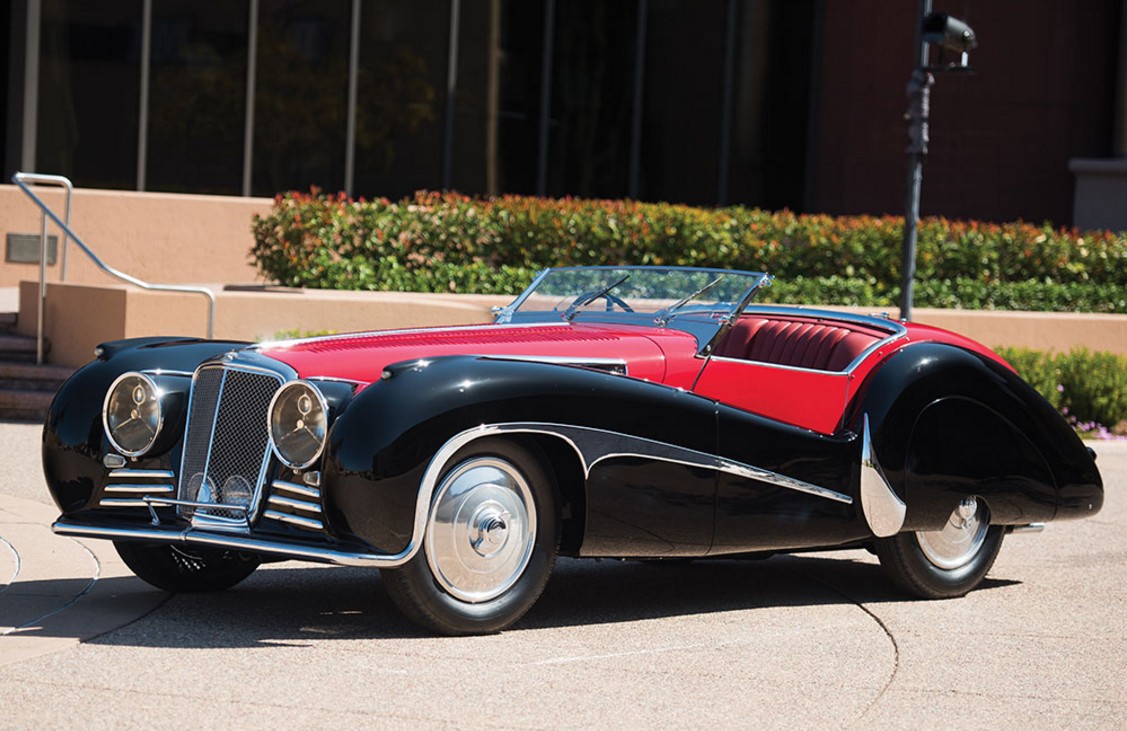
Photo - RM Sotheby's

Photo – RM Sotheby’s

We’ve featured another SS 100 before, but that was the larger-engined 3.5-litre model. This car is actually powered by a 2.7-liter straight-six (even though it’s called a “2.5-litre”) making 102 horsepower.

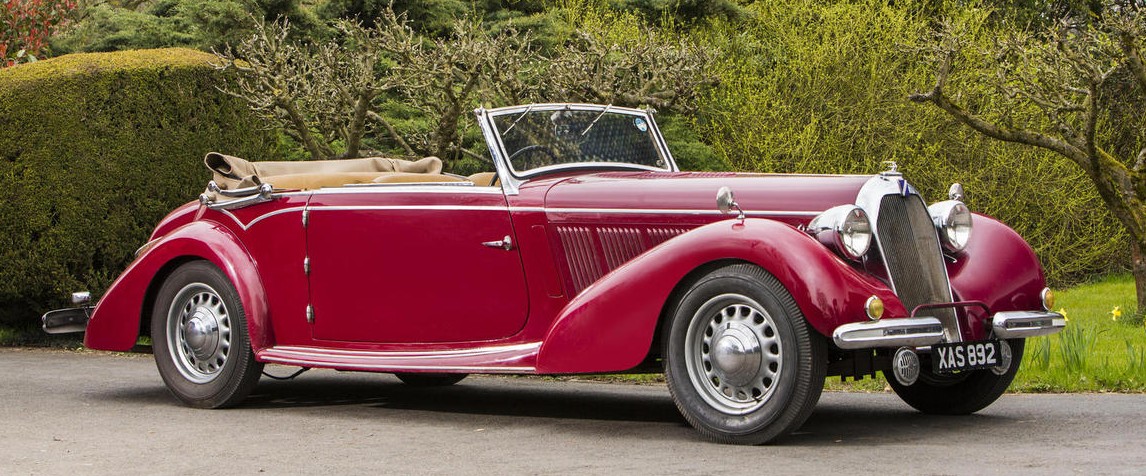
The SS brand, as we all know, became Jaguar after WWII and the Nazi connection those two letters had. This particular car is thought to be the final 2.5-litre SS 100 chassis built in 1939 and it was purchased by Van den Plas, the Belgian coachbuilder. But war broke out and they weren’t able to do anything with it until after things had settled down, so this car with this fantastic, Figoni-esque body debuted in 1948 at the Brussels Motor Show.

Van den Plas began in Belgium in 1870 and a British arm, Vanden Plas, opened in London in 1917. Jaguar had a long associated with that brand through its British Leyland ownership and beyond. You can see the underlying SS 100 under the added swoopy fenders – the grille and hood line is still intact.

This car arrived in the U.S. in the late 1980s or early 1990s and it was then restored. It still wears that restoration that shows well. It is one-of-one and will cost you a pretty penny. Click here for more info and here for the rest of RM’s lineup.

Update: Sold $1,402,500.
Frazer Nash-BMW 328

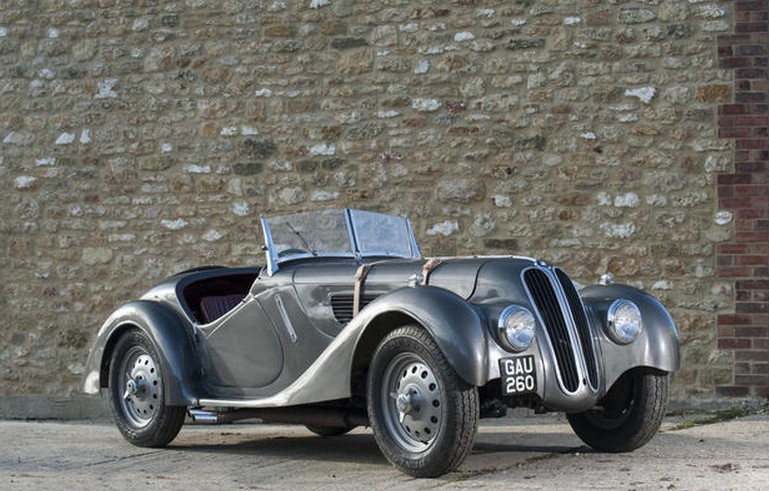
1939 Frazer Nash-BMW 328

Offered by Bonhams | Chichester, England | March 21, 2015

Photo - Bonhams

Photo – Bonhams

The BMW 328 is one of Germany’s first great sports cars, launched in 1936. It was the car that put BMW on the performance map. Meanwhile, in England, Archibald Frazer-Nash had established himself as the official importer for BMW vehicles into the U.K. Except, that these British-bound cars would be marketed as Frazer Nash-BMWs, not just BMWs.

The 328 is powered by a 2.0-liter straight-six making 79 horsepower. Top speed was 93 MPH and they were serious contenders at the Mille Miglia. Production continued until 1940 when the war broke out. This example was imported into England, thus it is a Frazer Nash-BMW, and it was the second-to-last 328 sold in the U.K. before production ceased.

This car has had a number of owners and entered a museum collection in 1972. When the museum closed in the 1980s, it was retained by the family who owned it and has been used sparingly since. It has never been completely restored, just worked on as needed, so it has many original parts. Only 464 BMW 328s were built and not many of them were sold as Frazer-Nash BMWs. This one can be yours for between $1,000,000-$1,200,000. Click here for more info and here for more from this sale.

Update: Not sold.

Bentley “Honeymoon Express”

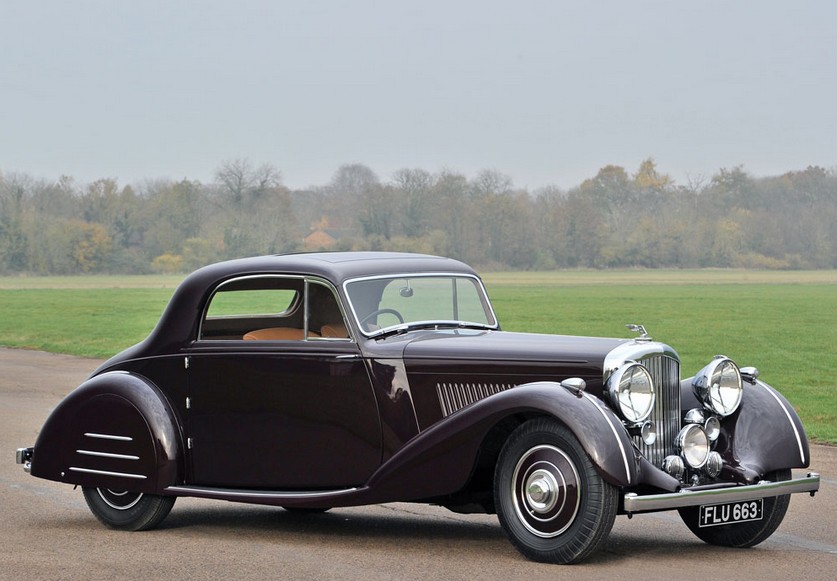
1939 Bentley 4¼ Litre Sports Coupe “Honeymoon Express” by Park Ward

Offered by RM Auctions | Paris, France | February 4, 2015

Photo - RM Auctions

Photo – RM Auctions

The Bentley 4¼ Litre was an offshoot of the Bentley 3½ Litre, which was introduced in 1933. When the engine was enlarged in 1936, the name of the model was changed to reflect it. Note, this model is not the same as the Bentley 4½ Litre or even the plain old Bentley 4 Litre.

Bentleys of this period were actually built under new corporate overlord Rolls-Royce and are sometimes referred to as “Derby Bentleys” because they were produced at Rolls-Royce’s Derby plant. The engine in this car is a 4.3-Liter straight-six making 126 horsepower. But it’s the body that is really interesting.

This was Park Ward’s 1938 Earl’s Court Motor Show car. It’s a two-seater, which was rare for this platform. Instead of rear seats, it has luggage space – just enough for two newlyweds to go off on a jaunt around England. The head of Park Ward kept the car for himself after the show. It later passed to an American serviceman in the 1960s and he kept it until 2002.

A five year restoration was completed in 2011 and it is gorgeous. Bentleys are drivers’ cars and this one is no different. It will prove to be a lot of fun for its new owner. Look for it to bring between $700,000-$840,000. Click here for more info and here for the rest of RM’s Paris lineup.

Update: Sold $769,440.

Willys Pickup

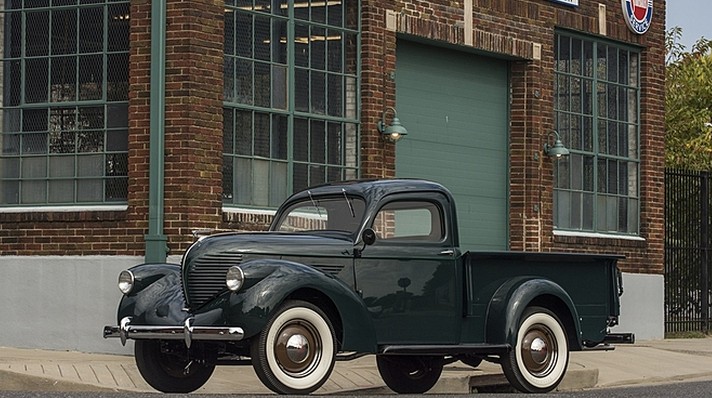
1939 Willys Series 38 Pickup

Offered by Mecum | Austin, Texas | December 12-13, 2014

Photo - Mecum

Photo – Mecum

John North Willys started building cars in 1908 and the Willys name has had a long and interesting history. It helped win WWII for the Allied powers and later became part of Kaiser. It lives on today as the Jeep brand.

The engine here is a 2.2-liter four-cylinder making 61 horsepower. You really don’t see examples of this truck around anywhere. Ever. You rarely even see Willys models from the 30s at all. It’s definitely cool. Click here for more.

Update: Sold $40,000.

Three Pre-War American Pickups

Kisber Vintage Truck Collection

Offered by Mecum | Austin, Texas | December 12-13, 2014


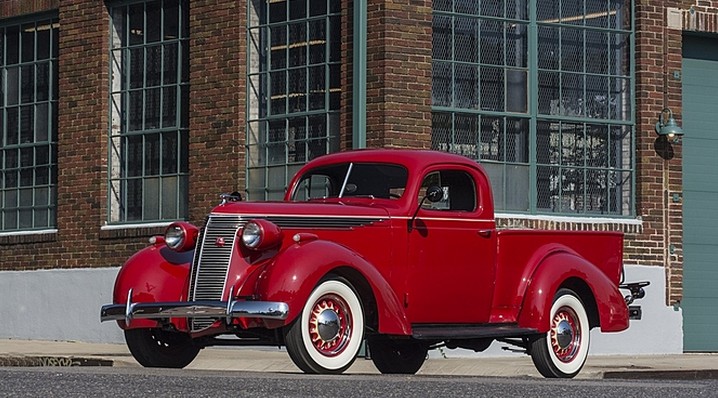
 1937 Studebaker J5 Express Coupe Pickup

Photo - Mecum

Photo – Mecum

Michael Kisber of Memphis, Tennessee, had a great collection of classic American pickups. This 1937 Studebaker J5 is one very pretty truck. The J5 was new for 1937 and it was a new take on the pickup truck: instead of  pure utility, they added some luxury and style.

The engine is a 3.6-liter straight-six making 85 horsepower. The Coupe Express was available through 1939. About 3,000 of the approximately 5,000 examples built were constructed in 1937. Click here for more info.

Update: Sold $72,000.


1939 Willys Series 38 Pickup

Photo - Mecum

Photo – Mecum

John North Willys started building cars in 1908 and the Willys name has had a long and interesting history. It helped win WWII for the Allied powers and later became part of Kaiser. It lives on today as the Jeep brand.

The engine here is a 2.2-liter four-cylinder making 61 horsepower. You really don’t see examples of this truck around anywhere. Ever. You rarely even see Willys models from the 30s at all. It’s definitely cool. Click here for more.

Update: Sold $40,000.


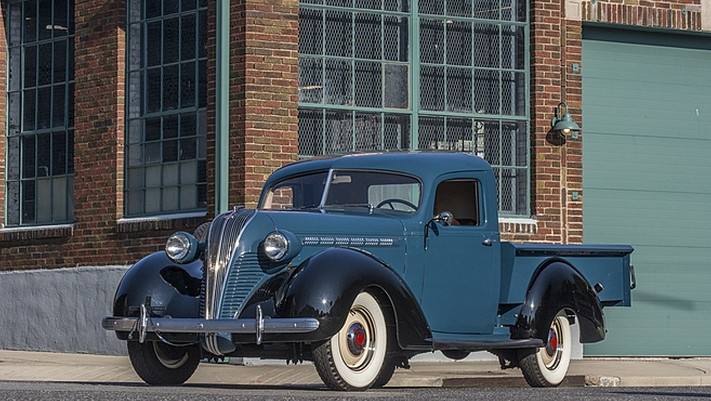
1937 Terraplane Series 70 Pickup

Photo - Mecum

Photo – Mecum

Terraplane was both a model built by Hudson and an entire sub-brand, depending on the year. In ’37 they were technically just Terraplanes, but it wouldn’t surprise me to see them badged as Hudsons as well.

Here’s how the Terraplane branding went down:

1932 through 1933: Essex-Terraplane
1934 through 1937: Terraplane
1938: Hudson-Terraplane

Now you know.

The engine in this one is a 3.5-liter straight-six making 96 horsepower. I’ve seen some of these trucks in person before and they are sharp. I’ve always been a Hudson fan and their sub-brand ranges were just as interesting as the cars they called their own. You can see more here and see more from Mecum here.

Update: Sold $45,000.

Alfa Romeo Tipo 256

1939 Alfa Romeo Tipo 256 Cabriolet Sportivo by Pinin Farina

Offered by Gooding & Company | Pebble Beach, California | August 16-17, 2014

Photo - Gooding & Company

Photo – Gooding & Company

The Alfa Romeo Tipo 256 was actually a racing car, despite the svelte body you see here. It was developed as a racing version of the 6C 2500 by Scuderia Ferrari. It has a shortened frame, huge fuel tank, and stiffer suspension.

The engine is a 2.5-liter straight-six making 125 horsepower – 35 more than the standard 6C 2500. Alfa raced these cars in the Mille Miglia and at Le Mans. It was the last race car Alfa built before WWII.

This car began life as a racing car, but when war broke out, most racing was suspended and many of the Tipo 256s were re-bodied. This one went to Pinin Farina in 1940. Later that year, this very car was sold to Piero Dusio – race car driver and future founder of Cisitalia.

It was restored (or refinished, depending on how you see it) in 2008 which consisted mostly of a new top and new paint. The interior is original. This is one of between eight and 20 Tipo 256s built and it is the only one that looks like this wonderful Cabriolet Sportivo by Pinin Farina. It will likely sell for between $5,000,000-$7,000,000. Click here for more info and here for the rest of Gooding & Company’s lineup.

Update: Sold $4,000,000.

A Darracq Talbot-Lago

1939 Darracq T120 Major 3-Litre Three-Position Drophead Coupe

Offered by Bonhams | London, U.K. | June 27, 2014

Photo - Bonhams

Photo – Bonhams

Someday I’ll have to do one of our “Car Guy History” posts about Darracq’s corporate history, but until then I’ll answer your question: no, this is not a Talbot-Lago. Well, I mean, it is a Talbot-Lago – but the brand name of this car is a Darracq. See, today’s proliferation of brand-engineered mini-SUVs wasn’t the first time stuff like this has happened.

Because of the weirdness in the history of the Talbot name, Talbot-Lago cars were only “sold” in France. The Rootes Group in England owned the Talbot name everywhere except France, so for more generic-looking exports (to places like the U.K. and Sweden, where this car was bought new), Talbot-Lago badged their cars “Darracq.” This is essentially a badge-engineered Talbot-Lago T120 Major.

The engine is a 3.0-liter straight-six and the car has spent most of its life in Sweden and Denmark. In the last 10 years, it came to the U.K. via a sale at Retromobile in Paris. It was freshened (the restoration was done in the late-80s) and used for touring. Bonhams describes this car as “elegant” – which it certainly is. It should sell for between $120,000-$130,000. Click here for more info and here for more from this sale.

Update: Sold $122,735.

Another Five Military Vehicles

The Littlefield Collection

Offered by Auctions America | Portola Valley, California | July 11-12, 2014


 1944 Nibelungenwerke Panzerkampfwagen IV Ausf. H

Photo - Auctions America

Photo – Auctions America

The Panzer IV was one of the most popular German tanks during the Second World War. It was the most produced as well. They were manufactured by Krupp, Vomag, and Nibelungenwerke – which would become Steyr-Daimler-Puch after the war. So this one was built in Austria. About 8,553 were built between 1936 and 1945.

The engine is a 296 horsepower Maybach V-12 that can push this thing to 26 mph. Used by Czechoslovakia after the war, they sold it to Syria. It was captured by Israel in 1967 and the museum got it in 2003. It is all-original and needs to be restored. But that doesn’t mean it’s cheap: the estimate is between $2,000,000-$2,400,000. Click here for more.

Update: Not sold, high bid of $1,750,000.


ca.1939 Krauss-Maffei Sd.Kfz. 7

Photo - Auctions America

Photo – Auctions America

Continue reading

German Half-Track

ca.1939 Krauss-Maffei Sd.Kfz. 7

Offered by Auctions America | Portola Valley, California | July 11-12, 2014

Photo - Auctions America

Photo – Auctions America

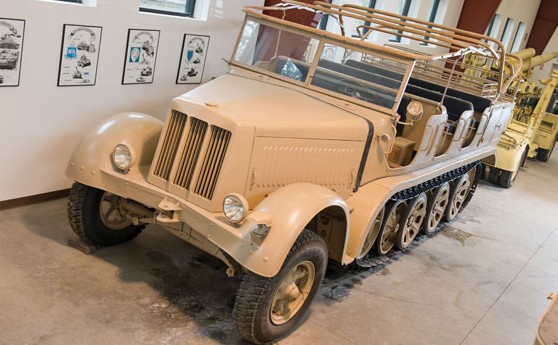
German half-tracks are some of the most sought-after military vehicles from WWII. The Sd.Kfz. 7 is one of the highlights. These were built between 1938 and 1944, with a total production of 12,187 between Krauss-Maffei, Borgward, and Sauserwerke. Breda also built 250 of them in Italy. The engine is a 140 horsepower Maybach straight-six. It seats 11 and can do 31 mph. This was used in Czechoslovakia after the war and was restored in the late-1990s. The price shows how sought-after they are: between $900,000-$1,200,000. Click here for more info.

Update: Sold $1,207,500.

Aston Martin Atom

1939 Aston Martin Atom

Offered by Bonhams | Goodwood, U.K. | June 27, 2014

Photo - Bonhams

Photo – Bonhams

Aston Martin built their first car in 1915. The built sporty open cars in the 1920s and 30s, but the company we know that builds luxurious tourers didn’t take off until the 1950s. But there was one landmark car that kind of signaled the direction the company would take once David Brown took over after World War II. This is that car.

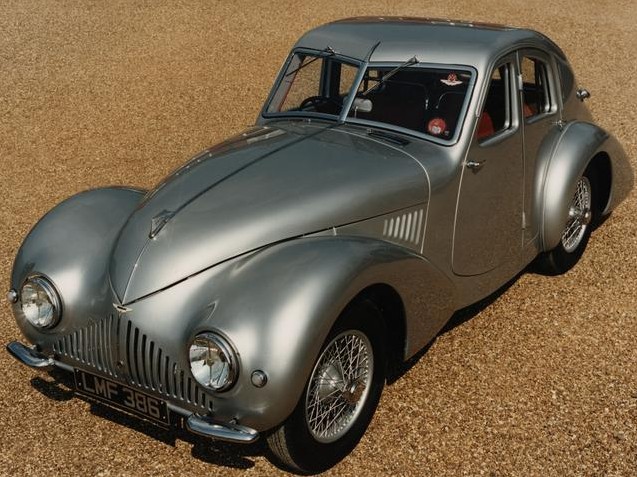
In fact, this is the car that caused David Brown to buy Aston Martin once he had the chance to drive it. What you see here is a one-off concept car – one of the first fully-functional concept cars ever built. It has an aerodynamic aluminium body and a tubular spaceframe chassis. It looks like a fastback coupe, but it actually has four doors.

It was driven over 100,000 miles by the then-owner of Aston: Gordon Sutherland. But the war broke out and it couldn’t be put into production. The engine was swapped out in 1945 for the new 2.0-liter straight-four that can also be found in the DB1. It makes 90 horsepower.

This car has only had a few owners in its life and has only changed owners once in the last 49 years. It has been maintained (meaning, presumably, never restored) over the years and used a lot – the odometer shows over 250,000 miles. This is a one-of-one car – the rarest Aston Martin there is. Bonhams isn’t listing a pre-sale estimate just yet, but they expect “many hundreds of thousands” of dollars. Perhaps more. You can read more here.

Update: Not sold.