Corvette ZR2

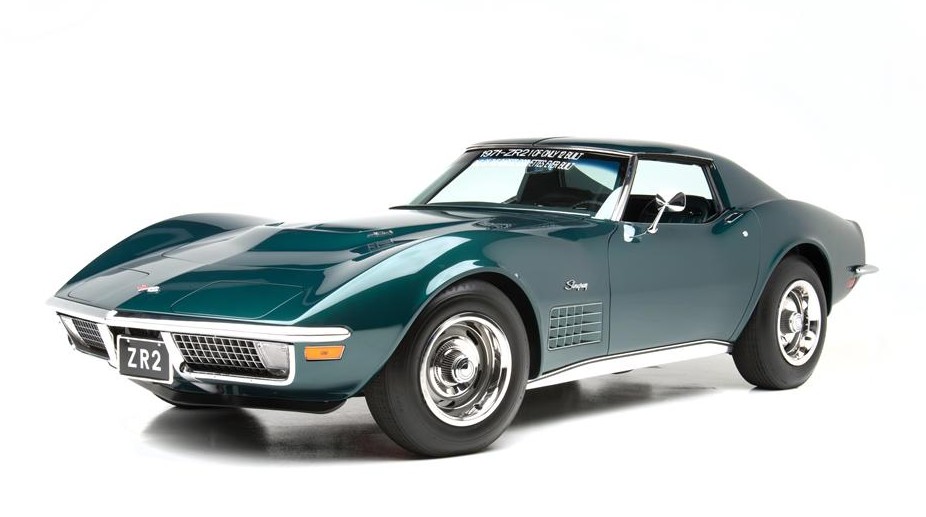
1971 Chevrolet Corvette ZR2

Offered by Barrett-Jackson | Scottsdale, Arizona | January 18, 2013
1971 Chevrolet Corvette ZR2

The third generation (C3) Corvette was all new for 1968. The Stingray, as it was called, dawned at the height of the muscle car era. Chevy and GM had their feet firmly planted in pony car territory. But all-out muscle cars?

In 1970, Chevy offered a special package on the Corvette called the ZR1. It was a high-performance package with an upgraded engine, brakes, suspension and more. For an extra $500 or so on top of that, you could’ve ordered a ZR2.

The ZR2 package was supposed to be for 1970 only, but it got delayed a bit too long and is only found on 1971 Corvettes. It uses the big 7.0-liter 454 V-8 underrated by the factory at 425 horsepower. It also got power disc brakes, heavy-duty suspension, and posi-traction. The package was an additional $1,747 on top of a base Corvette and only 12 were built.

A high-performance Corvette that is one of only 12 built + a Barrett-Jackson auction in January? Yeah, that’s going to make for one expensive car. Check out more here and see the rest of Barrett-Jackson’s auction lineup here.

Update: Sold $495,000.
Ex-BMW Motorsport McLaren F1 GTR

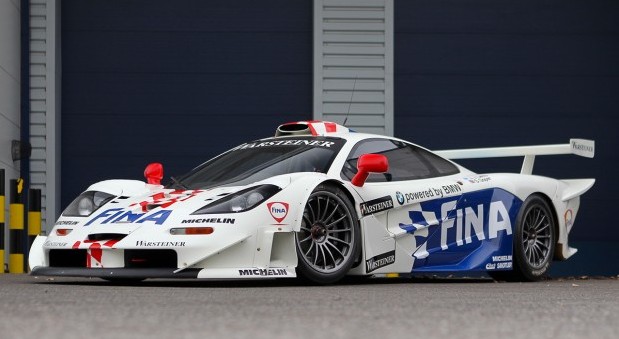
1997 McLaren F1 GTR Longtail

Offered by Gooding & Company | Scottsdale, Arizona | January 18, 2014

1997 McLaren F1 GTR Longtail

Photo – Gooding & Company

We’ve actually already featured a 1997 McLaren F1 GTR Longtail, so this is kind of awkward. What makes this car different? Well, for one, it is an ex-BMW Motorsport F1 GTR Longtail. Why is that distinction important? Because that was the closest approximation to a factory McLaren F1 race team.

The first F1 GTRs were built for 1995 and 1996 but the rules of racing changed for 1997. There were specialty-built prototype race cars backed by major manufacturers that came into the fold. Instead of building a race car around a road car (which is the case with the McLaren), companies built homologation specials of their race cars in order to make them “road-car-based.” The F1 had a slight handicap.

But it didn’t matter because Porsche, Mercedes-Benz and the like didn’t have Gordon Murray in their corner. The F1 was re-designed with an elongated nose and tail and a huge rear wing. The engine was a BMW Motorsport-sourced 6.0-liter V-12 detuned to make 604 horsepower (the road car made 627 with slightly larger displacement – that’s how incredible it really was).

This was BMW Motorsport car #1 (chassis #021R). It’s competition history includes:

  • 1997 FIA GT Hockenheim – 1st (with JJ Lehto and Steve Soper)
  • 1997 FIA GT British Empire Trophy at Silverstone – 3rd (with Lehto and Soper)
  • 1997 Helsinki 3 Hours – 1st (with Lehto and Soper)
  • 1997 Nürburgring 4 Hours – 3rd (with Lehto and Soper)
  • 1997 3 Hours Laguna Seca – 36th, DNF (with Lehto and Peter Kox)

And that was it for this car. After 1997, the F1 GTR program came to a halt. BMW traded this car to another McLaren team and the new owner loaned it to the Le Mans Museum for a little bit before selling it at the end of 2001. The new American owned had McLaren restore the car in 2002 to its original 1997 FINA racing colors.

In 2006, it was acquired by a German who actually used the car on track for the first time since 1997. Only 10 GTR Longtails were built (all in 1997) and this is as close to a factory race team example as there is. It was also the most successful BMW Motorsport Longtail with an impressive race history. Gooding & Company estimate that this car will bring between $5,000,000-$7,000,000 at auction in a few weeks. Click here for more info and here for more from Gooding in Scottsdale.

Update: Sold $5,280,000.

Duesenberg J-129

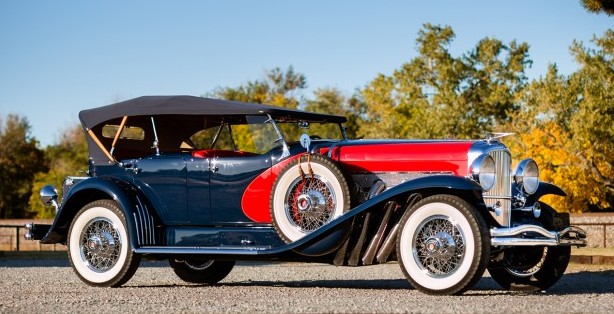
1929 Duesenberg Model J Dual Cowl Phaeton by LeBaron

Offered by Gooding & Company | Scottsdale, Arizona | January 18, 2014

1929 Duesenberg Model J Dual Cowl Phaeton by LeBaron

This is one of my favorite body styles of Duesenberg. The Model J is one of the best cars ever built and a LeBaron Dual Cowl Phaeton is just such a grand way to tour.

This is an early car (as evidenced by the engine number) and LeBaron was one of the three coachbuilders that Duesenberg invited to build bodies for their early cars. This style was designed by LeBaron co-founder Ralph Roberts. This car has its matching engine, chassis and body. Which is relatively rare.

Sold new to the son of one of the Dodge brothers, the Gooding & Company catalog description says this is believed to be the only Duesenberg delivered new in Detroit. I guess Indiana and Detroit had a nice feud going back in the day (I’d say Detroit won the battle but Indiana is winning the war, economically speaking of course). The ownership chain is unbroken and known since. The car was restored in 2008 by Fran Roxas (that adds to the price tag significantly). This is one of the best designs of all time and can be yours for between $2,000,000-$2,300,000. Click here for more info and here for more from Gooding & Co. in Arizona.

Update: Sold $2,090,000.

Update II: Sold, Gooding & Company Scottsdale 2016, $2,420,000.

Figoni et Falaschi Bentley

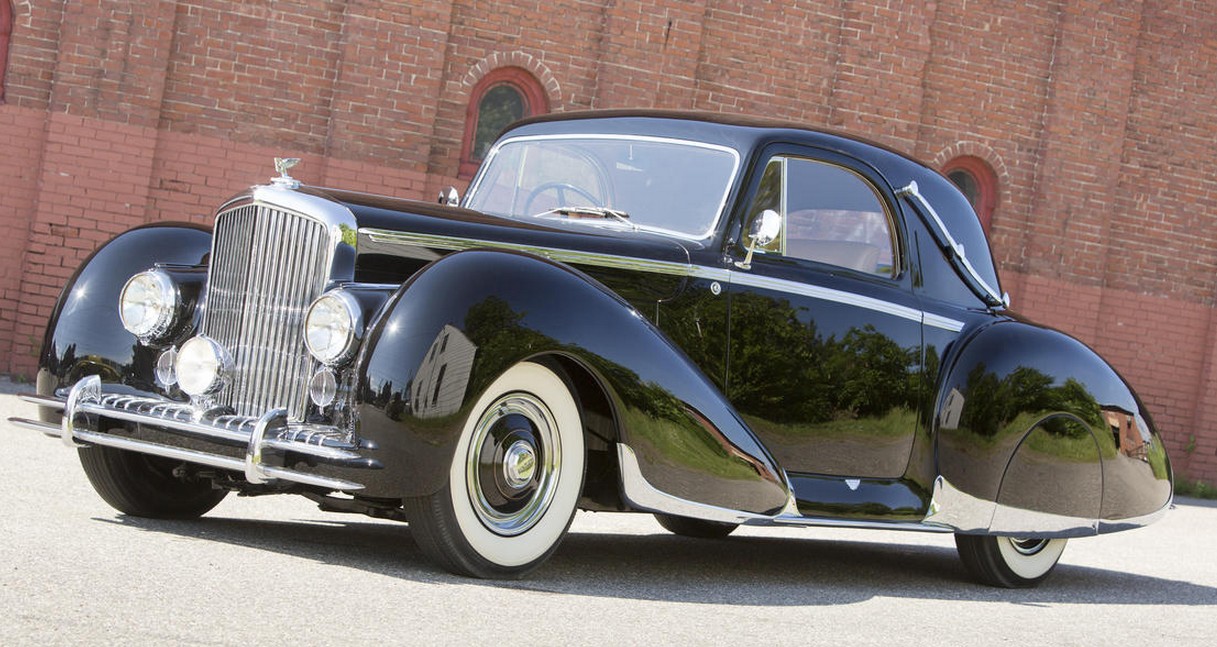
1947 Bentley Mark IV Coupe by Figoni et Falaschi

Offered by Bonhams | Scottsdale, Arizona | January 16, 2014

1947 Bentley Mk IV Coupe by Figoni et Falaschi

There’s nothing too remarkable about the Bentley Mark VI. It’s not a car that stands out to me as brilliant or beautiful or anything special other than it being an old, post-war luxury sedan. That is, until you have one of the most prestigious coachbuilders in history slap one of their windswept bodies onto it.

The Mark VI was introduced in 1946 and lasted through 1952. This car uses the 4.25-liter straight-six making about 132 (or “adequate”) horsepower. In total, 5,208 were built in various bodystyles.

This car was built for a Parisian who used it to commute to Monaco. It was originally dark gray and it came to America in 1964 – where it has been since. It was restored in 1990 – and painted red – when it showed up and won Best in Class at Pebble Beach. In 2012 it was repainted black – which is a much better color than red for this car.

According to Bonhams (and Joseph Figoni’s son Claude), this is the only “true” (not sure what that means) post-war Bentley bodied by Figoni et Falaschi. It’s certainly striking and it’s certainly the only one like it in the world. It should sell for between $500,000-$650,000. Click here for more info and here for the rest of Bonhams’ auction lineup.

Update: Sold $605,000.

Hispano-Suiza Cabriolet deVille

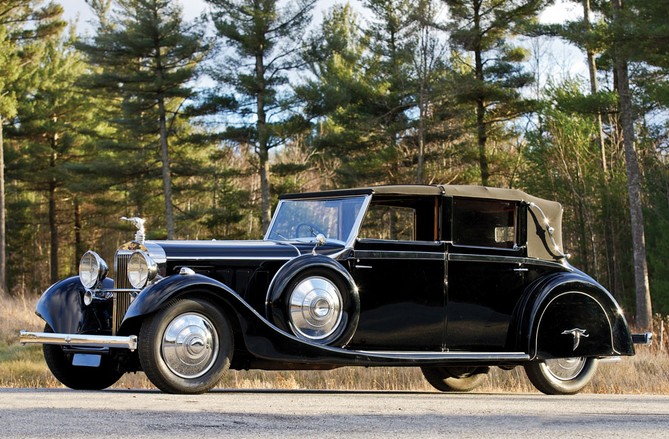
1935 Hispano-Suiza J12 Cabriolet deVille by Rippon Brothers

Offered by RM Auctions | Phoenix, Arizona | January 17, 2014

1935 Hispano-Suiza J12 Cabriolet deVille by Rippon Brothers

We featured a Hispano-Suiza J12 a few months ago but that car was withdrawn from the sale before it could cross the block so I couldn’t really get a feeling as to what it was going to sell for. The estimate was in the millions. This car shouldn’t be too far off with an estimate between $1,000,000-$1,300,000.

But then again, this car isn’t a long two-door cabriolet. Instead it’s a very stylish and expensive looking four-door limousine-like tank. RM’s catalog description uses the word “aristocracy” and that’s spot-on as this is truly a car for an aristocrat.

The J12 was Hispano-Suiza’s halo car. Built from 1931 through 1938, only about 100 of the magnificent V-12-powered cars were built. This car uses the smaller 9.4-liter engine making 220 horsepower.

Delivered new to the U.K., it made it’s way to the U.S. after a restoration in the 1980s. It became part of the John O’Quinn collection in 2006. A mechanical overhaul was recently completed, making this a better driver than it has been in over half-a-century. This car has it’s original body, engine, and chassis – numbers matching, as they say. It is stupendous and fit for a king. Read more here and check out more from RM here.

Update: Sold $1,045,000.

1910 Simplex

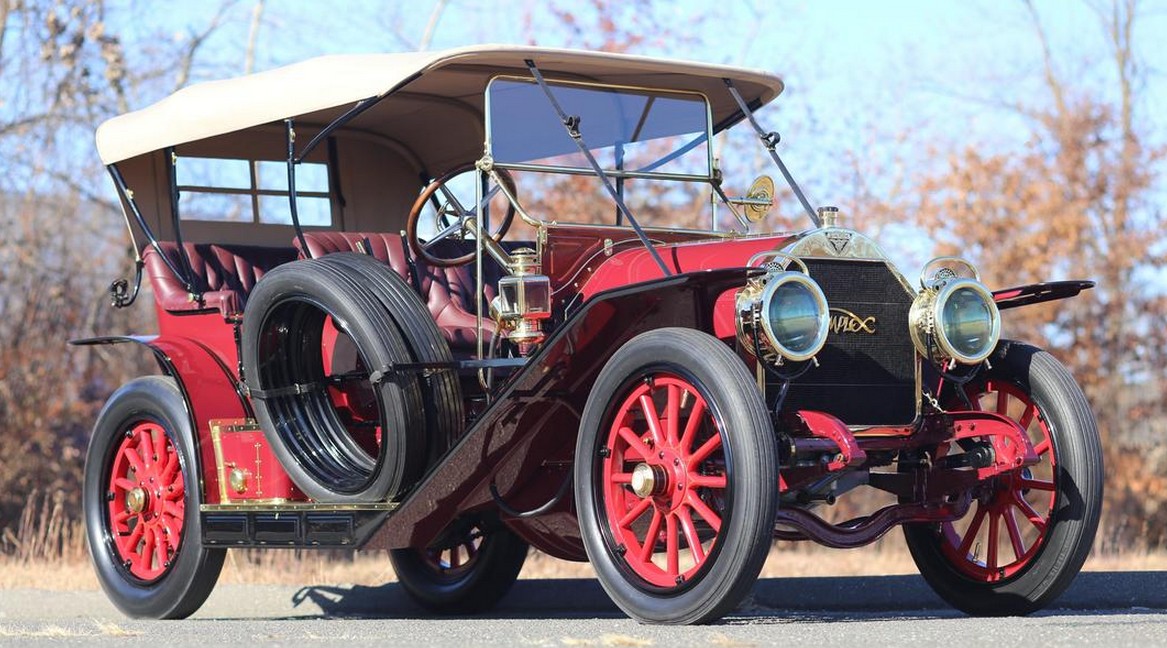
1910 Simplex 50HP Toy Tonneau by Holbrook

Offered by Bonhams | Scottsdale, Arizona | January 16, 2014

1910 Simplex 50HP Toy Tonneau

Simplex is a name that was used a lot in the early days of motoring. There were numerous companies with similar sounding names – and why not, the Simplex you see here was one of the standards of the world. Why not try to get someone confused and end up buying your off-brand Simplex instead?

Simplex began life as Smith & Mabley in New York – importing European cars for sale. Then they tried building their own car based on the Mercedes-Simplex – which didn’t work either. 1907 brought a change at the top of the company and a new model was designed. It was still similar to the Mercedes-Simplex, but had a bigger engine. This car uses a monstrous 9.8-liter T-head straight-four making 50 horsepower. It features dual-chain drive which is a sight to behold if you’ve never seen a car like this in action.

Simplex was one of the very top cars ever built. They had power, luxury, comfort, and speed all wrapped into one expensive package (about $6,000 in 1910). This car apparently has known ownership history from new and has been owned by some major collectors. Bonhams calls it “the definitive” Simplex. It’s certainly impressive. Only about 250 of these were built and this one should bring a big $1,000,000-$1,250,000. Click here for more info and here for more from Bonhams.

Update: Did not sell.

Ascari FGT Race Car

1995 Ascari FGT-GT1

Offered by Coys | Birmingham, U.K. | January 11, 2014

1995 Ascari FGT-GT1

Ascari is one of those little boutique automobile manufacturers that could’ve gone out of business five years ago and no one would’ve known. Apparently they are still in business but the company can trace its roots back to this car.

Lee Noble designed the FGT (he now builds cars under his own name) and it took about five years to actually get the thing built. This racing version was built for company owner Klaas Zwart to compete in the British GT Championship. He won one race at Silverstone. It also raced in 1996 and 1997 before being mothballed back at Ascari HQ.

Fast forward to 2009 when the car was completely rebuilt by an ex-Ascari team member to 1997 race spec. The car is being offered with spares as well. Only 17 road-going versions of the FGT were built (few if any remain). And only one race-going GT1 version was produced by the factory. This is that car. It should sell for between $100,000-$115,000. Click here for more info and here for more from Coys in Birmingham.

Update: Sold $108,000.

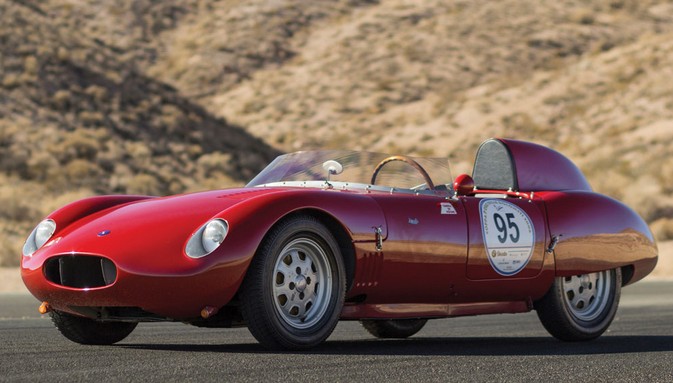
OSCA 750 S

1960 OSCA 750 S

Offered by RM Auctions | Phoenix, Arizona | January 17, 2013

1960 OSCA 750 S

After the Maserati brothers had sold their stake in the company that bore their name, they set up shop just out of town as Officine Specializzate Costruzioni Automobili – Fratelli Maserati SpA. – or OSCA. The company built race cars and a few road cars until it closed up in 1967.

OSCA threw itself into the spotlight after Stirling Moss and Bill Lloyd won the 1954 12 Hours of Sebring in one of their cars. A few years later in 1957, OSCA would introduce the 750 S – a light and nimble little race car.

The engine in this car is an 850cc straight-four making 75 horsepower. This was the last one built and it was purchased by race car driver John Bentley. The competition history for this car includes:

  • 1960 12 Hours of Sebring – 12th (1st in class) with John Bentley and Jack Gordon
  • 1962 12 Hours of Sebring – 23rd (1st in class) with Bentley and Gordon
  • 1963 SCCA Northeast Division Championship

Bentley raced this thing at just about any track he could, piling on miles at SCCA events all over the East Coast. The restoration was completed in 1984 and the car has been cared for and used in historic events since. Yes, it’s an older restoration – but that just makes it easier to take it out on the track. This is one of 18 750 S models built and it is expected to sell for between $600,000-$800,000. You can read more here and check out more from RM here.

Update: Sold $660,000.

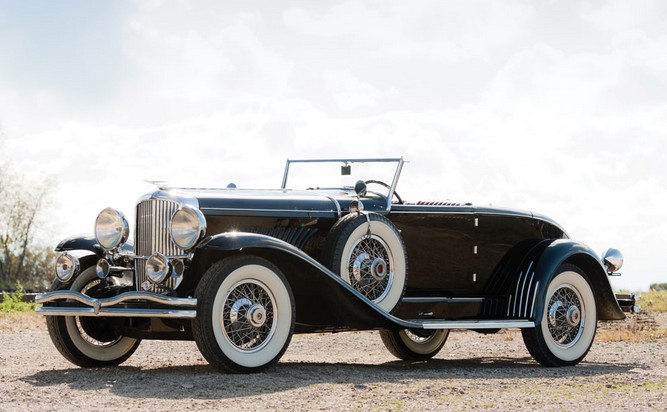
Duesenberg J-357

1930 Duesenberg Model J Disappearing Top Convertible by Murphy

Offered by RM Auctions | Phoenix, Arizona | January 17, 2014

1930 Duesenberg Model J-357 Disappearing Top Convertible by Murphy

Photo – RM Auctions

Well this is a beautiful car. What is strange though is that this was the cheapest Model J by Murphy you could buy in 1930. It cost a wealthy lumber baron in West Virginia $13,500 that year. It’s a short-wheelbase chassis and uses Duesenberg’s signature Lycoming 6.9-liter straight-eight engine making 265 horsepower.

The original owner sold it in 1946 to a man named Melvin Clemans who regularly drove the car from West Virginia to Auburn, Indiana, for the annual ACD gathering. A friend of Clemans worked on the car for him and became the cars’ third owner in 1998.

Luckily, he never restored it. He rebuilt the mechanicals (and so did RM Restorations, more recently) but the body, paint, wood, interior, and chrome are all-original. This is a 30,000 mile car that has been driven a lot by every owner it’s ever had. It’s really nice to see a car like this still being driven hard and on the road to local car shows and not across putting greens at big, fancy concours.

This is 1 of about 25 “Disappearing Top Convertibles” built by the prolific Walter M. Murphy Company. It is arguably among the coolest as it remains as it did the day it left the showroom floor in Huntington, West Virginia, back in 1930. This car should bring between $2,000,000-$2,400,000. You can read more here and see more from RM here.

Update: Sold $2,200,000.

Update: Sold, Gooding & Company Amelia Island 2016, $2,640,000.

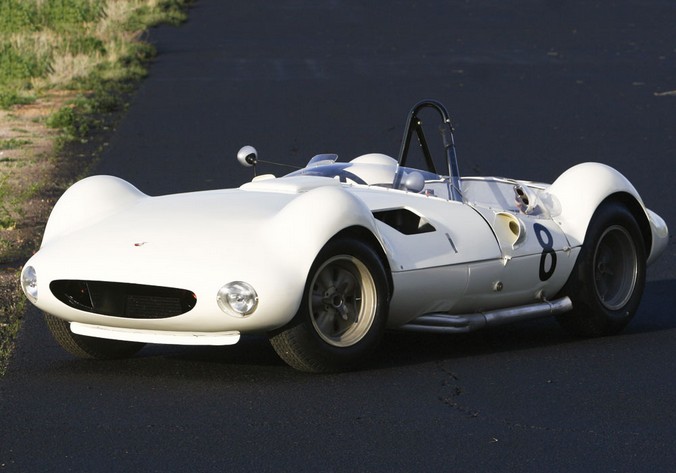
Chaparral 1

1961 Chaparral 1

Offered by RM Auctions | Phoenix, Arizona | January 17, 2014

1961 Chaparral 1

Jim Hall’s Chaparral race cars are some of the most imaginative and forward-thinking cars ever built. A racing driver in his own right (he contested in the 1963 Formula One season), Hall had some money from his family’s oil business and paved his own path for racing success.

The Chaparral story starts with Dick Troutman and Tom Barnes, builders of racing cars in California (they were behind the Scarab) Jim Hall approached them and helped engineer a new race car called the Chaparral 1 that they were about to begin building. They built two for Hall and three for other customers. This car, serial #003, was the second car bought by Jim Hall. After success with this car, Hall would buy out the Chaparral name and make it his own, building cars under the Chaparral 2 name until 1980.

This car uses a 5.6-liter V-8 making 339 horsepower. The engine is housed in front of the driver, but behind the front axle, thus technically making it mid-engined. The competition history for this car includes:

  • 1962 12 Hours of Sebring – 6th (1st in class), with Hap Sharp, Ron Hissom, Chuck Daigh & Jim Hall
  • 1962 Road America 500 – 1st, Sharp & Hall
  • 1963 12 Hours of Sebring – 62nd (DNF), with Sharp & Hall

The car was sold to a privateer after the 1963 season and was raced through 1965. It was restored in 1997 and acquired by the present owner in 2004 who’s used it in historic races. Chaparrals aren’t generally cars you can buy – making this early example a rarity indeed. If a Chaparral is on your wish list, then now is the time. It is expected to sell for between $2,250,000-$2,750,000. Check here for more details and here for more from RM in Arizona.

Update: Did not sell, high bid of $1,750,000.

S/N: 003.