AAR-Toyota Mk II GTP

1990 AAR-Toyota Eagle HF89

Offered by Gooding & Company | Amelia Island, Florida | March 13, 2015
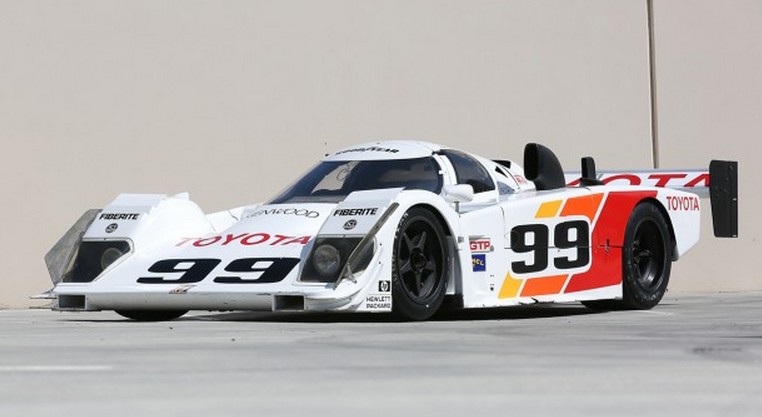
Photo - Gooding & Company

Photo – Gooding & Company

Last year we featured another AAR-Toyota Eagle IMSA GTP car but from 1992. This was a predecessor to that car. Dan Gurney’s All American Racers (AAR), which dates back to the 1960s, was tasked with taking Toyota to the top in IMSA in the late 1980s.

This car goes by a couple of names. Sometimes it’s referred to as the Eagle Mk II GTP and sometimes it goes by HF89 (for aerodynamicist Hiro Fujimori). And other times, because this car was built in 1990, it is called an HF90. The driver for most of this car’s competition history was Juan Manuel Fangio II. It won five races and was the first Toyota GTP car to top the podium.

It’s powered by a 680 horsepower turbocharged 2.1-liter straight-four. That is a lot of power from such a tiny engine, so it probably sounds insane. It’s probably also a lot of fun (if you’re experienced) and terrifying if you aren’t. This be-winged early-90s prototype racer can be yours for between $450,000-$550,000. Click here for more info and here for more from this sale.

S/N: 89T004

Update: Sold $660,000.

Update: Not sold, RM Sotheby’s Amelia Island 2019
One Awesome Stutz

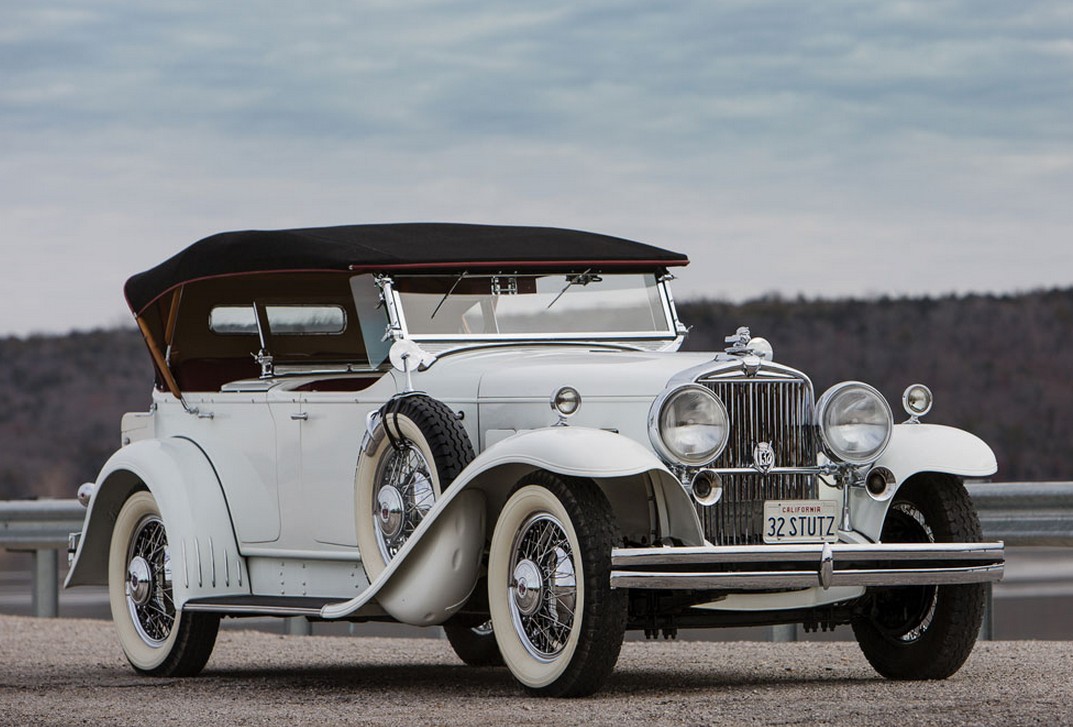
1932 Stutz DV32 Tonneau Cowl Four-Passenger Speedster by LeBaron

Offered by RM Auctions | Amelia Island, Florida | March 14, 2015

Photo - RM Auctions

Photo – RM Auctions

LeBaron bodied some beautiful cars. The Stutz you see here has a very Duesenberg Model J look about it, and that’s probably because some of LeBaron’s Duesenberg designs are absolute classics.

Another Duesenberg link is the impressive engine under the hood of this car. The 5.3-liter straight-eight powerplant was designed by Fred Duesenberg himself. The 32-valve engine makes 156 horsepower. It was Stutz’s crown jewel and their most powerful model.

This is called a Four-Passenger Speedster, but most would classify it as a Dual Cowl Phaeton. It’s definitely sporty. Only about 200 DV32s were built before Stutz closed up shop in 1935. This was the only Dual Cowl Phaeton body style that Stutz sold on a DV32 chassis. There are three Four-Passenger Speedsters known today and two have the tonneau cowl.

The current owner acquired this car in 1990 and it was restored in 1995. It would be an incredible car to add to your collection. There are few cars that would be better to have. You can read more here and see more from this sale here.

Update: Sold $522,500.

Update: Sold, RM Sotheby’s Monterey 2023, $190,400.

Lotus Mk IIIB

1951 Lotus Mk IIIB

Offered by Gooding & Company | Amelia Island, Florida | March 13, 2015

Photo - Gooding & Company

Photo – Gooding & Company

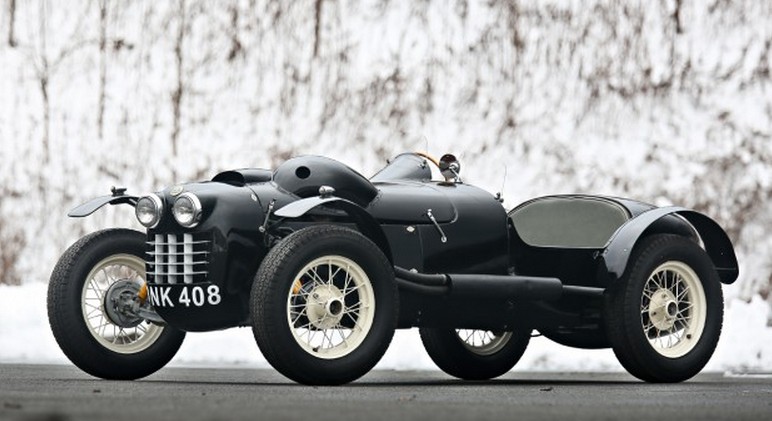
The Lotus Mark III was the third Lotus model produced. It came about when Colin Chapman and his partners modified three Austin Sevens to compete in the 750 Motor Club formula. One car was completed in 1951 before a man named Adam Currie came around to the Lotus shop and ordered this car, the Mk IIIB – the first Lotus ever sold to a customer.

It is also the first car to wear the legendary yellow Lotus badge. The engine is a massively reworked straight-four from a Ford 10 that was slimmed down to 1.1-liters. Horsepower is estimated at 50. The body is aluminium and the car was raced in period by Colin Chapman, Adam Currie, and successful hillclimber and Formula One driver Tony Marsh.

The car’s competition years lasted solidly through 1954. The current owner acquired the car in 1994 from long-term ownership dating back to the late 1950s. A restoration was performed in 1995, taking it back to 1953 race livery. This is an important Lotus, one of the oldest examples money can buy. It can be yours for between $250,000-$450,000. Click here for more info and here for more from this sale.

Update: Sold $247,500.

Jaguar XJR-9

1988 Jaguar XJR-9

Offered by RM Auctions | Amelia Island, Florida | March 14, 2015

Photo - RM Auctions

Photo – RM Auctions

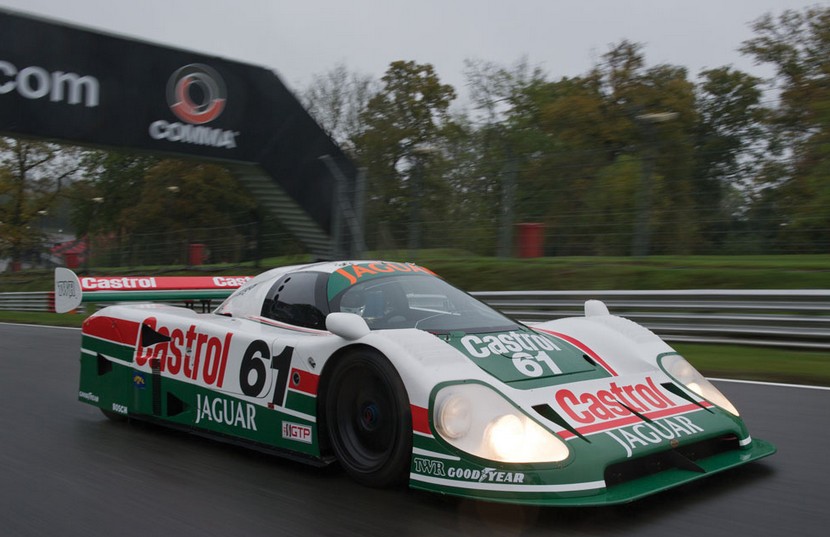
We’ve featured other members of Jaguar’s legendary XJR race car line in previous posts. Here is yet another. It’s an XJR-9, the fifth in the line of awesome race cars that Jag produced in the late 1980s through the early 1990s. The XJR-9 was the first of the series that was intended for both the World Sportscar Championship (Group C) as well as IMSA GTP.

This car is powered by a 6.0-liter V-12 making an estimated 670 horsepower. This particular chassis is a successful one with its competition history including:

  • 1988 24 Hours of Daytona – 26th (with Jan Lammers, Danny Sullivan, and Davy Jones)
  • 1988 12 Hours of Sebring – 7th (with Lammers, Sullivan, Jones, and John Neilson)
  • 1989 24 Hours of Daytona – 2nd (with Lammers, Neilson, Price Cobb, and Andy Wallace)
  • 1989 12 Hours of Sebring – 2nd (with Neilson and Cobb)
  • 1990 24 Hours of Daytona – 1st (with Jones, Lammers, and Wallace)
  • 1990 12 Hours of Sebring – 3rd (with Jones, Lammers, and Wallace)

So there you have it – this is the winner of the 1990 24 Hours of Daytona. It was a successful Tom Walkinshaw Racing team car for its entire racing life. It remained in the TWR museum until 2003 and was restored in 2006. The Castrol livery is a really good racing livery. Read more here and see more from this sale here.

Update: Sold $2,145,000.

Duesenberg J-395

1931 Duesenberg Model J Disappearing Top Convertible Coupe by Murphy

Offered by RM Auctions | Fort Worth, Texas | May 2, 2015

Photo - RM Auctions

Photo – RM Auctions

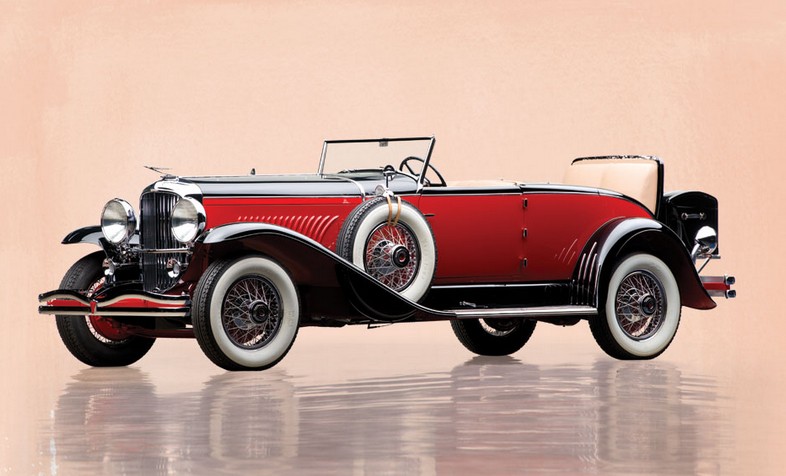
Here is another Duesenberg from the Andrews Collection. This is also a highly desirable version. The Disappearing Top Convertible Coupe is a very attractive, very sporty body style and it was done by the Walter M. Murphy Company, the most prolific Duesenberg coachbuilder.

Unlike the car we featured a week ago, this is an un-supercharged Model J, meaning that the 6.9-liter straight-eight puts on “only” 265 horsepower. This car has an interesting history as, for a large portion of its life, it was in collection of Pacific Auto Rentals – who provided cars for movies. This car has a number of credits to its name, regularly showing up on screen between 1949 and the late 1970s.

In the 80s, it became part of the Imperial Palace Collection and was eventually acquired by Dean Kruse of Kruse Auctions. It has been in the Andrews Collection likely since 2008, when it sold at an RM sale for $2,640,000. Click here for more info and here for more from this sale.

Update: Sold $3,520,000.

Update: Sold, RM Sotheby’s Amelia Island 2023, $4,295,000.

Nash Special Six

1928 Nash Special Six Cabriolet

Offered by Mecum | Las Vegas, Nevada | February 27-28, 2015

Photo - Mecum

Photo – Mecum Auctions

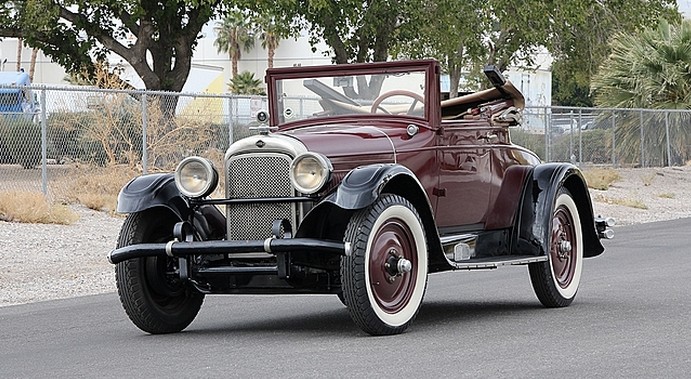
Nash Motors Company was founded by Charles W. Nash, a former G.M. president, in 1916 when he acquired the Thomas B. Jeffrey Company. Nash branded cars went on sale in 1917. The company would  go on to become part of American Motors, with the Nash name disappearing after 1957.

This Special Six wears an attractive body from the Seaman Body Corporation, which from 1919 was part of Nash. The Special Six nameplate dates back to 1925 and lasted through 1929. It was Nash’s mid-range model for 1928 (a year in which they only offered six-cylinder models). It was slotted between the Standard and Advanced Six models.

The engine is a 3.7-liter straight-six making 52 horsepower at 2600 rpm. This Model 341 Cabriolet retailed for $1,290 in 1928. It has a rumble seat and rear-mounted spare tire. It shows very nice. Click here for more info and here for more from this sale.

Update: Sold $17,000.

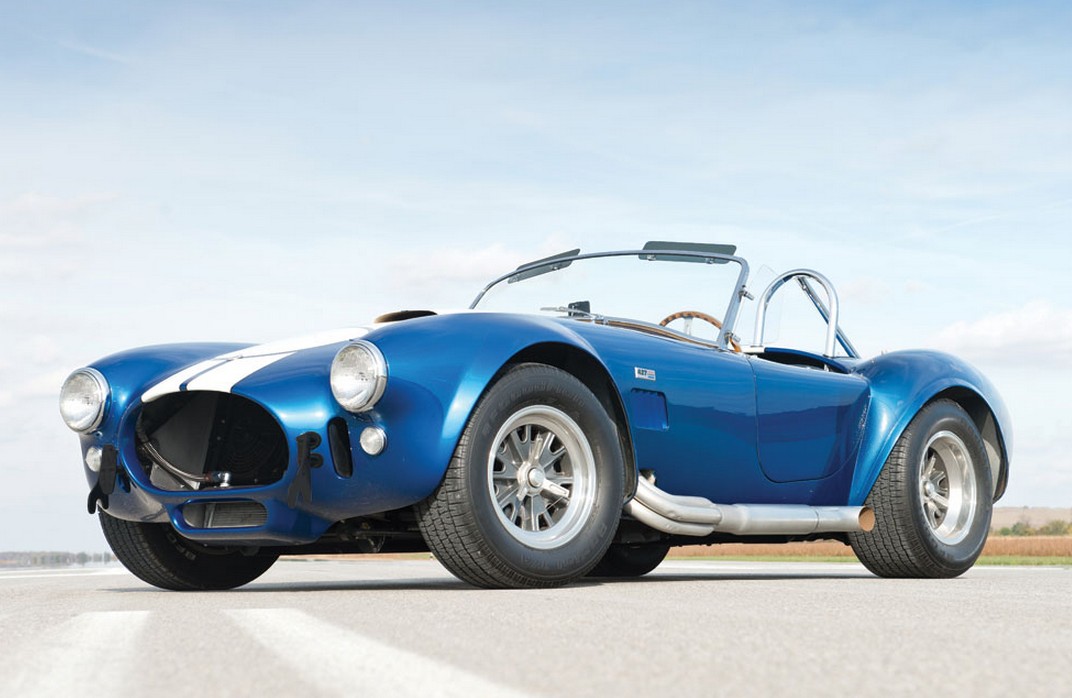
427 S/C Cobra

1967 Shelby Cobra 427 S/C

Offered by RM Auctions | Amelia Island, Florida | March 14, 2015

Photo - RM Auctions

Photo – RM Auctions

Here it is. One of the greatest cars of all time. By 1965, there had already been two versions of the Cobra. First, the 260, and then the 289. But the Cobra’s competitors were getting faster and faster and the 289 didn’t have any more power to give. So Carroll Shelby went to ford to get an aluminium 390 V8 and Ford said no and gave him this old iron-block 427 V8 instead.

The thing was monstrous and heavy and the Shelby team had to redesign the chassis to handle it. This is why 427 Cobras have those wide hips compared to earlier cars. So the Mk III Cobra, the 7.0-liter 427 V-8 powered monster, was built between 1965 and 1967.

What makes this even more special is that Shelby was a racer at heart and he wanted to see these things taking checkered flags all over the world. As the FIA was screwing around with their rules and classifications for different cars, Shelby was just trying to keep up. He ordered 100 competition Cobras from AC. 53 were completed before the FIA changed things again and Shelby put a hold on the order. But the new rules pitted the Cobra and GT40, siblings, against each other. Carroll bowed the Cobra out to run the GT40 program and left these roadsters to privateers, selling 16 of his 53 competition Cobras to private teams.

But he had some leftovers. Instead of racing them, they painted them (and this blue with two white stripes is the absolute best Cobra paint scheme there is) and sold them to the public as “Semi-Competition” (or S/C) road cars. They were the fastest street cars ever produced at the time of their introduction (and for quite a few years afterward).

The engine puts out 485 horsepower in S/C form. Top speed is said to be about 185 mph, which is insane for 1967. This particular car has known ownership history from new and 18,000 original miles. It has light SCCA competition history and is one of 29 authentic factory 427 S/C Cobras built. It’s incredible. You can read more here and see more from RM in Amelia Island here.

Update: Sold $2,117,500.

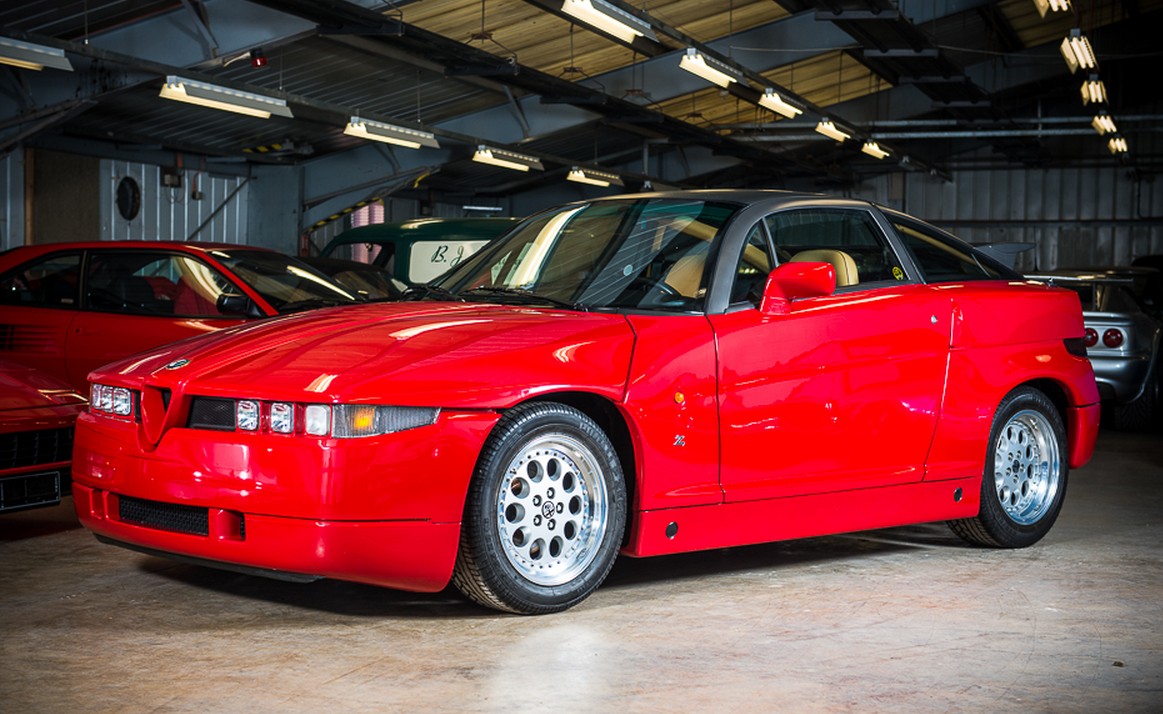
Alfa Romeo SZ

1991 Alfa Romeo SZ

Offered by Silverstone Auctions | Coventry, U.K. | February 21-22, 2015

Photo - Silverstone Auctions

Photo – Silverstone Auctions

The SZ (and it’s roadster twin, the RZ) were the result of a successful collaboration between Alfa Romeo and Zagato – two companies whose intertwined histories go back decades. The SZ was built first, launching in 1989 with production continuing through 1991.

The design by Zagato is rather boxy but definitely unique (Zagato really bought into boxy in the early 1990s). The RZ could only be had in one color: red with a tan interior (although one back car was built for Andrea Zagato). The engine is a 3.0-liter V-6 making 208 horsepower. It’s a compact little thing and for 1991, was pretty zippy.

Only 1,036 SZs were built and this one was sold new in the Netherlands. It’s for sale from it’s original owner and it only has 502 miles on it – so it’s basically brand new. Look for it to bring between $59,000-$82,000. Click here for more info and here for more from this sale.

Update: Sold $130,805.

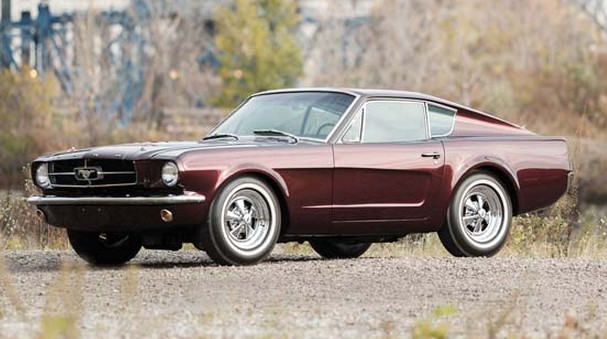
“Shorty” Mustang

1964½ Ford Mustang “Shorty” Concept

Offered by Auctions America | Ft. Lauderdale, Florida | March 27-29, 2014

Photo - Auctions America

Photo – Auctions America

This may be a car you are not familiar with. It looks like a normal 1965 – or, 1964½, my apologies – Mustang that got struck in a trash compactor. Believe it or not, this was actually a Ford factory concept car, its construction having been outsourced to Dearborn Steel Tubing Industries. This car was originally the 10th Mustang Prototype, but designer Vincent Gardner cut 16 inches out of the wheelbase and re-designed the entire body behind the firewall.

Ford had no intentions of ever building a two-seat-only Mustang because a car with four seats has broader appeal than does one with room only for two. But just for the hell of it, Ford decided to have this concept built anyway. After a few shows and magazine covers, Ford decided enough was enough and planned to have the car scrapped.

But Gardner had other plans. He stole the car and hid it in a warehouse… but he failed to continue to pay his rent and the warehouse’s owner found the car and called the cops. When the Mustang went missing, Ford’s insurance paid them for it, fearing it lost. So now the insurance had the car and Ford already had their money. So they sold it to one of their employees who kept it until 1968 when the current owner acquired it.

It was kept hidden away until the past 15 years, when it was restored and shown at various shows. In fact, here’s a video I took of it driving around last summer. The engine is a 4.9-liter V-8 and the body is fiberglass. Obviously, this is the only Mustang quite like this and it should sell for between $400,000-$600,000. Click here for more info and here for more from this sale.

Update: Sold $511,500.

Here’s video of this actual car:

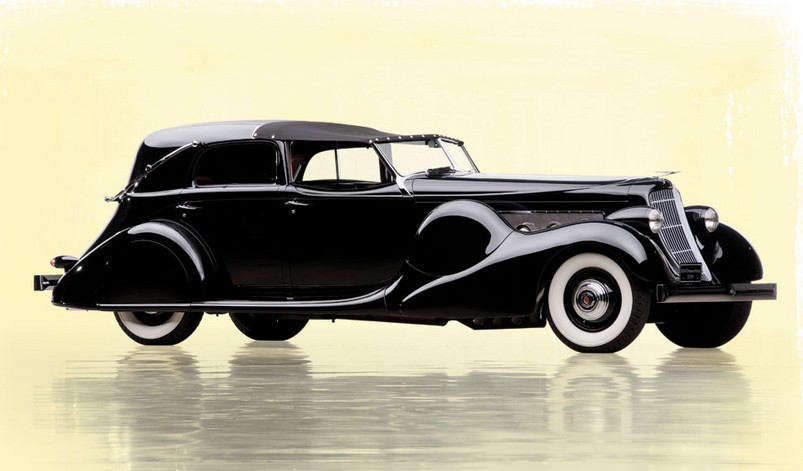
Duesenberg SJ-553

1935 Duesenberg Model SJ Town Car by Bohman & Schwartz

Offered by RM Auctions | Ft. Worth, Texas | May 2, 2015

Photo - RM Auctions

Photo – RM Auctions

It’s been quite awhile since I’ve done a write-up on a Duesenberg. This is an SJ, a factory supercharged example. What’s even better is that it has it’s original chassis, engine and body – there aren’t many SJs (or any Duesenbergs) that can say that.

The SJ was a supercharged version of the standard 6.9-liter straight-eight that pumps out a still-impressive 320 horsepower. The history of this car is interesting: it was a bare chassis sitting in a Duesenberg warehouse after the great clamor for these cars had passed. Designer Herb Newport of Bohman & Schwartz penned this body and the car was to be built for Mae West, who bought another Model J before this one was done.

Instead, this car was sold to Ethel Mars, of the Mars Candy Company. She was chauffeured around Chicago in this car for years. The car then had a string of Chicago-area owners into the 1960s before Bill Harrah got his hands on it. When his collection was dispersed, this car had a few more owners before RM sold it in 2007 for $4.4 million.

So how rare is this combo? Well, it’s a one-of-one design and it’s one of only 36 factory supercharged Model Js built (less than 30 remain). Only 10 have one-off bodies on an original SJ chassis. Bohman & Schwartz only bodied nine Duesenbergs and five of those were rebodies – making this one of four Bohman & Schwartz originals.

It has known ownership history since new and could top $5 million. Check out more here and see more from The Andrews Collection here.

Update: Sold $3,630,000.