1906 Autocar

1906 Autocar Type 10 Runabout

Offered by Bonhams | Carmel, California | August 16, 2013
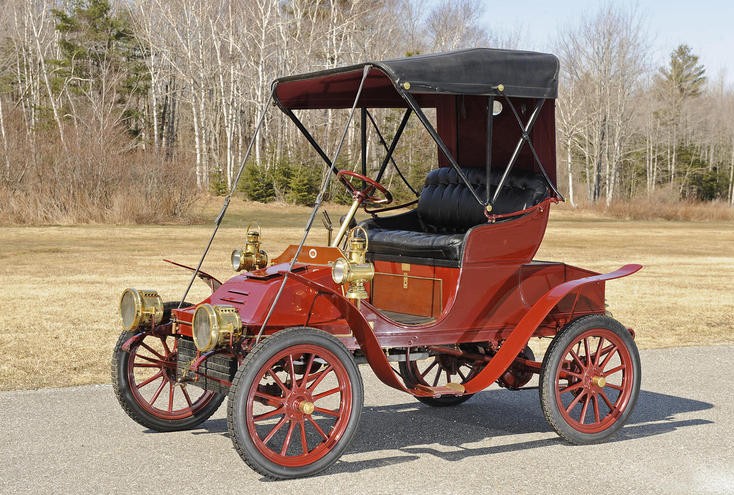
1906 Autocar Type 10 Runabout

Photo – Bonhams

Autocar, a company that is still around producing trucks, adopted the name Autocar in 1899. Their first car was introduced in 1900. In 1907, they started building trucks and by 1911, that’s all they were making. You’d think, in the past 100 years, they may have thought about a name change, but no, Autocar remains Autocar, even though they haven’t built a car in 102 years.

The Type 10 was introduced in 1904. It uses a flat-twin engine (at a time when most companies were using an inline configuration) making 12 horsepower. It was practical and reliable and over 1,000 were built by the end of production.

The car was restored sometime around 1967. A collector acquired it in ’67 and owned it until 2008 when it went to a European collection. Because it spent the past 50 years in museums, it remains in remarkable condition. This car should sell for between $40,000-$50,000. Click here for more info and here for more from Bonhams in California.

Update: Sold $46,200.
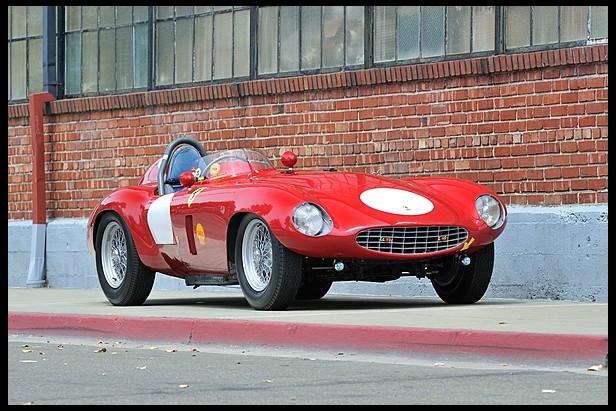
One-Off Ferrari 250 Europa by Vignale

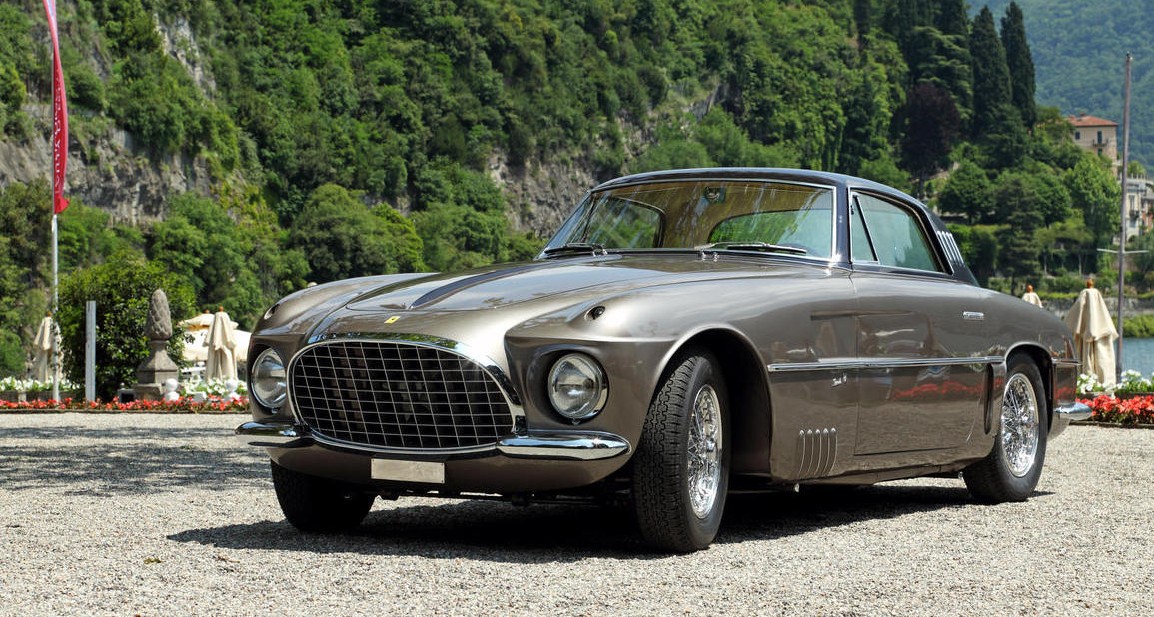
1953 Ferrari 250 Europa Coupe by Vignale

Offered by Bonhams | Carmel, California | August 16, 2013

1953 Ferrari 250 Europa Coupe by Vignale

Photo – Bonhams

The Ferrari 250 Europa was the first road car variant of the Ferrari 250 – the model line that pushed Ferrari over the edge from race car builder who built road cars to road car builder who builds race cars.

This particular Europa was bodied with a one-off body by Vignale and shown at the 1954 New York Auto Show. It was purchased from Ferrari by Luigi Chinetti – the longtime U.S. importer for Ferrari and the man responsible for introducing the brand to America. He had the car painted red for the auto show. Chinetti owned the car for about five years before selling it. It bounced around and ended up in California – where it was painted purple and a Chevy V8 was installed.

A model-correct, 200 horsepower 3.0-liter V12 is in the car now. The car was bought in unrestored, original and slightly modified/damaged repaired condition in 2004-ish by Tom Shaughnessy, renowned Ferrari rescuer.

In 2009, the car went to its current owner in Switzerland, who painstakingly restored it to the exact look it had on the Auto Show stand in 1954. Only 20 250 Europas were built (not to be confused with the 250 Europa GT). Only one of them has a body that looks like this. It is expected to sell for between $2,800,000-$3,400,000. Click here for more info and here for more from Bonhams’ Quail Lodge Auction.

Update: Sold $2,805,000.

Update II: Sold, RM Sotheby’s “Driven by Disruption,” December 2015, $3,300,000.

Update III: Sold, RM Sotheby’s “Leggenda e Passione,” September 2017, $3,440,850.

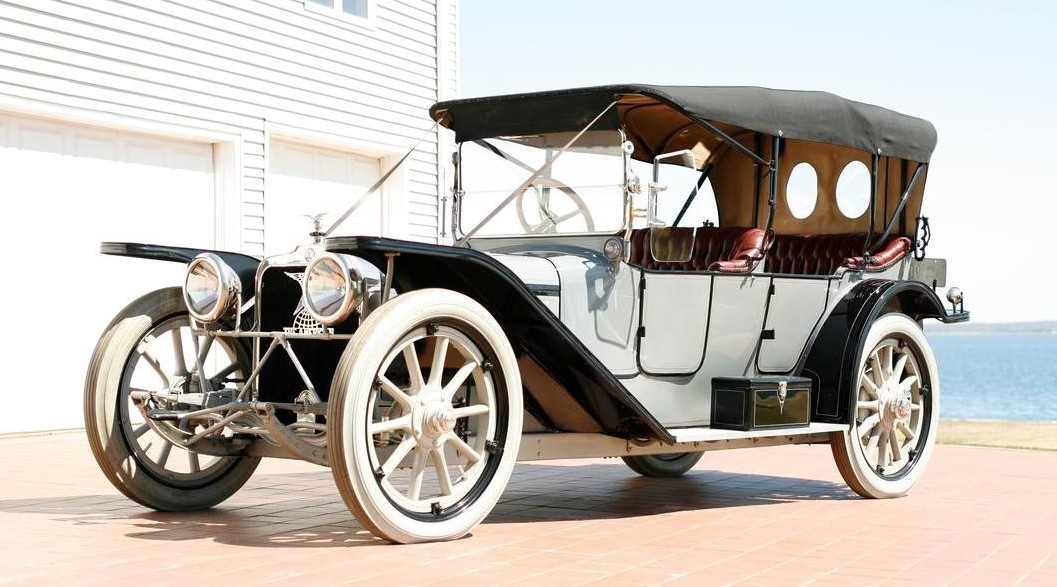
A Beautiful American Underslung

1914 American Underslung Model 644 Four-Passenger Touring

Offered by Bonhams | Carmel, California | August 16, 2013

1914 American Underslung Model 644 Four-Passenger Touring

American Underslungs are, I think, some of the prettiest pre-WWI American cars built. They are very distinctive with their low-slung chassis (hence the name) and those big, almost over-sized, white tires. Not to mention the gigantic emblem on the grille and the way the front fenders curve at sharp angles and fall dramatically back toward the passengers.

Even though this is a moderately big car, it still seems sporty. Strangely, it only accommodates four passengers, despite being a longish-wheelbase touring car. The low center of gravity (the frame is below the axles) provided for awesome handling, yet the bottom of the car was still high enough to scrape atop ruts ground into early, dirt roads. It might not look sporty, but many regard this as “Sports Car Genesis.”

The American Motor Car Company of Indianapolis built more traditional, upright touring cars when they were founded in 1906 (we featured one of them here). Underslungs came a year later. This particular car is from 1914, the last year the company was in business. It was part of the Harrah Collection for a long time before going to Europe in the 1980s. In about 2005, it was acquired by the current owner. The body was restored under Harrah’s ownership, but the interior is all-original, which is incredible. The engine is a 7.4-liter T-head six-cylinder making 60 horsepower.

These cars are very rare – most are in museums, so getting the chance to buy one almost never happens. It sucks I don’t have the money. Only three four-passenger Underslungs are known to still exist. This one should sell for between $550,000-$700,000. Click here for more info and here for more from Bonhams in Carmel, California.

Update: Sold $748,000.

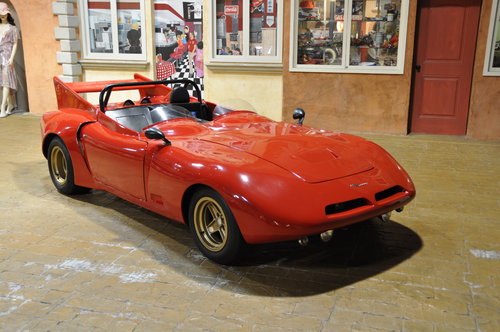
1971 Bizzarrini Prototype

1971 Bizzarrini 128 Sport Barchetta

Offered by Russo & Steele | Monterey, California | August 15-17, 2013

1971 Bizzarrini 128 Sport Barchetta

Ever seen this car before? Me neither. Giotto Bizzarrini was active in automotive design and engineering back in the day. Specifically, he got his start at Alfa Romeo in the mid-1950s. He wasn’t there long before he jumped ship to Ferrari (you can thank him for the 250 GTO). In the early-1960s, he worked for Iso Rivolta.

In 1964, he left Iso and founded his own company, Bizzarrini S.p.A. He wanted to build race cars and as an aside to that, he built precious few road cars. This lasted until 1969. Strangely, however, once his company shut down, Bizzarrini continued to churn out cars – and still does today – mostly one-off prototypes. In the early-1970s, he built a pair “single-seat competition barchettas” – and this is the prototype (the other is a race car).

Though titled as a 1971, the car was built in 1972 and shown at the 1972 Turin Motor Show. The engine is a 1.3-liter straight-four from Fiat. It makes 130 horsepower and can power the car up to 140 mph.

The race car variant is in the Italian National Car Museum in Turin – making this 128 the only one in private hands. And it can be yours. No pre-sale estimate is available. Click here for more info and here for more from Russo & Steele in Monterey.

Update: Sold $77,000.

Update: Sold, Bonhams Retromobile 2019, $110,907.

Cadillac Military Roadster

1914 Cadillac Model 30 Military Sport Roadster by Schutte

Offered by RM Auctions | Plymouth, Michigan | July 27, 2013

1914 Cadillac Military Sport Roadster by Schutte

Well this car got lucky. I wouldn’t have featured it, but some auction houses are taking their sweet time publishing their online catalogs (thank you, Mecum, for being on the ball!). Anyway, at the last second, I chose between this and another car. Why’d I pick this over the other? Two reasons: 1. I asked somebody to pick for me. And 2. This car has been in the same family for 98 years! So when was the last time you saw one like this come up for sale?

Let’s talk about that 98 years: first of all, incredible. Secondly, this is not the original body on this car. The Cadillac Model 30 was introduced in 1909. It uses a 6.0-liter straight-four engine making 40-50 horsepower. In 1915, the Model 30 was given a V-8. The original body was a roadster body. But during WWI, the Schutte Body Company displayed a range of new bodies at the New York Auto Show.

So the owner, whose car was a little long-in-the-tooth style-wise, liked what he or she saw. The so-called “Military Sport” body was installed on this car between 1917 and 1919 (so it’s pretty close to original). It was called that because it was popular with military officers during the war. It was basic and “patriotic” due to its use of few materials (and lack of features).

This is the only Cadillac known to have a Military Sport body on it. The restoration is brand new and it’s in excellent, usable condition. Here’s a chance for a one-of-a-kind car. It should sell for between $125,000-$175,000. Click here for more info and here for the rest of RM’s St. John’s sale.

Update: Sold $110,000.

Ferrari 750 Monza

1954 Ferrari 750 Monza Spider by Scaglietti

Offered by Mecum | Monterey, California | August 17, 2013

1954 Ferrari 750 Monza Spider by Scaglietti

Ferrari has always been a company focused on racing. The saying has always been “they build road cars so they can afford to go racing.” And it’s true. While, this is a race car, it was successful because of earlier race cars.

To wit: the engine. Alberto Ascari’s second Formula One championship was at the helm of a Lampredi straight-four-powered car. Because this engine was so successful in F1, Ferrari decided to install it in their sports racing cars, beginning in 1953. The 750 Monza (which used a 250 horsepower 3.0-liter variant of the engine) was the fourth iteration of what is now referred to as the “Monza” line of sports cars. It was built for 1954 only.

This car has known ownership history from new and was driven by Mike Hawthorn at Goodwood during its first racing season. It was then acquired by Jaguar and used for testing purposes (for comparisons to the D-Type). They sold it to one of their drivers (1951 Le Mans-winner Peter Whitehead) who sold it to Jack Brabham, who took it to Australia and hired drivers to race it in the 1955 season down under.

It entered its first historic race in 1987 and has been used and cared for since. It has been restored at some point and is a driveable and raceable race car. It is among the first of the 35 750 Monzas built and should bring about $2.5 million at auction. Click here for more info and here for the rest of Mecum’s Monterey lineup.

Update: Failed to sell (high bid of $3,250,000).

S/N: 0462MD

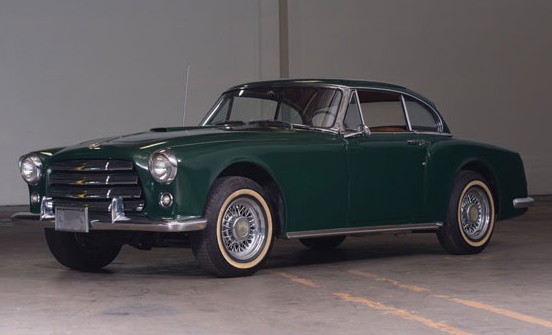
Edwards America

1954 Edwards America Coupe

Offered by Auctions America | Burbank, California | August 1-3, 2013

1954 Edwards America Coupe

Like many before him and many after, Sterling Edwards made a lot of money in industry but loved cars and wanted to build the perfect one. Well, very few have actually succeeded doing that (Ferruccio Lamborghini is about the only one who comes to mind. Horacio Pagani, I guess, too) and many have lost more money than they’ve made.

Anyway, he built a car called the R-26, which was a race car originally and a road car later. It was not a sales success. His second try was the Edwards America. He took a Mercury chassis and hung a lightweight, attractive, Italian-looking fiberglass body on it and stuffed a V-8 under the hood. This car has a 5.2-liter V-8, making 205 horsepower.

Unfortunately, Edwards’ timing was off and he couldn’t compete with the Corvette or the Thunderbird (much less both). Only six Americas were built and this is believed to be car #2. It has known ownership history and was repaired from a fire many years ago. It shows some signs of age, but it’s super rare and should be worth about $100,000. Click here for more info and here for the rest of Auctions America’s lineup in Burbank, California.

Update: Sold $66,000.

Delage Aerosport

1938 Delage D8-120 Aerosport by LeTourneur & Marchand

Offered by Mecum | Monterey, California | August 17, 2013

1938 Delage D8-120 Aerosport by LeTourneur & Marchand

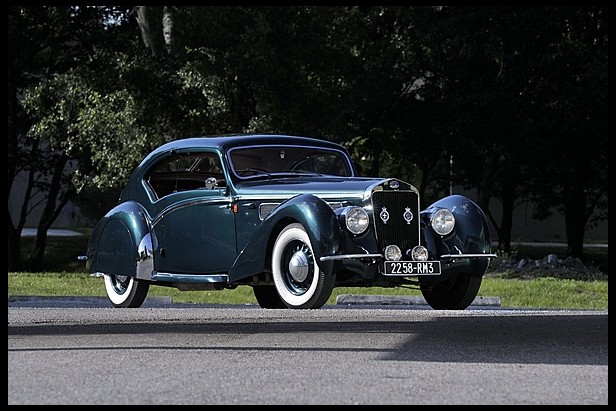
I’ve spoken before of the “French D’s” – highly-desirable pre-war French automobile marques that are all right next to each other alphabetically – but this is the first Delage we’ve featured. Delage was founded in 1905 by Louis Delage and it was acquired by rival Delahaye in 1935.

The D8-120 was the first Delage automobile designed and produced under Delahaye ownership. It was the only eight-cylinder car offered by either make. The engine is a 4.7-liter straight-eight making 115 horsepower. It was mounted on a Delahaye chassis and sent off to a French coachbuilder – in this case, LeTourneur & Marchand.

This body design ranks among the finest French designs of the 1930s and the most coveted among Delages. Only 12 were built (this is car #11) and only eight remain today. It has full ownership history – including wartime – and was in the same hands from 1957 until 2013. The most recent restoration was carried out in 1999. This is a million-dollar car. Click here for more info and photos and here for more from Mecum in Monterey.

Update: Not sold (high bid of $2,400,000)

Update: Not sold, Mecum Monterey 2014 high bid of $2,300,000.

A Studebaker Truck That Couldn’t Save The Company

1961 Studebaker Champ

Offered by Barrett-Jackson | Reno, Nevada | August, 8, 2013

1961 Studebaker Champ

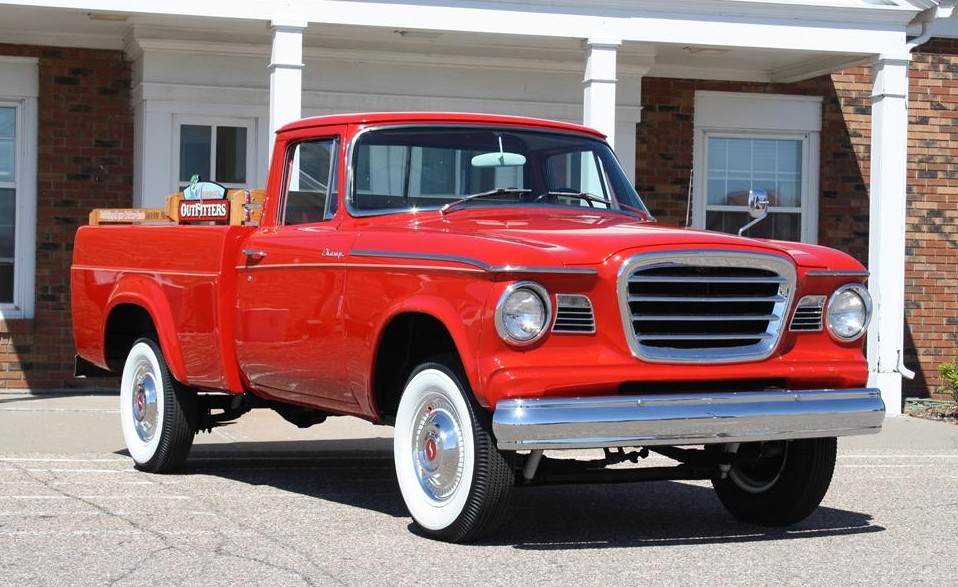
By the mid-1950s, Studebaker’s outlook was dim. Ford and GM were pulling away fast and labor costs and quality issues were dragging Studebaker toward the grave. They merged with Packard (technically, Packard acquired Studebaker) but all that did was kill Packard off.

Cash-strapped but pushing forward, Studebaker invested what it could into redesigning their light truck line (which had gone unchanged for more than 10 years). Working within limits, they took their compact car, the Lark, cut it in half and designed a truck bed behind the passenger compartment and mounted it on a truck chassis. You can tell that’s what happened, because the truck bed doesn’t really flow into the body at all. Regardless, it’s not a bad truck.

A 2.8-liter straight-six was the base engine. It made 90 horsepower. Even though this particular truck is a “Champ Deluxe”, it carries the base engine. It’s described as a “rust-fee Arizona truck” (rust-free and post-war Studebakers being a rare combo) but it has to have been restored. The Champ was the first truck with a sliding rear window – but this novel new idea would not save Studebaker. In December of 1963, their South Bend, Indiana plant was closed and the Champ was no more. Studebaker soldiered on until the end of 1966, but it was all over after that. This is a $15,000-$30,000 truck. Click here for more and here for the rest of the inaugural lineup of Barrett-Jackson’s Reno sale.

Update: Sold $30,800.

Puritan Steam Car

1902 Puritan Runabout

For Sale by H&H Auctions | Appleton, England

1902 Puritan Runabout

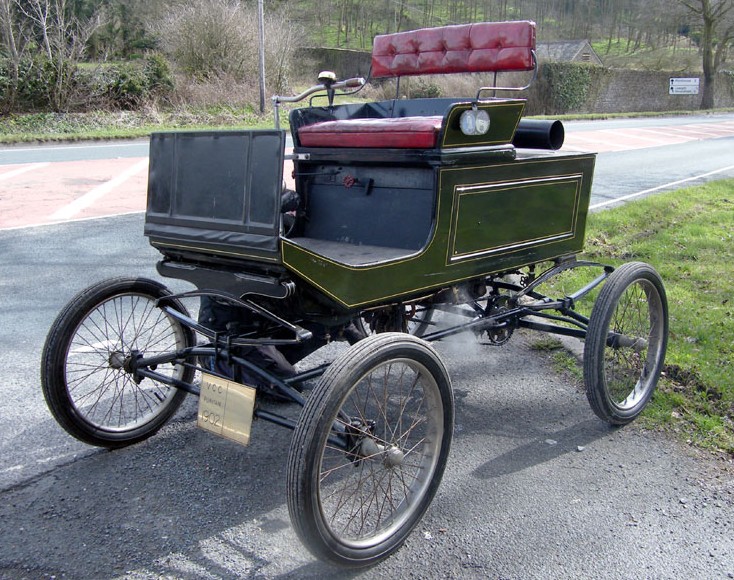
When Albert Locke took control of his father and uncle’s company in Salem, Massachusetts, around the turn of the century, he decided he wanted to do more than just build parts for steam engines. The Locke Regulator Company was getting into the car business.

In 1902, they launched their little runabout (designed in-house by Albert himself) that uses a straight-twin steam engine making six horsepower. Most Puritans were known to be ahead of their time (the cars, not the people) by featuring two things that would become standard on automobiles: a steering wheel and a foot throttle. However, this car has tiller steering. It could go 100 miles on one tank of water and could reach 20 mph.

Unfortunately, the company didn’t last in the car business for long, with production ceasing the following year in 1903. As rare as that makes it, surprisingly, there is at least one other Puritan steam car in England. This one isn’t exactly in concours-level shape, but it is usable – which is the most important thing. Price is not listed but you can check out more here.

Update: Not sold, H&H Auctions Duxford, Fall 2014.