Offered by H&H Auctions | Buxton, U.K. | July 24, 2013
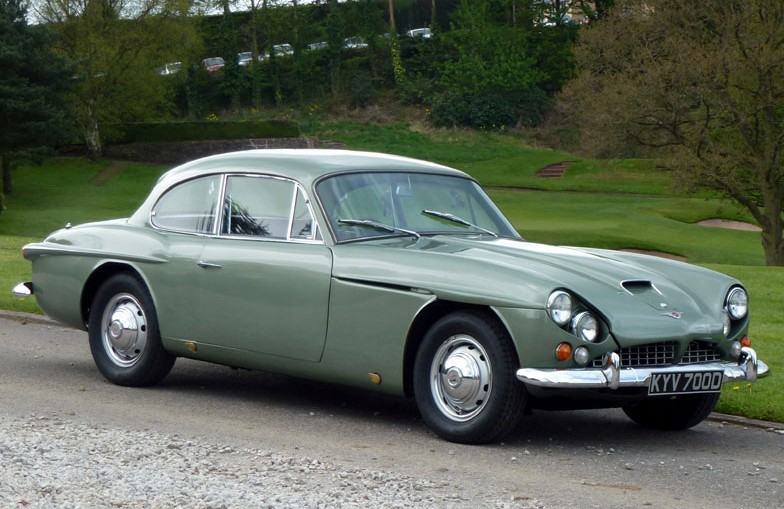
The Jensen CV8 was a four-seat sports car – or Grand Tourer – introduced in 1962. I’m not 100% sure what the CV8 name stands for, but the car did use a Chrysler V-8 (Chrysler V–8 – maybe?). Namely, this car uses a 6.3-liter V-8 (known as a 383 in the States). It makes 330 horsepower – which makes this car pretty powerful if you think about it.
The styling, love it or hate it, has a distinct look with the four headlights that can be viewed as either looking at you or giving you a really weird stare. Even if it’s slightly odd looking, I really like it. And it was one of the fastest GT cars of the period, with a top speed of around 136 mph and a big V8 (most British cars of the era used itty-bitty four-cylinder engines or straight-sixes).
Only 500 CV8s were built in total. This one was in storage from 1988 until last year when it was freshened and put into running condition. It is also one of the last 10 examples of the model built making it a very late car. And it’s rather pleasant looking in California Sage paint. It is expected to sell for between $42,000-$48,500. Click here for more info and here for the rest of H&H’s Pavilion Gardens auction lineup.
Offered by Mecum | Monterey, California | August 17, 2013
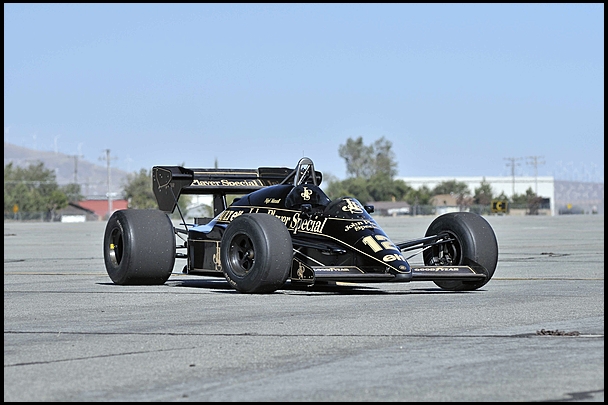
There are a few racing liveries that really stand out above others. Among them: Gulf, Martini and – of course – John Player Special. The tobacco company started sponsoring Lotus Formula One cars in 1968. This black and gold paint scheme would be a part of F1 through the 1986 season and the current Lotus F1 team uses the colors – albeit with different sponsors.
The Lotus 94T was raced at the end of the 1983 Formula One season without much success (a lone podium and many retirements). It was competitive, but not great. For 1984, Lotus introduced the 95T. It was powered by a Renault-Gordini 1.5-liter twin-turbocharged V-6. In race trim it made about 700 horsepower. For qualifying, that number was bumped up over 1,100! Four cars were built for that season to share between Lotus drivers Nigel Mansell and Elio de Angelis.
This car was driven by Mansell and includes the following race results (I can’t find if Mansell drove this particular car at more races than this or not):
1984 Monaco Grand Prix – 13th (with Nigel Mansell)
1984 Dallas Grand Prix – 6th, from first career pole (with Mansell)
It has since been retrofitted to accept computer input, making it easy to start and drive today (for historic events and parade laps). This is a Turbo Era F1 car that was raced by an F1 Champion. It’s also from one of the racing’s most storied manufacturers and carries one of racing’s most emblematic paint schemes. It can be yours for a price they won’t estimate. Click here for more info and here for more from Mecum in California.
Offered by Silverstone Auctions | Silverstone, U.K. | July 27, 2013
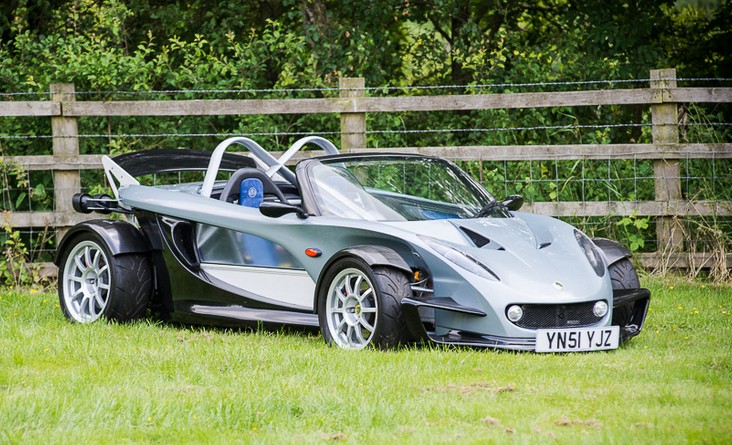
The Lotus 340 was based on the first generation of the Lotus Elise. They were built in 2000 and offered for the 2000 and 2001 model years (although there is an unusually-titled 2004 offered alongside this car at this sale).
So why is it such a special edition? Because look at the thing, that’s why. There is no roof. There are no doors. I hope it’s sunny when you go for a drive. Short of an Ariel Atom, have you seen something so out there? I’m pretty sure they aren’t even road-legal in the U.S. (although they are in the U.K.). Most see track duty and many probably just sit in collections. Only 340 were made.
The engine is a 1.8-liter straight-four making either 177 or 187 horsepower, depending on the extra Lotus goodies you have installed. Top speed is 130 mph but it will hit 62 mph in 4.4 seconds – it only weighs 1,550 pounds. The price was about $40,000 brand new, and this one is expected to sell for between $35,000-$40,000. Click here for more info and here for more from Silverstone’s sale.
Offered by RM Auctions | Plymouth, Michigan | July 27, 2013
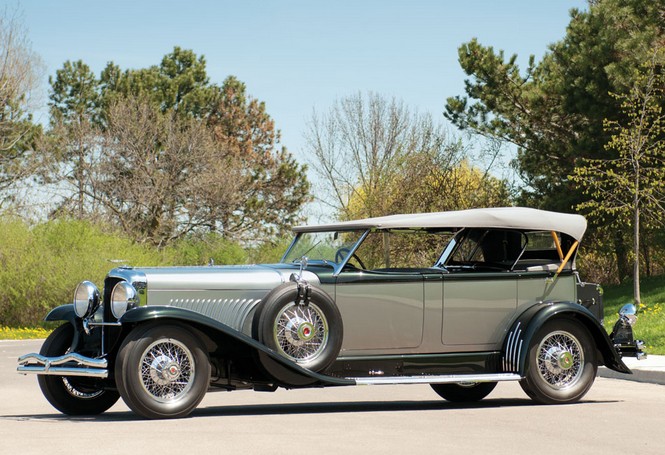
This beautiful Lincoln Model K is from the first year of K-Series production, 1931. The cars would be made through 1939 and offered for the beginning of the 1940 model year. All cars built in the first year were offered with the 145 inch long wheelbase.
The engine was an improved version of Henry Leland’s original 6.3-liter V8 that was introduced 10 years prior. It made 120 horsepower and would be replaced for 1932. The body on this thing is gorgeous though. It’s a dual-cowl phaeton built and designed by Lincoln and it very much rivals some of the great coachbuilt bodies of the era.
This car was restored for the first time in 1975 and again in 2005. It was acquired by the current owners shortly thereafter and expertly maintained since. It has been shown at numerous shows and has only covered 23 miles since its restoration (!). I understand show cars and why they are so babied, but this thing begs to be driven. It’s amazing sitting still and cars always look (and sound and smell) better in motion. It is expected to sell for between $125,000-$175,000. Click here for more info and here for more from RM at St. John’s.
Okay, so it’s been about a month since the 2013 Ault Park Concours d’Elegance (I’ve been busy!) was held in Cincinnati’s beautiful Ault Park. I was at the show bright and early and it was great. The weather was perfect and the rain held off until just after the show had completed (by literally minutes). While I managed to photograph every car on the show grounds, I’ll only show you some of the highlights here. I even managed to capture some of them on video.
Best in Show went to this 1938 Steyr 220 Special Roadster. I think most people knew going into the show that this was going to be the major award winner.
If this website were to give out an award for something – it would undoubtedly have gone to this 1911 Thomas Flyer K6-70 Flyabout. I don’t know if you’ve ever had the chance to hear a starter on a 1911 Thomas Flyer, but I highly recommend trying to get the opportunity. It is a noise. Watching this thing being driven was one of my favorite points of the show. I’ll post video below!
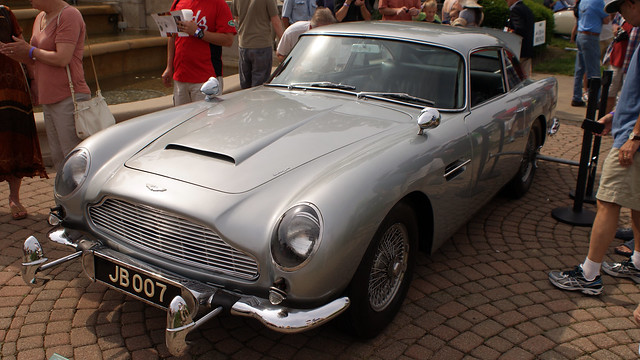
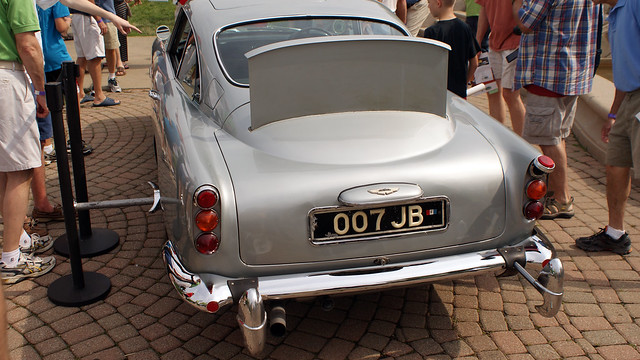
Hands down the most popular car at this year’s show was the Goldfinger Aston Martin. This was the DB5 that was actually used in two James Bond films: Thunderball and Goldfinger. The best part? It was just sitting there so you could get up close and personal with it AND the owner was driving it around. You can see video of it here.
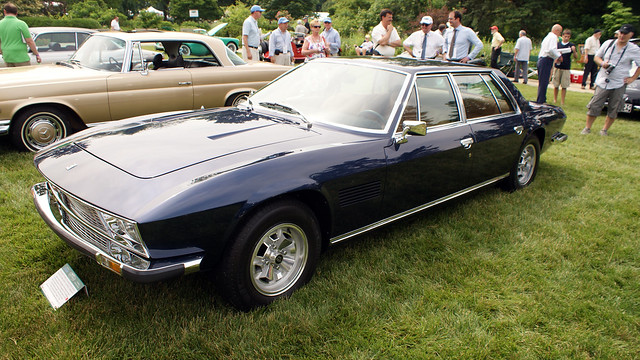
One of my other favorite cars was perhaps the most infamous of the show. It is a 1978 Monteverdi 375/4 High Speed Sedan. The High Speed 375/4 was built for a few years in very limited numbers. After production wrapped, the Royal Family of Qatar wanted a sedan version, so Peter Monteverdi built seven of them. This is one of those cars. It was exquisite and I took more photos of it than any other car there. Then, while lining up for awards, the owner (who brought the car here from Germany) was trying to keep the car running by revving the throttle. His foot slipped off the brake (or something) and he peeled out and smashed into the back of a McLaren MP4-12C Spider. Luckily no one was hurt and the McLaren will be fine. This thing will need slightly more repairs.
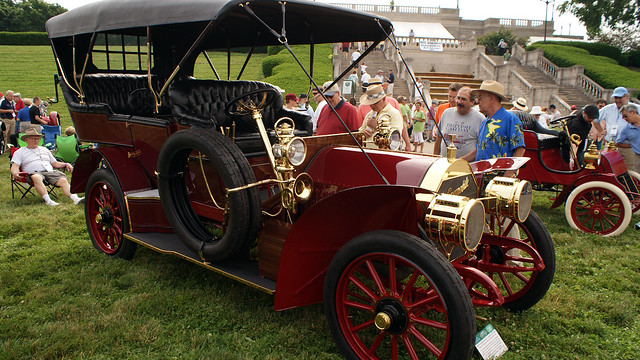
Some other cool cars included this 1908 Locomobile Model I 7-Passenger Touring, the restoration of which, concluded at something like 4 a.m. of show day.
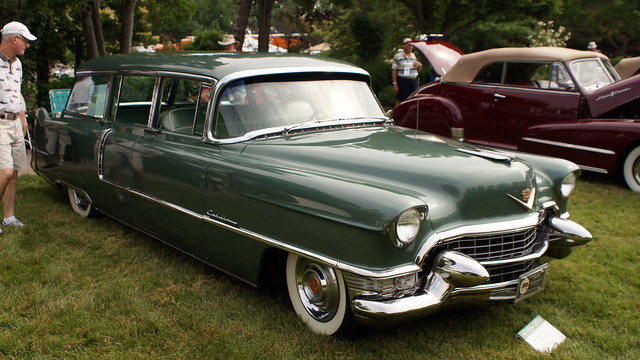
This 1955 Cadillac Custom Viewmaster was one of seven built locally by Hess & Eisenhardt and was really cool as you rarely ever see a Cadillac wagon.
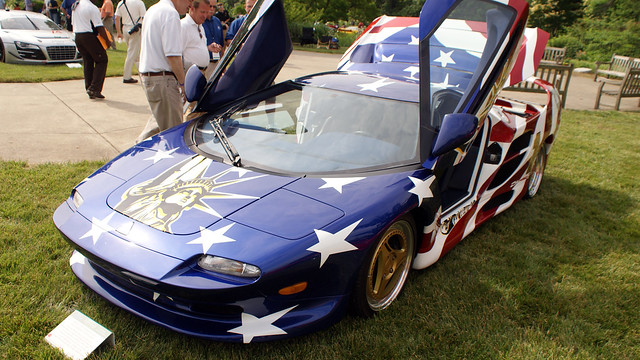
From the “you’ve got to be kidding” category: a 1996 Vector M12. This was the auto show car first displayed by the company and is painted in some hideously patriotic paint scheme. I couldn’t believe where the car was from – a small town not far from where I live and a place you definitely would not associate with supercars (more like beat-up pickup trucks and Ford Aerostars).
Two of the featured marques this year were Corvette and Porsche. There were some awesome Corvette race cars on the field but the most valuable has to be this 1957 Corvette SS Concept Car. I believe it resides at the Indianapolis Motor Speedway museum.
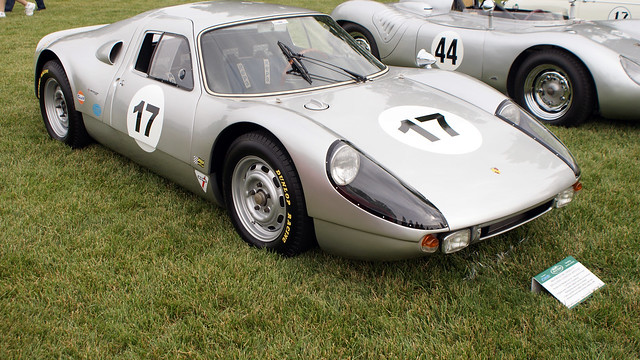
There were two Porsches that stood out (to me) above all others. First, this 1964 904 Carrera GTS:
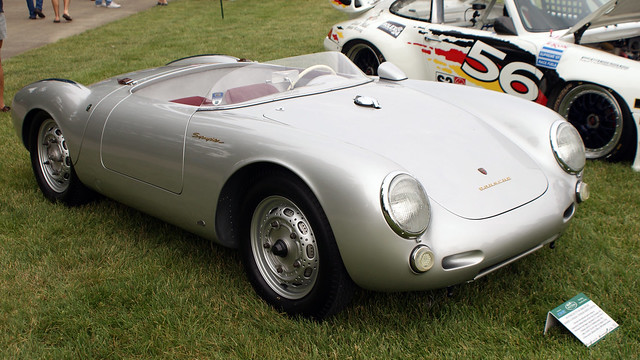
And second, this 1955 550 1500RS Spyder. This car is so small but it’s worth about $3 million. And the sound! The engine is about the size of a lunchbox but it packs a punch. I couldn’t believe how loud and how enthralling the noise actually was.
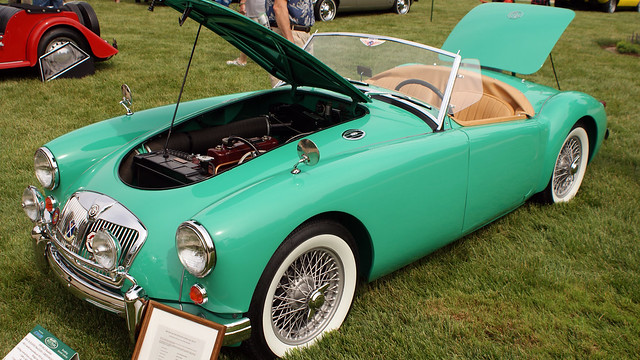
Finally, I have to give a shout-out to this car. It is the best-looking MGA (it’s a 1959) I have ever seen and this color is amazing in person. I talked to the owner and he said that something like 1% (or less) of MGAs were painted this color back in the day but no one wanted them so dealers sprayed them red and they drove off the lot. Only a fraction of the cars were sold without the repaint and those who bought them must be quite proud today because the combination of this soft teal and whitewall tires is outstanding.
Be sure to check out some of our videos from the show at our YouTube channel! These cars are ever better then they are in-motion and making noise. Sorry I couldn’t capture the smells for you too! And check the show’s website here for more winners.
Offered by Bonhams | Goodwood, U.K. | July 12, 2013
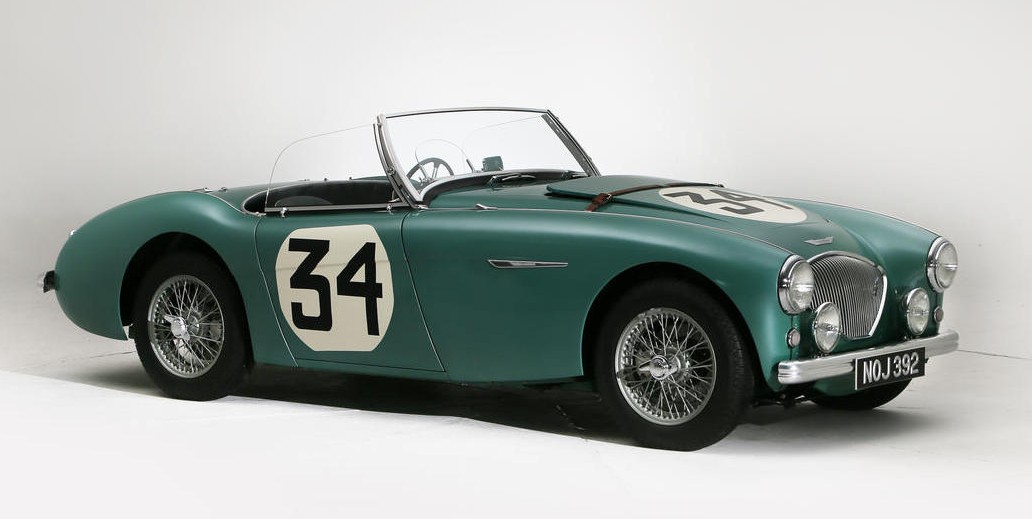
You’re looking at one of the first Austin-Healeys built. It was the sixth Austin-Healey built and it was one of several pre-production cars that were to be used “testing” on famous race tracks all over Europe. They are referred to as Special Test Cars and, while they look nearly identical to production cars, they were lighter (thanks to a lot of aluminium) and faster on the track. Only four Special Test Cars were built. The first three were eventually road-registered. This car has always remained in race/testing guise.
The engine began life in Austin’s “experimental shop.” The 2.7-liter straight-four received a special camshaft, a lighter flywheel and spruced up carburetors. Power was more than the production car’s 90 horses – it was rated at 103 for Le Mans. This car also has a significant competition history:
1953 Mille Miglia – 417th (seriously), DNF (with Bert Hadley and Bertie Mercer – yes, two people named Bert shared this car. The 1950s were a different time)
1953 24 Hours of Le Mans – 12th overall, 2nd in class (with Maurice Gatsonides and Johnny Lockett)
After Le Mans, the car had its appearance changed to that of a road car and was used in testing for the media (although they didn’t know they were testing a lightweight racing special all gussied up to look like a road car). Later, it was used to test new braking systems for future Healey models and it was also used as a personal car by the Healey family. The first private owner acquired the car in 1962.
It passed through many owners before it was restored in the mid-1990s in Australia. That restoration was “refreshed” in 2009 and was painted to look like it did at Le Mans in 1953 – and it’s a wonderful color. This is the only Special Test Car that looks anything like it did in 1953 – it has almost all of its original bodywork and parts. It has never been molested, wrecked or altered. It is super rare and very important in the world of Healeys and it should command it in price with an estimate between $780,000-$1,100,000. Click here for more info and here for the rest of Bonhams’ Goodwood sale lineup.
Offered by RM Auctions | Plymouth, Michigan | July 27, 2013
This Model J is an actual Model J but it doesn’t have an original body on it. The original body, which was a Derham Town Car, burned to the ground. At some point more recently, the car was restored and given a Dual-Cowl Phaeton body in the style of Murphy. But between that time is where this car’s interesting history lies.
James Hoe was a mechanic who is more or less responsible for keeping many of the Duesenbergs still around alive and well. He worked on them back in the day, servicing, repairing, etc. Whatever kept them around. Well in 1950, he bought this car for $150 – basically salvaging it. The body was a loss, so he turned it into a custom speedster. Many of the original Duesenberg parts were still on it, engine included (although the transmission was from a White truck).
He raced the car at some SCCA events and hillclimbs. It would do 140 mph. After he sold it, the car was restored to how you see it. A different engine was put in the car, but the bell housing from J-183 was retained and that is the number the engine carries today. It should sell for between $725,000-$900,000. Click here for more info and here for more from RM at St. John’s.
Offered by Auctions America | Burbank, California | August 1-3, 2013
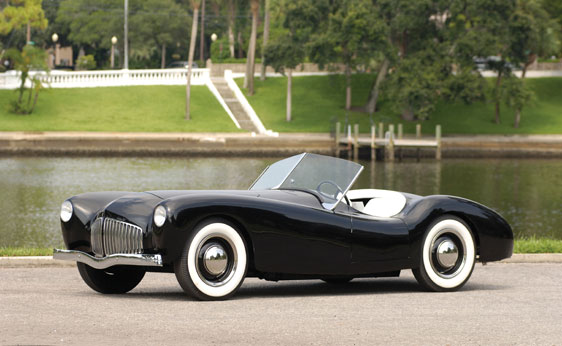
1950s low-production fiberglass sports cars are a really interesting sector of collector cars. There were quite a few of these little cars that came out in the early 50s and the Glasspar G2 is one of the more well-known.
Bill Tritt founded Glasspar in 1949 as a fiberglass manufacturer. He built boats and in 1949 he built a sporty body for a friend’s hot rod. Two years later, the Glasspar G2 made its debut. It was available as a coupe or roadster and as a kit or as a complete car. Very few complete cars were sold – most of them were kits. And you see roadsters now and then but rarely ever see a coupe.
The G2 was the first all-fiberglass production car to come to market. It’s an attractive car, really. The rear-3/4 view is a bit Jaguar XK120-ish. The engines available at the time were Ford or Mercury flathead V-8s. This one has a Mercury unit – a 3.7-liter V-8 with Offenhauser aluminium heads. The G2 was made through 1953. This is about a $35,000-$45,000 car. Click here for more info and here for the rest of Auctions America’s Burbank lineup.
Offered by Bonhams | Goodwood, U.K. | July 12, 2013
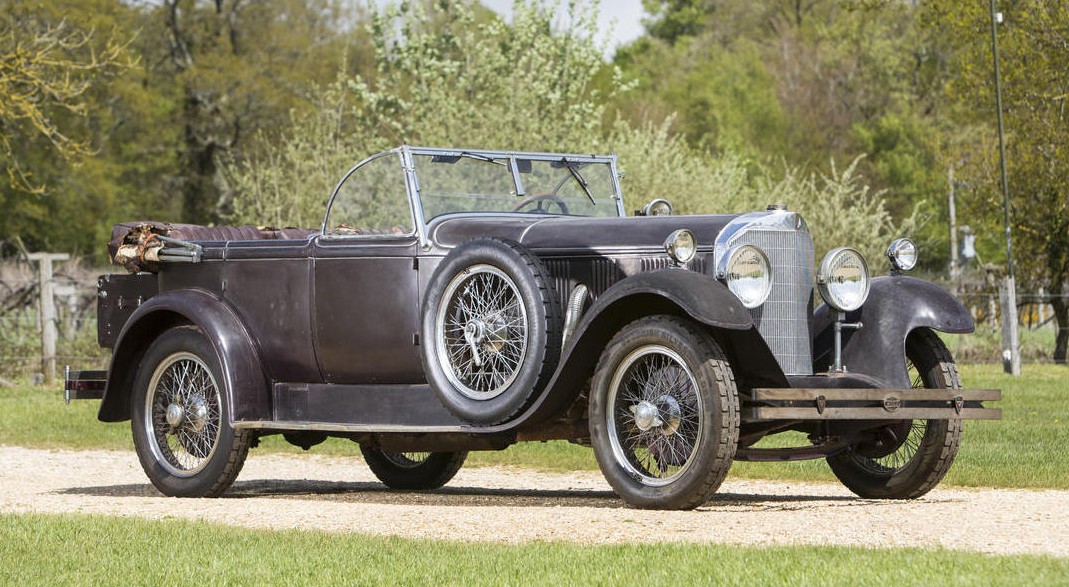
Mercedes became Mercedes-Benz in 1926 when Daimler and Benz merged. What is interesting about the 630K (okay, so there are many things) is that it was originally introduced in 1924 when Mercedes was just Mercedes. The model line was known as the 24/100/140 PS. When the companies merged, the name was changed to Type 630 (although 24/110/160 PS was still used on occasion). 1929 was the final year regardless of whatever you called it.
The model was more or less designed by Dr. Ferdinand Porsche when he arrived at Mercedes to replace the departing Paul Daimler. This model was a follow-up to the 6/25/40 PS model that Mercedes introduced in 1921 as the world’s first supercharged production car. Also: the slashes in the name denote the following: rated (or taxable) horsepower/horsepower without the supercharger/horsepower with the supercharger engaged. You can see that power in the new model was greatly improved. The engine in the 630K is a supercharged 6.3-liter straight-six making 138 horsepower with the supercharger active (and it was activated by flooring the gas pedal).
The “K” variant of the Type 630 was new for 1926 and it stands for “Kurz” and not “Kompressor” as one might think. “Kurz” translates to “short” – as in wheelbase. The K variant was available on other Mercedes-Benz models from 1926 through 1932. They had a 90 mph top speed and only 267 were built. Some had factory Sindelfingen coachwork while this one sports a Tourer body from Erdmann & Rossi. Other coachbuilders were involved as well.
This car was delivered new to Los Angeles with this body on it. It is presented in all-original condition and the color is apparently maroon (I guess). I personally find this car incredible and would love to own it, if I had the means. And means I would need: the pre-sale estimate is $280,000-$390,000. Click here for more info and here for more from Bonhams at Goodwood.
Offered by Bonhams | Goodwood, U.K. | July 12, 2013
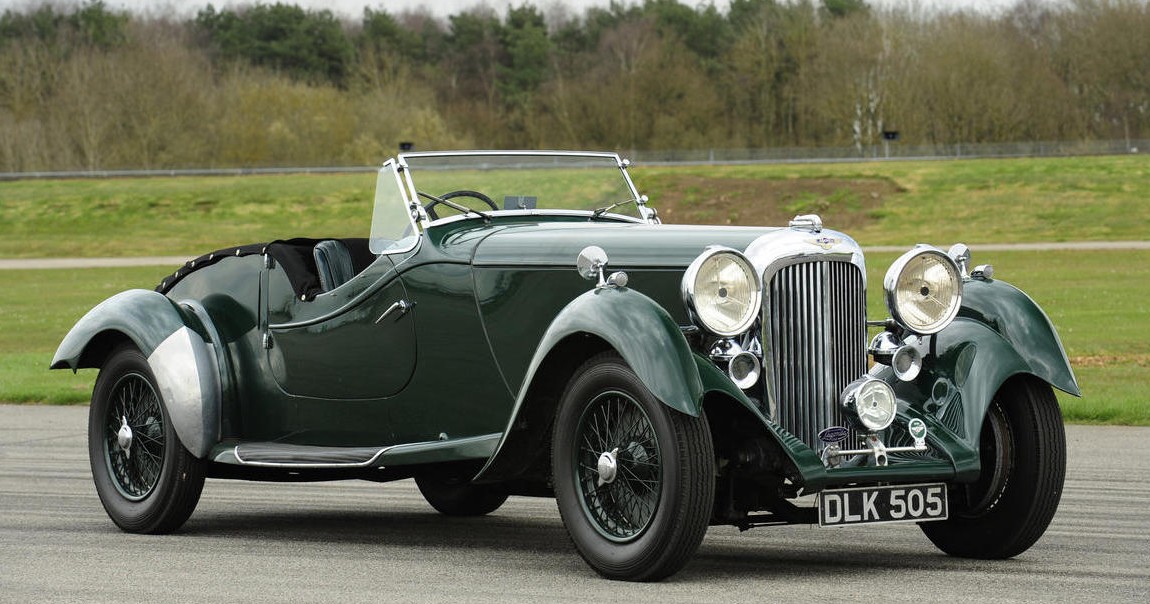
Although it has had a long association with Aston Martin (after being purchased by them in 1947), Lagonda was once an independent manufacturer. Lagonda car construction goes back to 1907, but it wasn’t until the inter-war period where their design and fame really took off.
In 1935, the company was going through hard times. But it was saved and W.O. Bentley was brought aboard to help build some fantastic cars. And in 1936, the LG45 was launched. It uses a 4.5-liter straight-six. The cars were heavy and beautiful but a little removed from sportier Lagondas of earlier days.
And thus the Rapide was conceived – it was to be a four-seat sports car based on the LG45. The car was lighter and featured a “Sanction 3” engine (the motors were available as Sanction 1, 2 or 3 – the higher the number, the more tweaks applied by W.O. Bentley). Total output was about 133 horsepower. The cars were attractive and all shared the same Lagonda-built bodywork. Only 25 were built – 24 remain.
This particular car was owned originally by the chairman of Lagonda at the time, a Mr. Alan P. Good, who nicknamed the car “Mathilda.” He sold it in 1938 and the next owner after that acquired the car in 1954 and owned it until 1997 in the U.S. It spent the following two years in Canada before the present owner acquired it in 1999. The restoration is at least as old as 1979 and has been well cared for since. The engine was freshly rebuilt in 2009. “Mathilda” is expected to bring between $860,000-$940,000 at auction. Check out more here and more from this sale here.