Daimler Dart Prototype

1960 Daimler SP250 AHC Retractable Hardtop Coupe

Offered by Bonhams | Goodwood, U.K. | September 10, 2016
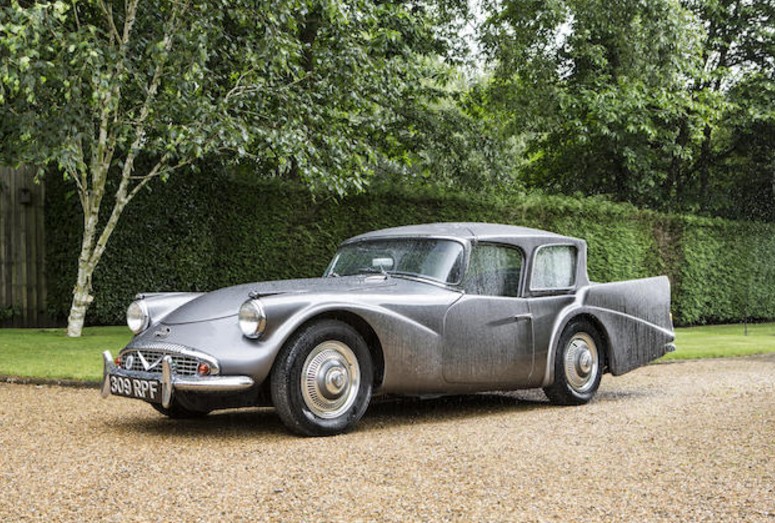
Photo - Bonhams

Photo – Bonhams

The Daimler SP250 “Dart” was a sports car built by the British Daimler company between 1959 and 1964. It was a weird thing for Daimler to build, as they specialized in big sedans and limousines. Obviously, as this is a 1960, it is not one of the original SP250 prototypes. Instead, it is a one-off prototype car built by the Antony H Croucher Precision & Prototype Engineering Company to showcase their novel retractable hardtop system.

The car was also slightly enlarged – it features four seats and a larger trunk. The work was completed in 1963 and the car is still powered by the SP250’s 2.5-liter V-8 that puts out 140 horsepower. A hardtop was an available option on the SP250, but this car’s can disappear into the trunk. Amazingly, the hardtop can be raised or lowered while driving.

The car has recently been freshened and is operable – roof included. Originally orange, it was repainted this silver that looks great when wet. Only 2,654 Darts were produced in total and this is the only one with a retractable hardtop. It has been owned by the same family since it was built and should bring between $65,000-$92,000. Click here for more info and here for more from this sale.

Update: Not sold.

Renwick & Bertelli

1925 Renwick & Bertelli 1½-Litre Sports

Offered by Bonhams | Goodwood, U.K. | September 10, 2016

Photo - Bonhams

Photo – Bonhams

William Renwick and A.C. Bertelli came together in 1924 to build engines… but their sticking to engines was short-lived. In 1925, they built the car you see here. Starting with a custom designed engine, they mounted it to a chassis from Enfield-Allday (where Bertelli used to work) and then they had Bertelli’s brother – who was a coachbuilder – build the body.

The engine is a 1.5-liter straight-four. It’s an important engine because the following year Renwick & Bertelli became the controlling directors of a little, financially insolvent company called Aston Martin. This car, dubbed “Buzzbox,” was the inspiration for the company-saving International and Le Mans models from Aston Martin. And with Aston up, running, and successful, Renwick & Bertelli never built another car under their own names.

This one-of-one car is a couple of things. One, it is incredibly sporty and good-looking. Two, it is an important piece of Aston Martin history, having given the company a path to success. It has been restored twice with the most recent work being quite fresh. It is ready and eligible for all major shows. The pre-sale estimate is between $310,000-$370,000. Click here for more info and here for more from this sale.

Update: Not sold.
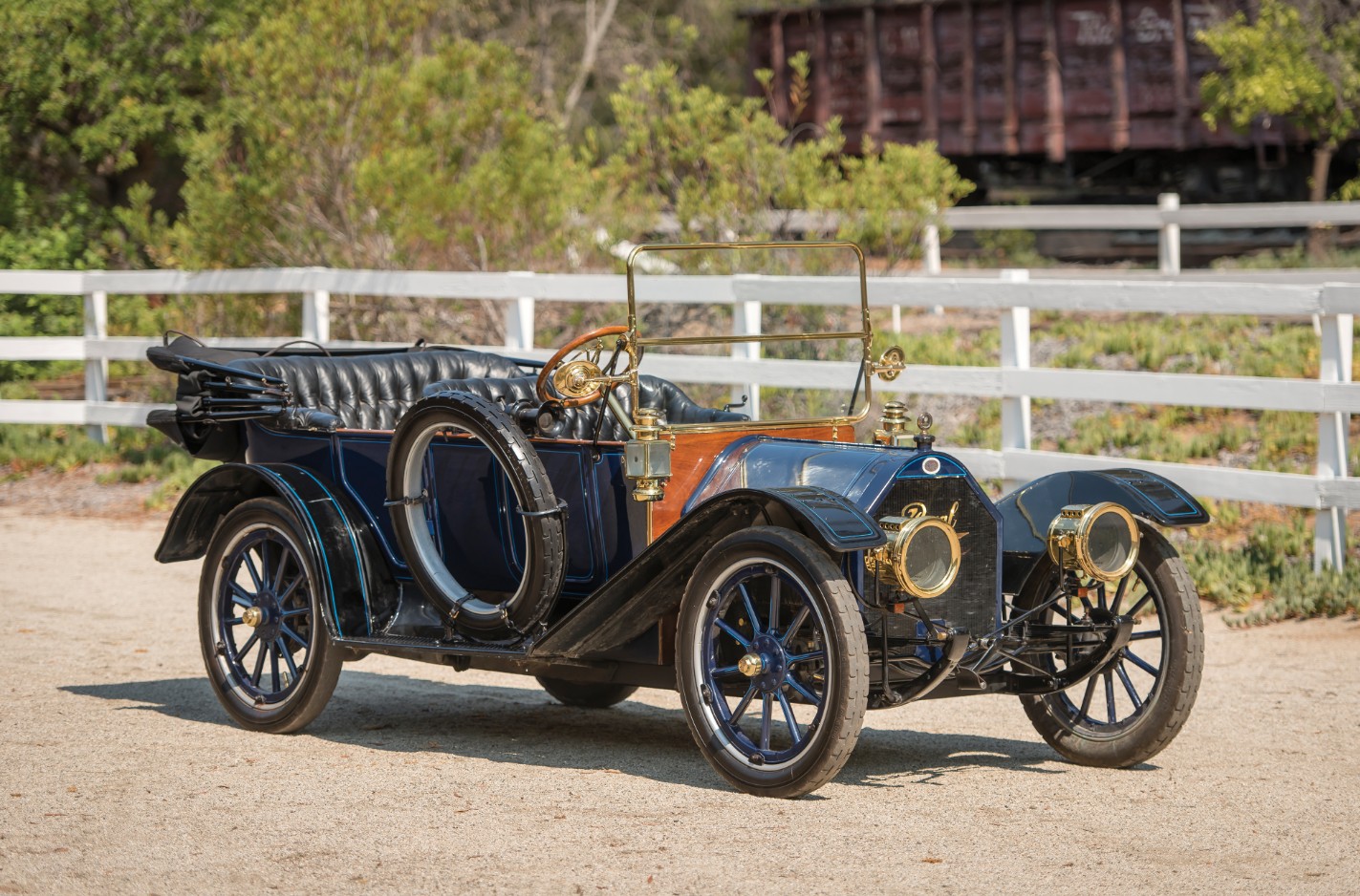
An Underslung Regal

1912 Regal Model T Touring

Offered by RM Sotheby’s | Hershey, Pennsylvania | October 6-7, 2016

Photo Courtesy of RM Sotheby's

Photo Courtesy of RM Sotheby’s

Detroit’s Regal Motor Car Company isn’t the most remembered automobile manufacturer to come out of Michigan, but boy did they produce some attractive cars. Brothers Charles, J.E., and Bert Lambert teamed up with Fred Haines to form the company in 1907. In their 11 years they produced some more traditional-looking (for the day) cars as well as this hot new thing called the Underslung.

An Underslung chassis is defined as a chassis where the chassis itself is suspended from the axles which lowers the car dramatically. Improvements from this include a lower center of gravity and awesome handling (for 1912 anyway). Because roads were more of an afterthought in the  day, larger wheels could be fitted to maintain ground clearance. The most famous example of these cars are the beautiful American Underslungs. Regal’s version went on sale in 1910.

This car is powered by a 25 horsepower 3.3-liter straight-four. The Model T (Ford’s trademark lawyers were apparently not quite as ruthless in 1912 as they are today) was the Touring model, although you could get a Roadster or Coupe with this engine. This is one of two survivors of this model and would be about as much fun as you can have driving a car from 104 years ago. Click here for more from RM Sotheby’s and here for more about this car.

Update: Not sold.

Monteverdi 375/L

1971 Monteverdi 375/L High Speed Coupe by Fissore

Offered by RM Sotheby’s | London, U.K. | September 7, 2016

Photo Courtesy of RM Sotheby's

Photo Courtesy of RM Sotheby’s

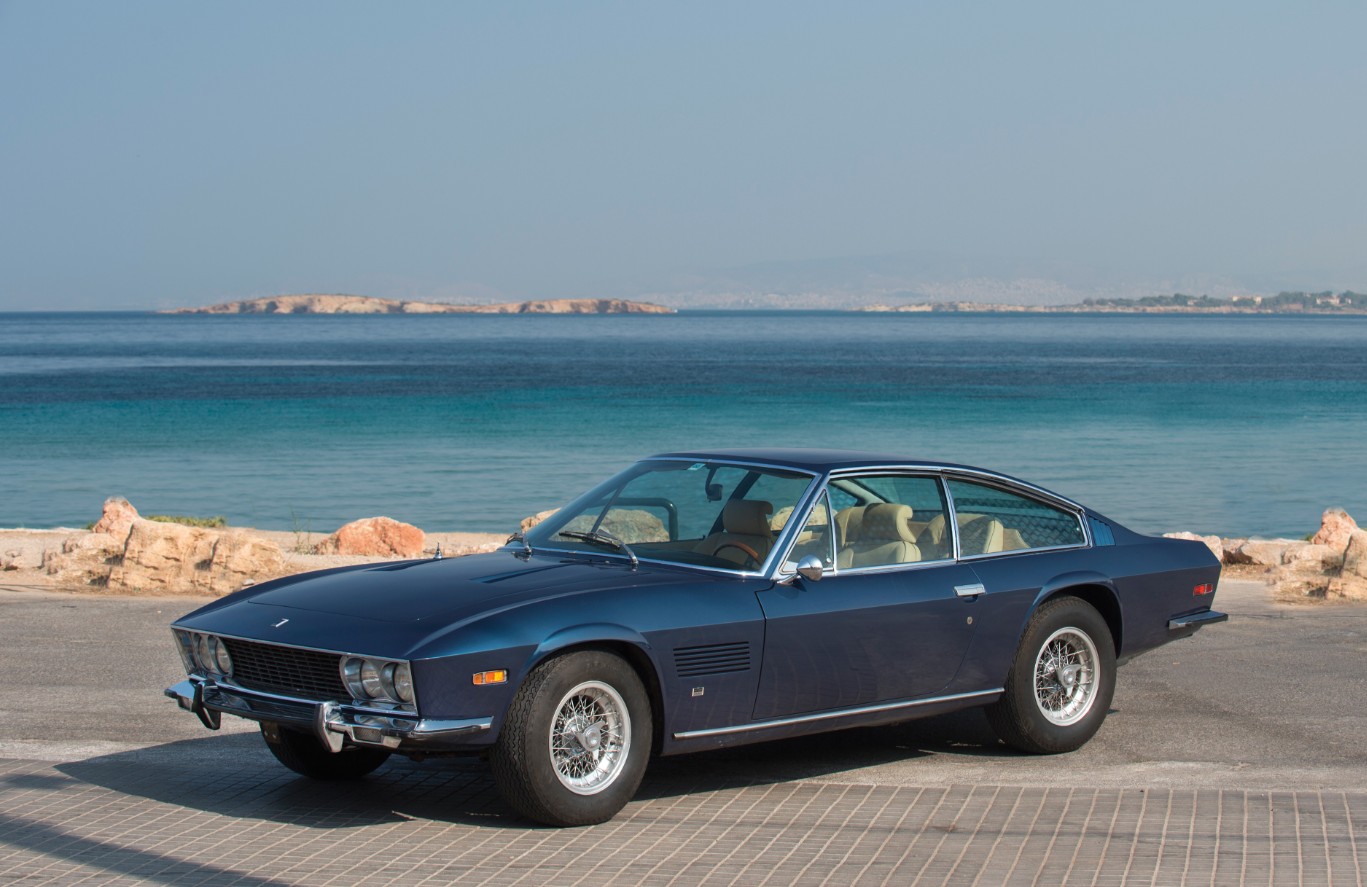
Peter Monteverdi’s Swiss car company never built models in huge numbers. In fact, only a handful of the cars he built ever made it to the production stage. Among them is the High Speed 375 line of cars that was built between 1967 and 1970 (with a few sedans built after that).

The 375/L was the second car in the High Speed line and it was a 2+2 four-seater on a slightly longer wheelbase than the preceding 375S two-seat coupe (there was also a 375C convertible and a 375/4 sedan). The engine is a Chrysler 440 (7.2-liter) V-8 making 375 horsepower. The body on this car is by Fissore of Italy.

A car with an American engine and an Italian body made for instant success. This particular example is being sold by its original owner. Monteverdis don’t trade hands often and that’s probably because they are awesome cars – on par with the other big Italian muscle car/tourers of the day (think Ghia SS and Maserati Ghibli). Production numbers are unknown, but it wasn’t many. You can read more here and see more from RM Sotheby’s here.

Update: Sold $210,112.

Morgan Plus 4 Plus

1964 Morgan Plus 4 Plus

Offered by RM Sotheby’s | London, U.K. | September 7, 2016

Photo - RM Sotheby's

Photo Courtesy of RM Sotheby’s

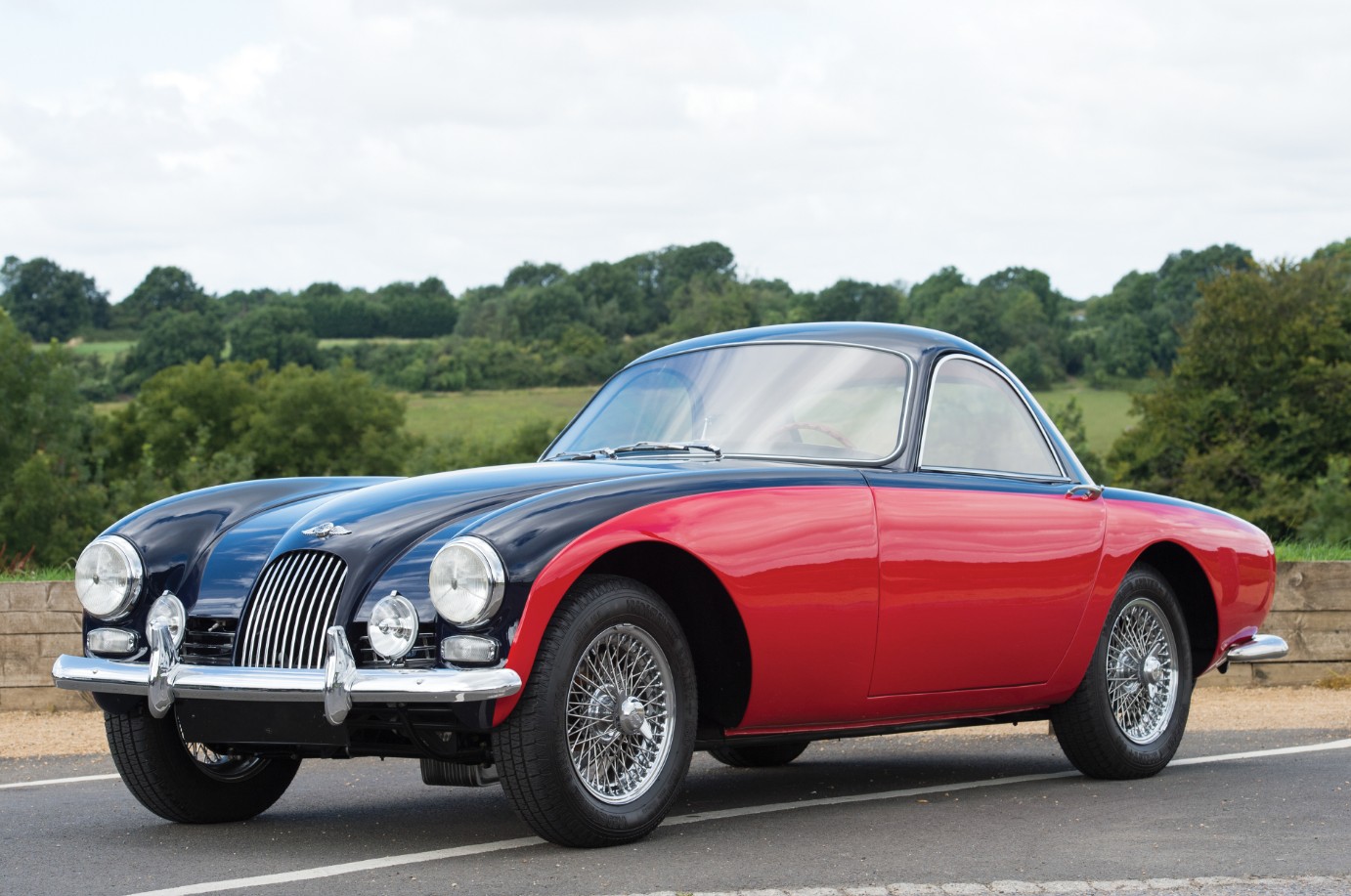
Morgan is a car company steeped in tradition – all their cars are assembled by hand and even today, in the 21st Century, they sell cars with an ash frame. Many of their cars sport styling that was introduced in the 1960s and they even sell a three-wheeler that’s just an updated version of a car that dates back 100 years.

So in 1963 when Morgan introduced the Plus 4 Plus at the Earls Court Motor Show, the technologically advanced car was met with a predictably cool reception and the company went back to focusing on their bread and butter. This car has a fiberglass body – a long way from ash frames. The striking closed coupe body has a greenhouse that is large enough for two human heads, but not much more. The engine is a 2.1-liter straight-four making 105 horsepower.

Restored in 2007, this example has spent most of its life on the West Coast of the U.S. and Canada where it had a string of only five owners. This is the fifth Plus 4 Plus built out of a production run of only 26 cars. It is among the rarest cars Morgan has ever built and one of the most instantly recognizable. It should bring between $156,000-$182,500. Click here for more info and here for the full RM Sotheby’s London catalogue.

Update: Sold $172,592.

Duesenberg J-365

1933 Duesenberg Model J Sunroof Berline by Franay

Offered by Auctions America | Auburn, Indiana | September 3, 2016

Photo - Auctions America

Photo – Auctions America

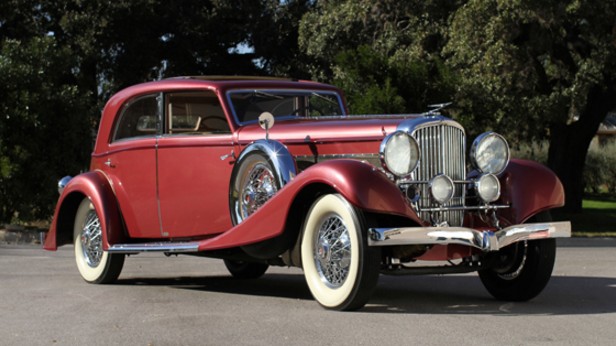
Many French cars of the 1930s had gorgeous bodies applied to them by the top coachbuilders of France while many American cars of the 1930s had gorgeous bodies applied to them by the top coachbuilders in America. But there was some mixing and matching, like this 1933 Duesenberg Model J with a very rare sedan body that features a sunroof – built by Franay of Paris.

The Model J is powered by a 265 horsepower, 6.9-liter straight-eight. This particular engine, J-365, was originally fitted with a Kellner Town Car. But in late 1931, it was re-bodied (and the Kellner body was applied to J-516). With the new Franay body, J-365 was featured at the 1931 and 1932 Paris Salon.

It’s first owner, a famous socialite, bought the car in 1934 and it remained in Europe until coming to California in 1971 having had two owners since 1988. Only two Model Js were originally fitted with a sunroof and this one should bring between $750,000-$950,000. Click here for more info and here for more from this sale.

Update: Sold $715,000.

Horch 780 B

1934 Horch 780 B Cabriolet by Gläser

Offered by Bonahms | Paris, France | September 3, 2016

Photo – Bonhams

Horch’s first eight-cylinder model went on sale in 1926. In 1931, their largest straight-eight was introduced, displacing 4.9-liters. The 780 B was the ultimate version of this series, produced between 1932 and 1935. That engine put out 100 horsepower, which made the car good for 77 mph – the fastest eight-cylinder Horch produced up to that time (the 4.9-liter engine would return in 1937 for the legendary 853 series).

This particular example was bodied by Gläser of Dresden and it’s very attractive. During or after WWII, this car ended up in Belarus, of all places, and it didn’t return to Germany until 2005 when it was finally restored after untold decades in a barn.

The 780 B is one of the rarer Horch models, with only 82 built. While the 853/853A is among the most sought-after models, they tend to appear for sale more often than the likes of this. It’s price reflects its rarity as this car carries a pre-sale estimate of $680,000-$1,000,000. Click here for more info and here for more from this sale.

Update: Sold $712,701.

Aston-Butterworth

1952 Aston-Butterworth Grand Prix Monoposto

Offered by Bonhams | Goodwood, U.K. | September 10, 2016

Photo - Bonhams

Photo – Bonhams

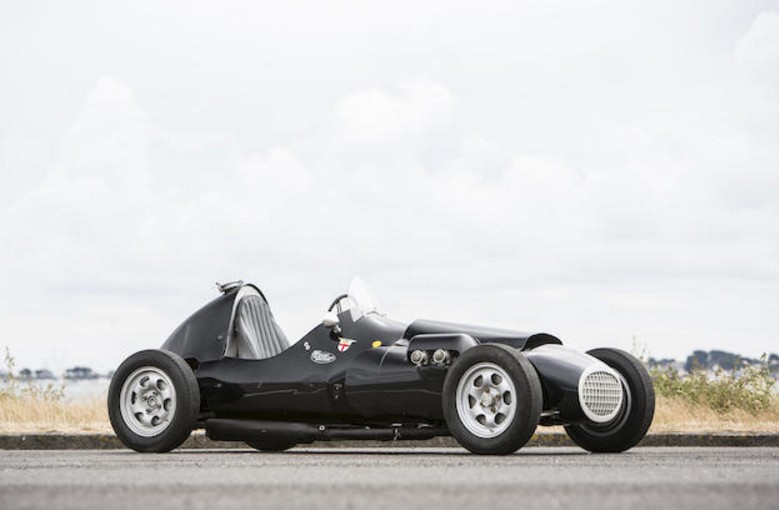
For starters: no, this car has nothing to do with Aston Martin. The Aston-Butterworth was the project of Bill Aston. He started with a Cooper Mark I chassis and then used an engine from Archie Butterworth to create this Formula 2 racer. Remember, about this time, Formula 2 was the formula used for the World Championship, like modern Formula 1.

Butterworth’s engine is a 2.0-liter flat-four that makes 140 horsepower. Aston raced one of the cars himself, and built a second (this car) for Robin Montgomerie-Charrington who DNF’d at the 1952 Belgian Grand Prix after running in the top 10.

This car passed through a couple of owners before being bought at auction in 1999 and completely restored in 2004. The current owner acquired the car in 2014 and actually got to use it in a few historic events. This car, one of two from a little-known Grand Prix team should bring between $79,000-$100,000. Click here for more info and here for more from Bonhams in Goodwood.

Update: Not sold.

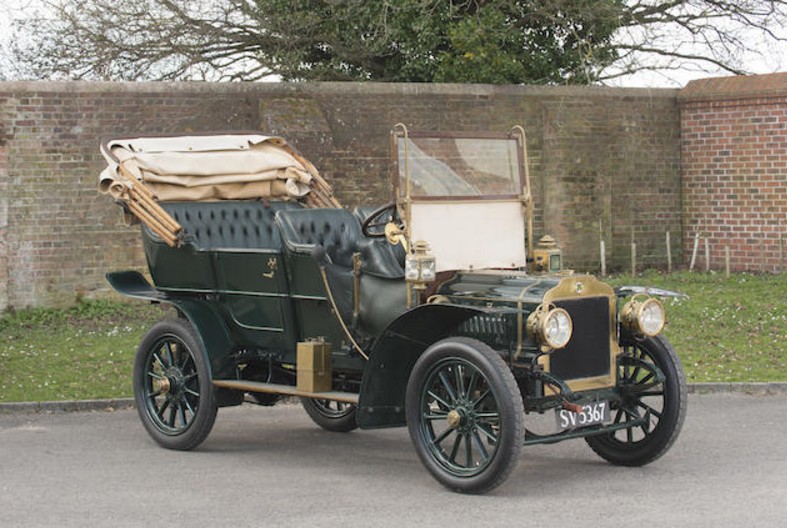
Brasier Tonneau

1906 Brasier 15HP Side-Entrance Tonneau by Vedrine

Offered by Bonhams | Beaulieu, U.K. | September 3, 2016

Photo - Bonhams

Photo – Bonhams

The Brasier marque began in 1902, after Charles-Henri Brasier quit his job at Mors and went into business with Georges Richard as Richard-Brasier. Richard jumped ship in 1905 to found Unic, leaving Brasier a standalone make beginning in 1905. The company lasted until 1931, having been known as Chaigneau-Brasier from 1926.

This car is from the second year of Brasier production and it is both big and quite nice. It’s powered by a four-cylinder engine making 14 horsepower, powering the rear wheels via shaft drive. This car was shipped from the U.S. to the U.K. in the 1980s and was restored by the current owner, likely in the 1980s.

The pre-sale estimate on this car is $52,000-$77,000. Cars from other manufacturers of similar size and vintage can go for many times this amount, making this a good, usable car at a decent price. Click here for more info and here for more from this sale.

Update: Sold $79,679.

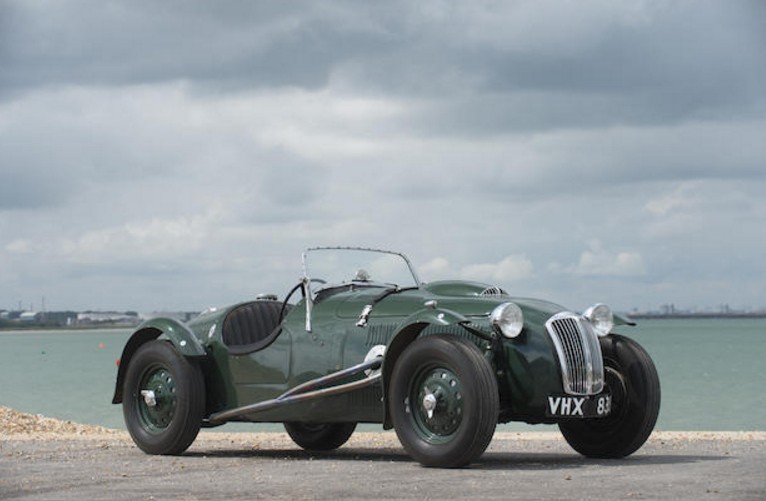
Frazer Nash Le Mans Replica

1950 Frazer Nash Le Mans Replica

Offered by Bonhams | Goodwood, U.K. | September 10, 2016

Photo - Bonhams

Photo – Bonhams

I feel like every time we feature one of Archibald Frazer-Nash’s spectacular automobiles, we have to have the conversation about the word “replica.” In this case, replica refers to a production vehicle modeled after an actual race car the company built. In this case, Frazer Nash built a car for the 1949 24 Hours of Le Mans. Because it was successful, they built a run of similar cars for customers.

This example, with known ownership history from new, was first sold in the U.K. in 1950. It is powered by a 2.0-liter straight-six from Bristol making 125 horsepower. One owner has had this car for over four decades. At one point in time, it was owned and raced by famed driver Roy Salvadori.

This was the 20th of 34 built. Frazer Nash only built about 85 cars after WWII, with this model being the most popular. With pre-war production included, Frazer Nash output was only about 400 cars. Not a large amount. But they are among the best of the breed – true sports cars. This example – which is all original – should bring between $760,000-$840,000. Click here for more info and here for more from this sale.

Update: Sold $785,031.