NSU Ro 80

1975 NSU Ro 80

Offered by Historics Auctioneers | Ascot Racecourse, U.K. | March 12, 2022
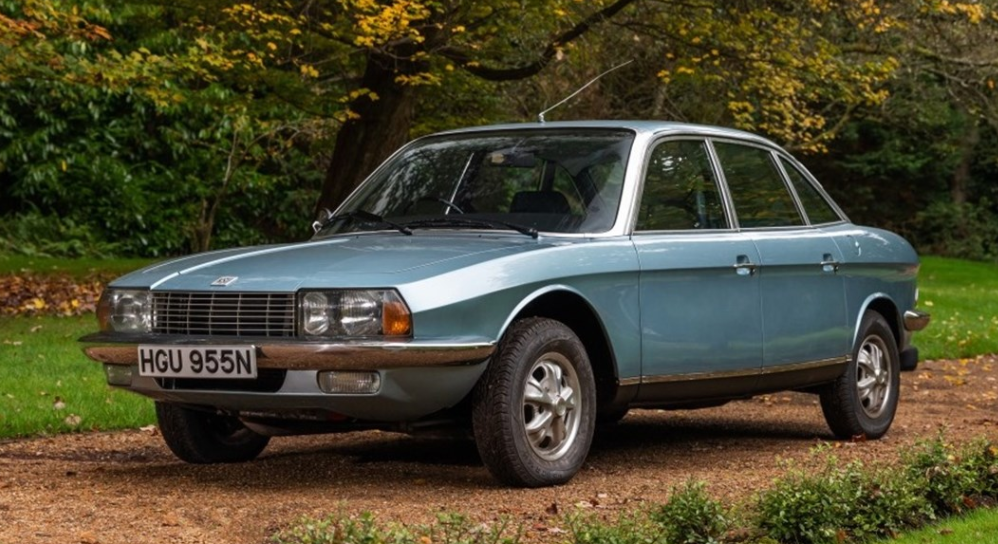
Photo – Historics Auctioneers

NSU was one of a handful of German automakers that restarted production after WWII. But they really didn’t get going until the late 1950s. In 1967 they introduced this large sedan powered by a Wankel rotary engine. Two years later, the company was acquired by Volkswagen, who eventually merged it into Audi, scrapping the NSU name after 1977.

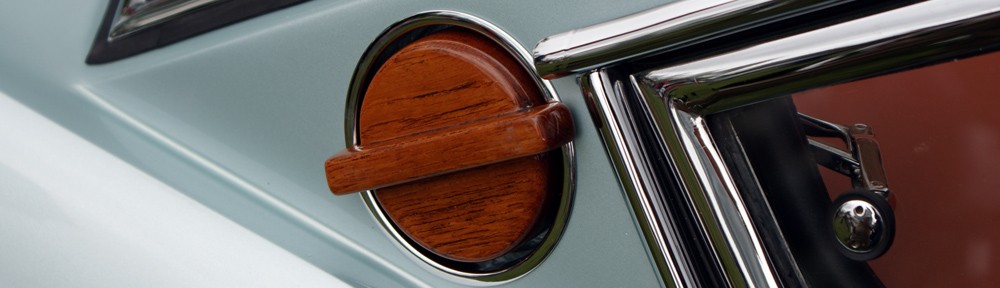
1977 was also the year the Ro 80 ceased production after a decade and a total of 37,398 examples built. The car was completely out of left field – and in a good way. First, the engine: a 995cc twin-rotor Wankel rotary. It made 113 horsepower and drove the front wheels through a semi-automatic transmission that featured an three speeds and an automatic clutch that worked off of a vacuum system.

The car featured a very low drag coefficient, enabling it to hit 112 mph. The wheels were pushed to the corners, and the interior was appointed with a PVC headliner and carpeted floors. Unfortunately, early cars suffered all kinds of reliability problems that were eventually rectified for later units, but not before the damage was done. Fuel economy was also poor, and all of the warranty claims sucked up NSU’s cash, leading to the VW takeover.

This example is one of 45 registered in the U.K. and has a pre-sale estimate of $17,000-$21,000. Click here for more info.

Update: Sold $10,785.

Liberty Standard Truck

1917 Liberty Class B 3-Ton Flatbed

Offered by Mecum | East Moline, Illinois | March 25, 2022

Photo – Mecum

This is a really fascinating truck, and kind of a weird one categorization-wise. The “Class-B Standardized Military Truck” was actually designed by the U.S. military in a matter of weeks, with the team sitting down for the first time in August 1917 and the first trucks ready in October. Assembly was performed by 15 different companies, with Selden, Graham-Bernstein, Garford, Pierce-Arrow, and Republic being the largest producers.

No marque was assigned to any of the trucks, but “Liberty” was the nickname given to them, thus why it’s labeled as it is here. About 9,400 were built between late 1917 and 1918, and only a few made it into service before the war ended. But that didn’t stop them from being used well after the war ended, with some still in-use by foreign governments up to almost 1940.

The 7.0-liter L-head inline-four was assembled from components from several companies, including Continental, Waukesha, and Hercules. Output was 52 horsepower. Compared to WWI, WWII vehicles seem commonplace. Finding a truck from the Great War, restored to this condition at that, is extremely uncommon. Read more about this one here.

Update: Sold $71,500.

Kougar Sports

1968 Kougar Sports SB

Offered by Historics Auctioneers | Ascot Racecourse, U.K. | March 12, 2022

Photo – Historics Auctioneers

Kougar Cars was founded by Rick Stevens in 1979 in the U.K. So why is this car listed as a 1968? Well, that’s just what it’s titled as, since the car that gave its life for this Kougar to be born was built in 1968.

There were a lot of less-than-stellar kit cars available circa 1980, but the Kougar wasn’t based on a Beetle pan. Stevens offered a tubular chassis designed to incorporate the suspension and drivetrain from a Jaguar S-Type sedan. The bodywork was especially sporty given the time, and Historics likens it to the Healey Silverstone or Frazer Nash TT Replica of decades prior.

This car is powered by a 4.2-liter Jaguar XK inline-six and apparently carries the chassis tag (and probably suspension components) from a Daimler SP250. The pre-sale estimate is $50,000-$59,000. Click here for more info.

Update: Sold $43,140.

Kelly-Springfield Truck

1914 Kelly-Springfield Model K-40 3-Ton

Offered by Mecum | East Moline, Illinois | March 25, 2022

Photo – Mecum

Kelly-Springfield Motor Truck Company sounds an awful lot like the Kelly-Springfield Tire Company. And that’s probably because both were founded in Springfield, Ohio, by Edwin S. Kelly. The trucks were sold under the Kelly marque from 1910 through 1912, when Springfield was appended.

Kelly actually started his truck company in 1910, 15 years after selling his tire company, after having purchased the Frayer Miller Auto Company. The K-40 was their biggest offering, launching alongside the smaller K-31 and K-35 in 1912.

This K-30 is a bare-chassis example powered by a 6.8-liter T-head inline-four of the company’s own design. It’s got chain drive and was a well-regarded truck when new. You can see more about it here.

Update: Withdrawn.

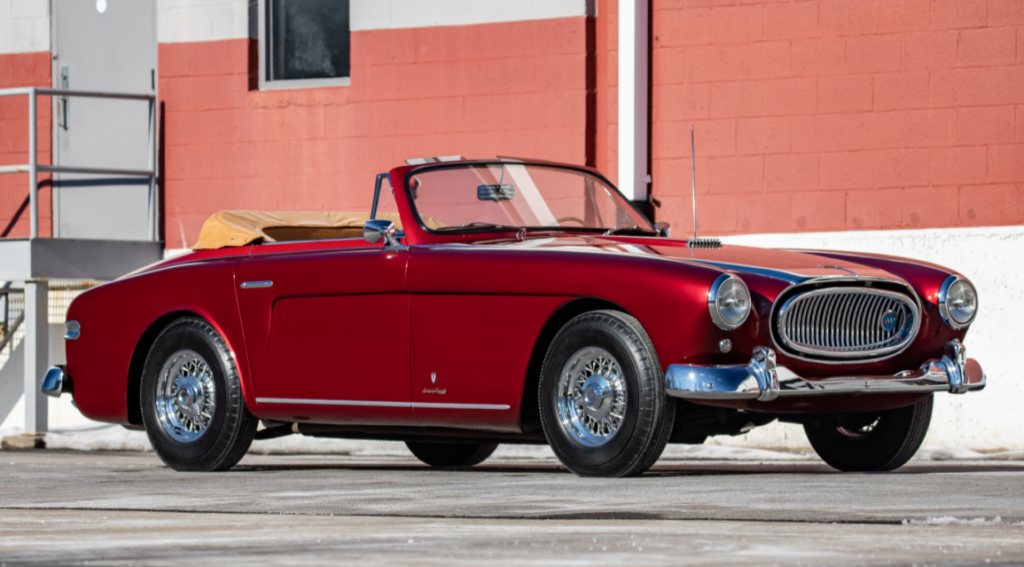
Cunningham C-3 Cabriolet

1953 Cunningham C-3 Cabriolet by Vignale

Offered by RM Sotheby’s | Amelia Island, Florida | March 5, 2022

Photo Courtesy of RM Sotheby’s

There aren’t too many Vignale-bodied American cars, but the Cunningham C-3 is one. But there aren’t too many Cunningham C-3s, either. Only about 24 C-3s were built, all Vignale-bodied. Apparently another dozen or so chassis were built, and some of those were completed individually later on with bodywork limited only by their builders’ imaginations.

Power is from a 5.4-liter Chrysler Hemi V8 that made 220 horsepower when new. C-3 coupes are more common, and just five cabriolets were built. It’s definitely Vignale styling, and it’s another example of American muscle with a sleek Italian body – a common theme of performance cars of the 1950s and 60s.

This was a New York car when new and was shown at Pebble Beach as early as 1956, appearing there most recently in 2015. It was even owned by Briggs Cunningham’s daughter at one point. The pre-sale estimate is $900,000-$1,200,000. Click here for more info.

Update: Sold $1,215,000.

Packard Model 30 Toy Tonneau

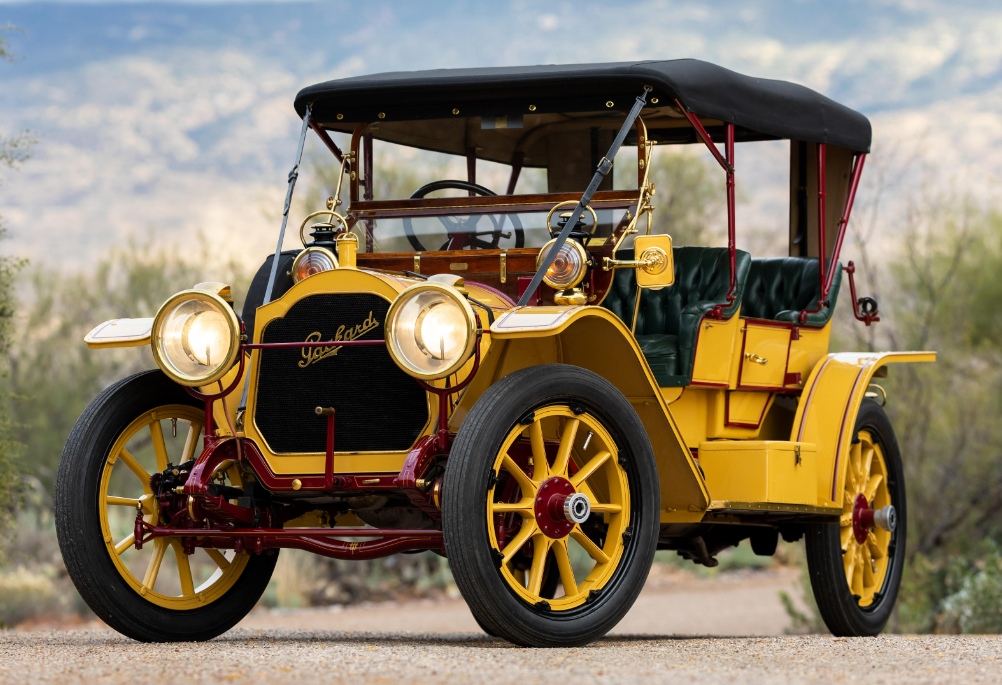
1912 Packard Model 30 Toy Tonneau

Offered by Bonhams | Amelia Island, Florida | March 3, 2022

Photo – Bonhams

The Model 30 was one of the great early Packards, and it was produced from 1907 through 1912. We’ve feature two of them previously, including a touring car. This is a “toy tonneau,” which looks pretty much like a touring car but with a narrower rear passenger compartment. You can see it in the photo above how the body sits inward of the fenders.

The 30 is powered by a 7.1-liter inline-four that was rated at 30 horsepower when new. The body on this one isn’t original, as it was recreated in a Holbrook style approximately 20 years ago. The car, which is believed to have been the final Model 30 chassis completed, initially spent time with the Detroit Fire Department.

Packard sold 1,250 Model 30s in 1912, and this, the last of them now has an estimate of $250,000-$300,000. Click here for more info.

Update: Sold $257,600.

356 Carrera Zagato Speedster

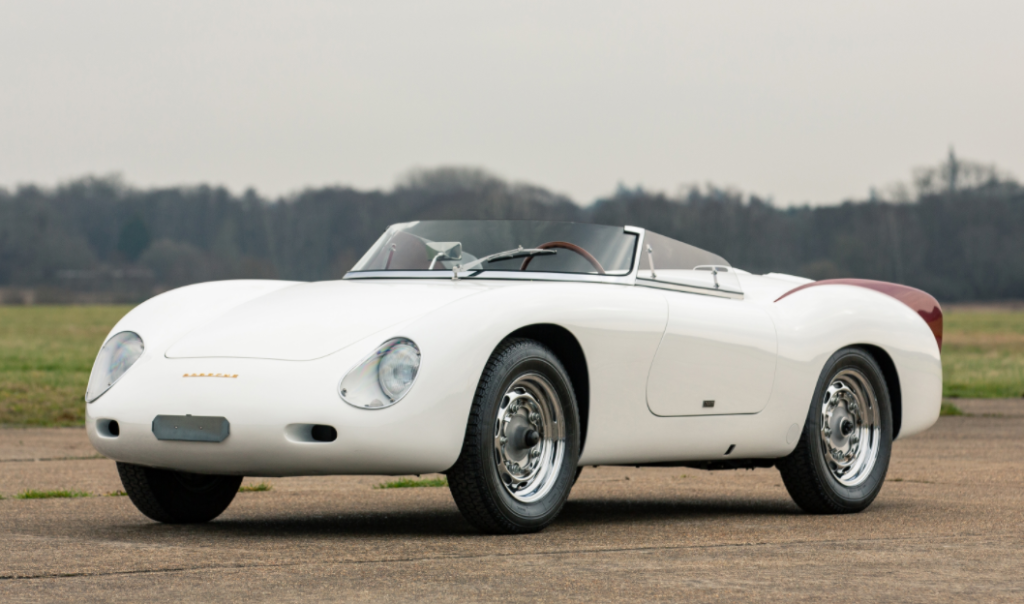
1960 Porsche 356 Carrera Zagato Speedster

Offered by RM Sotheby’s | Amelia Island, Florida | March 5, 2022

Photo Courtesy of RM Sotheby’s

Philosophical question: if a car is produced by a manufacturer and later sent to a coachbuilder, what is the maximum length of time between those two acts to where the car is still considered what it is claimed to be? Most would agree that an Aston Martin DB4 tweaked by Bertone a few months after it was built is just fine.

But what if you take a 1960 Porsche 356B and send it to Zagato in 2016 for a new body? Is it still a coachbuilt 1960 356? That’s what we have here. There was a Porsche-Zagato Speedster raced in 1958 and 1959. That car no longer exists. In the 2010s, an American collector persuaded Zagato to recreate that Speedster. There was also a coupe version produced. In all 18 were built, and only one of the Speedsters ended up with a 1.6-liter Carrera flat-four.

This car, which is a real, Zagato-bodied 356 (though it just so happened it was bodied in 2016), carries an estimate of $450,000-$550,000. Click here for more info.

Update: Sold $472,500.

XK120 by Pinin Farina

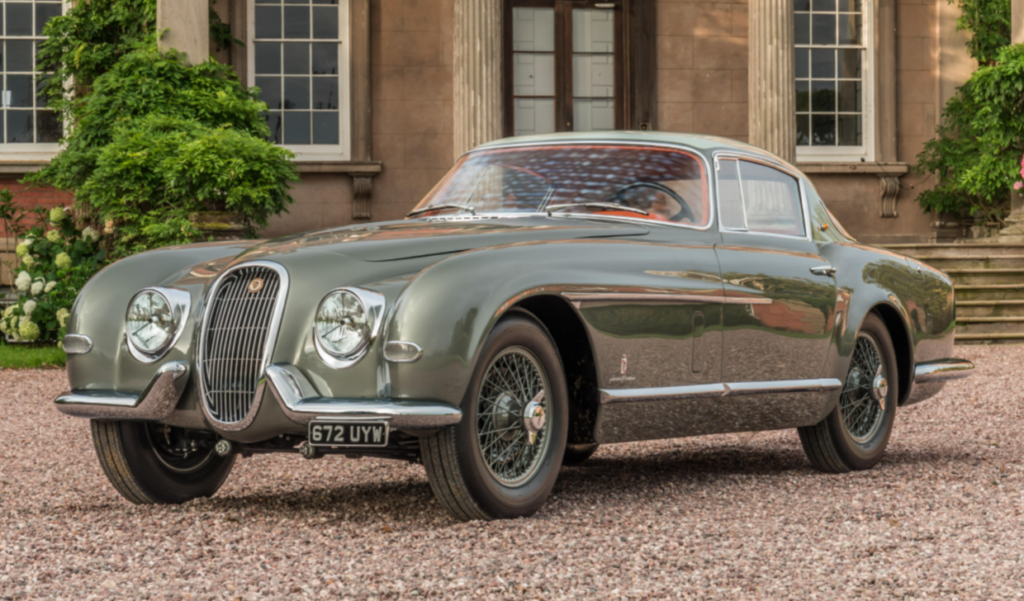
1955 Jaguar XK120 SE Coupe by Pinin Farina

Offered by Bonhams | Amelia Island, Florida | March 3, 2022

Photo – Bonhams

This is the third Jaguar XK120 we’ve featured, and all three have been coachbuilt cars with bodies that would not have come from the Jaguar factory. The XK120 launched in 1948 at the London Motor Show. Roadsters came first, and coupes and drophead coupes followed thereafter.

This coupe is the only XK120 bodied by Pinin Farina. It was at shows in 1955, which would’ve been after the XK140 entered production. It is an SE, or Special Equipment, model, meaning that the 3.4-liter inline-six was modified with higher-lift camshafts and a dual-exit exhaust for a horsepower bump to 180.

This car came to the U.S. via Max Hoffman, and a restoration was carried out in 2015. The result was a second-in-class at Pebble Beach in 2017. This one-off Jag has an estimate of $900,000-$1,300,000. Click here for more info.

Update: Sold $940,000.

Bandini Siluro

1953 Bandini 750 Sport Siluro

Offered by Artcurial | Paris, France | March 18, 2022

Photo – Artcurial

The Siluro: the most famous of all Bandini models. The cars were produced in 1100 and 750cc form, the former between 1947 and 1949, and the latter between 1950 and 1956. The 750cc Siluro won multiple SCCA championships and saw racing success on both sides of the Atlantic.

The 747cc inline-four was a modified Crosley unit capable of pushing out 71 horsepower. Bodywork varied car to car, but it followed general trends over the years. For example, 1953 cars received fenders that blended into the body in lieu of more cycle-style fenders or cars that were fender-less altogether.

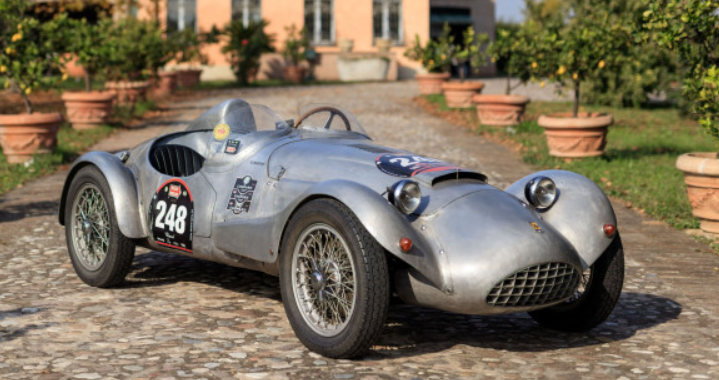
This car arrived in the U.S. prior to 1957 after having raced in Italy. It later returned to Italy where it was acquired by the Bandini family and restored. It’s been a part of three historic Mille Miglias and now carries an estimate of $285,000-$400,000. Click here for more info and here for more from this sale.

Update: Not sold.

Detroit Motor Wagon

1912 Detroit Motor Wagon

Offered by Mecum | East Moline, Illinois | March 25, 2022

Photo – Mecum

I am ashamed of this photo, and I didn’t even take it. But there will never be another chance to feature one of these, so here we are. The Motor Wagon Company of Detroit was founded in 1912, and they initially sold light vans and trucks under the Motor Wagon marque before tacking “Detroit” on to the beginning shortly after getting launched.

Production only lasted through 1913. This one is powered by a 1.7-liter flat-twin rated at 16 horsepower. Four-cylinder trucklets were also offered. This one is bodied as the pre-WWI version of a light pickup truck.

It’s got chain drive and wood pretty much everything else. There can’t be many of these left, if any others. You can read more about it here and see more from Mecum here.

Update: Sold $13,200.