Stutz Bearcat

1912 Stutz Bearcat

Offered by Bonhams | Amelia Island, Florida | May 20, 2021

Photo – Bonhams

Harry C. Stutz’s Indianapolis-based company produced their first cars in 1911. The following year they cemented their legacy with this, the Bearcat. Stutz continued to use the name on sporty models into the 1930s. But it was this, the original “Bear Cat”, that Stutz is most well-known for.

The 1912 Series A was offered in five body styles, and the Bearcat cost $2,000 when new. Not cheap. It’s got a low-slung frame, minimal bodywork, two seats, and a 60-horsepower, 6.4-liter Wisconsin inline-four. It was the first sports car.

This particular Bearcat is the oldest known Stutz car in existence. It was restored most recently in 2007-2008 and is expected to bring between $650,000-$850,000, which seems like a steal as this is one of America’s all-time great cars. Click here for more info and here for more from this sale.

Update: Sold $643,000.

Lanchester Straight Eight

1932 Lanchester 30HP Straight Eight

Offered by Historics Auctioneers | Ascot, U.K. | May 15, 2021

Photo – Historics Auctioneers

The Lanchester Motor Company was founded in 1899 by the three Lanchester brothers: George, Frederick, and Frank. They sold their first cars in 1901, and the company was acquired by BSA in 1931. The last cars were produced in 1955, and the brand name was acquired by Jaguar in 1960 and has remained with the Jag through its various acquisitions.

The 30HP Straight Eight was designed by George Lanchester and was sold between 1929 and 1932. Power is from a 4.4-liter SOHC inline-eight rated at 30 taxable horsepower. As we all know, 1929 was a poor year to launch a high-end new car (see Duesenberg; also see Lanchester’s subsequent 1931 takeover by BSA).

Only 126 examples of the Straight Eight were built. This one was re-bodied in the 1960s in its current style and is one of the final examples produced. The pre-sale estimate is $97,000-$111,000. Click here for more info and here for more from this sale.

Update: Not sold.

Update: Sold, Bonhams Beaulieu 2022, $68,761.

MG RV8

1995 MG RV8

Offered by Brightwells | Leominster, U.K. | May 8, 2021

Photo – Brightwells

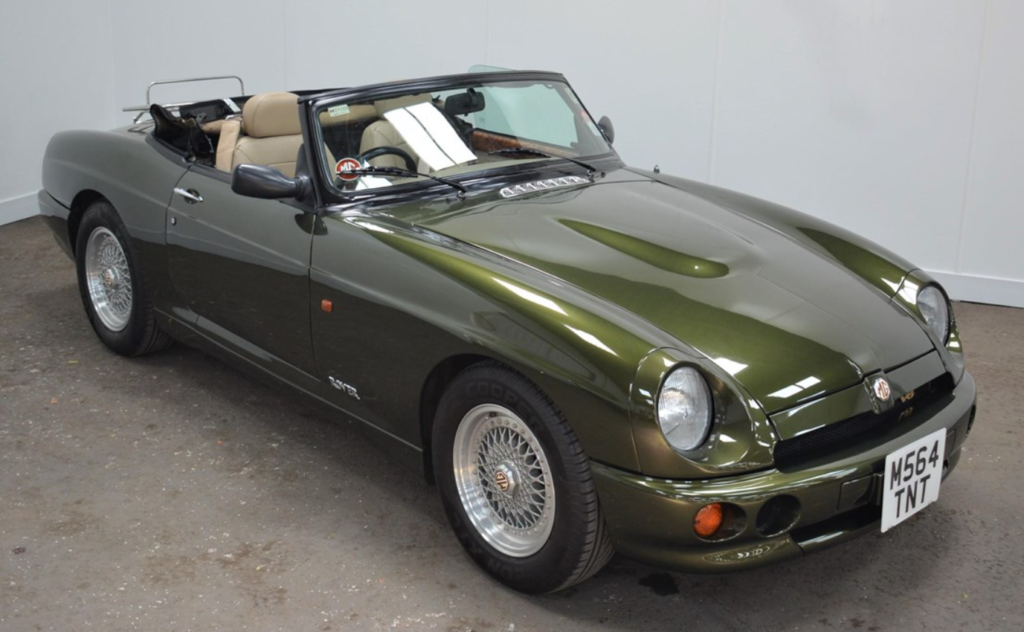
As time went on, MG became more and more of a shadow of its former self. By the time the 1990s rolled around, there wasn’t much gas left in the tank. The MGB had ceased production in 1980. After that, the company only sold badge-engineered versions of cars like the Austin Metro.

MG had started building MGB bodies again in the late 1980s to serve the restoration market. Then the Mazda Miata launched and gave MG the idea that light two-seat sports cars were still viable. In late 1992, they launched the RV8, which was basically an MGB with a 3.9-liter Rover V8, a revised front end, a limited-slip differential, and a slightly tweaked suspension.

Please recall that the original MGB launched in 1962. The RV8 still has rear drum brakes. Between late 1992 and 1995, MG churned out 1,938 examples of the 190-horsepower roadster. Most of them went to Japan, including this one. I like this car because it is interesting. It’s a footnote in the history of British sports cars, but it’s also the last hurrah of the MG sports car. It should sell for between $25,000-$30,000. Click here for more info and here for more from this sale.

Update: Sold $25,489.

Queen Model E

1905 Queen Model E Touring

Offered by Bonhams | Amelia Island, Florida | May 20, 2021

Photo – Bonhams

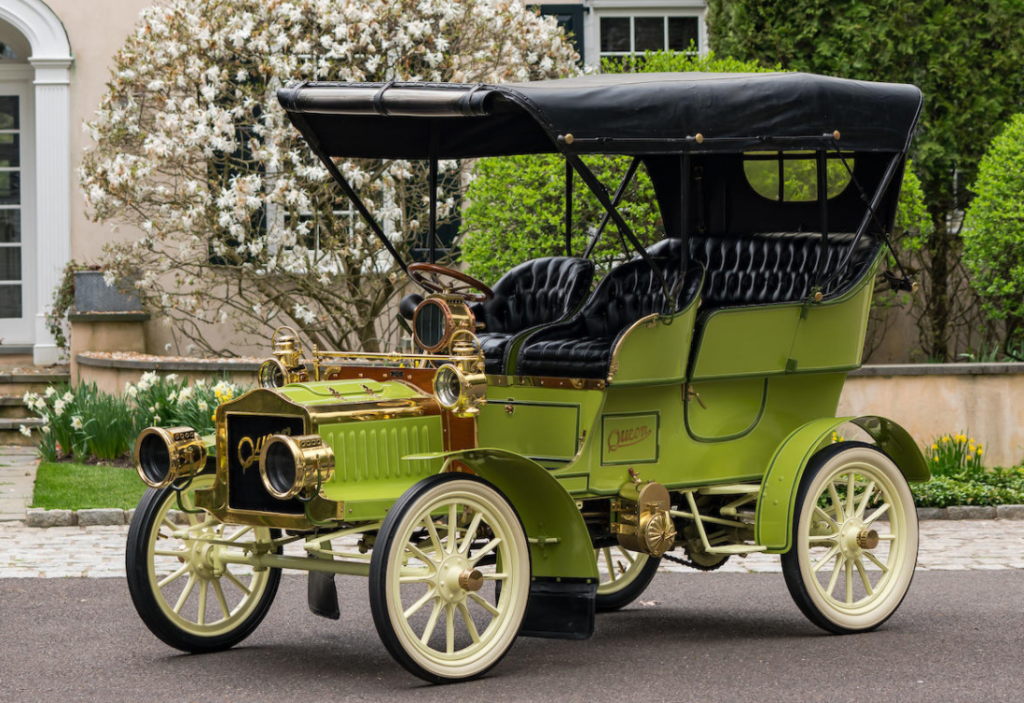
C.H. Blomstrom’s Queen was produced between 1904 and 1906 and was relatively successful. In all, about 1,500 cars were sold, but the company came under fire for being “defectively incorporated.” So Blomstrom merged his company with another, cashed out his stock, and opened another car company somewhere else in Detroit.

But the Queen’s legacy stood. Singles, twins, and four-cylinder cars were offered. The singles were among the most powerful of their kind, and the twins rivaled Packard with their output. The Model E was sold in 1905 and 1906 and features a 3.2-liter (presumably flat) twin that made approximately 16 horsepower. The E could only be had as a tourer like this.

This example was restored prior to being shown at Pebble Beach in 2005. It is the only Model E known to exist and is expected to sell for between $75,000-$100,000. Click here for more info and here for more from this sale.

Update: Sold $80,640.

Chenowth Indianapolis

1961 Chenowth-Chevrolet Indianapolis

Offered by RM Sotheby’s | Amelia Island, Florida | May 22, 2021

Photo Courtesy of RM Sotheby’s

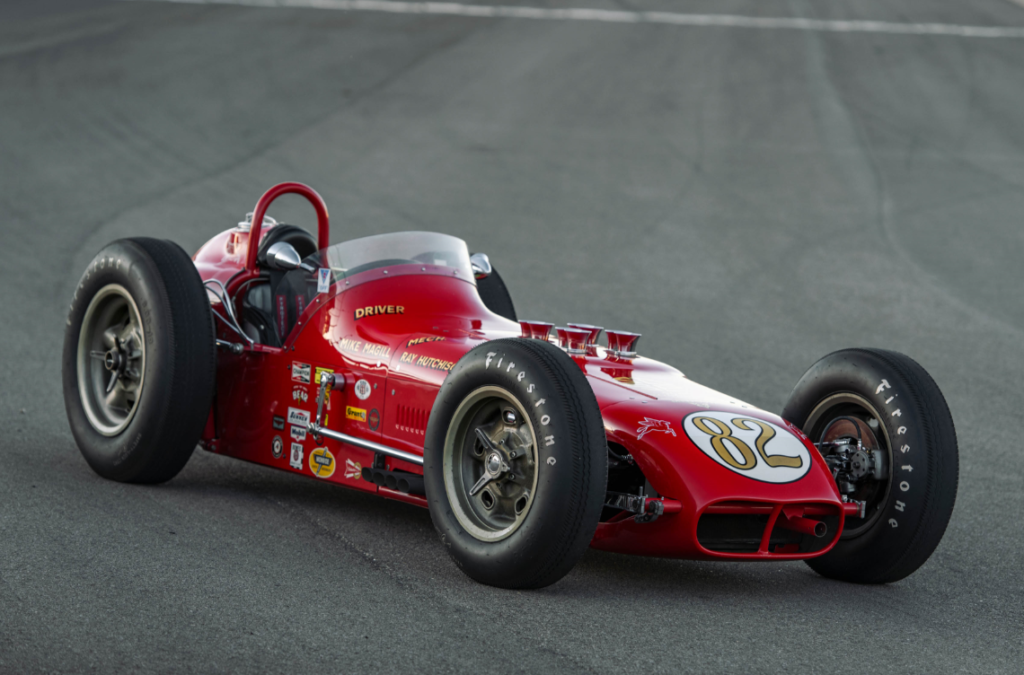
Once upon a time, there was a company called San Diego Steel Products, and they made exhaust headers. It was owned by a guy named Chuck Chenowth, and he wanted to go racing at Indianapolis. He built an Indy roadster and stuffed a 4.2-liter Chevrolet V8 up front in an era when an Offenhauser-powered Anything dominated each race. Bold move.

It’s got Hillborn fuel injection and a Lehman front-drive unit to operate the fuel and water pumps as well as an Offenhauser gearbox and Halibrand wheels. The body was actually designed by Don Kuzma, another legendary name of the period. The Chenowth name is still around, although primarily associated with off-road racing today.

Unfortunately, this car never made a 500. It failed to arrive for the 1960 race and failed to qualify in 1961. It was more successful on the USAC short-track circuit, where it was driven by the likes of Tom Sneva, Mike Magill, and Greg Weld. It was restored near Cincinnati in the 1980s and is now offered with an estimate of $175,000-$225,000. Click here for more info and here for more from this sale.

Update: Sold $156,800.

1953 RGS Atalanta

1953 RGS Atalanta

Offered by Bonhams | Amelia Island, Florida | May 20, 2021

Photo – Bonhams

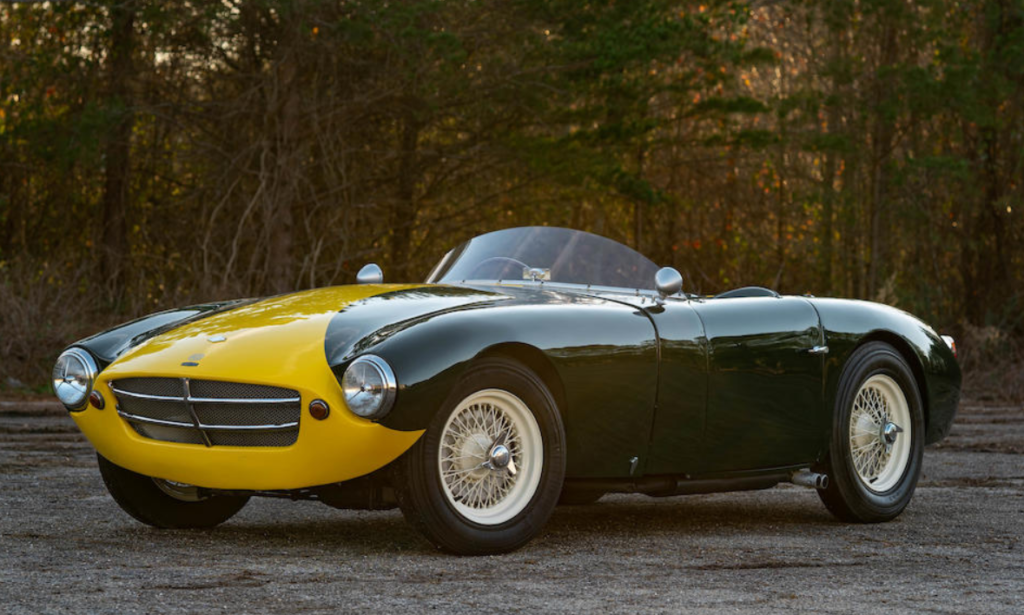
Atalanta Motors Ltd was active in Middlesex, England, from 1937 through 1939. They built less than 20 cars in that time, but they were held in very high regard. After WWII, the company was purchased by Richard G. Shattock, a former army member and race car driver.

He built a run of specials – 11 apparently – using the Atalanta marque and his initials. They were raced, and some were sold as standalone bodies. This was the third example produced and features aluminum bodywork. The powerplant is a 3.4-liter Jaguar inline-six good for 160 horsepower.

Clues as to the car’s early history indicate that it was probably raced before it was registered for street use. It arrived in the U.S. in 1970 as a pure racing car and was purchased by the current owner in the late 1980s. The current restoration was performed thereafter, but it has been on static display for some time. No pre-sale estimate is available. Click here for more info and here for more from this sale.

Update: Sold $285,500.

BMW 502 by Baur

1956 BMW 502 Cabriolet by Baur

Offered by Bring a Trailer Auctions | April 2021

Photo – Bring a Trailer Auctions

The BMW 502 was the V8-powered version of BMW’s six-cylinder 501. The 501 went on sale in 1951 and the 502 in 1954. Confusingly, there was also a “501 V8” model sold, with a detuned version of the 502’s.

The 502 was also better appointed than the 501, which made it expensive. They only sold 190 in the first sales year. The standard body style was a sedan, but Baur-built coupes and cabriolets were also available. This car is one of 57 cabriolet examples.

This one is powered by a 3.2-liter V8 sourced from a later BMW 3200L. The 502 was Germany’s first post-war V8-powered car. With a single carburetor, this engine was rated at 140 horsepower when new. The removed factory 2.6-liter V8 is included with the car.

This car was restored between 2011 and 2013, and it looks pretty fantastic. It’s been at Pebble Beach and is being offered out of a museum. The bidding is already at $125,000 as of this writing, and it is scheduled to end two days from this posting. Click here for more info.

Update: Sold $275,000.

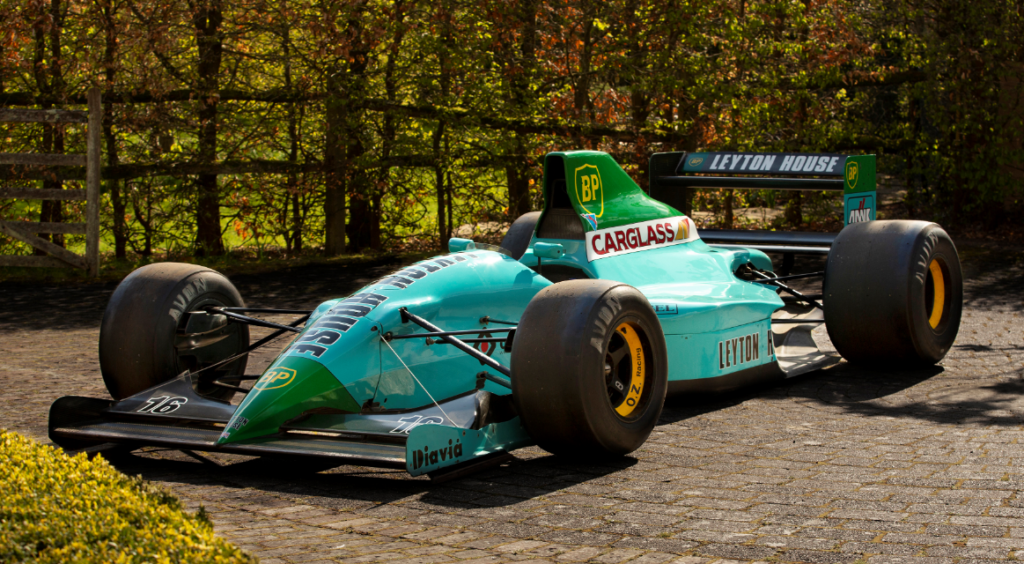
March CG891

1989 March-Judd CG891

For Sale by RM Sotheby’s | 2021

Photo Courtesy of RM Sotheby’s

The March Racing Team was a Formula One constructor founded by Max Mosley, Alan Rees, Graham Coaker, and Robin Herd in 1969. They built race cars for F1, F2, F3, IMSA, and IndyCar. This CG891 was their F1 car for the 1989 season.

The 1989 season was also the year March’s fortunes in F1 would come undone. Their financial situation deteriorated to the point where the team was taken over by their primary sponsor, Leyton House (a Japanese real estate company), mid-season.

Leyton House Racing was an F1 constructor (although more of a re-branded March team) in 1990 and 1991. It was purchased by someone else and renamed back to March for 1992 before disappearing forever. The CG891 was one of the first F1 cars designed by Adrian Newey and is powered by a 3.5-liter Judd V8 making 610 horsepower. The competition history for this chassis (02) includes:

  • 1989 Monaco Grand Prix – 11th, DNF (with Ivan Capelli)
  • 1989 United States Grand Prix – 21st, DNF (with Capelli)
  • 1989 French Grand Prix – 14th (with Mauricio Gugelmin)
  • 1989 Hungarian Grand Prix – 22nd, DNF (with Capelli)

This car retains its race engine and largely looks like it did when it pulled off the track for the last time. It’s been static for a while, so it’s gonna need some work. RM is offering it for about $522,500. Click here for more info.

Duesenberg J-281

1933 Duesenberg Model J Dual-Cowl Phaeton by LaGrande

Offered by Bonhams | Amelia Island, Florida | May 20, 2021

Photo – Bonhams

There are quite a few striking Duesenberg Model J bodies that were offered by various coachbuilders. In fact, just about every one of them is pretty striking. But none more so than the in-house dual-cowl phaeton penned by Gordon Buehrig.

The LeBaron dual-cowl phaeton was one of the first body styles introduced on the Model J after its introduction. Buehrig improved it a bit for those produced by LaGrande, which was actually a pseudonym for the Union City Body Company – a Cord subsidiary. They called it LaGrande, I guess because it sounded fancier. The only thing that would make this car better is to change the red to green.

Like other Js, this car is powered by a 6.9-liter inline-eight capable of 265 horsepower. It’s one of 12 such examples built with this bodywork, all of which survive. However, this chassis was originally delivered with engine J-334 and a Murphy convertible sedan body. J-281 was from a Rollston town car and was swapped into this car during original ownership. This body was added later on but is the real deal.

You can read more about this car here and see more from Bonhams here.

Update: Sold $1,655,000.

Inter-State Indianapolis Re-Creation

1911 Inter-State Fifty Race Car

Offered by Bonhams | Amelia Island, Florida | May 20, 2021

Photo – Bonhams

Thomas F. Hart founded the Inter-State Automobile Company in Muncie, Indiana, in 1908. Production of automobiles began the following year, and an Inter-State was on the grid at the first Indianapolis 500 in 1911. The cars were pretty good, but financial problems led to the company being reorganized in 1914. They shifted to war production during WWI and never resumed making cars. The new owners sold the factory to General Motors after the war, and the Sheridan was later built there.

In 1911, Inter-State offered two models: the popular Forty and the Fifty, which was only available as a seven-passenger touring car. This is what this car started as, but it was later converted to a replica of the 1911 Inter-State Indianapolis race car.

It uses an Inter-State chassis and a Fifty engine – which was a 6.4-liter inline-four rated at 50 horsepower. It’s a pretty monstrous four-cylinder, and I have either seen this car in person or a very similar Inter-State. But the pistons are about the size of your thigh.

The original car must not exist anymore, as this one was used during the centennial celebration of the 500, where it was driven by Buddy Lazier for a lap around the track. It will sell at no reserve. Click here for more info and here for more from this sale.

Update: Sold $184,800.