Porsche 550 Coupe

1956 Porsche 550A Coupe Prototype

Offered by RM Sotheby’s | Monterey, California | August 17-19, 2023
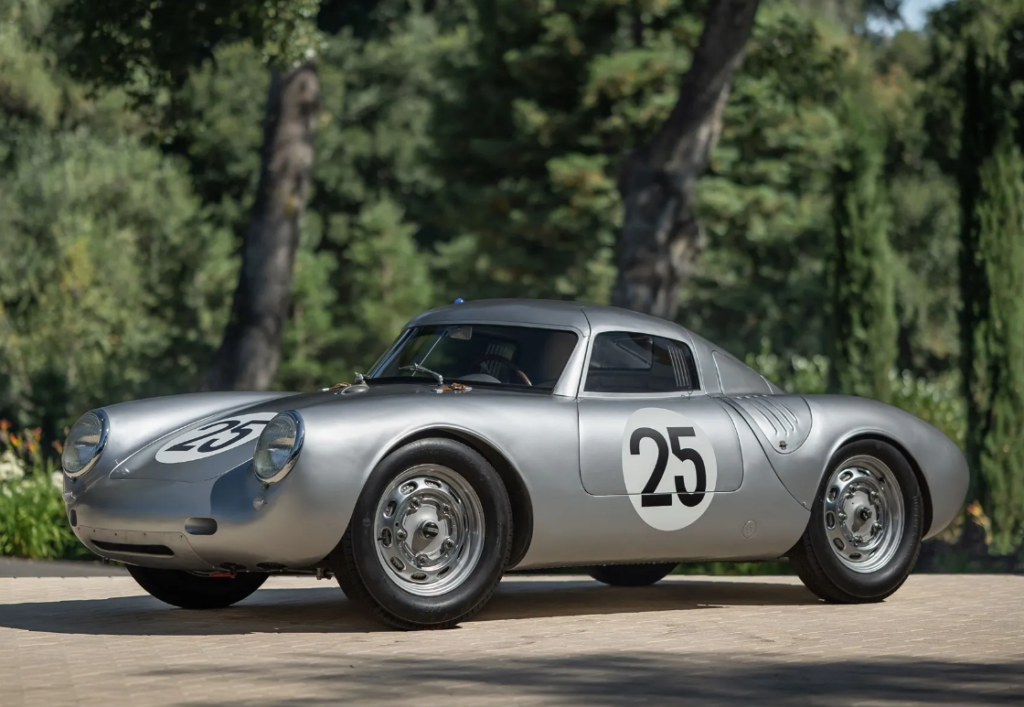
Photo Courtesy of RM Sotheby’s

RM throws out every superlative they can think of in the description for this car. It’s a little much, but the point is taken: this is an important and likely unrepeatable opportunity. Porsche’s 550 Spyder is already a legendary car, for reasons good and bad, and they command seven figures every day.

Porsche built four coupe prototypes of the 550. It’s got a slick fastback profile and is powered by a 1.5-liter flat-four. These were fully prepared race cars developed as a replacement for the 550 RS. The competition history for this chassis, 550A-0104, includes:

  • 1956 24 Hours of Le Mans – 5th, 1st in class (with Wolfgang von Trips and Richard von Frankenburg)
  • 1957 12 Hours of Sebring – 9th (with Ken Miles and Jean-Pierre Kunstle)

It also ran in SCCA races around the U.S. before being tracked down and restored by a Porsche collector in the 2000s. Since then, it’s been shown here and there. It’s got a pre-sale estimate of $5,500,000-$7,500,000, which seems low considering with 550 Spyders go for and the race history this car has. Anyway, you can found out more about it here.

Update: Not sold.
Duesenberg J-318

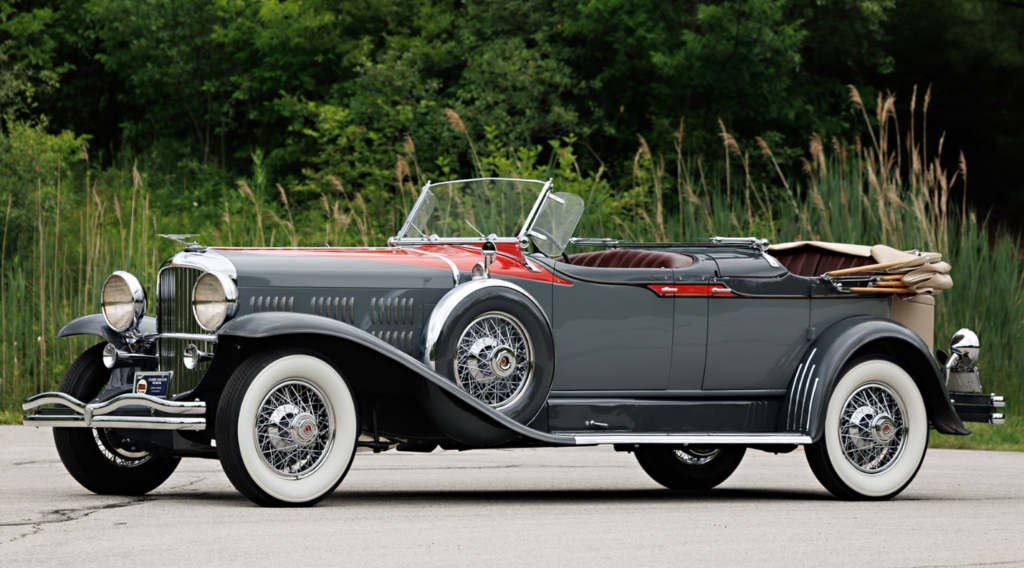
1930 Duesenberg Model J Dual Cowl Barrelside Phaeton by LeBaron

Offered by Gooding & Company | Pebble Beach, California | August 18-19, 2023

Photo – Gooding & Company

Great color combo here, gray with red accents and maroon upholstery. Not sure there’s really a bad two-tone Duesenberg though (this one was originally two-tone beige and brown). This is a LeBaron-bodied Model J, and it’s a dual cowl phaeton with a “barrelside” body, meaning the sides of the body had a slight curve, tapering inward at the top and bottom.

Just seven Model Js were bodied by LeBaron in this style. And this is the only one on a long-wheelbase chassis. The car is powered by a 6.9-liter inline-eight that made 265 horsepower.

This car was purchased new by a tobacco heir and was delivered new to its American owner in Paris. It was restored in the early 1980s and looks fresh. The estimate here is a healthy $3,000,000-$4,000,000. Click here for more info.

Update: Sold $2,975,000.

Delage D6 Grand Prix

1939 Delage D6 3-Litre Grand Prix

Offered by RM Sotheby’s | Monterey, California | August 17-19, 2023

Photo Courtesy of RM Sotheby’s

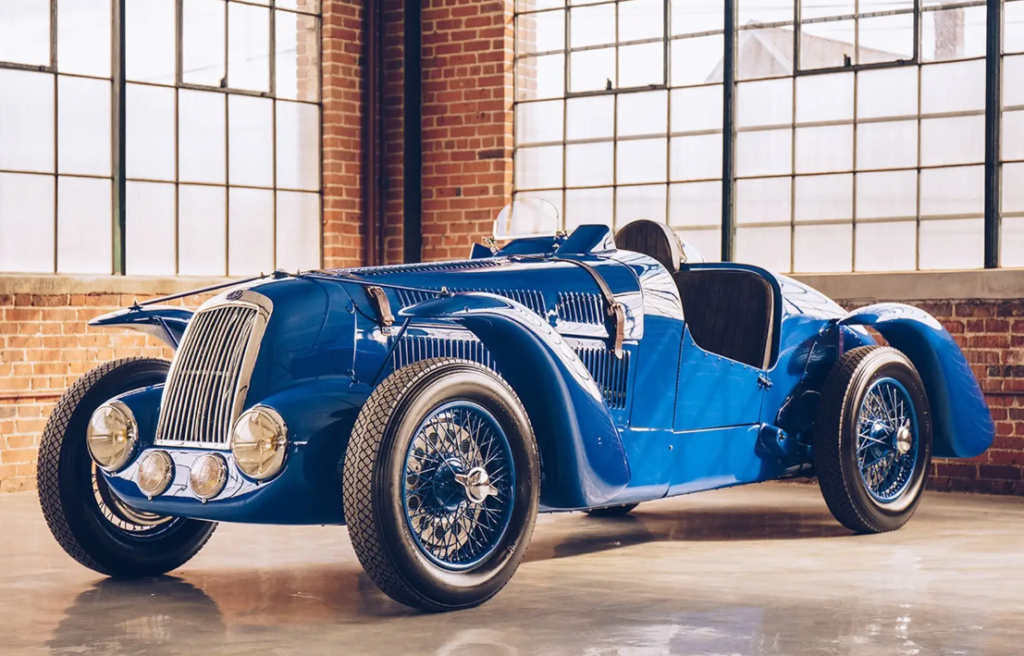
The D6 was a long-lived line of Delage cars that started in 1930, took a break during the war, and returned to production afterward and on through 1953 or 1954. The D6 3-Litre road model went on sale in 1946 and lasted until the end of D6 production. It was powered by a… 3-liter inline-six. But so were other, earlier D6s.

This pre-war grand prix car is one of two constructed in preparation for the 1939 season. It’s got a 150-horsepower, 3.0-liter inline-six and was campaigned in the following:

  • 1939 24 Hours of Le Mans – 2nd (with Louis Gerard and Georges Monneret)
  • 1940 Mille Miglia – DNF (with Gianfranco Comotti and Archimede Rosa)

This car was damaged during the race and was left behind in Italy. The disassembled chassis later found its way into the reserve collection of the horrible Schlumpf brothers, remaining there until 1966. The car was returned to the state you see here by a later owner in the 1990s.

It’s now got an estimate of $600,000-$750,000. Click here for more info.

Update: Not sold.

Brush Model D

1910 Brush Model D Runabout

Offered by H&H Classics | Buxton, U.K. | July 26, 2023

Photo – H&H Classics

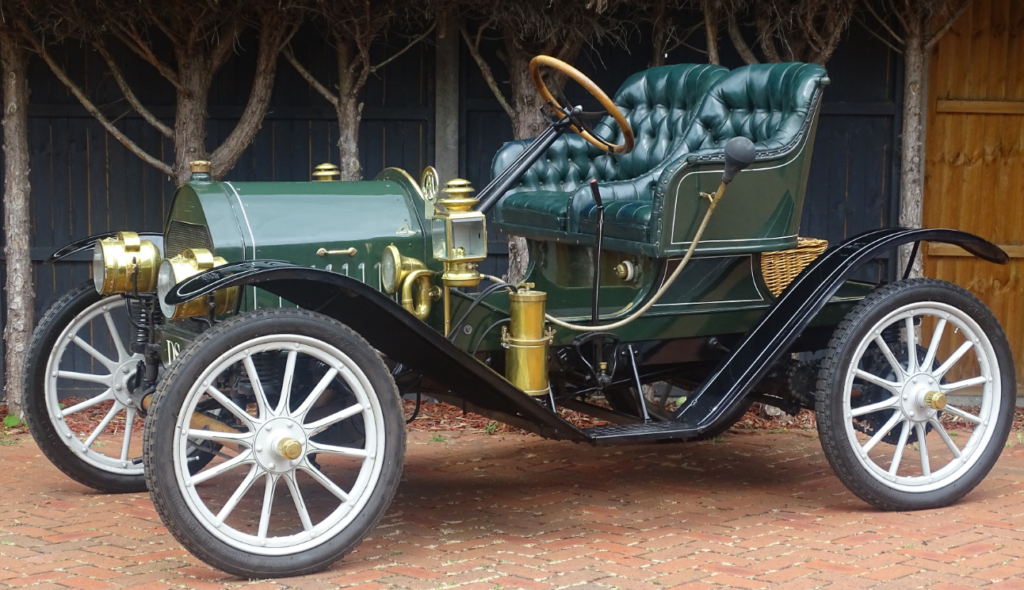
Detroit’s Brush Runabout Company was founded in 1907 by Alanson P. Brush, who previously helped design the first Cadillac in 1902. Brush was eventually absorbed into Benjamin Briscoe’s United States Motor Company before going out business in 1912.

In 1910, the company offered one product: the Model D, which was actually available in five bodystyles, including three different runabouts. This two-seater was the cheapest available option at $485 when new. It’s powered by a 10-horsepower, 1.0-liter single.

This car won awards at car shows in the U.S. in the 1970s before being imported to the U.K. in 1991. It’s been with the consignor since 2004 and was restored about 30 years ago. It has an estimate of $32,000-$40,000. Click here for more info.

Update: Sold $23,867.

Kurtis/Diedt-Offy Special

1949 Kurtis/Deidt-Offenhauser FWD Special

Offered by RM Sotheby’s | Monterey, California | August 17-19, 2023

Photo Courtesy of RM Sotheby’s

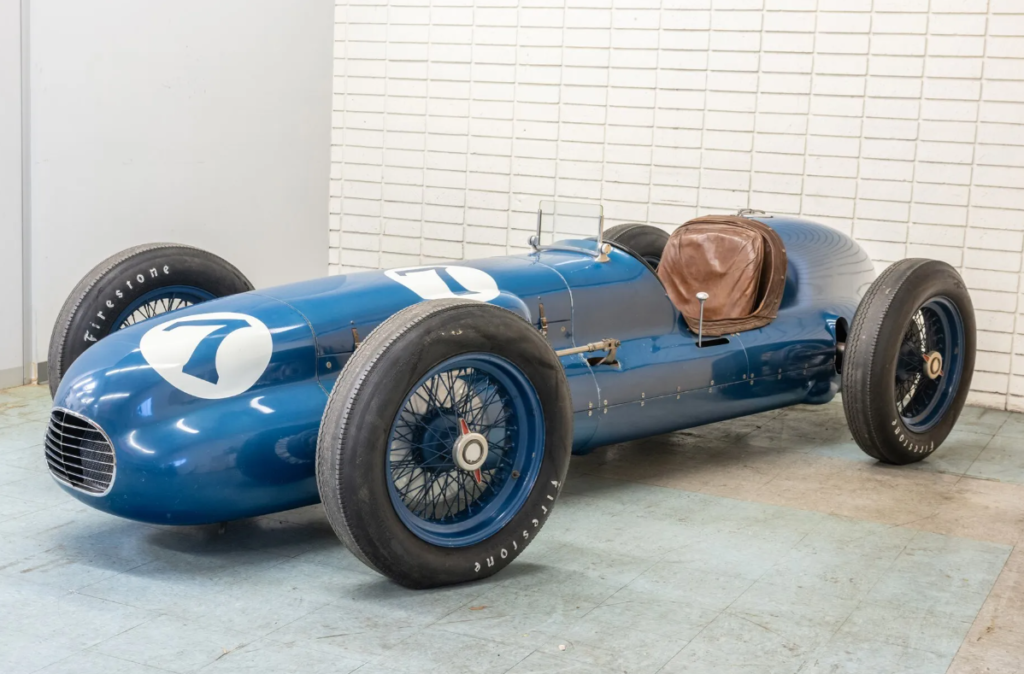
Here’s a handful of names that once dominated at Indianapolis: Frank Kurtis, Emil Deidt, Fred Offenhauser. Combining all three into one car? Should be pretty special. And that’s kind of what happened here.

So, what happened here was: owner Gil Pearson commissioned Deidt to build two front-wheel-drive race cars. Frank Kurtis built the body and frame, and then they stuffed a 4.4-liter Meyer-Drake-Offenhauser inline-four up front to drive the front wheels. They took it out to the Muroc dry lake bed and hit 176 mph.

It was then used in some movies before being parked with its sister car behind Gil Pearson’s house until the 1990s. It was then restored before being invited to Pebble Beach in 2001. Now it has a pre-sale estimate of $350,000-$500,000. Click here for more info.

Update: Not sold.

La Dawri Sebring

1957 La Dawri Sebring

Offered by Bring a Trailer Auctions | July 2023

Photo – Bring a Trailer

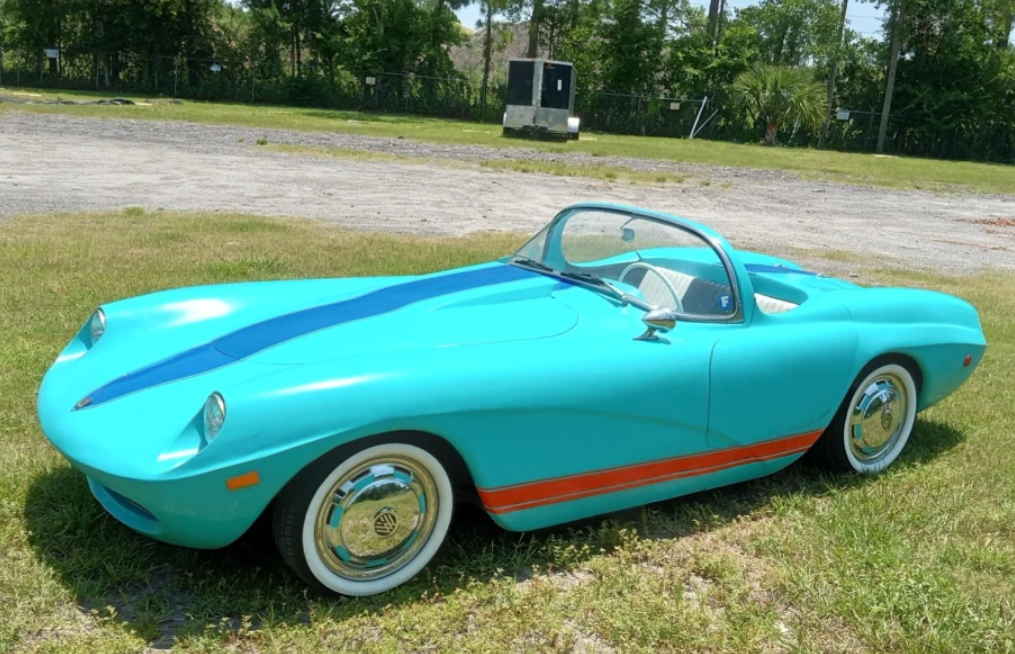
Okay, so “1957” probably isn’t the year here. No year is listed on the auction page, but what it does tell you about years is surprising. Unlike many fiberglass specials of the 1950s, this one is rear-engined. And it is powered by the 1.3-liter flat-four of its donor 1957 Volkswagen Beetle.

Can we take a moment to really appreciate how great this wild paint scheme is? This is the automotive equivalent of a surfboard. The windshield frame is a real highlight. La Dawri was only around a short time: founded in Canada in 1956 before moving to California the following year. They offered fiberglass sports car bodies until 1963.

Still, in that time, they produced no less than seven or eight different models. This Sebring screams “1950s sports car” but looks completely unlike almost anything else you could get at the time. It’s like some sports car special you would’ve seen in the background of an Elvis movie. This is a car that would be a lot of fun at the right price – and draw a lot of attention wherever it goes. Check out the auction here.

Update: Not sold, high bid of $7,500.

Wolseley-Siddeley

1906 Wolseley-Siddeley 15HP Tourer

Offered by Historics Auctioneers | Datchet, U.K. | July 22, 2023

Photo – Historics Auctioneers

Wolseley Motors was founded by Vickers – the armaments company – with engineer Herbert Austin on board to help design the cars. The first Wolseleys were sold to the public in 1901. Meanwhile, John Siddeley founded the Siddeley Automobile Company in 1902. Wolseley bought Siddeley in 1905, bringing the latter’s namesake into the fold.

Shortly after, Austin left to form his own company, and Siddeley was put in charge. He then promptly added his own name to the cars, thus forming Wolseley-Siddeley. In 1909, Siddeley left, and his name was then removed. So the car you see here is from a marque that only advertised from 1906 through 1909.

Power is from a 3.3-liter inline-four that was rated at about 15 horsepower. Not many of these survive, despite Wolseley being a dominant force in the U.K. car market around this time (interestingly enough, another auction house has another Wolseley-Siddeley in their catalog for not long after this car crosses the block). It’s been in the same family since 1956 and now has an estimate of $54,000-$68,000. More info can be found here.

Update: Sold, but the auction house won’t tell us for how much.

Lotus 107C

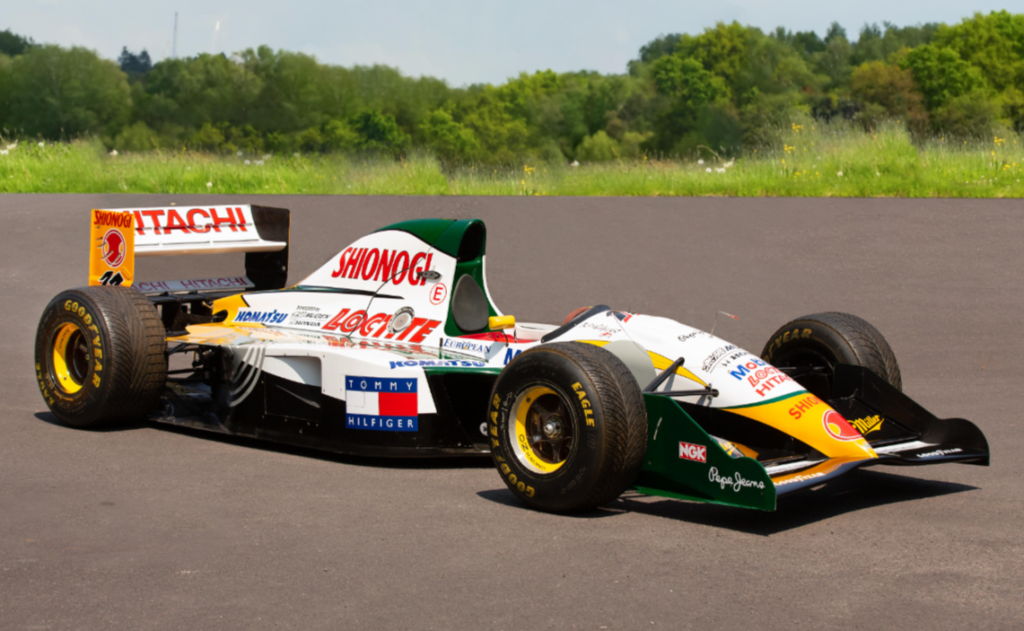
1993 Lotus 107C

Offered by Bonhams | Goodwood, U.K. | July 14, 2023

Photo – Bonhams

Lotus has a long history in F1. From the days of Colin Chapman and Jim Clark to dominance in the ’70s and Mario Andretti’s only F1 championship. Lotus survived into the ’90s, selling out to what would become Pacific Racing, a team that disappeared after one season. The name then returned in the 2010s for a few years, which basically a holding place after Renault left and before they returned again.

Anyway, the Type 107 was designed by Chris Murphy (and team) and debuted for the 1992 season. The car was updated to “B” spec for 1993 and then to “C” specification for the first half of 1994 before it was replaced by the 109. Power in period was from a Ford-Cosworth V8 in ’92 and ’93 and a Mugen-Honda 3.5-liter V10 in 1994. Output was 725 horsepower for the Honda.

The history for this chassis, 107C-01 includes:

  • 1994 Pacific Grand Prix at Aida, Japan – 8th (with Pedro Lamy)
  • 1994 San Marino Grand Prix – 10th (with Johnny Herbert)
  • 1994 Monaco Grand Prix – 11th (with Lamy)

Lamy then used this car in testing at Silverstone when it suffered a catastrophic failure and was essentially destroyed. After Team Lotus failed in 1995, the remnants of this chassis were purchased by the current owner in 1997 along with some spares and rebuilt to show-car status. The Mugen-Honda V10 is long gone, but a mocked-up Judd V10 without internals is in there. The estimate is still $90,000-$125,000. Read more about it here.

Update: Sold $124,208.

Tyrrell 014

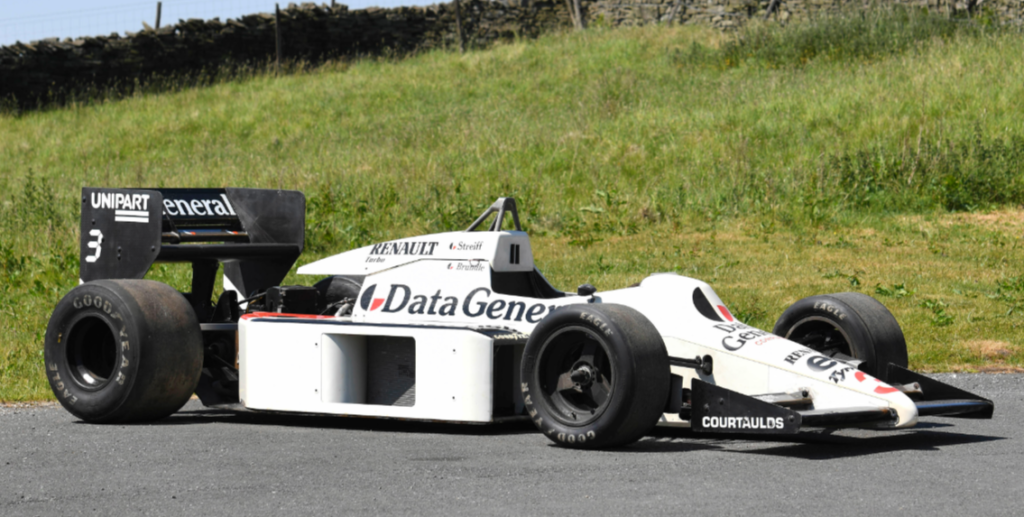
1985 Tyrrell 014

Offered by Bonhams | Goodwood, U.K. | July 14, 2023

Photo – Bonhams

Tyrrell was an innovative F1 team, especially in the 1970s. Ken Tyrrell started campaigning cars in other Formula in the late 1950s, arriving on the F1 scene in 1966. The team’s peak occurred in the late 1960s and early ’70s. Their final win came in 1983, and the mid-1980s were not kind. Their last season was 1998 before being bought by BAR, which became the Honda F1 team.

The 014 was the replacement for the 012 (which was a car that got Tyrrell disqualified from the 1982 championship season). The 014 was used for the latter half of the 1985 season and the first few races of 1986. The team’s drivers during that span consisted of Martin Brundle, Stefan Bellof, Ivan Capelli, and Philippe Streiff.

This car was raced with power from a Renault-Gordini turbocharged 1.5-liter V6. Only four 014 chassis were made, and the history for this one, 014/3, includes:

  • 1985 Italian Grand Prix – 8th (with Martin Brundle)
  • 1985 Belgian Grand Prix – 13th (with Brundle)
  • 1985 European Grand Prix at Brands Hatch – 18th, DNF (with Brundle)
  • 1985 South African Grand Prix – 7th (with Brundle)
  • 1985 Australian Grand Prix – 13th (with Brundle)
  • 1986 Spanish Grand Prix – 10th, DNF (with Brundle)

This car is described as being “in as-last-raced condition” and does not have an engine. But the gearbox is there! So you can sit in it and pull through the gears making revving noises. The estimate here is $63,000-$100,000. Click here for more info.

Update: Sold $73,933.

Trident Venturer

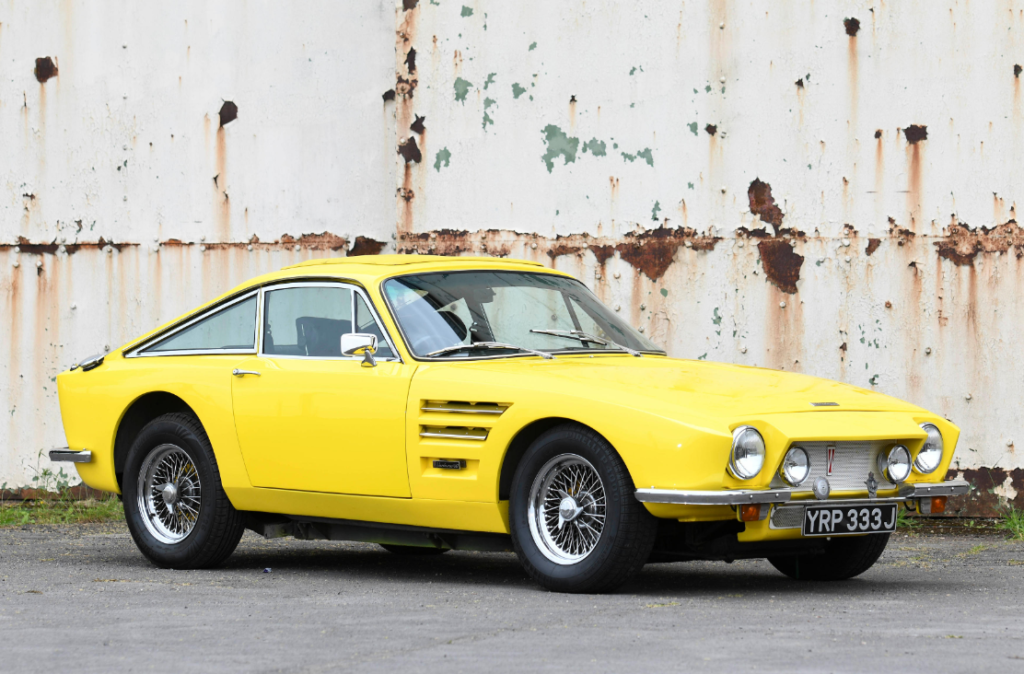
1971 Trident Venturer Coupe

Offered by Bonhams | Goodwood, U.K. | July 14, 2023

Photo – Bonhams

Trident Cars Ltd was one of many low-volume sports car manufacturers that operated in the U.K. between the 1950s and 1970s. Their first car, the Clipper, was born out of a TVR prototype that TVR decided not to build. So one of their dealers, Bill Last, set up Trident cars to make it.

The Clipper was followed by the Venturer in 1969. Styling was similar, but instead of the Clipper’s V8, the Venturer received a 3.0-liter Ford V6 and a lengthened Triumph TR6 chassis. Production ceased in 1974, and an attempted restart in 1976 saw a few cars built before Trident closed for good in 1977.

About 84 Venturers were built, making it the most common of Trident’s models. This one was restored in the late 1990s and now has an estimate of $23,000-$32,000. Click here for more info.

Update: Sold $18,926.