Nash Metropolitan

1957 Nash Metropolitan

Offered by Mecum | Indianapolis, Indiana | May 14-22, 2021
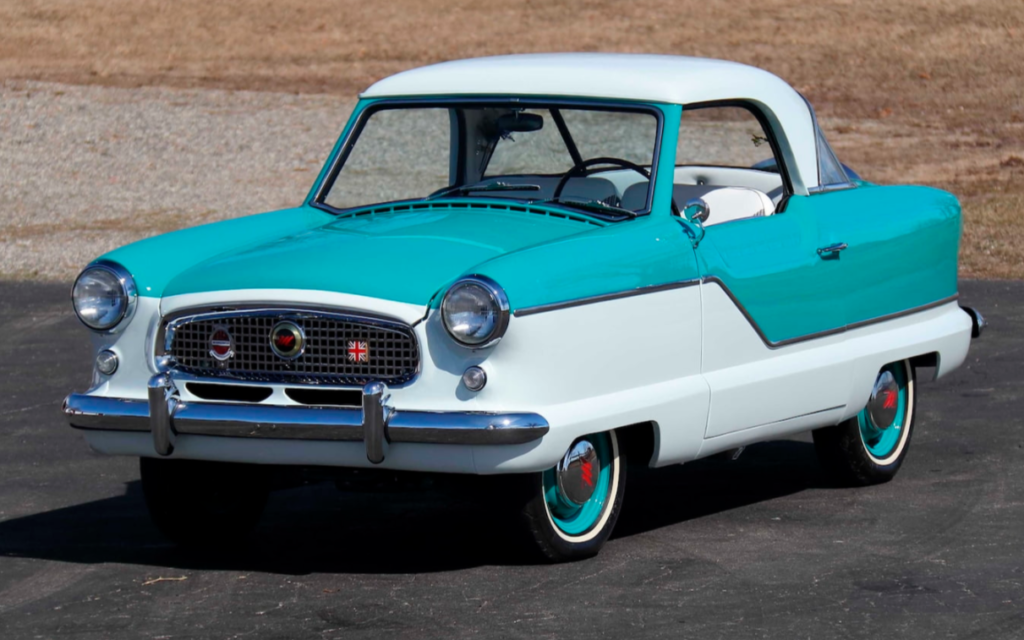
Photo – Mecum

Here is a car I adore. Partly because it is adorable, but also because it is affordable. The car was designed by Nash in the U.S. with the aim of offering a less expensive and economical alternative to the big behemoths rolling out of Detroit. But the cars were actually produced in England by Austin.

Series I examples were introduced in 1953, and this Series III hardtop would’ve sold for $1,527 when new. Power is from a 1.5-liter inline-four that was factory rated at 52 horsepower. Metropolitans were sold as Austins in the U.K. and under the Nash brand in the U.S. through 1957. Hudson-branded models were also offered until Nash and Hudson were phased out in ’57. From 1958 through 1962, Metropolitan was a standalone marque.

This restored example is finished in teal and white (excellent) and features houndstooth upholstery. Affordable when new, they remain an inexpensive way to get into 1950s American (or British, depending on your perspective) cars. Click here for more info and here for more from this sale.

Update: Sold $17,600.
Cisitalia D46

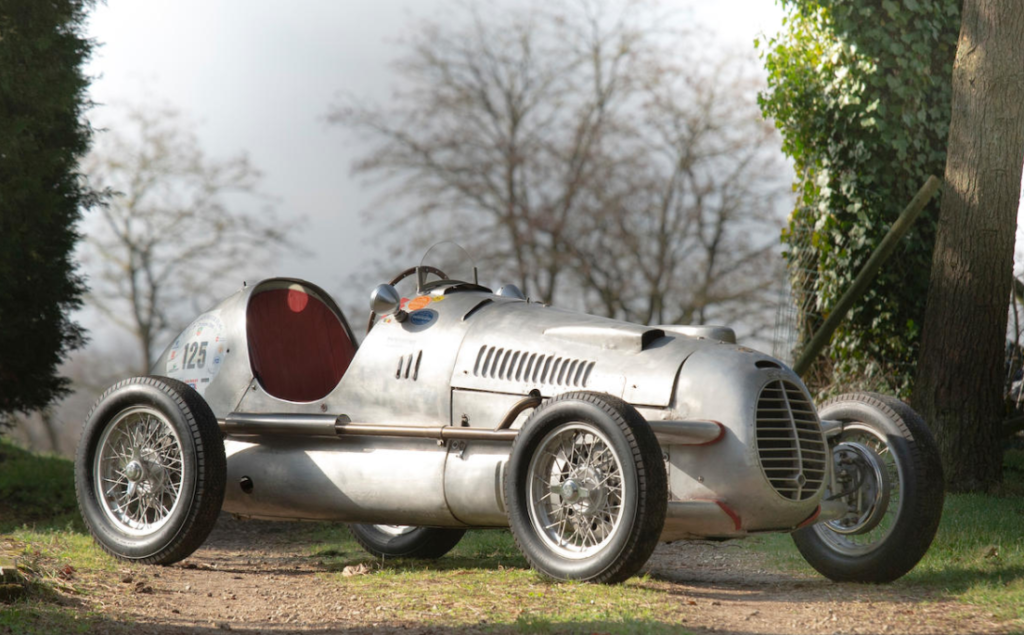
1947 Cisitalia D46 Monoposto

Offered by Bonhams | Monaco | April 23, 2021

Photo – Bonhams

Piero Dusio’s Cisitalia got its start by building tiny open-wheel race cars. In fact, the D46 was their first attempt at building a race car. And it was groundbreaking. It featured a tubular spaceframe chassis, which was something new in the open-wheel world.

The cars scored victories all over Europe in 1946 and 1947. Some of them continued racing into the 1950s season, even though Cisitalia had introduced other cars – and eventually road cars. Power is from a Fiat 1.1-liter inline-four. It’s a tiny engine, but with the chassis built the way it is, the car is light. It didn’t need a ton of power to be competitive.

This car is said to have been raced by Harry Schell back in its competition days and later spent time in Australia. In the 1960s, it returned to Europe, remaining with an owner for 40 years before the current owner bought it in 2003.

I’ve been waiting to feature one of these for some time, so it’s a treat that it has popped up. The pre-sale estimate is $180,000-$240,000. Click here for more info and here for more from this sale.

Update: Sold $190,682.

Duesenberg J-586

1936 Duesenberg Model J Convertible Berline by Rollston

Offered by Mecum | Indianapolis, Indiana | May 14-22, 2021

Photo – Mecum

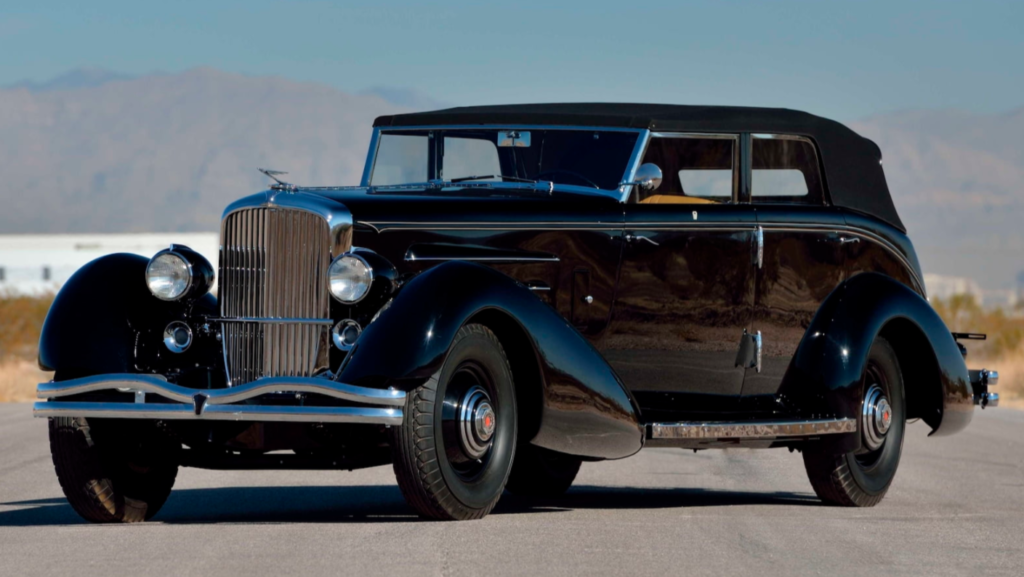
The 6.9-liter Lycoming straight-eight that powers this Model J Duesenberg is the third-to-last “J” engine by number. Only J-587 and J-588 are later. This is the final Rollston-bodied Model J, and Mecum states that it was the last completed car to leave the Duesenberg showroom. It was shown at the 1936 New York Auto Show with a price tag of $17,000.

The 265-horsepower car rides on a long-wheelbase chassis and was purchased new by the then-president of Coca-Cola. It was later owned by jazz musician Charles Kyner for 46 years. The restoration was completed in 1990.

These later Model Js have such different bodywork than the earlier cars. It seemed like there was more “freedom” for the designers to rework the area forward of the cowl. This one is striking from the head-on view, and the interior looks like a nice place to be. You can read more about it here and see more from Mecum here.

Update: Not sold, high bid of $2,800,000.

Update: Sold, Mecum Monterey 2022, $2,695,000.

Canda Auto-Quadricycle

1900 Canda Auto-Quadricycle

Offered by Bring a Trailer Auctions | April 2021

Photo – Bring a Trailer Auctions

The Canda Manufacturing Company was based in Cartaret, New Jersey, and they produced railroad hand carts. In 1896 they acquired the rights to the Duryea Brothers gasoline engine. But Charles Duryea bailed on the partnership shortly thereafter, so Canda decided to go it alone.

Their first car was produced in 1900, and it looked like this. The Auto-Quadricycle was a four-wheeled forecar with a single-cylinder engine. Production continued through 1902, but they offered a more traditional “Spider” runabout in 1901, which probably meant that the Quadricycle was phased out before 1902, when Canda folded.

This car features a De Dion-Bouton single-cylinder engine rated at 1¾ horsepower when new. It’s been part of the Indianapolis Motor Speedway Museum since 1957. You can read more about it here.

Update: Sold $56,000.

Edmunds Midget

1975 Edmunds Midget Race Car

Offered by Bring a Trailer Auctions | April 2021

Photo – Bring a Trailer Auctions

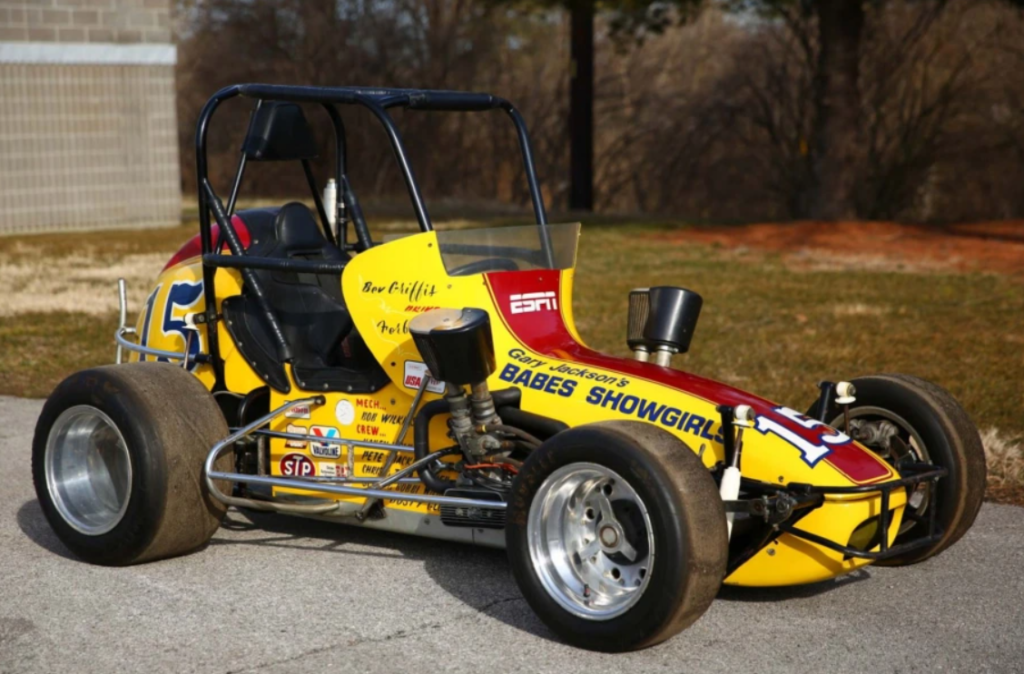
It’s not every day you get the chance to buy a race car directly from the Indianapolis Motor Speedway Museum. This USAC midget was raced Bev Griffis in 1986 to the first female USAC regional victory. Which is pretty awesome. Not sure about the sponsor she had to put up with while doing it though.

The car was built by Don Edumunds of Edmunds Autoresearch, a race car constructor based out of Anaheim, California. He built about 400 of these of various styles between 1963 and 1981. The car spent time in New Zealand back in the ’70s before returning stateside.

Power is from a 2.2-liter Volkswagen flat-four. The car does two things: it goes or it doesn’t. It has direct drive – no shifting here. Just fire it up and give it a push. It’s a compact little historic thing, but it’ll need a little work to get running. Bidding is underway, and the auction ends this weekend. Click here for more info.

Update: Sold $13,500.

Series 75 Town Car by Brunn

1939 Cadillac Series 75 Town Car by Brunn

Offered by Bring a Trailer Auctions | Online

Photo – Bring a Trailer Auctions

This series of the Cadillac Series 75 was produced in 1936 and 1937. Most of them were bodied by Fisher or Fleetwood, but a few escaped GM as bare chassis, including this car, which wears Town Car bodywork by Brunn. This means that the driver’s compartment can be “open” or closed, while the rear passenger compartment is always closed.

Two of these were built for the same guy, but the other one was lost in a fire in the 1950s. In 1966, this, the surviving example of the two, was purchased by its current owner… who was only 16 at the time. Imagine driving a used coachbuilt American classic as your first car.

Power is from a 5.7-liter V8 that was rated at 135 horsepower when new. The car was restored over a period of 50 years. I guess that makes it a “labor of love” because I couldn’t imagine tinkering on the same car for 50 years. At any rate, this one ends on Saturday. Click here for more info.

Update: Sold $130,000.

Armstrong-Siddeley Hurricane

1948 Armstrong-Siddeley Hurricane 16

Offered by Brightwells | Leominster U.K. | March 27-April 1, 2021

Photo – Brightwells

Armstrong-Siddeley, which I guess never officially had a hyphen but I’m hyphenating anyway because that’s how I did it last time, was founded via a merger in 1919 and existed as a motorcar manufacturer until 1960.

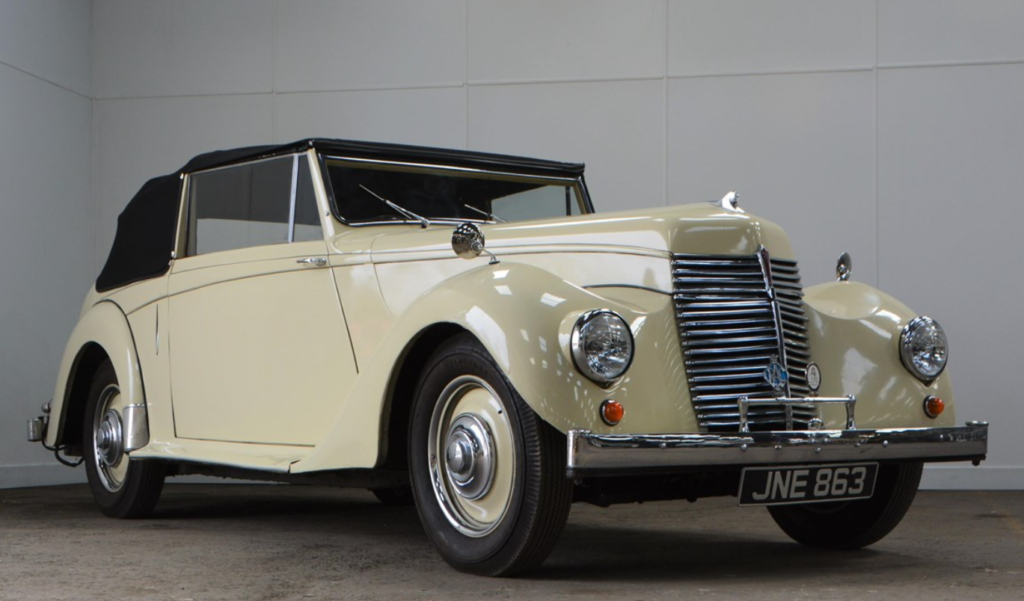
The Hurricane drophead coupe was launched alongside the Lancaster sedan at the end of WWII. The Hurricane remained in production until 1953 in two different forms. This, the 16, is the less-powerful of the two. It’s equipped with a 2.0-liter inline-six that was rated at 70 horsepower when new. There was a larger Hurricane 18 model with a 2.3-liter six as well.

Combined production between the two engine options was just 2,606, all of which convertibles. It was the first Armstrong-Siddeley with an independent front suspension and was boded in-house, unlike the Lancaster. The pre-sale estimate is $15,000-$18,000. Click here for more info and here for more from this sale.

Update: Sold $17,195.

Alvis TB 14

1950 Alvis TB 14

Offered by Brightwells | Leominster, U.K. | March 27-April 1, 2021

Photo – Brightwells

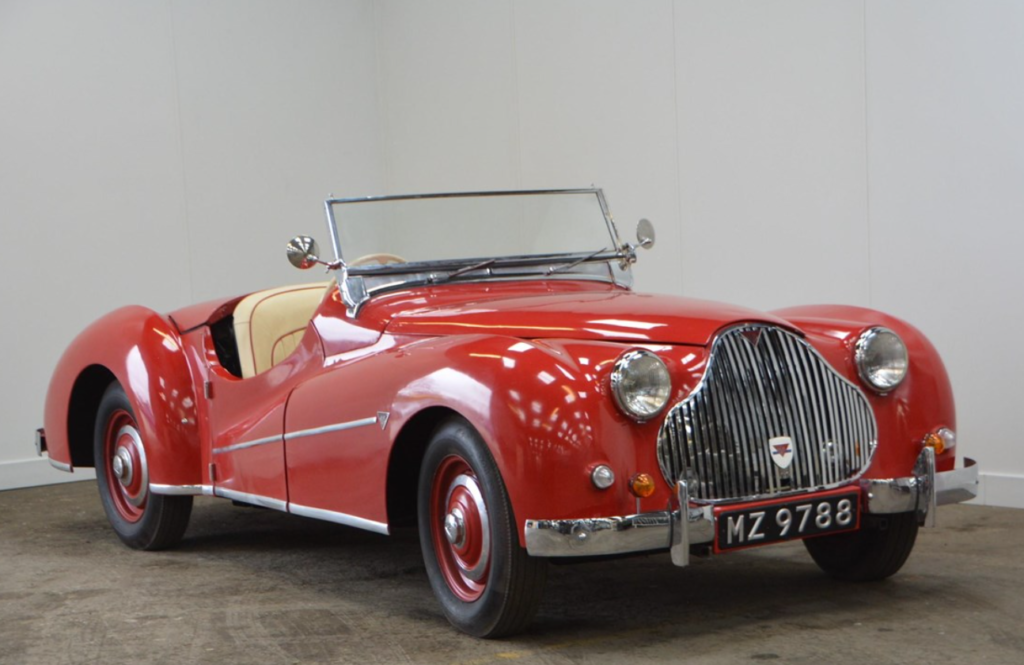
Alvis built a string of really nice-looking post-war sports cars, including the TC 21, TD 21, and TE 21. But before those, was this, the TB 14, which was based on the TA 14 saloon. The TA 14 was the company’s first post-war car, and the TB 14 was their first two-door sports car.

The TB was only produced in 1950, which was the final year for the TA, before it was replaced by the TB 21. It is powered by an in-house 1.9-liter inline-four rated at 68 horsepower when new. The car topped out at around 80 mph. Unfortunately, it was quickly overshadowed by the Jaguar XK120, which was much more of a performer.

Only 100 were produced, and about a third of them remain. This one was restored after having been parked for 25 years. It is now expected to bring between $43,000-$49,000. Click here for more info and here for more from this sale.

Update: Sold $41,923.

Cisitalia-Abarth 850 Scorpione

1962 Cisitalia-Abarth 850 Scorpione Coupe

Offered by Bring a Trailer Auctions | March/April 2021

Photo – Bring a Trailer Auctions

Piero Dusio got rich making uniforms during WWII and parlayed that cash into a small company he founded called Cisitalia. They built racing cars, and eventually road cars. But racing is expensive, and eventually, he ran out of money, forcing him to relocate to Argentina.

Cisitalia collaborated with Abarth (Carlo Abarth was Austrian by birth) here and there, and after the company moved to South America, the two got together for one last fling. Abarth had a car out there called the Fiat-Abarth 850 Allemano. This car is essentially a badge-engineered version of Carlo’s 850. It features an 847cc inline-four that was rated at 55 horsepower when new.

Fewer than 200 Fiat-Abarth models were produced, and about the same (or less) of these were also made. It is not really related to the similarly-named Abarth Scorpione. This one has obviously been restored and is up for bidding now. The auction ends tomorrow. Click here for more info.

Update: Not sold, high bid of $74,000.

1910 Brasier

1910 Brasier 12HP Double Phaeton

Offered by Osenat | Fontainebleau, France | March 29, 2021

Photo – Osenat

Charles-Henri Brasier and Georges Richard produced cars together under the Richard-Brasier marque between 1902 and 1905. Then, Georges Richard went off to found Unic, and Brasier kept going under his own name.

Beginning in 1908, Brasier customers got to mix-n-match to build the car they wanted. They selected a chassis size, engine, and body separately. This example is powered by a 12-horsepower inline-four and features a large double phaeton body.

Brasier cars were expensive, and prior to WWI they built about 1,000 cars a year. They survived the war building aircraft engines, but their fortunes dwindled afterward. 1926 saw a merger, and the company was gone by the early 1930s. This is one of the better examples of Charles-Henri Brasier’s cars that I’ve seen, and it should sell for between $47,000-$70,000. Click here for more info and here for more from this sale.

Update: Not sold.