Renault R24

2004 Renault R24

Offered by RM Sotheby’s | Paris, France | February 2, 2022
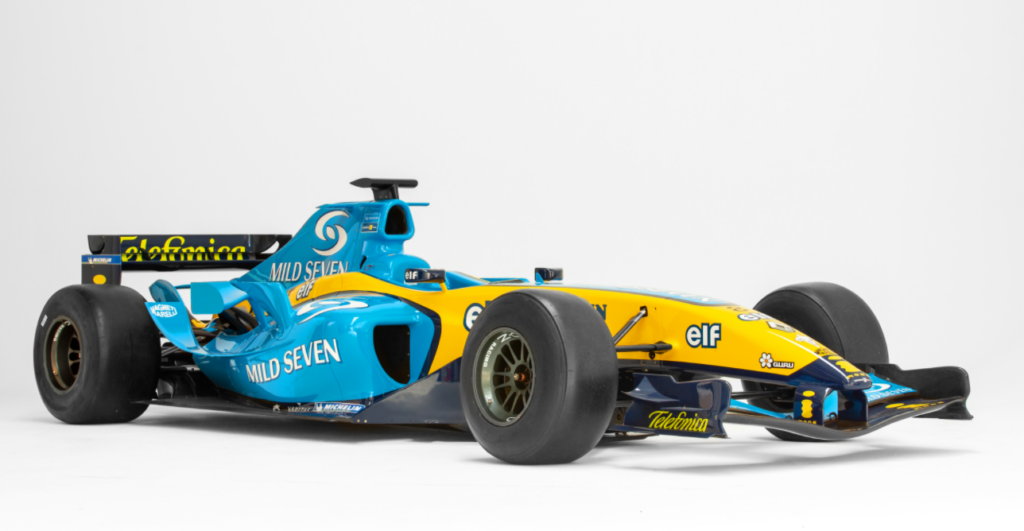
Photo Courtesy of RM Sotheby’s

The 2004 F1 season was dominated by Ferrari, but Renault’s R24 was a contender. It won the Monaco Grand Prix that year. And this livery is a nostalgic throwback to some good years of F1. It just screams “let’s watch Fernando Alonso tear it up.”

The R24 is powered by a screaming 3.0-liter V10 that made about 900 horsepower (it is unclear if this car still has an engine). This car was acquired by its first private owner in 2016, at which time it was repainted and fitted with the blue and yellow Mild Seven livery that was made famous by Renault’s two world championships in period (which would both come in the two yeas after this car ran). The competition history for this chassis includes:

  • 2004 Chinese Grand Prix – 4th (with Fernando Alonso)
  • 2004 Japanese Grand Prix – 5th (with Alonso)
  • 2004 Brazilian Grand Prix – 4th (with Alonso)

This car, being used so late in the season is likely, technically, an R24B. The only thing it needs to be perfect is a set of period-correct grooved tires. This Renault is from the team’s brink of greatness and looks the part of the later cars. Check out more about it here and see more from this sale here.

Update: Sold $292,104

Duesenberg J-269

1930 Duesenberg Model J Convertible Sedan by Murphy

Offered by RM Sotheby’s | Amelia Island, Florida | March 5, 2022

Photo Courtesy of RM Sotheby’s

Another great Duesenberg. RM calls this “one of the finest restored examples.” We recently featured another Murphy Convertible Sedan, and this one is finished in classic black. Approximately 45 such cars were bodied by Murphy.

This one was delivered new in New York City, and RM traces the ownership through quite a few owners of the years. Work is also noted, including a mechanical overhaul in 1957 and a 20-year restoration that started in 1985. Power is from a 6.9-liter inline-eight capable of 265 horsepower.

It won its class at Pebble Beach and is offered with a second set of wire wheels mounted with whitewall tires. The catalog does not yet list a pre-sale estimate, but this is quite a good car, so it should bring quite the sum. Click here for more info and here for more from this sale.

Update: Sold $3,525,000.

1937 Detroit Electric

1937 Detroit Electric Model 99C Coupe

Offered by RM Sotheby’s | St. Louis, Missouri | December 1-8, 2021

Photo Courtesy of RM Sotheby’s

Detroit Electric started selling electric cars in 1907. Most of them were fairly stodgy, upright boxes on wheels. They were marketed towards women, and the company was very successful while electric cars remained popular.

However, that popularity faded into the 1920s. As time wore on, sales plummeted while styling became more mainstream. Bankruptcy occurred in the early 1930s, and the last production Detroit Electrics were sold in 1935. After that, they were available on a per-order basis. Only a “handful” (as if they can fit in your hand) were sold between 1936 and 1939. The company advertised up until 1942.

This is one of the last examples produced, and by this point, the company wasn’t even producing its own bodies anymore. This is a Willys coupe with a Dodge front end. Yes, there is a grille and hood louvers… even though there is not an engine. Late Detroit Electrics were five-horsepower cars, and they even retained the very early cars’ tiller steering! Check out more about this one here and see more from this sale here.

Update: Not sold.

Abarth-Simca 1300 GT Coupe

1963 Abarth-Simca 1300 GT Coupe by Sibona & Basano

Offered by RM Sotheby’s | Le Castellet, France | November 19, 2021

Photo Courtesy of RM Sotheby’s

Abarth used cars from many different manufacturers as base cars for their wild creations. In this case, the base car is a Simca 1000, which was a small, rear-engined sedan produced by the French marque between 1961 and 1978.

Confusingly, there were Simca-Abarth variants of the 1000, which were really just hot sedans. What we have here is an Abarth-Simca. It’s a GT car that Simca wanted Abarth to build that they could take racing.

It’s got a Simca 1000 floor pan, an Abarth-tuned 1.3-liter twin-cam inline-four, and a Simca 1000 four-speed manual gearbox. The cars were eventually homologated for FIA competition, and they were successful in European road racing events.

This car was sold new in Italy, where it was campaigned successfully. From there, it has kind of a complicated ownership history, and frankly it’s too late in the day for me to make much sense of it. You can read more about it here and see more from this sale here. The pre-sale estimate is $405,000-$500,000.

Update: Sold $311,399.

Renault-Alpine A442

1976 Renault-Alpine A442

Offered by RM Sotheby’s | Le Castellet, France | November 19, 2021

Photo Courtesy of RM Sotheby’s

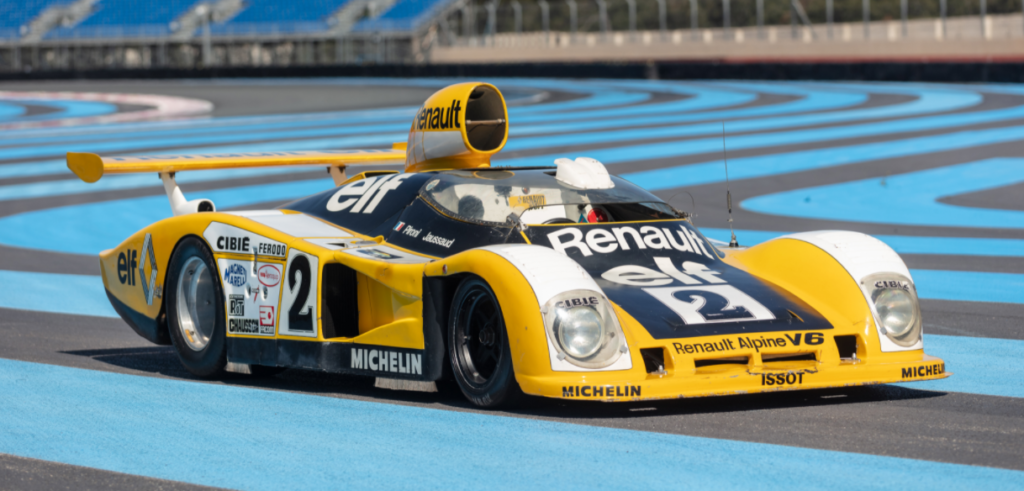
Sports prototype race cars were kind of getting a little out of hand in the 1970s. Think about Porsche’s Can-Am killer and some of the other wild cars that came out of that era. And look at the intake on this thing. I’m pretty sure there are smaller jet engines.

Alpine was owned by Renault at this time, but this car was designed and built by Alpine (with Renault power and funding, of course). Power is from a turbocharged 2.0-liter Renault-Gordini V6 capable of 490 horsepower. Only four examples of the A442 were built, and the competition history for this one, chassis 4422, includes:

  • 1977 24 Hours of Le Mans – 22nd, DNF (with Patrick Depailler and Jacques Laffite)
  • 1978 24 Hours of Le Mans – unknown

What? Yeah, there were two A442As, a single A442B, and an A443 entered in 1978’s race. The A442B won the race. But whether that car was chassis 4422 or 4423 has apparently been disputed. Renault says it was car 4423, but RM presents evidence that it could’ve been 4422. You can make up your own mind, but this car is the only A442 in private hands. It carries a pre-sale estimate of $4,600,000-$6,000,000. Click here for more info and here for more from this sale.

Update: Sold $2,553,471.

March Formula One

1977 March-Cosworth 771

Offered by RM Sotheby’s | Le Castellet, France | November 19, 2021

Photo Courtesy of RM Sotheby’s

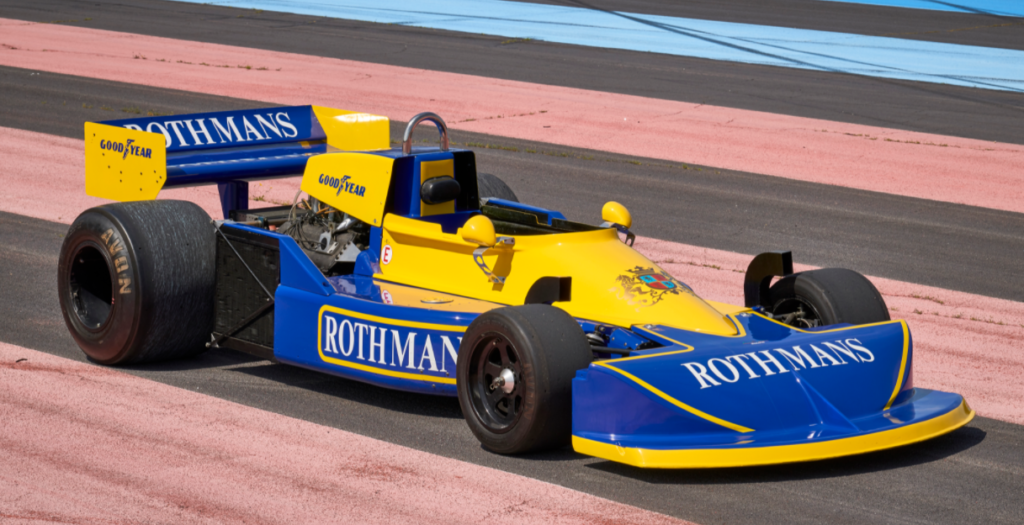
Not only was March Engineering a fairly long-lasting Formula One team, but they were also a race car and chassis constructor for other series for quite a long time. The F1 team first appeared on the grid in 1970, and they would continue to participate through the 1992 season.

The 771 was one of two chassis the team used for 1977. This is the first of two such examples built, and it’s powered by a 3.0-liter Cosworth DFV V8. The competition history for this chassis includes:

  • 1977 Canadian Grand Prix – 18th, DNF (with Ian Scheckter)

It was also used as a test car during the season and was actually merged with the second chassis prior to its Canadian Grand Prix outing. Later use included U.K. hill climb events, which must’ve been pretty exciting in a contemporary F1 car. It has an FIA Historical Technical Passport and had some decent refreshes about six years ago. It’s expected to bring between $345,000-$435,000. Click here for more info and here for more from this sale.

Update: Sold $355,985.

Ascari FGT

1993 Ascari FGT Prototype

Offered by RM Sotheby’s | London, U.K. | November 6, 2021

Photo Courtesy of RM Sotheby’s

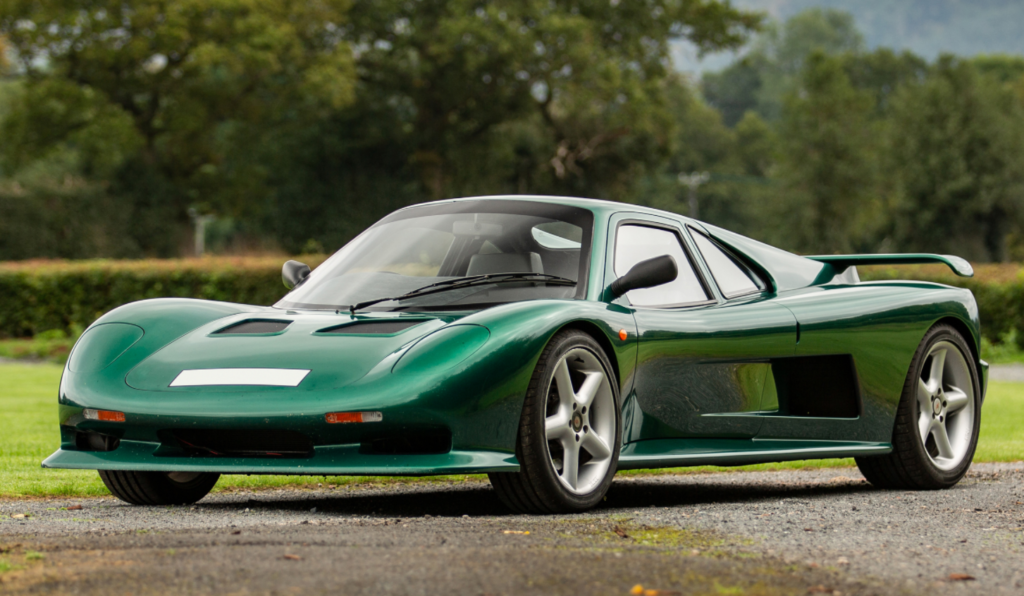
This is something you don’t see every day. Or year. Or decade. Ascari Cars was founded by Klaas Zwart and was named for Alberto Ascari. Based in the U.K., they built very limited-run supercars throughout the late 1990s and 2000s. Their former HQ is now home to the Haas F1 team.

The FGT was their first product. The car was actually designed by Lee Noble independently and sold to Zwart, who founded Ascari around the car and produced it as a race car. The FGT competed in the British GT Championship through 1997, after which Ascari produced 17 road-going versions of the car and called them the Ecosse.

This example is the first FGT built (and likely the only true road-going version) – the initial Noble-produced prototype and what would become the first car to wear the Ascari name. It’s powered by a mid-mounted 6.0-liter Chevrolet V8 making 420 horsepower with an upgraded ECU.

It was apparently found by the current owner in a barn after sitting for 13 years. Lee Noble was called in, and the car was restored to as you see it now. Ascari built less than 100 cars in 15 years, and this is the first one. No pre-sale estimate is yet available, but you can read more about it here and see more from this sale here.

Update: Sold $26,269.

Huron 4A

1970 Huron 4A Sports Prototype

Offered by RM Sotheby’s | Le Castellet, France | November 19, 2021

Photo Courtesy of RM Sotheby’s

Huron Auto Racing Developments Ltd. was founded by Jack Smith and Roy Ireland in the U.K. when they met up with former McLaren designer Jo Marquart. Marquart wanted to design something that wasn’t a McLaren, and thus the Huron was born.

The 4A was a single-seat sports prototype based around a Cosworth 1.8-liter engine. Today, this car, chassis number one of three built, is powered by a 2.0-liter Ford-Cosworth inline-four. The history of the Huron 4A is interesting. Cars number one and two debuted at the 1971 BOAC 1000 at Brands Hatch. Then they failed to qualify at Le Mans, causing Camel to pull their sponsorship funding.

In an effort to make some money, Huron sent the cars to DAF, who fitted car #2 with a Variomatic gearbox. The two cars remained together through their next few owners, including an American SCCA racer. This car has retained its original Hewland gearbox since new. It’s now expected to sell for between $115,000-$160,000. Click here for more info and here for more from this sale.

Update: Sold $110,688.

Arrows A11B

1990 Arrows A11B

Offered by RM Sotheby’s | Le Castellet, France | November 19, 2021

Photo Courtesy of RM Sotheby’s

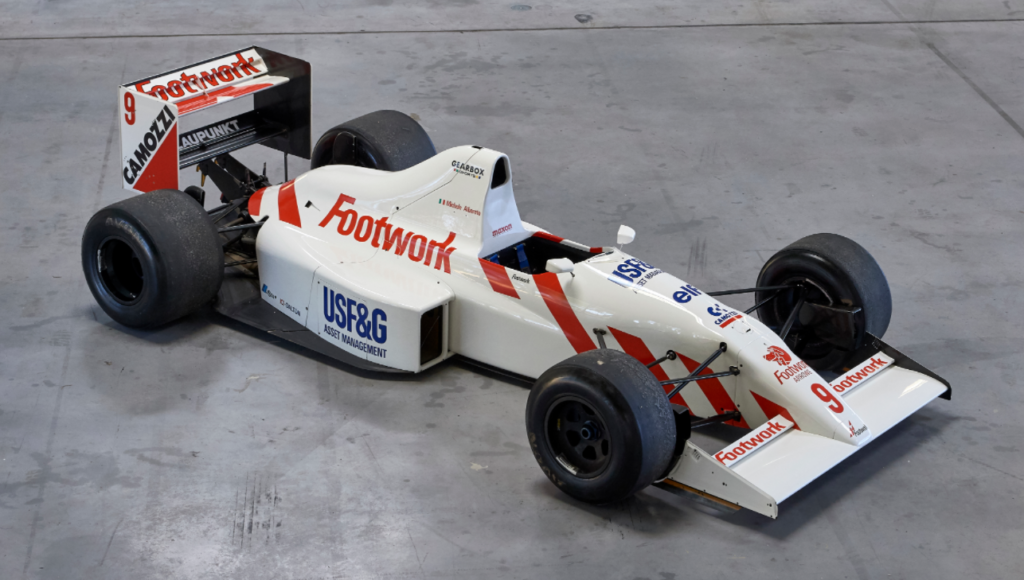
Arrows was around in F1 for quite a while: from 1978 through 2002, although they were known as Footwork Arrows for five years in the ’90s. The A11, and its derivatives, the A11B and A11C, were the team’s entries for the 1989, 1990, and 1991 seasons.

The A11 was designed by Ross Brawn, and the B variant was largely the same as the earlier car aside from some suspension modifications. The car was originally powered by a 3.5-liter Ford-Cosworth V8, although this chassis is currently engine-less. The competition history for this chassis, A11B03, includes:

  • 1990 San Marino Grand Prix – DNQ
  • 1990 Monaco Grand Prix – DNQ
  • 1990 Canadian Grand Prix -25th, DNF (with Michele Alboreto)
  • 1990 Mexican Grand Prix – 17th (with Alboreto)
  • 1990 French Grand Prix – 10th (with Alboreto)
  • 1990 British Grand Prix – 20th, DNF (with Alboreto)
  • 1990 German Grand Prix – 22nd, DNF (with Alboreto)
  • 1990 Hungarian Grand Prix – 12th (with Alboreto)
  • 1990 Belgian Grand Prix – 13th (with Alboreto)
  • 1990 Italian Grand Prix – 12th (with Alboreto)
  • 1990 Portuguese Grand Prix – 9th (with Alboreto)
  • 1990 Spanish Grand Prix – 10th (with Alboreto)
  • 1990 Japanese Grand Prix – 13th, DNF (with Alboreto)

If you’ve got a spare Cosowrth DFV lying around, this could be a fun project. You can read more about it here and see more from this sale here.

Update: Sold $182,309.

Prost F1

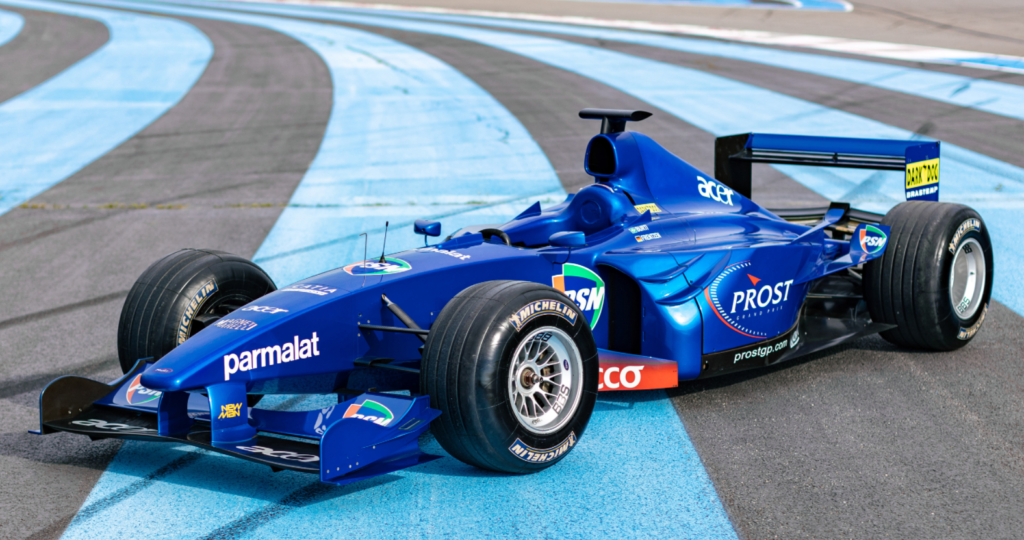
1999 Prost-Peugeot AP02

Offered by RM Sotheby’s | Le Castellet, France | November 19, 2021

Photo Courtesy of RM Sotheby’s

Alain Prost won four Formula One World Championships before tossing his hat into the F1 ownership ring. He purchased the Ligier F1 team in 1997, just before the season started, and rebranded it Prost Grand Prix. The following year, the team secured a deal to be supplied with factory Peugeot engines.

The AP02 was 1999’s car, and it was powered by a 3.0-liter Peugeot V10 making about 785 horsepower and revving to 17,000 rpm (!). The team had a decent 1997 season, a poor 1998 season, and an okay 1999 season. Things went south quickly thereafter, and it was all over after the 2001 season. The assets of Prost (and Arrows engines) were bought by a group called Phoenix Finance, but they never made it to the grid.

The competition for this chassis, 03, included:

  • 1999 Australian Grand Prix – 15th, DNF (with Olivier Panis)
  • 1999 Brazilian Grand Prix – 6th (with Panis)
  • 1999 San Marino Grand Prix – 13th, DNF (with Panis)
  • 1999 Monaco Grand Prix – 13th, DNF (with Panis)

It was used as a test car after that. It now wears the team’s 2000 paint scheme and 2001 sponsor livery. The engine is not currently installed, but is included, along with the gearbox. You can read more about it here and see more from this collection here.

Update: Sold $195,332.