1913 Minerva Tourer

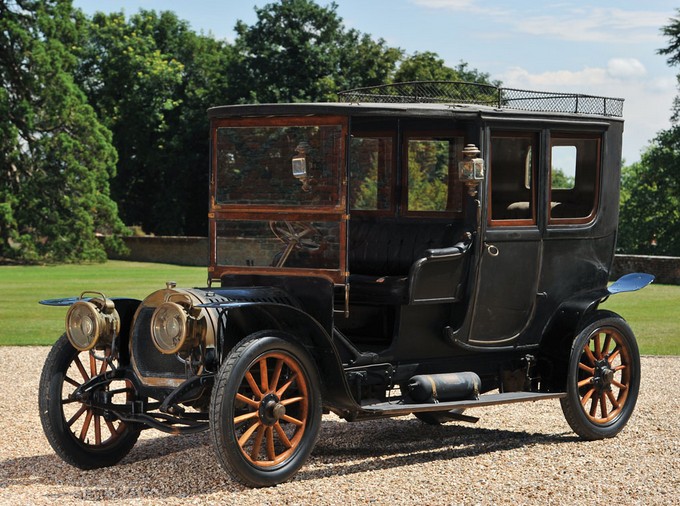
1913 Minerva Type DD 14HP Victoria Tourer by Cann & Co

Offered by Bonhams | Beaulieu, U.K. | September 6, 2014
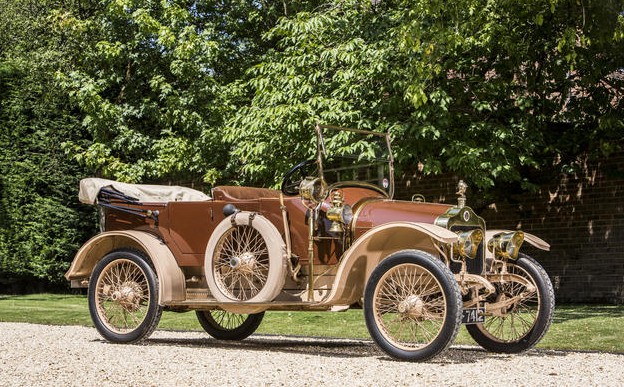
Photo - Bonhams

Photo – Bonhams

Minerva built very nice luxury automobiles between 1902 and 1938, with production of other vehicles picking up after the war and continuing until 1956. Their cars of the 1930s are right up there with Packards and Rolls-Royces and the like, except they were from Belgium. In fact, the Minerva dealer in London in the early years was Charles Rolls (who would become half of Rolls-Royce).

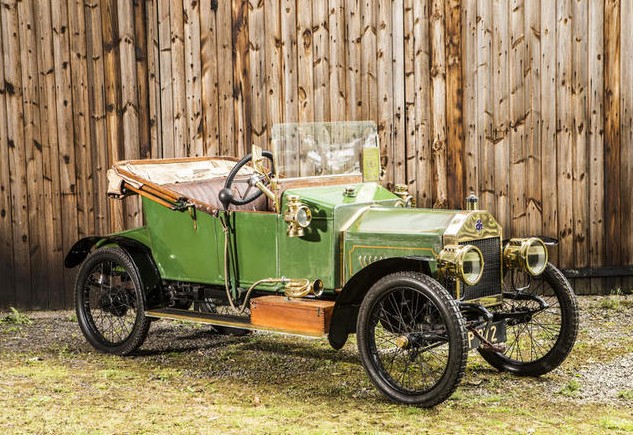
Minerva offered a range of vehicles in 1913. The Type DD uses a 2.1-liter straight-four making 14 horsepower. Minerva cars from 1910 used Knight sleeve-valve engines, this car included. The body is said to be by Cann & Company of London as it wears that company’s tag on the body.

But the history of this car says it was discovered in Australia in 1962 and taken to California. The Australians said the body was local and the rear half of the body had been removed and replaced with a pickup-like rear end. A Minerva Ute. But it has been restored to what it should have looked like in 1913. It is road-ready and should sell for between $67,000-$100,000. Click here for more info and here for the rest of Bonhams’ auction lineup.

Update: Sold $66,726.
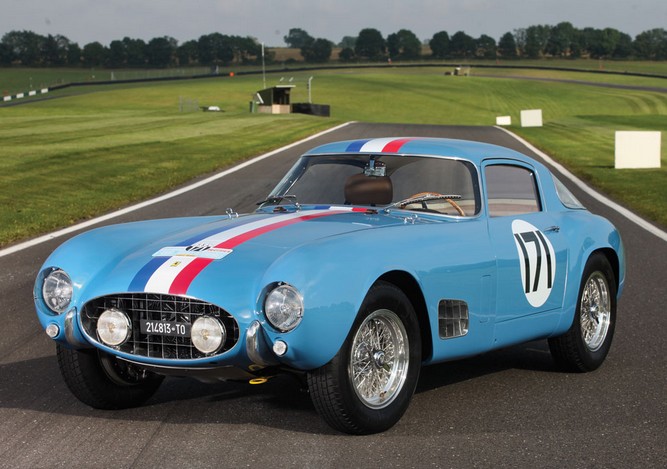
Ferrari 250 GT Tour de France

1956 Ferrari 250 GT Berlinetta Competizione “Tour de France” by Scaglietti

Offered by RM Auctions | London, U.K. | September 8, 2014

Photo - RM Auctions

Photo – RM Auctions

Ferrari 250s are very nice. They’re exceptional, wonderful examples of the golden age of Ferrari from the golden age of motor racing. The 250 GT Berlinetta followed the Europa GT, GT Boano, GT Ellena. They used Scaglietti bodies based on a Pinin Farina design and were sold from 1956 through 1959.

These two-door coupes (only body style) were powered by a 225 horsepower 3.0-liter V-12. They were nicknamed “Tour de France” after the 250 GT Berlinetta won it’s first race at the 1956 Tour de France (a 10 day race in France). The GT Berlinetta also won the Targa Florio and it’s class at Le Mans.

Not all “Tour de France” 250 GTs were race cars. In fact, of the 77 examples built, only nine were “Competizione” models – this being #8. It’s competition history includes:

  • 1956 Tour de France – 8th (with Jacques Peron and Jacques Bertrammier)
  • 1956 Coupes du Salon, Montlhery – 2nd (with Peron)
  • 1957 12 Hours of Reims – DNF (with Peron)
  • 1957 Tour de France – 5th (with Peron and Georges Burggraff)

This car is finished in the best color combination you can get on a 250 GT Berlinetta. These are spectacular cars, and very important in the history of the 250 GT. This one has great period race history and known ownership from new. It’s ready to take on any historic event you want, but it’ll cost you somewhere in the neighborhood of $6,850,000-$8,650,000 in order to do so. Click here for more info and here for more from RM in London.

Update: Sold $8,119,188.

Vector W8

1993 Vector W8

Offered by Mecum | Dallas, Texas | September 3-6, 2014

Photo - Mecum

Photo – Mecum

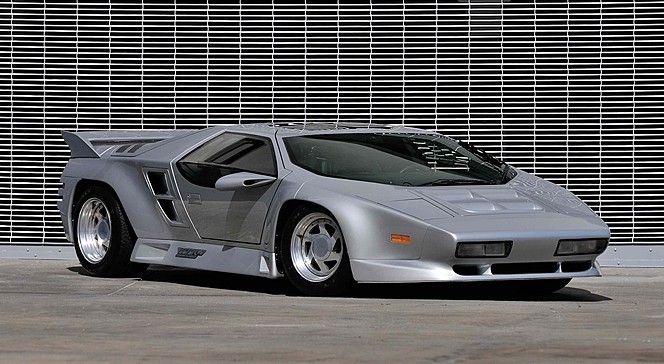
Vector Aeromotive (which is one of my favorite company names ever) was the child of Gerald Wiegert. The company is still technically around, but they haven’t built a car in over 15 years. This was their first production car – and it was intended to be America’s first supercar – and it pretty much was. At over 20 years old, it still looks wild and has the performance to match.

The engine is a mid-mounted 6.0-liter twin-turbocharged V-8 making 625 horsepower. Although they were built between 1990 and 1993, they remain an incredibly quick car by today’s standards: top speed is estimated at 220 mph.

Vector had a rough history. It was sold to Megatech, the ill-fated then-owner of Lamborghini. Megatech imploded in the late 1990s over an embezzling scandal and the brand was more or less scuttled until Wiegert returned to the scene circa 2007 to revive it, although they have not sold any new cars since 1999.

Only 19 or 20 W8s were built. This is car #16 of 18 built for public sale (the others were prototypes), making it one of the last. It’s been in the same family since new, too. For you supercar collectors out there, 1. I envy you and 2. this is a must-have for any supercar collection. Read more here and check out more from Mecum here.

Update: Mysteriously disappeared from the auction catalog.

Swift Cyclecar

1913 Swift 7HP Twin-Cylinder Two-Seater Cyclecar

Offered by Bonhams | Beaulieu, U.K. | September 6, 2014

Photo - Bonhams

Photo – Bonhams

The Swift Motor Co Ltd. of Coventry began as a sewing machine manufacturer. They turned to cars in 1900 and their specialty was those of the small variety. Swift were among the pioneers of the cyclecar movement that swept the world (most of Europe and the U.S.) between 1910 and the 1920s.

The twin-cylinder cyclecar was introduced by Swift in 1912 (replacing a single-cylinder model). The engine is a 972cc twin making seven horsepower. The car is tiny, light, and will seat two. I quite like the looks of it.

This car has been known in the collector world since 1959 and was used regularly up until 1968 before it became more of a static showpiece. The interior is mighty old if not original – same for the engine. It is a driver and the body and brass are in great shape. It should sell for between $23,000-$27,000. Click here for more info and here for more from this sale.

Update: Sold $33,826.

Duesenberg J-523

1936 Duesenberg Model SJ Dual Cowl Phaeton by LaGrande

Offered by Auctions America | Auburn, Indiana | August 30, 2014

Photo - Auctions America

Photo – Auctions America

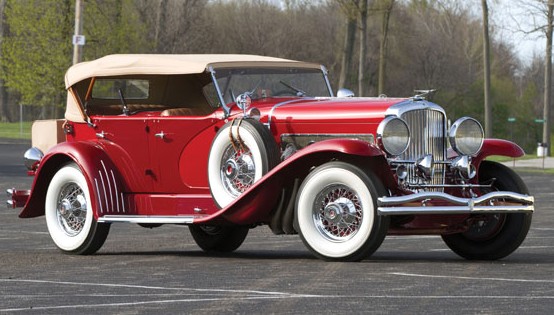
I’ll put this as simply as possible: Duesenbergs don’t get much better than this. Reason #1: this baby is supercharged. Reason #2: this is the best (my favorite) body style you can get. The body, the LaGrande Dual Cowl Phaeton, was an updated version of the LeBaron Dual Cowl Phaeton. The updates were done by none other than legendary designer Gordon Buehrig.

This is a factory-spec Model SJ – so it’s not a Model J that was upgraded years later. That’s pretty exciting. The engine is the standard 6.9-liter straight-eight that’s been supercharged to put out 320 horsepower. This is the original chassis and engine but the body was swapped with another car. Both of these cars simply wear each others bodies to this day.

The present owner bought this in 1978 after the current restoration had been completed. It has recently been serviced to running and driving condition. This is one of four LaGrande Dual Cowl Phaetons attached to a supercharged engine and one of the final of the kind built. It’s an awesome opportunity and should bring in between $1,500,000-$2,000,000. Click here for more info and here for the rest of this auctions’ lineup.

Update: Sold $1,265,000.

Update: Sold, RM Sotheby’s Monterey 2023, $3,030,000.

1913 Unic Taxi

1913 Unic Type C9 Landaulette Taxicab

Offered by Bonhams | Beaulieu, U.K. | September 6, 2014

Photo - Bonhams

Photo – Bonhams

Unic was founded in France in 1905 by Georges Richard (formerly of Georges Richard and later, Brasier) and in 1938 they shifted their concentration from automobiles to commercial vehicles. In the 1950s, Unic became part of Simca and a few years later, was acquired by Saurer. Fiat became the major shareholder in 1966. Unic was one of the firms amalgamated into IVECO in 1975.

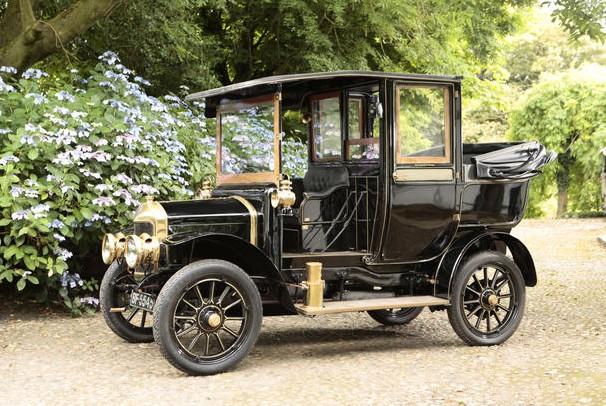
Unic sold passenger cars in a range of models and power outputs. The Type C9 was new for 1913 and it is powered by a straight-four making 12/14-horsepower. It was extremely popular among taxi companies and the United Motor Cab Company of London ordered this one.

It is thought that this taxi left service and immediately was transported to the U.S. as a collectors item. It was mechanically sorted in 2010 and ran well, although it might need some additional work to get it roadworthy today. These were very popular European taxis shortly after the turn of the century and it would be a very cool ride today. It should sell for between $47,000-$54,000. click here for more info and here for more from this sale.

Update: Sold $44,484.

1909 Hotchkiss Coupe de Ville

1909 Hotchkiss Type T Coupe de Ville by Eugene Boulogne et Fils

Offered by RM Auctions | London, U.K. | September 8, 2014

Photo - RM Auctions

Photo – RM Auctions

Look at that aerodynamic windshield. I love cars from this era because they were meant to do things. They moved people who no longer wished to use a horse. Yet they were exquisite in their detail and design. It wasn’t about streamlining for gas mileage. It was about accomplishing a task.

Hotchkiss started life as an arms manufacturer (as did a couple of other French automobile companies). The Hotchkiss brothers who founded the company were actually from Connecticut but they were gone before auto production started in 1902.

The Type T was new for 1907 and lasted through 1911. It uses a 3.1-liter straight-four and it was the smallest car they offered. The body is somewhat regal and was built by a little known French coachbuilder. It is believed this is the only Hotchkiss they bodied. This car is pretty much entirely original, which is amazing.

Less than 400 Type Ts were built. Not many are left, but this is the only one from this coachbuilder and it is as it was in 1909. A simply incredible opportunity. The price will range between $165,000-$210,000. Click here for more info and here for more from this sale.

Update: Sold on the cheap, $65,327.

Ferrari Daytona Spyder

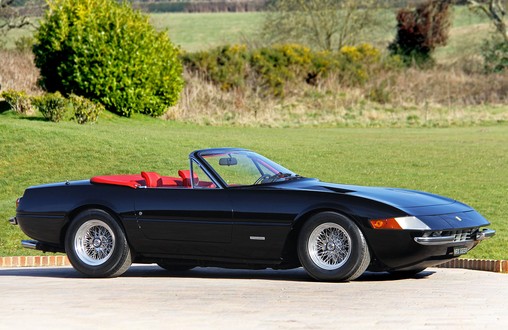
1971 Ferrari 365 GTS/4 Daytona Spyder

Offered by Silverstone Auctions | London, U.K. | September 4, 2014

Photo - Silverstone Auctions

Photo – Silverstone Auctions

While many vintage Ferrari models as of late have quickly approached (and in some cases, surpassed) the million dollar mark, the Daytona Spyder has long been a million dollar Ferrari. They are very rare – although recreations seem to be as numerous as originals as many owners had their Daytona’s roofs cut off in the 1980s and 1990s because a convertible was cooler.

No one would dare cut open a Daytona today, but those conversions are out there. This, however, is the real thing – a genuine 365 GTS/4. One of only 122 built (for comparison, 1,284 hardtop coupes were built, the GTB/4). The engine is a front-mounted 4.4-liter V-12 that makes 352 horsepower. This is one of the most classic Ferraris (in coupe or spyder form) and perfect for your daily driver around Monaco.

This particular car was purchased new by Bill Harrah and he sold it in 1976. It spent the next 31 years with that new owner before the current owner acquired it in 2008 – and to date, the car has only covered 3,946 miles. It’s practically brand new (although it has been thoroughly recommissioned and repainted).

If you feel the need to drive around pretending you’re Don Johnson from Miami Vice (as I so often do), then this is a car you’ll need in your fleet (Crockett’s car in the show was actually a Corvette done up to look like a Daytona Spyder). Anyway, this is the real deal and it’s among the very finest Daytona Spyders in the world (and perhaps the lowest mileage). It should sell for between $3,000,000-$3,750,000. Click here for more info and here for the rest of Silverstone’s auction lineup.

Update: Sold $3,711,510.

Jaguar XJR-15

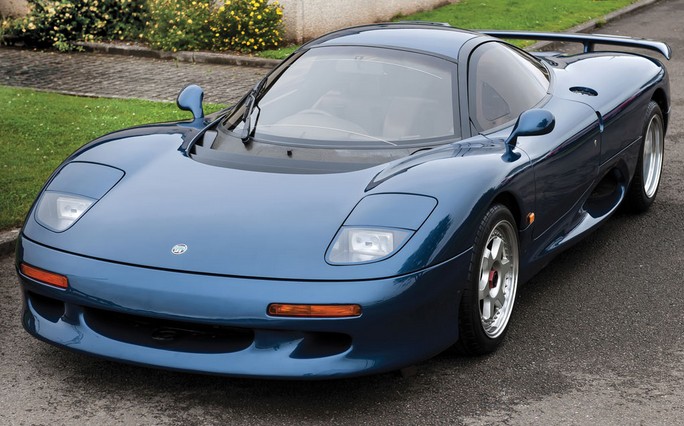
1991 Jaguar XJR-15

Offered by RM Auctions | London, U.K. | September 8, 2014

Photo - RM Auctions

Photo – RM Auctions

Everyone talks about the Jaguar XJ220 and how amazing it was (and how it was kind of a flop). It was one of the most well-known supercars of the 1990s. But no one ever mentions the XJR-15, the XJ220s direct predecessor and equal-in-awesomeness.

The droopy-eyed front end was styled by the same guy who went on to do the McLaren F1. The car is based around Jaguar’s Group C-dominating XJR-9 and XJR-12. The XJR-15 was a road car from the get-go, becoming the first street-legal vehicle that is fully made of carbon fiber. The engine is a Group-C spec 6.0-liter V-12 making 450 horsepower. The top speed was 191 mph (although 215 is listed – which would make it faster than the XJ220 that replaced it and the XJ220 was widely known as the “world’s fastest production car.”)

The cars were assembled by Tom Walkinshaw Racing and they sold new for approximately $1 million. 50 were scheduled to be built, but only 27 were turned out as road cars (there were 16 race versions built for a one-make racing series that ran three events in 1991 alongside the F1 calendar). It’s far rarer than an XJ220

This is an legitimate early-90s supercar and one that doesn’t get much respect today. If I were a supercar collector (I mean, when I become a supercar collector) this will definitely be on my list of “must-haves.” You can buy it for between $300,000-$425,000. Click here for more info and here for more from this sale.

Update: Sold $363,964 (outselling XJ220 at same sale)

Ford Explorer Sportsman

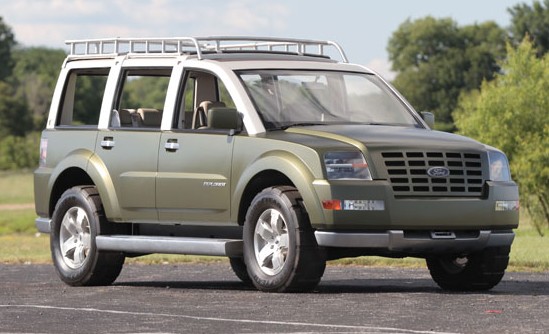
2001 Ford Explorer Sportsman Concept

Offered by Auctions America | Auburn, Indiana | August 30, 2014

Photo - Auctions America

Photo – Auctions America

Looks pretty manly, doesn’t it? I remember concept cars of this era – seeing auto show highlights in AutoWeek or some such publication (the internet still wasn’t my main source for news) and seeing these somewhat outrageous show cars. Many from the late-90s through the early-00s have a similar look about them.

This one is based on a standard Ford Explorer. The Sportsman was designed for fishermen. It comes with fishing rods and the self-deploying running boards offer storage for said rods (really a good idea that I’m surprised we don’t actually see on production cars). The roof rack is removable. There’s actually even a built-in fish tank in the rear. *Fish not included.

The engine is a 4.6-liter V-8 making 240 horsepower and it does run and drive (although you can’t register it, unfortunately). It’s the only one like it ever built and sold four years ago for $49,500. This time around it carries an estimate of $40,000-$60,000. Click here for more info and here for more from this sale.

Update: Sold $15,675.