Bugatti Type 22

1914 Bugatti Type 22 Torpedo by Chauvet

Offered by RM Sotheby’s | Monterey, California | August 18-20, 2022

Photo Courtesy of RM Sotheby’s

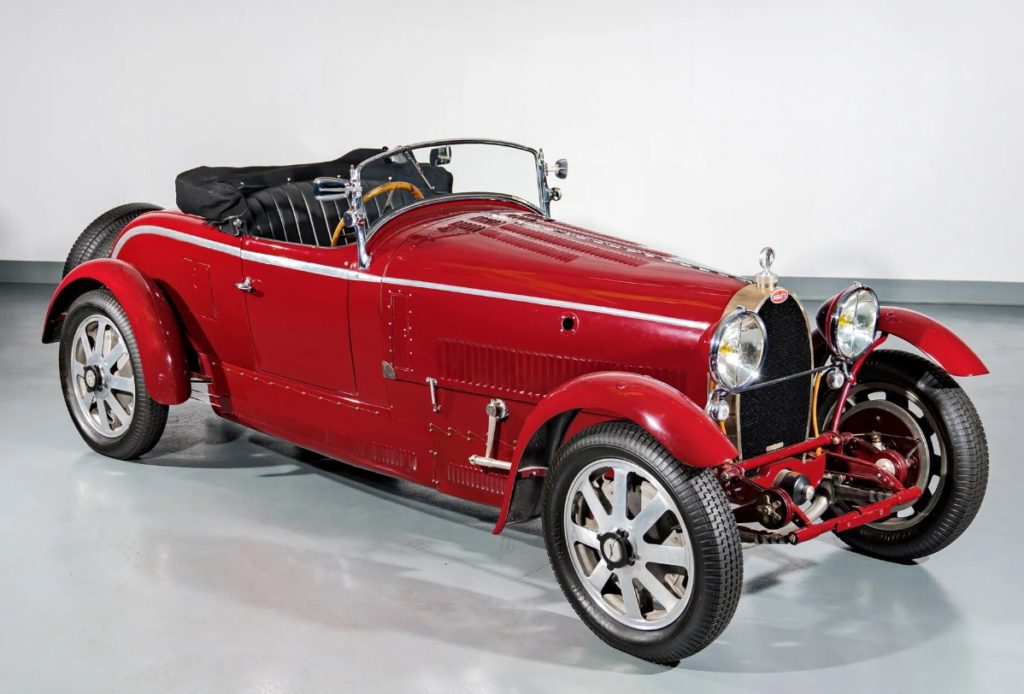
This car looks like a toy. From pretty much every angle, too. The body is by Carrosserie Chauvet, a coachbuilder that was active in the north of France from 1912 until 1929. This is their only surviving body on a Bugatti. It’s a small boattail torpedo with two tiny seats up front and maybe more seating under a hard tonneau behind a second cowl? Hard to say. The photos really leave a lot to the imagination.

The top looks like it would get ripped off of this thing at about 20 mph. Which is probably a good cruising speed here, as the car is powered by a bright red, Ettore Bugatti-signatured 1.4-liter inline-four that made about 30 horsepower.

The Type 22 was a road car, and they were built from 1913 through about 1922. Production totals are not widely known, but it was not many. And even less are left. This one has an estimate of $200,000-$250,000. Read more about it here.

Update: Sold $335,000.

Duesenberg J-550

1935 Duesenberg Model J Convertible Coupe by Rollston

Offered by RM Sotheby’s | Monterey, California | August 18-20, 2022

Photo Courtesy of RM Sotheby’s

It is both kind of disappointing and kind of mind-blowing that seemingly half of Model J Duesenbergs that come up for sale have already been featured on this site. This car is one of two coming out of this collection (this is the other). We haven’t featured this one before because it’s been owned by the same guy since 1967.

The Model J is powered by a 6.9-liter Lycoming straight-eight that made 265 horsepower in naturally aspirated form. This car, a 1935 model, carries one of the later engines built. There were more than a few convertible coupes put on Model J chassis, many of which by Murphy. This car is the only Rollston convertible coupe example built.

But the body wasn’t initially on this chassis, as it was previously fitted to an SJ. It has known ownership history, including time spent in Cuba, and it was purchased by the current owner in 1967, two years after it was restored. Read more about it here.

Update: Sold $4,680,000.

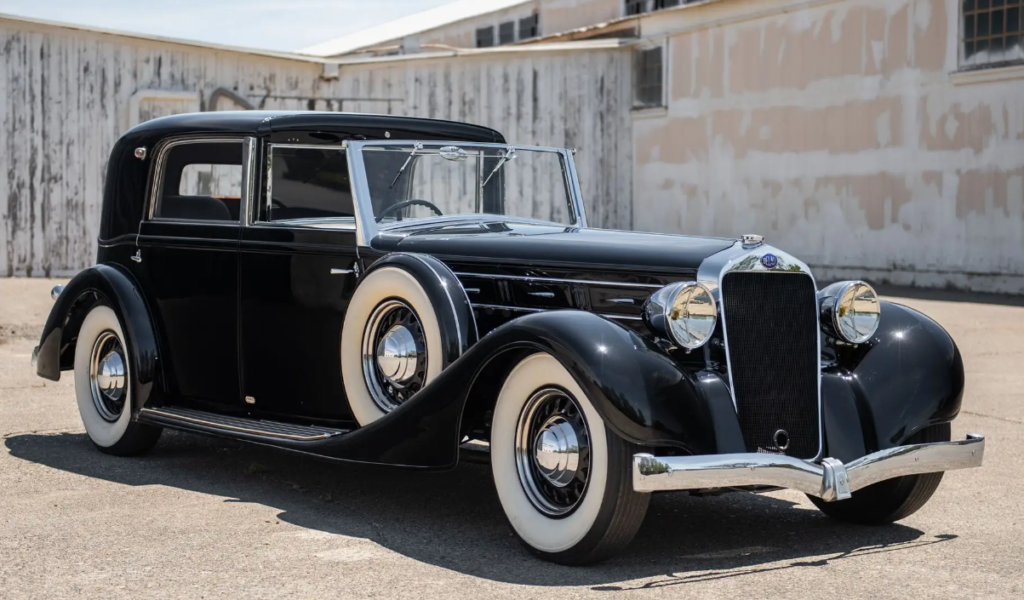
Delage D8-100 by Franay

1937 Delage D8-100 Coupe Chauffeur by Franay

Offered by RM Sotheby’s | Monterey, California | August 18-20, 2022

Photo Courtesy of RM Sotheby’s

Delage’s D8 was produced in nearly constantly updated versions from 1929 through 1940. There were more than five versions of it, with this, the D8-100 being among the longest produced, lasting from 1936 through 1940.

It’s powered by a 90-horsepower (105 from 1937 on), 4.3-liter inline-eight. Bodywork was either done in-house or contracted out, and Delages often got quite the treatment from some of Europe’s finest coachbuilders.

Look no further than Franay for high 1930 style. This car, the fifth D8-100 produced and the oldest survivor, was one of five with this style of Franay coachwork. It’s long and low. So low in front that it kind of looks hot-rodded. It was on Franay’s stand at the 1936 Paris Auto Salon, and it came stateside in the ’50s. The pre-sale estimate is $200,000-$250,000. Click here for more info.

Update: Sold $179,200.

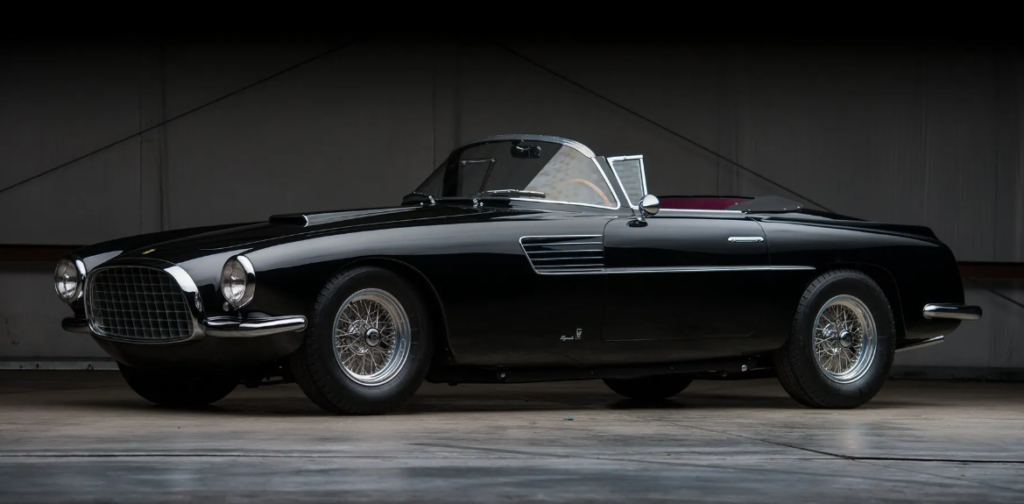
375 America Vignale Cabriolet

1954 Ferrari 375 America Cabriolet by Vignale

Offered by RM Sotheby’s | Monterey, California | August 18-20, 2022

Photo Courtesy of RM Sotheby’s

The 375 was the third in Ferrari’s limited-production “America” line of cars. It was produced in 1953 and 1954, with just 12 built, two of which were actually converted to 375 spec from existing 250 Europas.

So what was the difference between a 375 America and a 250 Europa? A bigger engine, for one. The 375 had a 4.5-liter V12 rated at 296 horsepower. This was a 160-mph road car… in the early 1950s. They were also very expensive. Most were Pinin Farina-bodied, however, Vignale produced three coupes and this, the lone convertible.

This car, which is one of the two Europas that became Americas, was a triple-black example when new and was first sold in Rome. A removable hardtop was optioned (not very common for Ferraris of any era). It was refinished most recently after the current owner’s purchase in 1998. This was nearly 20 years after it was initially restored.

No sales estimate yet, but you can read more about this car here.

Update: Sold $7,595,000.

Ruxton Model A

1929 Ruxton Model A Sedan

Offered by RM Sotheby’s | Monterey, California | August 18-20, 2022

Photo Courtesy of RM Sotheby’s

The front-wheel-drive Ruxton was designed by William Muller at Budd. A board member of Budd, a coachbuilding company, was also on the Hupmobile board. But no one else at Hupp wanted any part of the car. So that board member, Archie Andrews, set up New Era Motors, which traded the rights to the design for a controlling interest in Moon. Then Muller was installed as Moon chairman.

Moon then went out business, and next came down Kissel. And before long, the Ruxton was gone. The cars were powered by a 4.4-liter Continental inline-eight that made 100 horsepower. This example is said to be the first sedan built by the company and was used as a promo car. It features the well-known graduated/rainbow paint scheme. It also has Woodlite headlights. So major bonus points there.

Most Ruxtons are known as Model Cs. Why this one is a Model A is not laid out in the catalog, but maybe because it was the first one. It’s got an estimate of $200,000-$275,000. Click here for more info.

Update: Sold $313,000.

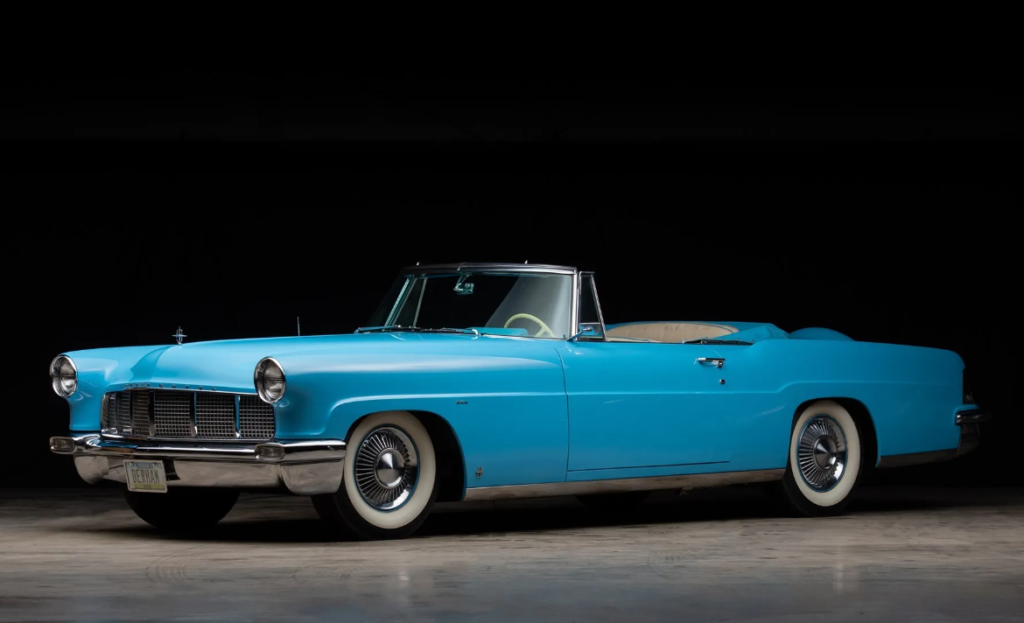
Continental Mark II Convertible

1956 Continental Mark II Convertible by Derham

Offered by RM Sotheby’s | Monterey, California | August 18-20, 2022

Photo Courtesy of RM Sotheby’s

When Lincoln (well, Ford), spun Continental off as a separate marque for 1956, the new company’s goal was to build the best car in America. And they did. The price reflected it too as the two-door Mark II cost $10,000 when new. In 1956. Which made it the most expensive American car you could get at that point.

Because they were so expensive, the product line made Ford rethink the whole thing pretty quickly. The model was only around for two years, with a combined production of just 3,005 units. And only one of those was a convertible. This one.

Ford sent this Mark II to Derham in Pennsylvania to figure out how to make a drop-top out of the car, as the range was supposed to expand to other body styles. But never did, which is a shame as this car looks GREAT with the top down.

After the show circuit, it became the personal car of Martha Firestone-Ford, wife of Continental head William Clay Ford. Before she received it, the mechanicals were updated to 1957-spec. The unrestored-but-repainted car is powered by a 300-horsepower, 6.0-liter V8.

Post-Ford ownership included a brief stint with a Ford employee before remaining with one family for over 60 years. It’s now offered without reserve. Click here for more info.

Update: Sold $296,500.

Ferrari 410 Sport Spider

1955 Ferrari 410 Sport Spider by Scaglietti

Offered by RM Sotheby’s | Monterey, California | August 18-20, 2022

Photo Courtesy of RM Sotheby’s

Enzo Ferrari wanted a car that could win the Carrera Panamericana in 1955. The company developed a new sports car chassis and fitted it with the 5.0-liter V12 from the 410 Superamerica. The twin-plug racing engine produced 400 horsepower, which was 40 more than the two single-plug customer cars that Ferrari delivered to some independent drivers.

Two twin-plug cars were built, with this being one of them. The Carrera was cancelled, so this car was saved for the 1956 World Sportscar Championship. This chassis, #0598, was driven by Fangio at the 1000 km of Buenos Aires before being sold into privateer hands.

From there, it was used at a variety of hillclimbs and SCCA events in the U.S., with wins racked up by Carroll Shelby. Other drivers in period included Phil Hill, Richie Ginther, Masten Gregory, Jo Bonnier, Jim Rathmann, and Fireball Roberts.

The full history of this car is pretty interesting and can be read here. Other notable events include decades under ownership of Luigi Chinetti. It was cosmetically refreshed in the 1980s, and the engine was rebuilt in 2012. With only four produced, and only two in this specification, this is a monster among golden-era Ferrari sports racing cars. RM won’t even publish an estimate.

Update: Sold $22,005,000.

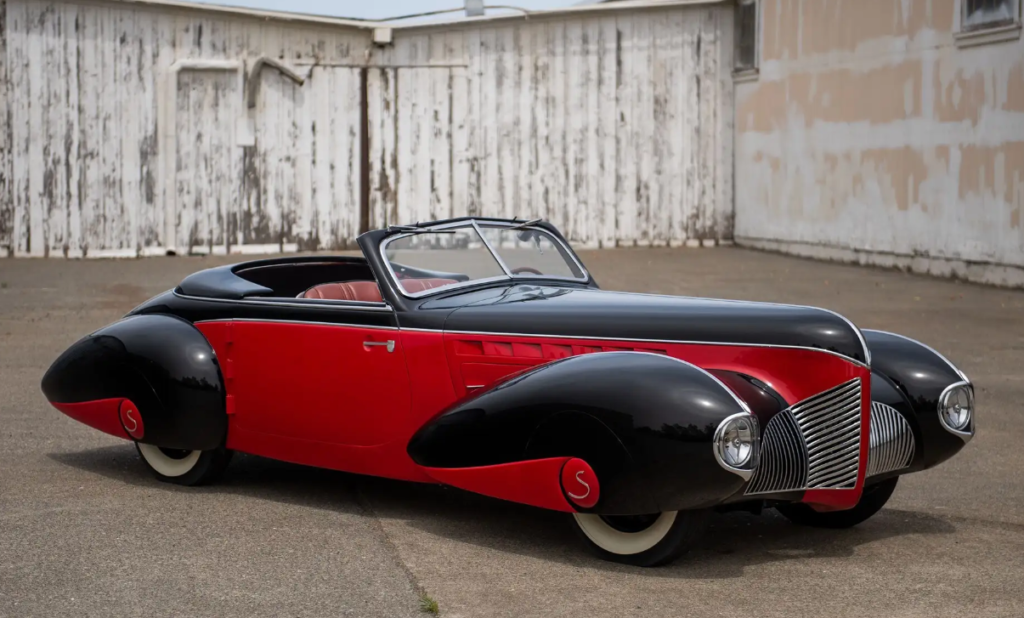
Aero 50 Dynamik

1939 Aero Model 50 Dynamik by Sodomka

Offered by RM Sotheby’s | Monterey, California | August 18-20, 2022

Photo Courtesy of RM Sotheby’s

Aero was a Czech company the operated as an automobile manufacturer from 1929 through 1947, with post-war models amounting to 500 units of a pre-war model. The company as a larger unit was primarily known for aircraft, and after it was nationalized in 1947, returned to strictly producing aircraft, which they still do today.

The Model 50 was the largest of the company’s offerings and went on sale in 1936. It remained in production until 1942, making it one of very few cars you could buy new in ’42. It featured a front-wheel-drive layout and sourced its 50 horsepower from a two-stroke 2.0-liter inline-four. Top speed was just over 80 mph.

Only 1,205 examples of the Model 50 were built, with just six of those being the Dynamik with swoopy coachwork from Joseph Sodomka. Two of the six examples built survive. The original owner stuffed this car in a barn during the war and then joined the Czech resistance. After the war, he gifted it to a friend in Colorado, and it was restored in the 1980s. The pre-sale estimate now is $300,000-$400,000. Click here for more info.

Update: Sold $346,000.

Bugatti Type 43 Roadster

1928 Bugatti Type 43 Roadster by Lavocat et Marsaud

Offered by RM Sotheby’s | Monterey, California | August 19-20, 2022

Photo Courtesy of RM Sotheby’s

Bugatti had a line of eight-cylinder road cars that started in 1922 with the Type 30. A few years and a few models later, they Type 43 debuted in 1927. The Type 43 gave way to the Type 43A in 1931, and that model remained available through the following year. Just 160 copies of the Type 43 were built.

Power is from a supercharged 2.3-liter inline-eight that was rated at 120 horsepower. This car was initially delivered as a Type 43 Grand Sport. The auction catalog lists this as a Type 43A (which were factory-bodied Roadsters). What I think it is is a re-bodied Type 43 wearing roadster bodywork by Paris-based coachbuilders Lavocat et Marsaud that was installed in 1929. Before the 43A even went on sale.

The engine was swapped later on, which means the car has its original… chassis. Which is about what many of these pre-war Bugattis can claim. But hey, at least its still out there and able to be driven. Click here for more info.

Duesenberg J-362

1930 Duesenberg Model J Convertible Berline by LeBaron

Offered by RM Sotheby’s | Monterey, California | August 19-20, 2022

Photo Courtesy of RM Sotheby’s

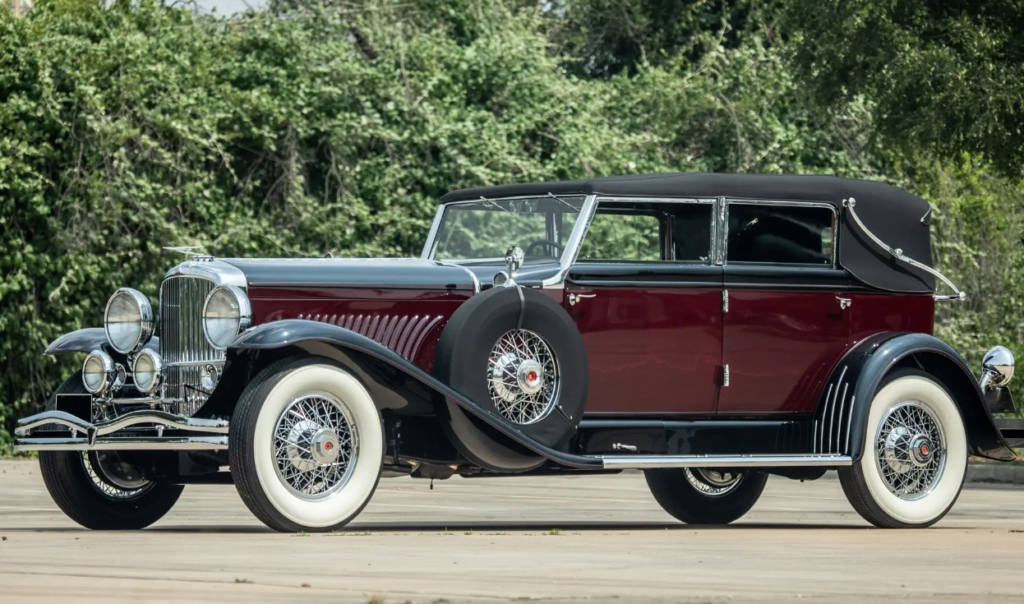
This is what you’d call a stately Model J. While it’s not a traditional limousine, it has that look but with a retractable soft top with landau bars and removable B-pillars. The coachwork is by LeBaron, who were responsible for some great Duesenberg designs back in the day.

Power is from a 6.9-liter inline-eight that made 265 horsepower when new. Model Js had a three-speed manual transmission. But all that power and favorable gearing means that this beast can do almost 90 mph in second gear.

This car was originally owned by an heir to a Chicago department store fortune. Ownership history is more or less known, and the car was restored by RM with work completing around 2000. The current owner bought it in 2010. Price estimates? More than a limo but less than a dual-cowl phaeton. Click here for more info.

Update: Sold $1,061,000.