Riley Nine Gamecock

1932 Riley Nine Gamecock

Offered by H&H Auctions | Duxford, U.K. | April 15, 2015
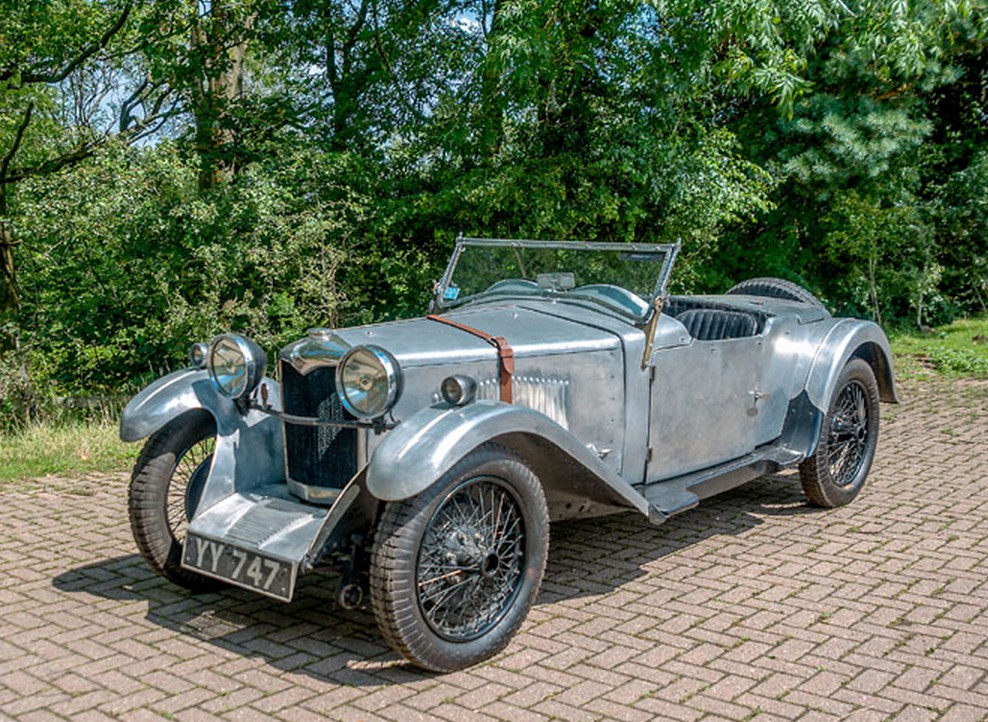
Photo - H&H Auctions

Photo – H&H Auctions

The Riley Nine was a very successful car built by Riley Limited between 1926 and 1938. I’m not quite sure what the American equivalent of this car would have been as the Ford Model A is a little too prevalent, but nonetheless, this was one of Britain’s most successful pre-WWII automobiles.

This car is powered by a 1.1-liter straight-four that was powerful enough to propel it car up to 70 mph. This is the Gamecock model and it was only produced between 1931 and 1932 in two-seat roadster form, although Nines were available in a variety of body styles.

This car is one of about 52 Gamecocks known to have survived. It has had over $10,000 worth of work done in the past year and is presented in bare metal, which actually looks pretty good. It is expected to sell for between $48,000-$55,000. Click here for more info and here for the rest of H&H’s auction lineup.

Update: Sold $47,144.
Kurtis 500 Coupe

1955 Kurtis 500 Swallow Coupe by Allied

Offered by RM Sotheby’s | Ft. Worth, Texas | May 2, 2015

Photo - RM Sotheby's

Photo – RM Sotheby’s

Frank Kurtis began building race cars in the 1930s. They were midgets and the first one he built was for himself. But he was good at it – and people recognized that. His cars were so good that Frank Kurtis was the first non-driver inducted into the National Midget Racing Hall of Fame. After WWII, he tried his hand at fiberglass road cars and would go on to build five Indy 500-winning roadsters.

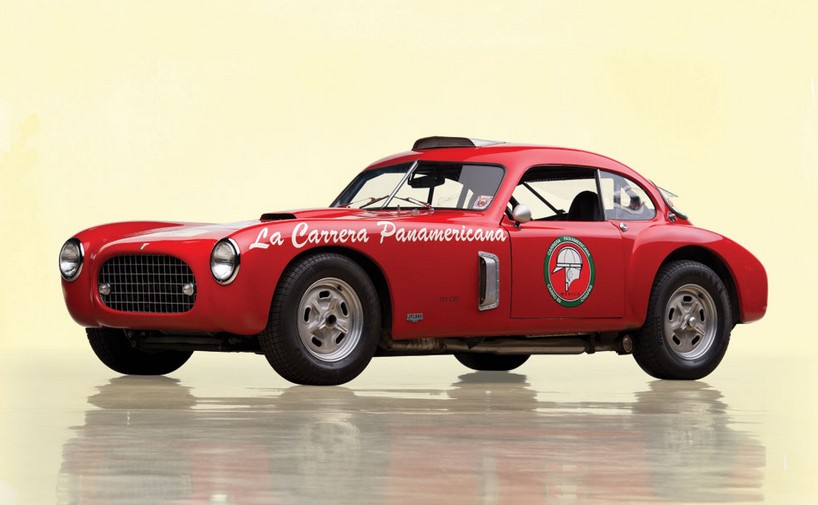
The Kurtis Kraft 500 was a racing car – an Indy Roadster. They built a (barely) fendered road version as well. What we have here is a KK500 racing chassis. The body is by a company called Allied that built bodies, specifically near-copies of the Cisitalia 202. It’s a short-wheelbase car and uses a 5.2-liter V-8 from a Lincoln that has been tuned to make 257 horsepower.

The car was built to compete in the legendary Carrera Panamericana, but the 1955 race was cancelled. It would, however, get to compete in the 1990 version of that race and some other vintage events as well. It’s one of only two Allied-bodied Kurtis cars known to have been built and should sell for between $140,000-$200,000. Click here for more info and here for more from this sale.

Update: Sold $220,000.

Update: Not sold, Bonhams Scottsdale 2020.

Buddy Stewart Pickup

1935 Stewart Model 40H Buddy Pickup

Offered by Mecum | Houston, Texas | April 9-11, 2015

Photo - Mecum

Photo – Mecum

The Stewart Motor Corporation of Buffalo, New York, began building commercial vehicles in 1912. For 1915 and 1916 only, they offered a passenger car, before returning to what they did best. In 1926 they introduced the “Buddy” – a light truck with road-going performance.

What you see here is just such a model, which was likely produced up through 1937 (Stewart folded in 1940). It’s powered by a 2.7-liter straight-four. Today, this wouldn’t be considered a commercial vehicle, but an everyday pickup truck.

And that’s why this is so interesting. This is a relatively late example (most car companies that the Depression was going to kill were already dead by this point and the only survivors are the ones that are household names today). So here’s a light pickup that would’ve competed against Ford and Chevrolet from a company you’ve probably never heard of. Check out more here and see more from Mecum here.

Update: Not sold, high bid of $37,500.

Update II: Sold, Auctions America, Auburn Fall 2015, $20,350.

Packard Model S

1906 Packard Model S Touring

Offered by Mecum | Houston, Texas | April 9-11, 2015

Photo - Mecum

Photo – Mecum

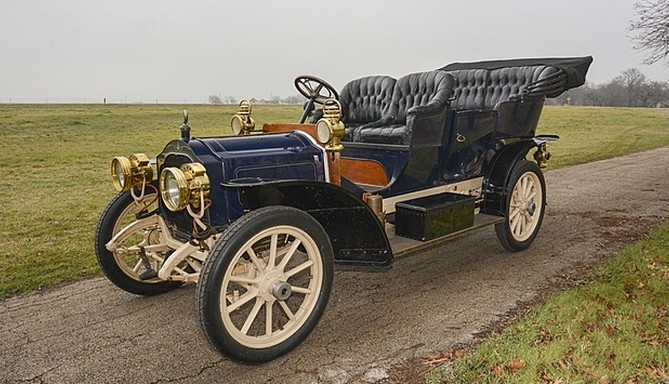
For 1906 produced a single model called the Model S and it was only offered in that 1906. The Model S was a step forward for Packard, who, up to this point, had been sort of building a slightly reworked version of the same car year after year.

It is powered by a 5.7-liter straight-four rated at 24 HP but actually produces somewhere in the neighborhood of 40-50 horsepower. Because of its initial rating, the Model S was sometimes referred to as the Model 24. It was offered in five body styles with this Touring example being the least expensive at $4,000 – in 1906. So it was still pretty rich.

Packard only sold 728 cars for 1906 and only three are known to exist. This one spent 20 years in the Harrah Collection before joining the collection from which it is being offered in 1991. It is the 22nd oldest Packard known to exist and it is a multi-hundred thousand dollar car. Click here for more info and here for more from this sale.

Update: Sold $300,000.

Update: Not sold, Mecum Monterey 2016, high bid of $285,000.

Update: Not sold, Mecum Kissimmee 2017, high bid of $290,000.

Update: Not sold, Mecum Indianapolis 2017, high bid of $250,000.

Update: Sold, Mecum Indy 2018, $286,000.

1902 Rattler

1902 Rattler Runabout

Offered by Worldwide Auctioneers | Houston, Texas | April 25, 2015

Photo - Worldwide Auctioneers

Photo – Worldwide Auctioneers

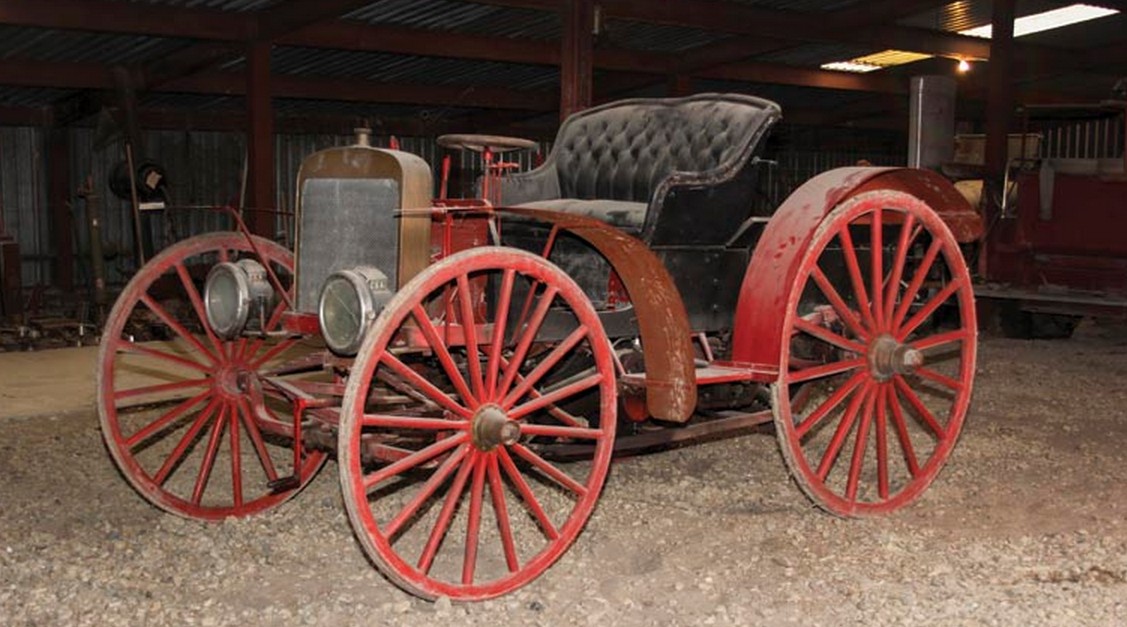
The 1902 Rattler (which, let’s be honest, makes it sound like it wasn’t put together all that well) is a mystery. No one really knows where it was built, nor who built it. It is one of many such one-off prototype cars built by men who wanted to get into this new automobile industry around the turn of the century. But it didn’t work out. Not for the Rattler, or numerous other early one-offs built.

But unlike many, the Rattler survived. Its setup is much like that of other early high-wheelers: large, wooden wagon-like wheels with a buggy-style body and an engine located under the seat. This probably isn’t a runner or driver, having spent many, many years in a museum. But it is original and complete.

It’s an interesting piece of history, that’s for sure. If you want to own it, it can be yours for between $40,000-$60,000. Click here for more info and here for more from this sale.

Update: Sold $9,900.

Parry Touring

1910 Parry Model 40 Touring

Offered by Mecum | Houston, Texas | April 9-11, 2015

Photo - Mecum

Photo – Mecum

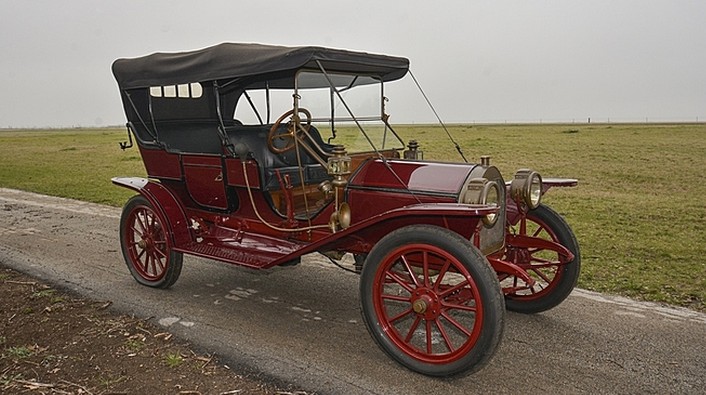
The Parry Auto Company was an Indianapolis-based manufacturer founded by David M. Parry in 1909. David Parry formerly owned Overland before selling it to Willys. Parry-branded automobiles were only available for the 1910 model year, and for 1911 and 1912 they were sold as “New Parry”s.

This is the larger of two models offered for 1910. It uses a 40 horsepower straight-four and features bodywork that is very nice if not somewhat standard for the era. Only 900 Parrys were sold in 1910, making this car very rare.

The company collapsed in 1912 as it was under-funded and operating at a loss (having spent most of their capital on advertising). David Parry died in 1915 but two of his brothers would go on to built the Comet cyclecar. You can see more about this car here and more from Mecum in Houston here.

Update: Sold $50,000.

Rugby Pickup

1930 Rugby S4 Closed Cab Express

Offered by Mecum | Houston, Texas | April 9-11, 2015

Photo - Mecum

Photo – Mecum

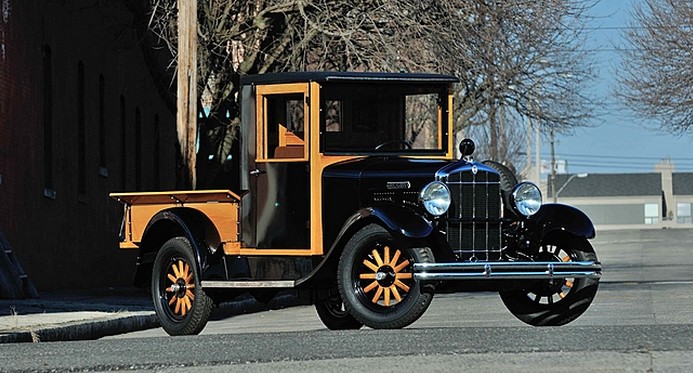
Rugby was an automotive brand sold by Durant Motors outside of the U.S. In the U.S., the Rugby passenger cars were sold under the Star brand. However, between 1928 and 1931, Americans and Canadians alike could purchase a Rugby pickup truck.

This truck is in beautiful condition. Look how sharp that paint is. And the woodwork looks great too. Old trucks are hard to come by because they were used until there was nothing left and thrown away, more or less. The S4 was powered by the same 2.2-liter straight-four found in Star motorcars.

Durant Motors closed in 1931 and Rugby went down with them. This is about as nice an example of a Rugby truck you’re likely to find. You can check out more pictures here and see more from Mecum here.

Update: Sold $35,000.

Duesenberg J-463

1932 Duesenberg Model J Dual Cowl Phaeton in the style of LaGrande

Offered by Mecum | Houston, Texas | April 9-11, 2015

Photo - Mecum

Photo – Mecum

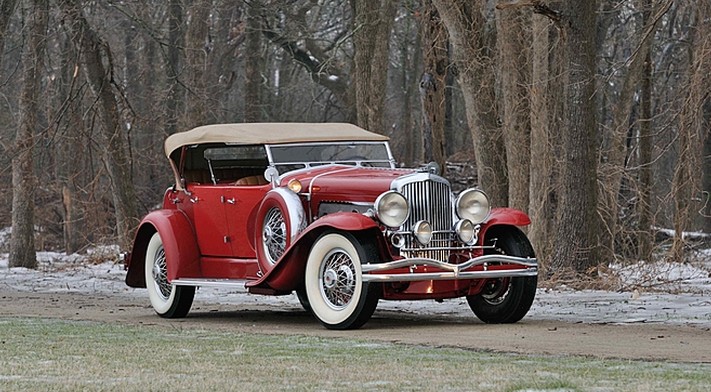
On December 1, 1928, Duesenberg debuted their new Model J at the New York Car Show. The car was an instant hit among those that could afford it. In the next year, the company built 200 examples before the stock market crashed and money dried up. Only a few hundred more were built before sales stopped in 1937.

The standard engine is a 6.9-liter straight-eight making 265 horsepower. This particular car was originally bodied by Rollston in limousine form. A few years after it was new, the body was swapped for a Dietrich Convertible Sedan. That body was lost in a fire.

In the 1970s, the car was restored and the current body – which was scratch-built in the style of the famous LaGrande Dual Cowl Phaeton. A supercharger was also added, upgrading the car to SJ specification (meaning 320 horsepower). It’s not an original SJ, but it is an original Model J chassis and engine. It’s very nice and you can read more here and see more from Mecum here.

Update: Sold $500,000.

Update: Not sold, Mecum Monterey 2015, high bid of $550,000.

Update: Sold, Mecum Monterey 2016, $600,000.

Update: Not sold, Mecum Monterey 2017, high bid of $550,000.

Buick Blackhawk

2000 Buick Blackhawk

Offered by RM Sotheby’s | Fort Worth, Texas | May 2, 2015

Photo - RM Sotheby's

Photo – RM Sotheby’s

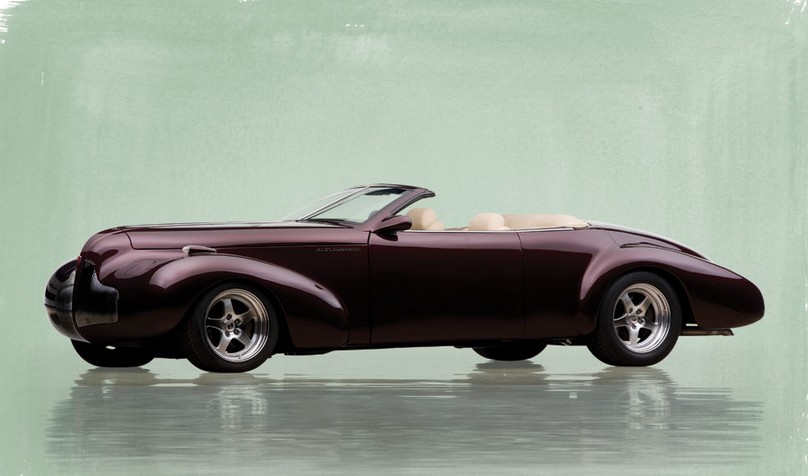
This extremely long-looking convertible hot rod was actually built by General Motors to celebrate 100 years of Buick. Even though the Motor Division wasn’t founded until 1903 (the year public sales began), David Dunbar Buick founded his company in 1899, building engines and prototypes.

The car was built to showcase the best things Buick had done in the past century. In 1938, GM designer Harley Earl created what was essentially the first “concept car” – the Buick Y-Job. This car takes some of its design inspiration from that car – and also the 1940s Buick Roadmasters.

The engine is a 463 horsepower 7.5-liter V-8 from a 1970 Buick GS Stage III. It went on the auto show tour in 2001 and was very popular. After the shows, it went back to the GM Heritage Collection until GM had to thin it out during bankruptcy. It was then sold to the current owners at a Barrett-Jackson sale in 2009 for $522,500.

As it was a show car, it wasn’t really well-engineered. So the new owners made it derivable. It’s a fantastic piece of Buick (and GM) history and is a true factory custom show car. It is expected to bring between $300,000-$450,000. Click here for more info and here for more from The Andrews Collection.

Update: Sold $363,000.

Update: Sold, Mecum Kissimmee 2022, $385,000.

Watson Indy Roadster

1960 Watson-Offenhauser Indianapolis Roadster

Offered by RM Sotheby’s | Fort Worth, Texas | May 2, 2015

Photo - RM Sotheby's

Photo – RM Sotheby’s

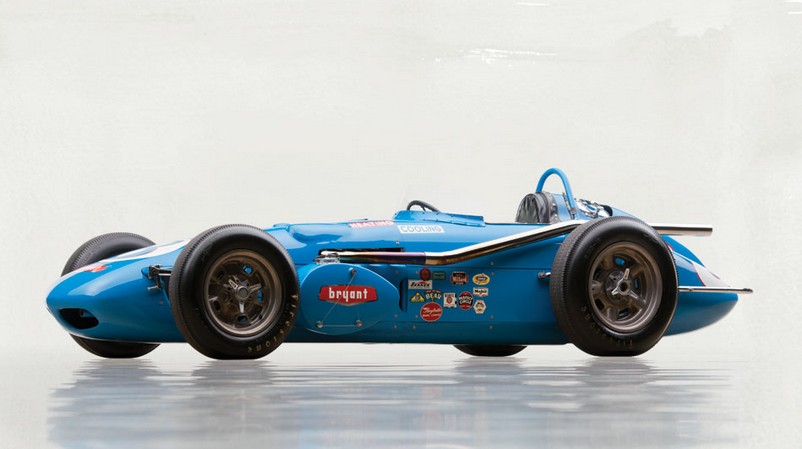
A.J. Watson and Fred Offenhauser are two legendary names associated with the Indianapolis 500 – names that, to Indy faithful, are right there with Foyt and Unser. Watson built his first car (for himself) in 1947. In 1955 he modified a Kurtis KK500C which ended up winning the 500. In 1956, Watson built his first Indy Roadster from scratch. He would go on to build only 22 more.

This car was built in 1960 and was run for a few years thereafter. Its competition history includes:

  • 1960 Indianapolis 500 – 30th, DNF (with Len Sutton)
  • 1960 Milwaukee 200 – 1st (with Sutton)
  • 1961 Indianapolis 500 – 19th, DNF (with Sutton)
  • 1961 Milwaukee 200 – 2nd (with Sutton)
  • 1962 Indianapolis 500 – 31st, DNF (with Allen Crowe)

The ’62 500 was the final race for this car (because it was crashed), which didn’t fare too well there. It is powered by a 4.2-liter Offenhauser straight-four. The car was discovered in the early 1980s and was restored thereafter to its 1961 Indy livery. It has been back to Indy since (driven by Sutton in some warm up laps) and was displayed at the NHRA museum.

Watson Roadsters are very rare – even more so in private hands. This one should bring between $700,000-$800,000. Click here for more info and here for more from this sale.

Update: Sold $577,500.