Corvette Challenge

1988 Chevrolet Corvette Challenge

Offered by Mecum | Kissimmee, Florida | January 25, 2014
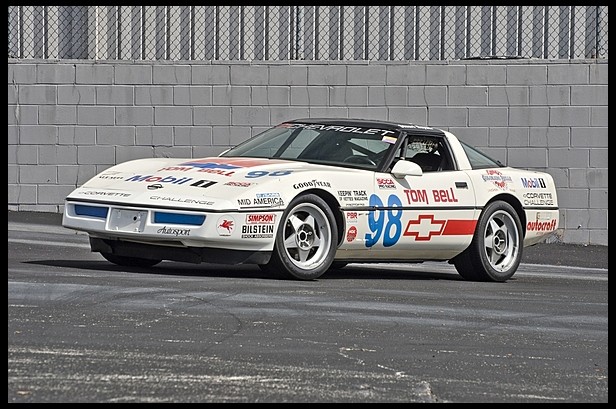
1988 Chevrolet Corvette Challenge

The Corvette Challenge was a one-make racing series that lasted two seasons – 1988 and 1989. The SCCA was the sanctioning body and some major racing stars turned out to compete, including Boris Said, Tommy Kendall, Andy Pilgrim, and Jimmy Vasser.

The cars cost $33,043 with an additional $15,000 payable to Protofab Engineering for race prepping. The cars were street-legal and all spec’d the same (Z51 performance handling package, roll cage, fire suppression system, etc.). The engine was a stock 250 horsepower 5.7-liter V-8.

In total, 56 Challenge cars were built for 1988 and only 46 of them ever started a race. This one was the series champion, having been driven by Stuart Hayner. It won a single race (Mosport) and had a total of four podium finishes. Consistency wins championships.

The car has covered what Mecum is calling “3,892 Sunday Driven” miles – aka race distance. These are rare cars and most Corvette people know what they are when they see them. They’re interesting and come from a time when Corvette motorsport presence was kind of thin. It would be an interesting addition to any collection. Click here for more info and here for more from Mecum.

Update: Did not sell, high bid of $8,500.
Duesenberg J-357

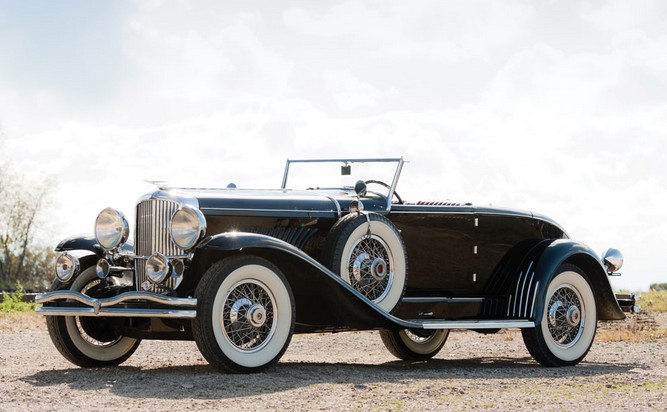
1930 Duesenberg Model J Disappearing Top Convertible by Murphy

Offered by RM Auctions | Phoenix, Arizona | January 17, 2014

1930 Duesenberg Model J-357 Disappearing Top Convertible by Murphy

Photo – RM Auctions

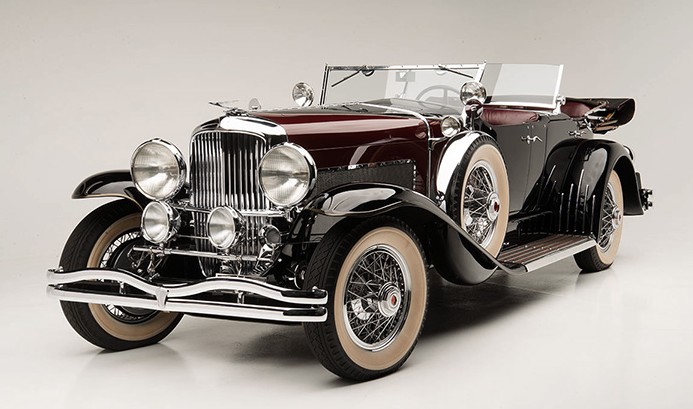
Well this is a beautiful car. What is strange though is that this was the cheapest Model J by Murphy you could buy in 1930. It cost a wealthy lumber baron in West Virginia $13,500 that year. It’s a short-wheelbase chassis and uses Duesenberg’s signature Lycoming 6.9-liter straight-eight engine making 265 horsepower.

The original owner sold it in 1946 to a man named Melvin Clemans who regularly drove the car from West Virginia to Auburn, Indiana, for the annual ACD gathering. A friend of Clemans worked on the car for him and became the cars’ third owner in 1998.

Luckily, he never restored it. He rebuilt the mechanicals (and so did RM Restorations, more recently) but the body, paint, wood, interior, and chrome are all-original. This is a 30,000 mile car that has been driven a lot by every owner it’s ever had. It’s really nice to see a car like this still being driven hard and on the road to local car shows and not across putting greens at big, fancy concours.

This is 1 of about 25 “Disappearing Top Convertibles” built by the prolific Walter M. Murphy Company. It is arguably among the coolest as it remains as it did the day it left the showroom floor in Huntington, West Virginia, back in 1930. This car should bring between $2,000,000-$2,400,000. You can read more here and see more from RM here.

Update: Sold $2,200,000.

Update: Sold, Gooding & Company Amelia Island 2016, $2,640,000.

Chaparral 1

1961 Chaparral 1

Offered by RM Auctions | Phoenix, Arizona | January 17, 2014

1961 Chaparral 1

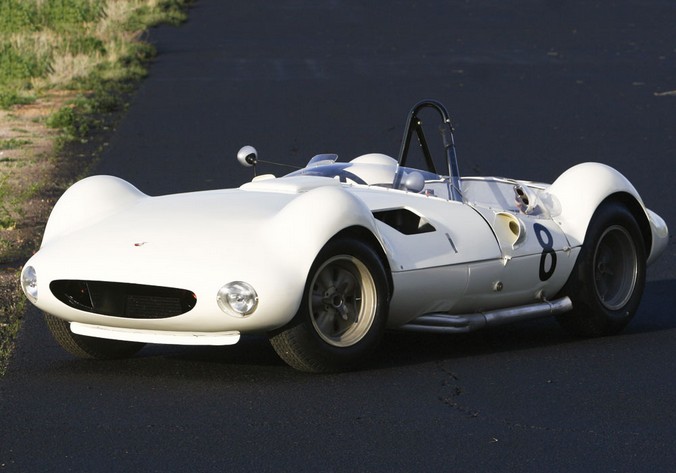
Jim Hall’s Chaparral race cars are some of the most imaginative and forward-thinking cars ever built. A racing driver in his own right (he contested in the 1963 Formula One season), Hall had some money from his family’s oil business and paved his own path for racing success.

The Chaparral story starts with Dick Troutman and Tom Barnes, builders of racing cars in California (they were behind the Scarab) Jim Hall approached them and helped engineer a new race car called the Chaparral 1 that they were about to begin building. They built two for Hall and three for other customers. This car, serial #003, was the second car bought by Jim Hall. After success with this car, Hall would buy out the Chaparral name and make it his own, building cars under the Chaparral 2 name until 1980.

This car uses a 5.6-liter V-8 making 339 horsepower. The engine is housed in front of the driver, but behind the front axle, thus technically making it mid-engined. The competition history for this car includes:

  • 1962 12 Hours of Sebring – 6th (1st in class), with Hap Sharp, Ron Hissom, Chuck Daigh & Jim Hall
  • 1962 Road America 500 – 1st, Sharp & Hall
  • 1963 12 Hours of Sebring – 62nd (DNF), with Sharp & Hall

The car was sold to a privateer after the 1963 season and was raced through 1965. It was restored in 1997 and acquired by the present owner in 2004 who’s used it in historic races. Chaparrals aren’t generally cars you can buy – making this early example a rarity indeed. If a Chaparral is on your wish list, then now is the time. It is expected to sell for between $2,250,000-$2,750,000. Check here for more details and here for more from RM in Arizona.

Update: Did not sell, high bid of $1,750,000.

S/N: 003.

Intermeccanica Omega

1967 Intermeccanica Omega

Offered by Bonhams | Scottsdale, Arizona | January 16, 2014

1967 Intermeccanica Omega

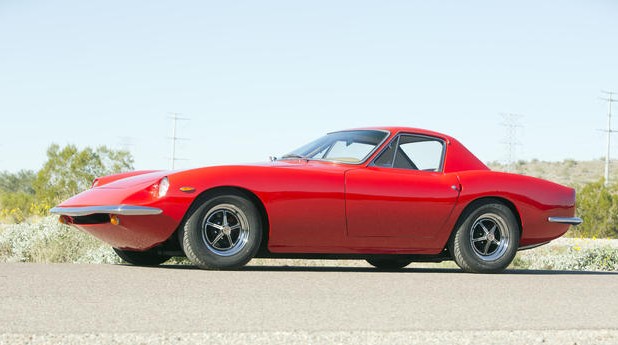
Intermeccanica is/was a sports car manufacturer from Italy. While they produce mainly replicas today (in Canada at that), back in the 1960s they built a number of American-powered, Italian-designed sports cars.

The car that preceded the Omega was not badged as an Intermeccanica. It was known as an Apollo and a Griffith. The Omega was a two-door coupe introduced in 1966 and used a 4.7-liter Ford V-8 making 271 horsepower. The steel bodies were designed and built in Italy and hammered by hand like cars of the old world should be.

The cars were then assembled by Holman-Moody in North Carolina (yes, the famous NASCAR team). This car was sold new to the Southwest and was recently restored. Only 33 Omegas were built. Cars like this from upstart sports car manufacturers of days past are very rare and seldom seen. This car should bring between $50,000-$70,000. Click here for more info and here for more from this sale.

Update: Sold $73,700.

1910 Thomas Flyer

1910 Thomas Flyer Model 6-40 Touring

Offered by Bonhams | Scottsdale, Arizona | January 16, 2014

1910 Thomas Flyer Model 6-40 Touring

Photo – Bonhams

The E.R. Thomas Motor Company was founded by Edwin Ross Thomas in 1896 in Buffalo, New York. He initially sold gas-powered conversions for bicycles before offering complete motorized-bicycles. In 1902, they built their first automobile.

1908 was a turning point for the company. It went from just another early American automobile manufacturer to one of legend. The company won the 1908 New York to Paris race – and the winning car survives today in the Harrah Collection in Reno. The very car you see here was also part of that collection at one point.

This Model 6-40 Touring uses a 7.2-liter straight-six making 64 horsepower. It has rear drum brakes only – so get on the pedal early if you want to stop! What’s cool about this car is that its ownership history is known from new. It was put away by its first owner in 1918 when he went off to war and was not started again until 1958. Bill Harrah bought it in the 1960s and repainted it. That is the only know restorative work done on the car in its history.

This car is mostly original – the leather, the brass, the drivetrain. Thomas Flyers are awesome cars. They are durable, quick, and powerful. A car like this deserves a great home. It should bring between $250,000-$350,000. Click here for more info and here for more from Bonhams in Arizona.

Update: Sold $275,000.

Here’s video of a similar car:

The Real McCoy

1956 Chevrolet Corvette SR Prototype

Offered by Mecum | Kissimmee, Florida | January 25, 2013

1956 Chevrolet Corvette SR Prototype

It seems like there’s always at least one more Corvette out there that will come along and smash price records for the model. This is one of those cars that has that opportunity. In all honesty though, I have no idea what it will bring – but it is a very important Corvette.

In 1955, Ford introduced the Thunderbird and it promptly walloped the Corvette, stealing a large portion of its sales. Zora Arkus-Duntov, the father of the Corvette, was afraid that GM was about to give it the axe and realized that the supposed sports car lacked any sort of sporting credentials.

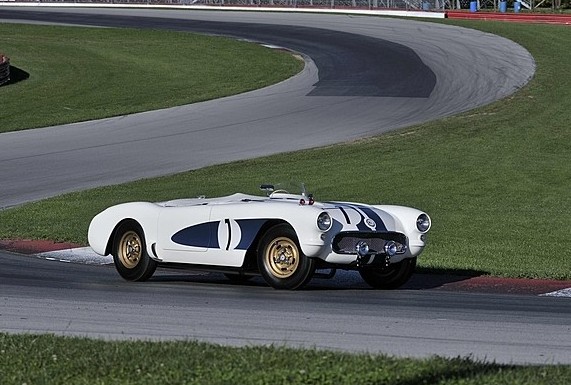
So he and his team put together a special prototype – the car you see here – and fitted it with a 255 horsepower 5.0-liter V-8. He promptly took the car to Daytona Speed Week and set a world record for the Flying Mile at just a tick over 150 mph, obliterating the record. This happened just before the 1956 GM Motorama in New York City. It drew a lot of interest, but more had to be done.

Ed Cole, head of GM at the time, announced that Chevrolet would be attacking the 12 Hours of Sebring. Duntov felt strongly that the track was not safe and that the car would not be able to last, so Cole replaced him as a driver with John Fitch and partnered him with Walt Hansgen.

Ed Cole put three-time Indy 500 winner Mauri Rose in charge of the team and Rose selected legendary NASCAR mechanic Smokey Yunick to prepare the Corvettes for Sebring (there’s a lot of famous name dropping going on here, sorry). In all, Chevy entered four cars – three of which were 1955 bodies on 1956 chassis – and one special prototype – the car you see here.

Two of the Corvettes failed early in the race. Fitch had a clutch slipping on this car on the second lap but somehow this car managed to win its class and finish 9th overall. Corvettes never did much factory-backed racing (until the C5-R anyway) and this car was the first and it brought the brand its most important victory – one that would keep Corvette around for another 60 years.

When Chevrolet publicized the win, they referred to the car as “The Real McCoy” – which is what this car is known as today. It is full of one-off, custom-built-by-GM parts for racing and is one of the most important Corvettes in existence. And it is going to cross the block. Read more here and check out more from this sale here.

Update: Sold $2,300,000.

Duesenberg SJ-292

1929 Duesenberg Model SJ Dual-Cowl Phaeton by LeBaron

Offered by Barrett-Jackson | Scottsdale, Arizona | January 18, 2013

1929 Duesenberg Model SJ Dual-Cowl Phaeton by LeBaron

What’s a better way to start off the new year than with a Duesenberg? Well, actually, how about with a factory-supercharged Duesenberg? That’s right, this Duesey has a blower on it – and not one that was added later in life (well sort of).

The story on this car is that it was bought new by one-time Indianapolis 500 participant Martin de Alzaga in 1929. He took the car to Argentina and the supercharger was added around 1935 – when Duesenberg was still in business. Alzaga didn’t use the car much and had the body converted in Buenos Aires to a race car (although the famous LeBaron “sweep panel” was still evident running down the car’s side. There are pictures out there and it’s a pretty wild sight).

In 1965, the car made its way back to the U.S. When it was restored, the original engine was mounted on a different chassis (as the original was shortened when it became a race car). The body was more or less constructed form scratch (perhaps utilizing what was left of the LeBaron coachwork). It’s still a beautiful car carrying one of the best bodystyles that you could’ve ordered.

Does this car count toward the 36 SJ Duesenbergs built by the factory? Barrett-Jackson says so. I’d say so too, but someone might argue with that. In any case, it’s a fantastic, million-dollar automobile. You can read more about it here and check out more from Barrett-Jackson here.

Update: Sold $1,430,000.

McKee Can-Am Racer

1965 McKee Mk IV

Offered by Russo & Steele | Scottsdale, Arizona | January 15-19, 2014

1965 McKee Mk IV

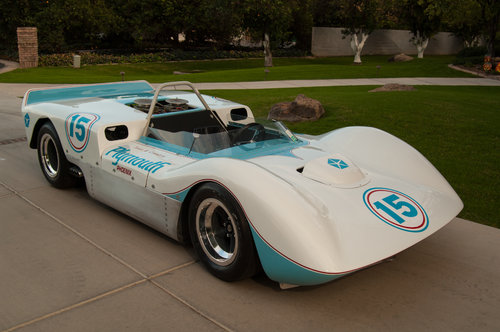
Can-Am was the coolest of race series. The rules were essentially: it must have two seats and four fenders. Other than that, anything goes. Unlike most racing series today, innovation was the key driver that bred some of the best race cars of all time (and ultimately killed the series).

McKee Engineering of Palantine, Illinois, was founded by Bob McKee. The company was one of very few in America producing road-racing sports prototypes in the 1960s. This car came about because NASCAR banned Chrysler’s Hemi engine for 1965 and Chrysler decided to sit Richard Petty out of NASCAR that year. They also figured that their Hemi would work well in a sports car, so they commissioned McKee to build this car for Petty to race in the coming Can-Am series.

Well the car was built but wasn’t ready to race until the end of 1965. Petty went back to NASCAR in ’66 and Phoenix, Arizona, Chrysler-dealer Bob Montana was given the responsibility to campaign this 7.0-liter V-8 powered monster. He raced it in USRRC and Can-Am between 1965 through 1967. In 1968, it competed in SCCA events and in 1969 it was retired.

It was parked for 35 years and restored in 2004 and the car has been invited to the Goodwood Festival of Speed and the Monterey Historics since. This is a really cool race car with a pretty interesting history. You can see more here and check out more from Russo & Steele here.

Update: Sold $260,000.

L88 Corvette

1967 Chevrolet Corvette L88 Coupe

Offered by Barrett-Jackson | Scottsdale, Arizona | January 18, 2013

1967 Chevrolet Corvette L88 Coupe

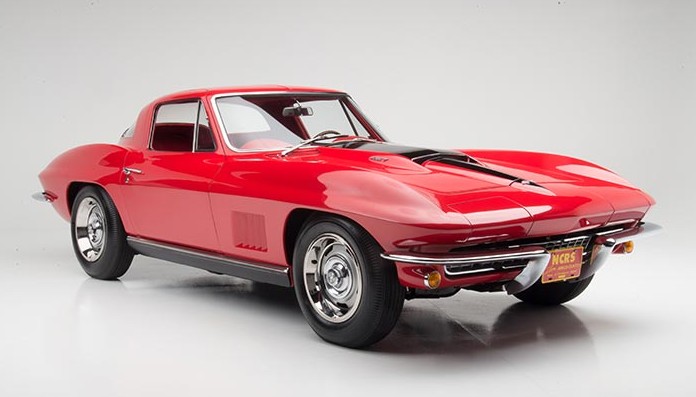
The L88 Corvette is one of the most sought after Corvettes. It was only offered for three years (1967-1969) and 1967 was the only year for the second-generation bodystyle to receive this monstrous engine.

The L88 was a 427 cubic inch (7.0-liter) V-8 that was all aluminium. You could get other 427 Corvettes, but this package had lightweight everything and a really high compression ratio which required 103 octane (!) fuel. Chevrolet tacked on some additional required goodies like Positraction, heavy-duty suspension and brakes, and they graciously deleted the radio and air conditioner (so people would be less tempted to drive it on the road – it was supposed to be a street-legal race car).

All of these extras (or deletions) tacked on about an extra 35% to the purchase price. Which might explain why only 20 were sold in 1967. That makes this one of 20 C2 Corvettes with this outrageous engine and option package. Horsepower was rated at 430 but dyno’d at 560. 1968 and 1969 L88 models trade for about $500,000. 1967 models are significantly more expensive and this one should bring around $1 million. Click here for more info and here for more from Barrett-Jackson in Arizona.

Update: Sold $3,850,000.

Kelsey Motorette

1911 Kelsey Motorette

For sale at Hyman Ltd | St. Louis, Missouri

1911 Kelsey Motorette

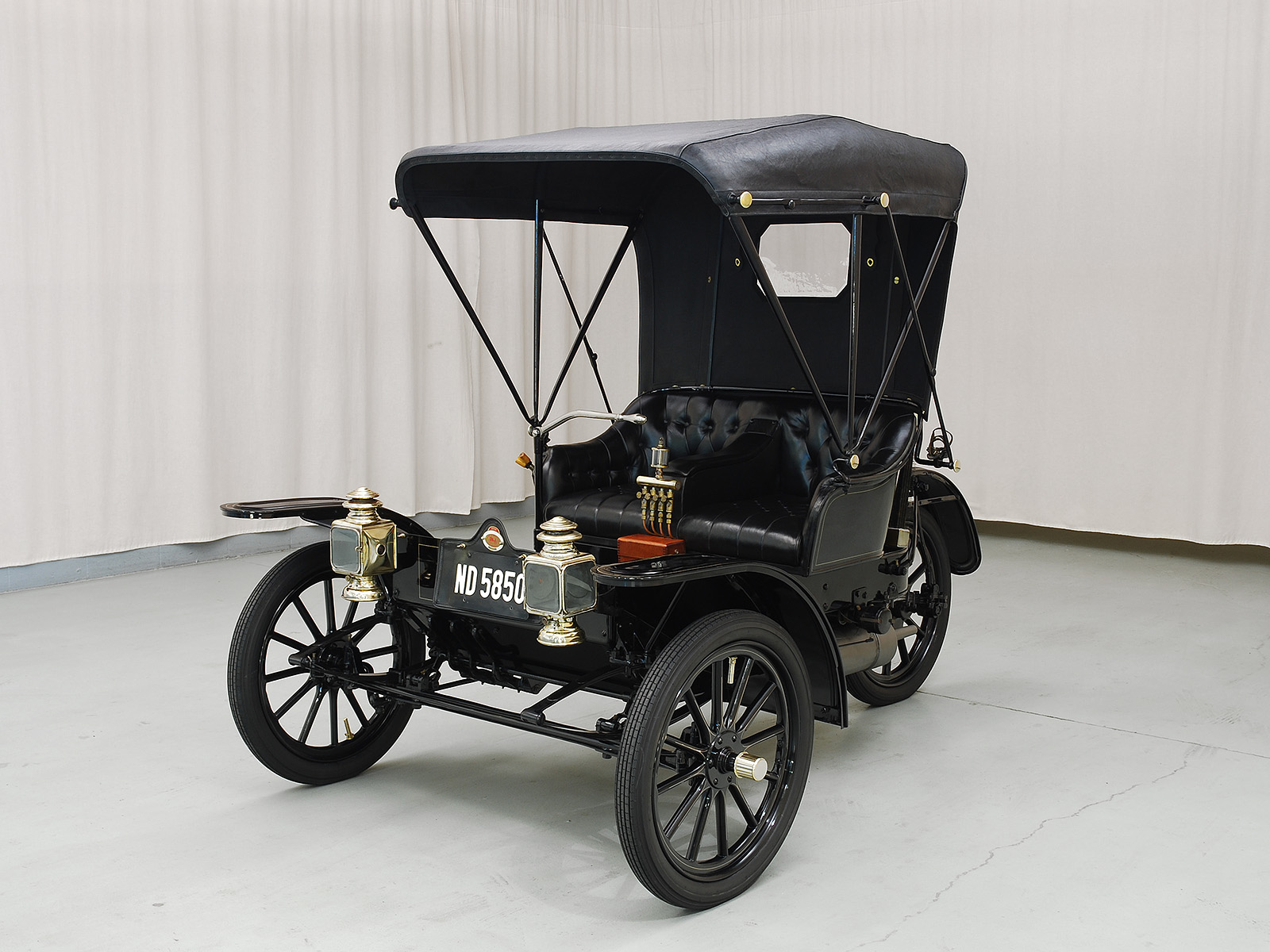
Carl Kelsey started selling cars off-and-on while in college in the early 1900s. Between 1910 and 1912 he built this, the Motorette. After spending a few years as a salesman for Maxwell, he started up the company again in 1920 and sold more traditional (read: four-wheeled) cars until 1924.

The car uses a mid-mounted flat-twin making 10 horsepower. The convertible top folds down, which gives this car a very strange appearance from behind. In all, about 200 Motorettes were built. This one has a meticulous restoration and is likely in nicer shape than when it was new.

I’ve posted prices for cars from this dealership before and got yelled at (by them). So I won’t tell you what they’re asking, but I will say it is right between $70,000-$80,000. In any event, I think you should buy it because it is very cool and looks like it would be a lot of fun to putter around in. You can find more here.